“It’s Almost Incomprehensible!” The Circus and Kafka’s Natural Theater

images-2

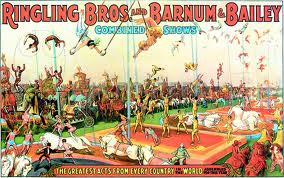
As I noted in the last blog entry, Ernst Bloch believed that “the circus is the only honest, down-to-earth honest performance.  A wall cannot be built anywhere in front of spectators who sit in a circle and surround performers.  Nevertheless, there is an estrangement” (179).

The confluences between Bloch and Walter Benjamin, in this claim and in these descriptions, are fascinating.  To be sure, Benjamin was also interested in the circus.  He also thought that although the circus was honest and utopian, it was fraught with estrangement.

We see the circus, utopia, and estrangement breached in Benjamin’s Kafka essay; namely, in the final section of the essay (which was published posthumously) entitled “Sancho Panza.”  In this section, Benjamin addresses the circus by way of the “Natural Theater of Oklahoma” that we see in Kafka’s novel Amerika.

Before addressing the Natural Theater, Benjamin cites a few lines from a Kafka short story about the “strange” ways of Kafka’s students and scribes.  They are the carriers and transmitters of tradition to the next generation and he is astonished by them:

‘To him, hammering is real hammering and at the same time nothing, which would have made the hammering even bolder, more determined, more real, and, if you like, more insane.’

Benjamin comments on this line that:

This is the resolute, fanatical mien which students have when they study; it is the strangest mien imaginable. The scribes, the students, are out of breath; they fairly race along.  (137)

Benjamin describes the scribes and students “as out of breath.”  They “race along” to receive and deliver the message of the tradition.  Benjamin goes to Kafka for the details.  And what we learn, from Kafka’s descriptions is that the narrator is astonished by the people who receive tradition.  Instead of seeing someone like Moses, Kafka’s narrator sees a bunch of schlemiels jumping up and down to get the message of tradition.  It is “strange…almost incomprehensible!”:

Often the official dictates in such a low voice that the scribe cannot even hear it sitting down; then he has to jump up, catch the diction, quickly sit down again and write it down, then jump up again and so forth.  How strange that is!  It is almost incomprehensible! 

Instead of explaining the meaning of tradition and this strangeness, Benjamin turns to the  Natural Theater of Oklahoma in Kafka’s Amerika:

It may be easier to understand this if one thinks of the actors in the Nature Theater.  Actors have to catch their cues in a flash, and they resemble those assiduous people in other ways as well.  Truly, for them, “hammering is real hammering and at the same time nothing” – provided that it is a part of their role.  They study the role, and only a bad actor would forget a word or movement. For the members of the Oklahoma troupe, however, the role is their earlier life; hence the “nature” in this Nature Theater. (137)

The nature of the nature theater is the earlier life of these characters.  The role they study is their tradition.  In other words, their earlier life is their tradition.  They inherit their childhood and learn it, play it.   In Bloch’s language, we could say that this is the “honest” element of the circus.  They play their earlier selves and they do so openly.  There is no curtain that stands between them and the audience.

Of them, Benjamin writes:

Its actors have been redeemed.

However, someone has not been redeemed and that is the student:

…whom Karl watches silently on this balcony as he reads his book, “turning the pages, occasionally looking something up in another book which he always snatched up quick as a flash, and frequently making notes in a notebook, which he always did with his face surprisingly close to the paper.”

The careful reader will understand what Benjamin is hinting at; namely, the fact that Karl is the student.  He is taking notes and “snatches” things up “in a flash.”  He is the unredeemed schlemiel who transmits the tradition.  Echoing the title of the section, he is Sancho Panza.

And perhaps this is what is most astonishing.  The fact that the schlemiel must spend his or her days recording and transmitting a tradition he or she doesn’t understand but only receives in flashes.  When it comes, he or she must “jump” up and snatch it as it flashes.

This is something the schlemiel must do as the schlemiel is not redeemed but these actors are.  By way of the Natural Theater of Oklahoma, Benjamin is saying something different than what Ernst Bloch says about the circus.  Although Bloch says there is an honesty and an estrangement to the circus that is unparalleled, he doesn’t explain why.  Benjamin does.

The honesty of Natural Theater, of the circus, is its nature.  It is the fact that it studies its earlier life and performs it.  This involvement is redemptive for the actors. However, those who carry on the tradition do not live this life.  It is they who are estranged.

Franz Kafka’s Karl Rossmann, who the Kafka scholar Heinz Politzer calls “infantile,” is a student; as is Sancho Panza and Walter Benjamin.  They are all students of tradition.  But in being students who transmit the tradition, they are not redeemed.  Not yet.

Rather, they are comic characters whose task is unnatural and yet necessary. Their leaping around after flashes and recording them, for Kafka, may be astonishing and strange but it is “almost incomprehensible.”

In other words, it is not completely incomprehensible.  It is in these small flashes that we know that a rationalist like Sancho Panza knew that the keepers of tradition and heritage were on to something.

Bloch knew this as well.  I would like to suggest that every comedian, writer, or performer of schlemiel comedy also understands this: without tradition, there would be no comedy and there would certainly not be a schlemiel.  Perhaps this is the “only honest down-to-earth honest performance” there is?

One doesn’t have to be in the circus to be a part of the circus.  All one has to do is watch it and, for those who want to carry on its tradition, all they have to do is leap up at the “flashes,” sit down, record them, and do that again….and again.

Its “almost incomprehensible!”

On the Apocalyptic Tone of Comedy – Take 1

images-3

For some writers, there’s nothing like a good death sentence.   Merely describing a death, for some writers, is ecstatic and revelatory.  In doing so these writers feel as if they are bearing witness to death while proclaiming a new beginning.  There is a sense of pathos, meaning, and liberation from the dead in such descriptions.

By speaking in an Apocalyptic Tone, one is, so to speak, transformed.  But, most importantly, this transformation is based on describing some kind of disaster to the reader.

Milan Kundera, who is internationally known for novels such as the Unbearable Lightness of Being and The Book of Laughter and Forgetting, is one of these writers.  But what makes him unique is that the death sentence he pronounces or describes involves the enunciation of comedy, on the one hand, and his commitment to its legacy, on the other.

In The Art of the Novel, Milan Kundera argues that comedy changed everything.  According to Kundera, comedy announces the death of tradition, certainty, and religion.   But, at the same time, it announces a new tradition which is born in the wake of death.  For Kundera, the origin of this new tradition, which bears witness to the death of the old tradition, has a proper name.

Kundera names the herald of death and the father of a new tradition: Don Quixote.

Kundera’s words echo Nietzsche’s “Madman” aphorism in the Gay Science where Nietzsche’s madman announces “God is dead. God remains dead. And we have killed him.”  But as God dies, something new is born: the comic novel.

As God slowly departed from the seat whence he had directed the universe and its order of values, distinguished good from evil, and endowed each thing with meaning, Don Quixote set forth from his house into a world he could no longer recognize.  In the absence of the Supreme Judge, the world suddenly appeared in its tiresome ambiguity; the single divine Truth decomposed into a myriad of relative truths, parceled out by men.  Thus was born the world of the Modern Era, and with it the novel, the image and model of that world.

Kundera deftly moves from Don Quixote to Descartes and then Hegel to describe the new world that the novel is the “image and model.”  What does this mean?  Kundera repeats the words “to take” twice to indicate what is at stake:

To take, with Descartes, the thinking self as the basis of everything (and not God), and thus to face the universe alone, is to adopt the attitude that Hegel was right to call heroic.

To take, with Cervantes, the world as ambiguity, to be obliged to face not a single absolute truth but a welter of contradictory truths (truths embodied in imaginary selves called characters), to have as one’s only certainty the wisdom of uncertainty, requires no less courage.

Let’s spell out what Kundera is saying: For the philosopher “to take” him/herself as radically alone, without God, is courageous.  And for the novel “to take the world of ambiguity” and to be “obliged” (that is, ethically charged) to “face not a single absolute truth but a welter of contradictory truths” is also courageous.  Kundera pronounces this courage and he identifies with it.  It is his.

But, according to Kundera, the novel is more heroic than the philosopher because it challenges man’s moral “desire” for “a world where good and evil can be clearly distinguished.”   This desire is a religious desire and a philosophical desire that is inherited from what the Enlighteners would call the ancients.  For Kundera, modernity challenges orthodoxy on this specific point regarding good and evil.  And, for Kundera, it is Don Quixote who bravely travels into the world and says no to the desire for a world “where good and evil can be clearly distinguished.”

The comic novel, in other words, is the herald of the death of God and the courageous embrace of a world in which good blends into evil and vice versa.  According to Kundera, the “inability” to distinguish between good and evil “makes the novel’s wisdom (the wisdom of uncertainty) hard to accept and understand.”

In other words, a normal individual would rather accept the world of the Bible where good and evil are clearly distinguished than accept the novel.  For Kundera, the comic novel “courageously” says no to such a world.  It denies its existence.  In making such a claim, Kundera is basically rewriting Neitzsche’s madman aphorism in terms of the comic novel.  As I noted, Kundera insists that Don Quixote “sets forth into the world” while “God slowly departs.”

In other words, the fool arrives after the death sentence from God has been pronounced.  For Kundera, the two coincide.  The fact of the matter is that we are led into the modern world by a fool.  Furthermore, Kundera implies that the wisdom of the fool is the wisdom of the comic novel.  For Kundera, this wisdom is existential.  The fool and not the normal individual who desires a clear understanding of right and wrong  is the hero.  The fool courageously embraces ambiguity.  But this is not simply a description of an ubermesche (overman) or a modern existential ideal.  No.  For Kundera, what is more important that such courage is the tradition that is passes on.  As Kundera argues, Don Quixote lives on from generation to generation but he disguises himself.

Kundera traces a path from Don Quixote to Kafka and he spots Don Quixote in the disguise of Kafka’s Land Surveyor:

Isn’t that Don Quixotre himself, after a three-hundred-year journey, returning to the village disguised as a land surveyor?

What we have here is a comic tradition.  But things have changed.  Unlike Don Quixote, the Land Surveyor’s “adventure is imposed on him.”  He is forced to wander in ambiguity.  How can one courageously accept this?  To be sure, the latter day Don Quixote cannot freely embrace ambiguity as his predecessor did.  He is not heroic.

The new message is Apocalyptic and Kundera is describing it for us. The herald of this message is Kafka.  Now the land Surveyor lives in a world which is not simply ambiguous; it is dangerous.  The world may kill this comic character! It deprives the fool of his freedom.  Perhaps Kafka’s Land Surveyor (from The Castle) marks the death of a legacy?

After Kafka, Kundera wonders: is the novel dead?

But if Cervantes is the founder of the Modern Era, then the end of his legacy ought to signify more than a mere stage in the history of literary forms; it would herald the end of the Modern Era.  That is why the blissful smile that accompanies those obituaries of the novel strike me is frivolous.  Frivolous because I have already seen and lived thorugh the death of the novel, a violent death (inflicted by bans, censorship, and ideological pressure) in the world where I spent much of my life and which is usually called totalitarian.

In effect, Kundera is telling us, by virtue of his own personal witness, that the novel was killed by the Totalitarian world.  This world, in contrast to the novel, lives in accordance with “one single Truth.”

But this is not enough of a death sentence. Kundera says that the novel is a “cemetery of missed opportunities.”  They include four appeals: to play, to the dream, to thought, and to time.

Kundera notes authors for each appeal.  They include, respectively, Laurence Sterne and Denis Diderot (appeal to play); Franz Kafka and the Surrealists (appeal to dream); Musil and Broch (the appeal to thought); and Proust (the appeal to time).

In an Apocalyptic tone, he notes that they all belong to a “cemetery of missed opportunities.”  Milan Kundera has personally witnessed their death.  He has witnessed the political death of the novel and the death of all of these appeals.  However, at this moment of description, in the face of this death, Kundera pronounces a new life for the novel. He pronounces a new purpose in the post-totalitarian era.

In a world in which everything is caught up in a “veritable whirlpool of reduection” the novel’s raison d’etre is to “keep the ‘world of life’ under a permanent light and to protect us from the ‘forgetting of being.’”

To courageously accomplish this mission, the novel must battle that which will reduce its complexity.  But there is something more important that this great task.  In a moment which challenges the modern idea of overcoming tradition, Kundera embraces one.  Kundera tells us that the “novel’s spirit is the spirit of continuity.”  In other words, although Kafka’s novel suffered the fate of history and politics, although it died, and althought the novel is a “cemetery of missed opportunities.” it is still a legacy.  And it is this legacy that was given to Kafka by Don Quixote.  Kundera, in effect, takes this legacy up. 

He does this after he announces that he is not attached to the future, God, Country, the People or the Individual.  He is, rather, attached to the “depreciated legacy of Cervantes”:

But if the future is not a value for me, than to what am I attached? To God? Country? The People? The individual?  My answer is as ridiculous as it is sincere: I am attached to nothing but the deprecated legacy of Cervantes.

What I find so astonishing about this confession is that Kundera’s move to attach himself to this legacy parallels the decision made by Walter Benjamin at the end of his essay on Kafka.  There, Benjamin mentions his favorite Kafka aphorism, which is entitled Don Quixote.  There, Benjamin likens himself to a Sancho Panza who, like Kundera, attaches himself to the legacy of Don Quixote.  Before Benjamin takes on this legacy, he begins by citing Kafka’s aphorism:

A free man, Sancho Panza philosophically followed Don Quixote on his crusades, perhaps out of a sense of responsibility, and thus enjoyed a great and profitable entertainment to the end of his days.

To this, Benjamin adds a new description of Sancho Panza:

Sancho Panza, a sedate fool and a clumsy assistant, sent the rider on ahead.

To be sure, Benjamin rewrites Cervantes’ Sancho Panza as a Sancho Panza in Kafka’s clothing.  And strangley enough, Benjamin notes that Sancho Panza “sent the rider ahead” which implies that Sancho Panza sent the legacy of the fool out into future generations.  In an earlier blog, I called this the schlemiel tradition.

What I would like to note here, however, is that Kundera also sees this tradition.  And, as like Benjamin before him, Kundera lovingly attaches himself to it.  However, Kundera’s attachment is made in the wake of death; namely, the death of God.  Benjamin isn’t as explicit about the Apocalyptic in his taking on the tradition.  Rather, he does so by way of allusion.

Kundera spells out what we can see in Benjamin’s words.  The assumption of this tradition is “ridiculous and sincere.”  Kundera’s words imply that he is a schlemiel author, a simpleton, who, in taking this tradition on, is “sincere” yet “ridiculous.”   This, I would argue, outweighs the ambiguity and complexity of the novel.  This sincere and ridiculous assumption of the schlemiel tradition includes all of the appeals of the novel to time, play, dream, and thought.

Most importantly, Kundera is telling us that in a world where good and evil are hard to distinguish, the most moral person of all is he who commits himself, in the most ridiculous and sincere way to the schlemiel tradition.

When God departs and Don Quixote arrives, Milan Kundera, like Sancho Panza is faced with a question and a new imperative: in the midst of God’s departure, should one follow the schlemiel and – as I suggest elsewhere, in my reading of Benjamin’s understanding of tradition – become the schlemiel?

Kundera answers yes in the most ridiculous and sincere way.  For Kundera, ridiculousness and sincerity – not cynicism and nihilism – survive by virtue of one thing: by taking on the “deprecated legacy of Cervantes.”

The question, for schlemiel theory, is how this tradition of the fool compares to the other hidden tradition of the fool which follows in the wake of prophesy.  As I point out in my earlier blog entry on the “schlemiel as prophet,” that tradition is Jewish.  But for both the fool arrives after God departs.  And for both, the fool initiates a new tradition.

(Please note that, though I said I would address the cynical schlemiel in this blog entry, I took a detour.  I hope to come back to it in tomorrow’s blog entry.)

President Obama and Slavoj Zizek: The Kynical Comic versus the Simpleton

DownloadedFile-4

Over the last few days, I’ve been thinking about trust, cynicism, and the schlemiel.

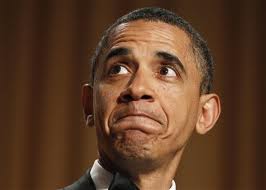
Does the schlemiel provide solace? Does the schlemiel restore trust?  There isn’t an easy answer to this question.  I started my thread of blog entries thinking about how President Obama, in his comic routine at the Correspondents’ Dinner, appealed to the self-deprecating simpleton.  He did this in order to end cynicism and gain trust.

The fact of the matter is that at least one variety of the schlemiel – the traditional, Eastern European one – works to endear the viewer, listener, or reader. The key ingredient to comically win over the audience is naivite.   The schlemiel may make mistakes and may try hard to win, but he often fails. 

The President played the schelemiel the other night. The President’s charm, at least in this routine, is to be found in his failure to make his dreams a reality.  And this is an appropriate topic for comedy given the President’s emphasis on hope and change.  The President, so to speak, is a dreamer.  He lives on dreams.  And perhaps many of us entrust him with power because we also like to dream (about a better future).  In effect, perhaps we identify with a schlemiel because we are schlemiels, too.  And this is the message: we can trust a naïve dreamer as only a dreamer can dispose of our cynicism. And The President seems to have been playing that comic role the other night.

But there is more on the table. The appeal of the schlemiel is not simply his or her inclination to dream big. To be sure. The dreamer who wants to make his or her dreams come true is socially awkward. As Adam Kotsko claims in his book entitled Awkwardness, many comedians play on the awkwardness of trying to succeed in a social situation.  We saw this throughout the President’s routine.  And to see this awkwardness in him is to see the everyman.  Perhaps the President’s awkwardness brings us relief; namely, to know that, like us, the President is also trying to be socially accepted and trusted while, at the same time, dreaming of making things better.

Whether or not the President’s routine ends your cynicism, however, is another question.  Perhaps we would all feel better if we believed that the President was a schlemiel like us.  But, as I pointed out yesterday with respect to Zizek, Karl (not Groucho) Marx believed that all ideology is naïve and that it has no idea that it is really doing anything wrong.  Ideology, for Marx, naively thinks it is right.  It can’t understand itself.  It can’t see itself.

In other words, Marx would read ideology as a fellow German of the 19th century would read the schlemiel. To be sure, the German reading of the schlemiel has a similar structure to Marx’s reading of ideology.  The German schlemiel is absent-minded and naïve; he has a blind spot and can’t see it.   We can.  As Sander Gilman points out in his reading of the German schlemiel in the 19th century, the point of the schlemiel in German theater was to show what NOT to be.  We can see what the schlemiel cannot.  And, as a result, we can reject the behaviors that the schlemiel naively repeats ad infinitum.  This is what Marx, analogously, thought with respect to ideology. His job, as a critic, is to “unmask” the naïve aspect of ideology and show what it is blind to; namely, the exploitation that private property and the class system is based on.   This “consciousness” could be used to correct the system and transfer all private property from the exploiters to the exploited.  In effect, consciousness is maturity and its first task is to negate naivite (which, analogously, would equate with the negation of the schlemiel).

Zizek doesn’t buy this.  He says that the notion that ideology is naive no longer holds. Today, Zizek argues ideology is not naïve.  It wears the mask of ideology while knowing full well that it is lying.  Zizek’s perspective, to be sure, is highly suspicious of anyone who purports to believe in this or that ideal.  To do so, especially with a smiling face, is tantamount to being a trick of the ruling power.  Zizek would say that anyone who upholds a principle or Enlightenment ideal is the real cynic as such a person does not truly believe in what he or she is saying but does so anyhow.

To think that the political is naïve, for Zizek, would be a mistake.  For Zizek, everyone acts “as if” they believe in this or that ideology when in fact they don’t.  One could also argue that the simpleton belongs to an ideology.  Using Zizek’s logic, one could say that acting as if one is a naïve simpleton is a ruse since no one can really be naïve today.  For him, this would be equivalent to nostalgia.

But, as I said above, the naïve schlemiel has a different meaning for Americans than it does (or rather, did) for Germans.  To be sure, the self-deprecating naïve schlemiel has more in common with the Eastern European, Yiddish schlemiel than it does with the German one.  In truth, Eastern European Jews (both secular Yiddishists and Hasidim) were charmed by the simpleton.  The foolish innocence of this character is something that they held onto.  It was the last bit of goodness in a world that, for them, was very bleak, dishonest, and violent.  In contrast to their German-Jewish brethren, they were not interested in exposing this naivite in the name of this or that consciousness.

Zizek’s dropping of the naïve in the name of the cynical and the kynical works in two ways.  On the one hand, it casts suspicion on any ideology that purports naivite; on the other hand, it leaves the possibility of goodness behind.

Zizek’s affirmation of kynicism, which he draws from Peter Sloterdijk, has nothing innocent or naïve about it.  In fact, the whole point of kynicism is, as he says, to mock and destroy the cynic who, for Zizek, dishonestly affirms freedom, truth, justice, etc.  As opposed to Marx, Zizek doesn’t believe that consciousness is the answer.  And the kynic doesn’t look to posit an argument.  Rather, the kynic is more interested in the power of mockery to displace those in power.  He could care less about the ideas that are affirmed by neo-liberals.  And this includes the appeal to innocence and simplicity.  For Zizek, these ways of being should not be corrected so much as left behind.

Here’s the question: if you get rid of the naïve, if you disregard Obama’s entire comic routine which makes endless appeals to simpllicity, do you also dispense with trust?

Reading Zizek, I’d have to say that the answer is yes.  Zizek is not interested in that which, for The Enlightenment, forms the basis of society.  To be sure, the notion that trust is the bond of society –as the basis of the social contract – is not simply an Enlightenment ideal.  As David Novak argues in The Jewish Social Contract, the social contract itself, and the trust it embodies, is based on something prior “historically” and “ontologically” to the social contract; namely, the covenant.  The trust in God to, so to speak, do his side of the bargain, is the basis for believing in the promises of any leader or government.

But you dont have to be a philosopher or a poltical scientist to know that if cynicism reigns, this trust and society itself will go down the tubes.  In the Torah, the prophet of all prophets, the law giver, is Moses.  One of his most salient character traits, which he no doubt won the people over with was his humility.

But there is more to the story.  Moses’s humility is inseparable from his faith.  Moses is humble because he knows that, no matter how hard he tries, it’s not all in his hands. He’s not sure if he will succeed. At the very least, he trusts that he is doing the right thing. And this faith, this belief, to be sure, is naïve.  It makes Moses, at times, socially awkward.  (To be sure, there are many occasions when, in speaking to the Jewish people, he feels very awkward and worries to no end.)  A rationalist like Karl Marx would see this belief as naïve since man, not God, is the master of the world.  Man, not God, can create and preserve justice by simply getting rid of such naivite and becoming mature and self-conscious. Putting trust in God or a covenant would, for Marx, be naive. Zizek, on the other hand,  would see this belief in a naïve leader and even the presentation of oneself as a naïve leader to be cynical.  Indeed, he would see this as a form of deliberate self-deception.

Humility and naivite, in other words, are, in Zizek’s view, impossible.  No one, today, can believe that the President is really humble or naïve.  Acting “as if” one is naïve, for Zizek, is an act that is used to legitimate a ruling ideology.

Strangely enough, the mockery of the self-effacing, self-deprecating, and naïve comic character, otherwise known as the schlemiel, would be a kynical answer to cynicism.  In other words, for Zizek, one kind of humor – the one that ridicules – is better than the other (which preserves trust, humility, and goodness).

So, the choice is yours.   Do you want the kynical comic or the naïve schlemiel? Which of the two would be better for society?  Has this question, as Zizek purports, already been decided?  Have we grown up and realized that preserving the naïve is really an act of cynicism or have we, on the contrary, decided to affirm the schlemiel because, without it, hope and trust will never be on the table? Or is this question, quite simply, ridiculous? Does it really matter to us if the President’s comic routine, in which he plays a simpleton, has an element of truth and does, in fact, foster trust while effacing cynicism? If it does, then we will have to admit that the relationship of aesthetics to politics matters to us and deserves greater attention.

(Spoiler Alert: In the next blog, we will look into another type of American schlemiel – the cynical yet naïve kind.)

Before I Speak, I Have Something Important to Say

images-1

Last night at the White House Correspondents’ Dinner, President Obama did some stand-up comedy.  To be sure, he has done this before.  But last night’s comedy routine was thought-provoking and it illustrated that now the President not only aestheticizes politics but also politicizes aesthetics.  In doing so, we have a blurring of the line between politics and aesthetics which makes it complicated for us to know which is which.  But, more importantly for this blog on the schlemiel, is the fact that he does this by playing the schlemiel whose dreams don’t match up with reality.  The genius of the schlemiel routine is that the subject of this blurring of lines is the President’s politicized and aestheticized identity. To top it off, the President’s scriptwriter (or writers) included a joke that comes from one of the most notable schlemiels in American-Schlemiel history: Groucho Marx.  The place of the schlemiel in this routine should not go by unnoticed.  So, I’ll briefly sketch out some of its outlines so you can see the figure of the schlemiel emerge in the President’s routine.

What made many of President Obama’s jokes so interesting was that they were not simply jabs at the Right’s views of him.  Rather, they were all based on the comic structure of self-reflection and self-deprecation.  By putting himself down, a trick used by many stand-up comics, he was able to efface many negative images of him and gain sympathy from the audience.  It’s the kind of charm that we see in schlemiel-comedians like Charlie Chaplin, Woody Allen, or Sasha Baron Cohen.

One good example of this is when President Obama theatricalizes the claim that he was (and ‘still is’) a Muslim and a Socialist.  He does this by way of the structure of reflection:  “I have to admit, I look in the mirror and I have to admit that I’m not the strapping young socialist I used to be.”

President Obama also played on the theme of improving his image by imitating Michelle’s new hair style.   But, as he comically notes, this image was not enough.  He’s still a schlemiel.  His dream of success is not meeting reality.  He needs help.

images-1

And who but Steven Speilberg comes to the Schlemiel’s rescue.   In Speilberg’s “Obama” mock-up the image of the President is, in some ways, restored.  He is the dream and the reality.  Daniel Day Lewis is trying to imitate him:

Noting that President Obama is already a “lame duck,” Spielberg introduces the schlemiel theme: President Obama is aging and unpopular. There seems to be no hope for him.   The comic concert of this video works on the doppelganger.  Here, Daniel Day Lewis is said to have become President Obama when we can all see that this is a sham.  What makes Obama funny in this piece is that he acts “as if” he is imitating President Obama.  And this works to efface the line between image and reality.  The whole distinction itself, Spielberg seems to be saying, is a joke.  In other words, the media has gone to far and has made him into a schlemiel.

But this message is driven home by the last joke the President makes; drawn straight from Groucho (“and not Karl”) Marx:

“Before I speak, I have something important to say.”

However, and this is the unspoken implication, when the President opens his mouth the press effaces that “something important” that he wanted to say.  The media caricatures everything the President says and this conflicts with his intentions.  His ‘real’ words will always be mediated for the better or for the worse.

In other words, the President will always be made into a schlemiel by the media.  He will always be misunderstood.  Like a schlemiel, he is largely innocent while the media is guilty.

But of what?

The final note, which follows the joke, spells it out.  The media is guilty of cynicism and a lack of trust:

And so, these men and women should inspire all of us in this room to live up to those same standards; to be worthy of their trust; to do our jobs with the same fidelity, and the same integrity, and the same sense of purpose, and the same love of country.  Because if we’re only focused on profits or ratings or polls, then we’re contributing to the cynicism that so many people feel right now.

After saying this, only a few people in the room clap.  After all, the President was implying that the majority of “us” (which could either mean people in the media or Americans in general) have become cynical.  This isn’t funny.

To be sure, the choice of words and the response is very telling.  Given the President’s jokes last night, one can say that he played the schlemiel routine in an effort to regain trust.  In other words, he used the schlemiel to charm the audience.

The interesting thing about all of this, is that the schlemiel has been used by Woody Allen, Charlie Chaplin, Ben Stiller, Adam Sandler, Sasha Baron Cohen (and many other American comedians and writers) to create an awkward but charming character.  It works to make these artists popular but can it work within the realm of politics?

What happens in routines like this is that the schlemiel is used to blur the line between politics and aesthetics or, at the very least, to put their relationship into question.   At the end of his essay on “The Work of Art in the Age of Mechanical Reproduction,” the Jewish-German thinker Walter Benjamin spoke explicitly of his worries about the aestheticization of politics in the modern age.  He linked it directly to the media, film, photography, and speed.  However, he saw the fear as relating to the glorification of destruction in fascism.  And this may not concern us as fascism is not on the table with such jokes.  However, what we can walk away from this performance with is the fact that Benjamin warned us that the blurring of the lines between aesthetics and politics happens when we are radically alienated from ourselves.  And this happens, for him, by way of mass media.  He didn’t have twitter, facebook, live feeds, real time news, etc.  But he could see the enlargement of mass alienation and mass cynicism coming.

The cynicism that President Obama mentioned, the cynicism that he tried to relieve by way of his schlemiel routine, is still with us.  Benjamin understood (like Kafka, as he says to Gershom Scholem) that in a time of crisis, only a fool can help.  The question is whether the fool, that is, the schlemiel’s help can do humanity any good. This question remains alive today and it was alive last night as President Obama did his comic routine. What this crisis is all about is clearer to us, however, than it was for Benjamin.  Its clear to the President as well: it’s a crisis of trust and the stakes are high.  Cynicism may be too much for the Schlemiel.  If that is the case, we may be in big trouble.

The Distracted Schlemiel: Empirical Consciousness, Reading, and Distraction (Take 1)

DownloadedFile-2

One of the definitive gestures of the schlemiel is distraction.  Nearly all of schlemiels we see in Yiddish literature are, in some way, shape, or form, distracted from the world they are living in or something that, for us, would seem obvious.  They are “absent-minded.” One prime example of this kind of distraction would be Sholom Aleichem’s character Motl.  In Motl, the Cantor’s Son, Motl’s father dies, his family goes into dire poverty, and his mother weeps constantly; nonetheless, Motl is so distracted by this or that physical detail that he cannot understand what is going on around him.  His distraction, however, is directly related to his youth and his innocence.  For Aleichem, it is simply natural.  He is not corrupted, so to speak, by the conventions of the world.  His consciousness is preoccupied or rather distracted by empirical details (not facts and not theories).

One of the things that I would like to do in this blog is to understand the meaning of this gesture of distraction.  What framework should we use to approach distraction?  Is distraction a way of challenging the status quo?  Or is it something that we should, as Bergson might say, laugh away?  Does distraction get in the way of what he would call élan vital?  Or is it élan vital?

A good place to start is with a thinker who has devoted some space to the reflection on distraction; namely, Walter Benjamin.  He mentions distraction in many places.  In his essay on “Work of Art in the Age of Mechanical Reproduction” and in his essay “Motifs in Baudelaire,” Benjamin notes that shock – whether by modern technology, film, or Dadaist art – distracts the viewer from contemplation of the object.   As Rodolph Gasche says in an essay on Benjamin entitled “Cutting in on Distance,” “with Dadaist art, and even more so with film since its distracting element rests on structural features such as cutting and montage, the object character of the artwork recedes entirely, and thus a radical diversion from what attracts – the singular object of the auratic work with its luring and enticing qualities – has effectively been achieved”(97, Of Minimal Things).

Distraction, in other words, is a modern phenomena that challenges the philosophical position of the contemplating subject.

Rodolphe Gasche ventures the claim that the precursor for Walter Benjamin’s foray into distraction was Immanuel Kant.  But, and here is the catch, Benjamin would be more attracted to Kant’s descriptions of empirical consciousness than to his view of the transcendental subject.

Gasche notes that for the Kant of the First Critique, “the distracted consciousness is unable to combine coherently a manifold of intuitions into one consciousness…Empirical consciousness is not only diverse and distracted in the different representations that may accompany but also distracted in itself, and thus is in no situation to secure self-coherence, or self-identity, authoritatively”(100).

In the Anthropology, Kant writes: “Distraction is the state of diverting attention from certain ruling ideas by means of shifting to other dissimilar ideas.  If the distraction is intentional, it is called dissipation; if it is called involuntary it is absentmindedness.”

Gasche argues that Benjamin was interested in involuntary distraction, that is, absentmindedness.  For Benjamin, the crowd watching a movie is not intentionally distracted.  No.  They are unintentionally distracted.  As Gasche argues, their distraction is “habitual.”

Strangely enough, Gasche notes that although Kant obviously didn’t live through the birth of the cinema, he did live in an era when novels were becoming more and more popular.  For this reason, Kant saw the novel as a distraction: “the reading of novels, in addition to causing many other mental discords, has also the consequence of making distraction habitual.”  Gasche adds that, for Kant, reading fiction “makes for habitual absentmindedness.”

When one reads, one cannot be self-present.

One wonders what Kant would say about someone who reads a novel about a character that is absent-minded.   To be sure, Benjamin affirms this kind of absentmindedness as it is a radically empirical way of relating to the world.   Instead of acting in relation to the world from a position of self-presence and knowledge, the distracted reader-slash-viewer acts on the world in an oblique (yet habitual manner).   One could say that the schlemiel, while distracted, does act in a habitual way.  One can certainly say that about schlemiels like Motl or Gimpel.

Gasche notes that “in these times” problems still need to be “solved.”  However, they are not to be solved by the self-present individual. Rather, the best person or people to solve the problems of our times are the distracted masses: “the only problem solving that has a chance of succeeding is that which occurs in an incidental fashion but has become habitual, hence repetitive and reproducible and not unique or singular, and which consequently does not focus or concentrate on what causes the problems”(101).

In other words, Gasche, paraphrasing Benjamin, is suggesting that the distracted masses can change the world, not the people who understand these causes of problems.  What needs to be cultivated, says Gasche, are “repetitive habitual modes of reaction” that prevent us from focusing on the “spell of what obtains here and now.”

This suggests that the masses should not be pragmatic; rather, the distracted masses are necessarily absent-minded and utopian.  Yet not going toward utopia by way of an idea so much as by way of “repetitive habitual modes of reaction.”

Gasche suggests that the “first citizen of a world without magic” is the collective subject.  However, Gasche notes that “a strange silence hovers about this world emancipated from myth.”   To be sure, I would argue that the strange silence has to do with the possibility of fascism.  Indeed, the distracted masses can go in any direction.  They can even, as Benjamin notes, celebrate death and aestheticize violence.  Indeed, there are many kinds of habits that can develop out of distraction many of which are terrifying.

But this isn’t what Gasche hears from the “strange silence.”  Rather, he hears something else: “In its utter profanity and blankness, the world devoid of myth points to what it cannot name, that from which the very meaning of the “profane” remains suspended”(102).

How does this all relate to the schlemiel?   Do we, in viewing the schlemiel, see what the world devoid of myth points to but cannot name?   Or does the strange silence that attends the schlemiel point us elsewhere?

Taking Benjamin and his anti-Kantian affirmation of distraction to heart, one can say that Benjamin would not shy away from the observation that we are all schlemiels.  He would say that we are all absent-minded because we are all shocked by cinema, technology, and the speed of modernity. Given this reading, can we say that social networking – constantly checking our facebook page, our email, and texting; constantly updating and looking for updates – has made us all into the absent-minded schlemiels who can do nothing more than habitually react to events, cellphones, and computers, etc?

In short, like a schlemiel, we can’t really think.  Like schlemiels, we merely react to this or that experience with this or that habit.  And this, somehow, will solve all of our problems.   This or that absent-minded reaction – to this or that crisis or shock – is the best we have.

But can we simply accept the celebration of distraction?  Can we simply celebrate absent-mindedness?  Or should we run from it – as Kant would suggest – like the plague?  And what does it mean to know that the masses are absent-minded?  Is Benjamin, the critic, also absent-minded?  Or does the intelligensia decide what habits to inculcate the schlemiel-population with?

I ask these questions at the end of this post because I think Gasche misses only one point; namely, that Benjamin struggled with the meaning of education.  As I mentioned in an earlier blog entry, Sancho Panza, the rationalist, follows Don Quixote (a fool).  But what did he learn from him?  Would Sancho Panza carry on Don Quixote’s legacy and be a fool for the next Sancho Panza or would he teach the next generation a different habitus?  Is Benjamin, like Sancho Panza, just watching the schlemiel (watching the distracted masses and its habitual reactions), bearing witness, and nothing more?   Is that all Benjamin or we can do?

Not Quite Jewish….Almost American: From Portnoy to Admiral General Alladin

DownloadedFile-1

Phillip Roth’s Portnoy’s Complaint is a long discourse-slash-novel that begins and ends on the couch of a psychiatrist.  But the novel is not simply a discourse on the psyche of the schlemiel.  Rather, it gives us a sense of how his identity crisis tarries between sexual identity and national identity.    Is Portnoy a Jew or an American?  Neither?  Does he reject one identity while failing to embrace another?

In a moment of revelation, Portnoy dramatizes his failure to be an American.  Something is getting in the way.  And this something makes him angry:

And its true, is it not? – incredible, but apparently true – there are people in life who feel at ease, the self-assurance, the simple and essential affiliation with what is going on, that I used to feel as the center fielder for the Seabees?  Because it wasn’t, you see, that one was the best center fielder imaginable, only that one knew exactly, and done the smallest particular, how a center fielder should conduct himself.  And there are people like that walking the streets of the U.S. of A.?  I ask you, why can’t I be one!”(71).

Unlike Americans, Portnoy cannot “feel at ease” and have “self-assurance.”  Unlike Americans, he cannot “affiliate” himself with “what is going on.”  Here, we have the basis of a post-WWII schlemiel: He is ashamed of the fact that he is ill at ease, unsure of himself, and is unable to bravely “affiliate” himself with “what is going on” in America.  He has failed to be an self-possessed American male.

Immediately following this, Portnoy says that he is not simply a failure; he is a Jew:

But I am something more, or so they tell me.  A Jew.  No! No! An atheist, I cry.  I am a nothing where religion is concerned, and I will not pretend to be anything that I am not!…And I don’t care how close we came to sitting shiva for my mother either – actually, I wonder if the now if maybe the whole hysterectomy has not been dramatized into C-A and out of it again solely for the sake of scaring the S-H out of me!  Solely for the sake of humbling and frightening me into being once again an obedient and helpless little boy. (71)

Being a Jew, for Portnoy, is not an essence; it is, rather, about being molded by one’s parents “to be” Jewish.  And Portnoy states emphatically that “I” will not “pretend to be anything that I am not!”  His Jewish guilt – or rather resentment – is based on his education and his birth.  To be sure, Portnoy is “told” that he is a Jew, which implies that he was told what to say and what to do.  He had no will of his own.  His whole education had a purpose.   Portnoy flatly states that it was dedicated “solely for the sake of humbling and frightening me into being once again an obedient and helpless little boy.”

In other words, Judaism didn’t help Portnoy to become a man.  He has never been properly raised to live in the world and be independent and self-present.  In other words, he was never taught how to be autonomous.  As a result of his upbringing, as a Jew, he has become a “helpless little boy.”   He has become heternomous and dependent on his mother.   This tension, in fact, has deeper roots in the struggle between heteronomy and autonomy.  This struggle, for the post-WWII Jewish-American schlemiel is a struggle that Jews also had in Germany.  In Germany, the schlemiel was a shameful character.  As Sander Gilman argues in his book Jewish Self-Hatred: Anti-Semitism and the Secret Language of the Jews, Jews, in the Enlightenment period (the Jewish-German Haskalah) made plays that satirically target the schlemiel.  His traits – which included being effeminate, over emotional, confused, unable to speak properly (mangling German), and being heteronomous – were to be laughed off the stage.

Like the schlemiels in these German-Jewish comedies, Portnoy is almost a man.

Portnoy’s only way of asserting his manhood is through anger; namely, through being sarcastic about the bad hand he was dealt.  And this is a new tactic, since in German-Jewish theater, the schlemiel is laughed at since he or she is unaware of his or her ‘folly’.  Here, it is different.  Here, the schlemiel “knows” what the source of his problem is.  And what ensues is a kind of impotent rage which is new to the schlemiel.  It is not a trait one would find in Yiddish literature.

As a part of his comic ranting, Portnoy turns on his mother.  She is responsible for making him a “helpless little boy.”

BECAUSE WE CAN’T TAKE ANY MORE! BECAUSE YOU FUCKING JEWISH MOTHERS ARE TOO FUCKING MUCH TO BEAR!

Portnoy is in effect revolting against her and humiliating her as a way of “freeing himself” of his Jewish guilt.   He wants to be a man and reverse that education and go from being a child to a man on his own.  In other words, he wants to give birth to himself.  His path from heteronomy to autonomy is based on ridicule.  By destroying his mother, he believes he will be autonomous.  For Portnoy, this is synonymous with becoming an American.

But this is not enough.  He may successfully ridicule his mother and feel free.  However, in reality, he cannot be an American because he is not successful in the sex department.  His failure is measured by a skill.  To be sure, he believes that what he’s good at, and what helps him to give birth to himself as independent, is masturbation: both literal and literary masturbation.  His words ejaculate on the page.  Portnoy takes deep pride in this but he knows, ultimately, that this doesn’t make him an American of the sort we saw above.  Rather, it makes him an American-Schlemiel.

Half the length of the tunnel it takes me to unzip my zipper silently – and there it is again, up it pops again, as always swollen, bursting with demands, like some idiot macrocephallic making his parents’ life a misery with his simpleton’s insatiable needs.  “Jerk me off, “ I am told by the silk monster.  “Here? Now? Of course here and now. When would you expect an opportunity like this to present itself a second time?”(126)

He believes that he must masturbate.  He must be ‘bad’ if he going to PUT THE ID BACK INTO THE YID. But to be a Jewish-American man – living in the shadow of the Jewish State – he must pass the ultimate test: he must have sex with a Sabra.  This leads us to Portnoy’s Final complaint, his final failure.

Since he can’t be an American, what is the model for a self-confident, autonomous Jewish male who can “affiliate himself” with what is going on?  Portnoy realizes that this model would be a Sabra.   But he rejects this model thinking that if he can match her, sexually, that he will finally win.  But what happens is that when it comes to the moment of sex with Naomi, a Sabra, he fails miserably.  As I noted in a previous post on Roth, Portnoy comes to the realization that he can’t be a self-confident Jewish man, that is, an Israeli.  And this is his final complaint.

But this failure and the following verbal compensation for failure (by his calling her names) gives birth to the new Jewish-American Schlemiel.   Although he, like many past schlemiels, is not quite a man and not quite a child, he is, a man-child with a big mouth and a passion for masturbation.

He’s an American schlemiel: he is neither an American nor a Jew.  He’s somewhere inbetween.

But since Portnoy, things have changed. His method of transformation is comic and literal masturbation.  But, when Roth wrote this, it was not considered to be American.  In Sasha Baron Cohen’s The Dictator, however, masturbation is a rite of passage for Admiral General Alladin, the Dictator.  Through masturbation, he can become an American.  He can fit in with the others in the Brooklyn Co-op.

From Portnoy to Alladin of Sasha Baron Cohen’s The Dictator, we have a comic-sexual lineage of Jewish-American stand-up – or sit-down comedy.   The measure of being an American Schlemiel, his power, for Portnoy was his masturbatory rant.  What Sasha Baron Cohen does is yet another parody of the masturbatory rant.  But in his rant masturbation is no longer “bad” – in fact, it becomes the rite of passage to America.  A rite that Cohen’s character – the Dictator – picks up in the back room of a Brooklyn Health Food Co-op.

Perhaps Sasha Baron Cohen is telling us, in an awry way, that in that space and at this time, the Schlemiel is literally a Modern American Hero.  In other words, Portnoy may no longer have to complain since being a man and autonomous may no longer be a concern for the postmodern American Jew.  It may no longer be a thing that Jews are ashamed of since more and more Americans – at least in big American cities like New York (where the Dictator takes place) – are leaning toward a kind of metrosexuality.

Regardless of what may be the case, we must not forget that at the end of a film like The Dictator, Alladin is almost an American.  And this “almost” is what, still, makes a Schlemiel a schlemiel.   But the game has changed.  The test for the Schlemiel, at least in the Dictator is not sexual, it is political.  The test is democracy not masculinity.  And it seems as if, in the end, by becoming an advocate of democracy, the schlemiel becomes an American or…almost American.

The Schlemiel and the Sabra or Portnoy’s Final Complaint

images-2

In The Schlemiel as Metaphor: Studies in Yiddish and Jewish American Literature, Sanford Pinsker devotes an entire chapter to the work of Phillip Roth.  Well, that’s not entirely true.  Although the chapter is dedicated to Phillip Roth, the majority of the chapter is on Roth’s most popular and controversial novel, Portnoy’s Complaint.  For Pinsker, the other two novels that are mentioned in the last part of the chapter –  The Ghost Writer and Counterlife – do not so much illustrate the schlemiel as put forth a new type of postmodern novel that emerged after Portnoy’s Complaint.  Pinsker suggests that these novels were not so much about the schlemiel as an attempt to leave the schlemiel behind for the novel within the novel and writing as such.

One of the most interesting elements of Pinsker’s treatment of Portnoy’s Complaint is the evidence he marshals to prove that Portnoy is a schlemiel.  Pinsker stages his argument by pointing out Portnoy’s favorite pastimes: masturbation and mouthing off.    To be sure, Portnoy violates all decorum by speaking in detail about his masturbation and mentioning all the places he has left his semen.  Ruth Wisse and Sidrah DeKoven Ezrahi would argue that this “mouthing off” is an important trait of the schlemiel. Portnoy’s words give him, as Wisse would say, an “ironic victory.”  But, for Pinsker, this isn’t the only thing that makes Portnoy a schlemiel.

Rather, the key trait of the schlemiel can be found in Portnoy’s memory of failure: “What he remembers most, however, about these masturbatory binges are his darkly comic failures.  In this regard, none is more spectacular that his disastrous episode with Bubbles Girardi.”

As Pinsker recounts, Bubbles made a deal with Portnoy’s friend Smolka to “jerk off one of his friends.”  However, there are two conditions:  1) the individual will have to leave his pants on and 2) she will “count fifty strokes” and no more.  Portnoy is elected to receive the “prize” but “the result is comic schlemiel hood of the first water”(149).

What Pinsker finds comic is that Portnoy is brought right to climax, but Bubbles stops at 50 strokes.  Portnoy cries out:

JUST ONE MORE! I BEG OF YOU! TWO MORE! PLEASE! N-O!”

Portnoy reflects on his failure and decides that he’ll have to finish the job whereupon he cums in his eye: “I reach down and grab it, and POW!  Only right in my eye.”

The greatest insights in Pinsker’s book on the schlemiel – and in his chapter on Roth – follow upon this passage.

Pinsker notes that “Portnoy’s sexual antics are the stuff of which Borsht Belt stand-up is made, but as he keeps on insisting, this is no Jewish joke, no shpritz (machine gun spray of comic material”(150).

And this is the ironic denial that makes him a schlemiel.  Roth is doing Schlemiel Stand Up.  Unlike Lawrence or Joyce, Pinsker tells us that Roth doesn’t take his failures with a “high seriousness”(150). Rather, Roth is a tumbler (an acrobat of sorts): “Roth reduces to the anxious flip.  The cunning of history is to blame here; when Portnoy shouts “LET’S PUT THE ID BACK IN THE YID! The effect dovetails a domesticated Freudianism into the jazzy stuff of popular culture”(150).

What does Pinsker mean by this “jazzy stuff of popular culture?”  Pinsker notes that what Roth has popularized and made comic is the stuff of tragedy: guilt.  And who else but Franz Kafka is the teacher of how to make guilt a comic affair.  To be sure, Roth said this in his book Reading Myself and Others (1975).  There, he notes that he got his stand-up routine from a sit-down comic named Franz Kafka: “I was strongly influenced by a sit-down comic named Franz Kafka and a very funny bit he does called ‘The Metamorphosis’… Not until I got hold of guilt, you see, as a comic idea, did I begin to feel myself lifting free and clear of my last book (Portnoy’s Complaint) and my old concerns”(150).

Pinsker uses this line as evidence that Roth may have come from Kafka and he may practice the schlemiel, but he wants to lift himself “free and clear” of this character.  For Pinsker, all of Roth’s future books were more mature while Portnoy’s Complaint was all about “enjoying being bad.”  Portnoy’s kvetch, his complaint, and his enjoyment of being bad differ, Pinsker tells us, from Walt Whitman’s “barbaric yawp” since Portnoy is not the man in the sense that Whitman portrayed himself to be.  He is afflicted by his own misfortunes and guilt.  Whitman is guilt free, Roth is not.  Here, Pinsker suggests that Portnoy’s mouthing off doesn’t change his reality.  He is still caught up in his masturbatory dreams and his guilt, which he can’t seem to escape.  His stand-up comedy doesn’t make a difference.  It seems, more or less, like impotent rage.

What Pinsker overlooks, however, is the fact that Portnoy’s greatest humiliation – his greatest and final complaint – comes at the end of the book with Naomi, the Sabra (native Israeli).   This time, he gets to sleep with a woman.  But before he does, he comes to realize that he is no match for her.  This dialogue brings out the crux of the new Jewish-American schlemiel who lives in the shadow of the Sabra.

Naomi deftly describes the difference in her characterization of Portnoy’s stand-up routine in which self-ridicule is the most prominent feature:

You seem to take some pleasure, some pride, in making yourself the butt of your own peculiar sense of humor.  I don’t believe you actually want to improve your life.  Everything this somehow always twisted, some way or another, to come out ‘funny’  All day long the same thing.  In some little way or other, everything is ironical, or self-deprecating. (264)

After Naomi goes on to discuss how powerlessness got Jews nowhere, Portnoy says, flat out: “Wonderful.  Now let’s fuck.”

In response, Naomi calls him “disgusting” and then they engage in a name-calling match in which Naomi puts the nail in the coffin by calling him a schlemiel.  Notice that in the following, “Schlemiel!” (in italics) is the final word:

“Right! You’re beginning to get the point, gallant Sabra!  You go be righteous in the mountains, okay? You go be a model for mankind!  Fucking Hebrew saint!” “Mr. Portnoy, “ she said…”You are nothing but a self-hating Jew.” “Ah, but Naomi, maybe that’s the best kind.” “Coward!” “Tomboy.” “Schlemiel!” (265)

Portnoy, cursing under his breath says, “I’ll show her who’s the schlemiel!”  But he fails, sexually. He’s impotent.

As you can see from these lines, Naomi has the last word. And that word is schlemiel. She is strong and he, a man, is weak. What we have here with Naomi is the new, Israeli Jew (which scholars like Daniel Boyarin, David Biale, and others discuss at length).  In the face of Naomi, the Sabra, all Portnoy has for power is his wittiness and vulgarity.  But the irony is obvious.  Roth is showing that Portnoy’s words are no substitute for her physical power.  Rather, his wittiness differs and competes with her power.  And, like any schlemiel it loses in the end.  What remains in the aftermath of all his verbal acrobatics is his failure.  (The acrobatics metaphor which I mentioned in my last blog on Beckett and Federman fits well here.)

Sidrah DeKoven Ezrahi interprets the meaning of Portnoy’s failure in Booking Passage: Exile and Homecoming in the Jewish Imagination.  Ezrahi notes that Portnoy explicitly confesses to his loss when he sings a self-depricating song, which he has created for this specific situation of failure: “Im-po-tent in Israel, da, da, da”(226).  Ezrahi’s interpretation of this moment of failure is telling.

On the one hand, Ezrahi says that the novel demarcates the “very moment when the schlemiel as cultural hero is superceded by what the critics of Zionism call the “tough Jew,” when “images of Jewish wimps and nerds are being supplanted by those of the hardy, bronzed kibbitznik, the Israeli paratrooper, and the Mossad agent.”   On the other hand, she notes that in Roth’s later novel Operation Shylock the schlemiel becomes a competitor: “What has happened to turn powerlessness into a competing cultural claim and Diaspora into the most authentic and secure form of Jewish existence?”(226).

The lines that follow this question, however, demonstrate that Ezrahi doesn’t believe Roth’s project has left the schlemiel behind. The claims he makes in Operation Shylock are still based on powerlessness:  “Once again Roth’s hero is defeated in Israel, but this time in a battle, fought with weapons – the pen and the sword – no less phallic but more consequential.  Israel has become the place where Reality writ large has the same affect on the psyche as Naomi did on the libido”(226-7).

In other words, Roth’s characters are still schlemiels but now Exile, “redefined as “Diaspora,” is no longer limited to the realm of therapy (as it was for Portnoy) but extends to the much larger realm of fiction.”

Fiction and not the libido becomes the resevoir of the dream and fantasy while Isreal becomes Reality (Israel IS-REAL) or the reality principle.  This contrast shows that, for Ezrahi, the schlemiel’s battle is not simply psychological as it was with Naomi.  Portnoy’s problem may be psychological, but the narrator and main character of Operation Shylock – whose names all happen to be Phillip Roth – have a problem with Israel.  In other words, their Jewish identity is ruptured by its very existence.

But, to be sure, we also see that this problem exists in Portnoy as well.  His problem is not merely psychological.  After all, he tries to call Naomi names so as to show he is more powerful, but it is to no effect.  Reading Ezrahi’s take on Roth, one cannot help but think that Roth is fully aware that he is on the side of the dream; and the side of the dream, as even Roth suggests, will always be the side of guilt and failure.

If Roth takes his task from Kafka, as Pinsker tells us, Ezrahi’s observation is very telling.  Roth admits that he saw Kafka as a “sit-down” comedian who took the tragic notes out of guilt by making guilt comical.  As Pinsker argued, Roth believed that by writing he would eventually be done with guilt and the schlemiel. But as Ezrahi argues, this project, inevitably failed.  Why?

For Ezrahi, this project to leave schlemiel-hood can never be completed since there is a competing claim; namely, the claim of reality (the claim of Israel). And this claim demonstrates that the real basis for the schlemiel, for Ezrahi, is the difference between dreams and reality (or as she puts it, Exile and Homecoming).  For her, language, without a land, provides (and has, traditionally, provided) nourishment for the exiled Jew.  The schlemiel’s words, as Wisse would argue, give people a sense of dignity in the face of failure.  But, as Ezrahi suggests, fiction, like the schlemiel, can’t stop dreaming.  Given these premises, I would suggest that Ezrahi can argue that Roth is not simply a schlemiel in the sense that he doesn’t know what is going on in reality.  No.  He is a guilty schlemiel.  We see this above, in the citations from Portnoy’s Complaint.  He, so to speak, enjoys his symptom.

Ezrahi suggests that in Operation Shylock Roth makes it explicit that he may fight with Israel but, ultimately, he will always be a comic failure.  His identity, as a Jewish-American writer will be ruptured.  He knows that his homeland is in a text while being cognizant that Israel is now a reality.  Ezrahi suggests that he knows that he has refused history in the name of fiction.   But do Jewish-American writers share this awareness?  Are they, like Kafka and other pre-Israel schlemiels, not able to properly enter history? To be sure, as a result of this failure, which they were not fully responsible for, Ezrahi tells us that they had to live in a “substitute” land with a “substitute” sovereignty. Today, Ezrahi argues, one no longer has to do this. A Jew can go home and “recover” their history.   But writers like Roth consciously opt not to.  And this opting-not-to constitutes their comical identity.   So, today, the schlemiel and its comic relationship with guilt remains but now it has a different basis.

What amazes me most about all of this is that what Roth and Ezrahi both seem to be saying is that to be an American Jew –and to resort to a constructed identity, fiction, and dreams – is to be a schlemiel.  Ezrahi calls this a “diasporic privilege.”  Based on this logic, one can say that living an ironic, schlemiel-like existence is a “guilty” pleasure that is had at the expense of returning to the land.  American Jews, as schlemiels, enjoy their symptom.   Now, being a schlemiel has a price; but before Israel was Real (for many before 1967), being a schlemiel was, as Ruth Wisse argues, necessary for Jewish survival.

For Ezrahi, Jews are forced to answer a question: What side are you on?  On the side of Portnoy or Naomi the Sabra?   One can brazenly be a schlemiel and deny any guilt, but at what price?  This, I think, is one of the main questions Ezrahi wants American-Jews to ponder.  Unfortunately, no scholar I have met who has read Ezrahi has figured it out.  For some strange reason, they miss this question and, instead, think Ezrahi is praising Diaspora.  This misreading, though unfortunate, is telling.

I won’t make this misreading.  I’m here to ask this question and to reflect on what it means.  Should I read Roth as she does – in terms of his comic acknowledgment of a guilt that is based on saying no to Israel?  Or should I consider myself to be a “New Jew” (see David Shneer and Caryn Aviv’s book New Jews: The End of Diaspora, who, according to these authors, is not bound by the distinction of Diaspora and Homecoming)?

What better time to pose this question than today on the 65th Anniversary of Israel’s founding in 1948?  Ezrahi has every right to ask us to ponder such guilt since she lives in  Israel and knows full well that there is a difference between being Jewish in Israel and being Jewish in America.  I do not see it from her perspective.

I read and write about the schlemiel, but with a difference.  As an American-Jew, I understand that with Israel’s existence, my enjoyment of the schlemiel can be thought of as a guilty pleasure.  And I clearly understand that her reading hinges on Jewish history.  If an American Jew thinks he or she is beyond the dream of having a land of his or her own, he or she is thinking ahistorically.  Though this is possible, and happens often enough (since, unlike Phillip Roth, many Jews lack an acute sense of what is at stake with Israel or how they are a part of a long history of Exile), one needs to ask oneself what is at stake if we totally lose our “Jewish guilt” which, today, is not tied to anything primordial but, quite simply, to Israel.  Can a Jew simply leave the schlemiel behind, which, for Ezrahi, would suggest that one leaves Israel and history behind?  Or are Jewish American novelists – like Shalom Auslander or Nathan Englander (to name only two) – willing to embrace this character and its ironic relationship with the Isreal?  Will the schlemiel remain, regardless of what we do, since Israel and America will most likely remain the two primary places where Jews live and dream?

These questions should trouble American Jews and be so troubling as to make us complain a little and realize the situation we are faced with.  Perhaps, for American Jews -in general – and Jewish-American writers – in particular -Israel is or will be the Final Complaint (as it was for Portnoy and for the author of Operation Shylock)?

Students and Teachers of The Schlemiel Legacy: From Sancho Panza to Walter Benjamin

don-quixote-26.jpg!Blog

(Enter Walter Benjamin)

To be distracted and become absent minded, is so to speak the condition of the possibility of the schlemiel. Walter Benjamin knew this lesson very well.  He learned if from Kafka, who learned it from Sancho Panza and Don Quixote.

At the end of his Kafka essay, Benjamin notes that he is like a Sancho Panza to Don Quixote.   To be sure, at the end of his Kafka essay he cites his favorite Kafka parable, the parable on Sancho Panza and Don Quixote which ends: “A free man, Sancho Panza philosophically followed Don Quixote on his crusades, perhaps out of a sense of responsibility, and thus enjoyed a great and profitable entertainment to the end of his days.”

In other words, Benjamin, like Sancho Panza, literally spent the “end of his days” following around a schlemiel named Franz Kafka.  And in this, he became very distracted and absent-minded himself.  After all, a reflection without penetration is the manner of the schlemiel.  And in response to it, one will either die laughing or “come laughing.”  Benjamin, near the end of his life, imitated the ways of Sancho Panza who imitated the ways of Don Quixote (a fool).

With Benjamin, we know that he took the modern Don Quixote, Franz Kafka, as his last teacher.  Gazing upon Kafka’s text, Benjamin knew, as he said in one of his last letters to Gershom Scholem, written on June 12, 1938, that Kafka was correct about two things: “first, that someone must be a fool if he is to help; second; only a fool’s help is real help.”  However, as Benjamin mused:  “the only uncertain thing (the only question) is whether the fools help will do humanity any good.”

Indeed, that is the ethical question of the schlemiel.  And this is the question I have been asking in the last two blog entries.

Benjamin was the first to reflect on it.   And while Derrida is on to the tragic or comic manner of the schlemiel, unlike Benjamin, he does not pose this ethical question (at least not in his language phase).  Benjamin does.  Benjamin wonders whether the attention given to learning the wisdom of the fool, the manner of the schlemiel, can do humanity any good.   The same question applies to the ways of deconstruction and to learning the manner of the foolish (schlemiel) text.

If such a way of reading of the text doesn’t do humanity any good, will it be rejected?  And in the name of what?  The politician?  The philosopher?  How, Benjamin queries to Gershom Scholem, could they help?  The only one who “can help is the fool.” As Benjamin says in the same letter to Scholem, perhaps the only wisdom “is the wisdom of the fool.”  But, perhaps, as Kafka suggests, Benjamin was wrong.   Perhaps it isn’t wisdom that Sancho Panza gleans from the fool so much as entertainment (which Sancho Panza, a philosopher of sorts, enjoys until he dies…laughing). But, then again, Kafka muses that he may have followed him out of a sense of responsibility. This would imply that following the schlemiel is an ethical act of sorts. So…which is it? Ethics or entertainment? Both?

Let’s ask again: Will the wisdom of the fool, of Don Quixote, the schlemiel, do humanity any good? 

On this blog, it is imperative that we pronounce this question in different ways.   It’s inescapable.  This question emerges out of an endless reflection on the “reflection without penetration.” It emerges out of paying very close attention to the “manner” of the schlemiel. Paraphrasing Paul Celan, who paraphrases Walter Benjamin, who paraphrases Malbranche: attention (to the schlemiel) is the silent prayer of the soul.

Two questions may emerge from the attention of the reader to the schlemiel; that is, the attention of Sancho Panza for Don Quixote:

1) Can the attention that Sancho Panza (Walter Benjamin or Jacques Derrida) gives to Don Quixote (Franz Kafka or the Foolish Text) and his foolish ways do humanity any good?

2) What can we learn from the examples of Sancho Panza and Walter Benjamin? Did they seriously imitate their schlemiel teachers or did they laugh at them and themselves for imitating them?

The Post-Holocaust Schlemiel (Take 3)

DownloadedFile

What happens to the Schlemiel after the Holocaust?

This is a very complicated question.  In one entry, I discussed the end of the schlemiel by way of the story of Menachem Kipinis, a reporter who acted as if he was reporting on the town of Chelm (a real town in Poland, and a fictional town in Jewish folklore). Chelm, as I explained there, is a town of schlemiels.  As the story about Kipinis goes, he, the schlemiel reporter, along with all of the living Jewish members of Chelm, found their end in concentration camps. I suggested, there, that I was here to continue reporting on the schlemiel whose existence now transcends the boundaries of the real or fictional town.

In another entry on the post-Holocaust schlemiel, I noted that, for Sidrah DeKoven Ezrahi, the schlemiel lives on in America, but not in Israel, because America has not properly mourned the Holocaust and the end of European Jewry.  It lives on in America as a cultural icon; it lives on in a culture dominated by Simulcura.  Here, in America, after the Holocaust, the schlemiel finds its home in Hollywood.  One need only think of Woody Allen, Ben Stiller, Adam Sandler, Larry David, Seth Rogen, etc to get a sense of what she is getting at.

For Ezrahi, the schlemiel takes part in what she calls “Diasporic privilege.”  This privilege is not restricted to the domain of Hollywood and popular culture; in fact, it is found in high, literary, culture.  Regarding this, Ezrahi notes that the schlemiel is bound to a textual homeland not to a real land such as Israel.  It is a figure of endless discovery not, as in Israel, a figure of historical recovery.  It’s trope is the trope of Diaspora not Homecoming.

In today’s blog, I’d like to suggest another route for the post-Holocaust schlemiel; one mapped out by Nathan Englander in his short story “The Tumblers.”  This route takes us into a scenario where the schlemiel lives on, but as damaged by history.

Ezrahi is correct when she claims that, with books like Roth’s Portnoy’s Compalint (and after 1967), American Jews can no longer think of themselves without thinking of Israel.  Jewish identity has changed radically, she says.  We are no longer, simply, schlemiels.  In fact, the American schlemiel battles, as we see in Portnoy’s Complaint, with the Sabra (I will return to this in another blog entry).

However, Ezrahi is not correct on all accounts.  There is a post-Holocaust schlemiel in America, one she doesn’t recognize, one that has yet to be researched.  As I would like to suggest, Englander, someone who has not survived the Holocaust and is far from its origin, recognizes that an American-Jew can’t look to the schlemiel as his predecessors did.  If at all, the schlemiel takes on a new shade.

Englander’s story appears in the book For the Relief of Unbearable Urges.

“The Tumblers” takes place in Chelm at the beginning of the Holocaust:

“Who would have thought that a war of such proportion would bother to turn its fury against the fools of Chelm?”

First off, we learn of the main character, Mendl, who descends from the legendary “Gronam the Ox.”   He inherits Chelm and he carries on this legacy which, as the story goes on, changes.

Before the big changes happen, we learn that “Gronam’s logic was still employed when the invaders built the walls around the corner of the city, creating the Ghetto of Chelm”(28).

This schlemiel logic was used to make light of the difficult things: “they called their aches “mother’s milk,” the darkness became “freedom”; filth they referred to as “hope”(28).  This is the logic of the faithful simpelton (the tam) – who as Rabbi Nachman of Breslav – in his stories – taught is the schlemiel.

However, there is a limit to their substitutions and that limit is death: “It was only death that they could not rename, for they had nothing to put in its place. This is when they become sad and felt their hunger and when some began to lose their faith in God”(28).

At this moment, the narrator tells us that “This is when the Mahmir Rebbe, the most pious of them all, sent Mendel outside the walls”(28).

Mendel, although a schlemiel, goes out to learn what is going on.   We witness how Mendel filters much of what he knows through the mind of a schlemiel.  He struggles with what he sees; none of it makes sense.  When he meets up with an orphan friend named Yocheved, she tells him of how she and he will run away to a farm and eat duck.  Like any schlemiel, he dreams his hunger away.

However, he loses his innocence and much of his dream logic when he sees Yocheved killed by a bullet. The description of her death, as seen through his eyes, is a measure of his incomprehension and his new, liminal sense of existence.  As the narrator points out, Yocheved would not have died had she not been startled by the beating of her uncle.  Her death, both real and represented, is mixed with aesthetics, shock, and religious confusion.

The bullet left a ruby hole that resembled a charm an immodest gril might wear.  Yocheved touched a finger to her throat and turned her gaze toward the sky, wondering from where such a strange gift had come. Only Mendel looked back at the sound of the shot: the other had learned the lessons of Sodom. (35)

Mendel is damaged by this memory.  He has seen death.  But he moves on and doesn’t give up hope.

His Rabbi tells him and his group of Hasidim to shave off their beards and to dress like they are secular people.  They all manage to escape and stumble upon a circus train by way of passages built by way of schlemiel logic.

This leads them to the next game they must play.  They are taken to be acrobats by the other circus performs in a train.  They take them for such performers because of their thin, Jewish bodies.  Now, to survive, they must act “as if” they are acrobats.

The rest of the ride to their first performance, Mendel learns how to do a few acts from the other performers on the train and he relays them to his fellow schlemiels.

They learn them as best they can, but when the moment of truth comes, and they have to perform before an audience of high officials, they fail.

However, their failure saves them, since the audience takes them to be acting “as if” they are Jews who “tumble” all over each other.

What bothers Mendel most about all of this is that the world they are performing for – the world the circus performers are performing for – is “efficient” and “orderly” in a violent sense.   In Chelm, where the order was loose and playful, there was no such violence.

Moreover, Mendel realizes that to be ordered, as a performer, one must act as if he or she is something when he or she is not.  He notices that the art of the circus performers is based on a forced kind of duplicity.

At the end of the story, he puts his hands up.  Unlike other schlemiels, the narrator notes that Mendel’s hands are not soft and humble, they are “cracked and bloodless, gnarled and intrusive”(54). These are the hands of a post-Holocaust schlemiel.

Englander ends his story by reminding us that Mendel’s hands, the hands of this accidental entertainer, are different from the hands that have died in the Holocaust:

But there were no snipers, as there are for hands that reach out of the ghettos; no dogs, as for hands that reach out from the cracks of boxcar floors; no angels waiting, as they always do, for hands that reach out from chimneys into ash-clouded skies. (55)

As a reader, we now know that we cannot think of the schlemiel without thinking of the Holocaust.  This is the novelty that Englander wants us to come to terms with.  This isn’t a Hollywood Schlemiel and it isn’t a schlemiel whose homeland is the text, as Ezrahi claims with so many other schlemiels.

Rather, Englander teaches us that we American-Jews who live in the shadow of the Holocaust can no longer think of the schlemiel in the same way; regardless, he knows that the schlemiel, Mendel, lives on.  But, as Englander shows us through his creative fiction, he lives on in shame.

His irony – the irony of the schlemiel – is no longer fictional; it is historical.

Woody Allen and his Jack-in-the-Box-Stammer (x1000)

images

Last week, The Huffington Post ran a 44 minute clip of Woody Allen stammering.  The clip puts together stammers that span Allen’s career.

When I saw it, the first thing that came to my mind was the Jewish-French philosopher Henri Bergson’s essay on laughter and, in particular, his words on the Jack-in-the-Box:

As children we have played with the little man who springs out of his box. You squeeze him flat, he jumps up again.  Push him lower, and he shoots up still higher.  Crush him beneath the lid, and often he will send everything flying….Now let us think of a spring that is rather of a moral type, an idea that is first expressed, then repressed, and the expressed again; a stream of words that bursts forth, is check, and keeps starting afresh.  Once more we have the vision of one stubborn force, counteracted by another, equally pertinacious (35).

For Bergson, a recurring force is comic because it is mechanical and repeats itself – unlike real life (élan vital).  Real people don’t “naturally” stammer like Woody Allen:

The truth is that a really living life should never repeat itself.  Whenver there is repetition or complete similarity, we always suspect a mechanism at work behind the living…The deflection of life towards the mechanical is here the real cause of laughter (17)

So, what we have here is not simply a stammer but a concentrated one.  But is this mechanical repetition of a mechanical repetition laughable?  Does the clip take the “surprise” out of humor?  Is Woody Allen’s stammer like a “jack-in-the-box” or does this video destroy the toy-slash-stammer?

That, my dear Watson, is the question.