On the Hasidic and Kabbalistic Meaning of Laughter – by Joseph Rosenfeld

I want to apologize to all of my subscribers for being off the blog for such a long time. I was literally locked out of my account because my password recovery email changed. After some time and back and forth with WordPress, everything worked out. Here I am! Hi’neni!

For my first post in a year and change, I’d like to share a reflection on laughter by Joseph Rosenfeld a friend of mine who is a master of Hasidic, Midrashic, and Kabblalistic texts. He also happens to be a fan of Schlemiel Theory! His reflection on laughter – something near and dear to this blog and blogger – shows how deep and important laughter is to Judaism, spiritually and intellectually.

We all know that Hasidim love to dance, sing, and tell stories. Joy, as the Baal Shem Tov (Father of the Hasidic movement), breaks all boundaries. It makes it possible for God’s light to break through into darkness. What is the deeper meaning of humor? Why is laughter so key to understanding Judaism?

Take a look:

Joseph Rosenfeld: “The Root of the Dispute Between Rebbe Nachman and the Shpoler Zeide and the Secret of Laughter”

The root of the dispute lies in the sublime laughter referenced in the verse “she laughs at the last day” (Proverbs 31:25), which is revealed precisely through the reversal associated with Binah (understanding).

The essential secret of the dispute between the Zeide and Rebbe Nachman, of blessed memory, is alluded to in Rebbe Nachman’s terse words regarding opposition, where he said that in the future it will be “a fine laughter.” That is, the entire matter of opposition and the darkness it brought about will all be transformed into the secret of future laughter. This follows the teaching of the Rebbe shlit”a, that this laughter is the laughter of the Leviathan, which arises from the cosmic battle between the Leviathan and the Wild Ox (Shor HaBar). Just as the ox represents revealed tzaddikim (righteous individuals) associated with Chokhmah (wisdom), the Leviathan symbolizes hidden tzaddikim rooted in Binah.

All opposition between tzaddikim is, in truth, rooted in the mystical opposition between Chokhmah and Binah, which is essentially the tension between ayin (nothingness) and yesh (being). Chokhmah points to the ayin of Atzilut (the highest world), while Binah relates to the “I” of Beriah, Yetzirah, and Asiyah (the lower worlds).

These two revelations are, by nature, diametrically opposed—like day and night, the sun and the moon, the “two great lights.” Therefore, they argue over the path by which two opposites can be united. The only way is through bitishah (collision), which is the secret of unity and peace within the dispute itself, in the aspect of “He makes peace in His heights”—which is an acronym for eisev (grass), as explained in Likutey Moharan I:39. This relates to the unification between Chokhmah, represented by the Divine Name AB (72), and Binah, associated with the Divine Name Elokim in its full spelling with yuds, which equals 300, alluding to the acronym AS”V.

Through dispute and collision, this wondrous unification is revealed—the secret of “a help opposite him.” For it is known that laughter emerges from gevurot (judgments) sweetened at their root, through Binah, where the secret of reversal is held, as in “v’nahafoch hu” (“and it was turned around”), with “hu” hinting to Binah.

Laughter is the ability to flip the path from what was expected to what was never imagined. As the sages say: “On the contrary, the opposite seems more correct” (adraba, ipcha mistabra)—an expression rooted in Binah, the mother. What we thought with our external intellect would lead to a known outcome is suddenly reversed. This astonishing movement of reversal is the inner sense of the joining of opposites, achieved specifically through reversal—or, as R. Aharon HaLevi of blessed memory put it, “unity from opposites.”

Laughter does not arise merely from change, but from the profound realization that what I had taken as obvious and certain was, in truth, only possible and doubtful. When a person realizes that what he assumed he had grasped remains merely hypothetical, a deep existential question emerges regarding how we perceive and interpret reality. When one sees that his previous understanding was merely a “hava amina” (preliminary assumption), his heart opens to see that he truly knows nothing. “I said I would acquire wisdom, but it is far from me.”

At the moment this awareness arises—that all prior knowledge was only a possibility—every calculation of knowledge collapses, and one enters a higher plane: the world of emunah (faith). Normally, a person navigates the world—this night-like realm—using wisdom and understanding: the mind and heart. But when these fail through sudden revelation (“my father and mother have forsaken me”), he must sink deeper into the soul’s core, the realm of Keter (crown), which transcends both Chokhmah and Binah, as in “but the Lord gathers me in.” Where Chokhmah and Binah end, there begins the power of wonder—Keter, the seat of emunah.

Only through emunah can a person withstand contradictions that defy reason. Emunah gives the capacity to hold two opposites in one subject, and through this, laughter is revealed—rooted in the union of opposites, as in “I saw an upside-down world.” This world of reversal is the realm of emunah, where the saying “on the contrary, the opposite seems correct” comes to life: the ability to discard outdated intellect and receive new insight from a higher place—the lights of Keter, the root of laughter.

The secret of laughter is the revelation of Binah as it is rooted in Keter, in the innermost dimension of Binah, which is the inner dimension of Atik, known as Radla (Reisha d’lo Ityada – the Unknowable Head).

The essence is that the root of laughter is found in Keter, as in “your God shall rejoice over you” (yasis, same gematria as Keter). There, the entirety of lower existence is rooted in the supreme yesh (being), in the necessity of existence—the true yesh—which exists only in Keter. Only Keter can hold opposites within one reality. It rules over the paradox of “above and below simultaneously,” like Moses’s unknown grave—appearing above to the lower and below to the higher—these are the consciousness of the “world of reversal.”

As long as the lights of Keter shine in the world, there is a revelation of the Infinite Light (Or Ein Sof)—for schok (laughter) equals “Infinite Light” in gematria. This is the new vitality descending from the heights into the world to sustain existence. Prior to laughter, there was a form of death—a breakdown of mind and heart—“my father and mother abandoned me.” Precisely there, in the death of intellect, is where the new revelation must emerge—from the heights of Radla. Since this revelation arises precisely from the death of intellect and heart, the new consciousness must carry within it the power to unify opposites, for the very cause of the breakdown was the encounter with paradox.

The revelation of a gap between the old and new understanding evokes a crisis of contradiction. This cannot be resolved with ordinary intellect—it has shattered. A light higher than mind and heart is required: the light of Keter, which includes both the “I” of perception and the “nothingness” of its negation. From there a new power arises—Keter, the wonder-working unifier of opposites. The core of the breakdown lies in their opposition, and the repair lies in their union—an astonishing unity at the heart of Keter’s joy: “He shall rejoice over you.”

Thus, Radla is the power of containing opposites, and through it laughter is revealed—a new understanding that what I thought I knew, I truly did not. As it says, “no one knows his burial place.” Laughter is the descent of Keter into the opposition between what was known and now unknown—this is the path to unite Chokhmah and Binah. True laughter does not unify by merging parts into something new through mutual cancellation. That method still cannot tolerate opposites.

Laughter, by contrast, allows both to exist simultaneously, even without fusing them. Its root reveals the wondrous power of linking through separation—each stands fully intact, and still, they connect. “Mem and Samech stood miraculously” (Talmud, Shabbat 104a). Their coexistence amid contradiction is inexplicable, yet functional.

This unification is not a frontal embrace (panim el panim), but a back-to-back (achor b’achor) union—each maintaining its identity, without surrendering to the other. Still, they are joined, through distance itself, in the high realm of Atik, where masculine and feminine are connected achor b’achor, like a floating tower in air, with no ground. Here, the only path to unity is through laughter, which breaks old frameworks and invites emunah into a world of new combinations beyond prior logic.

Only by breaking the strong vessels of old intellect can one enter the world of laughter, “a fine laughter, refined to the finest degree.” Through this breaking, one enters the gates of joy, where even contradiction becomes unity.

Thus, the “fine laughter” that will arise in the future from the dispute between the Zeide and Rebbe Nachman is not only a description of what will be, but reflects the very nature of the dispute—itself a form of redemptive laughter. It arises from a union forged through bitishah (crushing), an acronym for bitachon, tov, schok—trust, goodness, and laughter. This unity is possible only in the hidden realm of Radla, where the light of paradox reigns and unites opposites within contradiction itself.

Chokhmah and Binah are truly inseparable companions (trein re’in d’lo mitparshin), and thus both are needed, in the secret of “I and nothingness simultaneously,” revealed through Radla, in the unity-through-crushing (bitishah)—a mystery of “reaching and not reaching” that will be explained further, God willing.

Ultimately, the laughter that will arise from this dispute is an extended revelation of the true laughter that flows from the innermost depths of Keter—Radla. It is the path to perfect repair, revealing how both Chokhmah (ayin) and Binah (ani) work together to disclose the sublime light of Radla, the da’at (knowing) of peace.”
Reflections on the Passing of Milan Kundera & The Magical Ring of Political Delusions: “Marching Like Fascists, Dancing Like Children”

I grew up in a small town in the Adirondacks. We lived on a few acres of land. We had a pond, a stream, and a marsh in back of our house. In back of my house, I could see the mountains. Since we lived in a valley, I would see the weather come in from the mountains, slowly passing over my house. I lived in a kind of slow solitude, outside of history. To be sure, many Americans growing up in the 80s and 90s lived in a space outside history. But some theorists see this as a result of the burgeoning of mass media and capitalism. Entertainment keeps historical rupture at arms length.

Fredric Jameson – the celebrated theorist of postmodernism – saw America as post-historical, epitomized by artists such as Andy Warhol, whose art was focused much more on pop culture, pastiche, and irony. While we know him for his colorful variations of celebrities, soup cans, and cleaning supplies, he also depicted accidents, electric chairs, and tragic sensationalism.

Warhol could only hint about this. He was more interested in how we were distracted by celebrity, glamour, and American products. History was not his concern. Pop art demonstrates a kind of historical amnesia. Today, with Tik Tok, Instagram, etc we see how far distraction can go to displace history. For the majority of the world, there is no deep thought about historical things. There are memes. Happiness may or may not come out of one’s daily death scrolling.

In contrast to all this, Milan Kundera lived and breathed history and experienced the horrors of communism. He was a Czech-born French novelist and went into exile in France in 1975, acquiring citizenship in 1981. His books were censored by the Communists in Czechoslovakia

His literature opened my eyes – as an American – to things I never thought about. What is the relationship of literature to history? What is the meaning and purpose of comedy? How can history, war, and politics ruin lives and thwart growth and flourishing as a human being?

To be sure, Americans don’t have the same legacy as Europeans do for literature. We have – in many ways – inherited it from them. What Kundera did is noteworthy in this sense. In his amazing book, the Art of the Novel, he provides a powerful genealogy of the modern novel, staring with Don Quixote.

In The Art of the Novel, Milan Kundera argues that comedy changed everything.  According to Kundera, comedy announces the death of tradition, certainty, and religion.   But, at the same time, it announces a new tradition which is born in the wake of death.  For Kundera, the origin of this new tradition, which bears witness to the death of the old tradition, has a proper name.

Kundera names the herald of death and the father of a new tradition: Don Quixote.

As I note elsewhere, Kundera’s read on literature is apocalyptic.

The new message is Apocalyptic and Kundera is describing it for us. The herald of this message is Kafka.  Now the land Surveyor lives in a world which is not simply ambiguous; it is dangerous.  The world may kill this comic character! It deprives the fool of his freedom.  Perhaps Kafka’s Land Surveyor (from The Castle) marks the death of a legacy?

After Kafka, Kundera wonders: is the novel dead?

But if Cervantes is the founder of the Modern Era, then the end of his legacy ought to signify more than a mere stage in the history of literary forms; it would herald the end of the Modern Era.  That is why the blissful smile that accompanies those obituaries of the novel strike me is frivolous.  Frivolous because I have already seen and lived through the death of the novel, a violent death (inflicted by bans, censorship, and ideological pressure) in the world where I spent much of my life and which is usually called totalitarian.

In effect, Kundera is telling us, by virtue of his own personal witness, that the novel was killed by the Totalitarian world.  This world, in contrast to the novel, lives in accordance with “one single Truth.”

But this is not enough of a death sentence. Kundera says that the novel is a “cemetery of missed opportunities.”  They include four appeals: to play, to the dream, to thought, and to time.

Kundera notes authors for each appeal.  They include, respectively, Laurence Sterne and Denis Diderot (appeal to play); Franz Kafka and the Surrealists (appeal to dream); Musil and Broch (the appeal to thought); and Proust (the appeal to time).

In an Apocalyptic tone, he notes that they all belong to a “cemetery of missed opportunities.”  Milan Kundera has personally witnessed their death.  He has witnessed the political death of the novel and the death of all of these appeals.  However, at this moment of description, in the face of this death, Kundera pronounces a new life for the novel. He pronounces a new purpose in the post-totalitarian era.

In a world in which everything is caught up in a “veritable whirlpool of reduction” the novel’s raison d’etre is to “keep the ‘world of life’ under a permanent light and to protect us from the ‘forgetting of being.’”

The brilliance of Kundera’s work, especially in his novel, The Book of Laughter and Forgetting, is to challenge a kind of comedy that emerges out of politics; a kind of laughter, that creates a forgetfulness of history, of being, and weight.

In this novel, he takes aim at the “magical ring” of activism.

“A magazine photograph: a row of men in uniforms, bearing rifles and in helmets with protective plastic visors, watch a group of young people in jeans and T-shirts, hand in hand in a ring, dance in front of them…..I think I understand them: they have the impression that the circle they are describing on the ground is a magical circle uniting them like a ring. And their chests swell with an intense feeling of innocence: they are united not by marching, like soldiers or fascists formations, but by dancing, like children. What they are trying to spit in the cops’ faces is their innocence.

That is how the photographer saw them, and he brought out an eloquent contrast: on one side, the police and the false unity (imposed, commanded) of the row, on the other, the young people in the true unity (sincere and natural) of the circle; on this side the police in the sullen posture of lying in wait, and on the that one, those who are delighting in play.

Dancing in a ring is magic; a ring dance speaks to us from the ancient depths of our memories”( 88-89)

Kundera goes on to describe the laughter that comes out of people who revel in this kind of circle which puts sensuality and childish innocence into a mystical plane. He sees this by way of a teacher who indoctrinates her students into her mystical ring:

“Madame Raphael, the teacher” who “clipped that photo from the magazine and gazed at it dreamily. She too wished to dance in a ring. All her life she looked for a circle of men and women with whom she could hold hands and ring dance, at first in the Methodist Church (her father was a religious fanatic), then in the Communist Party, then in the Trotskyist Party, then in a Trotskyist splinter party….then she looked for it in Marxists, in psychoanalysts, in structuralists, looked for it in Lenin, in Zen Buddhism, in Mao Tse-Tung…she wishes at least to be in perfect harmony with her students, to be at one with them, meaning that she always compels them to thing and say the same things she does, to merge with her into a single body and a sing soul in the same circle and the same dance”(89)

Recalling a moment when two of her students – Gabrielle and Michelle – were “bent over an Ionesco play,” the narrator points out their passionate reading of this absurdist play. While reading they come across a passage about a cat who has “six paws.” They struggle with its meaning. But then Michelle has an aha moment: “This dialogue is certainly intended to create a comic effect”(90).

At this moment, they have a kind of mystical revelation about comedy that, as the narrator shows, is deluded and actually contrary to what Ionesco was trying to get across:

“The two girls look into each other’s eyes, their lips quiver with something like pride, and finally their mouths let out some short, spasmodic sounds in the higher reaches of their vocal range. Then the same sounds again and again. “A forced laugh. A laughable laugh. A laugh so laughable they can do nothing but laugh. Then comes real laughter. Bursts of repeated, rushing, unbridled laughter…They laugh their laughter until the infinity of their laughter…O laughter! Laughter of sensual pleasure, sensual pleasure of laughter”(90)

At this moment, the narrator evokes the “nearby people…holding hands and dancing in a ring”(91) yet for some reason, there is a void in the middle of this circle. “Madame Raphael, oddly anguished and unsatisfied, made her way home…”(91).

Following this, the narrator recalls his own memory of dancing in a ring: “I too once danced in a ring. It was in 1948. In my country, the Communists had taken power…and I took other Communist students by the hands or shoulders and we took two steps in place, one step forward, raised the left leg to one side, then the right to the other, and we did this nearly every month, because we always had something to celebrate…old injustices were redressed, new injustices were perpetrated, factories were nationalized, thousands of people went to prison…Then one day I said something I should not have said, was expelled from the party, and had to leave the ring dance. Then I understood the magical meaning of the circle”(92).

What did Kundera teach us? He taught us how when we are high on ourselves and our fantasies – when we are floating away in the dance, laughing – history will remind us about the meaning of the circle. Modernist literature – I learned from Kundera – is a balance between laughter and the weight of being.

Some laugh to remember, some laugh to forget. This reminds me of the Samuel Beckett line – often noted by Theodor Adorno – that is the subtitle of this blog: “the laugh that laughs at the laugh.”

That is the kind of laughter we hear in these passages. It is a heavy kind of laughter that has learned from history. Today, we need to take this to heart. But we are only capable of this laughter if we learn how to read again. In our age of TikTok and rapid-fire social media, we may all get caught up in the mystical ring of this or that movement only to wake up and realize that we’ve been duped.

Rest in peace, Milan Kundera.

Al Jaffee of Mad Magazine Passes at 102 (A Note on his work, Jewishness, and the Schlemiel Character)

Al Jaffee – who was at the inception of Mad Magazine in 1952, and returned in 1964 and stayed until it folded in 2019 – died today, at the age of 102.

Known primarily for his “fold-in” for Mad Magazine, in his last interview, for New York Magazine’s Culture blog, Vulture, he talks about his Jewish roots in Lithuania, and much else. Apparently, he was raised in an observant home and, like many Jews he took to humor. He saw all things oddly, including his own Jewishness:

But you weren’t born in Lithuania?
No, I was born in Savannah, Georgia, in 1921. But both of my parents were from Lithuania. My mother was very religious, and she wanted to go back to a place where she felt comfortable. She moved back, and brought me and my three brothers with her. This was in 1927.

How did those six years in Lithuania affect your comic sensibility?
My father remained in America through those six years, and I made him promise to send me American comic strips. Every few months or so, my brothers and I would receive a package of rolled-up Sunday color comics and daily comics. We would just sit there and read them for days and days. My brother Harry, who was also artistic, would take these Sunday comic pages, and we’d cut them up and turn them into little books. We would provide our own dialogue, maybe with a Lithuanian joke or two
.

Most of the comics we received were humorous. Some were adventurous, in the “Little Orphan Annie” mold. There was no TV or radio, so that was pretty much it for us. But I would see humor in everything, even in the religious practices, which didn’t quite register with me.

I found religion sort of funny. There was something that just didn’t make sense about not being able to play ball or not being able to walk too far on the Sabbath. These very strict religious prohibitions against any kind of enjoyment just struck me as being very old-fashioned and strange. Maybe I was bringing my Savannah influence with me; I don’t know. I was sort of straddling these two cultures: the New World and the Old World.

He also discusses humor in relation to anti-Semitism and saw it – like Charlie Chaplin and others – as ridiculous:

It is also really telling that one of his first ideas to come into the comic scene was to do a parody of Superman. It is fascinating because, as Hannah Arendt argues in her seminal essay on the schlemiel, “The Jew as Pariah,” that Charlie Chaplin had failed to laugh Hitler out of office with his film, The Great Dictator (1940); and for that reason, the schlemiel, as an American icon (as found in Chaplin) was displaced, according to Arendt, by Superman.

Jaffee parodied that displacement:

What was your first comic-book sale? How old were you?


I was 20. I went to see Will Eisner, who was the creator of a comic strip called “The Spirit,” which was beautifully drawn and very creative. The opening splash pages were all so brilliantly conceived. In the comics field, we all admired this strip tremendously. Will was a genius. He just did beautiful work.

I had created a parody of Superman called “Inferior Man,” and I wanted to show it to Will. It seems so naïve now, but it seemed like the right thing to do at the time.

Was this the first parody of Superman? This would have been what, the early ’40s? Superman had only been around a few years at that point.


At that time, there was another character who was called Stuporman — it was published by DC Comics. I don’t know if mine was the first Superman takeoff, but it really doesn’t matter. I came up with mine independently. Since then, I’ve seen a million takeoffs, but, at that time, there weren’t many. When I brought this idea to Will, I had no idea whether I was doing something stupid or not. But Will, who was only a few years older than I was, was already very successful. He hired me on the spot to do “Inferior Man” as a filler for his comic books.

Several years later, Jaffee was asked to create a character for the Chabad Lubavitch’s kids magazine under Tzivos Hashem. He took the task.

In its colorful pages, Al Jaffee reinvented a character called “the Shpy.” Part-fumbling secret agent and part-Torah scholar, “the Shpy,” clad in a trench coat with his hat pulled over his eyes and an attaché case filled with every conceivable gadget, is tasked with doing battle against the Yetzer Hora, the evil inclination.

This character has – without a doubt – some schlemiel characteristics in the way he is playfully portrayed. The Lubavitcher Rebbe commented to Rabbi Pape – whose magazine this character appeared in – about Jaffe’s caricatures:

“We used to send the cover of every issue to the Rebbe,” recalls Pape. “He would look it over and make suggestions—such as making sure girls were represented on every cover.” Other comments from the Rebbe included his belief that caricatures should be avoided in the magazine. In a note to the editors, the Rebbe wrote, “It’s not fitting that people should be drawn with unnaturally oversized bodies and cartoonishly large noses, even though that style is common in comics.” To do so, the Rebbe noted, was a “huge educational mistake.”

“When it came to the cartoonish elements that the Rebbe wanted us to avoid,” says Pape, “I don’t think he wanted children to laugh at how others looked. He was sensitive to those with various defining traits or disabilities and wanted art to reflect that sensitivity.”

Whether it is Inferior Man, Stuporman or Shpy, Jaffe wanted to create a parody of the superhero that was in line with the schlemiel character and its comical adventures in the world. To be sure, the schlemiel character is a Jewish response to the hero. The schlemiel is self-deprecating and, as Ruth Wisse puts it, wins an “ironic victory.”

He may not be superman, but he has the sincerity of Gimpel or Rabbi Nachaman’s humble simpleton who, like many a Jew, finds humor everywhere. Comedy is more in tune with Judaism than tragedy. After all, the Jewish tradition teaches us that the best ending is a divine comedy (albeit, not in Dante’s sense).

The schlemiel stayed with Jaffee, so to speak, throughout his career and marks his mission in life to make people laugh at the powerful and take joy in the power of comedy. In defiance of Arendt’s Superman prediction, the schlemiel lived on in his work.

May his memory be for a blessing!

Adorno on Persecution Mania, Antisemitism, and Anne Frank

With the rise of anti-semitism in America – which I have experienced, personally; and see on social media, perpetually – I have been starting to think more about what it is and what we can do to – if possible – counter-act it. One era that I have studied in depth and written on in many essays and book chapters, is the period before, during, and after the Holocaust. German Jewish thinkers like Walter Benjamin, Hannah Arendt, Gershom Scholem, and Theodor Adorno have been on my radar for some time.

Today, I look to what Adorno’s thoughts were after anti-semitism had its run through Germany, destroyed the country, and annihilated millions of Jews. How did it germinate, so to speak, in Germany? One thought that came to me is that what we are seeing right now with paranoia on social media about this or that group and its power is a symptom of anti-semitism. Adorno, in an essay entitled, “The Meaning of Working Through the Past,” sees the forces around nationalism as “intentionally self-deluded.” For him, nationalism is the “heritage of barbarically primitive tribal attitudes” that was against anything different. As the nation decayed, so to speak, it became, according to Adorno, “sadistic and destructive.”

Nationalism does not completely believe in itself anymore, and yet it is a political necessity because it is the most effective means of motivating people to insist on conditions that are, viewed objectively, obsolete. This is why, as something ill at ease with itself, intentionally self-deluded, it has taken on grotesque features nowadays. Admittedly nationalism, the heritage of barbarically primitive tribal attitudes, never lacked such traits altogether, but they were reined in as long as liberalism guaranteed the right of the individual—also concretely as the condition of collective prosperity. Only in an age in which it was already toppling has nationalism become completely sadistic and destructive.

For Adorno, the energy behind nationalism (“nationalism as a paranoid delusion system”) was “paranoia,” which, for the Nazis, was a “persecution mania.” It was “contagious.”

We see something like this today, on social media with anti-semitism in which anti-semites – like Kanye or his white supremecist muse, Nick Fuentes -have the paranoid belief that Jews control everything and are destroying not just the nation but they, themselves, personally.

The rage of Hitler’s world against everything that was different—nationalism as a paranoid delusional system—was already of this caliber. The appeal of precisely these features is hardly any less today. Paranoia, the persecution mania that persecutes those upon whom it projects what it itself desires, is contagious. Collective delusions, like anti-Semitism, confirm the pathology of the individual, who shows that psychologically he is no longer a match for the world and is thrown back upon an illusory inner realm. 

This fascinating part is that the anti-semite is “no longer a match for the world” and, in his retreat to his or her keyboard, is “thrown back upon an illusory inner realm.” In other words, the anti-semite, in taking the world as the enemy of the average American, etc cannot live in this world where it used to dwell so it he/she is thrown back into their private illusory worlds that are supported by other people tweeting, instagraming, etc from their lonely keyboards.

Anti-Semitism is so difficult to refute because the psychic economy of innumerable people needed it and, in an attenuated form, presumably still needs it today. Whatever happens by way of propaganda remains ambiguous.

Anti-semitism, in other words, is a “collective” desire. It is a desire based on paranoia that, because it is needed – due to alienation, loneliness, and confusion – is urgent and pressing. After arriving at this thought, Adorno turns to someone who enjoyed the dramatization of The Diary of Anne Frank. What, one may ask, is the connection of this dramatic experience to anti-semitism or persecution mania?

I was told the story of a woman who, upset after seeing a dramatization of The Diary of Anne Frank, said: “Yes, but that girl at least should have been allowed to live.” To be sure even that was good as a first step toward understanding. But the individual case, which should stand for, and raise awareness about, the terrifying totality, by its very individuation became an alibi for the totality the woman forgot. The perplexing thing about such observations remains that even on their account one cannot advise against productions of the Anne Frank play and the like, because their effect nonetheless feeds into the potential for improvement, however repugnant they also are and however much they seem to be a profanation of the dignity of the dead.

This person, for Adorno, only sees the individual, Anne Frank, she doesn’t see the “terrifying totality,” that made Anne Frank into an animal to be hunted and killed by Nazis. But, notes Adorno, the effect of this play can still “feed the potential for improvement.” While a play like the Diary of Anne Frank, seems to be a “profanation of the dignity of the dead” (something Eli Weisel or Paul Celan might say), it still can bring someone to a potentiality for “improvement.”

But Adorno has his doubts because he does not think the “genuine” anti-semite’s experience of real Jews – not fictional or dramatized ones – can efface his or her anti-semitism. Why? Because this presupposes that an anti-semite has the capacity for experience. On the contrary, writes Adorno, “the genuine anti-Semite is defined far more by his incapacity for any experience whatsoever, by his unresponsiveness.”

All too often the presupposition is that anti-Semitism in some essential way involves the Jews and could be countered through concrete experiences with Jews, whereas the genuine anti-Semite is defined far more by his incapacity for any experience whatsoever, by his unresponsiveness. If anti-Semitism primarily has its foundation in objective society, and only derivatively in anti-Semites, then—as the National Socialist joke has it—if the Jews had not already existed, the anti-Semites would have had to invent them.

For Adorno, the anti-Semite can’t experience the other; s/he cannot be changed. In a Levinasian sense, he cannot be vulnerable to the other and is incapable of experience because he has negated the world and put a paranoid one in its place. Even if s/he meets a real Jew – Kanye met many – this doesn’t change a thing. The anti-Semite is not in the world; he or she is in his or her own world; in that paranoid reality, the Jew is controlling everything. Only by destroying the Jew, taking away Jewish power, will the anti-Semite feel and know that the world he or she has projected on his or her – see below – (paranoid) world.

Why Wasn’t Chaim Topol of “Fiddler on the Roof” Mentioned in Last Night’s Oscars?

One of the most notable losses to the film world of recent note was the death of Chaim Topol (four days ago). To be sure, Topol received two Golden Globe Awards and was a nominee for both a Tony Award and an Academy Award. He won the most prestigious award in Israel, the Israel Prize, for his performance in Fiddler on the Roof. The play has run 3500 times on the Broadway Stage. Fiddler held the record for the longest-running Broadway musical for almost 10 years until Grease surpassed its run…and yet, there was no mention whatsoever of his death.

With this in mind, a Jewish Telegraph Article (JTA) with the title, “‘Fabelmans’ flops at the Oscars, but Hollywood’s Jewish History Gets a Nod,” caught my eye. The choice of wording is apropos. Jewish films or actors, in seems, are no longer celebrated in Hollywood. They get a “nod” (although Topol didn’t even get that).

The broadcast included a promotional video for the Academy Museum, which opened last year to celebrate the history of Hollywood. In the video, a curator named Dara Jaffe explains that one of the museum’s roles is to “bring important film histories to light, from the Jewish immigrants who founded the Hollywood studios to the early innovators of African-American cinema.” The inclusion is notable because the museum drew steep criticism when it first opened for giving short shrift to the industry’s robust Jewish history; Jaffe was appointed to put together a permanent exhibition about that history in response. The exhibition has not yet opened.

For now on, Jewish history and Jews in Hollywood will only get “nods,” especially the best of them. Just like at the museum in Los Angeles honoring the film industry, where the Jews who founded Hollywood are barely mentioned. David Chappelle and Louis Farakahn think Jews have too much power in Hollywood, so, it’s time to start “nodding” rather than celebrating. That is about all Jews in Hollywood and their history will get. That seems to be the new trajectory.

From recent movies like You People by Jonah Hill, we learn that Jews have too much power and privilege and are no different from spoiled white people with inhereted wealth (more than one generation of wealth, today, is considered a sin by the contemporary race theory ideologues, like Ibram X Kendi).

In this new context, Jews are “white” and don’t deserve anything close to celebration, especially one of America’s top Jewish filmmakers, Steven Spielberg. As the English comedian David Baddiel puts it, today, Jews don’t count. The celebration of Jewish success has been sidelined by the new regime of diversity, equity, and inclusion. The culture industry has moved on to the next “thing.”

An article by Tablet that brought out what this means – in terms of fresh data – is eye opening. It is entitled, “The Vanishing.”

I’ll end with a brief quote from the article which sums up the situation and may help us to understand why Topol wasn’t a focus – since, after all, such a choice may have put too much focus on the Jews and their contributions to American film and theater.

As true believers in the postwar liberal project, American Jews spent decades advocating for tolerance and equality of opportunity, not least because we were the prime beneficiaries. The ADL didn’t fight the quotas in the 1950s so Jews could matriculate in proportion to their percentage of the population. But there’s a tension between meritocracy and representation. The new DEI regime treats any disparity between groups as evidence of unfair advantage—and yet we’re supposed to think it’s a coincidence that Jewish representation plummets at the exact moment America frantically pushes to racially rebalance all high-status industries.

Because what is framed as a backlash against America’s “white” centers of power is in many cases a clever sleight of hand. Jews are being disproportionately purged from liberal institutions because Jews disproportionately exist within those institutions.

When activists and journalists and executives talk about how Broadway or NPR or publishing is “too white,” what they really mean is “too Jewish.” When The New York Times says it wants to make its internal demographics look more like New York City’s (excepting the Hasidim, of course), what this means is “fewer Jews.” Twenty years ago, if Pat Robertson spoke along these lines—making the same complaints about the same people and industries and institutions—there would have been a rush to condemn it as antisemitic. Today it passes for social justice.

In the 1960s and ’70s, facing hard barriers to their professional advancement, Soviet Jews lost the faith. The children and the grandchildren of the revolution tried to emigrate. When the authorities wouldn’t let them, American Jews rallied to their cause, created brand-new communal organizations, petitioned Congress, rallied thousands-strong outside the United Nations. Ours was a community confident in its power and confident in its future.

Asian Americans have the dignity of looking at admissions practices and demanding fair representation. The Jews, as ever, are a people apart. From civil rights to Vietnam to the spectacular bounty of their cultural and political achievements, liberal Jewish boomers always managed to be on the right side of history. It is a supreme irony that they’ve helped empower a movement that now places their children and grandchildren on the wrong side.

If Putin or Orban reduced their universities’ Jewish populations by 50%, the ADL would be howling. But Harvard and Yale can magically lose nearly half their Jewish students in less than a decade and we’ll take it on the chin. That this is occurring with the full acquiescence of a terrified liberal Jewish establishment should tell you just how much power Jews in America still have.

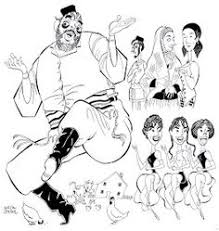
Chaim Topol – Who Played Tevye Fiddler on the Roof – Passes Away

I was born and raised in a small town in the Adirondacks called Mayfield. In elementary school, I was the only Jew in my class. When we sang in the school assembly in December, we sang several Christmas carols; but to make sure I didn’t feel like the odd one out, the teachers included two songs about Hannukah. All the students would look at me and smile as we sang. After an anti-semitic incident in junior high, I transferred to a nearby school, in Gloversville, New York where I went to Hebrew school and was bar-mitzvahed (in that school, I was one of three Jews in my grade).

Why do I mention any of this in a reflection on Chaim Topol?

Both of my parents and most of my family are Jews from New York City. But besides Annie Hall (1977), Mad Magazine, and Hebrew School classes after school that I barely focused on (save for the units on the Holocaust), I had little exposure to Jewishness as a child. The movie, Fiddler on the Roof (1971), however, was one of the most Jewish things I ever saw. It was even staged at one of my schools. The songs, the dancing, the story all intrigued me and made me feel ok about being an American Jew. My non-Jewish videographer included parts of the soundtrack in my Bar Mitzvah Video (at the beginning and end). It seemed to have brought me into an appreciation of “tradition” and life.

Later in life, after I was an undergrad, I found out for myself what Judaism was all about by going to Yeshiva and taking on a more observant lifestyle. Be that as it may, it was this film that gave me my first vague sense of what Jewishness I came from…in old Europe. I always wondered what life was like there, before the Holocaust.

I was intrigued with the Tevye character played so wonderfully by Chaim Topol. He was so full of life, so reflective, honest, and self-deprecating. Since Woody Allen’s and Mel Brooks’ films, as well as Mad Magazine, were my pop cultural guides to Jewishness, I always wondered how Tevye measured up. Was he a schlemiel like most characters in these films or caricatures in Mad?

We need to look at the original inspiration for the Broadway / Hollywood character by turning to Shalom Aleichem, who wrote these stories in the wake of pogroms and before the Holocaust.

Ruth Wisse, in The Schlemiel as Modern Hero, doesn’t think so. She contrasts Tevye to the character Menahem Mendel and sees Tevye as the embodiment of a schlemiel (who lacks insight into his condition) and his opposite (who does). Tevye, unlike the schlemiel character, experiences “ironic resignation” while also having an “elemental life instinct”:

I.L. Trunk distinguishes between these two heroes: Menahem Mendl, he says, is pure instinct. Unlike Tevye the Dairyman, he does not experience ironic resignation, or ironic faith: he ‘expresses the elemental life instinct which does not see its tragic perspectives.” But taken together, Menahem Mendl and his wife Sheyne Sheyndl, do create the ironic juxtapositions that Tevye expresses in his own person, allowing the reader to weigh the fierce optimism against a tragic perspective. Together they represent two extremes of faith and failure. (56)

For Sander Pinsker, in his book The Schlemiel as Metaphor, Tevye is a character who “best captures the tragic-comic sprit of the Diaspora”(32) when he says, “With God’s help I starved to death – I and my wife and children – three times a day, not counting supper”(32). Pinsker says – playing on Nietzsche in the Birth of Tragedy – that Tevye gives “tragic affirmation a new twist.”

For Pinsker, like Wisse, Tevye is a figure of faith:

With the world of the shtetl all but disintegrated and ‘modern children’ threatening to abandon its traditions entirely, Tevye not only continues to pattern his life on the Old Ways, but he also has a perfect faith that the Old Ways will somehow prevail. (36)

But he is a schlimazel because history ruins his life and his family. He loves them all, but he is the last person to preserve faith in the midst of rapid change. Aleichem wrote these tales before the Holocaust. That Europe is gone. But the spirit of Tevye, so beautifully embodied and preserved for the ages by Chaim Topol is with us.

What I loved about Chaim Topol’s performance of faith was how he embodied it through his acting. His joy and his tribulations, embodied through his “tragic affirmation,” gave me hope. One can be bold and Jewish in America, I thought, but how? Through theater? Literature? Film? A religious life?

To be sure, the film and the play are a part of what Sidrah DeKoven Ezrahi, in her book, Booking Passage: Exile and Homecoming in the Jewish Imagination, of a general post-WWII construction of a “virtual shtetl” – as we see with the popularity of I.B. Singer’s fiction, Irving Howe’s World of our Fathers, his Yiddish Anthology, new translations of Yiddish writers, etc – which emerged after the European shtetl and its Jewish culture were obliterated by the Nazis. For her, it is a form of nostalgia since that world is gone for good.

Be that as it may, the film and play touched the hearts of millions of people, Jews and non-Jews. Topol gave it new meaning and purpose. It is a past that means a lot to us insofar as we imagine it to be on the threshold of a rich Yiddish culture and an ancient faith that was challenged by history, pogroms, anti-semitism, etc. The point is to remain strong in the face of it all and to make a “tragic affirmation” of faith when it seems to have run its course.

Rest in peace, Chaim. Baruch Dayin Ha’emes.

You changed the world and gave us an embodiment of Jewish life, faith, and culture that inspired many Jews, like myself, to look deeper into their Jewishness.

An Excerpt from a New Piece: “TRASHED: GARBAGE, BARBARISM + SPECTACLE IN AMERICAN CULTURE”

I recently published a piece with White Rose Magazine on what I call “trash culture” entitled, “TRASHED: GARBAGE, BARBARISM + SPECTACLE IN AMERICAN CULTURE.”

It is a topic that deeply concerns me and should concern all of you. I enjoyed writing it and articulating what worries me about where America is going based on the proliferation of “trashing” and barbarism going down (24/7) in American culture.

Here is an excerpt:

Today, we are faced with—in ways Adorno could never imagine—accepting or rejecting the ideology of trash culture. When our culture is obsessed with trash and trashing, barbarism is not far away. By saying no to it, we look to stop barbarism and the destruction of all that is good in America.  

Saying no is an expression of what Susan Sontag would call the moral sensibility, and as Freud noted, saying no is the beginning of freedom. However, saying no doesn’t mean we are trashing someone or something. It is more a way of preserving that which is dignified in humanity. It is an ethical act of moral sensibility, which is now called for because culture is moving in the direction of sensibility and has short-circuited Adorno’s double band. To preserve human dignity, we need to say no to trash culture and no to the spectacle. 

Trashing + the Spectacle

Culture—to use a verb—trashes things constantly, and the trash it produces takes on meaning and instantly becomes beautiful, exciting, and entertaining.   

People love rants these days because of what they do. The bigger the rant and the scene of disruption, the more attractive it is; especially if the rant is obscene and trashy. On the other hand, one doesn’t even need to rant in order to trash culture.  One can just appear in a photo on Instagram and trash it.  

Trashing is a gesture, an ideological signal (if you will) to the society of the spectacle. But the unseen effect (as with any ingestion of garbage) on the users, keeps them from reflecting on what has been trashed and why.  For it to be effective, trashing calls for one’s full attention on the spectacle.

From streaming services to social media, we can see the various ways popular entertainment and this or that influencer trashes ethics, history, and memory. But here is the blind spot: the more they trash these things, the more barbaric we all become.  

Since culture misses this tragic blind spot, culture feigns reflection and acts as if it is moral.  

To be sure, for culture, reflection is more aesthetic and theatrical than actual.   

So when influencers go on social media feigning reflection and deep insight, they make people feel as if they are in on some kind of “truth” or “secret.” As if they are partaking in something that will make them better; people take in trash ideas as if they are participating in something larger than life.  

But the bad news is that this is all an illusion.  It’s an empty spectacle that got you to look and pay attention. Trash culture, as an ideology, seems to be working.

Sadly, this leads to barbarism.   

If the “secret” we are partaking in is based on the act of dissolving the moral fabric of our society and our sense of trust in each other, we will become more and more polarized and barbaric.    

American culture, in many ways, is moving closer to barbarism because culture makes us think that we are thinking or doing something good or meaningful, when all we are doing is destroying something for the sake of destroying it, or for the sake of thinking that in doing so we are truly “woke.”

That delusion—based on an act of violence—can only lead to hyper-partisanship and, ultimately, to increased violence. This ideology divides the world between the people who trash and the people who are trashed.  

When these are your only two options, what becomes of America?

American culture, in many ways, is moving closer to barbarism because culture makes us think that we are thinking or doing something good or meaningful, when all we are doing is destroying something for the sake of destroying it, or for the sake of thinking that in doing so we are truly “woke.”

Sadly, trashing, an act of violence—as we might see on a reality tv show or on the streets—is entertaining and even enjoyable to most people who love consuming it. Just go to TikTok or Instagram Reels to see what is most popular or trending. As the data will show, millions of people enjoy trash and the violent act and spectacle of trashing things.

As the master of Pop Culture, Andy Warhol notes in the Philosophy of Andy Warhol, “some people, even intelligent people, say violence is beautiful.” 

If violence is beautiful, people will want more of it. Trashing is a violent art form of sorts that sews the seeds of division and divisiveness and calls for more of the same.

Kanye’s cultural barbarism

Kanye West has great expertise in creating American culture through “creative destruction.” He has made billions of dollars on the spectacle. His most streamed songs—49 million streams a month on average—demonstrate the aesthetic of trashing.   

Kanye is popular with my children’s age group. While we have taught them about anti-Semitism and talk about it often enough in our house, our children didn’t seem to take it as seriously as we did. But what Kanye did changed all that.   

It was the first time that my children have talked to me and my wife about how they feel about anti-Semitism and how Kanye used it to cast hate and suspicion on us. How could Kanye say anti-Semitic things about me, my family, friends, and people, they wondered?  

We were all astonished. How can this happen again, and in North America?  

Why was Kanye trashing the Jews?

It is wild to think that even if 5 percent of his 50 million fans would stand with him until the end, that would be over one million people who harbor anti-Semitism. They would hear the “truth” he was spitting (even before he said he “liked” Hitler on the Alex Jones Show).    

Kanye told the world in several different media appearances that “the Jews” had some kind of nefarious drive—built into them at birth, in their genes—to swindle people and control the “black voice.” Kanye—in effect—trashed the Jewish people.  

Who wants to hear this garbage? Who wants to be trashed? Trashing a Jew is anti-Semitism. It is exactly what Hilter and the Nazis did in Germany.  

Trashing Jews has demonstrable historical consequences.   

Toxic garbage can get telegraphed to alienated and dangerous people who travel to places like the synagogue in Pittsburgh, leaving 11 dead, or the “targeted attack” in Jersey City of a Jewish grocery and children’s school, killing five. Toxic garbage like Kanye’s rant leads to the beating up of Jews in the streets of Brooklyn and Los Angeles.  

To be sure, the highest hate crimes in NYC are against Jews, not gays, Muslims, etc. There are consequences to publicly trashing Jews. If Kanye cared about history—as Adorno wishes we all did, after Auschwitz—he would be more reflective and ethical; he wouldn’t trash Jews.  

But Kanye, as a major arbiter of culture, wants to trash Jews in order to get attention to his empty spectacle, his claim to have the “truth” and to have revealed the “secret” of the Jews.

However, there is no secret. It is actually barbarism since it doesn’t see Jews as equals, so much as overlords; it contradicts democracy and calls for vengeance. 

Anti-Semitism is the detritus of old Europe, which trashed democracy and notions of equality under the law, made Judaism into its foil, and led, eventually (after countless exiles from countries and cities all over Europe), to the Holocaust.   

But it didn’t die with the Holocaust. When major influencers like Kanye trash Jews and give this hateful garbage an after-life, it lives on…in America.

As we saw with Kyrie Irving and Dave Chappelle, post-Kanye, anti-Semitic trash is becoming normalized. Trashing Jews has value. 

Kanye created this double bind in order to gain power.  

Any resistance to his anti-Semitism was seen—according to his anti-Semitic framing—as a testimony to the “fact” of Jewish power and its will to suppress “the truth,” the secret that Jews, apparently, want hidden: that Jews have all the power, and want to have revenge on the “goyim.” Jews want to enslave and have power over them.  

This paranoid description of what Jews are and what they think about suggests that me, my wife, and children, are dedicated to doing everything we can to control “them.”  

Each morning that’s what I apparently pray for. To be sure, this is the most ridiculous and trashy read on Jewish life imaginable. It seems lifted from a cheap novel. But that’s the point.  It’s a paranoid fantasy.   

All eyes were on Kanye before, during, and after he was deplatformed and became more extreme with his anti-Semitic pronouncements, ultimately saying, on the Alex Jones Show that “I really like Hitler.”

This stupidity, based on trashing Jews, is exactly where Hitler went after he instituted the Nuremberg Laws, stripping rights from anyone who has Jewish blood. Trashing Jews, today, may lead us down the same kind of path, the path of barbarism.

Dave Chappelle’s racism

In the wake of the anti-Semitism coming from Kanye, the Kyrie Irving tweet about From Hebrews to Negroes, a movie that is demonstrably anti-Semitic, and after a march in NYC to the Barclays Center of more than a thousand “Black Hebrew Israelites” (calling themselves “Kyrie’s Army”) saying, as they marched through the streets of Brooklyn, that they are the “real Jews,” we shockingly heard Dave Chappelle tell an SNL audience that Jews have to stop picking on blacks.

Chappelle also said that the Holocaust is behind us. I paused and thought to myself (because I thought he was a reflective and intelligent comedian) that he simply doesn’t understand the epochal implications of the Holocaust, not just for Jews but for the world.  

href=”https://www.youtube.com/watch?v=3YqD_Qeukko”>Dave Chappelle Roasts Kanye West, Jews & Makes Woke Culture Cry during SNL Monologue 2022

Moreover, Chappelle intentionally turned Kanye’s anti-Semitism and Kyrie’s tweet into something arbitrary and went so far as to equate anti-Semitism with free speech, that “the Jews” (the two words one can’t say or will be punished) won’t allow.   

Strangely enough, this is like saying racism is free speech and that Dave Chappelle and all black people should approve of it.  But that is something he would never say.  These double standards are troubling. They are the result of trashing Jews. It leads to more of the same action.  

Chappelle also turned a vulnerable moment for the American Jew—in which they had to defend themselves against rising anti-Semitism prompted by major influencers—into a racist attack.  False and libelous, but it also denotes a dangerous misunderstanding and should give us pause to understand how art and entertainment, through indifference to anti-Semitism and its implications (something that can be learned from the Holocaust Chappelle downplays in this act) can become vehicles for hate.  

Sadly, this kind of trash talk—by a major influencer in American culture—demonstrates what worried Theodor Adorno about culture after Auschwitz.  

Adorno feared that “post-Auschwitz culture” would not allow itself to be challenged by the enormity of the Holocaust and anti-Semitism. That since culture was “garbage,” it cannot refine itself and become reflective. Rather, as Adorno says, this trash—what I call the act of trashing—became “ideology.”   

To be sure, the cultural trash he worried about has to do with culture’s indifference to morality (or its fake espousal of it) in its celebration of entertainment and culture. This is an indifference to not just anti-Semitism but to all forms of excess and immorality. As I noted above, trash culture is concerned with aesthetics not ethics.   

Trashing the Jews, saying “I like Hitler,” or suggesting that Jews suppress free speech for fear of having their nefarious secret revealed, is theatrics. What anti-Semitism hates most—which happens, in America, to be the legacy of the Jewish people to modernity—is what Susan Sontag calls the “moral sensibility.”

On Sontag’s distinction between moral sensibility + camp sensibility 

But beauty and riches couldn’t have anything to do with how good you are, because think of all the beauties who get cancer.  And a lot of murderers are good looking, so that settles it.

Some people, even intelligent people, say that violence can be beautiful.  I can’t understand that, because beautiful is some moments, and for me those moments are never violent.

A new idea.

A new look.

A new sex.

A new pair of underwear.

Andy WarholThe Philosophy of Andy Warhol

In her famous essay, “Notes on Camp,” Susan Sontag equated modernity with a tension between the Jewish “moral sensibility” and the “camp sensibility.” As she notes, the camp sensibility is indifferent to morality and is dedicated to play, irony, and aesthetics. It has no moral limit. It defies them in the name of artistic and cultural freedom. 

“The experiences of Camp are based on the great discovery that the sensibility of high culture has no monopoly upon refinement. Camp asserts that good taste is not simply good taste; that there exists, in deed, a good taste in bad taste…. Camp taste supervenes upon good taste as a daring and witty hedonism.” (Susan Sontag Reader)

In terms of the tension, Sontag writes: “The two pioneering forces of modern sensibility are Jewish moral seriousness and homosexual aestheticism and irony…. Jewish liberalism is a gesture of self-legitimization. So is Camp taste, which definitely has something propagandistic about it. Needless to say, the propaganda operates in the opposite direction. The Jews pinned their hopes on integrating into modern society on promoting the moral sense. Homosexuals have pinned their integration into society on promoting the aesthetic sense. Camp is a solvent of morality. It neutralizes moral indignation, sponsors playfulness.” 

While Sontag wrote this in the late 1960s, one can see that it has much relevance now, in 2023.  To be sure, the camp sensibility is ascendent over the moral sensibility and dominates much of Hollywood, TV, social media, and the Internet. 

Nearly every major event in Hollywood will include camp to promote woke ideology (as Sontag notes, it is propagandistic and self-legitimating).   

Strangely enough, today, it seems as if the camp sensibility and the moral sensibility have joined forces. Hollywood wears the veneer of the “moral sensibility” in its obsession with diversity, equity, and inclusion, featuring the transgender darlings of the camp sensibility as its shock troops.  

But that morality play is all theatrics. It is the theater of grievances.

Much of the garbage we see today has a lot to do with this tension, which has been imported into most of our culture. For instance, as we saw with Chapelle, he has no qualms with accusing Jews of trying to silence the black artist (a complaint made by Kanye, in his anti-Semitic tirade) on the one hand; or, on the other hand, coming from the anti-Semitic alt-right, seeing Jews as behind the sexual degradations of Hollywood and American culture. 

Mayim Bialik on the Schlemiel

Once in a while, Mayim Bialik drops a Yiddish word and explains it. Today, the Yiddish word was schlemiel (and schlimazel).

Take note that Schlemiel Theory is the biggest repository of scholarship – literary, philosophical, and cultural – on the schlemiel (with over 400 essays/posts and over 6500 followers).

Here is a post I did on Mayim back in 2017.

Here is the Facebook Post.

Enjoy!

“Don’t Be Like Larry?” On the Schlemiel & the FTX Crypto Scam

In Larry David’s commercial promoting FTX Cryptocurrency that aired during the Superbowl, Larry David played the schlemiel character and script, which, to be sure, is his hallmark (whether in Curb Your Enthusiasm or in his writing for Seinfeld). In this commercial, David plays schlemiel characters throughout history who – in the span of one minute – all comically reject the introduction of inventions that changed civilization, such as the wheel, the fork, the toilet, the Declaration of Independence, the light bulb, the flight to the moon, etc. The punch line is at the end of the commercial where he rejects FTX’s crypto-app as a “safe way to get into crypto.” To which he says, “Naaaaah, I’m never wrong about this stuff, never.” The commercial ends with the words, “Don’t be like Larry.”

The irony here is that we should have listened to the schlemiel’s advice on this one. For once, the schlemiel was right and we were wrong. We were duped. FTX was a scam that was bigger than anything Bernie Madoff had done and, as we speak, it is piling up.

Larry David, along with many other celebrities (such as Tom Brady, the star quarterback of the Tampa Bay Buccaneers, basketball players Shaquille O’Neal and Stephen Curry) has been sued in a class action suit for promoting FTX.

To be sure, the irony of this commercial reminds me of one of the greatest schlemiel stories of all time, I.B. Singer’s “Gimpel the Fool.” In the story, everyone comes to dupe Gimpel, even the woman he marries who claims that the children born out of wedlock is really his. He trusts her because he loves her. In the end of the story, when she gets sick and on her death bed she confesses to him that she duped him:

“Before she died she called me to her bed and said, ‘Forgive me, Gimpel.’

I said, ‘What is there to forgive? You have been a good and faithful wife.’

“Woe, Gimpel!” she said. “It was ugly how I deceived you all these years. I want to go clean to my Maker, and so I have to tell you that the children are not yours.”

If I had been clouted on the head with a piece of wood it couldn’t have bewildered me more.

“Whose are they? I asked.

“I don’t know,” she said. “There was a lot…but they are not your.” And as she spoke she tossed her head to side, her eyes turned glassy, and it was all up with Elka. On her whitened lips there remained a smile.

I imagined that, dead as she was, she was saying, “I deceived Gimpel. That was the meaning of my brief life.”

It is not Gimpel who is at fault, it is Elka, it is all of the people in the city of Frampol who, like her, deceived him. The irony of this ad that Larry David did is that the schlemiel character is used to sell us on the idea that FTX crytpocurrency is like all of the inventions the schlemiel rejected, inventions that have, as we all know, made life better. It’s better that we don’t listen to the schlemiel and invest in FTX.

Now Larry David is being sued for duping us. Maybe we should have listened to the schlemiel. I.B. Singer’s point is that we can learn more about being good and moral from Gimpel than we can from the rest of the town and his wife who deceives him. We need to give the schlemiel back its good name and not use him (or her) to dupe others. In a way, it’s a an object lesson on the schlemiel and about how our society has gone off the rails.