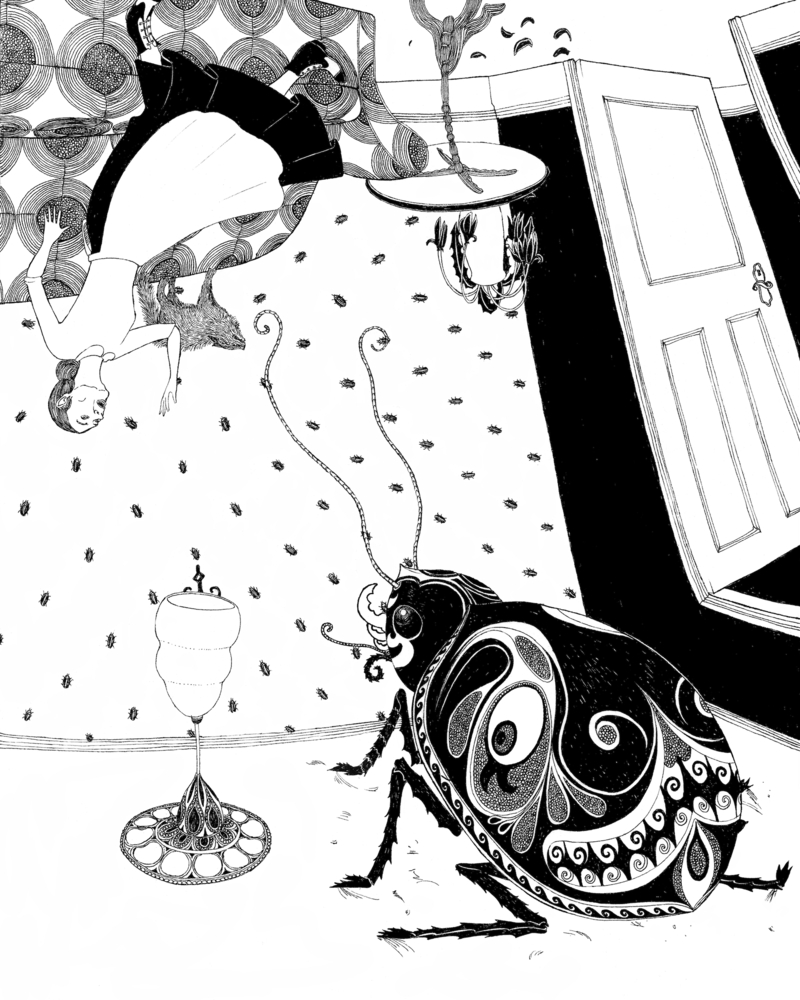
It’s either a huge compliment or a huge mistake to be invited so kindly to write a piece for this blog — and, more particularly, this series. Diving at the heart of what Kafka has to offer the universe is a noble pursuit, and the idea that I turned some of his stories into a picture book for kids either fits in perfectly or is way out of its depth.
Earlier this week, on this blog’s fabulous series of Kafka-related pieces, the Schlemiel wrote that “Kafka and Benjamin direct us to a more acute sense of the ‘how’ of their work rather than the ‘what.'” When you read Kafka, whether you’re an academic or not, and whether you’re a kid or not, it’s pretty impossible not to look for deeper themes and connections, some meaning beyond the apparent text and, well, thestory of the story. At some point in every Kafka piece, there’s a moment where you pull back* and realize that maybe there are deeper things going on than just the plot, the characters, the events in motion. Is Gregor Samsa a disgrace to his family because he’s a giant vermin, or because he’s a hopelessly single middle-manager? Are The Castle’s K. and The Trial’s Josef merely physically lost, or is there a deeper existential lost-ness?
We’ve been conditioned not to ask these questions, not because they’re obvious (although they certainly are) but because the nature of the question disspells everything we’ve been taught to believe in about stories. Stories are spells, and in them the interior and exterior are fused together, from the sublime to the ridiculous; it’s taken for granted in what we think of today as “serious” literature, but it’s no less true in popular literature. In Twilight, Bella is drawn to a dark, sulking guy because he makes his solitude and broodiness into something supernatural and magical, something she wishes it would be for herself (spoiler: it happens! She becomes a vampire too). In Dan Brown’s books, “symbologist” Robert Langdon is solving literal puzzles and infiltrating secret orders, but he’s also ostensibly engaged in a quest for self-definition, simultaneously attempting to impress whatever vaguely international love interest pops up as well as the naysayers who are, essentially, always asking, what is a symbologist?
So now that I’ve offended basically everyone who’s ever liked Kafka by comparing him to two of the most vapid, flaccid characters in modern fiction (both of which I think are reasonably good books, taken at their own merits), let me dig the knife in a little deeper by suggesting that, if we’re going to set up some sort of objective comparison, Kafka’s stories are more fundamentally poppy than both. Part of what draws us to Kafka, I think, is that there’s no distinction between signifier and signified, barely a set of cultural constructs that we need to understand, barely any references beyond the words themselves. A lot of the time, all we need to understand Kafka’s writing is a rudimentary understanding of the language.
None of which is actually true. The qualities about which he writes, loneliness and isolation and the fundamental meaninglessness, or our inability to find meaning in our lives, are the very stuff that our lives our made of. The other day someone asked me about my My First Kafka book, and, when I explained, he said, “Kafka? You mean, the philosopher?” Maybe once you pare human experience down to a labelless blob of emotions and motivations, as Kafka does, you switch from stories to philosophy. Or maybe at heart all our greatest philosophy are just stories. And that’s why, in the end, kids understand them so much better than the rest of us.
______________
* that is, if you’re me
(In addition to My First Kafka, Matthue Roth is the author of several works of fiction: Never Mind the Goldbergs,Yom Kippur A Go-Go, Candy in Action, Losers, and Automatic. Check out his blog for more:http://www.matthue.com/p/my-first-kafka.html)
In preparation for a series of blog entries that I will be doing on Walter Benjamin, Kafka, and Comic Gesture, I’ve been pursuing research on humorous gestures. In yesterday’s post, for instance, I pointed out that Franz Kafka and Walter Benjamin were both fascinated (and afflicted by) “childish” and “clumsy scribblings.” The fact is that they both write about this gesture and consider it to be of the utmost importance. But what does it mean that they admit to these gestures and “own up” to them? Have they taken on a tradition which starts with Don Quixote or with a tradition that starts with the end of prophesy – as I have suggested in the past?
Bearing mention of these comic gestures, Kafka and Benjamin direct us to a more acute sense of the “how” of their work rather than the “what.” Their reading of these “childish scribblings,” their identification with them, is instructive. Teetering between the gestures of an adult and a child, gesturing like schlemiels, they show us a wholly other side of their work and expose us to a sense of comic historicity.
But it’s not just the singular gestures – the childish and clumsy scribblings that they write of and identify with –that I’m interested in. I’m interested in how these comic gestures relate to or spur others and how they are shared.
What kinds of relationships do schlemiels create by virtue of their gestures; that is, by virtue of their clumsy childish scribblings?
In the last blog, I suggested that these scribblings are related to the temple (the Holy) on the one hand, and the future on the other. In other words, although they are ruinous of the holy, they, at the same time, open up a circuit in relation to the future and another kind of otherness which comes to the fore in the wake of the sacred’s departure. And here, I would add, it opens up, additionally, a circuit with other people.
How, in fact, does a comic gesture create a relationship to the future, otherness, and others?
One of the most interesting things I find about many of my favorite comedians is that they often don’t laugh or even smile at the audience. They may spur laughter through their gestures, but they often don’t smile or grin. The audience does. They see all of us laughing for the better or the worse. This gestural relationship is intriguing as it creates a community based on ridicule and difference.
The comedian wants to spur laughter; however, they don’t want to be laughed at. Laughter, as it were, can create relief or pain. And the difference between the two is prepositional: the difference between laughing “with” and laughing “at.”
However, today, some comedians want to be laughed “at” and to laugh “with” others “at” themselves. This complex form of self-ridicule can be seen in comedians like Larry David, Louis CK, Marc Maron, and Andy Kaufmann, to name only a few. What makes these comedians unique is that they laugh at those who laugh at them while at the same time laughing at themselves. They laugh “with” others, “at” themselves, and “at” the audience. The schlemiel, to be sure, is oftentimes laughed at. But he or she doesn’t get it or, if he or she does, just moves on. That’s the trick.
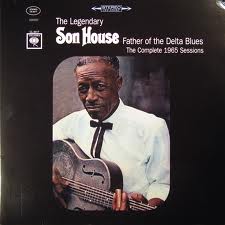
However, in reality, no one can just be laughed at and go on unscathed. While researching gesture, I came across this video by Son House, the legendary Blues Musician and Preacher. In this video, he gives solace to those who have been scathed by the quintessential comic gesture: the grin.
Son House’s advice, throughout the song, is not to “mind people grinning in your face.” The way to get through people grinning “in” (or “at”) your face, sings Son House, is to turn to keep in mind that “a true friend is hard to find. This implies that people you thought were your friends are really not. The gesture of their betrayal is the “grin.” True friends won’t grin at you.
Seen from the perspective of a schlemiel like Gimpel or Motl, what does this mean? It would imply that they have no true friends. But that doesn’t keep them from trusting people. The comedy of the schlemiel is inherent in the fact that they still do trust people. It is the viewer, however, who might have the problem. The viewer is the one who might become cynical. Unlike Gimpel, he or she knows what its like to be laughed at.
Son House’s song speaks to them. It is a gestural response to being ridiculed. It is a response to the grin. The song actually addresses the wound a comic gesture may inflict on a person. His song, in this sense, is “universal” in scope insofar as everyone – at some time in his or her life – has been laughed at by people he or she thought were friends.
So, on the one hand we have the schlemiel, whose comedy exposes us to a ridicule that he or she cannot recognize; on the other hand, we have the viewer who does recognize this ridicule. On the one hand we have comedy; on the other hand, we have the comic blues. Both are sides of the same coin. And on the coin we find one thing: the grin.
Kafka noted the relationship of the grin to truth his December 11th entry in the his Third Octavio Notebook:
Our art is a way of being dazzled by truth: the light of the grotesquely grimacing retreating face is true, and nothing else.
For Kafka, the truth is not simply in the grinning face. It is in the movement of the grimacing face; it can be found in the retreat of a “grotesquely grimacing (grinning) face.” The fact that Kafka notes the retreat rather than the approach of the grimacing face is telling. It indicates that Kafka sees truth in the wake of ridicule.
We hear this in Son House’s song. He sings it to those who the grin has touched. We also hear it both Kakfa and Benjamin’s mediations on the “scribblings of children” which embody the grotesque grin. Kafka seems to be telling us that our truth, the truth of who we are, can be found in the withdrawal of ridicule.
This implies that the comedian who sees the audience grinning back at him or her has the best view of truth. This relationship, I would aver, is not a once in a lifetime thing. Kafka suggests that this gesture of comic withdrawal happens repeatedly.
This gesture has a lot in common with a childish scribble; however, the only difference is that a scribble remains inscribed while the grin comes and goes. Nonetheless, perhaps like Derrida, we can imagine the scribble as a trace which, in its iterability, is caught up in endless repetition…constantly ridiculing the totality of the text in withdrawing the text from itself. Perhaps the text, in this sense of being childish, comes and goes?
Regardless, Kafka understood that the relationship to the truth, which he associated with God, can only be related to comically…in the withdrawal of the grin or in the wake of “childish scribbles.”
On the other hand, a Preacher named Son House advises us “don’t mind people grinning in your face.” The purpose of this line is to give solace to the believer who, in his or her search for God and justice, will have to face ridicule. The question, for Son House, is what to think and how to cope with this ridicule. The question, for Kafka, deals with the meaning of ridicule as it retreats and leaves us powerless and weak.
Nonetheless, both of them see truth in the withdrawing face of laughter (in the wake of laughter). And perhaps this is a new, comic tradition, which emerges in the wake of God’s withdrawal or, as Kafka might say, in the wake of a withdrawing grin….
One of the most “Greek” moments of Martin Heidegger’s celebrated essay “The Origin of the Work of Art” can be found in his description of the “temple work.” Heidegger depicts the temple as “giving things their look” and “men their outlook.” The temple “lets the god himself be present and thus is the god himself.”
The temple gathers everything together into itself and creates a “holy precinct”:
It is the temple work that first fits together and at the same time gathers around itself the unity of those paths and relations in which birth and death, disaster and blessing, victory and disgrace, endurance and decline acquire the shape of destiny for human being.
Besides being the ground for the “shape of destiny for human being,” Heidegger says that the temple is the condition for the possibility of a nation’s “return to itself” and the only basis for the “fulfillment of its vocation.”
The all-governing expanse of this open relational context is the world of this historical people. Only from and in this expanse does the nation first return to itself for the fulfillment of its vocation.
Through the temple, the earth becomes the earth, the sky the sky, the gods the gods, and, most importantly for Heidegger, a nation a nation. Because it does all of this, the temple is the ultimate work of art. It delineates, as Heidegger says, the holy from the unholy.
Kafka, in contrast to Heidegger, has a different story to tell about the temple. In a parable entitled “The Building of the Temple,” Kafka depicts a temple whose holiness is tainted (or rather marked) by the “clumsy scribblings of senseless children’s hands.” Before we look into the meaning of this kind of marking, we need to make a close reading of how Kafka depicts the temple as such.
Kafka begins his parable by talking about the builder of the Temple – the artist – who he depicts as a kind of magician. The world literally goes to him as if it were waiting all its life to be “put to work” in the name of holiness.
Everything came to his aid during the construction work. Foreign workers brought the marble blocks, trimmed and fitted to one another. The stones rose and placed themselves according to the gauging motions of his fingers. No building ever came into being as easily as did this temple – or rather, this temple came into being the way a temple should.
By saying that it came into being “the way a temple should,” Kafka’s narrator implies that temples should, in a Heideggarian sense, “come together” in the “temple work” and preserve the “truth.” Heidegger would not disagree with this; although his description differs, he would agree with the spirit of Kafka’s initial description of the temple work.
Knowing full well that this description of the temple is too Greek and too Holy, Kafka ruins it by way of introducing “instruments…magnificent sharpness” and their “senseless scribblings.”
Except that, to wreak a spite or to desecrate or destroy it completely, instruments obviously of a magnificent sharpness had been used to scratch on every stone…for an eternity outlasting the temple, the clumsy scribblings of senseless children’s hands, or rather the entries of barbaric mountain dwellers.
Heidegger notes that sometimes the god’s leave the temple for historical reasons and what remains behind, quite simply, are ruins. No holiness or unholiness remains. But, for Kafka, what remains are the “clumsy scribblings of senseless children’s hands.” The desecration of the temple by such scribblings remains.
But there are many questions that arise out of this parable which have yet to be answered. Who used these instruments and why should their mark outlast the temple? Does this survival make the “clumsy scribblings of senseless children’s hands” more significant?
The fact of the matter is that, for Kafka, the only thing that remains of the temple are “childish” gestures – what he calls scribblings (which make us think of hands). And, as Walter Benjamin notes of Kafka, we should read his work by was of a close attention gesture.
Regarding gesture, we notice that in the first part of the parable the gesture of “his fingers” (their slight movement) is in harmony with the act of building the perfect temple. These are gestures of a mature and responsible adult who is passionately committed to the holy. One can imagine that such an artist would arduously be at work building Heidegger’s temple.
Thinking by way of gesture, Kafka understood that the greatest offense to the adult nature of the holy is the gesture of a child. As he notes, the gesture of the child is “clumsy” and “senseless.” To add to the contrast, Kafka notes that this gesture comes from their hands as opposed to “his” fingers.
The gesture of children’s clumsy hands finds an echo in Walter Benjamin’s “Vestibule” aphorism which I have written many blogs on. As I noted in these entries, Benjamin saw the image of himself in Goethe’s house (and it wouldn’t be off to call it a temple) ruined by childish writing. He didn’t write his name; someone else did. He didn’t bring his ruin on; someone else did. Nonethless, he is marked by this “childish scribbling.”
To be sure, it is a child’s scribblings which, for both Benjamin and Kafka, ruins holiness. For Benjamin, his discovery of this scribbling is the discovery of himself as a schlemiel. His destiny is bound to this childish kind of writing and he is well aware of the fact that it clashes with the holiness of Goethe’s temple. Kafka is also aware that this writing marks the temple and ruins it; he is aware that he is the one who must relay this message to us. Even though he is not the one who perpetrated the writing, he reports on it. It is, so to speak, his awareness of the schlemiel and his ways that he reports. The schlemiel – regardless of his good intent – has a way of ruining perfection. The schlemiel’s actions (gestures) are clumsy and senseless scribblings. And, in many novels and in Hasidic stories, perfection is ruined in the name of something to come. Ruining the temple, the Greek one, is not simply an act of rebellion or ridicule. It is preparatory and it opens up the most foolish thing of all: hope.
Citing Kafka’s aphorism, Maurice Blanchot – in his essay “Kafka and Literature” – ends his essay with the claim that “art is like the temple of which the Aphorisms speaks.” Blanchot explains the meaning of this claim by likening art to a place of where opposites dwell together:
Art is the place of anxiety and complacency, of dissatisfaction and security. It has a name: self-destruction, infinite disintegration. And another name: happiness, eternity.
The problem with Blanchot’s reading of the parable is that, like Heinz Politzer, it leaves out the comic aspect of this parable and prefers, instead, a generalization about opposites dwelling in the same place. He prefers the paradox as such.
Rather than simply see the paradox, which is of course relevant, I’d suggest we see the children’s senseless scribbling as something that both Benjamin and Kafka thought of as standing in the way between themselves and holiness. They both desire the holy, but, unlike Heidegger, they both understand that no matter what they do they will always slip into the childish gestures of the schlemiel. They see themselves by way of this predicament and know that it will be an endless embarrassment. Yet, as I mentioned above, they saw such ruination as opening to something other, something to come.
Heidegger, on the other hand, seems to believe that perfect temples could still be made and that the destiny of nations could be predicated by such a free-standing structure. For Kafka and Benjamin, one can’t think of the temple without thinking of the schlemiel and his childish, senseless scribbling.
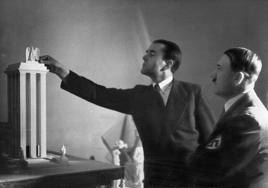
The schlemiel’s writing is written on the temple wall. Kafka could see it. Too bad Martin Heidegger and Albert Speer couldn’t….
At the outset of his book Franz Kafka: Parable and Paradox, Heinz Politzer cites a Kafka manuscript piece which Max Brod, in 1936, published under the title “Give it Up!” Politzer points out that Kafka didn’t give it this title; Brod did. In fact, Kafka called it “A Commentary.” Politzer uses this parable as the best illustration of his claims that Kafka’s parables are paradoxical. Politzer’s reading is very insightful. It brings up aspects of the parable that touch on the ridiculous and simple character of the “I “(who he calls a “wanderer”). This character, to be sure, approximates the schlemiel.
Although Politzer notes the “wanderer’s” ridiculous character, he moves on to entertain other possibilities. I would like to suggest that instead of ranking this as one amongst many possibilities, it be marked as one of the most important: since the ridiculous nature of this character accentuates the central role of the foolish simpleton in Kafka’s work. And this is something that has oftentimes been overlooked whether in the name of Maurice Blanchot’s reading of Kafka or Politzer’s (which focus on much more “serious” topics such as “paradox,” “the incessant,” and the “works demand”). They would regard such elements as, to use Poltizer’s term, “juvenile.” Seeking deeper meaning or a meaning that stresses ambiguity as such, they leave aside the simple, comic elements that inform many of Kafka’s parables. But, at the very least, Politzer’s notes them.
Here’s the Kafka parable that Politzer addresses:
It was very early in the morning, the streets were clean and deserted, I was on my way to the railroad station. As I compared the tower clock with my watch I realized it was already much later that I had thought, I had to hurry, the shock of this discovery made me feel uncertain of the way, I was not very well acquainted with the town as yet, fortunately there was a policeman nearby, I ran to him and breathlessly asked him the way. He smiled and said: ‘From me you want to learn the way? ‘Yes,’ I said, ‘since I cannot find it myself.’ ‘Give it up, give up,’ said he, and turned away with a great sweep, like someone who wants to be alone with his laughter.
Immediately after translating the parable from the German, Politzer notes several multivalent aspects. First, he points out that this parable is a narrative and it states a “negative truth”: “It’s a narrative and a statement of truth, although a negative one.” In addition, it provides “lyrical impressions” and “dramatic dialogue” which, in the end, are resolved by a “silent gesture” in the end.
Politzer, at this point, withholds the “negative truth” and, as for the gesture, what does it mean that Kafka, on the contrary, doesn’t associate it with silence so much as “someone who wants to be alone with his laughter?”
We’ll turn back to the “negative truth” in a moment; but before we do, I’d like to figure out why or how Kafka can conclude his parable with this gesture of turning away and laughter. Strangely enough, although it is not his intention, Politzer’s description of the “wanderer” gives some clues.
Politzer notes that the character is “shy” and that his words are “monosyllabic.” They are closer to English than they are to German. In other words, Kafka is appealing to the talk of someone who is a country bumpkin of sorts, a simpleton.
Politzer points out that wanderer is ridiculed by the Shutzman (the policeman). His role, according to Politzer, is to be two-faced and scandalous. His role is to “protect the man from whom he seems to be waiting.” And his smile takes on an “ominous” meaning “by the words which the policeman adds to it”; the smile is “false or ambiguous”(5). If this is the case, then the information he gives him (even the command) is clearly deceptive. Writing about the reader’s response, Politzer notes that
The discomfort that the change intends to convey arises in the reader only gradually. Some time is needed to realize the strangeness of this information giver who answers a question with a counter-question: ‘From me you want to learn the way?’ (5)
Moreover, Politzer tells us that we can’t miss the “undertone of arrogance and indignation in the worlds of the policeman who puts himself first in his question.”
Politzer cites the German that is used to address the wanderer as proof that the policeman is scoffing at the wanderer. He talks to him like a child: “He talks to him as one talks to an infant”(7). In other words, he regards the wanderer as a man-child (a schlemiel).
And the basis of this, Politzer hints, is a negative attitude toward religion. Noting the condescension of the policeman, Politzer translates the “it” of the words “Give it up!” in terms of the main characters “wanderings,” and his “haste.” However, the policeman doesn’t speak from the position of patience since, Politzer tells us, he doesn’t invite the wanderer to take his time and “linger” in the city.
Politzer argues that “Give it up!” can be translated as a commandment for the wanderer to give up on the journey towards God: “The policeman seems to be saying, ‘let all hope go, abandon the way and the desire to find it, give up your quest and your yearning, your very existence – yourself!’” (7).
Although the reader will catch on to this arrogant command which “infantilizes” the wanderer’s religious quest, Politzer argues that the reader will most likely take the side of the policeman: “The wanderer appears ludicrous to the reader, the official petty, pompous, and awe inspiring”(8). However, Kafka doesn’t take sides. He “doesn’t decide for any one of the conflicting points of view. Instead he forces the reader to change continuously from one to another”(8).
Instead of hearing “Give it up!” as a command, Politzer suggests that we also hear it as a question. He calls this ambiguity Kafka’s “evasiveness.” Unfortunately, Politzer doesn’t look into the meaning of wandering between the two positions which would essentially mean moving between the schlemiel, who has lost his sense of time and endlessly wanders in search of the truth, as opposed to the policeman who sees such a search, with all of its religious overtones as “infantile” in a negative way.
Kafka is interested in both. Is Kafka the wanderer, then? Politzer argues that we may be “tempted” to say that he is; however, “the man in our story may be an image rather than a more or less true likeness of the author”(17). He may only be a “code cipher” conveying “indecipherable messages.”
Regardless of such an esoteric reading, which eschews the biographical reading, both are possible. In fact, Politzer argues that there is even more possible “background” to this story and even suggests that we take Eric Auerbach’s claim, in his book Mimesis: The Representation of Reality in Western Liteature, seriously; namely, that there are two “styles” of writing: one Greek (founded in Homer) and the other the Jewish (Elohist of the Bible). The latter makes all clear while the latter states details but leaves countless gaps or lacunae. Kafka, he argues, is certainly influenced by the Elohist as his parables are “fraught with background” and lacunae.
However, the Jewish influence is not the only one; in fact, says, Polizer, it is in a tension with the view that finds no certainty in faith. To be sure, Abraham was faithful but “Kafka’s man,” on the other hand,” consists of a darkness symbolizing the complete absence of such certainty”(19).
Given all of these paradoxes, Politzer notes that Kafka won’t say he rejects faith or affirms the opposite. And that’s the point for Politzer. The crux of the matter is that Kafka states problems. And unlike the Biblical model, Politzer claims that Kafka gives “so many interpretations” that they “defy any and all.” In other words, Kafka’s parables present and then efface the possible meaning of a paradox. Its as if Politzer says that Kafka over-interpreted so as to destroy the meaning of interpretation.
I think that Politzer is on to something here that echoes what deconstruction would say twenty years after he wrote his book on Kafka. But the problem with all this is that Politzer’s reading is too generalized.
In the process of making this claim, we miss the central problem which, in this parable, is not effaced by too many possible meanings. Rather, I’d suggest that the position of the ridiculed simpleton who is looking for truth is something very close to Kafka. Politzer is correct in saying that we move back and forth between the positions but Kafka did this because he saw something deeply important about the schlemiel and his relationship with this character.
The interesting thing is that, as in much schlemiel literature, Kafka’s piece points out the bifurcation between the fool from the country who trusts everyone (even the police) and those who lie or scoff at him (like the policeman). His laugh, at the end of the story, is a negative one. Note that he laughs alone. And to do this, he turns away. He, so to speak, preaches a conversion (a turn) of sorts away from hope and wandering. What we are left with is the option provided by modern society which comes across as ridicule. In a negative sense, don’t be a schlemiel. On other hand, Kafka is advising us that the schlemiel is not in the wrong. When the schlemiel loses his sense of time and fears he may miss his encounter (perhaps with God or truth), these fears disclose something Kafka though of with regard to Abraham.
As with all of Kafka’s Abrahams, there is always something missing which keeps them from being, so to speak, “on time.” Yet, at the same time, Kafka wonders: why would anyone want to be on time for a command that may, in fact, be misapprehended. Why would anyone want to wander around for that? Yet, and this is the point, people still do.
And this brings us back to Walter Benjamin’s insight that only a fool can help; however, his help may not do humanity any good. Both thoughts illustrate how a reader may identify with the foolish wanderer, but, in the end, may think of him to be wasting his time. Benjamin, like Kafka, simply pondered the point. And he took on both positions. He also had a hard time deciding. But he didn’t have too many interpretations. Benjamin, before he died, understood that, in the midst of crisis, there were only two possibilities before him.
He wasn’t ready to play the role of Kafka’s policeman. Not yet. Walter Benjamin couldn’t completely ridicule the fool. And that is telling….
I missed my friend’s funeral. But I did have time to meet up with my friends after the funeral at two different bars in my hometown in Upstate New York. After teaching my summer course in Existentialism, Art, and Culture, I traveled in from Toronto. As I drove down, I reflected on how my friend Aaron was a larger than life person; he was a cross between Chewbacca and an upstate New Yorker who liked to hunt, fish, drink, and play football. His laugh was unique and unmistakable. And his warm, large, and humble presence was unmistakably delightful to be around. He was, as we say in Yiddish, a mensch who would always lend a helping hand.
His death was untimely; it took us all by surprise. Being taken by surprise, we were all left absent minded. In fact, one of things I couldn’t help but noticing is how we had, as Adam Kotsko says in his book Awkwardness, no norm that could help us to deal with his passing.
So, in the absence of any publicly known practice of mourning, what did we do? What happens when religion is not a common bond?
Before leaving Toronto, I noticed that one of my friends, who was in attendance of the funeral I missed, declared on facebook that he was avowedly an atheist. When I arrived at the after-party, I was surprised to hear that the father of my friend who died talked at great length to this person and at least fifty others (who didn’t have a strong religious orientation) about God. He declared, openly, that we was “born again” and that they should be too. He chastised them for being sinners. Apparently, from what I was told, he said nothing about his son and everything about sin, Jesus, and his rebirth. He did this for at least forty minutes. And, following him, there were two Evangelicals who did much the same. Shouting Jesus and salvation at everyone.
My friend who posted his atheism on facebook apparently had enough and, at the point of bursting, he confronted the father. But before anything could break out, another friend intervened, took the microphone from the father, and spoke about our common friend.
When I arrived at the party, I heard all of this. I spoke with many friends and, strangely enough, while I was talking at length with one of my friends, I wasn’t aware that the others had gone on to another bar to continue the after-party. Once I noticed that everyone was gone, I looked up and saw that me, the friend I was talking with, and my friend’s father were the only people left at the bar (besides the bartender and a few locals).
When we got up to go, the father asked us to help him put the food from the funeral after-party into his car. Although he claimed he hadn’t been drinking, he seemed to be very drunk. I asked my friend if he was ok, and he told me that “that’s just the way the father is.” I was astonished by his sheer absent-mindedness. I felt as if he was performing a comedy routine or some kind of performance for all of us. He would shuffle back and forth to the refrigerator, scream at it, ask us to get things, and then go back to his car which was blaring with Christian music. He repeated this routine although we insisted everything was in his car. Its as if he had to prolong some kind of performance for us.
I felt very awkward carrying food which he cooked but no one ate. To be sure, he had cooked large pots of macaroni that were untouched. Another friend of mine made sauce, but he missed the funeral and the after-party. It was ‘as if’ the missed encounters found their emblem in a large amount of wasted food.
Everybody seemed to be missing their cues. Since he was acting so much, I decided to play around with this situation. I wanted to test it out. So I would say, in a loud voice, that this item was his and this wasn’t; the haggling over items lasted a while. But I didn’t want to continue this game which seemed would go on ad infinitum. I managed to slip out with my friend to the other bar.
At the bar, I was pulled to the side and asked by a friend if I have anything comparable in the Jewish tradition to being born again. Then he told me that my friend’s father was more “crazy” than my own. In truth, my father was known to have done some odd things in my small town. News travels fast; and as a child I remember how these things caused me great pain and embarrassment. Mentioning them reminded me of how I would feel estranged about my father’s “ridiculous” behavior. It all came back now with these comments, but my other friend told me that this guy, basically, was a bigger schlemiel. All of this took me by surprise. Was I supposed to feel better about my father and my life and to think that I must be fine now that I know someone else is a bigger fool than my father was?
I didn’t know what to say. Although he tried to make me feel better by thinking that this guy is worse, I felt great sympathy for my friend’s father when I saw, all of a sudden, the father show up at the bar. He literally showed up in the midst of our conversation.
I watched the father go in the bar, I talked to him about Aaron, and he produced a few gestures that his son would make about a calendar, which he took out of us car to show us. He told me that he wanted to give his son this calendar with scantily clad women in front of sports cars. I couldn’t understand why or even how this would be on the mind of a father who has lost a son. It didn’t make sense. But, at the very least, it made him happy to think of what his son’s reaction to the calendar would be.
In the midst of my astonishment at these absent-minded comments, I was asked by a friend to go on stage and perform a tune with him. My friend was familiar with a few tunes I have written and thought it would be a proper tribute to our friend.
After tuning up and readying myself to play, I announced that every song I was singing was dedicated to my friend. While saying this, I thought to myself how transitory and arbitrary this tribute is. But I cast aside this thought. It had to be done. I had no ritual to participate in save…doing what I enjoy doing in the name of a friend who has passed away in such an untimely manner.
The father sat and watched as I played, but I’m not sure if it reached him. And I’m not sure what difference I made.
I felt as if I was in a bar with a bunch of people who had some connection to our friend who had died, but the eulogy, the party, and all else seemed to be ad hoc. We had no norms to guide us. We had no religion. And though the father did, it was disconnected from us. Something was profoundly wrong.
Regardless of this, my friend told me that our dead friend would be happy knowing that I played a tune for him at a bar. That is what he would want. A party not a Eulogy about being born-again.
After hearing this, I looked around and it struck me that my whole town was taken surprise by a world that was stripped away from us by a bad economy. The city I played in, Gloversville, New York, has the highest unemployment rate in New York State (25 %). It used to be a great hub for the production and distribution of gloves and leather. When I was growing up, I could smell leather in the streets. Money was abundant; people were at work. And as they say, the bars were packed after work. There was happy hour every day.
But, before we knew it, that disappeared. We were hit, taken by surprise. We had no norm to guide is post-mortem and could not mourn our loss.
All of this was awkward. And this after-party, the father, my song, all of it happened in the midst of a time and space that was awry. It was a distinctly American awkwardness that followed in the wake of a lost American dream. It infected everything in the town with questions upon questions such as: What happened? What can we do now? How do we act? How can we live in this world? But these questions were all beneath the surface and, from to time, came up in conversation.
The problem, last night, was that any decisions made out of this awkwardness seemed, to my mind, to make no difference for things in general. But, ultimately, my schlemielkeit (my public performance) meant something to a small group of friends while the schlemielkiet of others spun off into nothingness. And that’s what I saw with the father.
As he drove off, alone, from the bar, I felt so sad knowing that his awkwardness was translated into something that made people ridicule him. He drove off alone into the American night. But he was not born-again. It seems, from what I had seen and heard, that he was doing the same thing he always did.
In the end, after this death, we became living schlemiels and we all went home alone in an awkward absent-minded manner. Even though we tried, there seemed to be no way to dispel this and become conscious. In the face of his untimely passing, we had no norm.
However, after leaving the bar, I went to a friends house were me and a few friends played music, sang, and debriefed. And, fortunately, I entered into a conversation where someone was asking the same questions I was. And together we acknowledged that we were all schlemiels and we talked until the dawn about what this means for the future. How would this effect our children? What can we give them if we have no common norms?
And then it struck me. Where did our parents go? Where did my friend’s father go? Off into the American night… And now, when I look around at myself and my friends, it strikes me that we all seem to be post-mortem schlemiels. But, as Beckett might say, “I can’t go on, I must go on.”
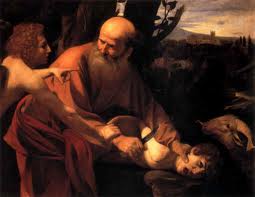
By way of a comic narrator, Kafka’s readings of Abraham and his creation of “other Abrahams” are educational: they teach us how the other Abrahams are. I would suggest that, for Kafka, his Abrahams are schlemiels who, while acknowledging Kierkegaard’s Passionate Knight of Faith, also offer a challenge to it. Instead of passion and concentration they also offer us inertia and absent-mindedness. Kafka’s close descriptions of Abraham and these “other Abrahams” offer us something like a phenomenology of the schlemiel-as-prophet. After all, Abraham is a prophet just as much as Moses is; however, as Maimonides notes, his prophesy is weaker because it is oftentimes mediated by the imagination.
In the first of his “other Abrahams,” Kafka sets the tone for his entire piece. His descriptions of him offer us foolish wisdom:
Abraham’s spiritual poverty and the inertia of this poverty are an asset, they make concentration easier for him, or, even more, they are concentration already.
Attention, as Benjamin says regarding Kafka, is the “silent prayer of the soul.” So is humility, which Kafka took as the greatest means to peace (as we pointed out in another blog entry). Spiritual poverty goes hand-in-hand with humility and, for Kafka, it leads to a kind of slowness (what he calls “inertia”). And, apparently, humility and slowness are not things one can use to concentrate better; they are concentration. In other words, Abraham’s humility, his spiritual poverty, is concentration. To make such a claim is to affirm some kind of pathos. But, immediately after stating this, Kafka decides to offset this pathos and inserts a joke (which every critic I have read has, unfortunately, missed):
By this, however, he loses the advantage of applying the powers of concentration.
The punch line is that he, the narrator, and not Abraham can’t concentrate or understand the value of being concentration instead of using it. The voice of this piece, the narrator, is a schlemiel. Kafka seems to be telling us that the schlemiel’s job is to acknowledge pathos and inertia but, at the same time, not recognize it. Pathos is tainted by distraction – something the schlemiel knows well.
The schlemiel is the “other Abraham” while Abraham is the “knight of faith.”
Its not that the narrator is an anti-hero so much as an almost-hero. To be sure, this absent-minded joke about Abraham and his “spiritual poverty” resonate throughout Kafka’s Abrahams.
The next Abraham addresses Abraham’s relationship to the world. The narrator criticizes him by saying that this Abraham falls prey to “the illusion” of not seeing the world as something uniform. By calling it an illusion, Kafka is being highly ironic. For Kafka, on the contrary, this is not an illusion. Yet, for the other Abraham it is. This is obviously ridiculous. And that is what a schlemiel is or does: he makes ridiculous claims. They are ridiculous in relation to Kierkegaard’s Abraham, the knight of faith, who, of course, is sickened by the uniformity of the world. Kierkegaard is preponderant in this regard; the Knight of Faith is obsessed with “the individual” and being “singled out.” And Abraham, for Kierkegaard, is the penultimate example of uniquesness. But the voice in this piece says something ridiculous which misinterprets this, once again. Or, rather, it doesn’t recognize pathos.
Regarding the next Abraham, the narrator notes that the “real Abraham” had “everything” and yet “was to be raised still higher.” He was raised, since childhood, for the deed. The narrator notes, here, that this Abraham did not, as Kierkegaard would say, take a leap; rather, “this (his sacrifice) would be logical.”
The narrator contrasts this “real Abraham” to some of the Abrahams who may not even have a child to sacrifice. For them, the commandment was impossible. In response to this “impossible” commandment, the narrator told us Sarah Laughed: “These are impossibilities and Sarah had a right to laugh.” Lest we not forget, Sarah laughs at what would naturally seem impossible: giving birth to a child in her old age. However, here, the laughter is something specific that happened after Isaac’s birth. The point being that the narrator mistakes Sarah’s laugh for a general laugh: the laugh at the impossible commandment.
This reading is fascinating because what she is laughing at is the schlemiels situation which is essentially impossible; however, what the schlemiel usually does is to act “as if” the impossible can still be done. This, of course, is ridiculous. But this is the condition of at least one of the “other Abrahams” who may not have a son to sacrifice. And it is to this part of the parable that Jill Robbins most closely illustrates her reading. Kafka, for her, is that “other Abraham.” Regardless of whether or not we read this parable, like Robbins, as an allegorical autobiography, the point remains: the narrator mis-reads Abraham’s specific, unique commandment by generalizing it. And this has the effect of challenging its pathos. This doesn’t detract from that Kafka, elsewhere, sees himself as commanded. The commandment remains but, as he points out there, it is hard to understand. His prayer, so to speak, is addressed toward understanding the commandment. To be sure, Kafka associates his commandment with prayer and humility.
And this brings us to the last of the Other Abrahams who is too humble. In yesterday’s blog entry, we ended with this “other Abraham.” This Abraham is so humble that he can’t imagine why he, an old man, and his son – a “dirty” child – could have been called upon by God:
True faith is not lacking in him, he has this faith; he would make the sacrifice in the right spirit if only he could believe he was the one meant. He is afraid that after starting out as Abraham with his son he would soon change on the way into Don Quixote. The world would have been enraged at Abraham could it have beheld him at this time, but this one is afraid that the world would laugh itself to death at the sight of him. However, it is not the ridiculousness as such that he is afraid of – that he is, of course, afraid of that too and, above all, of his joining in the laughter – but in the main he is afraid that this ridiculousness will make him even older and uglier, his son even dirtier, even more unworthy of being called.
This Abraham is already ridiculous; he fears becoming older the more ridiculous he becomes. This is telling. Here, Kafka, like Baudelaire and his imagining of an old clown in the circus, imagines what life would be like for someone like this Abraham, this schlemiel.
What would it be like to always be a schlemiel? What would it be like to always be the object of ridicule? In the end, Kafka’s parable suggests that being a humble-laughing- stock is not easy. It’s hard to be a clown, and this life of ridicule deeply affects the body of the schlemiel prophet. The other-Abraham’s fear – the fear of a humble schlemiel – is that the more one is the pit of laughter, the more one will not be “worthy” of being called. This fear demonstrates the utter simplicity and humility of this Abraham. This other Abraham mis-recognizes the calling because he is caught up in the reality of being a schlemiel.
Echoing the first joke, which was based on a mis-recognition of passion, these Abrahams are humble and absent-minded. They challenge Kierkegaard’s Knight of Faith since they misrecognize passion, don’t see themselves as worthy, and do not passionately relate to God (but this has nothing to do with their lack of faith; perhaps it has to do with the “inertia” of their spiritual poverty).
Unlike Kierkegaard, this Abraham doesn’t want to laugh with everyone. He is afraid of what will happen. And this makes sense. It reminds me of Andy Kaufmann’s reticence – near the end of his career – when facing a laughing audience. He can’t join in as he has lived with too much ridicule. What happens is that when one laughs, one becomes like a god in this moment of laughing with the gods. This Abraham can’t even entertain that. Its not that it’s ridiculous; rather, it is embarrassing. Ridicule exposes the schlemiel prophet and wears him down.
In the end, the schlemiel doesn’t opt for pathos. He can’t. The Knight of Faith can. Perhaps that’s why the schlemiel’s best defense is absent-mindedness?
In the end of The Concluding Unscientific Postscript to the “Philosophical Fragments,” Kierkegaard argues that the “ironist is always on the watch” for contradictions and verbal malapropisms. This vigilance is radical. For Kierkegaard, the true principled ironist will laugh at everyone, equally. S/he will even laugh at those who die for an opinion. No stone will go unturned by the ironist. The point Kierkegaard wants to make is that dying for a claim or idea (in the name of “freedom,” “justice,” etc) is ridiculous because it will always be ironic:
To the extent the gentleman may be right in asserting that he has that opinion with all his vital force he persuades himself he has, he may do everything for it in the quality of a talebearer, he may risk his life for it, in very troubled times he may carry the thing so far as to lose his life for this opinion…and yet there may be living contemporaneously with him an ironist who, even in the hour when the unfortunate gentleman is executed, cannot resist laughing, because he knows by the circumstantial evidence he has gathered that the man had never been clear about the thing himself. (257)
The ironist, so to speak, laughs at the beheading; it is ironic. But the ironist Kierkegaard is talking about, the vigilant ironist, is not secular; s/he is religious. S/he is not saved by laughter and the gods; s/he is saved by God:
Laughable it is…for he who with quiet introspection is honest before God and concerned for himself, the Deity saves from being in error, though he be never so simple; him the Deity leads by the suffering of the inwardness of truth. (258)
In other words, for Kierkegaard, God has the last laugh. For him, people who believe that their words and ideas will save them will always fail. Their martyrdom is (or will be) tainted by this or that irony.
To illustrate, Kierkegaard tells the story of a thief who dons a wig and robs an innocent bystander. But after committing the crime, the criminal takes off his wig and runs away. A “poor man” comes along and puts the wig on and he, unfortunately, becomes the scapegoat. Since man who is robbed sees the wig, and not the man, he makes an oath that the poor man – that is, the innocent man – is the criminal.
The irony is that when the man who steals happens upon the court case, puts the wig on, and says he is the real criminal, the oath taker realizes he has made an error; but he can do nothing since he already swore that the poor man with the wig (the wrong man) was the criminal.
The lesson is obvious. Kierkegaard sees all public oaths and all statements – statements one is willing to stake everything on – to be laughable. The oath is ironic; it is not a truthful commitment. In addition, it is the poor and innocent man – who happens to be walking by – who is the victim of irony (and not just the victim of the theft who made the wrong oath).
The final lesson that Kierkegaard wants to teach us is that people who are more concerned with the “what” (the “hat”) rather than the “how” (inner passion and conviction) will always be deceived.
The only thing that can save us from the absurdity of irony (the “error”), says Kierkegaard, is faith. Faith, “the how,” is greater than “the what” (the public proclamation of truth). The inner oath, so to speak, is greater than the outer oath. Apparently, the inner oath cannot be ironic while the outer oath can.
Therefore, laughter, for Kierkegaard, leads to faith since one will realize that truth cannot exist in exterior reality. All public acts – even the most noble – will lead to error and irony. Faith may not. It is a “possibility” or risk that Kierkegaard would like to take.
For Kierkegaard, the internal absence of irony makes faith better than laughter since irony may lead to faith or skepticism. Kierkegaard chooses the latter. Laughter may be the gift of the gods, but for the Kierkegaard of The Postscript, the greater gift is the gift of God: the gift of faith.
However, there is a problem. Kierkegaard’s description of Abraham in Fear and Trembling insists that the inner “secret” of Abraham’s faith-slash-wisdom is not a faith untainted by foolishness but…foolishness:
But Abraham was greater than all, great by reason of his power whose strength is impotence, great by reason of his wisdom whose secret is foolishness, great by reason of his hope whose form is madness, great by reason of the love which is hatred of oneself.
To say that the “secret” of Abraham’s wisdom is foolishness implies his faith is ironic. A secret implies something hidden from view; what Kierkegaard would call the “inner” or “subjectivity.” Given what we have learned from The Postscript above, we can understand that this public commitment can be called ridiculous, but his inner commitment (his inner “oath” of faith) should not.
To say that this is a secret invites the question: can anything, even something so serious as faith, escape laughter? If the secret of faith is irony, then everything is touched with laughter – even the state of “fear and trembling” that Abraham goes through when he “decides” to act. But can this really be the case? If faith, an internal oath, is better than the external oath, shouldn’t it be unblemished by irony? Is irony, still, a saving grace for Kierkegaard? Is it the secret of faith? Is Kierkegaard taking the side of the holy fool?
And how does this fare with the schlemiel? Is Kierkegaard’s notion of irony consistent with a Jewish concept of irony? Does the schlemiel have a secret, too? And is this secret foolishness?
The answers to many of these questions come from Kafka. For him, Abraham was a schlemiel of sorts. Kafka’s comic rendering of Abraham and his situation makes Abraham into a simpleton and not so much a passionate knight of faith.
To play on Kierkegaard, I’d say that the issue, for Kafka, is not so much whether faith puts an end to laughter as who laughs and how one laughs in relation to “the commandment.”
(I will turn to Kafka’s Abraham in the next blog.)
Soren Kierkegaard’s interest in irony is well-known. His book The Concept of Irony addresses irony and, throughout his work, one can find many passing references to it. Moreover, Kierkegaard’s concept of irony has been written on by many different scholars. I am not a Kierkegaard scholar, nor do I aspire to be one; nonetheless, as a schlemiel theorist, I am very interested in his work on irony. To be sure, anyone who takes an interest in philosophy and comedy can benefit from a study of Kierkegaard’s “ironic” project. In addition, I would suggest that anyone interested in Kafka’s work and its relation to irony should also look into Kierkegaard as Kafka read much of Kierkegaard’s work. There are many instances where their ideas of faith, truth, and irony resonate.
I am particularly interested in the two opening sections of Kierkegaard’s book Either/Or which alternate with each other in a musical way. These sections also give us an acute sense of how important the dialectic between melancholy and laughter was for Kierkegaard.
In The Concept of Irony, Kierkegaard notes that “as philosophy begins with doubt, so also that life which may be called worthy of man begins with irony.” In this passage, Kierkegaard is suggesting that both philosophy and the “life…which may be called worthy of man” both begin with a crisis that is spurred by wonder. Irony and doubt are at the beginning of the crisis. But, as Aristotle notes, the goal of philosophy is to leave the state of perplexity and ignorance that initiate the philosopher’s quest for knowledge.
The point, for Aristotle, is to end the crisis. Wonder, and the doubt that ensues, makes one unhappy and is certainly not the optimal state of man.
Irony, however, may not be the same. Would Kierkegaard see irony as an obstacle to wisdom? Or is irony an end in itself? Wouldn’t irony preserve this crisis?
However, Gilles Deleuze argues in his book Masochism that irony may not simply be the beginning of philosophy; it may also be the end. Deleuze argues that irony, in contrast to what he calls humor, looks to affirm a principle by way of negation. Deleuze reads the ironies of Socrates (and even Marquis de Sade) in this manner. Humor, in contrast, affirms contingency and relation. Deleuze sees such humor in the masterpiece of Masochism: Venus in Furs.
I would like to suggest that Kierkegaard sees irony as clarifying a fundamental crisis. It doesn’t affirm a principle so much as an alteration between possibilities and states. We see this in the two opening sections of Either/Or which interest me. What we find in these sections is a catastrophe. And instead of simply looking into what the catastrophe is, we will also look into how it is. This “how” will lead us to a more sophisticated understanding of Kierkegaard’s choice to affirm laughter above all else.
The word “catastrophe” has its roots in the word strephein which, in Greek, signifies a movement or turn from one chorus to another. In music and in poetry, a strophe indicates a movement from one verse (or segment) to another. The word Kata, in Greek, is prepositional. It indicates movement and location: along, according to, toward, or against. Taken together, a catastrophe could be read as a movement of one chorus or verse turning toward, along, against another.
Taken literally, a catastrophe suggests several movements: the movement of a verse in a collision course with another verse, a parallel course, a magnetic course, or…a “rotational” course.
To be sure, Kierkegaard suggests this in the first section of Either/Or which is entitled “The Rotation Method.” He starts the section with a citation from Aristophanes’ comedy Plutus. The passage, which takes place between two characters named Karion and Chremylos, rotates around many things that one gets “too much” of; they include: love, bread, music, honor, courage, ambition, etc. The point is not the what one rotates around; that’s arbitrary. It’s the how of rotation that concerns Kierkegaard. He’s interested in the rhythm, so to speak, of the catastrophe.
But what sets the rhythm off?
Kierkegaard, like Baudelaire, sees the biggest problem of all, which causes all of this rotation, to be excessive Boredom. I have written on this topic with regard to Baudelaire’s prose piece “A Heroic Death.” There, I point out how, for the main character (the Prince) Boredom is his greatest enemy and spurs him to do the most unethical things to ward against its power. In that prose piece, the fool, unfortunately, becomes his target. And, in some way, the death of the fool (who performs for the Prince) has much to do with the drive to kill Boredom. But, as I point out there, the real issue is the Prince’s jealousy of the fool-slash-artist who is able to entrance an audience and rob him of his power. For Baudealire, there is a war between art and entertainment and art and political power; his parable speaks to this conflict.
Like Baudelaire, Kierkegaard is aware of the tension between Boredom and art. Boredom seeks out entertainment and distraction; art, however, offers a scathing critique of such distraction. Kierkegaard offers his critique of Boredom as that which spurs endless rotation. And he slights it for all of our evils:
“What wonder, then, that the world goes from bad to worse, and that its evils increase more and more, as boredom increases, and boredom is the root of all evil” (A Kierkegaard Anthology ed. Robert Bretall, 22).
To illustrate this, Kierkegaard goes through history, starting with the Bible, and argues how nearly every major evil was caused, in some fashion, by boredom. Kierkegaard states as his universal proposition that “all men are bores” and launches into an interesting rant on boredom which tries to fit in as many particulars as possible within this category:
It may as well indicate a man who bores others as one who bores himself. Those who bore others are the mob, the crowd, the infinite multitude of men in general. Those who bore themselves are the elect, the aristocracy; and it is a curious fact that those who do not bore themselves usually bore others, while those who bore themselves entertain others (24).
So, where does Kierkegaard place himself in this spectrum or does he try to extricate himself, like Baudelaire, from the world of Boredom?
Judd Apatow has a penchant for portraying male-schlemiel bachelors and their struggle with dating and marriage. We see this in films like The40 Year Old Virgin and Knocked Up. The schlemiel aspect of these characters can be found in the fact that they have a hard time leaving their adolescence for adulthood. They are, as Adam Kotsko says in his book Awkwardness….“awkward.” For Kotsko, this awkwardness discloses the social-fact that male norms are faltering. In the wake of this faltering, Apatow’s characters appear “awkward” since, quite simply, they don’t know what role they should play with the opposite sex. What they are good at, however, is hanging out with their friends or acting like teens (when they are, in fact, adults). Kotsko’s reading of Apatow’s characters is a social reading of the awkwardness that comes with post 9/11 bachelorhood. However, schlemiel bachelorhood can be read in other ways.
In Franz Kafka: Parable and Paradox, Heinz Politzer argues that Kafka saw a deep link between being a bachelor and being an artist: “The paradoxicality of Kafka’s narrative work can be traced to these basic contradictions in the nature of their central figure, the bachelor”(46). For Politzer, the “vortex” of the Kafka narrative is the bachelor: “to become a writer he had to remain a bachelor. Eventually bachelorhood was identical for him with a life spent in continuous contemplation of life’s paradoxical nature”(46). Kafka’s characters are “comic” and “tragic” in their attempts to “solve” the paradox of life. And this task, says Politzer, is where they “derive their unjustified claims and their innate dignity.” In effect, Politzer argues that only a bachelor, for Kafka, can “testify” to the “enigma” of life.
Politzer ends his chapter, entitled “Juvenilia: The Artist as Bachelor” with a diary entry from Kafka on January 19, 1922. In this entry, Kafka contrasts the happiness of a family to his own “feeling”:
The infinite, deep, warm, saving happiness of sitting beside the cradle of one’s child opposite its mother.
There is in it something of this feeling: matters no longer rest with you unless you wish it so. In contrast, the feeling of those who have no children: it perpetually rests with you, whether you will or not, every moment to the end, every nerve-racking moment, it perpetually rests with you, and without result. Sisyphus was a bachelor.
The artist, in Politzer’s view, is a bachelor. Unlike a married person, Kafka is able to “testify” to the enigma of life. But, more importantly for us, Politzer sees the comic and tragic aspect of Kafka’s work in his attempt to “solve” this paradox. For Politzer, this is impossible. But what exactly is this paradox?
What I would like to suggest is that the paradox Kafka is addressing has to do with his relationship with the other. This other can be God, the sexual other, tradition, and himself. In addressing the paradox of the other, Kafka measures the movement from adolescence to adulthood. And this movement, which is never completed, is the movement of the schlemiel bachelor. To be sure, this movement has mystical resonance for Kafka because, in everything he writes about (in his notebooks, diaries, and fiction) there is a always the question of how it relates to the truth. And he often ponders whether the mystical state requires a movement from the child to the adult or from humility to assertiveness.
For Kafka, the problem with such meditations was not to get caught up in psychology. He wanted, for this reason, to make a distinction between what he called “mirror-writing” and reading/interpretation. He associated psychology with reading/interpreting “mirror-writing.”
In his Fourth Octavio Notebook, Kafka states it explicitly:
Psychology is the reading of mirror-writing, which means that it is laborious, and as regards the always concrete result, it is richly informative; but nothing has happened.
As we can see, Kafka enjoys such reading/interpretation; but he is more interested in mirror-writing. However, one informs the other. Writing is connected more to feeling, experience, and the event while reading is connected to “information.”
Through writing, he records his struggle with the truth, God, and the world. He records his movement from and back to bachelorhood.
In an entry dated February 23rd, in his Fourth Octavio Notebook, Kafka realizes that the world “seduces” him into thinking that marriage is a “representative of life” with which “you are meant to come to terms.” He is not certain if he should do so since it may distract him from God, tradition, and truth. However, he realizes that there is some truth in this seduction:
For only in this way can this world seduce us, and it is in keeping with this truth. The worst thing, however, is that after the seduction has been successful we forget the guarantee and thus actually the Good has lured us into Evil, the woman’s glance into her bed.
This glance would take him out of his gaze, which we discussed in the last blog. As I noted there, the gaze is the “third thing” which notes otherness. Kafka wonders what will happen if he exchanges the gaze for the glance. Will it remove him from his relationship to God? Will it take him from his adolescence? Will marriage make him lose his schlemieldom?
Kafka’s short story, “The First Sorrow,” opens up these questions by way of posing a figure.
In the story, the main character is a trapeze artist whose home is the circus. Through the story, we learn that the artist is a bachelor and does his own act. He lives and breathes the circus and has mastered the game of being a trapeze artist. And “nothing disturbed his seclusion.”
However, there is a problem. The trapeze artist could have lived his entire life alone and practicing his art “had it not been for the inevitable journeys from place to place, which he found extremely trying.”
Within the space of the circus, the artist is fine. It is only when the artist must travel from one place to another in the world that he becomes unsettled. While traveling the artist becomes “unhappy.” And his manager does all he can to make life easier for him. But “despite so many journeys having been successfully arranged by the manager, each new one embarrassed him again, for the journeys, apart from everything else, got on the nerves of the artist a great deal.”
But on one of the journeys, the trapeze artist, “biting his lip,” asked the manager for a second trapeze artist. And his feelings shift: “At that the trapeze artist suddenly burst into tears.” In response, the manager goes to him and comforts him as if the trapeze artist were a child. He climbed up into his seat “and caressed him, cheek to cheek, so that his own face was bedabbled by the trapeze artist’s tears.”
The manager assures the trapeze artist that he will find another trapeze artist immediately and “succeeded in reassuring the trapeze artist, little by little, and was able to go back to his corner. But he himself was far form assured, with deep uneasiness he kept glancing secretly at the trapeze artist over the top of his book.”
Politzer gives a cursory reading of this story and states, simply, that the irony is that the “first sorrow” is that of the manager and not the acrobat. This insight makes sense insofar as the manager worries that the trapeze artist’s existence may be threatened by these changes.
But, in the end, it is the face of the trapeze artist that changes. With the manager, we gaze at the change that has taken place with the trapeze artist: “And indeed the manager believed he could see, during the apparently peaceful sleep which had succeeded the fit of tears, the first furrows of care engraving themselves upon the trapeze artist’s smooth childlike forehead.”
It is this last detail which is most important. The furrows of care on the “trapeze artist’s smooth childlike forehead” indicate that the artist may still be a child but, at the very least, now he cares. His face changes. And this is the truth that interests Kafka. It is the risk of marriage, the risk of a relationship that interests him.
However, what makes this story so interesting is that he wants another trapeze artist to join him. In Kafka’s real life, the seduction marks the possibility of losing his art. Here, we can see that Kafka envisions a relationship within the context of art.
He wants the trapeze artist to retain his childlike face. He wants to be a schlemiel in a relationship. But this is not without its misgivings; after all, it is the “first sorrow.” This oddly resonates with Apatow’s characters who also take their chances and enter relationships. The question, however, is whether, in taking these risks, they remain childlike and what this implies.
In Knocked Up, for instance, Seth Rogen becomes a responsible individual who leaves his adolescence behind for being a father. Adam Kotsko, in his reading of this film, thinks that this rejoinder compromises the awkwardness which discloses a historical-social rupture of the roles of men and women. In contrast to Apatow, Kotsko would like to retain the awkwardness of Rogen’s man-child character for the purposes of putting social norms into question. To be sure, Kotsko thinks that this is a “fairy tale” solution. For this reason, we can imagine Kotsko would prefer that Rogen remain a schlemiel.
We seem to have something else going on with Kafka. Although Kafka clearly feels unprepared by his tradition to confront marriage, what seems to be at stake, for Kafka, is not a social otherness so much as an otherness that is wrapped up with Kafka’s art. And that otherness includes God, himself, and tradition. For Kafka, these overshadowed the social which he sees, as we saw above, as “seductive.”
Perhaps we can say that Apatow’s schlemiels are social schlemiels while Kafka’s are religious. The difference is telling and shows us how the schlemiel’s childishness can be read in such differing ways. Regardless, for Kafka as for Apatow, every schlemiel must dwell in the space between childhood and maturity. Once they leave one for the other, they are no longer schlemiels and, as Politzer might say, they will no longer be artists (let alone bachelors).
Given this claim, Politzer, Kafka, and Kotsko seem to be saying that ruptures and paradoxes are best fit for people or characters who are caught in this or that extenuating circumstance or social position. What does this imply? Must we learn from bachelor schlemiels what we, who live “normal” lives, cannot? Are bachelor schlemiels in a better position to understand otherness than we are? And instead of going back to school, should we go back to the circus?
In the first blog I did on “Kafka’s Commandment,” I noted how Kafka believed he heard a commandment coming to him but was puzzled as to whether that commandment came from himself or outside of himself. Kafka cannot rule out either possibility. In the end of his entry, he points out that the commandment comes upon him “as in a dream.” And he cannot turn away from its request, which is to communicate it and transmit the commandment to others. However, to his chagrin, it is “not intelligible.” Hence, his difficult task is to make the unintelligible intelligible to others and this transmission, to be sure, is the nature of tradition.
In my blog on Walter Benjamin, education, and the schlemiel tradition, I pointed out that Walter Benjamin defined tradition in terms of transmission. When reading Kafka, in particular, Benjamin took tradition seriously. In an important letter to Gershom Scholem, Benjamin argued that Kafka’s tradition is a comic one. Moreover, for Benjamin, it parallels the tradition that starts with Don Quixote and Sancho Panza.
But there is more to the story. And Benjamin knew this. Kafka’s tradition is not simply comic; it is religious. To be sure, Kafka feels commanded to communicate. And although he is not sure of the source of that commandment, the fact of the matter is that it singles him out. And Kafka feels compelled to respond to this commandment.
Moreover, Kafka, in several entries in the Blue Octavio Notebooks, in his diaries, and in a few of his parables, shows an affinity not just with Don Quixote and Sancho Panza but with Abraham. Some of his most interesting aphorisms were on Abraham and deal, specifically, with the nature of the commandment.
To be sure, Kafka doesn’t think that the commandment happened once in history. It was not something that occurred only in relation to Abraham or the Jewish people. Kafka notes (like the Midrash and the Medieval Torah commentator, Rashi) that the commandment is “continual,” but, states Kafka, “I only hear it occasionally.” And when it is heard or even when it isn’t, it presents a challenge to “the voice bidding me to do the other thing”:
From the fact that I hear it, as it were, even when I do not hear it, in such a way that, although it is not audible itself, it muffles or embitters the voice bidding me to do the other thing; that is to say, the voice that makes me ill at ease with eternity.
This interference is interesting because it shows us that Kafka’s struggle to translate and transmit the commandment was based, primarily, on first hearing it. Kafka’s reflection on his own state and about what state to be in so as to better receive the commandment show us a person who has, in effect, become dumb.
These descriptions, made in the Third Octavio Notebook, are powerful. They demonstrate a mystical-slash-prophetic vocation for the schlemiel.
The first of these entries appears in an entry dated December 2nd. In this section, Kafka starts mid-sentence with a situation in which “they” are presented with a choice by God. “They” have to choose between being “kings or kings messengers.”
They were given a choice of becoming kings or the king’s messengers. As is the way with children, they all wanted to be messengers. That is why there are only messengers, racing through the world and, since there are no kings, calling out to each other the messages that have now become meaningless. They would gladly put an end to their miserable life, but they do not dare to do so because of their oath to loyalty (28).
Who are “they?” I would suggest that they are schlemiels. They act like “children” and, like schlemiels they deliver a message whose meaning they are blind to. To be sure, one way of understanding what the schlemiel is (or rather, does) is by way of the Hebrew: Shelach (sent) m’ (from) el (God).
Parsing Kafka, we can say that the most interesting thing about them, these schlemiel messengers, is that they are bound by “an oath of loyalty” to tradition. They must transmit it. However, as simpletons who think like children, they keep to their word and obey the commandment that is embodied in the oath of the tradition-slash-transmission. But they cannot be kings. They are messengers. In the Jewish tradition, the only king is the Messiah. And many of the prophets did not simply exhort the Jews to return to God (teshuva in Hebrew). As messengers, they communicated the coming of the Messiah to the people.
Immediately following Kakfa’s reflection on them, he speaks directly of the king-to-come: “The Messiah will only come when he is no longer necessary…he will not come on the last day, but on the last day of all.”
This “message” or rather “transmission” that Kafka is relaying about the Messiah is the message of a schlemiel. The message doesn’t make any sense, yet it, like the Jewish tradition, promises redemption.
Two days later, Kafka describes his method for apprehending such messages:
Three different things. Looking at oneself as alien, forgetting the sight, remembering the gaze.
This description of the prophetic process amounts to seeing oneself as other, forgetting the content of this otherness, but keeping the gaze that initiated this process. In other words, Kafka is ultimately interested in the gaze that makes things other but not in the content of that otherness. The gaze of the schlemiel, so to speak, is glazed over. It forgets its contents, but by way of gazing, by way of the gesture, it communicates the tradition which is, ultimately, a messianic transmission without any content.
The next day, Kafka describes what is at stake in these meditations.
Man cannot live without a permanent trust in something indestructible in himself, though both the indestructible element and the trust may remain permanently hidden within him. One of the ways in which his hiddenness can express itself is through faith in a personal god.
In other words, what keeps Kafka going on is a “faith in a personal god”; that is, a god that commands and communicates with man. Following this, Kafka describes this “indestructible” element as dumb:
Heaven is dumb, echoing only to the dumb.
This implies that the personal God relates “only” to the schlemiel (the dumb). And it is this simplicity and stupidity that Kafka sees as man’s goodness. He notes this in the last line of this entry:
The mediation by the serpent was necessary: Evil can seduce man, but cannot become man.
For Kafka, man may be “seduced” by evil, but is ultimately good. He cannot become evil. It is ontologically impossible for Kafka. This is precisely what we see portrayed by way of the schlemiel. A schlemiel like Gimpel or Motl cannot become evil; in their stupidity and trust they are good. And in their aloofness they act as if they were committed to an oath. And “they” are the messengers. They are not kings. They are too humble and simple for that.
What I find astonishing about Kafka’s entries is the fact that Walter Benjamin had never read them. They were published after Benjamin’s death. Nonetheless, Walter Benjamin’s reading of Kafka resonates with these ideas. Unfortunately, Benjamin never fully articulated them. And this is why his essay on Kafka was a work-in-progress that he carried with him to his grave. He noted the tradition of the schlemiel indirectly.
In my work on the schlemiel in this blog and in my book (which delves deeper into these insights), I look to carry this tradition on. To be sure, Kafka wrote these lines feeling as if he were about to die. For him, the commandment and its transmission were of the utmost urgency. But, like Benjamin, he had a hard time communicating it. As a result, no one was able to hear it properly and pass it on.
I suggest we listen closely to the commandment (which speaks continually) and the tradition of the schlemiel. This is a task which, like Kafka’s messengers, runs ahead of us. Yet, if we listen hard it will, like Kafka’s commandment, overtake us like a dream and stupefy us. This will disclose the “indestructible element” and, as Kafka suggests, it will remind those of us who believe in a personal god that “heaven is dumb, echoing only the dumb.” For Kafka, it seems, only a schlemiel can obey and transmit “the commandment.” After all, a schlemiel is shelach m’el (sent ‘from’ God – literally into exile and literally as a messenger). But, lest we not forget, this commandment is not simply apprehended by an empty gaze. It also communicates a message about the Messiah, a message which may not mean anything anymore but must be told. And, for Kafka, this is not a simple message; it must be translated. But, in the end, it is not tragic. It is comic. The message is not simply given to the people who transmit it to yet other people; it is extolled by a dumb messenger to a dumb heaven.