The Whistle and the Gaze of the Holy Fool – Take 2

images-2

How can an encounter with a schlemiel have an affect on one’s writing?  And does it matter if this encounter is fictional? Will our reading change as a result? And what do the figures of the “gaze” and the “whistle” have to do with these changes?

These are the questions that Meir Abehsera’s narrator prompts in the reader.  To be sure, in the last blog entry we saw how the writer leaves his town and the old librarian – who defends his task as a writer (which is to “teach the world”) – to follow the idiot/schlemiel.  The writer is prompted to leave with him since he is singled out by the fool and “gazed” at.  This gaze is the response to the librarians point which is that what is right and wrong for the idiot may not be right and wrong for others (namely, the writer and the people he wishes to teach).  For this reason, we can see that the gaze has an esoteric quality.   It is an assurance that what the schlemiel teaches is not a relative kind of truth about good and evil.  To be sure, we are introduced to the schlemiel by way of a “whistling” that is supposed to ward away evil. And the advice of the schlemiel to the town is to fight and run away from evil.  His whistling is a way of running from evil or fighting against it. And that evil, as he states, is merely an illusion.  Whistling will, apparently, challenge it.

I ended the last blog entry with the thought that the schlemiel helps us to get a sense of the shape of evil – regardless of whether that schlemiel is secular or religious. This schlemiel is a Holy Fool; so its absent mindedness is based on a certain tact: namely to challenge evil.

With this in mind, I would like to take us into the next phase of Abehsera’s parable.  In this phase, we learn, right off the bat, that:

The writer has had a difficult time since his encounter with the idiot.  He has not lifted his pen in years.  He even finds it hard to a write a letter to his family. (116)

In this phase of the story, the writer cannot write.  The only thing he has is the experience of the schlemiel’s gaze.  This gaze has, so to speak, suspended his writing (as well as his sense of himself as a writer with an appointed task of teaching humanity).   All he can think about is the gaze:

From time to time, he is tempted to offer people some peace of mind by tossing them some factual news, but he restrains himself because, you see, on that fateful day, as the idiot look at him with his piercing eyes, he completely lost contact with his work. Or rather, it all became meaningless to him. (116)

Since he is left with his encounter with the schlemiel he wonders about why it means so much to him and this thought leads him to a reflection on his new task.   The question that haunts him is whether he himself is a schlemiel or is he, rather, a writer?

The most amazing thing he had yet to discover was that the persona of the idiot happened to mysteriously cohere with an undefined, yet consistent, recurring thought that had accompanied him in his youth.  This was precisely the same pounding thought that had him start to write in the first place; but he had lost it…A few days went by before he could finally figure out that he knew the idiot from deep inside himself, not in the sense that they were one and the same person, but that he had become the idiot’s relay.   (117)

This new formulation is very telling and it sheds some light on what I have been working on with Walter Benjamin and Kafka; namely, the relationship of Sancho Panza to Don Quixote.  This question of what this relationship was and how it relates to the writer and thinker was of interest to both Benjamin and Kafka.  For Abehsera the relationship is defined in terms of the writer (Sancho Panza) being the “relay” for the idiot/schlemiel (Don Quixote). But this is more than a relay of foolishness. For Abehsera, it’s a relay of spirituality and wisdom.  (Benjamin, I would argue, also saw this kind of relay.)

Abehsera notes that his “wisdom grew at a remarkable pace” once he realized how, now, whenever he tries to speak his words would be overwhelmed by a “rush of ruminations.”  And when he tried to speak, he would utter “sheer nonsense.”  Now, this “infirmity” prompts him to “search for other modes of communication.” And one of these modes includes whistling. But it also includes theater and play; basically, anything that can make people laugh.

The writer now notes one of these practices.  However, he relates this practice to reading scripture.  Now, whenever he reads even a little bit of it, thoughts rush to his head. And when he fell into a “trance” he would “offset the undesired effect by standing on his head.” One would think that this clownish activity effaces his seriousness; but, as he puts it, it does something else:

He would feel rather silly doing it, but it was the only way he knew to keep his soul from taking off.  Ever since this began to happen, he would only study alone, from fear he would have to perform public headstands when his head threatened to explode.  (118)

After stating this, the writer reflects on an encounter he had with a Maggid (a story teller and a Rabbi). The point of the story is to illustrate the new task of the writer.  As the writer tells it, the Maggid starts his lesson off with humor (as it is a Talmudic tradition to start every lesson with a joke).  And this had the “audience roaring with laughter.”  All of this was “woven” into a talk the Maggid gave on the Torah.  Unfortunately, the lesson of the story went to the other extreme and slighted the audience with being sinners who, if they did not repent, would be punished.   In response to this, the writer notes:

He had the entire congregation in the palm of his hand.  But then, all faces had turned white from extreme fear.  A bad smell began to ooze out from an unknown source, but only the writer noticed it. (119)

This smell, which we will turn to in a second, prompted the writer to feel a rush of energy and it spurred a memory of the schlemiel – his “teacher” – and his words to “run from evil and do good.”   And this memory spurred words to emerge:

He screamed loud, deep within himself, to break the walls of darkness which were entrapping him.  He heard the din of galloping horses in his head. Soon, an avalanche of words began to roll out of his mouth. Every word was blasted out by a powerful combustion that was fueled by an utter abhorrence of evil. (120)

The effect of these words was to undo the “damage that the manic maggid had inflicted upon the congregants.”  According to the narrator, the “smell” that the writer sensed cam from a “low grade type of fear.”  In contrast to this low grade type of fear and the smell it emits, the fear of the righteous emits a smell is pleasant.

What is the deal with “smell” and what does it have to do with the schlemiel?

Abehsera is dealing with a tradition that emerges out of the prophets. In reference to the Messiah, it is written that he can judge by the way of smell.  Citing Isaiah 11:3, which says that the Messiah will judge good and evil by way of smell, the Babylonian Talmud (Sanhedrin 93b) writes:

Bar Koziva ruled for two and a half years, and then said to the rabbis, “I am the Messiah.” They answered, “It is written that the Messiah can judge by smell (based on Isaiah 11:3); let us see whether he [Bar Koziva] can do so.” When they saw that he could not judge by smell, they killed him.

Writing on this power of smell, which the schlemiel in this parable possesses, Abehsera writes of how smells will emerge from the memory of the “transgressions of his youth.”  And, “against” these odors from the past, the writer “measures other people’s sins by the nuances of smell.”  The Messiah, “however, like his saintly predecessors whose lives are untainted by sin, will be spared the noxious smell of other’s indiscretions.  Since he will lack first-hand experience (like the schlemiel or the writer), Heaven will have to grant him the power to judge at least the spirit, if not the substance of sin.”

This sense of smell is something that the writer apparently learns from the schlemiel. And, as mentioned above, since the writer is a “relay” for the schlemiel, this sense will also be relayed.  This suggests that the schlemiel not only teaches one how to whistle and find other ways of communication to “run from evil” but also a sense of smell which can detect it.  This sense, as I have indicated above, is connected – in some way –to the messianic.  It gives the schlemiel and the writer some form of judgment vis-à-vis evil.

In the next blog entry, we will return to this sense of smell which recurs; this time, however, in the form of a beggar.  Since the schlemiel, in the third part of the parable becomes the beggar.
The Whistle and the Gaze of the Holy Fool – Take 1

images-1

We all know what its like to be a stranger in a crowd.   The fact of the matter is that in big cities people are thrown into a situation where they are anonymous and alone.  We get used to it and some even crave being alone.   We hide away as we walk through urban streets and ride through the caverns of the city on subways.  And, like many who hide away, we like to look and not be looked at.  We are voyeurs and this isolated state leaves us without a world.  And, as Hannah Arendt has noted, a person is “worldless” if he or she is not seen.   Unfortunately, many of us would prefer to be worldless voyeurs.  And what we fear most is being caught.

But there is more to the story.  When we are confronted by a stranger, this experience may, at one and the same time, be a shock and a challenge.   This is the sense one has when one reads Edgar Allen Poe’s “Man of the Crowd.”  In that story, the main character sees someone very unique. Someone who sticks out in the crowd:

With my brow to the glass, I was thus occupied in scrutinizing the mob, when suddenly there came into view a countenance (that of a decrepid old man, some sixty-five or seventy years of age)-a countenance which at once arrested and absorbed my whole attention, on account of the absolute idiosyncrasy of its expression. Any thing even remotely resembling that expression I had never seen before. I well remember that my first thought, upon beholding it, was that Retszch, had he viewed it, would have greatly preferred it to his own pictural incarnations of the fiend. As I endeavored, during the brief minute of my original survey, to form some analysis of the meaning conveyed, there arose confusedly and paradoxically within my mind, the ideas of vast mental power, of caution, of penuriousness, of avarice, of coolness, of malice, of blood-thirstiness, of triumph, of merriment, of excessive terror, of intense-of supreme despair. I felt singularly aroused, startled, fascinated. “How wild a history,” I said to myself, “is written within that bosom!” Then came a craving desire to keep the man in view-to know more of him. Hurriedly putting on all overcoat, and seizing my hat and cane, I made my way into the street, and pushed through the crowd in the direction which I had seen him take; for he had already disappeared. With some little difficulty I at length came within sight of him, approached, and followed him closely, yet cautiously, so as not to attract his attention.

What we find in Poe’s story is the voyeur who passionately follows the “man of the crowd” in hope of not being discovered.   Now, imagine that instead of seeing the man in the crowd, one first hears him.  And instead of him being someone who only inspires horror and fascination, he also inspires joy and even prompts redemption and transformation.  And also imagine that one is found out and seen by the man in the crowd.  One is gazed at by the person one hides from.

This is the situation of the Holy Fool in Meir Abehsera’s parable.   And this is what gives the schlemiel, in Abehsera’s parable, a symbolist aspect.

The symbolic aspect – which can be found in Edgar Allen Poe and his French translator, Charles Baudelaire – is put at the beginning of the parable by way of reference to a “dream adventure” in which the schlemiel appears in the “middle of the night”:

In one of those dream-adventures, he appears in the central square of a small town, in the middle of the night.

But “he” is different from the “man in the crowd.”  He makes himself known and disturbs the entire town.  He is not an anonymous figure in a crowd that the writer/philosopher follows.  And his disruption is not his appearance; it is a sound. To be sure, a noise:

He whistles loudly. Everyone is awakened.  Then, with a second whistle, he shatters plaster moldings and chandeliers, bringing mirrors and paintings crashing to the floor.   Landlords and tenants pour into the square.  They run toward the sound of the whistling and find the idiot standing by the fountain.  (111)

In response to the idiot’s disruption of the town, he is singled out and accused of “destroying property.”  The idiot/schlemiel – like many schlemiels in the Jewish tradition – has no idea that he has done something wrong:

He looks around in bewilderment, his hands resting on his hips. 

In the midst of all this, a “man in his later thirties,” a writer, “shakes a crumpled sheaf of papers in front of the idiot’s face.  ‘This was all that is left of a manuscript which was to teach the world!”

The narrator that tells us that, as they were about to “lynch him” the idiot surprised them and said that he didn’t want to destroy their property; he just wanted something to eat.  But, while looking for food, he noticed something odd. And he had to whistle. He whistled because he saw “dark hosts gathering in the sky, preparing your annihilation.”  His whistling, he believed, would scare them away.

One of the people in the crowd confronts the idiot-slash-Holy-Fool by calling him out on his mission.

“If I understand his words correctly…this imbecile claims to have been sent to save us.  And to the idiot: “Answer me this, then: If you are really the rescuer you portray yourself to be, where does that power come from anyway?  From a holy place, or somewhere else?”

In response to this, the idiot’s face “lights up” and he says that his power is not really his and that “what has happened here is not done by own will or calculation. I do as I am told.”

In other words, the idiot literally interprets himself as a schlemiel which can be read as Shelach (sent) m (from) el (God).  He has no will.  His will is the will of the master.  And his master, it seems, wants him to whistle and disturb the entire town.

The idiot goes on to explain to the crowd that he, in fact, was at one time a mystic and wealthy (“I had everything: wealth, glory, and wisdom.  I could read minds and predict events”).  But he met a sage and lost all his powers.  And was told that he should devote his time to people.  This, says the idiot, was a revelation that caused him great joy:

What a relief that was!  He cleared my head.  I went out of there as a free man. I danced in the streets.  I howled.  And I whistled.  I whistled so much that my mind became an empty chamber.  Within that emptiness, which was devoid of all my intellectual acrobatics, I suddenly made an extraordinary and sublime contact with the sage, my Rebbe.  For just an instant, I ceased to be a separate self. (113)

After saying this, he throws water on his face from a nearby fountain and says he must leave.  But as he leaves he calls on the people to stop fighting with him and to, instead:

“Fight the enemy! But now how to do it.  For he is…illusion.  This is why he appears so overwhelming.   So take my advice.  Have no pity.  Use your breath.  Whistle as I do.  With the breath of pleasure we have sinned, and through the breath we shall be redeemed!”

But after stating this message, he “whirls around and peers through the crowd, scanning the faces as though expecting to find someone.”  And, lo and behold, who does he find but the writer:

The idiot points a trembling finger in his direction…The writer’s face, now in full view, turns green.

Like the philosopher/writer who is following the “man of the crowd” and who fears to be seen, the writer is found out and publicly accused.  This is a moment of surprise and shock which will, ultimately, prompt a transformation:

“And you! the idiot says.  “Be sure to despise evil with every fiber of your being.  You’ll see that it will make you a better writer.   As you run from evil, you will acquire rhythm, through which your soul will speak more freely.”

What is so emblematic about this scene is that the writer, like Sancho Panza, is taking his directives from a Don Quixote figure (the idiot/schlemiel).  The problem is for the writer to accept this mission.  And this mission, in contrast to the secular mission of the writer, is religious.

In response to this, a woman in the crowd speaks out, an “old librarian,” and says that she has “groomed this gentleman from youth.  And I have seen him blossom into the finest writer of his time.  Now you come, carrying on with crazed grandiloquence about clouds and evil forces, to lure the very spiritual genius from our midst!” After saying this, she notes that what the idiot sees as right and wrong is not the same for what others would deem right or wrong.

The idiot doesn’t speak; rather, he gazes at the writer.  The writer, shocked by this gaze, feels as if he has seen him before:

But where? Was it in dreams?  No, it was in his life. Where then? 

In this midst of this confusion and in the face of the “old librarian’s” defense of his work and life, the writer makes his decision with his feet and follows the idiot.

They disappear from the place. The townspeople return to their homes.

This ending echoes and resists Poe’s “Man of the Crowd.”  He is fascinated with the idiot; and like the writer/philosopher of Poe’s story he feels “as if” he knows him from somewhere.  But unlike Poe’s story, he is broken out of his space and follows him out of the town.  He is singled out; he is no longer anonymous.  And this singling out, which was initiated first by whistling, privileges the breath.  Abehsera is suggesting that the writer draw his life from this idiot and his revelation and not the librarian.  He suggests that writing should find its basis in disrupting evil and not fighting the town.

This is a religious path spurred by a religious schlemiel.  In the next blog entries, I will look into where the idiot takes the writer and where this parable takes you, the reader. I would like to suggest that what we have here, in this parable, is a sketch of a schlemiel, his mission, and its meaning.   This meaning is not the same as the secular schlemiel, but, ultimately, the secular schlemiel is also interested in fighting evil.  What is at stake, it seems, is the writers estimation of what evil is.  And the schlemiel’s form and mission – as well as the writer’s – will take shape in light of this estimation of evil.

And it all starts with a whistle and a gaze which singles out the writer and fool in the crowd….

Meir Abehsera’s “Possible Man” – The Holy Fool, The Writer, and the Beggar – Part II

Chagall_Harlequin_M578a

Before presenting his parable on the Holy Fool, the Writer, and the Beggar, Meir Abehsera tells us about a dream that he had as a young man.  Playing on the theme of “memory as redemption” – which we discussed in the last blog entry – Abehsera recalls a dream he had as a child and how that dream, which was vague, now comes back to him but with more clarity.  This dream offers us an allegorical key to understand what exactly is at stake with the schlemiel as Holy Fool.

Writing on his apprehension of the dream as a child, Abehsera writes metaphorically of how his dream:

…was like the hoarse, insistent pounding of the sea that exhorts young dreamers to set sail, and as mysterious as an unknown song begging to be aired. (106)

Abehsera goes on to liken this dream to a “song” that he, as a writer, wanted to pen.  He didn’t write it, apparently, because he didn’t think he was ready.  And, “at a certain point I decided that it would take me until old age before I would be prepared to do it justice.”  In such lines, one can hear a persona that is humble, perhaps too humble and afraid to take the leap into writing.  It foreshadows something. Indeed, I think Abehesera is asking the reader to pay close attention to this persona since, through his parable, we see that the writer goes through a transformation.  And this transformation is brought about by witnessing the schlemiel face-to-face. 

But before we get there, we learn of a person who is touched by a dream but who, as a matter of course, must let us know that he may not be prepared to write its song.  Echoing what he stated earlier, his problem is a memory-slash-imagination problem:

I might have kept my resolve to let go of the dream, had it not been for the rapid deterioration of memory that I perceived in the people around me.  It is true that I am uneven.  I am half raw and half burnt.   I had to come out….Can a crudely fashioned man such as myself succeed in singing the song whole?

In this passage, I want not only to point out his low estimation of himself and the world around him but also the fact that something has changed: instead of simply writing the song, he now says that his task is to sing it.  And he fears that he can’t.  Moreover, he can only sing a fragment of it. 

Looking down on himself and parodying the kind of song it will sound like, Abehsera jokingly plays out a narrative in which his performance is judged from the “ancient sages.”

The ancient sages look down on me from their heavenly portals. They are amused, but perturbed at my insolence.  One of them says: “Who gave that clown permission to speak?”  “Sounds like a barking dog,” says another.  “But look how his audience howls.” A third stage, though engrossed in an enormous book, has overheard the conversation.  He lifts his head for a moment and peers down at me.  “is there such a shortage of teachers that we’re forced to put up with this?”(106)

 This moment of slapstick put down’s be the sages is brought together by something they can all agree on; namely, that Abehsera is a schlemiel:

“We all agree,” says the first, “that he is an empty-headed fool.”

But Abehsera is not alone; it seems his generation gives birth to schlemiels. This is what one of the sages says:

“But consider the generation in which he lives…and read what it says here.”  He thrusts a thick volume across the table and quotes: “In a place where there are no men, strive to be a man.” 

This prompts the question that is of great concern to schlemiel theory: must the schlemiel stop being a man-child and become a man?  Is that the issue?  Will Abehsera’s singing of this song redeem him from being a schlemiel?  Or is it the case that the song itself is a comic one and leaves the schlemiel a schlemiel.  Is the schlemiel, in other words, the “Possible Man” that Abehsera mentions in the title?  Or will he always be a possible, half man, at least, until the Messiah arrives?

Following this reflection, we witness Abehsera trying to rally himself up to sing this song.  The effect is, in many ways, quite comical.  Yet, at the same time, it puts forth a spirit of revolt which is, to be sure, Abehsera’s response to the sages’ put-downs.

I had no choice but to go ahead with my original intent to speak with a spirit of revolt in my heart.  I figured that at that stage, my immaturity would prove more productive..

He must act, even if his actions appear crude.  He, in effect, is the barking dog the sages were talking about; but he transforms the barking dog into something redemptive.  It foreshadows a key, transformative, moment in the parable (which I will discuss in the next entries).

At the end of this moment of inspiration and revolt, he turns to the metaphor of dance and claims that his writing is with his feet and not his hands:

For a melancholy bystander (namely himself, as writer), I write page after page of holy texts with my feet, not stopping until the blood reds my cheeks.  He takes a liking to my dance, and asks for more than I can afford to give.

But something happens, the “melancholy bystander” takes charge of his dance:

Now I am his puppet. He maneuvers me like a bouncing ball.  I am about to collapse from exhaustion, yet here I am building up speed, trapped by own will to please. (109)

But something has happened.  It appears as if this melancholy bystander has become a fool of sorts and he loses himself in the dance:

He comes near me, clapping hands and jerking to the beat of my unconventional interpretation of scriptural verse.  His lack of rhythm throws me so off balance that I have to constantly change my pace to cover for his awkwardness.  A sudden surge of joy brims over his pathetic countenance, revealing a hint of dementia.  I grasp his hands, and together we compose holy patterns that swallow his affliction, until he begins to look like himself again. 

What Abehsera seems to be illustrating in this moment is his spiritual vocation.  His dance is the dance of the schlemiel and its goal is to heal – at least temporarily – the pain of exile.  Indeed, this happiness, says Abehsera, will be enough to “last him for one exile.”

However, after going through this Holy Madness, Abehsera comes back into his body and his weariness. But this is redeemed by his new friend – who gives the weak comfort and then takes the lead in this dance:

But my lungs are burning and my knees are weak.  He senses my weariness, pulls my head to rest against his shoulder, and we twirl, so fast that we form one body.  I am only mind; my feet no longer touch the ground.  And the music grows louder as we play that old Jewish game of being caught and freed at the same time. (110)

Out of this moment of shared joy and transformation, Abehsera gathers his wits and calls for the schlemiel to take to the streets.  And this is where the Messianic tone starts ringing out:

In the meantime, intelligence won’t be wasted.  On the contrary, it will only gain by going out into the streets.  It will wear street clothes.  It will come dressed as a harlequin to prepare people for the coming festivity. 

The Holy Fool he announces, who will prepare everyone for the “coming festivity,” is full of color and life.  He likens him to the major figure of commedia dell’arte – Harlequin.

The schlemiel and his wildly colored outfit and dance will “entertain the wrecked sensibilities of the perplexed.  It will amuse them with bright flags before flipping them over to reveal the basic black and white of unequivocal truth.”

Abehsera tells us that, in his dreams, he constantly thinks of the schlemiel.  The schlemiel is, in his words, his “alter ego.”  He, the writer, has the schlemiel as his muse.  And, to be sure, it seems that, at times, the writer transforms into the schlemiel.  He is a prophet of sorts who heals those “wrecked sensibilities of the perplexed” and who “prepares people for the coming festivity.” 

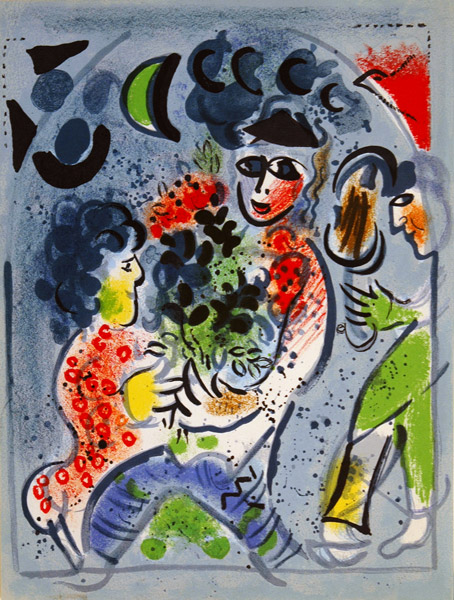
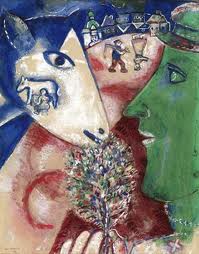
Perhaps this is what Marc Chagall – an artist who well-understood the place and meaning of the schlemeil to the Jews of Eastern Europe – had in mind when he made his lithograph “Harlequin with Flowers.”  The schlemiel makes us happy. He brings us flowers and hope.  But for Abeshera, he does more that just entertain: he discloses, by way of his theatrics and indirection, some kind of hidden, “unequivocal truth.”

Chagall_Harlequin_M578a

All of this is prologue to the parable of the Idiot, the Writer, and the Beggar.  In the next few blog entries we will address it and assess this messianic mission that Abehsera has given over to the schlemiel.


Meir Abehsera’s “Possible Man” – The Holy Fool, The Writer, and the Beggar – Part I

DownloadedFile

At the beginning of the summer, I had an interesting talk with the Kabbalah scholar Elliot Wolfson about Holy Fools.  The subject that I wanted to discuss with him, which pertains to the Holy Fool, is something he was familiar with in his studies of Habad (Lubavitch) Hasiduth and Mysticism; namely, something called Ruah Shtut D’kedusha (“the Holy Spirit of Foolishness”).  What spurred our conversation was a challenge that I posed to his reading of “negative theology.”  I suggested that we pay closer attention to the “madness” that this negative theology suggests and to think about how it may or may not relate to what Paul deMan – the literary theorist – would call, following the 19th century French poet Charles Baudelaire and the German Romantics – the “irony of ironies.”  As I have suggested in other blog entries, deMan’s reading of madness, which is spurred by the “irony of ironies,” leans toward the Daemonic.  What I wondered was whether the “madness of the Holy” differed from this type of madness prescribed by deMan.  To be sure, The Zohar, one of the most important books in Jewish mysticism, often makes distinctions between what’s called the Sitra d’Kedusha (the side of the Holy) and the Sitra Achra (the other side).  Where did the madness of the Holy fit?  Elliot was very intrigued by this question and has, since, exchanged some emails with me about it.

But the point I ended our conversation with was, to my mind, the most important. I suggested that Elliot take a look at Meir Abehsera’s book The Possible Man: Life in the Shadow of the Just.   For me, this book took the Holy Fool not so much as a concept than as a Midrash and an account of someone very close to the Lubavitcher Rebbe, someone who, in my view and perhaps his own, plays and played the Holy Fool.  During his years with the Rebbe, he lived out the “Holy Spirit of Foolishness” and, fortunately, he gave it to the next generation of Jews by way of parables in his book.  It can be found in the chapter entitled “The High Road.”

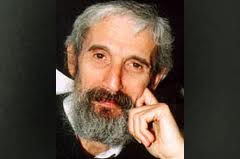
Before I discuss this wonderful work or writing, I just want to say a few words about Meir Abehsera.  I have great respect, love, and admiration for Abehsera.  Before becoming the Rebbe’s “whistler” (a name I will explain over the next few blog entries), Abehsera was a writer, artist, and poet in Paris. He was also one of the major people who was instrumental in bringing Macrobiotics (a way of life, eating, and community) to America.  After touring through the United States in the 1960s, he settled in Binghamton, New York, created something of a community, and influenced countless people there.  Two of those people are very close to me today.  (One of them is my uncle.)  In many ways, I find Abehsera to be one of the most important Jews in my life.  He is, in many ways, a schlemiel-rebbe for me.  His Jewishness is all-embracing, kind, joyful, and inspiring.  He wants to people to dance, sing, and talk with each other.  His gatherings at his home, whether in New York, Los Angeles, or in Israel, were gatherings unlike any I have ever been to.  I am not a child of the 60s, but in many ways I feel as if what he did is the closest thing I will ever come to a Jewish “be-in.”

That said, I’d like to summarize and unpack his wonderful parable.  I think it would be appropriate for Schlemiel-in-Theory to start the Jewish New Year with a spiritual reflection on the schlemiel (or at least one, important, variety of the schlemiel: the holy fool and the “holy spirit of foolishness”).

Here it goes:

Before talking about the Holy Fool, Abehsera begins his “High Road” chapter with a reflection on Memory, Imagination, and Redemption.   The serve as a central motifs in his chapter and they are the preface to his words on the Holy Fool, the Writer, and the Beggar.

Speaking of himself in terms of his inadequate memory, Abehsera writes that “unlike the Just – who are the true repository of memory… – I am a broken vessel, who must resort to circuitousness to find my own way around.  My memory is that of an archeologist by comparison.  Each fragment that I unearth calls for the next, until I finally face the complete form”(94).    What kind of memory do the Just have and how can we tap into it?  How is it possible?

Following this reflection on memory, Abehsera turns immediately to something that concerned The Baal Shem Tov and his grandson Rabbi Nachman of Breslav; namely, the rift that grew in Europe between educated Jews and simple Jews.  To be sure, as Ruth Wisse notes in The Schlemiel as Modern Hero, this rift gave birth to the first “literary schlemiels” in Rabbi Nachman’s stories.  The schlemiel, in these stories, challenges the Jewish intellectual who sees himself as closer to God as a result of his greater intelligence and skepticism.  The simplicity and naivite of the simpleton are, for the intellectual, negative traits.

Abhesera points out the Baal Shem Tov came around to address this rift:

He proceeded to transmit to common folk, in their own terms, what had been previously reserved for a select few.  His rationale was clear: the same Father in heaven who gives clever people the capacity to understand, also creates the feeble mind, and grants it no less right to share in the divine feast. (96)

Echoing the Baal Shem Tov, Abehsera lauds the simpleton. They, who live in the “now,” are closest to what Martin Buber would call “root experiences” (such as the giving of the Torah, Splitting of the Sea, etc) and they are the one’s who are closest to the Messianic.  And reflecting on what he says about memory, Abehsera describes this relationship to the “now” of the messianic the “memory of the future as well as of the past”:

Simple people were ideal chariots to transport the sacred, with never a self-conscious thought, for they did not suffer from the vanity with which the gifted are apt to be plagued. They could travel in an instant through time to Sinai, and fall to their faces, trebling as if they had just received the Law….The messiah was not a fable for these good people, or a possible dream of times to come; for them, redemption was now.   Cunning minds might contend that they were merely naïve.  I would say, rather, that they bore the mark of wisdom: a good memory of the future as well as of the past. (97)

The point of the imagination – and the point of the Baal Shem Tov’s famous expression “memory is redemption” – is to “bind past events with those that must inevitably come, to fuse the two extremes of the time and bring them to peace with the present.”  In other words, what Abehsera learns out of the Baal Shem Tov is that the imagination has a messianic and temporal task.  Imagination is equated with memory.  And for Abehsera memory/imagination is an “agent of healing” and spurs the “process of reawakening.”

Nonetheless, memory is challenged by the forces of trauma and destruction.  Memory “slips away.” And, for Abehsera, this is where the Baal Shem Tov and he himself comes in: his work (echoing that of the Baal Shem Tov) is the work of memory and its task is to heal the wounds that Jews have endured by exile and the Holocaust.

After pointing this out, Abehsera notes what he is up against; namely the fact that, in the times of the Baal Shem Tov, people were much more imaginative and hopeful.  Today, in contrast, the imagination is “less obsessive.”  We are – by and large – skeptics and rationalists who live in a disenchanted world.  And “yesterday’s dreamer is an extinct breed.”  So, in this world, we have to “smuggle” light in.  And this is done by way of metaphor.  Regarding this, Abehsera writes: “A metaphor is a transfer that can only be carried out by flesh and blood.” And it is human beings – and not angels – who have to use metaphor to transfer/smuggle light.   In other words, the way to truth, for Abehsera, is by way of the oblique.  We must hint at things but this is done by way of parable.

The trick is to keep this parable simple enough so as to speak to the hearts of people and not to an intellectual elite. And this is certainly something that is on his mind.

What I like most is how Abehsera situates himself within this framework and how, in his parables, he brings in the Holy Fool.  To be sure, it is the Holy Fool who smuggles in the light but, and here is the twist, this is conveyed by way of writing.  For this reason, Abehsera gives a parable that involves the relationship between the “writer” and the “idiot” (Holy Fool) so as to illustrate what is at stake.

In the next blog entry, I hope to discuss the dream that inspired this parable. Since this dream offers a, so to speak, allegorical key to the parable it deserves its own entry and must be laid out.  As I will demonstrate, it gives us a new way of understanding the schlemiel, one which shows how deeply personal and spiritually meaningful this comic character can be.

Living Schlemiels – Stranger than Fiction

images

One of the things I have never discussed on this blog is the topic of the “living schlemiel.”  To be sure, the most well-known books on the schlemiel – Ruth Wisse’s The Schlemiel as Modern Hero and Sanford Pinsker’s The Schlemiel as Metaphor – do not address this topic.  Their concern is the schlemiel in literature, folklore, and, for Pinsker (only with regards to Woody Allen), cinema.  The first time I saw the expression “living schlemiel” was in Sander Gilman’s book Jewish Self-Hatred: Anti-Semitism and the Hidden Language of the Jews.  To be sure, Gilman used this title for a section on his third chapter which includes German-Jewish writers and thinkers of the 18th and 19th century such as Ludwig Borne and Heinrich Heine.  For Gilman, Heine’s poetry, which dubbed the schlemiel the “lord of dreams” (the poet), bled into his life.  And Ludwig Borne’s life also, for Gilman, bore the stamp of the schlemiel.  Although Heine, according to Hannah Arendt, embraced the title of the “schlemiel” and “lord of dreams,” Gilman’s reading suggests that he and Borne did all they could to avoid it.  And that’s the point: Gilman calls them both schlemiels because no matter how much they did to fit into German society – and this included Heine’s baptism and both Heine and Borne’s attempts to satirize their Jewish origins to be accepted as equals – they remained the odd one’s out.

In judging their lives in this fashion, Gilman is teaching us that he, like many German Jews, uses the term in a critical/judgmental sense.  To live the life of the schlemiel, he suggests, is to live a life that is blind to the fact that it is excluded.  It “believes” it and fits into the world when it doesn’t. And this fits well into Gilman’s definition of the schlemiel vis-à-vis literature and theater. Schlemiels are  “fools who believe themselves to be in control of the world but are shown to the reader/audience to be in control of nothing, not even themselves.”  This is what Gilman is saying about Heine and Borne: they think they were in control of their world and could cajole it to accept them, but it refused their gestures.  In effect, Gilman suggests that they were odd in two senses: as a result of their satire they were excluded from their Jewish communities; and, despite their efforts, they were not accepted into the “world.”

Taking this definition into account, I wondered about how it could be applied to people I knew and not just to this or that intellectual.  And should it be modified?

Thinking about this, I would say that it should be modified to include the fact that, with a living schlemiel, there is a blindness over the reality that he or she is not fitting in; yet, despite it all, they keep on trying.  And here’s the twist: unlike Gilman who would suggest that the “living schlemiel” comes to a bad end, I would suggest that sometimes their foolishness can bear fruit.

I’ll offer a story about people who, I think, may be living schlemiels or at least analogous to living schlemiels.   This may serve as an illustration of how the schlemiel may be alive and living amongst us.  The question, I think, is how to judge them.

I was raised in Upstate New York by parents who were both raised in New York City.  I was one of a small handful of Jews and, in many ways, my parents skill set and education didn’t match up that well with the rural community that they made their new home.  Growing up, I often felt like I was the “odd one out.”

But, after years of travel, higher education, and exposure to the urban way of life, I realized that many people in my town, from an urban perspective, would be considered the odd one’s out.  I’m somewhere in the middle.   Describing my borderline state, my father jokingly calls me a “cosmopolitan hick.”  I think this title is apt and see read it in terms of what advantages it gives me over people who are either fully urban or are down-and-out country bumpkins.  The greatest advantage I have, to my mind, is the fact that I can participate in both groups and for this reason I am better able than many of my friends to comprehend or judge things that are said by one group about another.  I see it from the inside of both, widely different, cultures.  So when someone is said to be the “odd one out” by one group on another, my ears perk up.  However, there are times when no one says anything and I am the sole witness of an event that is of the schlemiel variety.  Let’s call it a schlemiel situation.

I recently went out for an evening with a group of friends to a bar on the Sacandaga Lake, a lake I spent a lot of my youth enjoying.   (To preserve my friend’s identity, I will change their names while noting what happened.)   In this group of friends, the words and deeds of at least two of my friends spurred a schlemiel-situation in which I bore witness to a schlemiel or two and was prompted to make a schlemiel-judgment call.

They traveled over to the bar by way of the boat.  I came in by car and met them there.  When I got to the bar, I heard that they were still on the lake on the way to the bar.  When I got word that they arrived, I went down to the lake to discover that one of my friends was playing guitar the entire way.  What’s unusual about this?  My friend, let’s call him Bob, is full of energy. He passionately gets into everything he does.  However, sometimes this can be grating because he subjects everyone he knows to his learning experience.  He does have experience as a lead singer in a band and he plays guitar, but he doesn’t take well to criticism.

That said, he was very excited to show me that he had learned how to play rhythm in a rockabilly kind of style.  I listened but, like the night before, he still needed to be much more gentle with his strumming if he was to get it right.  His erratic strumming coupled with his singing, which didn’t match up, his innocence, and his intense personality made me think of Bob as a “living schlemiel.”   To be sure, people tell him that his playing is off, but he goes on.  Its funny.  And so is he.  He is the odd one out, but he manages to slip through the cracks. But, as I found out, this has its limits.

Before going into the bar, Bob started talking with some people in a boat coming in to the bar’s dock.  Using a megaphone, he brought them in (acting as if he was an air-traffic control). This made the whole boat laugh and they were, instantly, endeared with him.  This gave him a big boost.

When he came up to the bar, he started working his foolish magic.  And this is when things started getting odd: reality and dream started clashing.  In the bar, Bob met up with a man in his seventies.  He got this gentleman going and he started dancing wildly to the music.  To have fun, I egged Bob on to increase the madness. But, to my chagrin, I bore witness to some mixed feelings in the bar.  The older gentleman started going off and people around the bar looked at him as if he was crazy.  I felt an odd identification and repulsion with the old man who was dancing wildly.  He was the odd one out and though people were giving him dirty looks, I couldn’t help but think them wrong.  He was having a good time and, yes, he appeared to be a schlemiel of sorts.  He believed he was enthralling the audience by going over the top, but he enthralled no one save Bob.

Together, they were whooping it and each encouraged the other.  I pulled back and noticed, immediately, that my friend Bob was eager to sing with the band.  In Upstate New York, it does often happen that people from the audience go on stage and sing.  But there are tell-tale signs when and when not to do this.  Moreover, it’s always good to have a friend in the band you’re joining.  In this situation there were neither signs nor friends. And my friend, Bob, went into it without any concern hoping his joy and charm would win the day.

But what happened was far from what he imagined. The drummer of the band told him to get off stage and the lead singer gave him dirty looks.   And the older man dancing around the bar started turning off a few of the audience members.  Things looked as if they would get ugly.

But they didn’t.  My friend did all he could to mend things.  It worked, but it didn’t get him on stage so much as in their favor.  What gets me, however, is that my friend kept at it as if there never was a negative moment.  And this blindness, though comic, gives him the title of a living schlemiel.

Following this, I went back to his boat and talked with another friend who keyed me into another kind of living schlemiel: one who has God on his mind and odd ways of relating to Him.   We were looking up at the stars when he said to me that he talks with God.  I asked how and he told me that he would ask questions while looking up at the stars. And for each question, God would answer with a shooting star.  I found this innocent and endearing, but coming from an adult this did seem odd. But isn’t faith a strange thing, too.  And, to be sure, Ruth Wisse notes that the first major literary schlemiel was, in fact, a schlemiel of faith.  That schlemiel comes out of the work of Rabbi Nachman of Breslav.  He is the simpleton who, with simple faith, believes in God.  His simplicity is scoffed at by the educated Jewish world, which, at that time, privileged the Jew who learns over the simple Jew.  The former, they believed, was closer to God. But the Baal Shem Tov – and his grandson, Rabbi Nachman of Breslav – thought the contrary.  Their stories bear witness to the spiritual doings of the simpleton.  My friend’s story about his communication with God reminded me of this; to be sure, the model for the literary schlemiel is a real one.  This is something Wisse doesn’t discuss as much.  But in this moment, I felt there is a need for more of this kind of reflection on “living schlemiels.”

If I weren’t a “cosmopolitan hick,” I’m not so sure I would look upon what I was seeing in the ways I do.  To be sure, I feel like Sancho Panza did when he followed Don Quixote.  He felt he could learn something from the fool, and so do I.

Some of my friends teach me about the living schlemiel.  But, to be sure, I can also see this from Chad Derrick’s documentary on (a segment of) my life: Shlemiel.  Every time I screen the film to audiences, I see that this is what the filmmaker – who is also my friend – was trying to accomplish.  And, every time I give the Question and Answer session following the film, I am asked if I am a schlemiel (a living schlemiel).  Perhaps I am.

But I am aware of many of the things I am blind too while my friends may not be.   However, then again, I am not.  We may see things that others don’t see, but we are often blind to ourselves.  You may not know this, but you too may be a schlemiel.  And, if we cared, we would be surprised how many living schlemiels are in our midst.   The question is how to judge them and ourselves.  Do we have anything we can learn from “living schlemiels”?

My friends and the older man I saw the other night reminded me that, though people may laugh or scoff at a schlemiel (of the Jewish or non-Jewish variety), there is something about this character – in fiction and in reality – that is good and worthy of our thought and reflection.   This goodness is something that many German-Jews missed (in their rush to judge the schlemiel as an idiot who should, like all things from the ghetto, be left behind).  But it was recognized by the Hasidim, by many of the Yiddish writers, and by some Jewish-American novelists, filmmakers, and artists.  Now that the times have changed, we need to ask ourselves where this goodness can be found and how it can be found.  These are questions not only for schlemiel-in-theory but for the schlemiel-in-reality.  The living schlemiel…..

Is this the End? Physical Comedy, Style, and the Body

DownloadedFile

In a review of This is the End (2013), written and directed (in part) by the often-schlemiel-playing-comedian Seth Rogen, Richard Brody of The New Yorker makes a compelling argument as to the place of physical comedy in this film.  Before addressing the film, he looks into the history and fate of physical comedy, today.

Brody begins by making reference to an article by Max Winter entitled Slapstick Last: Why a Modern Day Harold Lloyd is Unthinkable.  The first words of Winter’s article say it all: “there are no great physical comedians any more.”  However, he makes a distinction: he points out that while physical comedy may be lacking, “physical presence” on stage (with comedians like Louis CK) is not.  Now, today, more people put out something of a “verbal” or cerebral comedy.

The subject of the article, the master of physical comedy, is Harold Lloyd.  He is deemed that king of silent-film slapstick.  His work, unlike the comedians today, says Winter, appeals directly to our bodies and skips over this or that cultural code or popular reference.  Out laughter at his work, says Winter, is “more pure” (that is, bodily) that our laughter today:

The kind of laughing you do during this film, and in fact the laughing you do during most comic films of the silent era, is more pure and often more whole-hearted than the kind of laughing you might do during contemporary comedies. This is because there’s nothing between you and the laugh. Lloyd does a physical stunt, a prank, or a funny face, and you laugh at it: it’s that simple. The humor here is free of pop culture references, or irony, or any of the other triggers we have come to accept as “funny.” It’s almost as if you’re laughing with another part of your brain.

Lloyd’s physical comedy uses the whole body, not just the head or face.  His slapstick relied on bodily gesture:

From his neck up, Lloyd could be a modern comic, with an ever-changing set of expressions that could be seen on TV or in a film today; from his neck down, he belongs to an earlier era, when people waved their legs around, made silly gestures, punched each other in the forehead, and swung their arms wide when they walked. His facial expressions transform this story from a rags-to-riches tale cum love story cum fable of the foibles of industry into a travelogue of a journey through a psychological minefield. In one scene, he’s nervous about knocking on a general manager’s office door; the way he expresses his agitation, with his arched cheekbones, his twitching mouth, and his jumping eyebrows, shows every stage of his thought process, from start to finish. Here, as elsewhere, he caps off his facial gyrations with slapstick: marching up to the door, starting to knock, stopping, starting, stopping, and so on.

Winter’s articulation of how the comedy of the lower body (in one of Lloyd’s scenes) contrasts with the comedy of the upper body (namely his face) brings out a comic/horrific tension that so much of today’s comic does by more intellectual and less physical means.

His swinging legs and arms seem to be telling you to laugh, while his face reminds you just enough of what your own expression might be in such a situation to make you… well… scared. 

Commenting on Winter’s article and physical comedy, Brody argues that today a return to physical comedy would be impossible since today’s American audiences are, in contrast to audiences of the earlier 20th century, morally appalled by the presence of physical danger in comedy.  In his words, “physical comedy…has been moralized out of existence”:

Here goes: a new Harold Lloyd is unthinkable because physical comedy depends on the proximity and possibility of death, which no longer seems acceptable to viewers who are completely aware of the prevalence of stunt doubles and digital effects, and who are repelled by the idea that a performer would actually face death for what is, after all, only a movie. In other words, physical comedy—the kind that made silent comedies famous—has been moralized out of existence.

Brody cites Mel Brooks and Jerry Lewis to point out the proximity of their comedy to physical suffering and possible damage.  Lewis, says Brody, built his career as a comedian on his falls, trips, and physical acrobatics.

In contrast to them, Brody lists the great “anti-physical” comedians; namely, “Groucho Marx, Bob Hope, and Woody Allen.”  He calls the “great comic cowards” who did all they could to avoid physical comedy.  They are rooted in “stand up” comedy rather than “fall down”(slapstick) comedy.   Nonetheless, Brody adds, with a bit of astonishment, that today, in films like This is the End, physical comedy seems to be making a comeback.

The film, argues Brody, may be filled with lots of slapstick and fall down comedy, but “it’s almost completely unfunny.”  And the physical comedy we see, apparently, is not even done by them.  It is done by stunt doubles.

This isn’t funny because Hollywood has made changes that apparently reflect an audience’s changed “endurance” of suffering:

The world has changed; just as classic-era Hollywood, with its unchallenged prejudices on matters of ethnicity and gender, reflected the dominant presumptions and exclusions of the time, so the endurance of suffering during a rough-and-tumble period when many more Americans did physically hard and dangerous work found its reflection in a comedy of danger.

And This is the End, for Brody is a “superb example of how comedy and comic violence have become subordinated to a conspicuous ethical order.”

What I like most about Winter and Brody’s reflections is the fact that they both point out how the meaning of the body in comedy has altered considerably.  Brody suggests that it has, in fact, been censored for “moral” reasons.  Nonetheless, he doesn’t think a return to physical comedy is possible or necessary.   Winter suggests that we pay more attention to what happened in early physical comedy; namely, a laughter that was “more pure” because it appealed directly to the body.  This, I would argue, could form the basis of a more nuanced ethical argument on behalf of physical comedy that could challenge the new attitude toward physical comedy that Brody makes reference.

To this end, I’d like to end this blog entry with a suggestion.  Roland Barthes’ reading of style in his book Writing Degree Zero suggests that we think of style (and here I would suggest comic style) in terms of the body.  For Barthes, the “imagery, delivery, and vocabulary” of style “spring from the body and the past of the writer and gradually become the reflexes of his art.”   For this reason, style has something “crude” about it since it is the “product of thrust, not an intention”; its “frame of reference is biological or biographical, not historical.”  Moreover, style is a challenge to society: “indifferent to society and transparent to it, a closed personal process, it is in no way the product of choice or of a reflection…it is the decorative voice of hidden, secret flesh.”

Style is a “germinative phenomenon, the transmutation of a humour” and has a “carnal structure.”

All of these reflections on style bring us back to a reflection of the body.  Based on them, one can argue that what appeals most to people who have enjoyed physical comedy in the past was its style. The style of Buster Keaton, Charlie Chaplin, and Harold Lloyd is not simply rooted in their routines; it actually gives us a deeper sense of their “hidden, secret flesh.”  Barthes sees the mystery of the body – in all its opacity – in style and I suggest we see such style in bodily comedy.

It may be the case that Jerry Lewis’ style of physical comedy has been, to some extent, displaced by Woody Allen’s style of comedy; but, still, it is not entirely cerebral.  This is not the “end” of physical comedy so much as one kind of “physicality.”

We still see a body on stage “standing up” (rather than “falling down”) before us.  We see this, as Winter notes, in Louis CK’s bearish body pacing the stage and, I would add, in his comic style and delivery. The comic body remains.

To be sure, in the film, This is the End (2013), Seth Rogen’s physical gestures and styles convey his comical, bodily way of being.  The question we need to ask is what kind of bodily secrets Rogen conveys as opposed to what kind of secrets Sasha Baron Cohen or Charlie Chaplin.  How do we contrast their styles if, as Barthes says, they come from an opaque place? Are we given, so to speak, “flashes” of (bodily) wisdom when we watch their differing comic styles? Can we use Barthes, so to speak, to better understand how we bear witness to the mystery of physical comedy?  Is there an ethical relation to the body that Barthes was trying to uncover by way of his reading of style?  And would it be worth our while to pursue what Winters alludes to when he says that the laughter of physical comedy was “more pure?”  Was Barthes also seeking for this “purity,” which touched on the origins of not just comedy in particular but also style in general?

Sarah Silverman’s Personal God

Picture 18

The term “personal God” is used in reference to the personal relationship between God and man that we often find in the Bible (Torah).  God walks with Noah, communicates with the Patriarchs (Abraham, Isaac, and Jacob), and speaks “face-to-face” with Moses (not literally face to face because, as it says in the Bible (Torah) “no man can see me and live”).   In these moments of relation, God would sometimes take the prophet by surprise and visit at unexpected times; other times, we see people like Abraham, Moses, of Job (to take only three examples) arguing or pleaing with God.  We also see, from time to time, the call for the Jews in the Bible to pray in hope of a response from the “personal God.”

The notion of a personal God is the opposite of a notion of an “impersonal” God.  This is the God that the Medieval Jewish Philosopher Yehuda HaLevi – and the famed mathematician and author of the classic Pensees, Blaise Pascal – associated with the “God of Aristotle.”  This “impersonal” God can only be contemplated. And by contemplating “Him,” the “cause of causes” one will, eventually, gain true wisdom and happiness.  Nonetheless, the impersonal God cannot “save” or “redeem anything” – the impersonal God has no “personal” relationship with humanity.  And the “impersonal” God cannot be the God of history and cannot act in history.

When, as an undergraduate in university, I first came across the term “personal God” the first thought that came to my head was a God I could hang out with and talk to “personally.”  Immediately after having this thought, I recall how ridiculous it seemed to me.  The term didn’t seem to work.  After spending more time studying Torah, the Talmud, Kabbalah, the Midrash, and Jewish mysticism, I learned that the term didn’t account for the fact that, in Judaism at least, God is in the world but not of the world.  The “personal” aspect, I learned, is not to be understood as a God one can just hang out with.  To be sure, as the Midrash, the Talmud, and books like the Megillat Esther (Book of Esther) explain, God’s “personal” relationship to humanity was severed after the destruction of the Second Temple and the attendant “Diaspora.”  In fact, the meaning of exile can be found in the distance from God’s “presence” in history and in the life of the Jewish people.

The Guide to the Perplexed, written by Moses Maimonides (the RAMBAM) in the 12th century, would take major account with the use of a term like “personal” God.  To be sure, the book does all it can to de-anthropomorphize the representation of God in the Bible (Torah), the Prophets, the Psalms, etc.  It does this, quite simply, because such antropomorphisms would subject God to the whim of our imaginations.  Nonetheless, Maimonides still held that God communicated with the patriarachs, the prophets, and the Jewish people.   The question, for him (and for us), is how do we characterize God’s relationship to man?

To be sure, Yiddish literature has characters like Tevye who are constantly speaking (as it were) to God.  Though he doesn’t reply, this doesn’t stop Tevye from talking.  And Jewish comedians from Mel Brooks to Woody Allen love playing on the notion of a personal God.   Here’s a classic moment with Mel Brooks doing exactly this:

Woody Allen also stages a hilarious conversation between Abraham and God over the “binding of Isaac.”  In this conversation, God scolds Abraham for “taking him seriously.”  His call to Abraham to sacrifice Isaac was, in Allen’s version, a “joke.”

Following a long line of comics and writers who have played on the “personal” God relation, Sarah Silverman has also included the personal God in her comic routine.  However, this inclusion is really personal.  She doesn’t simply speak to God, who is represented as a middle aged African-American gentleman, she sleeps with him.

In the clip, entitled the “morning after,” God tries to work out what happened the night before and how it led to this.  Regardless, Silverman asks him to leave.  But before he leaves, he notes that she won’t get back to him (that she probably won’t “call” on him in the future – an obvious pun on the call to a personal god).

The clip obviously led to some controversy, but this didn’t keep Silverman from coming back to it; but not in her show so much as in the “Afterword” to her book The Bedwetter.  To be sure, Silverman personally communicates with God and gives him the opportunity to write the “Afterword.”  To be sure, God includes Sarah’s personal plea to “Him” to write the Afterword.  Here is an excerpt:

Dear God, I know I have denied your existence my entire life, and have only spoken you name at crucial moments of jokes and orgasms, but I really need you now.  I need you so much, in fact, that I want to accept you right now as my lord and savior, and renounce any negative things I’ve said about those who worship you.  Please make this book be finished.  I’ll be honest: I find of blew it off….I know I don’t deserve your help, but I’m asking anyway. (234)

But, then, she tells us that while writing this letter she was stoned.  And she needs God’s personal help because the high she is experiencing is too much for her to handle:

Holy crap, I am realizing…I am incredibly stoned. I ate half a brownie just to ease my anxiety, but I think I went to far.  This is way too intense.  I’m really scared. I don’t want to be alone right now.

Following this citation from her letter, God says “at this point, she began to sob, and since I am not completely heartless, I agreed to help her with her book.”  What follows this is God’s mundane, personal nature. To be sure, he sounds just like one of us.  He watches TV, porn, has TiVo, iTunes, etc.  Here are a few of his personal confessions:

I follow Top Chef.  I’m totally interested, it’s edge-of-your seat stuff, but I forget to TiVo it, I probably won’t bother buying it on iTunes. For me, it’s pretty much out-of-sight-out-of-mind-ish…Wait, one more thing.  I saw a video on YouPorn where two men managed to position themselves in such a manner that they could both penetrate the woman’s vagina simultaneously.  Regardless of what they think, let me just tell you were I stand on it: Let’s not touch balls in a situation where we’re working up to a cum. But that’s just me.  I’m not gay. (235).

God also says he is “proud” of Cancer and HIV and notes: “I don’t say that to provoke anyone, either.  It’s just that at a basic scientific level, both of these inventions are really cool”(234).

Silverman ends God’s Afterword with God giving praise for Silverman’s work to get Obama in office:

And she was, for the record, the deciding factor in Barack Obama’s victorious campaign for president of the United States.  That alone makes her existence a net gain for the universe. 

The final image of God we are left with is him sitting next to President Obama with a “raging boner”: “I’m sitting five feet from Obama right now, and to be perfectly frank, I have a raging boner”(237).

As you can see, Silverman reduces the notion of a “personal god” to an absurdity.  But instead of reading this as a stupid, heretical gesture as some have, I suggest we look at it as a practice that actually resonates with Maimonides’s wariness of anthropomorphisms.  Moreover, it can actually spur us to think about how god could be “personal.”  How does God relate to the world and to me?  And how, in fact, can we imagine a personal god today in a world which is thoroughly secular and “everyday?”  These are all good questions that, I think, are spurred by Silverman’s comical representations of God.

But what makes me smile is to know that, within the Jewish tradition, there is a space to imagine and re-imagine (comically and seriously) what kind of relationship the Jewish people have with God.   Violating the prohibition of representing God with this or that image is allayed, I think, by Silverman’s comical approach.  To see it as blasphemous would be to miss the fact that, ultimately, there is a desire to relate to a personal God in her work and this, ultimately, is one of the most Jewish things about her work. Her desire to relate to a personal God challenges the sense of Jewishness that is based on this or that physical trait or habit.

Regardless of how much she parodies this desire, it is still there. And even though the image of God with a “raging boner” – because he is sitting next to President Obama – is the last image of God we are left with and seems to be “too personal.”  It still discloses her desire for a “personal god.” Perhaps this is the real punch line.

(Note: Imagining this personal relationship may, in fact, bring her closer to Yehuda HaLevi than to Moses Maimonides – which we don’t have enough space to discuss here.)

Another Note on Sarah Silverman’s Jewishness

images-3

For the longest time, the claim that someone is a “Self-Hating Jew” has given vent to a lot of attacks on comedians, filmmakers, writers, etc.  It often comes up when something is said by this or that Jew which isn’t, as the saying goes, “good for the Jews.”  And it is often used against people who are radical critics of Israel.  Instead of calling people who claim that this or that person is a self-hating Jew a name, I just want to point out that, although many people may deplore it, it comes from a place of concern.  And that concern 1) emerges out of centuries of oppression and anti-Semitism against Jews (which culminates in the Holocaust) and 2) with the sense that Jews have of themselves as a people which, in spite of all the negativity against them, are proud of their Jewishness.

It would be amiss to think that Jews alone have such a concept and make such accusations.  For instance, the African-American community also has a notion of selling out one’s relation to “blackness.”   A person who leaves it behind is described and defined, most recently, by the MSNBC host, Toure and Eric Dyson, an sociology professor at Georgetown University Michael Eric Dyson in Who’s Afraid of Post-Blackness: What It Means to be Black Now.  (To be sure there are countless books on this topic.)    By mentioning this, I don’t wish to excuse the act of accusing this or that person of being a Self-Hating Jew so much as to show its relation to suffering, history, and ethnicity.

In Sander Gilman’s book, the Jews who he includes under the title of (possible) Self-Hating Jews include figures such as Karl Marx, Ludwig Borne, and Heinrich Heine who had a (or some) negative attitude toward their Jewishness (or Jewishness in General) and saw it as a barrier to their assimilation or to progress.  However, most recently Paul Reitter has written a book entitled On the Origins of Jewish Self-Hatred which traces the origin and genesis of the concept of Jewish Self-Hatred.  He argues that it didn’t begin after the Enlightenment so much as after WWI.  Reitter argues that Anton Kuh and Theodor Lessing popularized the term but did so as to actually work through Jewish self-loathing.  However, though this book changes the perspective we may have on the meaning of Jewish Self-Hatred, it also creates a whole new problem for understanding the meaning of the term as used by Sander Gilman and others.  I suggest looking Amos Bitzan’s exceptional review of the book, which explains this problem in more detail.

Reitter and Gilman’s take on Jewish Self-Hatred can help us to better understand what is at stake in understanding Sarah Silverman’s edginess with respect to the claim that she might be a self-hating Jew.  I began and ended my last note on Sarah Silverman’s Jewishness with a discussion of the Jewish “trait” as it relates to what Sander Gilman and others have called “Jewish Self-Hatred.”  The point I was trying to make is that Silverman is playing with the notion.  And this makes her work, as it pertains to Jews, edgy.  I am certainly not accusing her of being a self-hating Jew.  Rather, I’m pointing out how she evokes herself as a possible target of such an accusation while, at the same time, allaying such suspicions.   Let’s call this moving back and forth from target to non-target her comic strategy.   And her act of employing it may work to diffuse or expose this complex phenomenon.

We see this in the chapter entitled “Jew,” from her quasi-autobiography, The Bedwetter.  As I noted in the last entry on this topic,  Silverman begins the chapter by acting ‘as if’ (hence the irony) the editor’s call to have her write on her Jewishness was an embarrassment.  She then goes on to note how she doesn’t even “look” Jewish.  Here, she plays on the trait.  However, later in the chapter, she confesses that she cannot not think of herself as Jew; her traits betray her Jewishness:

Growing up, the only way I really sensed I was a Jew was by dint of the fact that everyone around me was not.  My dark features and name both scream “Jew” like an air-raid siren.   Most people in New Hampshire have names like Lisa Bedard (pronounced Beh-daahhd) or Cheryl Dubois (Boo-boyz).  I was the only one with hairy arms and “gorilla legs.” (220).

She then goes on to note that when she was in Third Grade, one boy, Matt Italia, threw “pennies and nickels at her feet” as she “stepped on to the bus.”  In jest Silverman notes that it “wasn’t as bad as it sounds” since she made “52 cents!”  But she doesn’t see Matt’s affront as anti-Semitic; rather, she thinks that Matt and others “were just trying to wrap their heads around the differences between people.  Matt didn’t hate me when he threw change at my feet any more than he loved me when we were boyfriend and girlfriend”(220).

Some people may read this and argue that, in this serious reflection (minus any irony), Silverman doesn’t want to call anti-Semitism by its real name. Regardless, Silverman does admit that she cannot escape her Jewishness.  But it is not the object of hatred so much as a childish confusion over what it means to be different.

In the next section, entitled “Seriously, Though, New Hampshire was not Especially Jewish,” Silverman goes on to talk about yet another way she had a sense that she was Jewish; namely, her difference from Christians.  She notes that she went to Church with her friends on Sundays after “Saturday-night sleepovers” and that sometimes her friends would come to temple.  But, regarding the temple and the church, she notes:

Both places of worship seemed to be these bizarre forums where authority figures told fucked-up ghost stories between spurts of loving encouragement. (221)

Her assessment of religion indicates that, for her, Jewishness (her traits, differences, etc) means more to her than Judaism.  To this end, she notes that, when she was sent to a “local convent” – while her mother went to school to get a degree – she was treated differently than she was in her Jewish home.  There, Silverman learned that she would be punished if she didn’t finish her PBJ sandwich; at home, there was no such pressure. That difference, for her, constitutes some sense of her Jewishness.

The following section, entitled “Unlike Jesus Christ, I am Embraced, Rather Than Murdered, by Jews, for Flapping my Yapper,” employs her strategy of flipping back and forth between making herself a target of Jewish Self-Hatred and effacing it.  The very title bespeaks the claim; namely, that Jews killed Jesus.  This is a claim she plays with in her Jesus is Magic (2005) film.

Silverman turns from Jews and Jesus to speaking explicitly about her Jewishness. She validates it by noting that her sister Susan – who visited Israel, went to seminary, and became a Rabbi – loves Judaism.  And Silverman jokingly notes that the proof of her sister’s love can be found in the fact that her sister added an extra Jewish name (her husband’s) to her own. She became Susan Silverman Abramowitz.

After noting her sister’s turn to Judaism, Silverman notes that she hasn’t pursued Judaism but “the faith has sort of pursued me”(224). But I wouldn’t say Judaism has pursued her so much as Jewisness. She notes that she has now “been deemed ‘good for the Jews’ and from that there seems to be no going back; the Jews have spoken”(224).  By stating this, Silverman is making it clear that she doesn’t think there is any reason why she should be called “self-hating” – after all, she has been “deemed ‘good for the Jews.’”

But here’s the punch line.  Immediately after saying this, she states (ironically):

I could do anything now and I’ll still be considered good for them.  I could, for example, accept Jesus as my lord and savior.  I could deny the Holocaust.  I mean, when you think about it, the proof isn’t exactly overwhelming – what, a couple of trendy arm tattoos and some survivor testimonials filmed by Steven Spielberg?  Um, Steven Speilberg? The guy who made E.T.?

Here, she works out her strategy which is to play around with the Jewish Self-Hatred card.  The punch line, in this statement, is that Silverman uses her charm (she knows about E.T. after all) to get the joke past the gates of Jewish Self-Hatred.

All of these seemingly self-hating jokes, Silverman tells us, are similar to those told by fat people to put people around them at ease about their “differentness”:

The smart fat kid will be the first to make a fat joke as a protection from whatever insults the other kids might hurl at him, and, as a smart Jew, I did likewise.  Joking about my differentness seemed to put the people around me at ease.  Even though I actually knew almost nothing about being a Jew other than that I was one.  (226)

This claim casts another light on her strategy.  Silverman jokes about Jews appeal to allaying fears of others (regarding her “differentness”) and to playing with the claims of Jewish Self-Hatred.

I’ll close with the last section of her “Jew” chapter since this section ends on the note of the trait, which reminds us that Silverman’s Jewishness is still caught up in allying the possible negativity her name, physical traits, etc may evoke. The essence of that negativity would be her Jewishness.

In this section, Silverman turns to the Jewish name change and notes that Winona Ryder changed her name from Winona Horowitz.   She says that the name change was a “sneaky Jewish move” and adds, perhaps pridefully, that she didn’t change her name (231).   Silverman admits that her name may create some “limitations” on the work she would get in Hollywood, New York, etc.  And she can see that there is some bias.

However, Silverman then turns it all around and shows us that the thought she had about not changing her name had nothing to do with pride; rather, she kept her name because the name Silverman sounds less “ethnic and more graceful than Horowitz.”   Following this, she says that she can’t imagine Jon Stewart as Jon Leibowitz. Why?  Because it sounds “too Jewish.”

These statements, of course, may evoke the claim of Jewish Self-Hatred. And she knows it. For this reason, she employs her comic strategy in the last paragraph of the section to allay it all. But the punch line returns us to the Jewish trait and the problem of Jewish Self-Hatred:

Whether I like it or not, I am, at least from the world’s point of view, Jewish.  And yes, I admit I draw on my Jewishness when comically advantageous, though nothing I have even done, or plan to do, will be about advancing any kind of Jewish agenda….Because I have accepted being identified as Jewish, I’ll also have to accept the responsibilities, limitations, and consequences.  If I ever want to get away from that, it’ll be an uphill battle that will require, among other things, a larynx transplant and some major hair removal.  (232)

In the end, it is the physical ethnic trait that identifies Silverman as “Jewish.”  That seems to be the punch line.  Her Jewishness, perhaps to the chagrin of those who make accusations of her being a self-hating Jew, doesn’t seem to be based on pride so much as difference.  And her comic strategy, it seems, plays on these accusations as well as her sense of Jewish difference.  Silverman knows she is targeted, and like many comedians she evokes and plays with this comic targeting in several of her (Jewishly oriented) routines.

Sarah Silverman, Hannah Arendt, and “The Old/New Lord of Dreams”

images-1

Last night, before I went to sleep, I noticed that Sarah Silverman had Tweeted something that had schlemiel written all over it.

Why?

In Hannah Arendt’s essay, “The Jew as Pariah: The Hidden Tradition,” Arendt argues that Heinrich Heine’s schlemiel initiates the “hidden tradition” of the Pariah.  Heinrich Heine, argues Arendt, was the first notable Modern German-Jewish poet to popularize the schlemiel in Germany.   According to Arendt, this happens in his Hebrew Melodies poems where we learn of the “lord of dreams” which is another name for the poet who is attached to nature and the world of dreams (which it fosters) but not fully to the world (not to “life life”).

Strangely enough, Arendt sees the model for this in Heine’s description of the Jewish Sabbbath and – in particular – in relation to the song “lecha dodi.”  Through the song, sung to welcome the Sabbath, the Jews are transformed:

In his poem, Princess Sabbath, the first of his Hebrew Melodies, Heinrich Heine depicts for us the national background from which he sprang and which inspired his verses. He portrays his people as a fairy prince turned by witchcraft into a dog. A figure of ridicule throughout the week, every Friday night he suddenly regains his mortal shape, and freed from the preoccupations of his canine existence (von huendischen Gedanken), goes forth like a prince to welcome the sabbath bride and to greet her with the traditional hymeneal, Lecha Dodi.

Arendt tells us that this is the only “positive” aspect of Judaism that Heine can find and, to be sure, he uses it for poetic purposes:

This poem, we are informed by Heine, was especially composed for the purpose by the people’s poet-the poet who, by a stroke of fortune, escapes the grueling weekly transformation of his people and who continually leads the sabbath-like existence which is to Heine the only positive mark of Jewish life.

Out of this figure, Heine creates the schemiel (spelled shlemihl in the German).  The transformation of the Jew from a dog to a prince foreshadows the task of the “lord of dreams” since the transformation is a way of telling the world to go to hell.  And for Heine, this is accomplished by the schlemiel poet.

As Arendt notes, by way of her schlemiel genealogy, the schlemiel has no “heroic deeds” to boast of; rather, his greatest trait is his “noble heart.”  To explain what this means, Arendt notes the schlemiel-poet’s “innocence.”  And, in her translation, the secret of the schlemiel’s innocence is not Phoebus Apollo but Rabbi Faibusch (the last name is a comic play on the Greek Phoebus):

Innocence is the hall-mark of the schlemihl. But it is of such innocence that a people’s poets-its “lords of dreams”-are born. No heroes they and no stalwarts, they are content to seek their protection in the special tutelage of an ancient Greek deity. For did not Apollo, that “inerrable godhead of delight,” proclaim himself once for all the lord of schlemihls on the day when-as the legend has it-he pursued the beauteous Daphne only to receive for his pains a crown of laurels? To be sure, times have changed since then, and the transformation of the ancient Olympian has been described by Heine himself in his poem The God Apollo. This tells of a nun who falls in love with that great divinity and gives herself up to the search for him who can play the lyre so beautifully and charm hearts so wondrously. In the end, however, after wandering far and wide, she discovers that the Apollo of her dreams exists in the world of reality as Rabbi Faibusch (a Yiddish distortion of Phoebus), cantor in a synagogue at Amsterdam, holder of the humblest office among the humblest of peoples.

The schlemiel, Arendt tells us, is “the peoples poet”; he is not the poet of the nouveau rich and the parvenu.  On the contrary, he, like the people, are outsiders in a fake society ruled by lies and posturing.  Moreover, the schlemiel stands with the people and with nature, not with culture:

It is but natural that the pariah, who receives so little from the world of men that even fame (which the world has been known to bestow on even the most abandoned of her children) is accounted to him a mere sign of schlemihldom, should look with an air of innocent amusement, and smile to himself at the spectacle of human beings trying to compete with the divine realities of nature. The bare fact that the sun shines on all alike affords him daily proof that all men are essentially equal. In the presence of such universal things as the sun, music, trees, and children-things which Rahel Varnhagen called “the true realities” just because they are cherished most by those who have no place in the political and social world-the petty dispensations of men which create and maintain inequality must needs appear ridiculous.

Arendt’s rhetoric makes it clear that the schlemiel, the “lord of dreams” stands on the side of the “true realities” because they are politically excluded.  In other words, they have no choice but to dream because they have no place in the world which, with all of its inequalities, appears “ridiculous.”

Can we say the same of Sarah Silverman?  In her tweet, she says that she is “crazy busy with dream life.” That’s where her real work is: in the dream world and in producing dreams.  She has “very little time for life life.”  She seems to be telling us that she is the old/new Lord of Dreams.

But here’s the catch.  Arendt believed the Schlemiel would no longer be necessary once the Jews were allowed to live in a world as equals.  At the point, Jews would no longer have to dream.  And Sidra Ezrahi, in Booking Passage, has argued that, while in exile, the schlemiel was appealing because it provided Jews (who were the losers of history) with a “substitute sovereignty.”  But now, after the establishment of Israel, that no longer seems necessary as real sovereignty is within reach.  However, Ezrahi notes that, though things have changed, American artists and writers still insist on what she calls the “trope of diaspora.” In lieu of this, she sees America as fertile soil since it is the “land of dreams.”  And in this virtual world, which comes straight out of Hollywood, the Lords, so to speak, are the “Lords of Dreams.”

What can we take out from this?

Perhaps Sarah Silverman gives evidence that supports Ezrahi’s argument about America and schlemiels.  If that is the case, what does it imply?  Isn’t it the case that the Lord of Dreams passes back and forth between the world of dreams and the world of reality?  Isn’t the schlemiel, the poet of the people who, like the schlemiel, feel like they are in the middle?

If this is the case, perhaps we can say that Arendt was wrong when she said that Superman replaced Charlie Chaplin (the last in her line of schlemiel-pariahs in the “hidden tradition”).  In my book and here, on this blog, I am venturing this possibility.

But we need to ask ourselves, whether or not Sarah Silverman is the schlemiel-poet-of-the-people and whether we can still say that she, like Heine’s Lord of Dreams, speaks from the angle of nature and the people.  Perhaps she speaks from a land of dreams that has no relation to the political or to a utopian dream that nature and culture merge.  Perhaps her work is to dream and nothing more nor less than that.

Perhaps she is just a woman-child, who lives somewhere in-between dreams and reality:


A Note on Sarah Silverman’s Jewishness

DownloadedFile-1

Sander Gilman’s book, The Jew’s Body, points out how, since Jews became modern, they were often identified with negative stereotypes based on different body parts such as the nose, the ears, lips, and even the feet.  Jews were also identified with negative psychological traits.  What interests me most about Gilman’s work is not how non-Jews looked at Jews in these ways so much as how Jews have looked at themselves by way of these bodily and psychological stereotypes.   The discomfort some Jews have had with others Jews has to do with the fact that, for them, these Jews would look or act “too Jewish.”  When it is extreme and expresses itself as a form of repulsion, it may be called Jewish Self-Hatred.

Over the last two decades there has been a move by some “New Jew” comedians, artists, and writers to play around with the fine line between humor and “Jewish Self-Hatred.”

An interesting case for seeing how this works itself out today can be found in the comedy of Sarah Silverman.  Oftentimes, she plays on the discomfort she feels about her own Jewishness and the Jewishness of others.

What does Jewishness mean to Sarah Silverman?  There are many different places where Silverman puts her Jewishness at the forefront of her routines.  And if anyone wants to get a sense of this he or she should look at each of these routines and ask a number of important questions.  I can’t touch on all of them in one blog entry, nor do I want to, but I’d like to take a look at least two instances.  And, in future blog entries I will return to this topic and look into more. These reflections are preliminary at best.

Let’s start with Silverman’s cover for Heeb Magazine in which she appears naked beneath a sheet with a hole in it.  The image blandishes an insider joke which involves the urban myth that some Hasidim have sex with their wives through a hole in a sheet.

Playing on this urban myth, and making herself the pornographic target of the Hasid, Silverman is shown naked behind a white sheet with a deviant “bad girl” look on her face.  This suggests much for those who like Louis CK, think of Hasidim, comically, in terms of sexual transgression.  The point of these jokes or images is obviously to go against the grain of what one would think a religious person would do.  Silverman, like Louis CK, is playing up this stereotype for comic affect. This type of image puts Silverman in an adversarial-comic-relation to the Hasidic other and gives us some sense of her Jewishness (which is “modern,” which can poke fun at a “pre-modern” Jewishness).  But, to be sure, the adversarial aspect of this image is effaced by her charm and innocence.   And that’s the trick. The clash between rudeness and innocence is what gives her comedy its “New Jew edginess.”

But it would be amiss to leave out the fact that, historically, Jews in Germany of the 19th and 20th century (before the Holocaust) found Ostjuden (Eastern European Jews) of the Hasidic variety to be repulsive, dirty, and smelly.  Gilman and others have written extensively on this topic and one wonders how this historical relation between modern German-Jews and their neighbors in Eastern Europe passes on to American Jews.  Silverman, obviously, doesn’t go as far as they did; but she does find an otherness in them that she, like Woody Allen and others, plays on.  Nonetheless, she does so for a reason: she plays on the otherness of their practice to demarcate a boundary between her Jewishness and sexuality and theirs.

Silverman also tests her “edge” on Jewish Bubbies (grandfather (in Yiddish)  = Zadie; grandmother – Bubbie ) in Florida – as she did in her viral video which promoted President Obama: “The Great Schlep.”

She begins the video by saying, in a way that plays on anti-Semitism, that (at :35) “if Barack Obama doesn’t get elected President, I’m going to blame the Jews.”  After saying this, we se see an image of a Jewish nose in the right corner of the screen.  The nose is the punch line.

But to make her reading acceptable, she notes the Jewish grandmothers have a lot in common with African-Americans.  Silverman sits between the two on a couch (a very “homely” gesture of American everydayness) and makes the comparisons.  Each of them plays on stereotypes to get a comic affect: some comparisons are harmless; others are not.  They both wear track suits, like Cadillacs, etc.  But, after saying that both the African-American gentleman and the Jewish Bubbie have many friends who are dead, the African-American gentleman leaves the couch.   This joke, she realizes, was shameful.  And this is the point: at one and the same time, the joke-comparison brings up a social-racial issue and then admits to a feeling of guilt.  It’s as if Silverman is defining her Jewishness not just in terms of her being kind-yet-rude but also in terms of her being ashamed and being a supporter of Barack Obama.

More important, however, is the subtext: namely, that Jewish grandmothers and grandfathers in Florida don’t get along with African-Americans and need to be convinced if they are to vote for Barack Obama.   But, as the video ends, it is the grand-children who must convince their bubbies in Florida.  And they must, ultimately, do so by way of threats, not reasoning.  (And this implies that the Jewish grandparents are likely to be very stubborn and settled in their ways.)  The threat: If the grandparents don’t vote, they will not be visited this year.

The joke is on them, really.  Silverman’s video is not about the bubbies so much as about the grandchildren who are watching the video; it is their Jewishness, a comic-edgy Jewishness, that she wishes to cultivate and turn toward a political end. But this Jewishness is based on cultivating an awareness of traits and in fostering an attitude which is progressive and political.

I’d like to end this blog-post with a brief reflection on the chapter entitled “Jew” in Silverman’s quasi-autobiography, The Bedwetter: Stories of Courage, Redemption, and Pee.  It brings Silverman’s acute awareness of Jewish traits and her own Jewishness to the forefront.

In a chapter entitled “Jew,” Silverman addresses her Jewishness in her characteristic charming-yet-rude quasi-naïve style.  To begin with, her chapter title takes on the negative practice of calling someone a “Jew.”  The one word, with its anti-Semitic history, tells all.   But she plays on this edge by saying she doesn’t know what it means to be Jewish:

I don’t remember if I mentioned this to you before, but I am Jewish.  If my publisher had a sense of decency, they would have printed that disclaimer prominently on the book cover.  Otherwise, how would you necessarily know?  I mean I can’t think of anything about me that really says “Jew!!” (217)

After noting this, she goes immediately to her physical traits and notes that she doesn’t even “look” Jewish.  She points out how, in a visit to Iceland, she “blended in with the Gentile population seamlessly.”  And then, in an allusion to anti-Semitism, she writes “although there was an incident…”   But, as we learn, the incident had nothing to do with her being a Jew so much as her black hair which an “intoxicated Icelandic shepherd mistook” for a scouring pad.

To be sure, Silverman says it flatly (and, of course, ironically): she doesn’t like to be faced with her Jewishness and worries that it will bother the reader:

It’s just not fun to be reading and thoroughly enjoying a book and then you get close to the end and discover that the thing was written by a member of an ethnicity that disgusts you.  I write this chapter somewhat begrudgingly. (217)

But, in the end, she does write and admits not so much to her mission so much as to a Jewish trait she can’t stand:

To be honest, I would like to go about my life exploiting the subject of Jewishness for comedy, and not be saddled with the responsibility to actually represent, defend, or advance the cause of the Jewish people.  Nevertheless, my Jew editor convinced me to write a chapter on Jewishness by using one of our culture’s greatest tools of persuasion: relentless nagging. (218)

Although this is obviously a joke, one cannot walk away from it without asking why it works.  It works because Silverman is banking much of her Jewish comedy on identifying this or that physical trait or habit with Jewishness and mocking it.  Silverman’s discomfort with her own Jewishness makes it “edgy.”  But it also breaches questions as to what Jewishness is. Do we share the same understandings of Jewishness with Silverman and is that why some of us may find her Jewish dis-comfort laughable?  Or do some of us, when reading this, sigh?   Is she making fun of people who feel uncomfortable when Jews talk about Jewishness, is she laughing at herself, or is she half-serious?  Most importantly, why does Jewishness have to reside in this or that Jewish “trait”?  Is Jewish comedy attached to the trait whether it wants to be or not?