The Difference Between Sadism and Masochism as the Difference Between Irony and Humor

Jerry-Lewis-War-Army

One of the most interesting distinctions I have come across, regarding comedy, deals with the distinction made by Gilles Deleuze (a French philosopher) between humor and irony.  According to Deleuze, in his book entitled Masochism, we find irony in Sadism and humor in Masochism (I am capitalizing these words for the sake of emphasis).  As a thinker who is interested in “leaving metaphysics behind,” Deleuze makes the interesting claim that Sadism simply reinstates metaphysics even through it purports to destroy it.   In contrast, Deleuze thinks that Masochism does leave it behind.  Evidence of this distinction can be found in the irony and humor we find in the work of Marquis de Sade and Leopold von Sacher-Masoch, respectively.

The reason this distinction is of such interest to me is not simply that it is unexpected; rather, it is also of interest because, as Ruth Wisse notes in The Schlemiel as Modern Hero, the psychologist Theodor Reik and the cultural critic Albert Goldman both “psychologize” the schlemiel by claiming that he is a masochistic character or, quite simply, a person who, in fear of reality, finds excuses and “rationalizes” inaction:

‘Psychoanalysis,’ writes Theodor Reik, ‘would characterize the schlemihl as a masochistic character who has strong unconscious will to fail and spoil his chances.’  Explaining the popularity of the schlemiel pose in modern culture, Albert Goldman calls it an excuse, an apology, and a rationalization.  (68)

To be sure, the basis of her reading of the schlemiel – in major part – is based on challenging the claim that the schlemiel is a masochistic character.  She argues against the psychoanalyst who “treats the schlemiel concept as a neurotic symptom and tries to determine the causes of a patient’s failure in actual situations.”    In contrast, while the author “may or may not be aware of the ‘masochistic need to fail’ that dominates the subconscious of his (schlemiel) character,” such “knowledge may be irrelevant to the story.”  Wisse claims that, in a story like “Gimpel the Fool,” the “irony…rests on our ability to perceive his failure as a success”(68).  And Gimpel’s “antipragmatic philosophy mocks the need for classification and rationalization of which the tendency to define Gimpel as a masochist is a good example”(68).  This mockery of psychological explanations – namely, the claim that the schlemiel is a masochistic character – affirms, by way of irony, goodness:

Since the schlemiel is above all a reaction against the evil surrounding him, he must reject more and more as the evil increases; Gimpel is prepared to walk into eternity in pursuit of personal goodness. (69).

Read against Wisse’s take on Masochism, Deleuze’s reading offers another way of addressing the claim that the schlemiel is a masochistic character.  I’d like to break his reading down and test Wisse’s reading against it so as to see how or whether Deleuze’s reading has any relevance to schlemiel theory.

Cutting right to the chase, Deleuze writes that “in modern thought irony and humor take on a new form: they are now directed at a subversion of the law”(86).   Both Sade and Masoch (respectively, the founders of what, today, is called Sadism and Masochism), “represent the two main attempts at subversion, at turning the law upside down.”  But the ways they went about doing this and the success in doing so differ radically.

In view of his claim, Deleuze offers definitions of irony and humor in terms of law.  Writing on irony, he states:

Irony is still in the process or movement which bypasses the law as a merely secondary power and aims at transcending it toward a higher principle. (86)

Deleuze’s reading speaks directly to the Socratic practice of irony where “Good” is a principle toward which one transcends one’s “secondary nature” in the name of one’s “primary nature.”   Through irony, one “discovers” one’s “primary nature.”   Sade, like Nietzsche after him, took the Good as their target.  And, as Deleuze notes, they used irony to “overturn” it; or rather reveal that the Good no longer exists and can no longer be used as the basis of law:

But what is the higher principle no longer exists, and if the Good can no longer provide the basis for the law or a justification of its power?  Sade’s answer is that in all its forms – natural, moral, and political – the law represents the rule of secondary nature which is always geared toward conservation; it is a usurpation of true sovereignty.  (86)

Sade sees the law as the basis of all of societies problems.  It is the basis of tyranny.  Deleuze paraphrases Sade as saying: “Tyrants are created by the law alone: they flourish by virtue of the law”(86).  Sade’s hatred of tyranny is the “essence of his thinking.”  And the heroes of his novels speak the “counter-language of tyranny.”

Sade looks to transcend the law, but not toward the Good (as Socrates would do); rather, he transcends the law toward the “direction of its opposite, the Idea of Evil, the supreme principle of wickedness, which subverts the law and turns Platonism upside down”(87).  (Note: The notion or rather language of inverting Platonism was stressed in a several aphorisms by Friedrich Nietzsche.)  By way of such a process, one will discover his or her “primary nature,” which, in Sade’s view is the opposite of tyranny.  Citing Sade, Deleuze notes that, for Sade, law is “inferior” to “anarchy”:

The law can only be transcended by virtue of a principle that subverts it and denies its power.  

This principle is, according to Deleuze, at the basis of the Sadean irony which destroys the law in order to transcend the law.  But, as Deleuze notes, we are still in the realm of metaphysics since one principle (the Idea of Evil) replaces another (the Idea of the Good).

Deleuze contrasts Sade’s ironic challenge to the law to the Masochist’s challenge, which is based, instead, on what Deleuze calls humor.  Although they both take the law as their “target,” the ironist and the humorist, like the Masochist and the Sadist, are fundamentally different.  However, this assertion may rightfully meet with a puzzled look since, to be sure, the Masochist is one who submits (and here, one would say, submits to the law). Deleuze, nonetheless, claims the opposite: a “masochist would not by contrast be regarded as gladly submitting to it (the law)”(88).

So, what is humor as opposed to irony?  And how does it relate to Masochism?

Deleuze uses a spatial metaphor to illustrate:

What we call humor –in contradistinction to the upward movement of irony toward a transcendent higher principle – is a downward movement from the law to its consequences.  (88)

This downward movement of humor is accomplished by “twisting the law by excess of zeal.”  In other words, one mocks the law by way of being “too zealous.”  And this is what Masochism-as-humor does:

By scrupulously applying the law we are able to demonstrate its absurdity and provoke the very disorder that it is intended to prevent or to conjure.  By observing the letter of the law, we refrain from questioning its ultimate or primary character; we then behave as if the supreme sovereignty of the law conferred upon it the enjoyment of all those pleasures it denies us; hence, by the closest adherence to it, and by zealously embracing it, we may hope to partake of its pleasures. (88)

This speaks directly to the Masochist since:

A close examination of masochistic fantasies or rites reveals that while they bring into play the very strictest applications of the law, the result in every case is the opposite of what might be expected (thus whipping, far from punishing or preventing an erection, provokes and ensures it).  It is a demonstration of the law’s absurdity. (88)

How can we, based on this reading, address the schlemiel?  While for Reik and Goodman, Masochism vis-à-vis the schlemiel has a negative value, for Deleuze, Masochism (and its essence: humor) has a positive value: it challenges the law in ways that Sadism cannot.   By over-observing the law one makes it absurd.

A good example of this is evoked by the film theorist and critic Steve Shaviro.  In his book Cinematic Bodies, he writes on Jerry Lewis as a figure of Masochism.  By being over-zealous and through intense mimicry, Shaviro tells us, Jerry Lewis masochistically inverts the law (or the norm).

In the next blog entry, we will continue on this thread and look into how or whether this reading of Masochism and humor relates to the schlemiel.  After all, Jerry Lewis does play a schlemiel.  But this reading is focused less on the psychologizations that Ruth Wisse criticized than on a different way of understanding one’s relation to “the law.”

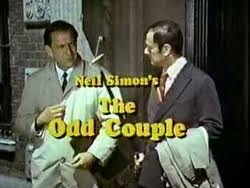
The Odd Couple: Kairos and Masochism

images

Going through Roland Barthes lecture notes (for his lectures in Morocco in 1978), I came across an odd relationship, one I have never seen posited by any scholar; namely, the relationship between Kairos and Masochism.  Giving some thought to it this morning, it occurred to me that timing may in fact have something to do with masochism if, that is, one doesn’t try to master it.  On the other hand, I wondered what this has to do with the schlemiel or humor.  To be sure, Leopold Sacher Masoch, the father of masochism, did write a novel or two about Jews who he lived side by side with and who, some argue, taught him about the masochism.  Gilles Deleuze, in his book Masochism, posits a relationship between humor and masochism and contrasts it to the relationship of irony to mastery.  Although he discusses the relationship of masochism to contingency (something Barthes is interested in), he doesn’t discuss the relationship of masochism to time.

How does Barthes approach this topic?  And can we learn anything about the schlemiel’s relation to time by way of addressing it?

In a sub-section of his notes entitled “the Perishable,” Barthes notes that the “right moment” that informs his notion of Kairos is one that “passes” and that, in terms of the subject, it is a “perishable quality” of this passing moment is “accepted, wanted.”  But, says Barthes, desire is not an act of “resignation” – rather, it is an act of “consecration.”  But this consecration is not the creation of monument to one’s mourning of the passing moment.  It is, instead, an “acceptance” of the moment’s contingency, fragility, and perishability. And it exists, says Barthes, in the parenthesis.  In other words, it is not something that can be affirmed or denied; it is neutral.  But if this is the case, how do we understand what he means by desire or acceptance?  Isn’t that an affirmation or an act of the will?

Anticipating this question, Barthes looks to create a notion of acceptance that has nothing to do with the will.  And all of this, for Barthes, is a preface to his claim that masochism is related to Kairos.  To this end, Barthes evokes a non-western concept so as to challenge the western notion of the will which, as anyone who has studied 20th century philosophy knows, is a central concept that has met with much debate and discussion.

(To be sure, the assumption of the will is an ancient notion which finds its culmination in Nietzsches’s idea of the “will-to-power.”  The German philosopher Martin Heidegger argues that Nietzsches’ notion of the will-to-power marks the end – or the completion – of metaphysics.  Barthes, in the spirit of Heidegger, Jacques Derrida, and other Continental thinkers is also putting the notion of the will and its metaphysical foundations into question.)

The non-western concept that Barthes brings to the fore is “Wou-Wei” – a concept drawn from the Tao.  He contrasts it to the “will to live,” but says that it is “not the opposite”:

It’s not the will-to-die: it’s what baffles, dodges, disorients the will to life.  It’s therefore, structurally, a Neutral: what baffles the paradigm.

Continuing on this line of reasoning, Barthes says that “wou-wei” privileges the “spontaneous” to the “detriment of” the “voluntary.”  It is something that doesn’t come from us.  But it also involves “not-doing”:

Wou-wei: not to direct, not to aim one’s strength, to leave it marking time in place.  For example the Melting of Breath (lianqi) is superior to the Control of Breath (xingqui).

This also includes not using one’s strength, intelligence, wisdom, or knowledge or “to use it to the minimum, within the limits of a pure concern for protection, for prudence.”

In the face of Wou-wei, Barthes points out that the West is baffled since it is a “subversion of all our moral values, and notably of the “progressive” ones.”  The wise person, notes Barthes does not “strive” or struggle.”  Citing a Taoist, Barthes notes that the wise man has a “tranquility in disorder.”  This, of course, goes against what Barthes calls “the moral ideology of the will,” which he defines in terms of the will to “dominate, to live, to impose one’s truth.”

In terms of temporality and time, the will is in accord with the individual who looks to dominate and shape the moment.  In contrast, Barthes notes that Wou-wei is not a moment dictated by the individual “but according to what one says of him.”  Citing Freud’s work of Leonardo DiVinci, Barthes associates this with a “feminine sensibility” which did not “abstain from the world.”  DiVinici’s gesture is non-western – it is an illustration of Wou-wei – since he exposes himself to the sensory world and judgment.

And this is where Barthes brings in the relation of time/Kairos to masochism.

Citing a passage from Tolstoy’s War and Peace, Barthes points out a moment in the text where the main character is, so to speak, experiences his hopelessness.  This experience, because it is narrated and makes extensive reference to time, has a temporal quality.  In addition, it illustrate a state of non-action and non-striving of the will:

During his journey he, as it were, considered his life afresh and arrived at his old conclusion, restful in its hopelessness: that is was not for him to begin anything anew – – but that he must live out his life, content to do no harm, and not disturbing himself or desiring anything.

This “disenchantment,” says Barthes, has a “slightly masochistic tonality.”  I find this suggestion to be very telling as it implies that the Kairos, for Barthes, has a lot to do with acknowledging one’s hoplessness in relation to the other.  Unfortunately, Barthes spends more time thinking about the “surprise” of these moments and of accepting them and not enough time on the masochistic element.  Nonetheless, he does celebrate the fact that, in these states, one is “good for nothing.”

I find it fascinating that Barthes can see a link between Kairos and masochism.  But that the link to the other is displaced by the reflection of the self’s relation to the event while Deleuze thinks about masochism in terms of this relation but without thinking the relation to time (save for the claim that masochism exposes one to the contingency of terms and relations).

What I would like to suggest is that we address the temporality of the schlemiel in terms of a masochism that is temporal and relational.  However, as Ruth Wisse suggests at the outset of her book The Schlemiel as Modern Hero, in the midst of this gesture there is a reversal victimization and, as I would argue, masochism.   I would like to look more into the presence of masochism in the comic but I want to juxtapose it to the irony we also see. Deleuze insists that we separate irony from humor, but as I would like to show in future entries, how they often work together in schlemiel comedy. And, more importantly, this is not simply a matter of relation; it is a matter of timing.

The schlemiel is and is not a masochistic figure and the communication of that paradox is all in the timing.  Kairos and masochism are an odd couple…like Felix and Oscar….

Perhaps that is what makes schlemiel comedy so (un)timely.

It’s All in the Timing: A Brief Note on Kairos

DownloadedFile-1

After responding to Jeffrey Bernstein’s piece on schlemiel temporality, I have been thinking about the relationship of messianic time (the Augenblick) to schlemiel temporality.  Are they, in fact, opposites?  The key term that Bernstein brought to the discussion was Kairos.  As I noted in the last blog entry, this term was used by Paul to signify a kind of time that is anticipated, messianic.  As Bernstein puts it, kairos is the “eschatalogically charged instant in which the encounter with God and the acknowledgment of messianic time occurs.”  In contrast to this time, Bernstein proposes a time that he calls more “prosaic” as opposed to the time of Kairos which is more poetic and resonates more with a Christian tradition that battles with presence. Jewish time, in contrast, is belated.  As I noted:

Bernstein brilliantly argues that “the schlemiel does not prophesy so much as ‘register prophetically’ what has already happened as what will always already continue to have been happening (Oy, look what I did).”   The schlemiel doesn’t have an “Ahah!” moment so much as an “oh…yeah!” moment.  And this is not by any means an moment of Kairos or messianic anticipation (with all of its poetry and pathos).  Rather, it is quite a prosaic and mundane moment.

This prosaic moment is necessarily comic.  And, as I note in the blog entry, Walter Benjamin’s “Vestibule” aphorism marks such a discovery; however, in it, Benjamin realizes that he is the subject of the joke.  His writing, as the aphorism implies, is always-already childish, but he figures it as a surprise.

Bernstein’s reading of Kairos puts an interesting twist to my reading and it made me think about the other reading of Kairos; namely, the one that both Heidegger and Agamben reject. That reading is the reading of Aristotle.  To be sure, Aristotle’s reading is to prosaic for them.   They would rather have Paul’s reading of Kairos on their side.

I was curious about this reading of Kairos and it struck me that I had, in the past, come across another reading of Karios which I found very interesting and perhaps even relevant to schlemiel theory.   I found this reading in one of Roland Barthes’ lectures which he gave in 1978 in Morroco.  The lectures have been translated and complied in a book entitled The Neutral.

What I find most interesting about Barthes’ readings of Kairos is the fact that he doesn’t even mention Aristotle.  In fact, he mentions two “other” readings of Karios: one coming from the sophists and the other from the skeptics.  I’ll briefly sketch them out and, in the end of this blog entry, I’d like to think about whether or how they can be related to the schlemiel.

Barthes begins his lecture on Kairos by giving its etymology: Ho Kairos: right, appropriate measure.  And then he reads it in terms of time as a “timely moment” or “occasion.”

To illustrate his take on Kairos, Barthes contrasts the Sophist’s reading of Kairos to the Skeptics.  For the sophist, proper speech is always about finding and speaking at the right moment:

The temporality of the Sophist discourse by jolts, zigzags, catches: hunting for the “right moment.”  The tension is continuous, lengthy lookout > discourse of mastery: the “right moment” = weapon of power: today we would say: political swell.

In contrast to the Sophists, the Skeptics are not looking to appropriate time as a “weapon of power” that can be used to win whatever argument.  Rather, the skeptic’s sense of Kairos is about “marking” time and “undoing the time of the system.”  The skeptic:

Puts moments of flight in it (the system and is) about preventing the system from taking.

Barthes mentions how, if there could actually be a “virtual system of Skepticism,” it would be the “devise for undoing mastery.”

However,  regardless of their differences, both the Sophistic and the Skeptical sense of Kairos would agree that “Truth is not the ultimate instance.”  In his discussion of this point, which echoes Marx and Hegel, Barthes brings up Hegel’s words on Skepticism and relates it back to Kairos.  According to Hegel,  both the skeptic and the sophist are stuck on the level of “subjective certainty and conviction and not on the value of absolute truth.”

Skeptic: acts according to laws that don’t have truth value to this eyes: his consciousness is a completely empirical existence; his reality = total contingency; his self-identity – something completely empty.

Barthes builds on this reading and exults Kairos as the time of contingency.  He notes that it has a “humbling” feature:  it is what “prevents the becoming system, the becoming arrogant of worldliness.”  He translates this into a way of avoiding being on time or what he calls “perfectly dodging time.”  To illustrate, Barthes cites a passage about the pre-Socratic philosopher Thales and his avoidance of marriage:

The story is told that, when his mother tried to force him to marry, he replied that it was too soon, and when she pressed him again later in life, he replied that it is too late.

The point of this version of Kairos, which “perfectly dodges time,” is to avoid being taken into any system or even having one’s own system.   Ultimately, Barthes throws out the possibility that Kairos is to be associated with Satori.  But instead of translating this into a timeless spiritual state, Barthes associates it with “an energetic time: the moment insofar as it produces something, a changeover: it’s a force > non-tactical kairos (not meant to trap the other but rather interiorized).  This leads him to claim that, unlike an intellectual “insight,” the Kairos is an energetic “burst of brilliance” – “of the moment in its pure status of exception, its absolute power of mutation.”  And this relates back to the skeptics insofar as, for Barthes, the main mode of perception for the Skeptic is skepsis which he translates as “intense observation.”

And out of Satori, out of this “intense observation” that is Kairos there is an exclamation: “Ah, this!”  This is opposed to a rational apprehension of things: “That’s how it is!”

After reading through Barthes’ reading of Kairos, I wonder: is this “Ah, this!” (Kairos) moment different from the moment of schlemiel temporality which exclaims, as Bernstein puts, “Oh…yeah!”?   I’m inclined to say yes and I do this with the thought that, for Barthes, the Kairos he describes is still caught up with the loss of truth and the experience of time as contingency.  What’s different with the schlemiel is the tension between the hope and skepticism (which is a temporal tension).  The schlemiel – or the viewer of the schlemiel – cannot simply settle for the skeptical.  Its there, as is the tact of the sophist, but there’s more.  And this leads to a kind of irony that is temporal in character.  Perhaps this is the comic aspect that Barthes’ reading lacks.  It wouldn’t make sense to him or to a Sophist or Skeptic – to be caught in such a temporal jam of absent-mindedness.  To state it simply, Jews know very well the meaning of contingency; that’s not the issue.  It’s the relation of contingency to election and to its frustration.

By election  I don’t simply mean the election of the Jews by God as stated in the Torah.  Rather, by election I mean, as Emmanuel Levinas says, that one is elected by the other to be responsible.  (This is something outside of oneself and beyond one’s control.  But it is constantly coming toward one, as it were, from out of the future.  It, so to speak, haunts one’s every move.)  And this creates a different sense of temporality than the temporality of Kairos.  This election comes from out of the future and by way of the other person (and, for the schlemiel, that could be the shlimazel, the audience, etc) and it reminds one that one is always-already indebted to the other and that, most likely, one will fail – in one way or the other – to “properly” respond to the other. And, as in many a schlemiel routine, this always comes as a surprise.  The schlemiel is, in a sense, always belated vis-à-vis the other.  He comes too late.  And this isn’t so much a “perfect dodging of the system” (as we saw above with Thales witty way of dodging marriage) as being dodged.

And on this note, the belated “oh…yeah!” of the schlemiel resonates differently that the “Ah, this!” of the Zen master.  Perhaps this is the temporal key to why the schlemiel is so funny: she will always be to late not because she is simply absent-minded but because she is – so to speak – too late for the other.    And, as I suggested in my title, it’s “all in the timing.”  This timing of the other does have a Messianic aspect to it since, in this kind of time, one is constantly standing in judgment (a judgment that is alway to come).  The awkwardness of the schlemiel and her acknowledgment – stated in the “oh yeah!” –  is constantly repeated.  And this repetition reminds us that the schlemiel, as a Jewish comic character, stands continually in this kind of temporal relation.  It is a relation that Jews have, so to speak, inherited from their tradition and, as Levinas argues, from their acute awareness of an other who – I might add – may or may not laugh at one’s jokes.

A Response to Jeffrey Bernstein’s Guest Blog Post: “Schlemiel, Schlemazel…Augenblick Incorporated”

DownloadedFile

Comedy is all about timing.  As they say in showbiz, “it’s all in the timing.”  So, if “it’s all in the timing,” how do we understand comic timing?   More to the point, how does schlemielintheory.com understand the timing of the schlemiel?

I have been thinking about the timing of the schlemiel in many different entries.  But, to be sure, one of the most insightful entries into the timing of the schlemiel came to me by way of a guest post by Professor Jeffrey Bernstein.   On March 24th, he wrote a guest post for schlemielintheory.com entitled “Schlemiel, Shlimazel….Augenblick Incorporated.”  It addressed an earlier post (and other posts) that addressed the relationship of the schlemiel to the prophetic and the messianic.    Bernstein’s post, on the one hand, looks into how and whether the schlemiel’s temporality relates to the models of temporality handed down to us from such religious figures and theologians as Paul, Augustine, and Luther, on the one hand, and from such philosophers as Giorgio Agamben and Martin Heidegger.  On the other hand, he asks, in the wake of these whether another model exists.  I think Bernstein is on the right track and I would like to briefly go over his readings and his suggestions before I give my two cents.

Bernstein begins his blog post by correctly noting that one of my posts suggests the tradition of the “augenblick” (the wink of the eye).  He cites that passage:  “Winking is not a straightforward gesture.  It is oblique.  And it is immediate, like a blink of an eye.”

Commenting on this, Bernstein notes that when he read this he thought of the “augenblick” of the religious and philosophical tradition and Walter Benjamin’s notion of Jetztzeit (“now-time”).  Bernstein’s question, upon seeing this, was about whether or not there is a “schlemielich temporality.”

To answer this question, Bernstein turns to the classic (American) schlemiel joke about a schlemiel and a schlemazel (or shlimazel, as one transliteration from the Yiddish has it) who go out to eat and the schlemazel asks the schlemiel to get him some soup.  When he comes with the soup, the schlemiel accidentally trips and pours the hot soup on the schlemazel.  In Bernstein’s retelling, the temporal aspect is highlighted:

Schlemazel:  Ow!  Vey iz mir!  That soup’s hot!  Look what you did!

Schlemiel:  Oy! Look what I did!

Commenting on this joke, Bernstein notes that there, apparently, isn’t anything indicating anything “messianic” or “prophetic.”

There doesn’t appear to be any prophetic aspect to this caricature—but of course, the littlest things contain the deepest truths.  Soup is hot; we make messes; we burn—such is life.  And what can we do except scratch our foreheads and say ‘Oy! Look what I did!’  This may be the adult secret contained in many of our childhood experiences.

To be sure, this last line does offer an important clue. But before explaining why this is the case, Bernstein correctly notes that the “augenblick” – that I associated with the schlemiel by way of the wink – does have a source in theology and philosophy.  On this thread, Bernstein points how many thinkers and theologians in the 20th century – such as Barth, Heidegger, Rosenzweig, Lukacs, Benjamin, Kafka, Adorno, Bloch, Schmitt, etc – “all attempted to articulate the sense that if historical change is to happen, it will do so instantaneously and non-teloelogically.”  To do this, many of them drew on the concept of the “augenblick.”  As Bernstein points out, however, this is nothing new.

To be sure, it goes back to Paul and finds its way to Augustine and then to Luther.  Bernstein points out how Paul’s notion of “Kairos” marks a sense of immediate and non-teleological historical change:

(It is) the eschatologically charged instant in which the encounter with God and the acknowledgment of messianic time occurs.

As Bernstein also points out, this notion resurfaces in Augustine’s “discussion of ‘the present’.  Years after Augustine, Paul’s notion of Kairos is translated, for the first time, into German by Luther as “augenblick.”  Augenblick translates Paul’s claim that the redemption will come in a “twinkling of an eye.”

After citing the religious thread, Bernstein points out the thread that leads from philosophers such as Martin Heidegger to Giorgio Agamben who read the Augenblick against the “mechanical conceptions of temporality.”  He correctly notes that Heidegger and Agamben both oppose Aristotle’s reading of Kairos as “opportune time” and how they both lean more toward Paul’s reading of Kairos.

Taking all of this into account, Bernstein argues that Augenblick is not the right term to use in reference to the schlemiel.  The reasons are as follows:

(1) ‘augenblick’ and ‘jetztzeit’ (understood as sudden and arresting) are both set over against a conception of time as homogenous, empty, identical and simply quantitative, and (2) as such, both terms are markers for a presence which the schlemiel  always seems to refuse (or, perhaps, fails to attain).

In other words, the schlemiel is much more prosaic.  He/she doesn’t appeal to this concept of time which “bears witness to a religious tradition in a context that is poetic.”  Rather, Bernstein tells us that it appeals to a Jewish sense of time.  Citing Amos Oz and Fania Oz-Salzberger’s book Jews and Words,  Bernstein points out that Jews look forward and face the past.  This recalls the reading of Paul Klee’s Angelus Novus by Walter Benjamin in his “Theses on the Philosophy of History” and Hannah Arendt’s essay on Kafka (and her introduction to her book by the same title) “Between Past and Future” where she situates the “he” of Kafka’s novels between the past and the future.

How does all of this reading of Jewish temporality relate to the schlemiel?

Bernstein brilliantly argues that “the schlemiel does not prophesy so much as ‘register prophetically’ what has already happened as what will always already continue to have been happening (Oy, look what I did).”   The schlemiel doesn’t have an “Ahah!” moment so much as an “oh…yeah!” moment.  And this is not by any means an moment of Kairos or messianic anticipation (with all of its poetry and pathos).  Rather, it is quite a prosaic and mundane moment.

I think Bernstein’s reading of the schlemiel’s temporality is right on the money.  Thirteen days before he wrote his guest post, I was pondering this kind of Jewish temporality vis-à-vis the moment in Walter Benjamin’s “Vestibule” aphorism (in One Way Street).  In my blog entry, entitled “Wink, Wink! Walter Benjamin’s Childhood Secret and his Calling to Schlemieldom,” I point how he discovers that he already is a schlemiel:

In the aphorism, Benjamin notes how, in a dream, he “visits” the home of the famed German writer, thinker, and poet: Johann Wolfgang von Goethe.  He notes that even though he was in Goethe’s house, “he didn’t see any rooms.”

Benjamin tells us how the interior of his dream space appears to him from his angle-slash-perspective: “that it was a perspective of whitewashed corridors like those in a school.”  This implies that he feels like a young student in Goethe’s house (or, rather, school of thought). In the house-slash-school, there are “two elderly English lady visitors and a curator.”  They are only “extras.”  They lead him to the secret, which, we must underscore, is to be read and written.  The curator asks that he and the two elderly ladies “sign the visitors’ book lying open on the desk at the end of the passage.”

When he opens the book to sign, he has a revelation about his name and his prophetic calling:

On reaching it, I find as I turn the pages my name already entered in big, unruly, childish characters.

He realizes that he doesn’t have to sign!

This is the prophetic calling of the schlemiel.  To be sure, his name is “already” written in “big, unruly, childish characters.”  The words literally wink at him: Benjamin is in on a big joke.   This passage suggests that we all know that Benjamin was always meant to be a fool.  Moreover, it is written in the book of Goethe: the prophet, so to speak, of all German scholarship.

In the blog entry following this one, I call his realization (humorously) the “schlock of discovery.”  The point of the shock is, as Bernstein would say, not a poet “Aha-moment” so much as a prosaic “oh-yeah-moment.”  Benjamin’s discovery has a belatedness to it which is unmistakable.  And it has a prophetic element to it as well since it does, as Bernstein says, “prophetically register what has always happened as what will always already continue to happen.”  And when Benjamin says “Oy, look what I did,” he realizes that he, like a schlemiel, didn’t know what he did and only finds out later about it.  But, ultimately, the lingering question for Benjamin – in the “Vestibule” aphorism – is really “who”did this?  Am I the source of this prank or something/someone else?

I want to thank Professor Bernstein for clarifying the schlemiel’s temporality for me.  It is prophetic and messianic but in a way that is more prosaic that anything we find in Paul, Augustine, Agamben, or Heidegger.  And this temporality yields a prophetic and messianic kind of time that is “other.”

Bernstein ends his piece on the schlemiel’s temporality with a contrast that brings out what is at stake; it’s the difference between a poetic and a prosaic ending-slash-beginning:

If life is poetic, we turn to TS Eliot: “After such knowledge, what forgiveness.”

If it is prosaic, what else is there to do but laugh? Incipit schlemiel…

In lieu of this, I find it fascinating that, in relation to the Messianic, the Midrash associates real laughter with a laughter-to-come.  In making this claim (or rather interpretation) it uses Psalm 126:2 as its textual basis:

Then our mouth was filled with laughter And our tongue with joyful shouting; Then they said among the nations, “The LORD has done great things for them.”

Q: How do we reconcile the schlemiel’s belatedness with this laughter to come?

A: It’s all in the timing.


Neo-Hasidic Magical Realism and the Revision of the Hasidic Schlemiel

DownloadedFile-4

In his book Unheroic Conduct: The Rise of Hetrosexuality and the Invention of the Jewish Man, Daniel Boyarin has a chapter where he looks into how some of the stories of the Baal Shem Tov, the father of Hasidism, evince a new approach to Jewish masculinity.    Boyarin prefaces this reading by arguing that Jews, traditionally, are averse to masculinity.  In fact, he notes that a Yiddishe Naches (a Jewish Joy) as opposed to Goyim Naches (non-Jewish joy) was illustrated, during the Middle Ages, in the Passover Haggadah.  The images Boyarin includes in his book show the four sons which, as he argues, demonstrate a clear distinction between the “evil” son and the simpleton.  As he argues, the distinction can be read in terms of masculinity.  The evil son is stronger and more masculine that the simple son.  And this, claims Boyarin, illustrates the fact that Jews in the Middle Ages saw masculinity as other.  Instead, Jews valued the quality of humility and edylkeit, qualities that were often found in the pious Jew.  Learning and not physical prowess were of interest to the Jewish community.

Boyarin argues that this value is challenged by way of the Baal Shem Tov’s stories.  Boyarin, relaying a few selected stories, calls the group that disseminates these stories “revisionist”(61).  And by revisionist he implies that they revised the Medieval paradigm which privileged humility and denigrated masculinity.  He argues that this revision is “closer to the normative traditional Judaism of the nineteenth-century of East Europe” and not to the normative traditional Judaism of the Middle Ages.  And it is closer in the sense that, according to Boyarin, it is more masculinist.

In the story he cites as a proof-text, we learn about how, on the way to school, a teachers assistant would take his students from their homes to the school or to the synagogue. He would sing heavenly songs as he walked them to school:

While he walked with the children he would sing with them enthusiastically in a pleaset voice that would be heard from far away.  His prayers were elevated higher and higher…And it was a time of rejoicing in heaven.

However, while this is happening, evil is brewing.  The Satan overhears this music and, looking to interrupt it, transforms himself “into a sorcerer.”  And, once, while the Baal Shem Tov was walking with the children, “singing enthusiastically with pleasure…”

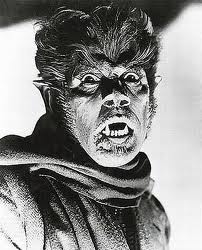
…the sorcerer transformed himself into a beast, a werewolf.  He attacked and frightened them, and they ran away.  Some of them became sick, heaven help us, and, could not continue their studies.   (62)

In response, the Baal Shem Tov (from here on the BESHT) “recalled the words of his father, God bless his memory, not to fear anything since God is with him.”  Drawing on these words, the BESHT goes to the people in the community and “urges them to return the children to his care” since he will “fight with the beast and kill it in the name of God.”

The town agrees to his pleas.  And the BESHT then takes up a “sturdy club” with him just in case he is attacked:

While he walked with the children, singing pleasantly, chanting with joy, this beast attacked them.  He ran toward it, hit it in the forehead, and killed it. The corpse of the gentile sorcerer was found lying on the ground.  After that the Besht became the watchman of the Beit-hamidrash.  (62)

Writing on this passage, Boyarin notes that what we find in this passage is a “tension between its valorization of “Diasporic” models of Jewish masculinity (models based in the Middle Ages) and the inability of such men to ‘protect’ Jewish children from anti-Semitic violence”(63).   Boyarin points out that the BESHT is different insofar as he is a “Jewish boy who did not grow up like other Jewish boys.” He is different, says Boyarin, insofar as he is more masculine.  This text, he argues, provides a “revisionist model of masculinity…one closer to chivalric, romantic ideal of manliness than to the scholarly ideal of the Yeshiva-Bokhur”(63).  Nonetheless, says Boyarin, it is trying to “preserve” the “scholarly ideal.”  The proof of this can be found in the fact that there is a “delicate semiotic code opposing indoors to outdoors.”   The “subversive aspects” are placed on the “outdoors.”

Boyarin goes on to argue that this tension is negotiated in several of the Besht’s text. But the crux of the matter, for Boyarin, is that this is gradually lost when the Hasidic ideal is displaced by the Zionist one.  To be sure, Boyarin sees the Medieval Model as offer a critique of Hasidic and Zionist practices.  And he would rather we turn back to the older pre-Hasidic ideal.   While this reading is interesting, I like to suggest that Boyarin look into the final parts of Meir Abehsera’s parable.

As I have pointed out, the end of this parable works on a few levels and draws on Magical Realism.  In the parable, the Old Beggar – who was once the schlemiel whistler – is met with a major challenge: the Miser.  Before visiting the Miser, the Old Beggar is reminded that he is a schlemiel and of what great power this comic character has.  To sum up, the schlemiel has the power to break illusion and bitterness by way of joy.  The emphasis on breaking presents us with an ideal that Boyarin may take issue with since it includes a kind of violence that he might deem masculine.  Nonetheless, the notion of challenging evil and “breaking” klippot (shells that conceal God’s light) is actually a Medieval notion (found in the work of Rabbi Isaac Luria) that made its way to the Hasidim.

When the Old Beggar encounters the Miser, he is rudely accused of being a thief and a liar and it told to leave his premises.  In response, the Old Beggar transforms himself into a dog.  At first he goes at the miser, but then he becomes playful.  The joy seems to break the Miser, but, the audience is troubled when they see what looks like an attack on the Miser. But, and this is the twist, they see that they are really play fighting with each other.

Although Boyarin might call this yet another model of the “revisionist model of masculinity,” I think it would be wiser to call it a neo-Hasidic revision.  In Abehsera’s parable, the Old Beggar becomes a new kind of schlemiel, a schlemiel which can be aggressive and playful.   Moreover, in this model, the Old Beggar transforms into a dog (and reverts back to the schlemiel).  Instead of the Satan transforming into a Sorcerer, we see another trick that, this time, is played by the Old Beggar (who has much in common with Yeshiva Bocher of the Middle Ages insofar as he is humble and not aggressive).    However, the Old Beggar doesn’t become a schlemiel; he always was one.

But the schlemiel he originally played was one who actively disturbed an entire town by whistling in the middle of the night.  Moreover, the Old Beggar’s reversion to the schlemiel-as-dog ends with the dog-becoming-man.  This is where the tale ends.  And in this reversion the Miser and the Schlemiel/Beggar are now friends.   And the community, in bewilderment, learns of a deeper kind of joy which emerges out of a struggle that appears negative but is actually positive and playful.  The point of Abehsera’s neo-Hasidic tale is to revise the schlemiel.

Instead of extremely humble schlemiels who wouldn’t know evil if it stared them in the eye, this schlemiel, while humble, is also touched by a zealousness and playfulness which looks to “break” seriousness by way of play and joy.  There is definitely a force behind this schlemiel that we don’t see in the Hasidic schlemiel evninced by Rabbi Nachman’s of Breslav’s “simpleton” (in “The Clever Man and the Simple Man”).

At the outset of Abehsera’s parable, we meet a schlemiel who whistles and the wind that comes from him, in the end, either moves people to laugh or takes their breath away.  That’s the point.  The neo-Hasidic schlemiel – for Abehsera – transforms and breaks the rules of realism and culture so as to transform the community and transform bitterness into joy. For Abeshsera, this is the task the writer needs to communicate to the reader. After all, as I pointed out in previous blog entries, the writer is the “relay” of the schlemiel.

Regarding Boyarin’s reading, I think it would be a mistake to simply read this in terms of a “revisionist” masculine paradigm which he, ultimately, sees as problematic.  Instead, this should be read in terms of what good it can do.   Abehsera responds to Walter Benjamin’s question as to whether the fool can do humanity any good with a resounding yes.  And we see this by way of the community’s response to the schlemiel’s magical realist transformation from a dog back to a beggar who seems to be fighting with the Miser but is really playing with him.  And that response is not simply laughter; it’s laughter followed by dumfoundedness.  That’s the neo-Hasidic revision.

The Day of Judgment: Reflections on Sholem Aleichem’s “A Yom Kippur Scandal”

images-3

On Erev Yom Kippur (the Eve of Yom Kippur), it makes sense – at least for me – to ask how Sholem Aleichem, perhaps the most well-known and celebrated of all writers on the schlemiel – approaches Yom Kippur by way of fiction.  With this in mind, I thought of one piece that has Yom Kippur in its title, a piece which the literary critic Irving Howe believed illustrated the darker side of Aleichem’s work: “A Yom Kippur Scandal.”

Aleichem’s story begins with a “man with round eyes, like an ox” who, “sitting in a corner” of a synagogue, “overhears stories about thefts.”  In response to hearing them, he screams out “That’s nothing!”

He has a story that will top their stories, one which will astonish them.

The storyteller begins by pointing out that in Kasrilevka (Aleichem’s Chelm – his imaginary town where schlemiels come and go) there is no thievery. And that is because, quite simply, no one has any money.  But, in truth, he says, a “Jew is not a thief by nature.”  Jews don’t break into houses brandishing knives or guns.  If they steal, and they don’t often do so, they do in an indirect, clandestine manner: “He will divert, pervert, and subvert and contravert as a matter of course; but he won’t pull anything out of your pocket.”  (This, of course, plays on the difference, stated in the Talmud and familiar to Jews of Aleichem’s time, between the Ganev (thief who steals openly) and the Gozlan (the thief who steals indirectly).

However, he tells us, he witnessed one case that was unusual; and that case happened on Yom Kippur.  He tells us that a wealthy man came from out of town and, upon coming to the synagogue, he generously gave charity to the poor in the synagogue.  Following this, the community makes room for the charitable guest at the front of the synagogue for the holiest day of the year: Yom Kippur.

The guest takes his seat, prays deeply, “standing on his feet all day,” and, right after the final shofar blasts of Yom Kippur, he screams out that his money has been stolen:

Help! Help! Help!

He looses consciousness and falls on the floor.  When he comes to, he tells the congregants that a large sum of money had been stolen from him while he was praying.  First of all, in traditional Judaism, it is well-known that on Yom Kippur (the “Sabbath of all Sabbaths”) one doesn’t carry money.  And this man, who appeared very pious, was violating this prohibition on the very day one would be careful not to carry money.  Nonetheless, this is not addressed.  Rather, the theft is.

The man tells us that the stolen money wasn’t even his own.  He was a clerk, a poor man with a lot of children.  He couldn’t face them know and he openly ponders ending his life.  In response, the “crowd stood petrified.”  And the Rabbi, observing the scene, orders the doors to be locked.

Following this, he addresses what just happened and communicates his awe as to how, on a day like Yom Kippur, someone could stoop so low as to steal (and in a synagogue)!

I cannot believe it is possible.  It simply cannot be.  But perhaps – who knows?  Man is greedy, and the temptation – especially with a sum like this… is great enough.  So if one of us was tempted, if he were fated to commit this evil on a day like this, we must probe the matter thoroughly, strike at the root of this whole affair.

He orders everyone to empty their pockets.

Everyone does so except for a gentleman named Lazer Yossel, “who turned all colors and began to argue that, in the first place, the stranger was a swindler…No one had stolen any money from him. Couldn’t they all see that it was all a falsehood and a lie?”  At this point, the “man with round eyes” (the story teller) tells us that the congregation, upon hearing this, became very suspicious of Lazer.  The crowd orders that he be searched.

Lazer pleas desperately with them:  “He begged them not to search him.  He swore by all that was holy that he was innocent.”  After saying this, storyteller notes how he was a young and learned man (he even calls him “our prodigy”) but, in lieu of the story, he notes that, nonetheless, there was reason to be suspicious of him.  To be sure, the reasons he brings up are odd (they aren’t really reasons so much as rumors) and they show how, in a given situation, one can dig up anything to make a good man look evil.

The man is thrown on the ground by the crowd and searched.  But what they find is not what they expected: instead of finding money, they find “a couple of well-gnawed chicken bones and a few dozen plum pits still moist from chewing.”

The story ends in shame and disillusion.  And the money, the “man with the round eyes of an ox” says, was never found.  The last words of the story say that it was “gone forever.”   But before saying these words, we learn that the narrator turns to the widow “unconcerned” and “resumed smoking.”   He is indifferent.

Reflecting on this story, I think that Irving Howe, to some extant, is right: this story exposes us to something dark about Jewishness.  But what is it?

What struck me most is the presence in this story of judgment and the fact that it all happens on the day of judgment.  What Aleichem wants us to consider is how we judge each other and how we are judged. To be sure, the storyteller wants us to understand how we look at people and judge them based on who we think they are.  Moreover, he shows how, given this or that rumor, our judgment of them may always turn sour.  We saw this with the scholar, and, as readers, we thought that his words incriminated him.

But what we thought he was guilty of was incorrect.  Yes, he was guilty, but we had no idea he would be guilty of eating on Yom Kippur instead of fasting.  Regardless, we are astonished and, by the end of the story, the difference between appearance and reality is put into the foreground.  We are left with a sense that those who we think are pious may not be and that, at the same time, we are also guilty of falsely judging them.  In this story, everyone is guilty of something.  And, of all days to see this, it is on Yom Kippur.  It seems as if everyone is keeping it, but concealed in their pockets are things that are forbidden on that day: such as money (which may or may not have been stolen) and food (which was eaten).

And perhaps that is the point.  We all seem to be hiding things and the veneer of holiness may only serve to conceal sin.  This thought is very cynical,  And the last words of the story “gone forever” seem to amplify this cynicism.  They seem to hint at something, besides money, which is “gone forever.”  Given the cynical tone of the story, what seems to be gone forever is not the money but true piousness and trust.   And this, I believe, is what bothers critics like Irving Howe.

But is honesty really gone forever?

This, I think, is the question or rather the challenge that Aleichem wants to leave us with.  The last words – and the story – can be a judgment upon humankind, that is, if we let it be.   On Yom Kippur, the tradition is that one wears a white kittle (garment) the reason being that, on Yom Kippur man aspires to be close to the angels.  I just want to underscore the word “aspires.”  If it is to be honest, the cynicism in this piece brings out what is at stake and helps us to realize how easy it is to falsely judge the other and, at the same time, how what we take for good may not be.  Nonetheless, the possibility of goodness doesn’t thereby disappear; rather, it is complicated.

And this is where the schlemiel comes in.  As Aleichem knew, the schlemiel was often subject to the negative judgment of the community for no other reason than that he is good or hopeful in a time that lacks hope or goodness.  Nonetheless, he exists.  And he exists in the face of the crowd which, more often than not, lives on rumors and lies.   But as “A Yom Kippur Scandal” suggests even the most pious may be hiding something from sight.

These pious people, in this story, were.  But they aren’t schlemiels.  And even if a schlemiel, like everyone else stands in judgment on Yom Kippur, we need to ask whether or not he is hiding anything.  Doesn’t he wear everything on his face?

Regardless, as we know from the stories I have discussed on this blog, no one – not even the schlemiel – escapes judgment (even if he is hiding nothing).

An Interview with the Stand-Up Comedian David Heti

DownloadedFile-3

Schlemielintheory.com had the opportunity to recently interview the stand-up comedian David Heti.  Samples of his work – which include videos, podcasts, and blog entries – can be found on his website/blog: http://davidheti.com/

I ran into David recently when he did a show with a group of comedians in Toronto. We talked after the show and agreed to have an interview by way of the email.  Here is the interview.  (Do note that I will be posting a blog or two on his comedic work over the next week as a follow up to this interview.)


SIT: Thank you for agreeing to be interviewed by the Schlemiel-in-Theory Blog!  I am very excited to be interviewing you since you are the first comedian Schlemiel-in-theory – a blog that is only 6 months old – has interviewed.  In the near future, we hope to interview more.  The point of these interviews is to understand how you, the comedian, understand yourself and what you do best.  (You can reply if you wish.)

DH: I could use help in understanding how I understand myself. Thank you. Thank you very much for this opportunity. As a comedian schlemiel-in-fact, perhaps—at least, that’s the subtext here, no? (It’s ok, I’m ok with it)—it’s nice to have found maybe somewhat something of a home. Indeed, I first came to your blog when in need of some comedy theory succor, and now here we are. So it’s a beautiful thing.

SIT: One of the interesting things about comedy that can be learned from the Talmud is that a Rabbi should open with a joke before teaching a lesson.  The reason for this is because it “opens up the senses” and makes it easier for one to learn something that can deeply affect them.  That said, what joke would you like to tell?

DH: But that whole first paragraph was a joke. Come on, what do you mean? No, but really, I think that’s a fascinating, entirely humbling tradition. I’m no Rabbi, but…

If you ask yourself whether life’s worth living…and…if you think about it…and, I mean, really think about it…like…all the time…like…if that’s all you ever do…like if that’s all you ever do…then…it really isn’t.

SIT: Why did you choose that joke?

DH: There are many reasons. First, it’s my joke. It is one, though, that I can recall telling only a handful of times, most presumably on account of it having never really worked. (Accordingly, the wording may not be quite right, as it’s yet to have come into any ostensible final form.)

Second, I feel like it’s a joke that attempts to speak to universal themes with respect to both life and comedy, not to mention—keeping in mind both the interview and blog—the schlemiel and rabbinic traditions. What is life? What is comedy? Why is life a comedy? Is life a comedy? Necessarily? For whom? Etc.

I also like how the joke isn’t—at least in my opinion—so expressly funny. Most especially with respect to a joke about life itself, the fact that a joke may not be funny can in fact contribute to its comedic merit. Sometimes a joke may simply set the stage for other jokes or whatever else is to follow.

Also, one time after telling this joke, a comic whom I’d never met before came up to me and said, somewhat curiously somberly, that he really appreciated it. And it’s making these little in fact not so insignificant connections—with comics in particular—that makes telling jokes—if at least only apparently so—feel so possibly meaningful or important.

SIT: Tell me about yourself.  Where do you come from? What kind of family did you grow up in?  And why did you decide to become a comedian?

DH: I come from an upper-middle class Jewish-Hungarian background, though I was born and raised in Toronto. My parents are professionals, both working in the sciences, whereas my one sibling—an older sister—like, more or less, myself, is in the arts. (Her name is Sheila Heti and she’s a wonderful writer.)

My family was very small, without too many extended relatives or at least very few whom we ever saw. There was pretty much absolutely no religious feeling in the home, though we did go to my grandmother’s for the holidays, though it was very much really about family only, not religion. I’d say my sister and I were quite free to speak our minds and question whatever we liked.

I’m not sure why I decided to become a comedian. I mean, there’s not that very much in the world that holds my interest or seems worthwhile (i.e., for me or perhaps even ultimately), so in one way it’s a sort of default response. (I’d imagine that if most things didn’t appear so ridiculous to comics, then there’d be no comedy. Comedy most certainly addresses what is, but by way of an immediate evading. Comedy, for me, is a ceaseless cutting down and exposing.) Divorce.

SIT: In your pantheon of comedians, who are the most important and why?

DH: My reply to this question has pretty much always been Woody Allen and Rodney Dangerfield. As a child, through my father’s love of his films, I was exposed to an inordinate amount of Woody Allen. So it’s perhaps somewhat just an accident of history. He was in effect my Walt Disney.

It’s hard to say whether I would’ve taken to these comedians later in life had I not been exposed to them so early on. That is, it’s possible that they were, quite literally, my formative comedic influences. I would say, though, that most likely a sense of humor is secondary, in that it must come after and in response to a more foundational sentiment of life. Woody Allen speaks to my sense of the absurd and ridiculous. Also, it’s always heartening to listen to recordings of his stand-up and recognize that intelligent comedy can succeed, find an audience and be amazing.

Rodney Dangerfield is just such an artist or craftsman. His stand-up comedy is so unbelievably simple and immediately accessible. He gets away with telling the simplest, silliest, dumbest and cleverest jokes, but in a way which makes you think that he’s the greatest genius you’ve ever seen. To be able—through the presentation of yourself as a buffoon—to command the highest respect, is such a hilarious, magical, innocent trick.

Aside from stand-up comics, Monty Python played a huge role too. I seem to recall singing their dirtier songs around the house (e.g. sit on my face and tell me that you love me) before even knowing what they lyrics meant. Maybe I just knew.

SIT: What makes your stand-up comedy unique and different from other comedians?

DH: I believe that I’m much happier than most other comics to leave the audience feeling uncomfortable. Perhaps most especially on account of our greater and general, traditionally post-modern disillusionment with ideas of truth, sincerity, objectivity, simplicity, etc., there’s something now intrinsically, sometimes painfully unfunny about somebody’s standing before you with the intention I’m going to go make you laugh, and then going and making you laugh. What could possibly be unfunnier than that? What could possibly more satisfy an audience’s expectations as to what the world ought or is supposed to be, which is precisely a non-comedic experience?

I’m not trying to make audience members feel terrible about themselves or that they’ve wasted their time, but in a very real way, if you’re not fucking with the audience or you’re not fucking with the form of stand-up comedy itself, then I’m not really sure what you’re doing. It’s ever-evolving and inward-turning—as what comedy is changes as what comedy is changes (or vice-versa)—but if comedy is to be in any way meaningful and more than just simple joke-making or entertainment, then it must be critical, which means self-critical. I believe that comedy—properly and at its best—is entirely, infinitely destabilizing.

And in a way I feel like an idiot because I really don’t want to suggest that I don’t respect or take pleasure from comics I see who don’t attempt anything like this. It’s just for me, at least at this time, I’ve little to no interest in putting out into the world any other kind of comedic performance.

SIT: Do you like telling jokes that may offend people?  And what’s the worst response you have received from a joke?  What happened?

DH: I’m not sure that I ever really want to offend. First, I just don’t think that’s a very nice thing to do. Second, I’m not sure what’s gained by an audience’s feeling only, mainly or even just very much offence; I’m not sure what that engenders. To confuse or create self-questioning or self-doubt in an audience member (e.g., as to whether they ought to feel offended) is wonderful, but that’s different than to cause offence, which to me suggests something far simpler.

I’ve had, I would imagine, my fair share of angry outbursts from the audience, but I’d say that the worst response I ever received from a joke was when a man with whom I was sort of friends just sort of silently walked out of the room, in what I can only imagine was incredible anger and hurt. At the time, I’d been telling jokes for about only a couple of months.

What happened was that I had one really nice joke about the telling a joke about the rape and murder of this woman…which the man in the audience loved. It turned out that his wife or mother (I can’t remember which) had in fact been raped and murdered, and he really, genuinely appreciated the joke. I remember him speaking to me after a set and we had a really lovely conversation about art, comedy and performance.

Bolstered, I suppose, by this incredible response to what was obviously a dangerous subject-matter, I then wrote a joke about my telling that joke. It just ended up being incredibly contrived, unartful and uninspired, and I suppose somewhat incredibly exploitative of my then newfound friend’s goodwill, pain and openness. It was just a dishonest process and intention.

I don’t believe that I’ve ever hurt someone more with a joke. I don’t think anyone’s ever had as much reason to be upset with a joke of mine.

SIT: When I heard you do a little stand-up, I noticed a few Jewish jokes.  You also mentioned that some people may consider you a “self-hating Jew.”  Do you consider yourself a Jewish comic?  And what do you think of those people who may think you are self-hating?  Do you have a message for them?

DH: Hmm…I’m not sure, but I think that the joke you’re referring to has me asking myself whether I think I’m a self-hating Jew. It’s not about others’ perceptions.

I most certainly consider myself a Jewish comic, but then what does that mean? I don’t think that there’s such thing as a universal comic or joke or comedic sensibility. Every joke assumes particular epistemic, linguistic, cultural, moral, etc. understandings and assumptions. I am Jewish, and Jewish feeling, history and values inform everything that I do and all the jokes that I tell, even if the jokes themselves may not be expressly about Jews or Jewishness. I suppose, though, ultimately, I would say that I have a fairly traditional Jewish comedic sensibility, yes.

As for the last part of your question, to those who may think I’m self-hating, I might say that hate is a very strong word. Certainly, I have self-doubt, but then I suppose that’s my value, but then I suppose that’s because that’s who I am. Am I supposed to disconfirm these people’s suspicions? Really, others can think what they like, about both me and self-hating.

SIT: What, to your mind, is the relationship of comedy to depression and suffering?

DH: I don’t think that one needs to suffer or be depressed to create or appreciate comedy. Perhaps in a perfect world there would be no possibility or place for comedy, but depression and suffering to me suggest terrible extremes. An appreciation of the comedic requires not only the intellect to understand, but the emotions to feel. For instance, can one identify something as funny without experiencing it as such? Can I think something objectively funny if I don’t find it subjectively so?

I think that contentment doesn’t necessarily lead to comedy, but then neither does the inability to feel happiness. Really, though, it’s been my experience that most comics aren’t the happiest people, or so it seems. Of course, the world of comedy itself is tough, but I think it attracts those who feel a kind of ultimate discomfort.

SIT: What “culture” do you most identify with and how does this culture come into your work?

DH: If I’ve understood the question correctly, I probably most identify with what I understand to be Mediterranean culture. Maybe I’ve a completely incorrect, romanticized idea of what that is, but their values, truths and aspirations appear to be very honest and undeniable. There’s sun, sand, simple food and half-naked bodies. This may come into my work by way of affecting a bluntness or directness or simplicity. There’s also an acknowledgment of the finitude of life, in addition to the utter poverty of any metaphysical basis for whatever notions of good or right.

SIT: In one of our conversations, you mentioned that you saw a blog post I had on Gene Wilder and Gilda Radner.  And what struck us both as most interesting was the fact that Gene Wilder said he didn’t always find his jokes so funny?  What kind of jokes make you laugh?  And do you laugh at your own jokes?  And do you think it is a comedians job to make people laugh? Or feel better through humor?

DH: I like jokes that reveal to me an absurdity which I’d never before thought of or recognized. Also, I like just sublimely ridiculous jokes. Sometimes I laugh at my own jokes. If it’s a new joke, I may laugh on stage, but then I can also laugh when listening to recordings of older sets.

Whether it’s a comedian’s job to make people laugh…this is a tough one. This is a tough one no less because of what I like to try to achieve with my own stand-up. I think that what belongs to a comedian’s art is humour. But humor isn’t synonymous with laughter. Laughter is only one kind of response to humour. (Though if we’re talking about the comedian’s job, then, yes, it is about laughter, but then beer and ticket sales too.)

This is also a very hard question, but, no, I don’t believe that belongs to a comedian to make people feel better through humor. I think that, more often than not, audiences feeling better is a byproduct of what a good comedian normally does, but that’s not the essence of comedy. For instance, if you look at the old Soviet era jokes, they were unimaginably bleak. What they ended up doing was revealing even deeper injustices and absurdities than the listener may have been aware of. In communicating to the listener I understand what you’re going through and we see the world similarly, you will almost invariably make them feel better, but then you can do this while at the same time revealing that the world is shit. This is a very complicated question.

SIT: From our discussions, I have learned that you were a philosophy major in University and then you went on to law school and actually practiced law.  Does philosophy or even legal practice or legal issues ever enter into your comedy routines or jokes?

DH: I wouldn’t say that I have jokes about philosophy or law per se, but certainly my comedy is informed by a philosophical disposition and way of understanding the world through the philosophical and legal. I enjoy playing with ambiguity, especially with respect to questions of morals and propriety. What’s potentially most comedic is that which speaks to what’s gravest or most sacred. What’s gravest or most sacred are notions of truth and morality, etc.

SIT: Sarah Silverman has said that it is, so to speak, healthy for a comedian to be offensive and travel the edge of racism, sexism, etc.  She says that by doing this, she is working through things that we all have in us whether we admit to it or not.  Do you agree with her?  And do you have anything to add to this?

DH: I agree with her more or less. Again, perhaps to offend is just one element. Certainly, though, it’s healthy to provoke self-questioning.

SIT: In the Sarah Silverman show, Sarah had a controversial episode where she sleeps with “God” and the next day tells him to leave. Here’s the clip: http://www.comedycentral.com/video-clips/vzk83c/the-sarah-silverman-program-the-morning-after  What do you think of this joke?  What does it accomplish?

DH: I think it’s a funny premise and a cute sketch. I’m not sure if I’m missing some subtext or something, but this was controversial somehow? To whom? It doesn’t deal in or with reality. What it accomplishes is a nice little break in my day. (And I really like Sarah Silverman! But this sketch to me isn’t so representative of what makes her great.)

SIT: Last question: The classical American schlemiel joke has three players in it: the schlemiel, the shlimazel, and the nudnik.  Here’s a slightly modified version of it: All three of them go into a restaurant to eat a meal.  The waitress is nowhere to be found so the shlimazel asks the schlemiel to get him a bowl of soup.  The schlemiel gets the soup and brings it to the table, hoping not to screw up.  But when s/he gets to the table s/he drops the soup in the shlimazel’s lap.  The shlimazel gets up, screams at the schlemiel, and laments his ever asking the schlemiel to do anything.  In the midst of this, the nudnik gets up and says, “Ah that’s too bad…What kind of soup was it?” Of the three comic characters, who do you most identify with and why?  (If you wish, you can pick more than one.)

DH: Can I be the soup?

(I’m not sure why the schlimazel has to yell at the schlemiel after the soup is dropped, but I do like how he says that we don’t have to be without food just because the waitress isn’t around. Perhaps I identify most with the schlimazel’s irreverence.)

SIT: Thanks for this interview; its been a great pleasure and a learning experience (?)  Do you have anything you’d like to say before you “close shop?”

DH: Just thank you very much for the opportunity and very thoughtful questioning. These were some difficult questions I had to ask myself. I hope you continue with these interviews.


Becoming-Dog: The Old Beggar, the Miser, and the Return of the Schlemiel as a Dog

DownloadedFile-2

In stories like I.B. Singer’s “Gimpel the Fool,” Sholem Aleichem’s Motl, the Cantor’s Son, or I.L. Peretz’s “Bontshe Shvayg,” we don’t always see the positive effect the schlemiel has on people around him.  Or, if we do, that effect is usually minimal. And that is the point: the fact that people don’t change spurs the reader to be disappointed with the society that laughs at the schlemiel.  On the other hand, Peretz’s schlemiel spurs people to realize that they must change their priorities.  Regardless, we don’t often see the effect of the schlemiels magic in Yiddish literature.  However, in Hasidic literature we, from time to time, do.   I would include Meir Abehsera’s parable of the schlemiel in this kind of literature.  However, I would call it, instead, a “neo-Hasidic” kind of literature since it reflects not just on the schlemiel’s impact on people but it reflects on it within the text.  To be sure, the inclusion of philosophical reflection in the midst of the text is a modern practice.  We see it in all of the great modern and postmodern writers such as Lawrence Stern, Hermann Broch, James Joyce, Thomas Pynchon, etc.  Abehsera includes such reflection to foreground the relationship of the writer to the schlemiel.  And at the end of his parable, he points out what real-life experience spurred him to create and reflect on this relationship.  Abehsera adds the “old beggar” to this relationship.   To be sure, at the end of the parable the beggar – in many senses – stands between the writer and the schlemiel.  Abehsera shows how, of the two, the schlemiel is greater.  The schlemiel can transform others around him in ways that the beggar cannot.   And, in the end, the schlemiel aids the beggar and, in effect, helps the poor and the needy.   He does this by way of transforming himself and becoming-animal.

In the last blog entry, I pointed out how the schlemiel lay dormant in the old beggar and  how the old beggar is reminded of this by way of a dream.  The dream is spurred by the old beggar’s experience of a circus as he begged for money.  As I noted in the last entry, the old beggar meets another old beggar in the dream who tells him about history of the circus and reminds him of the power of joy and laughter – which is at the schlemiel’s core.    The main point of this reminder was to inspire the beggar to go into the world and transform it not so much as a beggar than as a schlemiel.  To do this, he not only has to encounter one kind of joy with another; he also has to sweeten bitterness with joy.   And this last task is the hardest task of all for the schlemiel.

In the last part of the parable, the old beggar awakes from his dream and goes into the world.  But instead of going into the circus, he emerges into a world of angry and solemn people.  If they give anything to him, they “throw” it at him.  The narrator, who seems to have merged with the old beggar, takes on a weary tone and muses on the nature of judgment.  He points out that these people don’t “smell” good.  As I pointed out earlier, the Jewish tradition associates smell with judgment.  And it is the Messiah who it is said, will have the power to smell someone and judge them.  Abehsera plays on this and notes that though the beggar is not the Messiah he, nonetheless, knows what the smell of anger and bitterness is from his own life and experiences.

Using his sense of smell, so to speak, the beggar is able to determine how much a person should give if he/she is to be redeemed.  The implementation of this judgment apparently does wonder.  The narrator notes how “astonishing” it is “how a mere monetary transaction can acquaint the contributor with the reality of redemption.”

The narrator tells us that the old beggar does extremely well and brings home a lot of change.  He helps people to narrowly “avert death” by way of charity and this inspires him to take on the toughest challenge; namely, a miser who never gives money to anyone.

The encounter between the miser and old beggar is telling.  To be sure, the old beggar can do nothing to prompt the miser to give.  The miser is so bothered by the old beggar that he accuses him of “stealing” all of the money he has acquired through begging.   He then proceeds to kick him out of his home.

The old beggar’s response to the miser, strangely enough, transforms him into a schlemiel or rather a playful dog:

As the man lets loose a stream of obscenities, the beggar steps back and begins mimicking his mad behavior, trembling wildly, then falling on all fours, yelping and growling and circling the man who thinks he is having delusions upon seeing the beggar transform into a dog!  The dog barks, and the man panics and kicks it in the head; but the animal grabs the man’s bathrobe and pulls so hard that the miser tumbles, head over heels, crashing to the ground.  (130)

This transformation of the beggar into a dog-schlemiel is fascinating and, as far as I know, has no precedent in schlemiel literature.  Abehsera has the miser and the schlemiel-dog tumble around with each other and, in the end, he “breaks” the miser with laughter:

Man and animal thrash about, knocking over the table, causing plates and dishes to shatter on the gazebo’s marble floor.  The man gropes pitiably among the fragments of glass and porcelain and the remains of his meal.  He reaches for a large bone and flings it across the lawn, beyond the pines.  ‘Go get it!’ he shouts to the dog who, good naturedly, goes scampering after the bone…The latter is delighted. (131)

As all of this goes on, the miser becomes childlike and throws the bone out again.  As he does so, he notices that he is being watched by the community. They cheer and laugh in joy as they watch him and he waves back of them in acknowledgment.  In effect, the schlemiel has won.  By becoming a dog he has endeared the miser and prompted him to give.

But this isn’t the end of the tale.

Abehsera has the schlemiel/dog transform back into the old beggar.  And, strangely enough, the two get into a fight.  The “townspeople stop laughing.” And “absolute silence is interrupted by scattered remarks directed at both the beggar and the rich man.”  Some protest the beating and some encourage it.  But, at some point, the miser let’s himself be beaten up and then it occurs to the audience that they really aren’t fighting: they are play fighting:

The kicks are not truly kicks and the screams are not screams either. It is an unrehearsed drama between two men who, moments before, were antagonists, but through the chemistry of their encounter are about to engender a love so deep as to render it contagious.  (132)

In the end, the miser starts to laugh and the townspeople are dumbfounded.   But it is this dumfoundedness which transforms the community-as-circus into a community that is returned to itself.   Abehsera notes that his parable is drawn from the teachings of the Baal Shem Tov since he, like the Baal Shem Tov, writes of a character who acts with foolishness to bring the dead back to life.

And this, says Abehsera, is the wisdom of the fool.  The schlemiel shares this wisdom with the writer and it becomes the “paradigm of a new type of intellect”(133).

What I find so interesting about this “new type of intellect” (and the parable that is used to communicate it) is not simply that it is “relayed” to the writer by the schlemiel; but that it is also relayed by the schlemiel through becoming an animal that makes the bitter sweet and the man into a child.

To be continued….

Seeking Alms at the Circus: The Schlemiel and the Old Beggar

DownloadedFile-1

In Yiddish literature and in many a Hasidic tale, schlemiels are often portrayed as being poor and humble.  However, we don’t often see a schlemiel as a beggar.  Although they are poor, they make people laugh.  And their dreams and imaginings often distract them from the poverty around them.  After all, schlemiels – although they may be poor or ragged – are usually figures of hope.   Beggars, in contrast, are often very solemn characters who are portrayed as being devoid of hope or dreams.   And when we see beggars in this or that Hasidic or Yiddish tale, the authors of these tales make sure to separate the two.

However, the last part of Meir Abehsera’s parable presents us with something different.  From the narrator, we learn that the “whistler” (the schlemiel) had, in old age, become a beggar.  In other words, Abehsera gives us a schlemiel which is hidden within the beggar:

An old man is walking on a deserted road.  His worn out clothes are evidence that he is a beggar.  The rooftops of the town toward which he is heading appear on the horizon.  From a pocket, he removes an immaculate handkerchief and covers his mouth. As he walks steadfastly toward the town, his shoulders hunched, his face buried in the handkerchief, he is periodically seized with violent fits of coughing.  The beggar is none other than the legendary whistler, whose age and waning strength now prevent the practice of his former craft.  Instead, he has totally given himself over to the task of collecting funds for the needy.  (121)

As we can see from the narrator’s description of the beggar, there are certain things – without which – one can no longer be a schlemiel; namely, his “age” and “waning strength.”  A schlemiel, for the narrator, is identified with the whistler – who we encountered in the beginning of this parable.  We first see the schlemiel as a character who, in the middle of the night, awakes a town with his whistling.  As I have noted, this moment has a life-changing effect on the writer.  Here, however, the schlemiel becomes a beggar.  He lacks the energy to disrupt; but he turns himself to the same end that the whistler did: redemption.

As the narrator tells us, this is a noble – though difficult – path to travel on. And the schlemiel-become-beggar sees his new task as a “blessing” since he “paves the giver’s road”:

It’s a vexing occupation, but the old man does not complain; he actually views his present appointment as an unmitigated blessing.  In begging for charity, he knows he paves the giver’s road, bestowing life upon him, both in the here and the hereafter.   He saves the miser from certain death, and forces die-hard thinkers to face the deed.  (121)

However, the narrator creates a situation where the schlemiel may have an opportunity to emerge from body of the beggar.  This situation involves the beggar’s entrance into a circus.  We are immediately reminded of the powerful noise that once blew through the schlemiel/whistler by way of the narrator’s description of the beggar’s encounter with the circus:

Inside the gate he is greeted by the explosive sounds of a fairground.  Calliope music blasts from the loudspeakers mounted over the entranceways to rides and gates.  There is a skeeball, a batting cage, a rifle range, and a roller coaster, whose clacking wheels can barely be heard beneath the squeals of passengers. (121)

Abehsera’s knowing very well of the Kabbalistic way of contrasting the Sitra d’Kedusha (“The Side of the Holy”) with the Sitra Achra (“the Other Side”) is playing one kind of wind against another.  To be sure, the whistling the schlemiel is on the Side of Holiness and it battles with the noise of the other side.  But, at this point of the parable, that is not yet explicit.  In yesterday’s blog entry, I pointed out how the writer – inspired by the memory of the schlemiel – spoke out against the “bad wind” of the Maggid who looked to frighten his congregants.  Here, it is more than just wind that is at stake; it is the noise that is produced by wind that is at issue.  This noise has spiritual meaning.

To be sure, there is a lot at stake.  The entire community – and not one individual – is the source of this noise.  Included amongst the throng of people is a Rabbi, a Talmudist, many “young yeshiva students,” and the rabbis wife. The description of the scene is joyful.  Everyone is having fun. And the wind that blows through them is the wind of laughter:

The beggar wends his way through the thrown. A Talmudist is tossing baseballs at kewpie dolls. The Chief of Police, bare-chested, muscles bulging, is bench-pressing barbells before dazzled young yeshiva boys.   The rabbi’s wife, holding a plucked chicken high in the air, breathes fire, and in a single blast, roasts the bird whole.  Every face glows red…from excessive laughter.  Happiness sizzles in the early evening air like streaks of summer lightening.  (123)

In the midst of all this joy and laughter, the “beggar feels uneasy.  He lifts his eyes skyward in prayer.”  The irony of all this is that a schlemiel would take great joy in the fact that people around him are laughing; but the twist is that he is no longer a schlemiel: he is now a beggar.  And in this scene, he sees himself as having no way of gaining charity.  He is, after all, a somber figure in the midst of all this joy.

In his prayer, he asks for strength and that God should “place kindness in their hearts, that they may give with an open hand, and thereby be redeemed.”  The beggar’s prayers are answered and he leaves with a “heavy sack of coins.”  However, he is still troubled by what he saw and heard at the circus; and we see this in his dream.

The narrator tells us that in his dream he is visited by another “old beggar” who tells him about how it has all come down to this: a circus full of noise which includes everyone, even the leaders of the Jewish community, the Rabbi, etc.  In his account, we can hear the separation of “true joy” and “false joy”; “true laughter” and “false laughter.”  The old beggar notes how, in the beginning, all of the poor were taken care of and of how this care for the poor was an expression of the learning that the Jewish community did.  But all of that came to an abrupt end.  And the wealthy no longer cared for the poor; they ignored the poor.  And people didn’t talk to each other.  Joy was replaced by seriousness: “seriousness became such a plague that dozens died from it every year.”  The death caused by seriousness was so great that the “town council met for a special session.”

In response to all of the death caused by seriousness, the town council decided that “happiness was the answer, and that a grand amusement park would provide the cure.”  They went right to work building the park and it “was an instant success.”  The “plague of seriousness” ended.

But now a new problem arises. The old beggar points out that “an abominable, overpowering stench” issued from the village.  The old beggar could do nothing to stop this smell and he ended up dying in the forest outside the town.  After finishing this account, he hands the ball over to our old beggar and tells him what is at stake. And in doing so, he makes distinctions between true and false joy, etc.  The old beggar in the dream brings together all of the pieces that were, as I pointed out in the outset of these blog entries on Meir Abehsera’s Possible Man, tied to remembrance and redemption. And out of this, our beggar learns (or rather, remembers) his original task – the task of the schlemiel:

You surely noticed how artificial was the joy of these people….With their silly behavior, they hope to demonstrate that they are in the swim, that they can outdo us.  Our bursts of joy, as you know, are upsurges of remembrance.  I don’t have to tell you that their false joy is the result of a deficient memory….Your mission, therefore, my dear colleague, consists of breaking these people with true laughter, until they regain their true identity…You break them with joy and you will affect the entire planet. (125)

This task shows us that, ultimately, the schlemiel concealed within the old beggar has the last word.  And it also discloses Abehsera’s conviction that there is such a thing as “true laughter” and “true joy” and that this laughter and joy will help people to “regain their true identity.”  This task is redemptive and affects the “entire planet.”  And it cannot be done without a battle.  To be sure, we hear this in the command to “break them with joy.” The ironic twist that Abehsera is communicating is that by breaking them one fixes them.

In the next two blog entries, I hope to follow out this thread to the end.  The point of these close readings is to understand how central and important the schlemiel is for Abehrsera’s project.  To be sure, without the schlemiel man (that is, the best man can be) – for Abehsera – is not “possible.”  For Abehsera, the writer is the “relay” of the schlemiel and the “possible man.”  What he relays to his readers is a joy and laughter that can break “us” out of our “false joy.”  And, in effect, he asks us to also become relays and to take part in a joy that will “affect the entire planet.”   But being a relay is not by any means an easy task when the world is, as Abehsera suggests, caught up in the circus….

The Whistle and the Gaze of the Holy Fool – Take 2

images-2

How can an encounter with a schlemiel have an affect on one’s writing?  And does it matter if this encounter is fictional? Will our reading change as a result? And what do the figures of the “gaze” and the “whistle” have to do with these changes?

These are the questions that Meir Abehsera’s narrator prompts in the reader.  To be sure, in the last blog entry we saw how the writer leaves his town and the old librarian – who defends his task as a writer (which is to “teach the world”) – to follow the idiot/schlemiel.  The writer is prompted to leave with him since he is singled out by the fool and “gazed” at.  This gaze is the response to the librarians point which is that what is right and wrong for the idiot may not be right and wrong for others (namely, the writer and the people he wishes to teach).  For this reason, we can see that the gaze has an esoteric quality.   It is an assurance that what the schlemiel teaches is not a relative kind of truth about good and evil.  To be sure, we are introduced to the schlemiel by way of a “whistling” that is supposed to ward away evil. And the advice of the schlemiel to the town is to fight and run away from evil.  His whistling is a way of running from evil or fighting against it. And that evil, as he states, is merely an illusion.  Whistling will, apparently, challenge it.

I ended the last blog entry with the thought that the schlemiel helps us to get a sense of the shape of evil – regardless of whether that schlemiel is secular or religious. This schlemiel is a Holy Fool; so its absent mindedness is based on a certain tact: namely to challenge evil.

With this in mind, I would like to take us into the next phase of Abehsera’s parable.  In this phase, we learn, right off the bat, that:

The writer has had a difficult time since his encounter with the idiot.  He has not lifted his pen in years.  He even finds it hard to a write a letter to his family. (116)

In this phase of the story, the writer cannot write.  The only thing he has is the experience of the schlemiel’s gaze.  This gaze has, so to speak, suspended his writing (as well as his sense of himself as a writer with an appointed task of teaching humanity).   All he can think about is the gaze:

From time to time, he is tempted to offer people some peace of mind by tossing them some factual news, but he restrains himself because, you see, on that fateful day, as the idiot look at him with his piercing eyes, he completely lost contact with his work. Or rather, it all became meaningless to him. (116)

Since he is left with his encounter with the schlemiel he wonders about why it means so much to him and this thought leads him to a reflection on his new task.   The question that haunts him is whether he himself is a schlemiel or is he, rather, a writer?

The most amazing thing he had yet to discover was that the persona of the idiot happened to mysteriously cohere with an undefined, yet consistent, recurring thought that had accompanied him in his youth.  This was precisely the same pounding thought that had him start to write in the first place; but he had lost it…A few days went by before he could finally figure out that he knew the idiot from deep inside himself, not in the sense that they were one and the same person, but that he had become the idiot’s relay.   (117)

This new formulation is very telling and it sheds some light on what I have been working on with Walter Benjamin and Kafka; namely, the relationship of Sancho Panza to Don Quixote.  This question of what this relationship was and how it relates to the writer and thinker was of interest to both Benjamin and Kafka.  For Abehsera the relationship is defined in terms of the writer (Sancho Panza) being the “relay” for the idiot/schlemiel (Don Quixote). But this is more than a relay of foolishness. For Abehsera, it’s a relay of spirituality and wisdom.  (Benjamin, I would argue, also saw this kind of relay.)

Abehsera notes that his “wisdom grew at a remarkable pace” once he realized how, now, whenever he tries to speak his words would be overwhelmed by a “rush of ruminations.”  And when he tried to speak, he would utter “sheer nonsense.”  Now, this “infirmity” prompts him to “search for other modes of communication.” And one of these modes includes whistling. But it also includes theater and play; basically, anything that can make people laugh.

The writer now notes one of these practices.  However, he relates this practice to reading scripture.  Now, whenever he reads even a little bit of it, thoughts rush to his head. And when he fell into a “trance” he would “offset the undesired effect by standing on his head.” One would think that this clownish activity effaces his seriousness; but, as he puts it, it does something else:

He would feel rather silly doing it, but it was the only way he knew to keep his soul from taking off.  Ever since this began to happen, he would only study alone, from fear he would have to perform public headstands when his head threatened to explode.  (118)

After stating this, the writer reflects on an encounter he had with a Maggid (a story teller and a Rabbi). The point of the story is to illustrate the new task of the writer.  As the writer tells it, the Maggid starts his lesson off with humor (as it is a Talmudic tradition to start every lesson with a joke).  And this had the “audience roaring with laughter.”  All of this was “woven” into a talk the Maggid gave on the Torah.  Unfortunately, the lesson of the story went to the other extreme and slighted the audience with being sinners who, if they did not repent, would be punished.   In response to this, the writer notes:

He had the entire congregation in the palm of his hand.  But then, all faces had turned white from extreme fear.  A bad smell began to ooze out from an unknown source, but only the writer noticed it. (119)

This smell, which we will turn to in a second, prompted the writer to feel a rush of energy and it spurred a memory of the schlemiel – his “teacher” – and his words to “run from evil and do good.”   And this memory spurred words to emerge:

He screamed loud, deep within himself, to break the walls of darkness which were entrapping him.  He heard the din of galloping horses in his head. Soon, an avalanche of words began to roll out of his mouth. Every word was blasted out by a powerful combustion that was fueled by an utter abhorrence of evil. (120)

The effect of these words was to undo the “damage that the manic maggid had inflicted upon the congregants.”  According to the narrator, the “smell” that the writer sensed cam from a “low grade type of fear.”  In contrast to this low grade type of fear and the smell it emits, the fear of the righteous emits a smell is pleasant.

What is the deal with “smell” and what does it have to do with the schlemiel?

Abehsera is dealing with a tradition that emerges out of the prophets. In reference to the Messiah, it is written that he can judge by the way of smell.  Citing Isaiah 11:3, which says that the Messiah will judge good and evil by way of smell, the Babylonian Talmud (Sanhedrin 93b) writes:

Bar Koziva ruled for two and a half years, and then said to the rabbis, “I am the Messiah.” They answered, “It is written that the Messiah can judge by smell (based on Isaiah 11:3); let us see whether he [Bar Koziva] can do so.” When they saw that he could not judge by smell, they killed him.

Writing on this power of smell, which the schlemiel in this parable possesses, Abehsera writes of how smells will emerge from the memory of the “transgressions of his youth.”  And, “against” these odors from the past, the writer “measures other people’s sins by the nuances of smell.”  The Messiah, “however, like his saintly predecessors whose lives are untainted by sin, will be spared the noxious smell of other’s indiscretions.  Since he will lack first-hand experience (like the schlemiel or the writer), Heaven will have to grant him the power to judge at least the spirit, if not the substance of sin.”

This sense of smell is something that the writer apparently learns from the schlemiel. And, as mentioned above, since the writer is a “relay” for the schlemiel, this sense will also be relayed.  This suggests that the schlemiel not only teaches one how to whistle and find other ways of communication to “run from evil” but also a sense of smell which can detect it.  This sense, as I have indicated above, is connected – in some way –to the messianic.  It gives the schlemiel and the writer some form of judgment vis-à-vis evil.

In the next blog entry, we will return to this sense of smell which recurs; this time, however, in the form of a beggar.  Since the schlemiel, in the third part of the parable becomes the beggar.