Guest Post by Davis Schneiderman: “On Groucho, Plagiarism, and the Camps”

18338370

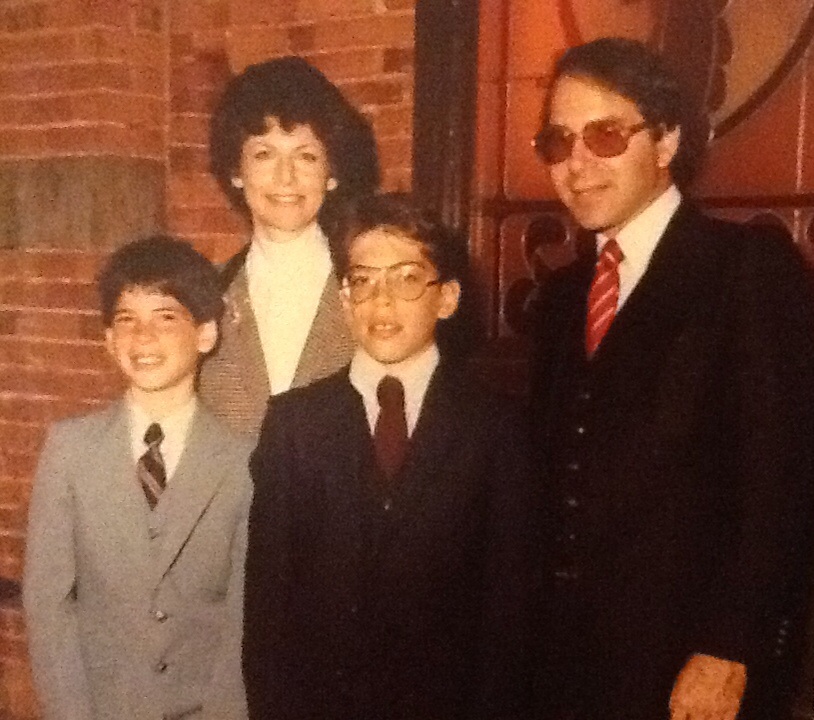
1. My family came from old Europe. We were like that mouse from An American Tail, Fievel. And when we came to the Ellis Island the immigration people changed our species from “mouse” to “human.”

2. I often see Groucho Marx in my dreams.

The grease-painted mustache is of the same general variety to me as those worn Little Richard and John Waters, and yet the extremity of his facial features—and here I think of Digital Underground rapper Shock G’s “Humpty Hump” character (“Doowutchyalike” and “The Humpty Dance”)—and the caricature of the costume struck me as strangely mellifluous with Groucho’s character.

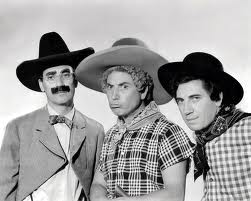
The most cerebral and silver-tongued of the brothers, Groucho could express to me, as I watched his movies on television in my youth (at 6, 7, 8?), along with the always less-interesting Abbot and Costello films, the knowing wink of persona, or performance, and of Jewishness used as both weapon and costume.

3. The old man takes a cruise for the first time, late in life, but he doesn’t want to go. His children do, and they ultimately arrive in New York City to embark for a week’s cruise—the ridiculous activities, the canned stage shows, the sunsets straight out of central casting.

At dinner, the old man is astounded at the bounty of the food, the endless buffet. He sits down at the table, not sure what to make of it all, and is surprised to hear a voice speaking German.

It turns out that the young waiter is part of the international staff, and is indeed from Germany. Over the course of the week the old man begins to speak with him in German, a few words one night, a few more the next. By the end of the week they’ve spoken of many things involving the food, the boat, the working conditions.

On the last evening, at the last dinner, the waiter says to the man: “Where did you learn to speak such excellent German?”

The old man looks directly at the waiter and says “Auschwitz.”

4. Underneath—and it took me a while to recognize that the Marx Brothers were Vaudevillians, in costume (and actual brothers, unlike the Doobies)—I imagined that the performers were absent, not present, that if you lifted the glasses and mustache and eyebrows off Groucho you would find the non-present frame of the invisible man.

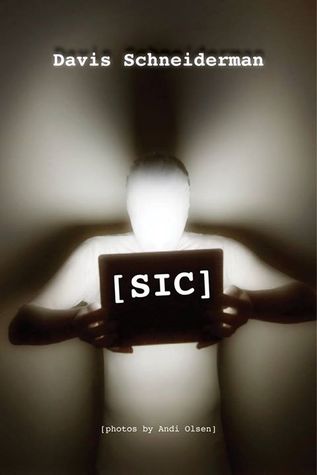
I had Groucho very much in mind when writing [SIC], [MU1] my new and plagiarized novel. The work takes it’s title from the Latin abbreviation for “as written,” includes public domain works, like “Caedmon’s Hymn,” Sherlock Holmes, and the prologue to The Canterbury Tales, and features Wikipedia pages, intellectual property law, genetic codes, and other untoward appropriations. The text also pivots on Jorge Luis Borges’s story, “Pierre Menard, Author of Don Quixote,” taking its publication history through a replicated series of Google auto-translations.

Andi Olsen’s photos of me—a pathogen in Paris, France—in a Lycra suit, illustrate the text, which contains an introduction from Oulipian Daniel Levin Becker, and sampling-based tracks, already created for other projects, from Illegal Art label acts Yea Big, Oh Astro, Steinski, and Girl Talk.

The fine-art edition ($24,998.98) comes with a biological pathogen, which the reader may choose to deploy over the text. In this way, [SIC] will make the reader sick—sick about copyright. The book is timed to the release of 25 free, full-text e-books—including The Red-Headed League and Young Goodman Brown, now bearing my “signature.”
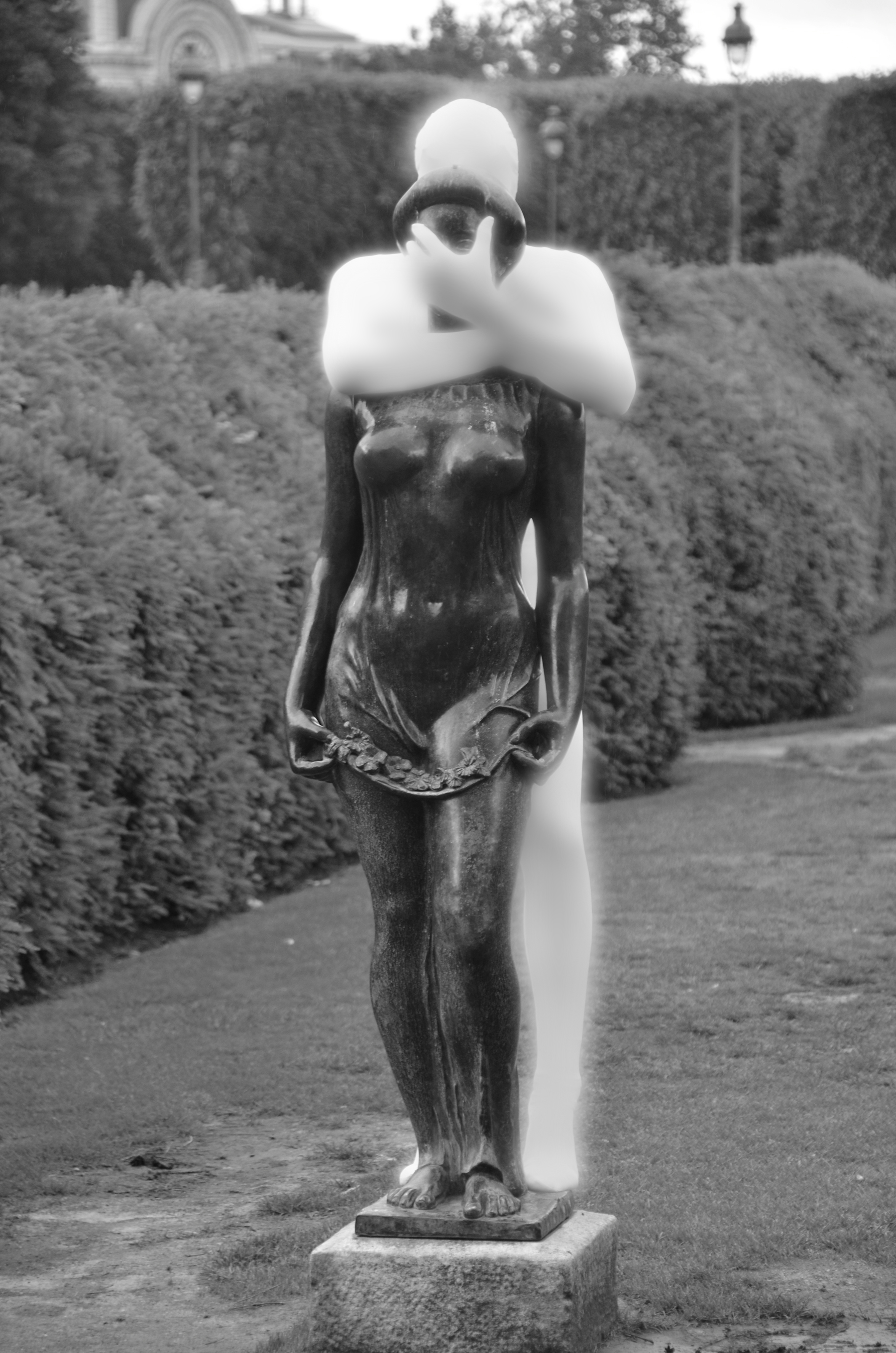
01


(Picture by Andi Olsen)

5. When I entered Hebrew School in 5th grade, I could name exactly one Jewish holiday with ease—the ever-present anti-Christmas called Hannukah—although Passover might come to me if I thought hard enough, complete with the frozen Chinese turkey my mother complete with a brackish sweet sauce attached to the edges of the meat (yes, edges!).

Only in my late 20s did I discover Elijah, Biblical wonder-worker, is a separate entity from the Angel of Death. I assumed, perhaps not so strangely, that the angel would slaughter the firstborn child of those with doors unmarked by lamb’s blood, yet for the families of the chosen people, us, the only ones on the block, the old boy, in Elijah guise, would rush in for a quick drink.

6. The appropriations of [SIC], the second part of my DEAD/BOOKS [MU2] trilogy from Jaded Ibis Productions (after BLANK[MU3] ), are not specifically inflected as “Jewish” and my writing is not particularly identified as ethnic in any particular way. And yet to copy, to cover, to hide in plain sight, these are to some extent the lessons I absorbed as a collage artist.
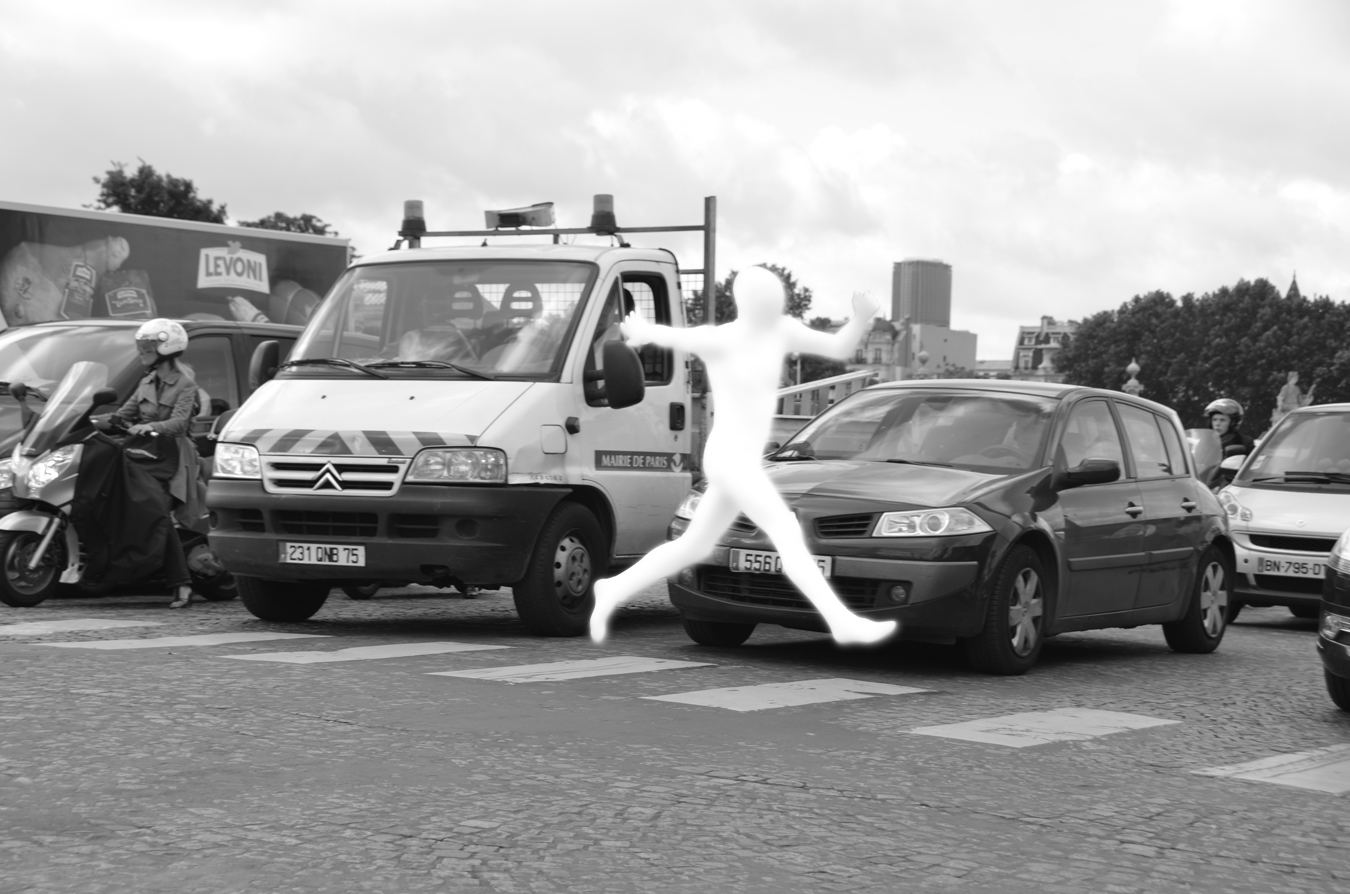
06


(Picture by Andi Olsen)

7.  The entire congregation of the Hebrew School, from the well-meaning cantor with the baritone voice to the old Rabbi, whose name escapes me but who I picture as somewhere between the second and third Rabbi in the movie A Serious Man, to the volunteer teachers accredited to the subjects primarily by their willingness to volunteer, implicitly, for this anti-Nazi activity of 1980s Jewish race preservation, laid down this narrative with repeated gravity whenever possible: You, a Jew, are eternal victim.

At the school, the matronly Hebrew History teacher explained the assignment, and I quickly understood that the reports would have to be completed in the only way possible before the internet: from the massive World Book Encyclopedia that had been my father’s and which lined the spaces of our bookshelf not far from the cartoon of Judah P. Benjamin (speaking to me, always, in the voice of Looney Toons’ Foghorn Leghorn). From 1954, the volume remained always for me, with its thousands of pages and the crinkle of its onionskin, as the source for all information of the world entire, eternal, unmoving even 30 years after its advent.

The Hebrew History teacher had me choose from the hat full of names on small sheets of paper:

My name? The name I chose: Josef Mengele.

8. My name? The name I choose: Groucho Marx.

9. My name?  The name I choose in [SIC]: Davis Schneiderman.
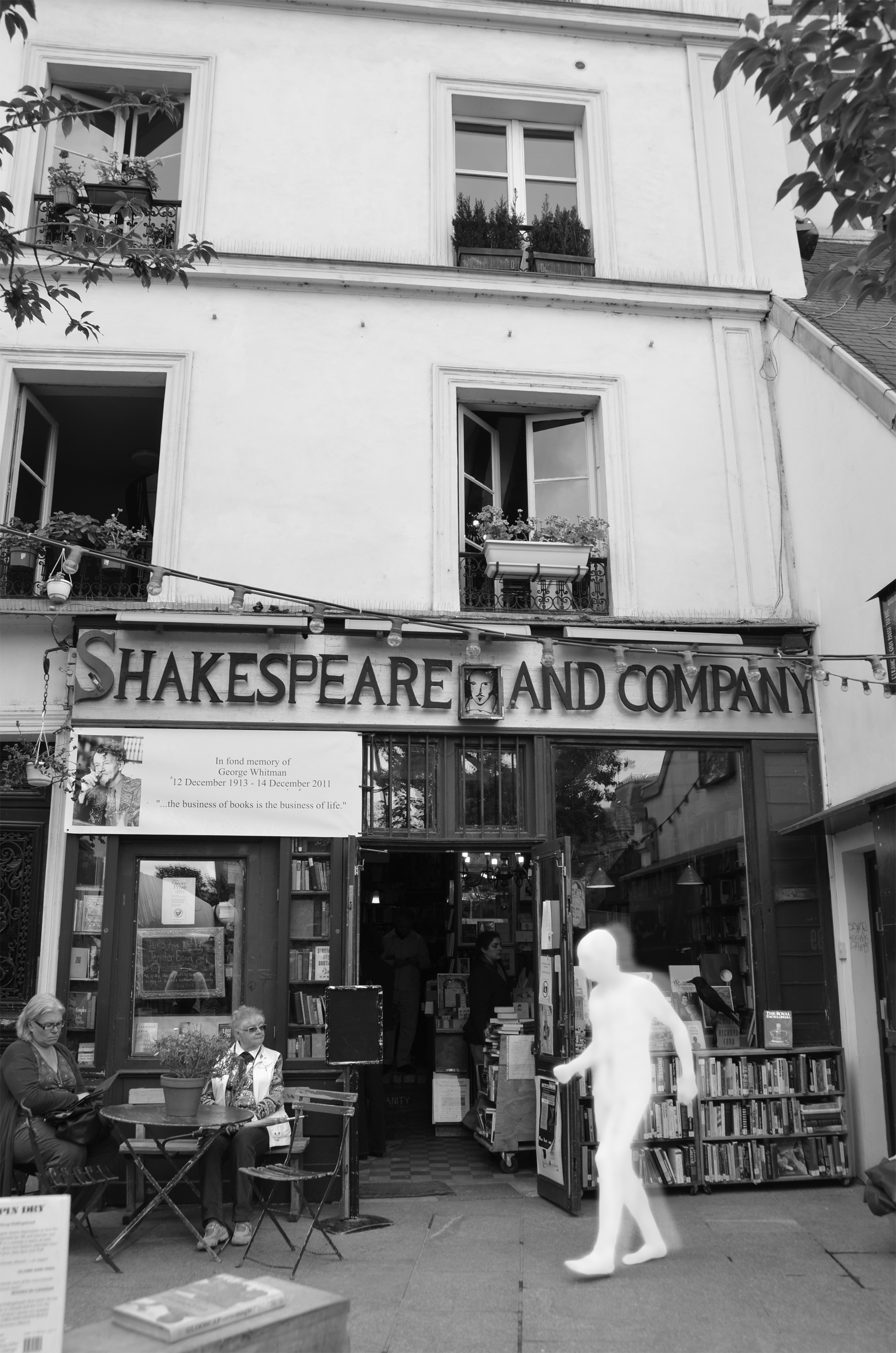
13


###

Davis Schneiderman works include the novel Drain (TriQuarterly/Northwestern); the DEAD/BOOKS trilogy (Jaded Ibis), including the blank novel, Blank: a novel , with audio from Dj Spooky, and the forthcoming [SIC](Fall 2013)with intro by Oulipian Daniel Levin Becker, images from Andi Olsen and audio from Illegal Arts acts Oh Astro, Steinski, Yea Big, and Girl Talk.

His Multifesto: A Henri d’Mescan  (Remix Edition), contains remixes from Matt Bell, Roxane Gay, Alissa Nutting, and others. He is editor of The &NOW AWARDS: The Best Innovative Writing (vols. 1 and 2).

Schneiderman’s work has appeared in numerous publications including Fiction International, Harpers.org, The Chicago Tribune, The Iowa Review, TriQuarterly, and Exquisite Corpse; he blogs for The Huffington Post and is a Contributing Editor for The Nervous Breakdown .

He is the Associate Dean of the Faculty and Director of the Center for Chicago Programs at Lake Forest College. He also Directs Lake Forest College Press/&NOW Books.

(The photograph was taken by
 

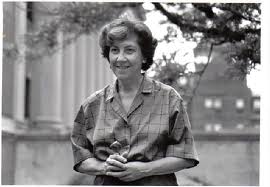
Ruth Wisse’s Political Schlemiel

images-2

A few months ago – when Edward Snowden was leaking information and his story was in the headlines nearly every day for a few weeks – someone went through my blog and wrote an article in which Snowden was characterized as a “political schlemiel.”  The article – authored by John Grant – was written for the well-known left-leaning website Counterpunch.  It was entitled “Whistleblowers as Modern Tricksters.”  In the article, John Grant also cites Ruth Wisse and her book The Schlemiel as Modern Hero:

According to Ruth R. Wisse in The Schlemiel As Modern Hero, the schlemiel was a quite resilient character who suffered “vicious, unrelenting harassment” but “whose continuing ability to experience frustration without yielding to desperation or defeatism may be reason enough for winning our interest.”

Further drawing on Wisse, Grant cites the distinction between the schlemiel and schlimazl, associates the schlimazl with the New York Times, and the schlemiel with Bradley Manning (and Edward Snowden):

Jewish tradition, according to Wisse, contains an amazing assortment of mythic and literary fools. Two of them are often used in comparison. The schlemiel is distinguished from the schlimazl this way: “the former spills the soup, the latter is the one into whose lap it falls.” Thus, we might see Bradley Manning as the schlemiel and The New York Times as the schlimazl. The schlemiel/trickster is an active force “in confrontation with reality” notorious for the disruption of authority. As such s/he is a cleansing and positive force vis-a-vis abusive and overweening authority.

Although this example of the “political schlemiel” is a possible application, I think it is worth our time to look deeper into the issue by taking a closer look at Ruth Wisse’s reading of the “political schlemiel.”

To be sure, the first section of the first chapter of The Schlemiel as Modern Hero is entitled “The Political Schlemiel.”  Wisse begins this chapter with a joke:

Sometime during World War I, a Jew lost his way along the Austro-Hungarian frontier.  Wandering through the woods late at night, he was suddenly arrested by the challenge of a border guard: “Halt, or I’ll shoot!” The Jew blinked into the beam of the searchlight and said:

“What’s the matter with you? Are you crazy?  Can’t you see that this is a human being?”

Wisse interprets the joke in the following way:

Outrageous and absurd as his innocence may be by the normal guidelines of political reality, the Jew is simply rational within the context of ideal humanism.  He is a fool, seriously – maybe even fatally – out of step with the actual march of events.  Yet the impulse of the joke, and of schlemiel literature in general, is to use the comical stance as a stage from which to challenge the political and philosophical status quo.

In other words, the schlemiel is political simply by virtue of his being a humanist who doesn’t understand the “normal guidelines of political reality.”  He is “out of step with the actual march of events” (that is, history).  This argument sounds much like the argument that Hannah Arendt makes in her essay “The Jew as Pariah” since she would also see all of the schlemiels as historical pariahs who challenge the “political and philosophical status quo.”   And, if one will read Arendt’s essay closely, there is a point when the Jew will no longer be in this historical position – a point at which the schlemiel’s challenge to society will no longer be necessary.

What many people miss – in their readings of Wisse and Arendt (vis-à-vis the political nature of the schlemiel) is the most important question: do schlemiels challenge the “political and philosophical status quo” because they want to or because they are reflecting the historical fact that Jews did not know how to live in a world of politics and history?  Arendt and Wisse, I think, tend to see these challenges as produced by history and an ill-fit between Jews in the world.   After all, the schlemiel emerges for Arendt, Wisse, and Gilman on the cusp of Emancipation and Enlightenment; a period when Jews were, for the first time, even considered as “citizens.”   When this happens, the relationship of the Jew to the “world,” “history,” and “politics” becomes an issue. Before this time, Jews lived in their own autonomous communities and were always considered second class citizens.

After Wisse tells yet another war joke, she points out that the schlemiels in these types of jokes are not “anti-military” types so much as a “non-military” types of schlemiels (4).  To clarify, Wisse writes: “The responses (of the schlemiels in these military jokes) are not in the spirit of conscious rebellion, but the naïve, wholly spontaneous questions of a different culture.”

Wisse points out, as she did in her introduction to the schlemiel, that there were different ways of looking at this “weakness.”  On the one hand, weakness registers as a form of cultural opposition:

The schlemiel is also used as the symbol of an entire people in its encounter with surrounding cultures and its oppositions to their opposition.  (4)

On the other hand (mostly in central Europe and less so in Eastern Europe), this weakness was seen as a thing to be eliminated.  And what better weakness is there to eliminate – for Jews who wanted to fit into military societies like Germany and Austria – than military weakness?

Wisse sides with the former and notes that the schlemiel was a “model of endurance” in which “his innocence was a shield against corruption, his absolute defenselessness the only guaranteed defense against the brutalizing potential of might”(5)

However, as she notes, with Enlightenment there is “God’s view” of the Jew and “Voltaire’s.”  This may lead to a form of “self-hatred” (5) in which Jews hate their Jewishness (which they associate with weakness).  But it doesn’t, says Wisse, because the schlemiel “does not submit to self-hatred, and stands proudly on his record” (that is, his religious history which is based on serving God and being subject to God and not man’s judgment). This, one might say, is the balance.

Wisse calls this the “inevitable dialectic” and the proof of this dialectic’s effectiveness is “survival”(5).  In other words, by not fully surrendering Jewish history to Voltaire, the Jew makes a “political” gesture.    Building on this claim, Wisse says that “the schlemiel is the Jew as he is defined by the anti-Semite, but reinterpreted by God’s appointee”(6).

What I find so interesting about Wisse’s reading is that on the one hand she says that the political gesture of the schlemiel is “non-military” rather than “anti-military.”  That is not so much conscious, yet, over here she seems to be saying that it is.  More is at stake, it seems, for Wisse.  And what is at stake is the preservation of the Jewish people.

This works with Wisse’s shift to politics later in life; since, as she stated in a talk to West Point Jewish students at their graduation, the schlemiel may no longer be necessary when Jews can fight for themselves.  In other words, once Jews are integrated, and are no longer “weak,” the schlemiel will no longer be necessary.

But is this really the case?  After all, the schlemiel does live on. And is it, from time to time political, as Gordon seems to be arguing?  If it can’t be anti-military and it can only be non-military, how does that work out?  Isn’t Snowden an “anti-military” type?  How could he be a schlemiel?

Reflections on “My Schlemiel Universe”

bar mitzvah 2

Last year, Chad Derrick and I screened the film Shlemiel at the Le Mood festival of Jewish Art, Culture, and Learning in Montreal.  I was blown away by the festival.  I had never seen such a gathering of wonderful cutting edge Jewish artists and art lovers as at this event.  It took place on one day with several concurrent sessions each hour which stretched from 11am until 8pm.  At night there was Jewish-themed entertainment and comedy.  Underpinning all of this was the warmth of the Montreal Jewish community, which I feel is without parallel in North America.

When we screened our film, I was amazed by the reception and the feedback.  People were genuinely excited to see it. They thought I was courageous to allow the ups and downs of my Jewish life to be displayed on the screen.   Many of them understood my struggle with Jewish identity and how that was related to my complicated past with a father who was psychotic.

This year I wanted to build on what I did last time; but instead of telling the story from the filmmaker’s perspective, I wanted to tell it from mine.  To this end, I gave a talk entitled “My Schlemiel Universe: From Woody Allen to Sarah Silverman to Me.”  The talk started off with the most basic question: What is a schlemiel?  Responding this question, I provided a number of different perspectives from Hannah Arendt, Sander Gilman, and Ruth Wisse.  Then I gave my own reading of the schlemiel which moves from “fictional” schlemiels to “living” schlemiels.

Ruth Wisse argues that the shlimazel is a character whose comedy is “situational” while the schlemiel’s comedy is “existential.”  Bad things happen to the shlimazel by way of this or that odd circumstance or situation.  Nothing in his/her “nature” would warrant such bad luck.  In contrast the schlemiel creates bad luck by virtue of his very existence.

In my talk, I looked to show how I played both a shlimazel and a schlemiel by virtue of the odd situations I was thrown into, on the one hand, and an odd Jewish-American existence in upstate New York,on the other.  The point of my talk was to provide an autobiographical account of my own schlemielkeit.

Philip Roth has Portnoy do this with his analyst in Portnoy’s Complaint.  But Roth doesn’t do this with his own life.  This would be too dangerous.  Rather, as Sanford Pinsker points out, his novels show a progression away from this character and “existence.”  Roth, in other words, wanted to pave his way out of schlemieldom.  And this is something many post-Holocaust writes wanted.  However, writers like Saul Bellow, Howard Jacobson, Steve Stern, and Gary Shteyngart don’t.   They are interested in looking at the schlemiel’s existential and historical plight.  And in doing so, they are able to articulate the plight of being in-between being Jewish and American, being Jewish and English, or Jewish and Russian.  This existence prompts stories that are fraught with a kind of humor that is “haunted” by strife and anxiety.

But, unlike some schlemiel writers and many a Jewish cultural critic from the 20th century, I, like these writers, feel the subject is worthy of discussion.  And it is worthy of being rethought in terms of the traumas that still afflict us today.  In terms of my own life, I can look to the schlemiel as a way of understanding how, as a child and as an adult, I have grappled with living in-between being an American and a Jew as well as being in-between being like all the other kids in my town and being the son of a brilliant, psychotic father.    And this is only scratching the surface.

That said, I think the schlemiel lives on; but not just in fiction.  Moreover, the “existential” part of the schlemiel is not something that is restricted to fiction.  No, on the contrary, it is something that is alive and well – even today, after the founding of Israel and even post-assimilation.  Unfortunately, not many of us know what this means.  My point: if we did, many of us could engage in a reflection on the comic-existential dimensions of our own lives.

Why, after all, do we have to turn to Woody Allen, Seth Rogen, or Larry David, when we can simply look in the mirror?  What we will find is that we play, so to speak, Sancho Panza and Don Quixote at the same time.  Sancho Panza, as the story goes, followed around a fool named Don Quixote.  But he wasn’t a fool.  We was a rationalist and a skeptic. But that’s the trick.  We live through that relationship in terms of how we reflect on ourselves.

Although some would scoff at the suggestion, because they are so “rational” and “normal” and “adjusted,” this suggestion is something that the best writers and artists in the field of Jewish-American literature, poetry, and film have – in my view – done.  But they have done this with fiction.

How would this look in reality?  And would it lead to what Freud would call the “interminable analysis?

I thank Le Mood Montreal for allowing me to share my interminable-schlemiel-self-analysis and explore these questions (of this – wink, wink – Jewish-American schlemiel).  Thank you for allowing me to educate the next generation of schlemiels.

Remembering Weakness: Ruth Wisse’s Introduction to the Schlemiel

DownloadedFile-2

Looking back on things from the past from a position of strength, Jews may often see those things that remind them of weakness as a bad memory that is better left to the dustbin of history.  However, sometimes these things which appear as weakness may actually be signs of strength or something else that is worth salvaging.  After the Holocaust, the founding of Israel, and the fact that Jews are now in the phase of post-assimilation, the status of the schlemiel should be a concern.   It should because the schlemiel can be seen, from either a Zionist or a modern position (bent on progress and assimilation), as a bad memory because it can be read as a sign of weakness.  While the attempt to frame the schlemiel in these terms may prove beneficial to some, perhaps the binary of weakness and strength may not be the right way to frame the schlemiel.  Perhaps we need a different framework or else a different way of reading the schlemiel’s “weakness” in the post-Holocaust and post-assimilation era that we are living in today.

In her introduction to The Schlemiel as Modern Hero, Ruth Wisse reflects on the status of the schlemiel after the Holocaust.  She notes, immediately, that the act of “reading death back into everything” that existed before the Holocaust would be problematic since this consigns all great Jewish cultural and artistic achievements to the dustbin of history.   Making her case for the culture that existed before the Holocaust and its cultural productions, Wisse notes:

Before the destruction there was a civilization of considerable resiliency whose continuing ability to experience frustration without yielding to desperation or defeatism may be reason enough for winning our interest, particularly at this time (the early 70s, when she published this book).

Writing on this pre-Holocaust culture, Wisse notes that it had a “very high threshold” of pain and that, to be sure, the Eastern Europeans had an “excessively high” one.  But this threshold had a purpose: it was to “absorb severe shock without abandoning the image of man to which is pledged itself, and without losing its desire for life”(x).  However, as she notes, this led to a lot of bitterness in Yiddish humor and it contains more “harshness than merriment.”  Nonetheless, the creation of “techniques” (many literary) worked to “preserve sanity and health…even in America.”  The schlemiel, according to this argument, would be the product of such a historical technique aimed at “preserving sanity and health” – on the one hand – and “the image of man” on the other.   In other words, against all odds, the schlemiel shows us what is best in man when the world shows the worst in man.  Jews could have rejected, in other words, this “image” (which seems to allude to man as made in the image of God) and become bitter and angry, but they didn’t. And this is a great feat.

However, what Wisse points out in her very first description of the schlemiel is its “weakness.”

He stands in the age-old company of fools, embodying the most outstanding folly of his culture: weakness. (x)

Following this, Wisse makes several distinctions which show that the schlemiel’s folly belonged to “his” culture.  For example, while Feste is “vulnerable and wily; the schlemiel is vulnerable and inept.”  Moreover, in contrast to the holy fools of Doestoevsky and other writers, “the schlemiel is neither saintly nor pure, but only weak.”  To be sure, this feature of weakness, in Wisse’s view, makes the schlemiel Jewish (in an Eastern European way).

And the purpose of the writer is to “trick” us into thinking that the schlemiel’s weakness is his strength (x).  Poking humor at this (and making a rhetorical Jewish shrug of the shoulders), Wisse notes that the only way a weakling can survive is, “how else,” through a “story.”   This shrug is the trick and, for her, it is a way of adapting from a position of weakness.

What amazes her is that the schlemiel, even after the Holocaust, became the “unlikely hero” in American culture “during the relative calm of the 1950s.”  (We see this for instance, in the popularity of I.B. Singer, Bernard Malalud, and in a few of Saul Bellow’s novels and shorts stories from that era such as “Herzog” or his translation of “Gimpel the Fool” for Partisan Review.)

But the purpose of her book, she relates, is not so much to disclose why this is the case so much as to show the “roots” of this character. The last words of her introduction note that the schlemiel was born in “Krotoshin” which is another way of saying that it was born out of a response to its weakness.

What I find so interesting about this claim, is the fact that Wisse introduces the schlemiel in terms of a trick that was used to retain the commitment to the “image of man” and to “sanity.”  Perhaps this is more than a trick, however.  And perhaps the weakness is a strength yet of another sort.

Later in her book, Wisse shows evidence that it is something more.  But it isn’t explicit. What I’d like to suggest is that even today – in 2013 – and not in the 50s – the schlemiel works because it appeals to a new way of viewing weakness by way of humor.  This new way looks to balance an existential weakness with the power and grace of literature, art, and humor.  I find this more in the realm of literature than I do in stand-up comedy.  For instance, I think that while Woody Allen looks, in his later films, to leave the weakness and vulnerability we see in Annie Hall behind, writes like Howard Jacobson and Gary Shteyngart do not.  They see vulnerability and weakness in different terms and don’t look to “trick” you into thinking it is a strength.  They show you how, in fact, it is. There is no trick involved.  Since, today, we can see the schlemiel as opening up a dimension of experience that may be closed to us as readers.  Their comedy can help us to explore a weakness that the Jewish Philosopher Emmanuel Levinas and the French thinker and literary critic Maurice Blanchot (Levinas and Blanchot were friends) see as part-and-parcel of our relation to the other.  In addition, the Jewish-immigrant fiction of Gary Shteyngart shows us how, in traveling from one world to another, the schlemiel can be a guide for all the subtleties that we, most of us not immigrants (and post-assimilated) may not understand.

That said, we shouldn’t throw the schlemiel and his ironic inversion of weakness into the dustbin of history.  Schlemielintheory would like to make the case that we should, like Wisse, save it, but for a variety of new reasons that speak to where we are and who we are, today.   This will require us to rethink the old and new ways of understanding weakness and how it relates to the schlemiel’s variety of comedy.

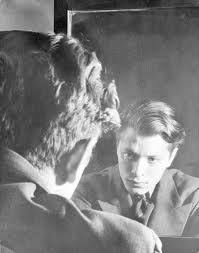
At Wit’s End: Delmore Schwartz’s Poetic Reflections on the Other

DownloadedFile-3

We are all deeply affected by what people may or may not say about us.  Oftentimes, in moments of loneliness and at times when we are looking for success, we may imagine people say things about us.  And this can be very harmful. This is especially the case for an immigrant or the child of an immigrant (like Delmore Schwartz) who is trying to fit in to a new country.   This fear of what others may or may not say about the immigrant may lead to depression, paranoia, or anger.  On the other hand, this fear may lead to something creative.  It could lead to humor or wit that fends with the desire to be accepted.

In yesterday’s blog entry, I was struck by the last words of Delmore Schwartz’s short story “America! America!”  And even after publishing this blog entry, these last lines have continued to haunt me.  I couldn’t stop thinking about them throughout the day:

No one truly exists in the real world because no one knows all that he is to other human beings, all that they say behind his back, and all the foolishness which the future will bring him.

These lines imply that, in the “real world,” our existence is based on the fact that we know “who” we are to others (and not just to ourselves) and that our future is secure.  But if this is not the case, Schwartz tells us that we don’t “exist” in the real world.  Because we don’t know what other people really think about us, what they say behind our back, or what the future will bring, we don’t exist in the real world.  Rather, we exist in the imaginary world.  And our lack of knowledge, for Schwartz, is destructive.  But there is more to the story.  The lack of knowledge is not the problem, so much as our desire to know for certain what others think about us and our desire to live in a secure future.   The frustration of this desire, for Schwartz, is to be found in our relations to others and the future.

These are themes that Emmanuel Levinas touches on, but from a philosophical and not a poetic or literary horizon.  In Otherwise than Being, Emmanuel Levinas uses a whole range of graphic terms to describe one’s relation to the other.  And in doing so, he traverses the poetic.  He, in effect, resorts to a variety of metaphors in an effort to translate the relation to the other (the ethical) into words.   Here is one example (and there are many):

The one is exposed to the other as a skin is exposed to what wounds it, as a cheek is offered to a smiter….one discloses oneself by neglecting one’s defenses, leaving a shelter, exposing oneself to outrage, to insults and wounding….saying is a denuding of denuding…an expression of exposure, a hyperbolic passivity that disturbs still waters. (49)

We also learn that we are “vulnerable,” “persecuted,” and “traumatized” by the other.  This relation is, on the one hand, called “psychotic,” and on the other, “prophetic” since one relates to the future by way of the other (as Levinas also points out in his book Time and the Other).   And, yet, the relation to the other – in other books – is also called a “caress.”  And in Otherwise Than Being, Levinas also refers to the relation to the other in terms of “maternity,” “touching,” “palpitation,” and “openness.”

What we find in this “alphabet of tropes” (as John Llewelyn calls them in his book Emmanuel Levinas: The Genealogy of Ethics), is a register that includes terms that connote violence, on the one hand, and kindness on the other.

What I find deeply unsatisfying about discourse on Levinas is the fact that when I speak with Levinasians it’s usually about Levinas’s philosophy as it relates to ethics, theology, politics, or art.  These conversations tend to hinge on generalities.  But I have found a number of friends in the Levinas community who are turning more and  more to particular articulations of the ethical: in literature, film, and even comedy (wink, wink).   By looking at particular artworks, which are the proper domain of metaphors, tropes, and relations, one can come to a better understanding of Levinas and all of his metaphors and tropes for the ethical.

As you can see, I have turned from Schwartz to Levinas to show how Levinas may help us to understand what bothers Schwartz so much about existence (which is, to be sure, the relation to the other and the future).  But what I’d like to do now is turn to a Delmore Schwartz poem that echoes the last lines of “America! America!” because they bring us closer to the specific experience, poetically articulated, of exposure.  And this exposure, I aver, emerges out of the immigrant experience, on the one hand, and the experience of the face, on the other.

The poem I am referring to is entitled “Do the Others Speak of Me Mockingly, Maliciously?”  The line starts with a quote from Psalm (27:19): “As in water face answereth to face, so the heart of man to man.”   These lines evoke a series of questions that surface in the wake of the face:

Do they whisper behind my back? Do they speak/ Of my Clumsiness? Do they laugh at me, / Mimicking my gestures, retailing my shame?

The next lines show us the poetic speaker’s response to these types of terrible questions: “I’ll whirl about, denounce them, saying/ That they are shameless, they are treacherous,/ No more my friends, not will I once again/ Never…Recognize their faces, take their hands.”

The last lines of the stanza repeat his lament: “They whispered behind my back, they mimicked me.”  This belief tears the speaker to pieces and his response is to turn away his gaze from them, who we learn above, may be his friends.

In the next stanza, the speaker confesses to also talking behind people’s backs.  And he is ashamed of being “cruel for wits sake.”  He admits: “I have mimicked them, I have been treacherous/ For wit’s sake, to amuse.”  And he did this, he says, because he wanted to denounce the “necessity of friendship” and did not want to be “denounced and rejected.”

But that would leave him…alone.  The third stanza, attempts to reconcile the two previous ones by speaking of love. But this reconciliation is incomplete as he doesn’t believe it is possible that one can be “equal” with the other in love:  “What an unheard of thing it is, in fine,/ To love another and equally be loved!”   Although the tone of these words is damning and even condescending, the speaker admits that “pride and wit destroy the heart of man.”  And yet, he admits, that it is “true and sad” that “I need them/ And they need me. What can we do?”  This need of friendship is important but it is exposed, as we saw in the first stanza, to ridicule and mimicry.  And he fears that he is being mocked.  On the other hand, he knows he mocks and mimics others.

But in the end, he says “we need/ Each other’s clumsiness, each other’s wit,/ Each other’s company and our own pride.”  And then he turns to what he needs and we learn that his needs display the confusion of being-in-relation-to-the-other:

I need/ My face unshamed, I need my wit, I cannot/ Turn away.

And then he ends the poem with what we know:

Our weakness, our necessities…our pride, our faces, our common love.

After is all said and done, however, what we know doesn’t match up with what he needs.  And of all the things he needs, he may never get what he wants most: his face unshamed.  He cannot “turn away” from the other and from what he knows, but he cannot turn away from his shame and from the fact that relationships are not “equal.”

If that is the case, he isn’t left only with what he knows so much as his wit.  And, if we read this against the last lines of “America! America!” his knowledge of what the other thinks about him will always draw a blank.  And, as in any cycle, this brings us back to the first lines of the poem.  In my reading, the final lines of this poem only bring us back to the beginning.

And this is where Levinas can lend a helping hand.  Turning to Levinas, we can say that this poem is based on an asymmetry that emerges out of a relationship to the other.  For Leinvas, unlike Buber, the relation to the other is asymmetrical.  What Schwartz does, vis-à-vis this asymmetrical relation, is to give voice to the questions, imprecations, and reflections of someone who is persecuted by the other and yet who “needs” the other.  The only problem, however, is that the poet realizes that his face may never be “unshamed.”  And, if we read this against “America! America!” we realize that this has much to do with immigrant experience, as well.  For the immigrant desires success, but is more familiar with failure and negativity that in its negation.

Schwartz doesn’t look to fool himself.  He looks to answer to the other. But the only way he can retain his pride and his minimal sense of self is through wit.  In fact, his wit saves him from being deluded by the belief that one can be “equally loved.”  But he is at his wits end.  He can’t keep on going through this process; but as the poem teaches us, as long as he turns to the face of the other (and as long as he wishes to retain some sense of self) he will have to start all over again in the first stanza.  He will, like many Jews, start with questions that concern the other.

The whole process is foolish, but, as the poet realizes, it is inevitable.   And, as the son of Jewish immigrants in America, Schwartz knew it was inevitable.

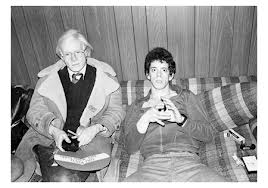
Delmore Schwartz and Lou Reed: The Odd Couple

images-3

When I first heard that Lou Reed was influenced by the poet Delmore Schwartz, I was very happy.  I love their work and I have been looking to write on the possible relationship between Reed’s music and Schwartz’s poetry for a while.  With the passing of Lou Reed, this thought has crossed my mind more than once over the last few days.  To my surprise, I noticed – just this morning – that The Jewish Philosophy Place had posted a blog entry on Lou Reed and Delmore Schwartz.    The entry didn’t look into how Reed may have been influenced by Schwartz; it simply noted that Lou Reed majored in English at Syracuse University where Zachary Braiterman, the author of the Jewish Philosophy Place Blog, teaches.  Regardless, his blog entry prompted me to return to Schwartz’s work and to think about how it might relate to Reed’s music.

I don’t want to go in depth about this or that influence on Reed, so much as point out their shared interest in irony and the comedic.  What I love about their humor is that it doesn’t come from a high place that looks condescendingly on this or that target, so much as from an awareness of their own odd predicament in a world that is and is not theirs.  Their fiction, poetry, and lyrics didn’t so much provide them with a form of redemption so much as a way of reflecting on their comic/odd relationship with America, their parents, and their dreams.  They were both outsiders and regardless of their successes I can’t help but think that they thought of themselves as failures.  Yet, in the spirit of their art – and in the spirit of the schlemiel – this reflection wasn’t tragic so much as comic.  They shared the realization that they were the “odd one’s out” and in this we can say that they are an “odd couple” of sorts.

In his Foreword to the Delmore Schwartz’s collected stories, Irving Howe takes note of how the danger of addressing Delmore Schwartz is that one might get caught up in his sad life and miss his wonderful fiction and poetry.  In the process, Schwartz risks becoming “the subject of a lurid cultural legend.”  Nonetheless, Howe points out how Schwartz’s story is an American story of going in the opposite direction of the American dream – from success to failure: “The image of the artist who follows a brilliant leap into success  with a fall into misery and squalor is deeply credited, even cherished in our culture.”

Howe points out that Schwartz’s “In Dreams Begin Responsibilities” found an odd location in the first issue of the new Partisan Review in 1937.   It was the only story in the collection and it appeared right in the beginning.  Howe tells us that when he first read the story he experienced the “shock of recognition.”  What took Howe aback was the fact that the narrator, who sees his entire life pass before him on a movie screen, screams back at the screen when he sees his parents getting married: “Don’t do it. It’s not to late to change your minds, both of you.  Nothing good will come of it, only remorse, hatred, scandal, and two children whose characters are monstrous.”  Howe tells us that when he read it for the first time he deeply identified with Schwartz’s “cry against the mistakes of the past.”

When Howe reread the story, he found not just a protest against history but also a protest against existence.  But this voice wasn’t so much a voice of an existentialist as a voice “at home with the speech of people not quite at home with English speech.”  In other words, Howe found in Schwartz the struggles that were familiar to children of Immigrants (a theme I have been discussing a lot on this blog vis-à-vis Gary Shteyngart’s work).

In Schwartz’s work, Howe finds “the pathos and comic hopelessness of the conflict between immigrant Jewish families and their intellectual children”(ix).     He also finds the “frantic mixture of idealism and ambition, high seriousness and mere seriousness.”  The “mere seriousness” was also used as invective against New York intellectuals.  Howe says his criticisms were “bitter and..sometimes nasty.”    But, all in all, his words “created communities” and “floundering intellectuals.”  They indicated a “strong awareness of the sheer foolishness of existence, the radical ineptitude of the human creature.”  But he didn’t exclude himself from this foolishness and often played the fool.  In doing so, he was able to surprise his audience and evoke an awareness of the “ridiculousness of….everything”:

The persona of buffoonery, which goes perfectly well with a sophisticated intelligence, brings with it some notable dangers, but at its occasional best it enabled Schwartz to catch his audience off guard, poking beneath the belt of its dignity, enforcing the shared ridiculousness of….I guess, everything.  (xi)

All of this, Howe claims, comes out of Schwartz’s “anti-rhetoric.”  This, he claims, was a “deliberate mimicry of immigrant speech.”  And in this gesture, we find his sad and odd humor at work.

One story that really brings this out is “America! America!”  In this piece, the narrator, using his anti-Rhetoric (which mocks an English adapted by immigrants), introduces us to “Shenandoah Fish.”  He comes back from Paris and, in contradistinction to his American-immigrant parents, he was “not troubled by his idleness.”  The narrator tells us that he enjoys “two months of idleness” but this enjoyment starts to evaporate when he experiences a new “emotion”:

The emotion of a loss or lapse of identity. “Who am I?  what am I?” Shenandoah began once more to say to himself, and although he knew very well that this was only the projection of some other anxiety…nonetheless the intellectual criticism of his own emotions was as ever to no avail whatever. (11)

The comic aspect of this can be found in the fact that the narrator states things in a plain-American style (one which Howe finds to be a “mimicry of (English) immigrant speech”).  The narrator states, in simple declarative sentences, that Fish didn’t like the Baumann’s (family friends who chased after money and success):

The important thing in insurance was to win one’s way into the homes and into the confidences of other people.  Insurance cannot be sold as a grocer or druggist sells his goods. (12)

The descriptions of the Baumanns as the paradigmatic Jewish-American-Immigrant family, while simple, are demeaning.  By using this anti-Rhetoric Mr. Baumann comes across as a monster.  And although they “like” fish, it seems he doesn’t like them. And he doesn’t seem to like their children who all seem so perfect.  All of this indicates that he sees himself as the odd one out: he can’t become an American; at least, not like the Baumann’s or their children.

However, we learn that Baumann has an “idle son” named “Sydney.”  Fish identifies with him in some way.  Toward the end of the story, we learn of Baumann’s relationship to Syndey, which Fish’s mother recounts to him.  After hearing it, Fish feels abstract and removed from this world that he had left for Paris and returned to; he sees much of this world, which he had missed, as a “caricature, and an abstraction.”  However, instead of being repulsed, we learn from the narrator that Fish wishes he could have “seen these lives form the inside, looking out”(32).

Following this twist in the plot, the narrator tells us that he now feels his connection to the immigrant Jews:

And now he felt for the first time how closely bound he was to these people.  He felt that the contemptuous mood which had governed him as he listened was really self-contempt and ignorance.  He thought that his own life invited the same irony. (32)

He looks in the mirror and sees himself and the moment he is living in as ridiculous and a failure.  But the point I want to make is that he sees this all against the fact that he shares so much with the people he originally despised.  He wonders how his children will see him.  Will they see him as a schlemiel?  How does he stand in relation to the future?

Schwartz ends this short story with a reflection on his schlemielkeit, which is based on the fact that “no one truly exists in the real world”:

No one truly exists in the real world because no one knows all that he is to other human beings, all that they say behind his back, and all the foolishness which the future will bring him. (33)

This realization teaches us that, in relation to others and to the future, in relation to that which transcends him, he, like a schlemiel, has no world.  In this realization, he discovers that he is not the only “odd one out.”

I hear this story put to words in Lou Reed’s song “Perfect Day.”  It’s odd appeal to the other discloses something that Fish and the narrator of “America! America!” were acutely aware; namely, that we don’t really know who we are to others and that “all they say behind his back” and the “future” itself will only bring more “foolishness.” Regardless, I think Howe is correct: this kind of realization comes to Fish, the narrator, and Schwartz by way of being the child of Immigrants, by virtue of being between two worlds where one’s identity is constantly at stake.  The day Fish comes to his realization is far from a “perfect” day, but, as he realizes, this is the way every day is and will be for him…until he dies.

May Lou and Delmore – an “odd couple” – rest in peace…they no longer have to look in the mirror and  wonder about who or what they are….

Jewish Comedy and Theft

DownloadedFile-2

Many postmodern writers incorporate the texts of other writers within their own texts, and oftentimes they don’t cite them.  This practice has been called pla(y)giarism by Lance Olsen, Kathy Acker, and others.    These writers take great honor in the fact that they “steal” and retool texts.  One of my favorite theft-texts is Kathy Acker’s Don QuixoteIf anyone were to read this text, one would see that she is not telling the same story as Cervantes.  In fact, the novel she writes plays more or less on the structure of Cervantes’ novel (namely the relationship between Sancho Panza and Don Quixote).  But in her novel, the characters accompany each other in transgressive sexual exploits.  The exploits bring Acker’s Don Quixote to the edge of madness as they go outside of the sexual “norm” into uncharted territory.  That said, Acker, in this novel and in many others, pla(y)giarises and oftentimes has characters who, as in many a Jean Genet novel, steal, murder, and rape.

Although I have given thought to novelists or fictional characters who “steal,” in a fictional or authorial sense, I never gave much thought to authors who were actually thieves and how such thievery could aid their work as novelists.  I recently came across this idea in Lawrence Epstein’s book, The Haunted Smile: The Story of Jewish Comedians in America.   But Epstein uses theft vis-à-vis Jewish comedians, not writers.    He provides evidence that many Jewish comedians were thieves (or had aspects of thievery) and suggests that this had influenced their comedy in some way.  What makes his suggestion interesting is what it brings out about the American dream from an immigrant’s perspective.

Epstein notes that in the Lower East Side, Jews saw an abundance of goods and foods in the streets: a reality that had not experienced in Eastern Europe:

Deprived for so long of the certainty that there would be food for the next meal, Jews embraced the abundance of food in the Golden Land.  Mothers, especially, urged their children to eat.  Food was a living symbol of the Jewish drive for survival.  The aroma of a Shabbes meal sustained many with its rich assurances and its heady promises of even greater success. (13)

But in the midst of all this abundance, there was a lot of poverty.   And although there was such poverty, Jews knew that, in the last resort, they could always find food or a loan.  Espstein calls this “family in a broader sense.”   Nonetheless, Epstein tells us that many Jews would still steal.  And many of them became comedians:

Many of the young immigrants were young thieves.  George Burns always claimed that he took his name from the Burns Brothers coal yard.  He and his brother would steal the coal, and the neighbors would shout: “There go the Burns brothers.”…. He also claimed that he had gone to the Automat with a sister’s hairpin, stood by the stew, and after someone bought the stew, Burns slipped in the hairpin, preventing the door from closing. (16)

And the list goes on:

Phil Silvers stole gum from pushcarts and sold stolen pipe.   Fanny Brice stole gum from her mother’s store and then began shoplifting until she was caught.  Eddie Cantor stole from pushcarts.  At thirteen, he stole a purse.  Burt Lahr stole form local stores and resold the goods at an open market on Saturday mornings. (16)

Epstein notes that “Groucho Marx didn’t exactly steal,” but his mother knew that Marx took the change when he got bread for her.  She let this happen, says Epstein, because “she thought it showed initiative.”  He notes that although they stopped stealing at an early age, it “had an effect.”  According to Epstein “the antiauthoritarian nature of such thievery helped to make them feel apart not only from the rules of society but also from their own Jewish culture and sometimes, even, their Jewish families”(16).

Besides setting them apart from society, Epstein claims that we can find “a sort of assertion” and “transgression” in these acts, which “would in subtle ways influence the Jewish comic voice.”   Following this, Epstein also notes how – when they were children – many Jewish comedians would also skip school.

Epstein is basically claiming that the audacity of Jewish comedians is drawn – in some way – from their “deviant” past.  This is an interesting thesis, but as I pointed out in the last blog entry, Epstein also suggests that the audacity to question also has a “theological” basis since Jews are taught to question (from the Torah and the Talmud).    In addition to this, Epstein also suggests that the Yiddish language has many rude and audacious expressions.

Regardless of the reasons Epstein brings to explain the audacity of Jewish comedy, I find the fact that he saw thievery as a major factor worthy of more thought.  But I do so not simply in the genetic sense (that comedians are audacious because they were once thieves).  I think it is thought-worthy because the relationship of theft to comedy can be read in a number of different ways.

I’ll cite just one.  One interesting way of looking into theft is in terms of smuggling things that are illegal and then brandishing these things.  In Jewish comedy, we often find that a joke is a way of smuggling in views and perspectives.  The very structure of the joke is based on this.  The first part often says something authoritative, while the second part of the joke smuggles something that defuses the authoritative nature of the first part of the joke.  In a sense, it steals the authority away from the first part of the joke and brandishes this theft in plain view.

What’s left in the wake of this is, more or less, an empty shell: something is stolen.  We see this, for instance, in this joke by Woody Allen: “Not only is there no God, but try getting a plumber on weekends.”

What this joke does is more or less secularize the theological by juxtaposing it with the historical.  In a way, this is a theft.  And although Allen wasn’t a thief when he was a child, at the very least he was exposed to a theft effected by history and radical change.

In relation to this note, Epstein is correct in noting that Jewish humor was not the main staple of religious Jews who lived in the Pale of Settlement.  Rather, it was the product of  a theft, so to speak, the theft of the religious life that was affected by the wave of secularism, violence, and massive migration to America.  By way of all these factors, the Jews lost something.  Yet, at the same time, they also gained something: humor.  To be sure, humor helps to deal with this loss and it also presents something in its wake.  And, more importantly, as Allen shows and as Epstein suggests, humor is best when it “steals the rug” from underneath things that have too much authority.   (However, Ruth Wisse rightly associates this kind of humor with the tension between hope and skepticism as it suspends the authority without completely negating it.  However, in her view, sarcasm – extreme irony – makes a total theft and destroys its “target.”)   In the wake of such a theft we may realize that “the emperor has no clothes.”

Insecure Immigrants, Americans, and Jewish Comedians

DownloadedFile

Is there a unique relationship between America and Jewish comedy?  And is the immigrant experience the only source of Jewish culture, comedy, and literature?  Irving Howe held that the immigrant experience was the high point of Jewish culture and literature.  And he feared that as the Jewish immigrant experience faded into the past and Jews assimilated, the basis for Jewish fiction, humor, culture, and identity would also disappear.

But as I have pointed out in my blog entries on Gary Shteyngart, this is an issue that concerns us today.  What I found in Gary Shteyngart is something that Lawrence Epstein – in his book The Haunted Smile: The Story of Jewish Comedians in America – also finds in the Immigrant experience; namely, the “insecure immigrant” who lives within the uncomfortable place between being an outsider and wanting to be an insider.

What interests me most about Epstein’s argument is 1) his description of this insecurity and 2) the proof he brings to the fore when he argues that Jewish immigrants to America, who happened to become famous comedians, managed this anxiety.  According to Epstein, Jews drew on their own history, language, and optimism to make a unique contribution to American culture and, in the process, created a new kind of Jewish identity that could only have been devised by Eastern European Jews who were turning to comedy rather than religion for security.  But this identity didn’t come out of a vacuum: Jewish humor evokes, as the title of his book suggests, a “haunted smile.”   Insecure immigrants-who-became-comedians were not just fighting with the insecurity of being an immigrant or with a religion that no longer seemed to grant security; they were fleeing a horrible and impoverished life.  And America motivated them, in Epstein’s view, to address all of these anxieties and create something new.

At the outset of this book The Haunted Smile: The Story of Jewish Comedians in America, Lawrence Epstein cites the New York Times columnist Frank Rich who states that the “very basis of American history was that insecure immigrants came to settle that land.”  Adding to this, Epstein notes that the Jews were the “most insecure” and could “serve as a symbol for Americans as they could for no other people.”

Epstein marks out why, historically, Jews were unique.  Epstein thinks that the great generation of Jewish comics emerged from the immigration at the end of the 19th century and the beginning of the 20th century.  During that time, the largest number of immigrants came from Eastern Europe (at that time the majority of the world Jewry lived in Eastern Europe and Russia; but that changed with immigration and history):

In 1880, there were 80,000 Jews living in New York. By 1910, that number swelled to 1,250,000.   By one estimate, a typical block consisted of 2,781 people – and no bathtubs. (11)

This wave of immigration emerged out of an insecurity that developed out of thwarted hopes and the horrors of history.  Jews had, since the 18th century, been forced to live in the Pale of Settlement.  Jews were often at odds with the Russians.  And although the Haskalah movement (The Jewish Enlightenment) made its way from central Europe to Eastern Europe and gave Enlightened Jews hope that Russia would one day become a democracy, the laws against Jews and forced conscriptions flattened the optimism of many.  But during the time of Czar Alexander II of Russia, there was a small window of hope (of a few decades in the middle of the 19th century) when Jews were allowed to leave the Pale of Settlement for Russian cities like Moscow and St. Petersburg.  Jews were allowed to enter universities and take on typical professions.  This prompted many Enlightened Jews to imagine that they had finally become equals.

But this was short lived.   Alexander II was assassinated and Jews were blamed and this led to Pogroms and violence against the Jews.  His plan was to solve Russia’s “Jewish problem”:

One third would emigrate, one third would be converted to Russian Orthodoxy, and one third would starve to death. (6)

Following this, Jews were killed in mass during several different pogroms and were forced to give their children over for military conscription.  In the midst of this horror, America offered some form of hope.   Epstein describes the trip across the Atlantic in detail so as to show how difficult it was and how Jewish immigrants were willing to go through all of these difficulties in order to live a better life.

This desire met with an America that was looking for a way to deal with “changes in American society itself.”  Epstein makes the case that Jews used their ingenuity to address American anxieties about these changes:

Searching for a way to deal with the emerging anxieties of the modern age, America turned to the Jews, the masters of handling history’s troubles.  Jewish humor, so useful in helping generations of anxious Jews, was called to action to serve the similar needs of the wider American community.   An immigrant generation found in the Jews a people repeatedly practiced in starting over again in a new place while feeling marginal and scared.  (xii)

Epstein’s reading suggests that Americans and Jews were, at this time of history, a good fit since both were “insecure.”  And what Jews had to offer to a fledgling America (which lacked the history of Europe and its internal coping mechanisms) was a humorous means of dealing with modernity and radical historical change.

Epstein’s account of what Jews bring to this situation – vis-à-vis their history – is worth noting.  He points out that “they drew on their heritage in ways they didn’t always understand”(xiii).  And this act was transformational: “As they used that heritage to find ways to express truths about America, they transformed American culture, making Jews and Jewishness acceptable, even enviable”(xiii).

The greatest feature that Jews can draw from their history is their sense of anxiety that is the product of living on the margins of history: “Jewish comedians could sense majority anxieties early and transform them into humor, giving these anxieties a shape and a name as well as a way to cope”(xiii).

In this situation, Epstein argues that the schlemiel fit perfectly: “One of the most famous Jewish comic types is the schlemiel, a clumsy, maladjusted, hard-luck loser”(xv).  The schlemiel addresses these majority anxieties.  But instead of citing the immigrant comedians of the early 20th century as an example, Epstein turns to Woody Allen:

Sometimes, as in the classical schlemiels created by Woody Allen, this poor character is profoundly neurotic,  His one liners reflect negative emotions (When we played softball, I’d steal second, then feel guilty and go back”) or a sense of being trapped by unfeeling institutions (“I went to a school for emotional disturbed teachers”). (xv)

Epstein says that his body and demeanor were a “standing sight gag” and that his “distinctive New York voice added the effect as he told his audience the story.”  The story he cites is the “moose joke.”

Following this, Epstein turns to the Marx Brothers and describes each of them in detail.  He contrasts them to Allen by noting that they – together – “created a different comic type, the free soul who doesn’t so much criticize all social mores as mock and ignore them.”   Epstein names a few other “types” (that range from the “fool” (Ed Wynn and Rodney Dangerfield), the “observer” (Jerry Seinfeld), and the Social Critic (Lenny Bruce), but ends on the note that all of these types emerge out of a history and culture that is “extraordinarily verbal”:

Words form the center of study, of prayer, and of entertainment. The emphasis of language and on the argumentative patterns of Talmudic reasoning provided Jews with a style of thinking.  (xviii)

And he even goes so far as to say Jewish comedy also emerges out of a “theology” in which Jews were “permitted, even encouraged to question.”  This includes the challenges made to God we find in the Torah, the Talmud, and the Hasidic tradition.  This challenge to authority is the “hallmark of Jewish humor.”  And “Jewish comedians were notable in their willingness to test their audiences’ sense of which subjects and words were acceptable”(xviii).

Taken together, Epstein argues that these aspects of Jewish history were of great interest to the insecure American majority of the post-Civil War and rapidly industrializing America of the early 20th century.  Jewish comedians, who emerged out of the uncomfortable space of immigration, were of interest as they gave Americans new ways of dealing with radical historical change.  And this way became the basis for Jewish-American identity.

Epstein goes so far as to say that Jewish-American comedy offered a new kind of secular Jewish identity that displaced the security offered by religion.  In America, Jews could be secure with their insecurity and use it as a basis of identity.  As a recent Pew Poll shows, Jewish comedy is still a major basis for Jewish identity.

But after pondering Epstein’s thesis which he makes at the outset of his book, I wonder how, historically, it is the case that the comic American-immigrant fiction of Gary Shteyngart is so popular.   Is it because America is and will always remain a country that can learn from “insecure immigrants”?  Will America always be insecure and in need of new ways of coping with crisis?  And will comedy always be in great demand for this very reason?  Epstein seems to suggest that this is so…

If that is the case, the major question for schlemiel-in-theory is to figure out what the every changing basis for “insecurity” is and how comedy comes to address it.   But is it the case that, as Daniel Itzkovitz in his essay “They are All Jews” (in You Should See Yourself: Jewish Identity in Postmodern Culture) claims, that Jewish comedy has become so common that it is indistinguishable from American comedy?  And what might this imply about the Jewish contribution to American comedy?  Insecurity may remain in America, but are Jews still really insecure about being Jews in America?  Are comic Jewish-Immigrant writers like Gary Shteyngart an exception?  And is Larry David’s comedy a product of his New York Jewishness which is out of place in Hollywood?  Is he an inter-American immigrant like Woody Allen was in Annie Hall (1976) when he went off for Hollywood at the end of the film and went back with his tail between his legs?

The Voice on the Other Side of the Line: Walter Benjamin, The Telephone, and the Schlemiel

images-1

My parents used to take my brother and I to New York City at least once a month. (Since both of my parents were born and raised there, and because they wanted to visit family and leave the Adirondacks for the city, this was an imperative.)  We used to go to museums a lot.  Although my parents preferred to go to MOMA or the MET, my brother and I liked the Museum of Natural History.  And if we ever went to the MET, we would spend a lot of time in the Egyptian exhibits.  There was something so intriguing about the way the exhibit was laid out.  The walls, the coffins, the animal worship, the hyeroglypics, were astonishing.  Being so intrigued with the mysteries of the past, I had little interest in Modern Art.  But my mother, a BFA, wouldn’t let that bother her.  More important than seeing art was doing art.  She would often paint, draw, and work clay with me.  To be sure, some of my most memorable childhood moments were when I was doing art with my mother.   She prompted me to taste, touch, hear, and feel things in nuanced ways that are still with me today.  But as I grew older and became a teenager, all of my artistic experiences took a backseat.

But this all changed when I left my hometown for university.  When I was an undergraduate, I wanted to better understand the artistic experiences I had as a child.  But instead of taking an interest in realism or classical art, I took an intense interest in Modern Art.  I found something reminiscent of my childhood experiences of art in some modern artists.  I can still remember the astonishment I had when I saw, for the first time, paintings by Cy Twombly, Paul Klee, Arshile Gorky, and Phillip Guston.  What struck me about their work was the fact that they would paint and draw “as if” they were children.  Around their work, I would feel like a child.  And when I went to art school in Manhattan, I spend a lot of time working in this manner.  I have journals full of drawings that are very childlike.  And, looking back at what I wrote, I can see that I was constantly fascinated with memories of childhood and dreams of childhood.  Certain moments, smells, sights, feelings, or gestures stuck out in my mind and I would explore them.  And in this, I felt like a schlemiel, a man-child who – in my case – lost touch with adulthood while he/she tapped into allusive memories, gestures or feelings from childhood.   In many ways, I felt that Twombly, Klee, Gorky, and Guston were all schlemiels – artistic schlemiels – they were, so to speak, caught up with voices on the other side of the line (voices that spoke to them from out of their childish relationships with things).

While my artwork drew a lot of inspiration from the work of the above-mentioned painters, the thinker whose approach to childhood caught my eye was none other than Walter Benjamin.  When I first read Berlin Childhood Around 1900 (Berliner Kinderheit um Nunzehnhundert), I was astonished by how he would mime the child and his/her experiences of things.

I recently decided to reread the book, and was hoping to find things I had never found before.  And, to my joy, I stumbled across several things that were very appealing to me. For now I’ll only mention one: a section entitled “Telephone.”

Benjamin’s description of his childhood relation to the telephone (a device of social communication) is mystical and may very well constitute what he, elsewhere, called a “profane illumination” or what Richard Wolin, in his book Walter Benjamin: An Aesthetic of Redemption, calls “redemptive criticism.” According to Wolin, this criticism (which could also take the form of a memoir like Berlin Childhood) saves the moment from “the ever threatening forces of social amnesia to which humanity over the ages has become inured”(45).  Wolin says the goal of this activity is “remembrance.”

Benjamin starts off his meditation on the telephone with this very notion:

Whether because of the structure of the apparatus or because of the structure of memory, it is certain that the noises of the first telephone conversations echo differently in my ear from those of today. (48)

In other words, the call – as he remembers it – is different from what he hears today.   And what interests him most about those calls are the “noises” on the line: “They were nocturnal noises.  No muse announces them.”  Benjamin, alluding to mysticism, notes that these noises “precede every true birth.”

The schlemiel aspect of all this comes out in Benjamin’s description of his relationship to the phone.  To begin with, he calls the phone his “twin brother” and looks to it for hope.  The phone, unlike himself, “rises above the humiliations of its early years.”  It is “like a legendary hero once exposed to die in a mountain gorge.”  And unlike other technologies that are moved into the back room, the phone is prominent; it stays in the front.  Benjamin, in this scenario, is not the hero; and instead of standing in the front, he stands in the back.

But the phone is more than just a hero.  It is messianic: “Now, when everything depended on its call, the strident voice (of the phone) it had acquired in exile was grown softer.”  The ringing of the phone is a portent of things to come but this ringing is also an alarm of sorts that sets family members on edge and against each other.  It is an “alarm signal” that “menaced” his family and “the historical era that underwrote and enveloped the siesta”(49).

The most interesting observations of the phone come through his father’s specific relation to it.  He  noticed, on the one hand, the “threats and curses” uttered by his father at operators; and, on the other hand, he noticed his father’s “real orgies” which came when he “cranked the handle” or when doing this he totally forgot himself:

His hand, on these occasions, was a dervish overcome by frenzy.  My heart would pound.

In these moments, Benjamin is terrified by his father.  He imagines that his father will yell at someone after getting worked up by the phone: in other words, the phone has a redemptive function and a daemonic one, too.  To be sure, after describing his father’s relation to the phone, he says the phone, when it wrung, “served to multiply the terrors of the Berlin household.”

In response to all of this violence put forth by the phone and through the phone, Benjamin notes that he had managed to “master his senses with great effort.”  In this state, he musters the strength to attack the phone.  His description denotes his counter-violence to the phone’s ringing:

I tore off the two receivers, which were heavy as dumbbells, thrust my head between them, and was inexorably delivered over to the voice that now sounded.  There was noting to allay the violence with which it now pierced me. (50)

Since he says he was “inexorably delivered over to the voice that now sounded” – a voice that is violent and pierces him – one would be amiss not to notice how his moment resonates high in the religious frequency.

At this moment, he becomes “powerless.” His “consciousness of time” as well as his “firm resolve” and “duty” are “obliterated.”  Benjamin goes so far as to liken himself to a “medium” who obeys “a voice beyond the grave.”  But what was the content of the call?  It doesn’t matter.  For, at this moment of “profane illumination,” Benjamin, in affect, is showing us how, by way of the phone, he became a schlemiel.

He was so enthralled with his childhood experience of the phone that he forgot where he was and what he was doing vis-à-vis reality.  And his act of heroism, when he attacks the phone, discloses itself as a flop since, in the end, he becomes totally powerless to the voice at the other end.

What I love most about this passage, is that Benjamin is not simply engaging in “remembrance.”  He is also reliving the process he went through in relation to the phone and I would suggest that it evinces a pattern we see throughout his memoir (and in One Way Street) where Benjamin looks into how, in his childhood, his relationship with things often evinced some form of failure or disconnection.  And by disconnection, I mean disconnection from reality.  All of these comes out of an intimate experience of how things, such as the telephone, affect who we are and how we are.  He isn’t simply interested in analyzing this like a sociologist; rather, he is interested in how he experiences things.  He realizes that the only way he can experience these things is through an “immanent criticism” that is offered by way of the thing itself; here, the telephone.  But what we find, time and time again, is that in his relationship to things he often loses control of himself and his world.  He can’t stand up to the phone, but when he does, he becomes subject to the voice – a voice that comes from the dead (the inhuman); that is, from things.

I think Cy Twombly, Paul Klee, and the other artists I mentioned above were also fascinated with this childish relation to things because, in this relation, they found something more intimate than any discovery they had ever made.  However, in doing this, these artists become children and schlemiels.  And this requires a kind of passivity and receptivity that may make them all subject to the voice on the other side of line.


A Note on Franzlations: The Imaginary Kafka Parables

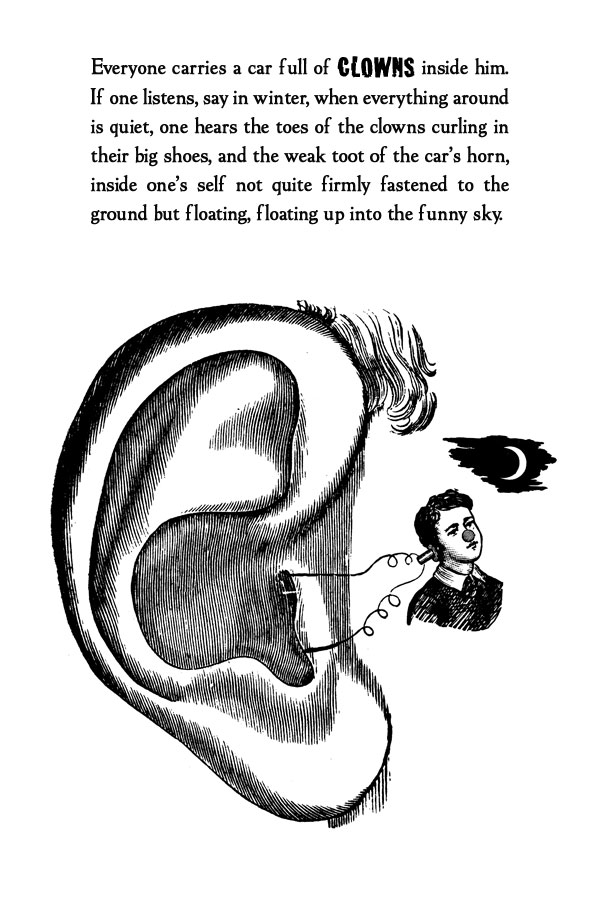
32-Clowns

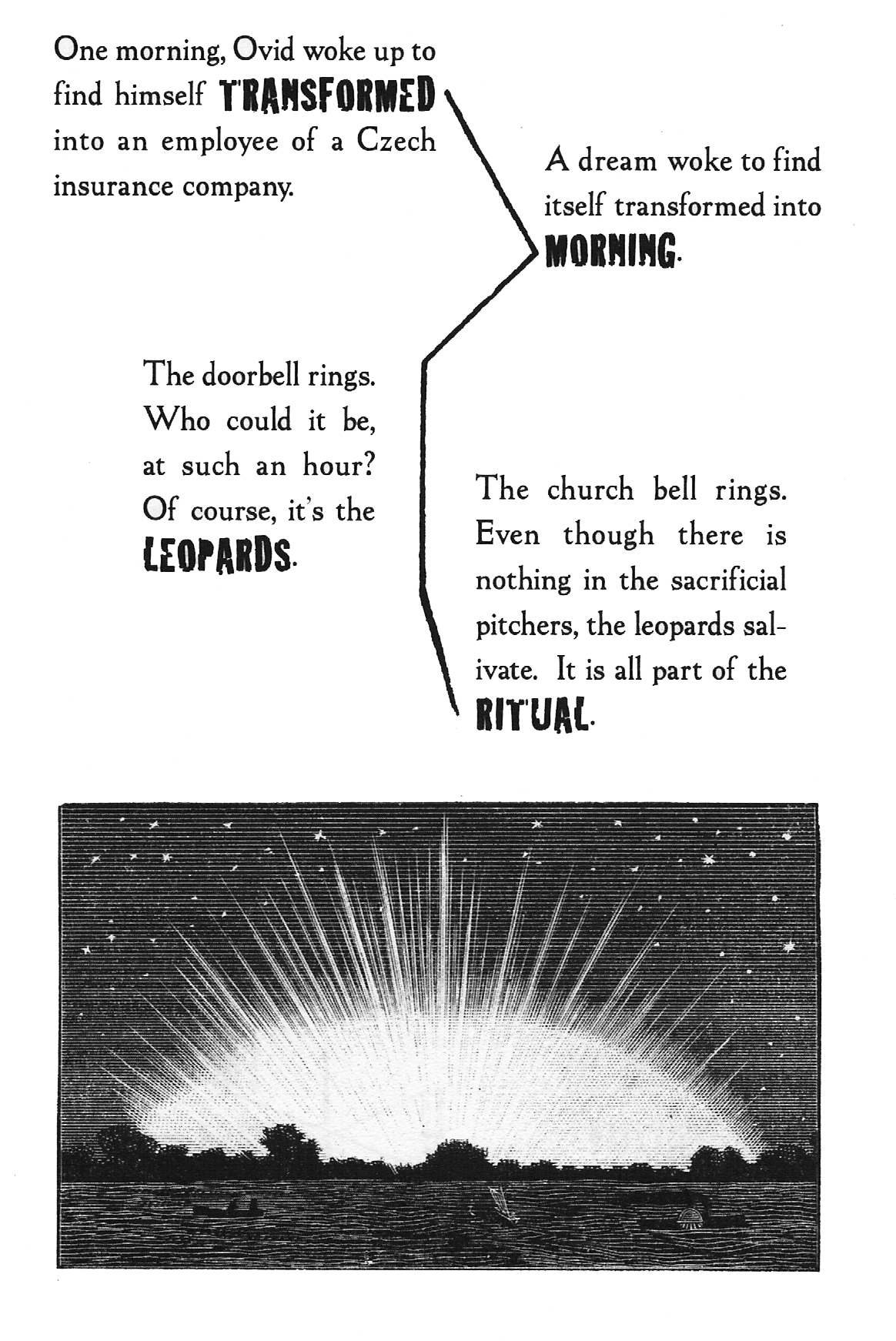
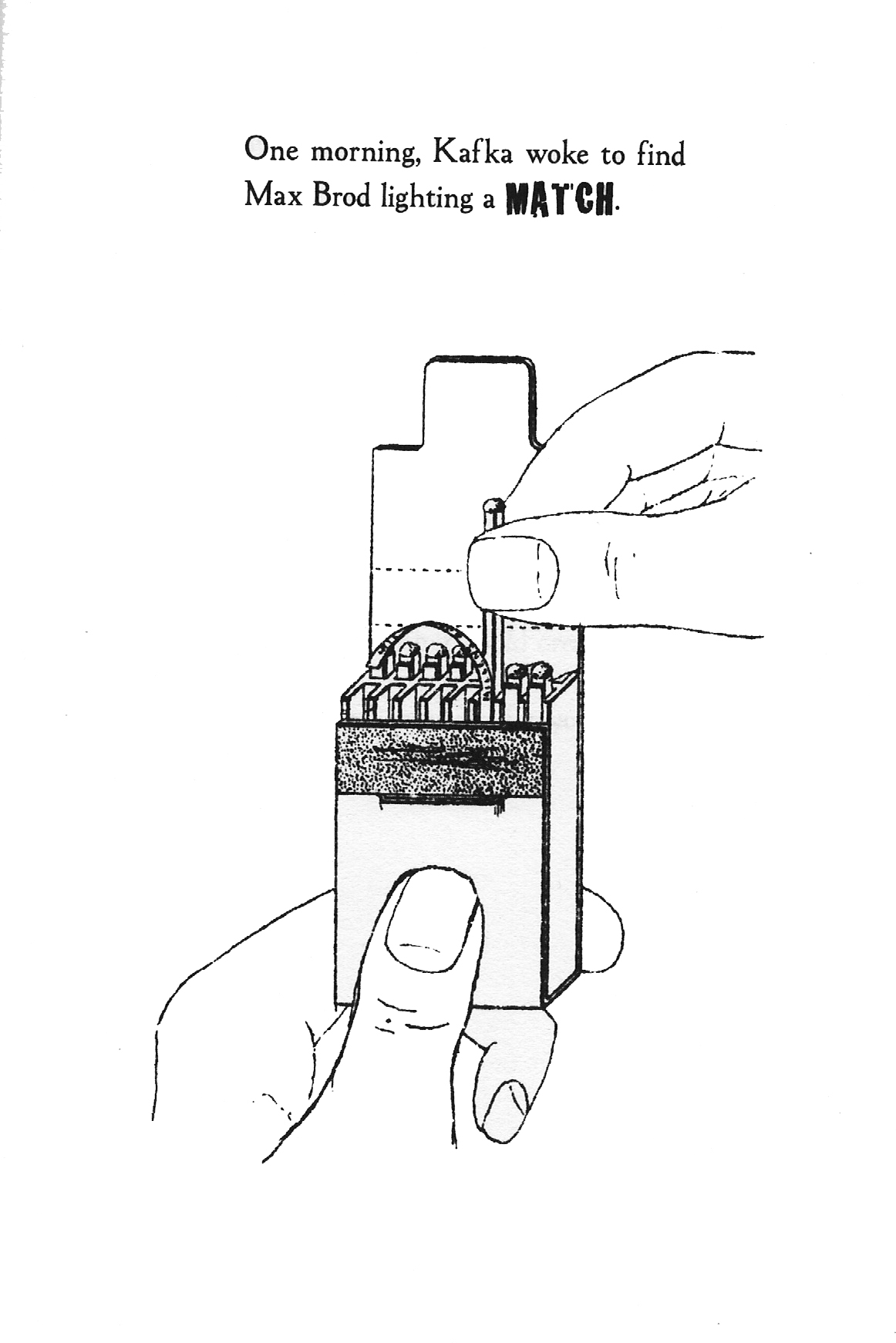
Schlemielintheory.com has hosted and posted many blog entries on Franz Kafka.  I have had a guest post by Matthue Roth on his very popular book My First Kafka: Runaways, Rodents, and Giant Bugs, a guest post on Walter Benjamin’s reading of Franz Kafka by Hillel Broder, and more than ten of my own posts on the work of Franz Kafka.   His work, without a doubt, is of great interest to this blog and my book project.  That said, I have recently come across an exceptional book that plays on Franz Kafka’s parables entitled Franzlations: The Imaginary Kafka Parables.  This enchanting book was co-authored by Gary Barwin, Craig Conley, and Hugh Thomas.  Gary Barwin is the author of fifteen books,  which include works of poetry, fiction, and children’s fiction (here’s his blog).  Like Barwin, Craig Conley is an eclectic writer whose books span fiction, mysticism, linguistics, pop culture, folklore, children’s fiction, and grammar.    Hugh Thomas is a Canadian poet who has published a few books of poetry.   In collaboration with each other, they have created a book that speaks to anyone who is interested not just in reading Kafka but in, so to speak, taking his work as the basis for new texts, images, and interpretations that “open” up the text to play and new meaning.   Moreover, this book speaks to people who are well versed in what is called “intertextuality.”  And by this I mean the textual practice of moving between texts which, in effect, offers new meanings (I will return to this below).

But I would argue that since Franzlations also includes images, one text doesn’t simply translate into another; it also translates a text into another image (or rather a set of images which harken back to the early 20th century).  By doing this, this book takes the work of Kafka into a wholly other sphere of meaning with an entirely different register of connotations.  And for someone like myself, who loves textual play, this is doubly exciting.  It brings us into the zone where Walter Benjamin, in his book Berlin Childhood around 1900, wanted to go; namely, to a space where the imagination can be freed by virtue of the play of images, text, and history.  In this space, one becomes like a man-child, interpreting text, images, and history while at the same time playing with them.   This touches on depths by way of traveling across different surfaces.

I’d like to take a look at the interplay between text and text and text and (historical) image to illustrate how these texts open up horizons that I have not experienced in any previous academic readings or fictional plays on Kafka’s novels, short stories, or parables (as in Phillip Roth, Paul Celan, or Aharon Appelfeld’s work– to mention only a few examples of writers who engage in intertextuality with Kafka’s work).

Although there are a number of ways to enter this text, I’d like to suggest reading it (for the first few times) in a linear manner.  Playing on the text, I would like to suggest my own “Franzlation” of this book.  Taking the text as its guide, my reading looks to play on one of the central signifiers in this text: the parable.

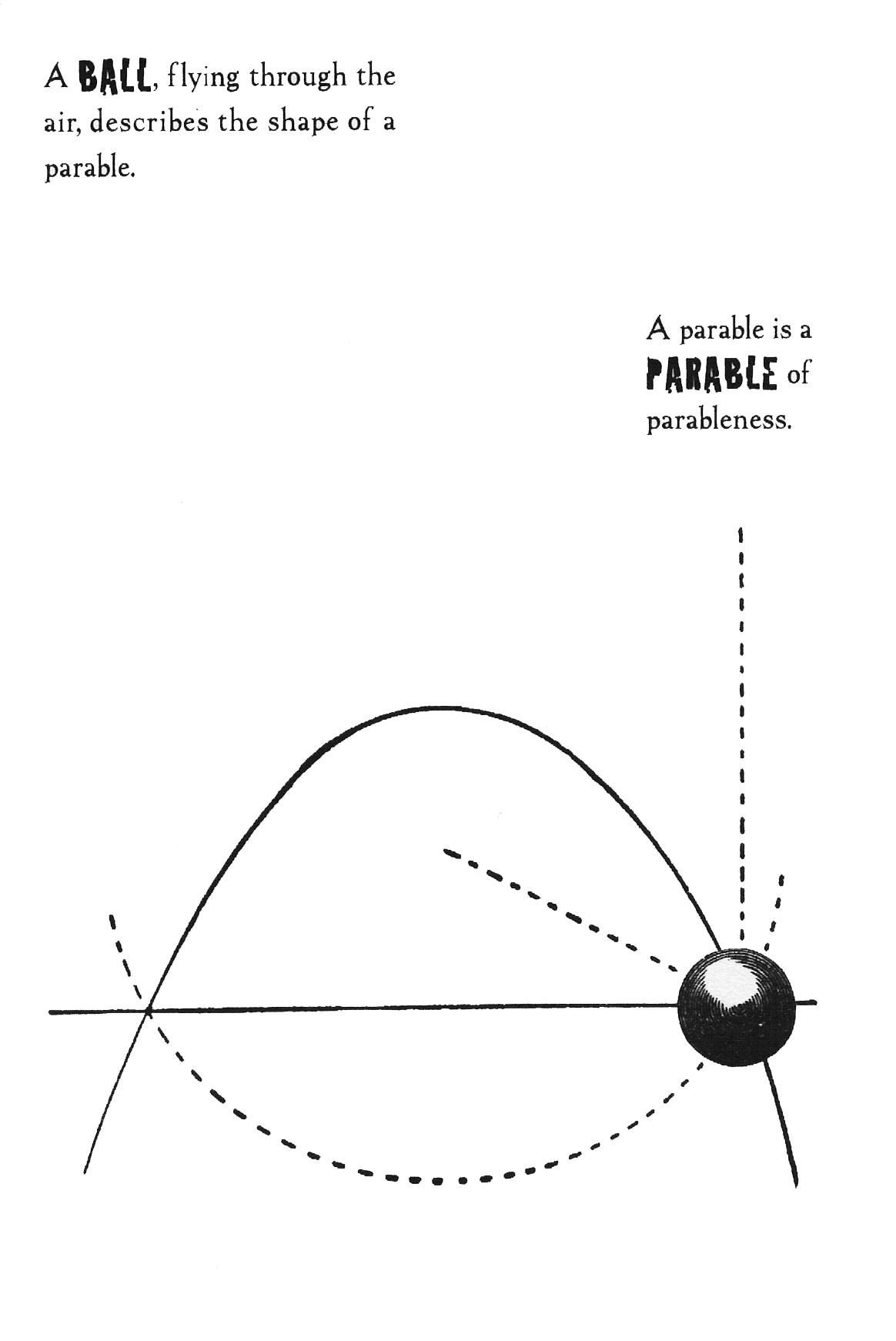
To be sure, the meaning of the parable is one of the main concerns of this text.  The Oxford Dictionary defines parable as “a simple story used to illustrate a moral or spiritual lesson, as told by Jesus in the Gospels.”  It comes from the Latin “parabola” which means comparison.   Working with the Latin root, I would like to suggest that Franzlations works not by way of illustrating a “moral or spiritual lesson, as told by Jesus and the Gospels” as a textual-imagistic strategy to compare one text or image to another so as to “reinvent” Kafka’s text.  This comparison has a spatial and a textual dimension, but, instead of illustrating a lesson from the Gospels, it articulates a number of relationships with which all of us are intimately familiar.

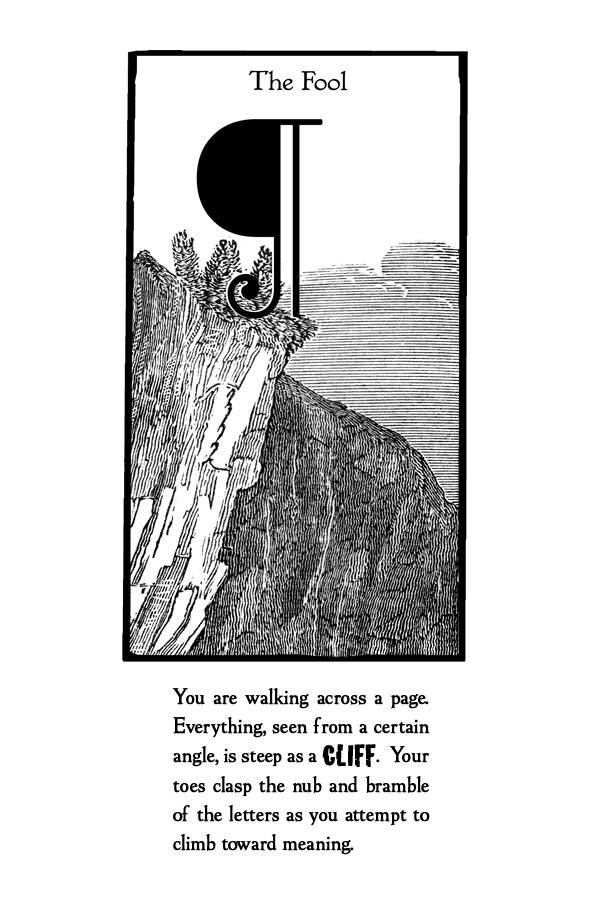
We see this in the introduction to the book, which likens such comparison to taking a step to the left; a – so to speak – parabolic step to the edge of a cliff:

We have stepped a few paces to the left in order to reinvent them. Sometimes this means we have walked off a cliff into the empty air.

In the body of the text, the Tarot card of the “fool” illustrates this by having a sign on the edge of a cliff; that is, on the edge of an abyss:

28-Walking-Across-a-Page-1

As you can see, the text for this image gives one a spatial coordinate for how one’s eye moves from text to image.  It is self-reflexive in the sense that it is a parable of reading in which the reader “clasps” at meaning as he/she “attempts to climb toward meaning.”  This, let me stress, is likened to the movement of the fool (reader-writer)  since it is a risk that most adult readers wouldn’t venture.

The introduction plays on the fact that when we read we move between things (the “inter” – the between – is located in a few different places).  And this explanation, itself, is a parable since it is a comparison “between” different pairs; one of which is between the reader and these writers:

This, itself, is a parable.

And so it is clear, that at its heart, Franzlations is a collaboration.  Between writers and writings.  Between words and images.  Between readers.  Between the past, the present, and the future.  For it is our belief that new writing is the imaginary future of past writing, even if that writing was never written.

The last words suggest that this book casts forth, for the reader, new, possible relations to a past that may or may not have been written by Kafka.  But I can assure you that as a reader of Kafka, they do include fragments of his aphorisms; but they also play on them and write them in configurations that never appeared in Kafka’s text.  Regardless, as they note in the introduction, “Kafka’s words have been an inspiration for us.”

The text/image demonstrates the movement “between” things, images, times, and readers; and between Kafka and their text.  This movement informs what they call the parable.  For instance, in an image of a cow and a crow, they write “A COW is a parable for a CROW.  And vice versa.  Humans are their own parables.  And this suggests that one thing (parable) can be translated by another and that humans are parables of themselves (which suggests, based on this, that they are not themselves but something other).

12-cow-is-crow

While the reader might see this as a free-for-all which lacks any connection to reality, I would like to suggest taking a look at page 8.  In this image-text, the proposition that “a single poem can destroy war” is tested.  It suggests that war is the impossibility of poetry; and if the work of the between, the parabolic work, is poetry, then this suggests that this book is a challenge to war only insofar as it dwells in the parabolic.  As Emmanuel Levinas notes in his book Totality and Infinity, war dwells in absolutes.  Franzlations, on the contrary, doesn’t deal in absolutes; it deals with the parabolic. As we can see in this image of a naked-man-warrior who is sloping parabolicly with a feather (away from war).

8-Poems-and-War

Another major theme in Franzlations is the movement between the serious and the comic.  This movement is of great interest to me and my own schlemiel-project.  The movement suggests that poetry moves between the two.  On page 32 we see such an image/text.  It plays on the initial parable in the book – drawn from Kafka – about hearing a train inside of oneself moving along.  Here, we see a little boy with a clown nose under a crescent moon listening to a large ear.  He is listening to a “car full of clowns inside him.”  But the text takes a serious, poetic note by referencing silence.  If one listens to the clowns, against a deep silence, one can hear “the toes of the clowns curling in their big shoes.” One can also hear the “toot of the car’s horn” as it floats up into the “funny sky.”

32-Clowns

The irony in this piece is that the floating away into the sky is also a melancholic image of loss.  Silence is often associated with the tragic, not the comic.  And the comic sound runs up against tragic silence.  But although the sounds disappear there in the sky, this is not tragic; it is “funny.”  This juxtaposition of the two makes for a depth and a paradox that takes this text out of the zone where textual play is the only thing on the table.

This juxtaposition returns on page 46 where we see an image of a lonesome tree in the foreground.  The text notes the “SORROW” of the forest; but what stands out is not suffering and despair so much as the “jokes of the wood” which “bring you alone, laughing among the ranks of trees.”  It muses that this “perhaps” may cause “confusion in the forest” but “you know nothing of that.  You know only your shimmering leaves.”

46-Sorrow-of-the-Forest

This image speaks to me and my project.  It suggests that the reader is child-like (a man-child/schlemiel of sorts).  Yet, at the same time, it suggests an adult-awareness of sorrow and tragedy. This frission makes for a relation that I ponder often in schlemiel-in-theory.  Namely, the relation between Sancho Panza and Don Quixote (a relation that both Kafka and Benjamin found so much interest).  This awareness takes us into a space between the comic and the tragic which is also the space between childhood and adulthood.

44-Destination

Franzlations, much like Walter Benjamin in his reflections on childhood terror, explores this zone of childhood as it relates to death.  The text-image that brings this out is on page 44.  This image and text play on this relation vis-à-vis a mystical image.  In it we see a boy who appears to be dreaming of a land from the space of his heart.  The text, however, suggests that he may be dead.  It intensifies the claim by speaking in the first person: “I asked for my body to brought to me.  They did not understand.”   The boy speaks to a Doctor about this (which would, of course, be impossible, since he is dead).  The doctor doesn’t hear him. The ensuing dialogue, we can suppose, is with himself.  He will take his body away; but he has no destination for it: “We do not need a DESTINATION.”  This implies that the body can be taken anywhere; this may be an allegory of the dead letter. On the other hand, it may just be a way of addressing death in a way that is steeped in the imagination and the “between” of life and death; dream and reality.

The theme of terrified children and the “other world” is also seen on page 48. The antiquated images that are used for this (and other texts in Franzlations) bring us back to a cultural childhood (in the early 20th and late 19th century) where, it seems, the relation of childhood to death was of interest.  It also helps us to “look back” at ourselves and our relation to death.  Here, “shadows” and “fear” are foregrounded.  When I see this image, I also think of the shadows of words and images and the fear they evoke (as it were, the fear of unknown possibilities).

48-Shadows

But perhaps there is nothing to fear.   The end of Franzlations offers some comfort by way of offering us – as if we the readers are children – images of a man posing like a crescent moon above him.

78-Hoping-to-Dance

These images are parabolic and remind me of the circus.  The shape of the man is compared to the moon in this image.  But the text tells us that these images emerge out of duress: “Birds shrieked. We crawled through the dust, hoping to DANCE.”

This movement itself may be comforting; like the image of a ball whose movement through space is also parabolic.

83-ball-flying

Maybe there is hope at the end of the parabola.  Maybe there is a new morning.  Or is it just the course of the day or of a parabola?  A ritual?

87-ovid

All of these questions are left open for the reader to decide on.  But, in truth, they are well posed. The images and the texts selected give me much food for thought as so much dwells in that arc between one thing and another – especially if that arc spans what is and what could be or between what was and what may be.  These are the thoughts of children…and adults.

The last image of Franzlations casts a possibility that never happened.  As any scholar of Kafka knows, Kafka wanted his best friend Max Brod to burn all his work.  But he didn’t.  Playing on its task of translation, Franzlations purposefully misreads what actually happened (the texts were not burned and served as the basis for much of Franzlations’s musings).

91-max-brod

Here Kafka (playing on Gregor Samsa of “The Metamorphosis”) wakes up to find Brod lighting a match.  He never did, but let’s take a moment to imagine that he did.  For if he did, we, just like these authors, would have to “invent” another Kafka.  Regardless…. they did invent or rather re-invent him!  And for that, I am very happy: because the way they chose to reinvent Kafka brings us into a space that is made especially for schlemiel-readers (see the “fool” Tarot card above) who travel back and forth between adulthood and childhood, a space that is evoked by way of moving our eyes on a page between text and image, and between the past, present, and imaginary possibilities of the future.