The Meaning of Failure: A Word or Two on the Trailer for Gary Shteyngart’s New Memoir

DownloadedFile-7

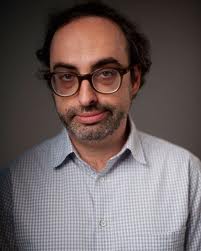
I recently stumbled across a trailer for Gary Shteyngart’s new book – Little Failure –  which will hit the streets on January 2014.

I came across the trailer by way of an article in Slate. The title of the piece, “Gary Shteyngart’s Homophobic Little Failure of a Book Trailer,” suggests that the trailer, because it played on “gay stereotypes,” was homophobic.   But the author of the article – J. Bryan Lowder – isn’t against gay jokes that poke fun at this or that stereotype so much as gay jokes that are based on “lazy stereotypes”:

Gay jokes aren’t that hard to pull off. Whether the comedian is straight or gay themselves, they only need to be clever, to pick out something fundamentally true about gay people or culture and play with it deftly. Unless you just reject identity-based humor altogether, a well-crafted gay joke delivered in the spirit of good-natured frivolity should not offend. That should only happen when the joke is malicious or, as is more often the case, draws its “humor” from lazy stereotypes.

Using the word “lazy” repeatedly, the author says that Shteyngart was looking for a “lazy gay laugh.”  And he uses it, once again, in his final summation of the piece:

Look, I’m sure Shteyngart and the folks at Random House thought they were making fun of the author’s shlumpy looks and demeanor, but there are ways of doing that which don’t necessitate lazily dusting off tired homophobic clichés.

And it recurs in his last words on the trailer:

Of course, considering the source, it’s clear this trailer wasn’t produced with malicious intent; it’s just the product of unimaginative, lazy thinking. Unfortunately, that doesn’t make it any less offensive.

The problem with this kind of reading is that by repeating the word “lazy” over and over again in different variations we are led to believe, falsely, that there is an argument here.  What would a more imaginative gay joke look like?  The author refers us to an article he wrote on a James Franco roast for his criteria.

But what we find there is that Franco’s jokes were acceptable because they were an “imagined embodiment of gayness” and were not “at the expense of gayness.”

Were the jokes really at the expense of gayness in general, or were they based on Franco’s imagined embodiment of it? From what I saw, the latter was the case; specifically, the jokesters all seemed very focused (to the point of fetishization, really) on how much crazy gay sex Franco was having, often with the person speaking.

This “imagined embodiment,” in his view, was “very focused” as opposed to Gary Shteyngart’s “lazy” performance.  Rather than level such a “taste- based” reading of this video – as to whether or not it is “at the expense of gays” – I think it would be more fruitful to read this performance of gayness by way of the schlemiel.  To be sure, the schlemiel and not gayness is the real focus of this trailer.

But what, in fact, is a gay schlemiel?  What examples do we have?

The gay schlemiel is something that has not been explored by any writer I know of – including Shteyngart.  But in this trailer, Shteyngart gives a go at it.  He starts off with a slightly inflected pitch for his new memoir by suggesting titles that “fail” because they are out of tune with reality (something we often find in the schlemiel is a disconnect between reality and their dreams; this at work here, too).  Playing on James Joyce, he first suggests The Portrait of an Artist as a Young Mensch, which is actually witty (and not lazy) because the subject of Joyce’s novel – Stephen Daedelus – is the anti-thesis of the schlemiel.  The second suggestion, playing on the serious writer David Eggers’ opus, The Heartbreaking Work of Staggering Genius (a title which, though ironic, has a serious non-Jewish, edge, and lucid prose), is The Staggering Work of Great Jewness.   Both titles are frowned upon (notice the musical cues and the blank facial reactions); however, what is missed is that these titles evince a major difference between a comic Jewish attempt at a memoir (the attempt of a schlemiel – a half-man) and a “serious” (heroic) non-Jewish attempt.

Both titles are rejected.  And the two representatives of Random House tell Shteyngart that through their “focus group” they have discovered that the best title for his book (and for Shteyngart) – which best describes what he “is” – is Little Failure.   In other words, he is identified as a schlemiel by a “focus group” that consist of people who are self-actualized and normal.

Now comes the “gay schlemiel” part.  For the rest of the trailer, Shteyngart tries to deal with the fact that he has been designated a “failure” by Random House.  (Lest we not forget, the attempt to come to terms with failure, of course, is something Woody Allen does in many of his films.  It is a central schlemiel motif in his films.  And Shteyngart, in many ways, takes Allen as a model.)  When Shteyngart goes home to talk to his “husbands” about this designation, we first see James Franco who tries to cheer him up.  He tells him that Shteyngart shouldn’t worry about being designated as a “failure.” In Franco’s eyes, he’s a lover.  But, as we can see, Franco is self-actualized (a “real man”) and has his own Memoir (“an erotic journey”) which, once again, pits success against failure.  Although Shteyngart is in Franco’s memoir, the real focus is Franco and his erotic journey.   (Shteyngart is incidental)

Shteyngart’s attempt to come to terms with being a “little failure” – something that he, as a schlemiel, was blind to all these years (which reminds me of the motif of “blindness” in Woody Allen’s Hollywood Ending) – is repeated in the rest of the trailer.

In the next scene we see Jonathan Franzen – another self-actualized individual – as his therapist/husband and Shteyngart on the couch.   After Shteyngart presents the book, Franzen, condescendingly, says the more appropriate title should be “the little narcissist.”  Franzen ends with his identity as a heroic-slash-authentic writer of sorts who has to “speak the truth” without any irony: “I’m so sorry I have to stop speaking the truth aloud.”

The last part of the trailer – framed by the words “three weeks later” and sad violin music – shows us a sad Shteyngart at a coffee house.  The barista is reading Franco’s book, which isn’t a memoir – he says – so much as “an erotic journey.”  Memoirs, we see, aren’t welcome there.  To foreground Shteyngart’s failure, we bear witness to everyone else in the coffee house reading Franco’s book. We hear a series of clichéd descriptions of Franco’s book by these young and “hip” readers: his prose is perfect, he captures the Zeitgeist, etc.   The final blow is directed at Shteyngart: “why is he married to that dork?”

The meaning: no one wants to read the memoir of a “little failure” (a schlemiel).

In contrast to the author of the Slate article, I wouldn’t call this “lazy thinking” or a denigration of gay culture so much as an articulation of Shteyngart as a gay-schlemiel.  But, to be sure, this gayness is not fully sketched out and could use a lot more development.  It is by no means the benchmark for a new kind of schlemiel.

That said, the context for Shyeyngart’s designation as a “little failure” is that all of his “husbands” are good looking, confident, and successful.  He, like Jews who were historically excluded from a society that privileged masculinity, is not.  The schlemiel, to be sure, can be used – in this regard – to critique serious art, eroticism, and culture.  His failure can speak truth to power – albeit in an indirect manner (not like Franzen, Eggers, et al).

That’s what I like about this character. To be sure, I’m more interested in Moses Herzog, Gimpel, or the schlemiels of Yiddish literature than I am in Hemingway and all his literary heroes. That’s why I found Woody Allen’s Midnight in Paris to be a great disappointment: in the end Owen Wilson’s character is influenced by Hemmingway to “be a man” and as the movie progresses we watch him “become a man.”  Woody Allen’s concession, in this film (and several others that stretch back to Anything Else in 2003) is to masculinity.

The schlemiel, in contrast, offers a critique of this emulation of masculinity (as we saw, for instance, in Woody Allen’s Annie Hall).

For this reason, I would suggest that the author of the article for Slate take a moment to think about the historical context of the “little failure” aka the schlemiel and how this comic character offers a powerful critique of masculinity.  Perhaps he should read Daniel Boyarin’s Unheroic Conduct: The Rise of Heterosexuality and the Invention of the Jewish Man to better understand what is at stake with the schlemiel’s critique of masculinity.  (I have dedicated a few blogs to this insightful book.)  If this trailer has any power to it, it comes from this tradition.   And while I can appreciate the concern the author has for the trailer’s treatment of gayness, I cannot overlook the fact that in this reading (by calling it “lazy”) he misses the point of the schlemiel (the little failure).

All of this comes across as odd since, ultimately, gay culture – at its best – offers a critique of masculinity that has much resonance with the schlemiel.
Jewish Emasculations: On Gary Shteyngart’s Metaphors for the Wounded “Member”

images-1

Following Gary Shteyngart’s depiction of Misha’s (fictional) circumcision – his first “American experience” – there are two chapters that address the two people closest to him. The first person to be addressed, in a chapter entitled “Who Killed Beloved Papa?” is his father. As I pointed out in other blog entries, his father – who he has, in a schlemiel-like fashion, “too much love” for – is responsible for Misha’s decision to be circumcised. And, as I pointed out in the last blog entry, this circumcision is the source of Misha’s “uncanny” and negative relationship with Jewishness. It is his moment of emasculation. However, in this chapter he tries to mourn his father’s death. Nonetheless, he doesn’t express anger at his father regarding the circumcision so much as anger over the fact that since his father was involved in the killing of a man from Oklahoma, he will not be able to return to New York City:

If only I could believe that you are in a better place now, that “other world” you kept rambling about whenever you woke up at the kitchen table, your elbows swimming in herring juice, but clearly nothing survives after death, there’s no other world except for New York, and the Americans won’t give me a visa, Papa. I’m stuck in this horrible country (Russia) because you killed a businessman from Oklahoma, and all I can do is remember how you once were. (25)

As you can see, Misha doesn’t share the religious views of his father. As he stated in the prologue, he’s a “secular Jew.” And he sees Jews as a “prehistoric” group. He finishes this chapter with mock reflection on the Jewish process of mourning. The haste of this articulation indicates that he has yet to work through his loss but it also indicates his impatience with Jewishness:

And that, in so many words, is how I became an orphan. May I be comforted among the mourners of Zion and Jerusalem. Amen. (26)

In contrast to this chapter, the chapter that follows – entitled “Rouenna” – is much longer and much more detailed. And in this chapter Misha reflects on his circumcision as it relates to a Latino-African-American woman he meets at bar and falls in love with. Her name is Rouenna.

Before he meets her, he talks about how alone he is in his “Wall Street loft.” His description includes a reflection on his penis which continues in the same vein as we saw in his horrific final descriptions of his circumcision:

On occasion I would wail this deep-sea arctic wail invented specifically for my exile. I cupped what remained of my khui (Russian for penis) and cried for papa five thousand miles to the east and north. How could I have abandoned the only person who had ever truly loved me? (29)

Following a few despairing descriptions of his bad-luck, Misha tells us that “one day I got lucky.” The luck has to do with meeting Rouenna. He meets her with a friend named Max – a “middle aged Jew” who had “long given up ever encountering human warmth or arousing the love of a woman”(30). The pairing of the two should alert us that the two – at this point – are “Jewish” because they are wounded sexual schlemiels. But, at the very least, one of them has a “lucky” break: Misha.

The bar, we learn, is special because the barmaids walk around in bikinis and, for money, pour drinks between their breasts and allow the customers to lick them up. When Rouenna sees Misha for the first time, she says “Whoa, daddy!” The first response it telling. It should remind us of his nickname, which we see at the outset of the novel: “Snack Daddy.” As I discussed in an earlier entry, this nickname was given to Misha in “Accidental College.” At the outset of the novel, this name and his Jewish-Black-Fatman identity are foregrounded. He identifies more with being “Snack Daddy” than he does with being a Jew. But all of that is the realm of culture and multicultural fantasy. Rouenna makes this identification a reality when she says “Whoa, daddy!”

And that’s the point.

The only thing that needs healing, however, is his circumcised penis; that is, his Jewish identity. In fact, there is a whole discussion of Jewishness when Rouenna and Misha meet for the first time:

Her breasts were ponderous. “You Jewish? She asked me…”Yes, I am a secular Jew,” I said proudly. “Knew it,” the girl said. “Totally a Jewish face.”(31)

What sticks out most in this encounter is the body. She recognizes his face as Jewish. What she doesn’t see, however, is his hidden face, the true mark of his Jewish identity. This worries Misha. He fears what she will say if she were to see his circumcised penis.

He is reminded of his penis when his tears of joy, at having met this multicultural woman (lest we not forget he majors in “multiculuralism” in “Accidental College,” apparently fall between his legs and touch his “crushed purple insect”(32).

After he reveals to Rouenna that they nicknamed him “Snack Daddy” in college, Misha and Rouenna make a line for his bedroom and “tumble upon” his bed (33). But when the moment of truth comes near, he gets scared:

I fought with my mass, but Rouenna overpowered me. My underwear ripped in two. The crushed purple insect shyly drew its head back into its neck. (34)

Following this, he, once again, makes a detailed negative description of his circumcised member. And finishes his description with a new metaphor. Instead of calling it a “crushed purple insect” now he calls his circumcised penis an “abused iguana”:

It would seem that the khui’s knob had been unscrewed from its proper position and then screwed back into place by incompetents so that now it listed at an angle of about thirty degrees to the right, while the knob and the khui proper were apparently held in place by nothing more than patches of skin and thread. Purple and red scars had a created an entire system of mountain-ridge highways running from the scrotum to the tip…I suppose the crushed insect comparison worked best when my khui was still covered with blood on the operating tale. Now my genitalia looked more like an abused iguana. (34)

As his penis moves close to her mouth, he yells at his “abused iguana” (penis): “Stop it! I told myself. You’re a disgusting creature. You don’t deserve this!” (35).

What is happening here is that Misha fears that Rouenna will reject him and withdraw in horror from him when she sees his Jewish monster. She looks at it, “turns it over,” finds the “most hideous spot on its underbelly – a vivid evocation of the Bombing of Dresden – and, for the next 389 seconds…imparted upon it a single, silent kiss”(35).

At the end of the chapter, he reflects on his “floating feeling” to his absent father. But, to be sure, his “happiness” is altered by the fact that Rouenna has her lips around “what’s left of me.” His circumcision has taken a piece out of his self. As we see above, he likens it to the Dresden bombing. He thinks of himself as mortally wounded by his Jewishness. His circumcision – the mark of his Jewishness – is the mark of his monstrosity.

However, after Rouenna’s “single, silent kiss,” things seem to change. To be sure, he seems to leave his Jewish body behind. She makes him feel like a man. However, as the novel progresses he loses her to Russian-American professor (who he was friends with in College). And though he flees from his Jewishness, it returns in the end of the novel since he finds refuge with the “Mountain Jews” of Abusrdistan (following a protracted civil war). But, as we saw in the prologue, he doesn’t want to stay with these “pre-historic” Jews. He wants to go back to New York and to win back Rouenna.

And in the end of the novel, Misha and his servant Timofey flee the “mountain Jews” and make the heroic journey back to New York and Rouenna. What I find most interesting about this flight is that it all comes down to a flight from the Jewish body and the “pre-historic” Jewish community. Rouenna holds the keys to his redemption from both. The suggestion is that by leaving both he can live a “normal” post-Jewish life. This, of course, is troubling.

The irony of all this is that his circumcised penis, which one can call a “wounded member,” is the appropriate word for Misha himself. He, like his penis, is a “wounded member” of the Jewish people. Seeing his Jewishness in this way should be troubling for a Jewish reader of the text since it looks negatively on Jewishness – seeing at as a wound and a monstrosity to oneself and others. To see one’s Jewishness in terms of how one’s body appears to others, is to prove Jean-Paul Sartre’s thesis in his book Anti-Semite and Jew: if a Jew sees himself and his body in terms of what others say about it, he will hate himself. This, of course, is not the right way to go. Even Sartre, who wasn’t Jewish, could see the pitfalls of this view of the Jewish self and Jewish body. By seeing his penis and himself as a “wounded member,” Misha affirms – unbeknownst to himself – anti-Semitism. He is ashamed of his Jewish member(ship). Rouenna’s single kiss alleviates him of this shame and allows him to feel more at ease about leaving his “pre-historic” Jewishness for something else, something in tune with history and its correlate: multiculturalism. Apparently, Jewishness and the world of “mountain Jews,” for Misha, are neither historical nor multicultural; New York and Rouenna, in contrast, are.

Misha wouldn’t belong to a club that would have him as a member. But the punch line is that this club is Jewish.

Guest Post by the Poet Jake Marmer: Six Poems from the “Old Country Cycle”

DownloadedFile-6

Same Ass but View Sideways

mirrors of fat,

circle fatefully

evading the spoon

“let me tell”

“exactly the type of a girl”

“that’s alright, that’s not what gentile women

love us for”

“though one day they remind you

who – “

yes yes, this world, etc.:

Pushkin, Mandelshtam, the radio

in these pants?

what you know

is every buttock

in this town, tapped each one lovingly

on public transportation

with your bags of groceries

the provider!

already, a real man! “they” spend their dough

drinking but we:  invite relatives and talk, talk

we talk how we eat, in

circles, blowing

Public Bathhouse

Age 5, first time in the public bathhouse

I thought everyone’s penis

looked like a miniature accordion

“usage”         “music”

explained my grandfather

Like Water off the Goose


with a pocket full of sunflower seeds

spitting shells by the goal

why am I always a goalie

because you don’t run as fast

because falling is your calling

“wise-men sit at the gate”

from behind the stadium’s trees, the beaten

gold of the church, still the center of the city –

so much for the “opium”

path to the bridge over a thinning, rotting river

Tzarina Elizaveta fortified the shores against nomadic elements

a few rusted ships

on Hanukkah you get a rubel

another year of missed shots and offsides –

hope for things

not

happening is the closest you come to intuiting

prayer

before you read somewhere people do that

you get dreamy

you get smacked

with a ball on your face


Assimilation: After the First Decade

I admit I enjoy being held

on hold

composing

orally

bold complaints

replacement ivory/sand colored shoelaces

priority mail

have been a loyal customer

some ancient being

                  holding a hose, opens

its mouth, gold-toothed

Memoir

my aunt’s friend worked at the meat factory

that cooked up secret kalbasas, salamis, cured meats

inaccessible to general public

and because there were eyes

and ears everywhere, on the phone, with my aunt,

the friend used code:

“I have what’s hurting

your husband”

(meaning, liver –)

and a meeting would be arranged

my uncle’s

liver must have swelled every time with signified’s burden –

professor of Marxist philosophy

in our provincial university –

when he heard a joke he liked

instead of laughing, he’d make a pained smile and say:

“so is that how it is?”

Anniversary

roses in the mouth

of a three headed trout

happy birthday

motherland’s

shadow

airplane

happy absence

& double-stamped passport

squashed final apricots

loneliness, squashed

in the stomach

under air-

plane food

& sodas and victory

I’m not my age

not my nationality   my ancestors

made biiig mistakes

rode the wrong

horse

in the wrong direction

did

ensure sur-

vival vaval viva

words

lots of words on the t-shirt I wasn’t planning

on changing so often as I

changing, scrambling signals, I

“called a suburban, k?”

“do you know what the word ‘humongous’ means?”

and shame & glory & terror & poverty

happy new ritual   happy one-time

——–

Jake Marmer is the author of Jazz Talmud (Sheep Meadow Press) and has recently released a Jazz and Spoken-Word Poetry CD entitled Hermeneutic Stomp.   Marmer maintains a blog entitled Jake Marmer’s Bob Apocalypse: Poetry, Philosophy, Existential Rants.  For more on his work, take a look at the blog entries Schlemiel Theory has posted blog on his recent poetry-CD.

“A Crushed Purple Bug” – Jewish-American Identity Before and After Misha’s (Fictional) Circumcision (Part 2)

DownloadedFile-5

For novelists and for readers of novels, one of the most complicated issues is to determine what one can learn from the fictional “experiences” and inferences of different characters.  This is of especial interest when the character in question is a schlemiel.  Since the schlemiel’s experiences are often permeated by several different blind spots, we need to figure out 1) what the blind spots are and 2) what is missing.  However, sometimes it is the case that it is the narrator who has the blind spot.  I’m very interested in how this works with Gary Shteyngart’s portrayal of Misha’s circumcision.  To be sure, Misha, the narrator of this novel, depicts his circumcision in such a way as to disclose himself as a character wounded by Jewishness.  Misha’s description, I believe, is his blindspot.   As readers, we can either identify with this disclosure or reject it.  I think it is imperative that we reject this identification of Jewishness with botched circumcision since, as I pointed out in a previous blog, this identification harbors a deeper form of resentment: reading Judaism as a form of castration.   According to his reading, which I reject, Misha is a schlemiel by virtue of allowing himself to be castrated by Jewishness.

To arrive at this rejection, we need to understand how Misha presents his “experience” of circumcision.  That way, we can understand how he presents and interprets that experience of a fictional circumcision.

To this end, I began my last blog entry with a reflection on the difference between “experience” and “thought” as brought down by Aristotle.  And from there, I discussed how this tradition was carried on into the modern era with thinkers like Rene Descartes, Baruch Spinoza, Immanuel Kant, et al.  After doing this, I looked into the challenges posed by Martin Heidegger and Sigmund Freud to this distinction.    Their challenges flip this distinction.  For both of them, experience and thought are deeply intertwined.  And it is not just experience in general that interests them; it is the  “uncanny” experience that, for both, prompts us to reflect on who we are.  However, these experiences can also do the opposite.  Anxiety about this or that thing is a sure sign that the subject is coming close to something that is at the core of his or her identity.

For the narrator of Absurdistan, that thing is Jewishness.  It is associated with a late-in-life circumcision and, as I have argued here and elsewhere, a form of castration.  Misha’s power to assimilate and enjoy the world is, in many ways, curtailed by his Jewishness.  The description of his circumcision is a substitute (prosthesis), in a Freudian sense, for this belief.   We see this in the fact that is it is uncanny.

The word for uncanny in German is un-heimlich (which means not-homely).  The German word is suggestive because it suggests that it is not totally alien (it is also something that we are familiar with).   Drawing on this, I’d like to pay close attention to the narrator’s description of the circumcision.  His familiarity with the Hasidim who circumcise him is juxtaposed to the horrific depiction of the circumcision.  This mixture of familiarity and horror is the literary correlate for the uncanny.

As I noted in the prologue, the narrator looks at Jewishness as old and “prehistoric.”  In his opening description of the Hasidic neighborhood we see this connotation return:

The cab stopped in front of an old but grand house whose bulk was noticeably sinking into its front columns the way an elderly fellow sinks into his walker. (19)

The narrator’s description of the first Hasid he sees is familiar and even endearing:

A pleasant young Hasid with an intelligent expression (I’m partial to anyone who looks half blind) welcomed me in with a handshake and, upon ascertaining I spoke neither Hebrew nor Yiddish, began to explain to me that concept of a mitzvah, meaning a “good deed.”  Apparently, I was about to perform a very important mitzvah.  (20)

Following this, Misha describes the odd but non-threatening experience  of drinking and singing that precedes the circumcision.  They want him to feel “at home” and this, apparently, fosters this feeling:

“Now do you feel at home?” the happy Hasids shouted at me as I swigged from the plastic cup and chased the drink with a sour pickle.  “A tsimis-tov, a humus tov,” they sang, the men branching their arms and kicking up their feet, their remarkably blue eyes drunkenly ablaze from behind their black getups.  (21)

All of this goes awry when Misha suggests that he pay them “seventy dollars” and that they skip the operation:

Please tell my papa I got cut already. He never look down there anymore, because now I am so fat. (21)

They didn’t “buy” his suggestion and they turn it into “their mitzvah”: “This is a mitzvah for us.”  Misha hears the words “redeeming the captive” from them (which is apparently said by them since the Hasidim see him as a “captive of the Soviet Union).  But, in truth, he now sees himself as a “captive.”  In other words, Misha represents himself, at this point, as losing control and being violently taken in by the Hasidim.  It is their mitzvah, not his.  He is their captive.  This is when the familiar aspects of Jewishness because unfamiliar and threatening.

Misha is then pushed into a hospital for the operation and is clearly angry.  He feels duped and in his drunken anger at this realization, he screams out to his father for help: “Papa, make them stop! I cried in Russian”(23).

And when he awakes from the operation, he sees, in horror, his penis and describes it as a “crushed purple bug”:

When I woke up, the men in black hats were praying over me, and I could feel nothing below the carefully tucked folds of flesh that formed my waistline.  I raised my head.  I was dressed in a green hospital gown, a round hole cut in its lower region, and there, between the soft pillows of my thighs, a crushed purple bug lay motionless, its chitinous shell oozing fluids, the skin-rendering pain of its demise held at bay by anesthesia.  (23)

Given this description and the fact that he describes this as a form of capture and imposition, the Hasidm’s blessings following the operation (“mazel tov and tsimmus tov and hey, hey, Yisroel”) are uncanny.  Following these now uncanny words, he writes:

The infection set in that night. (23)

Reading this, I cannot help but see this as an allusion to his Jewishness and not just his circumcision.  Following this operation, Misha sees his Jewishness as diseased (an anti-Semitic connotation that Sander Gilman – and many other scholars – has documented in many of his scholarly studies of 19th and 20th century depictions of Jewishness in Europe).

Although Misha’s feeling of being duped by his “co-religionists” calls for identification, I reject this call.  It’s a blindspot which, without a doubt, gives substance to Freud’s claim that circumcision is a substation for castration.  This passage makes it clear to me that Misha sees himself as a schlemiel-who-agreed-to-circumcision-out-of-a-blind-love-for-his-father.  His maturity consists in realizing that he was duped not just by this love but by Judaism.  And this comes through a description that is un-canny.

The greatness of fiction is to be found that, like much else in experience, we are free to reject the descriptions and judgments of the narrator or characters in a novel.  To simply identify with a character would be a mistake.  In this case, it would lead to reading Judaism as diseased and this, I believe, is set up by Misha’s description of the circumcision – a description that starts with familiarity and being-at-home and ends with horror.

“A Crushed Purple Bug” – Jewish-American Identity Before and After Misha’s (Fictional) Circumcision (Part 1)

DownloadedFile-4

In “The Metaphysics” Aristotle distinguishes “perceptions” from “experiences.”  Men and animals share the fact that they both have perceptions (sensation plus memory).   The first thing that differentiates them from each other is “experience.”  Animals can’t have experiences because, Aristotle tells us, they cannot make inferences based on the totality of their perceptions.    We do.  We infer who we are and what we are by way of our “experiences.”  But, for Aristotle, there is a higher mode than experience and that is thinking.  When we look for the causes of things, we move beyond inferences.  Aristotle acknowledges that scientists may be thinkers but that the greatest thinker is the philosopher since the philosopher looks not for this or that cause so much as the “causes of causes” (that is, the foundation of all things: from which things emerge and return).

But Aristotle makes a concession to experience when he argues that philosophy (always) begins with wonder.  However, it ends with wisdom and knowledge.  To remain in wonder, for Aristotle, would be to remain in the painful state of ignorance.  For him, happiness coincides with leaving wonder behind for knowledge.

To be sure, Aristotle gave birth to a whole line of thinkers who privileged thought over experience (from Descartes and Spinoza to Leibnitz, Kant, and Hegel).   Given this tendency toward thought and away from experience, Immanuel Kant – in the 18th century – thought of the novel as a distraction from the “true things.”  Since the novel was focused on experience it exposed us to things we could only make inferences about.  Dwelling in experience is tantamount with dwelling in confusion, ignorance, and doubt.  It would evince – as Aristotle would say – a lower, imperfect form of existence.

In contrast to Kant, Freud argued that we can learn a lot about “who” we are from our past experience.  Unlike Kant who thought of literature as a distraction, Freud oftentimes turned to literature and novels to understand what it means to be human.  All of our deepest problems and complexes are alluded to in such experiences as we find in dreams and novels.  Nonetheless, Freud believed, liked Kant and Aristotle, that we should work our way through such dreams or literary experiences so as to arrive at knowledge.   And this knowledge would, so to speak, set one free from this or that condition that hindered our being a reality-adjusted ego.   Although the analysis of self was “interminable,” for Freud, it had a goal.

To be sure, Freud would agree that first “experiences,” usually, count for a lot: especially when it comes to one’s identity.  A person’s first experiences of a country, a religion, or a culture, especially if they are a “part of it,” can certainly color his or her a) perception of him or herself and b) one’s identifications in this or that geographical, religious, or cultural context.

Oftentimes our experiences are arbitrary; however, sometimes they are primal or “originary.”  They can become “first experiences” and may, as the philosopher Martin Heidegger might say, alter how things – and oneself – “appear-in-the-world.”   For Heidegger, anxiety was a central mood through which the world was disclosed “as a world” and through which one is disclosed to oneself “as a being-in-the-world” (or as Heidegger would say a “being-thrown,” which suggests a “first experience” of things that was is not familiar with, things one did not know or intend).

In a Freudian sense (vis-à-vis the emergence of repressed materials in dreams), the world can become “uncanny” when buried experiences come to the surface.  Freud called this “primary” or “primal” experiences or scenes.  In this sense, there can be something shocking or even traumatic about first experiences.   And it can certainly be argued that literature is a way of coming to terms with – and perhaps even knowing the “source” of – this shock.

The more schlemiel literature I read, the more I see that sometimes the schlemiel is involved with the literary elaboration of this coming-to-terms with this or that primal experience.  What interests me most –as a schlemiel theorist – is to ask what the schlemiel learns or fails to learn – on the one hand – and what we, as readers, learn – on the other.  What blindspots do we see vis-à-vis the recollection and assessment made by this or that schlemiel regarding their experiences?

To be sure, working through a character’s “first experiences” may involve bearing witness to something shocking that will make a character appear awkward and comical.   The reader may find this schlemiel to be a tragic-comic kind of character since the schlemiel may not know what causes him to err.

In a Heideggarian sense, we may see the schlemiel as a character who is thrown into a situation that he cannot overcome.  And, on this note, the schlemiel may come across as a character that is wounded by a traumatic situation that they may or may not know – a situation that he or she may not be able to overcome.

In Gary Shteyngart’s novel Absurdistan, that situation is Jewishness and it is brought out through the main character, Misha’s first “American experience.”   Strangely enough, his “first American experience” was shocking and traumatic; it was, according to the narrator, circumcision.  Apparently, his first American experience becomes his first Jewish(American) experience.  In other words, it alters his Russian-Jewish experience and his perception of Jewishness.   And although he is aware of this, he is also blind to how it drives his desire to leave “the Mountain Jews” behind for another, more “multicultural” experience that can only be found in the context and arms of his former Latino-Black lover.    This is what I will call the “other” New York; the New York not inhabited by Hasidic Jews – who circumcise him – or “mountain Jews,” who remain in Eastern Europe (in Abusrdistan).

The problem of circumcision is spurred by Misha’s “foolish” love from his father (apparently, a schlemiel/idiotic trait).  In one of my previous blog entries on the novel, I pointed out how Misha committed himself to this painful experience out of love for his father (“too much love”). According to the narrator, this love makes Misha into “the idiot” of Dostoevsky’s novel by the same name: Prince Myshkin.   We follow Misha as he “foolishly” travels to the circumcision.  What happens before, during, and after the circumcision should be duly noted as they trace his trajectory from naivite to an experience that discloses his greatest obstacle, which is branded on his body: his Jewishness.  Circumcision affects how he sees himself, America, and Jewishness.

To begin with, his trajectory is spatial and tells us about what he identifies with.  Although his first American experience is circumcision, he starts off his American journey in an African-American neighborhood.   His observations speak for themselves:

I fell in love with these people at first blush.  There was something blighted, equivocal, and downright soviet about the sight of underemployed men and women arranged along endless stretches of broken porch-front and unmowed lawn….The Oblomov inside me has always been fascinated by people who are just about ready to give up on life, and in 1990, Brooklyn was Oblomovian paradise.  (19)

The descriptions change, however, when he enters into the Jewish parts of Brooklyn and toward his circumcision.   He feels more repulsed by this neighborhood.  He doesn’t identify with it though these are his “co-religionists”:

And that (the “Spanish speaking section”) gave way to a promised land of my Jewish co-religionists – men bustling around with entire squirels’ nests on their heads…velvety coats that harbored a precious summer stink…What the hell kind of Jewish woman has six children?  (19)

This shift in location is a central motif in this novel which many critics have overlooked. This shift is marked by his circumcision, which leaves him with “his crushed purple bug.”  This physical wound is also the limit that separates him from what Hannah Arendt – in her book The Human Condition – would call his “primary birth” and his “secondary birth.”  It seems that, for Shteyngart’s Misha’s movement from his primary birth (his “first American experience”) to his secondary birth (which will, later in the novel, be his “first experience” with Rouenna, an African-Latino-American girl he meets, falls in love with, and lives with).    But this movement, I will argue, seems to be always plagued not only by his Jewishness but by his wounded penis; his “crushed purple bug.”  The proof is in the pudding: if he still thinks about his circumcision and his Jewishness as a burden or wound at the end of the novel, he has not worked through it; if he doesn’t, apparently, he has.  Also, we need to ask whether this defines Misha, at the end of the novel, as a schlemiel or a “reality adjusted ego.”  Can he leave the wound being for knowledge?  Or do we end the novel with a lack of knowledge and a blindspot?  Is he, in the end, distracted by his experiences?  Or has he found his true, post-Jewish/post-schlemiel self in the “other”?

(In the next blog entry I will give address these questions.)

Circumscribed: Circumcision as Dismemberment in Shteyngart’s Absurdistan – Part II

DownloadedFile

In the Jewish world, circumcision has prompted many jokes that have found their way into the mainstream.  On the internet you’ll find a lot of these Jewish jokes.   Here’s one from Comedy Central’s Website; its entitled “Circumcision…At Your Age?”

Two men are sharing a hospital room.  “What are you in for?” the first man asks.  “I’m getting a circumcision,” his roommate replies. “Damn,” exclaims the first man, “I had that done when I was born and I couldn’t walk for a year.”

This joke hits on what we left off with in the last blog entry: the fact that Misha sees himself as the but of the joke because he – like Abraham, the first Jew to be circumcised – is to be circumcised at a late age: the age of eighteen.  He likens himself to Dostoevsky’s “Holy Fool” – Prince Myshkin because he feels that his great love for his father led him into bad luck; which, for him, translates into a circumcision.

Whenever I discuss Freud’s notion of “castration anxiety,” I feel very awkward.  How, I always wonder, will the class take it when I tell them that the image of a mutilated penis is constantly at the back of their minds.

To be sure, Freud, in his early work, associates circumcision with castration anxiety.  In “An Outline for Psychoanalysis” he argues that “the primeval custom of castration” is a “symbolic substitute for castration.”  And it “can only be understood as an expression to the submission to the father’s will.”

This submission to the father’s will (which we saw is a major part of Misha’s circumcision) is based on the fear that if he violates his father’s will, he will be punished.   To be sure, the image of the mutilated penis is too much to see. Freud argues, however, that the endangered eyeball can become a substitute for the penis-that—daddy-may-cut-off.   When framed in this manner, Freud’s reading of the “Sandman” story in terms of castration is literally an “eye opener” for my students.  They see how, for Freud and for those psychoanalysts who followed him, the eyeball could relate to the penis in terms of a drive to see a “scopic drive” (or “scopophilia”).  To be sure, vision is one of our greatest powers.  (Aristotle, in the Metaphysics makes it the highest of all our senses; and Plato gives it the highest honor in his dialogues.)

The threat to the eyes is, for Freud, a threat to the penis.  To illustrate, I show Un Chien Andalu, the 1929 film by Luis Bunel.

Paul, centuries before Freud, associated circumcision (and Judaism) with mutilation.  We see this in his epistle to the Philippians 3:2:

Beware of dogs, beware of evil workers, beware of the mutilation!  For we are the circumcision, who worship God in the Spirit, rejoice in Christ Jesus, and have no confidence in the flesh, though I also might have confidence in the flesh.

Following this, Paul tells of how it is the case that he, as a Jew, has left “the mutilation” (his physical circumcision) behind.  He admits that he –as a Jew – must overcome his “confidence in the flesh” which he associates with circumcision.  By calling it “the mutilation,” he distances himself from it.  And this, as he moves on to something “higher” and more “spiritual” than the flesh (the circumcision) and the law (covenant) that is associated with it.

Freud may or may not have read Paul, but he did read psychologists that did associates circumcision with mutilation.   In The Jew’s Body, Sander Gilman takes the work of Paolo Mantegazza (1831-1901) as an illustration of how these views entered into the medical literature.  Mantegazza, notes Gilman, had a major influence on Freud.

Mantegazza’s words on circumcision suggest that circumcision-as-“mutilation” differentiates Jews from non-Jews and that this difference has political consequences.   To be sure, he insists that the ticket – for Jews – to equality is to stop circumcision:

Circumcision is a shame and an infamy; and I, who am not in the least anti-Semitic, who indeed have much esteem for the Israelites…shout and continue to shout at the Hebrews, until my last breath: Cease mutilating yourselves: cease imprinting upon your flesh an odious brand to distinguish you from other men; until you do this, you cannot pretend to be our equal.  (91)

What’s fascinating about this statement is that though it is said in modern times, it has been around since the Hellenistic period where –for a time period – it was against the law to be circumcised.  Moreover, it reiterates the reading of circumcision as mutilation but in a secular as opposed to a religious context.  Still, it is read as a form of violence and distinction.  It is read as a barrier to “true” equality or spirituality.

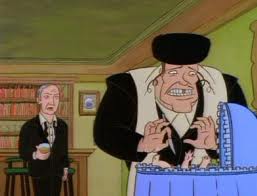
This clip from Family Guy reminds us that the association of castration, Jewishness, and mutilation is far from gone.

All of the above is a preface to the close reading I would like to make of Misha’s circumcision in Gary Shteyngart’s Absurdistan.  He sees his circumcision in Freudian terms (as a concession to his father – as I pointed out in yesterday’s blog) and in terms of mutilation.  This prompts him to feel as if he has been “had” and is a Prince Myshkin (schlemiel) type.  His negative descriptions of his circumcision, which in many ways echo Paul, distance himself from Judaism and form the basis of his literary “circumscription.”  This “circumscription” will, like Paul’s powerful and negative words on Jewish circumcision, form the basis of his movement away from what he considers “prehistoric” Jewishness.    His text marks his off and situates him within a different journey: one that will bring him back to America rather than Israel.  As I will discuss, Misha’s textual journey to his other homeland emerges out of a recognition that he had become a circumcised-schlemiel.  But this recognition is conveyed to Misha (and to us, his readers) by characterizing his circumcision as a form of mutilation.

These descriptions, this “circumscription,” and his recognition that he was a fool who was “had” will be the topic of my next blog entry.

Circumscribed: Circumcision as Dismemberment in Shteyngart’s Absurdistan – Part I

absurd-copy2

In Hebrew the word for circumcision is “brit.”  Brit is the same word used for “the covenant” between God and Man.   In fact, the first covenant between God and Man mentioned in the Torah is between Abraham and God.  When Abraham, at his late age in life, circumcises himself, God makes a covenant with him which becomes the foundation for all covenants in the Torah.  In fact, it is associated with the preservation of the Jewish people:

This is My covenant which you shall keep, between Me and you and thy descendants after thee, every male among you shall be circumcised. And ye shall be circumcised on the flesh of your foreskin, and it shall be a sign of the covenant between Me and you. And he that is eight days old shall be circumcised among you, every male throughout your generations (Genesis 17:10-12).

Like Abraham, Gary Steyngart’s main character Misha (from his second novel, Absurdistan) is also circumcised at a late age.  But while Abraham would refer back to his circumcision as the site of his greatest promise and the greatest joy, Misha looks at it as the source of his greatest suffering.  It is not his entry into the covenant so much as the sign of his mutilated masculinity (which really isn’t mutilated), his father’s mad obsession with Judaism, his hatred of Hasidim, and his membership in “pre-historic” tradition that he literally finds primitive in contrast to his more modern “multicultural” experiences.

Misha likens his circumcision to a wounded penis.  Although he fulfilled his father’s request by having a circumcision, he is very resentful. But instead of aiming this resentment at his father, he levels it on Hasidim and on Jewishness.  When he negatively describes his penis, his Jewishness is also being trashed.  It’s a world he would like to leave behind.  He’s more interested in living in New York with Rouenna, his Black-Latino lover who left him for someone else.  His love for her and New York is greater than his love of Judaism because, quite simply, he finds little to love in it (besides his father’s love for it).  The source of this problem, I am arguing, is his circumcision.

However, in an interview with Phawker.com Gary Shteyngart, when asked “Why did you decide to use the really kind of horrifying circumcision scene?” says that its not his circumcision that is the problem: it was Misha’s relationship with his father.  Misha’s father – and his “demand” that he be circumcises – is a part of what he calls his “awful” “ethnic circumstances”

The book does take a kind of skeptical attitude towards religion, Judaism, Christianity and even Islam sometimes comes in. The idea of the father wants this; the son doesn’t want this. This is the father imposing his will on the son and the results are not good. In some ways, it’s more about the relationship between the father and the son than it is about the actual act. In the scene leading up to it, is a long discussion between the father and the son about why he has to do this. In a way, a lot of the characters in this book are trapped in ethnic and religious circumstances that they didn’t call for. What’s so interesting about going around the world is that people are just trapped in these awful circumstances.

However, his relationship to these “awful” circumstances not only informs his father’s insistence on Jewishness; it also influences his negative description of the circumcision and, more importantly, his belief that he became a “holy fool” (a schlemiel) as a result of his first American experience of forced circumcision.  In other words, he had “been had” (as he says in the prologue) because he loves “too much” AND because of his “awful circumstances.”  And this makes him the holy-fool-who-agreed-to-a-circumcision.

In the second section chapter entitled “Dedications,” Misha likens himself to Prince Myshkin from Dostoevsky’s The Idiot:

Like the prince, I am something of a holy fool.  I am an innocent surrounded by schemers. I am a puppy deposited it a den of wolves…Like Prince Myshkin I am not perfect. (15)

However, when he looks more deeply into “how” he became such a holy fool, we readers learn that this cause and the life are so entirely different from Prince Myskin since Prince Myshkin wasn’t circumcized at a late age.  And while Prince Myshkin is a “holy fool,” Misha is something else:

How did I become such a holy fool? The answer lies rooted in my first American experience. (15)

His first American experience was the circumcision.  And this experience was set up by his father: he decided, in 1990, that: “his only child should study to become a normal prosperous American at Accidental College.” But before he went to the college, he would first have to get circumcised.

The description of what prefaced this decision is troubling.  And this casts a curious shadow over the circumcision.   Misha notes how, after his mother had died, he and his father were living together in a “tight, humid apartment in Lenningrad’s southern suburbs.”  And both were becoming something “other” : “neither of us could understand what the other was becoming.”

After writing this, we see what he has become: his penis or “khui.”  He tells us that “one day” when he was “masturbating furiously on the sofa, my legs splayed apart so I looked like an overweight flounder…Papa stumbled in upon me.”   His father tells him to “put it away” and has a “man-to-man” talk with him about his journey to America and the new life he will live:

“Mishka,” my papa said, “you’ll soon be in America, studying interesting subjects, sleeping with local Jewish girls, and enjoying the life of the young”(16).

After sharing a few deep moments with each other, the father asks that Misha do one thing for him.  Misha thinks he means losing weight, but it is something else, something more Jewish:

“Idiot,” Papa said…”You’ll never be an American.  You’ll always be a Jew.  How can you forget who you are?  You haven’t even left yet. Jew, Jew, Jew.”(17)

These last words have the ring of anger to them.  And they imply that his father doesn’t want his son to assimilate.  He wants his son to always think of himself as a Jew.  And to guarantee this, he gives him the “other reason” why “you’re going to America”(17):

“Once you land in New York, go to this address. Some Hasids will meet you there, and they will circumcise you”(17).

At this point, Misha flies into horrific reflections on what will happen to his penis (Khui).  In his mind, he had now developed a big penis and would no longer be picked on by his classmates who considered him a Jew-with-a-small-penis:

The pain was clouding my eyes, the pain of having the best part of me touched and handled and peeled like an orange.  Since becoming gigantic, I had gotten used to a kind of physical inviolability….No one dared touch me now.  Or wanted to touch me, for that matter.  “I’m eighteen years old,” I said.  “My khui will hurt terribly if they cut it now.  And I like my foreskin.  It flaps”(18).

But in the end, he bends to his father’s greatest desire for him.  He realizes that his father is no longer ashamed of being a Jew: he is a Baal Teshuva of sorts.  And Misha’s penis is the sacrifice, so to speak.

At the time, he forgets his terror because his love for his father is too great.  This love is wrapped up in several physical aspects of his father:

Some wags say that men spend their entire lives trying to return to their mother’s womb, but I am not one of those men.  The trickle of Papa’s deep vodka breath against my neck, the hairy obstinate arms pressing me into his carpet-thick chest, the animal smells of survival and decay – this is my womb.  (18)

In other words, when he is near his father he becomes like a child.   And this is what makes him a holy fool of sorts (almost like Abraham). The only question in his mind is “what is a Hasid?”

They are the one’s his father is giving his son over to; they are the gatekeepers of America.  Before Misha can experience America, he must have a Jewish experience: circumcision.  As I will show in the next blog, this is the experience that he must overcome if he is to be his own person.   Unlike Abraham, the circumcision is something he only does for his father and will be something he would rather leave behind.  It brings him more shame than good.   This revised – fictional -reading of circumcision is what I call “circumscription.”

To be continued….

Who is Moishe Pipik? (Take 2)

DownloadedFile-3

In yesterday’s blog entry I quoted a part of Philip Roth’s words on Moishe Pipik.  Here is the full quote.  It gives a sense of how the schlemiel returns to Roth’s later work (challenging Sanford Pinsker’s claim that Roth had spent his entire life trying to leave it behind).  To be sure, as I noted in the last blog entry, Moishe Pipik is the name for the “other” Philip Roth:

Moishe Pipik! The derogatory, joking nonsense name that translates literally to Moses Bellybutton and that probably connoted something slightly different to every Jewish family on our block — the little guy who wants to be a big shot, the kid who pisses in his pants, the someone who is a bit ridiculous, a bit funny, a bit childish… that little folkloric fall guy whose surname designated the thing that for most children was neither here nor there… the sole archaeological evidence of the fairy tale of one’s origins, the lasting imprint of the fetus who was somehow oneself without actually being anyone at all, just about the silliest, blankest, stupidest watermark that could have been devised for a species with a brain like ours.

The other Philip Roth poses a counter to the serious author.  He creates mischief and this speaks to Roth’s own project; which, amongst other things, provides a new language for Jewishness which we can only understand if we play Moishe Pipik’s game.  This is what Roth teaches us in a key moment in the novel when he can’t take Pipik’s mischief anymore.

In Operation Shylock, the greatest mischief of all is Moishe Pipik’s psychotic-slash-messianic idea which, in his mind, will solve the new “Jewish problem” caused by the strife between Israelis and Palestianians.  His inspired idea is the “new Diasporist movement” in which all Jews in Israel should return back to Europe. This kind of mischief sounds like the mischief of Helen Thomas.

But he truly believes – or so it seems -that this will be good for the Jews.  The author, Philip Roth, wants nothing to do with Pipick’s madness.  But when Pipik brings him to the edge, as I mentioned above, the author imitates the madness of Pipik and plays it back to him.  The author, Philip Roth, becomes the psychotic-schlemiel-messiah, Moishe Pipik.   The key is to “say everything” (no matter how extreme) and, in the process, do a little stand-up. This leads him to the new Moses and the “father of the new Diasporist Movement,” Irving Berlin:

On I went, usurping the identity of the usurper who had usurped mine, heedless of truth, liberated from all doubt, assured of the indisputable rightness of my cause – seer, savior, very likely the Jews’ Messiah. 

So this is how it’s done, I thought.  This is how they do it.  You just say everything.

No, I didn’t stop for a very long time. On and on and on, obeying an impulse I did nothing to quash, ostentatiously free of uncertainy and without a trace of conscience to rein in my raving…I was talking about Armenians, suddenly, about whom I knew nothing: “Die the Armenians suffer because they were in a Diaspora?  No, because they were at home and the Turks moved in and massacred them there.”  I heard myself next praising the greatest Diasporist of all, the father of the new Diasporist movement, Irving Berlin.  “People ask where I got the idea.  Well, I got it listening to the radio.  The radio was playing “Easter Parade” and I thought, But this is a Jewish genius on a par with the Ten Commandments.  God gave Moses the Ten Commandments and then He gave Irving Berlin “Easter Parade” and “White Christmas”…And what does Irving Berlin brilliantly do?  He de-Christs them both! Easter he turns into a fashion show and Christmas into a holiday about snow. (157) 

What makes Berlin “the father of the new Diasporist movement” – who is on par with Moses – is that he empties Christmas of its religious content.  He secularizes them.  And this, says Roth-as-Moishe-Pipik, is the key to his schlemiel-mania.  He realizes the power of comedy to create all kinds of secular mischief.  American culture, produced by Jews like Irving Berlin, is the source of a new Diaspora in which rooted meanings and traditions (such as Christmas) are uprooted and rerouted into different popular meanings.

The key to Philip Roth’s re-invention of the schlemiel is to “never stop talking.”  But, to be sure, it is a re-invention because the schlemiel has always, as Ruth Wisse points out, talked its way out of war and conflict and into the hearts of Americans.   In other words, for Wisse, the schlemiel tradition finds its greatest moments when it addresses the political by way of talking and winning an “ironic victory.”

Philip Roth’s Moishe Pipik is also a  “political schlemiel” of sorts.  But just because the schlemiel is “political” doesn’t mean its political. Rather, the schlemiel plays with politics and the world. He knows, like Roth does when he becomes Moishe Pipik, that, in the end, it’s all just a comic performance whose main purpose is: Diaspora.  He learned this from the new Moses: Irving Berlin.  Although Roth, the author, might cringe at this, he eventually realizes that he cannot distance himself from Moishe Pipik’s mad claims.

Just as Jews throughout history couldn’t separate themselves from the implications of Moses and the Ten Commandments, now, Roth suggests, they can’t escape from the history of the “new Moses” and the “new Diaspora movement.”

But this is the simple meaning of the text. The deeper meaning is that what Roth-the-author-says-while-he-becomes-Moishe Pipik bears a secret: although Irving Berlin was the “father of the new Diaspora movement,” and may be considered the “new Moses” in Moishe Pipik’s manic-schlemiel-mind*, we can only conclude that Moishe Pipik thinks he’s the real Moses (the Messiah).

But – let’s not fool ourselves – we all know he’s a Pip-ik.

Who is Moishe Pipik? (Take 1)

DownloadedFile-2

Growing up, I heard the term pipik thrown around by my father’s best friend (and teacher). David Kaplan  introduced himself to us as the “Son-Of-A-Maggid” (a Maggid is a Jewish storyteller who would go from town to town telling stories and teaching children).    He was a Jew (a “Yid” as he would always say) who grew up in Brooklyn and, when he turned thirteen, traveled to Upstate New York to peddle leather.  He learned how to make a deal and he taught my father how to do the same.  The main lesson, for Kaplan, was that one can’t make a deal if one doesn’t know how to tell a joke and a captivating story to compliment it.  Oftentimes, he would slide in dirty jokes about pipiks.  Whenever he said the name, he would start laughing nervously.  My father used to imitate everything Dave did.  I can remember how, at a certain point, my father would say the word “pipik” and start laughing.  The very sound of it made him laugh.

When I asked him what it was (I must have been eight or nine when I did), my father pointed gestured at his penis.  But a “pipik” is not a penis; it’s a “bellybutton.”

And Moishe Pipik is the nickname of the “other” Philip Roth in Philip Roth’s postmodern novel Operation Shylock.   In the novel Philip Roth, the writer, meets up with his doppelganger who, he learns, is going around Israel stirring up trouble in his name.  Moishe Pipick is a “mischief maker.”   He is, for the Jewish-American literature scholar Andrew Furman, the crown of the “mischief making tradition” (which I discussed in yesterday’s blog entry).  Is he a schlemiel?  Can a schlemiel be a “mischief maker”?  Or is this kind of foolishness the other side of the schlemiel who is, in general, an innocent character?

Moishe Pipik brings together Moses (the most significant character in the entire Jewish tradition who, as Maimonides notes, is the “greatest of all prophets”) with the Pipick, a bellybutton (the most insignificant part of the body; as opposed to the circumcised penis which, for the Jewish tradition, is associated with the covenant between man and God sealed by Abraham).

As Derek Royal points out in his essay for Shofar on Roth entitled “Texts, Lives, and Bellybuttons: Philip Roth’s Operation Shylock and the Renegotiation of Subjectivity,” this term is a “name that the Roth family used to designate a ridiculous, funny, but nonetheless innocuous character – significantly enough, one that isn’t real – and it gets its effect from being two dissimilar antithetical words yoked together: Moses, the law-given, juxtaposed to bellybutton, a purposeless anatomical mark”(61).

While Moses (Moishe) is associated with law and words, the Pipik is associated, by Roth, with the “Philip that is not words.”    One Philip Roth is drawn toward Moses, the other toward the Bellybutton.

Royal suggests that we think of the bellybutton (the Pipik) in terms of ethnic origins.  After all, the bellybutton bears the trace of connection to the mother.  However, as Royal argues it is “a remnant of the origin that leads nowhere and is nothing more than a meaningless trace.”  To support his claim, Royal cites Roth’s definition of the “Pipik”:

The pipik is the silliest, blankest, stupidest watermark that could have been devised for a species with a brain like ours.  It might as well have been the omphalos at Delphi given the enigma the pipik presented.  Exactly what was your pipik trying to tell you?  Nobody could every really figure it out. You were left with only the word, the delightful playword itself, the sonic prankishness of the two syllabic pops and the closing click encasing those peepingly meekish, unobtrusively shlemielish twin vowels.

Royal reads this against the meaning of circumcision, which “acknowledges a male individual’s place within an ethnic community.”  Following Roth’s Zuckerman, Royal calls circumcision a “unifying act.”  This suggests that the bellybutton is a disunifying act.  And it moves, Royal tells us, from the “modernist focus on origin and depth to the postmodern privileging of surface and dissemination.  He has moved from souls to bellybuttons”(61).

But it is not simply a surface.  Royal likens it to a “scar of identity” which “no more determines the self than do authorized or fixed notions of Jewishness.”  In other words, Royal reads Moishe Pipik in terms of a struggle with Jewish identity.  In this novel, it is a struggle between one Philip Roth and another.  But this is not a duality.  Their identities efface each other and, for Royal, indicate a plurality of Jewish identities. This pluruality is, for Roth, what defines Jewishness. The strife between Jew and Jew is the product of such a plurality.  The evidence for this can be found in one of the character’s discourses (Smilesburger’s) on Jewish identity.  Each Jew, for him, contains a multitude, a “mob of Jews.”

The divisiveness is not just between Jew and Jew – it is within the individual Jew.  Is there a more manifold personality in the world?  I don’t say divided.  Divided is nothing.  Even the goyim are divided.  But inside every Jew there is a mob of Jews.  The good Jew, the bad Jew. The new Jew, the old Jew.  The lover of Jews, the hater of Jews. The friend of the goy, the enemy of the goy.  The arrogant Jew, the wounded Jews.  The pious Jew, the rascal Jew….Is it any wonder that the Jew is always disputing?  He is a dispute, incarnate. (334)

Royal is right to read Roth’s Moishe Pipik in terms of this plurality.  It makes sense.  I just want to add that Royal overlooks the schlemiel above.  As Roth notes in the above-mentioned passage, the word Pipik has a schlemielish* sound to it:

You were left with only the word, the delightful playword itself, the sonic prankishness of the two syllabic pops and the closing click encasing those peepingly meekish, unobtrusively shlemielish twin vowels.

Pipik is a “delightful playword” that has a “sonic prankishness to it.” It is also “peepingly meekish, unobtrusively schlemielish.”  In other words, we see from this that Roth associates the “Jewish mischief” of Moishe Pipik with the schlemiel.  But the twist is that the sounds may be “prankish” but they are also “peeplingly meekish.”  These latter words offset the “sonic prankishness” of Moishe Pipik.  Roth’s schlemiel is plural and we can see this from his words describing the word “pipik,” which are plural.

Pipik sounds both aggressive and passive.  And by joining the word Pipik to Moishe, it brings postmodern Jewishness to the reader.  Taken together, we have law and comic lawlessness, together.  But they are not alone.  And one doesn’t reject the other; Moishe and Pipik live side-by-side. Like the “mob of Jews” inside every Jew, they are “dispute incarnate.”

But, I might add, the schlemiel with his Pip-ik turns conflict into something Jewish and comical rather than something Greek and tragic. The mischief of the schlemiel operates to open up Jewishness to the “mob of Jews” that all Jews carry within them.

To be continued….

*Note that Roth spells “schlemiel” with an “h,” he’s taking on the  European rather than its American spelling. And perhaps this indicates that the tradition he is drawing on is one that begins in Europe and makes its way to America (and into Roth’s contemporary post-Holcaust Jewish-American fiction).

Dancing Fools – Take 1

images-6

Whenever I see pop singers who dance in tandem with choreographed dancers, I often cringe.  Synchronized dancing is “serious.”  Even though it is “fun,” it often lacks the comic touch.  To be sure, the only kind of dancing I like to watch, if it is to be worth my viewing time, must be comic.   Although this is my present view, I didn’t arrive at it overnight.

When I was growing up, I loved to dance.  And my brother and I would often dance in front of the TV to Michael Jackson, Soul Train, and, yes, John Travolta.  I loved Grease and Saturday Night Fever.

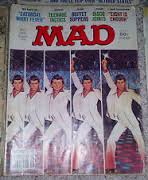
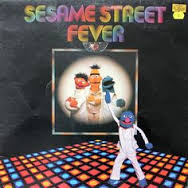
I also liked MAD magazine.  So when I first saw the issue parodying John Travolta and Saturday Night Fever, I was introduced to a new type of dancer: the dancing fool.   Alfred E. Newman as John Travolta.   This parody of a serious dance film also caught on at Sesame Street.

images-7

Although this blipped on the screen of my youth, the shock didn’t settle in until I was in Junior High.  When I first heard Frank Zappa’s “Dancing Fool,” it struck me how powerful a parody of serious disco could be.

This song altered how I looked at music and dance.   I moved my body differently.  And this made me rethink the Disco Genre that I so loved as a child.  I wanted to alter it and I changed my moves to something more “funky.”   One of the things I  noticed, in dancing in a “funky” and comical way, was that I was happier and my friends around me were happier when I danced in a comic fashion.   I felt some kind of liberation form main-stream culture in this kind of musical parody.

In university, I had a group of friends that loved to play with movement and we would have dance parties.  Many of my friends were from NYC and they introduced me to a new movement that was brewing. They showed me a new way of parodying disco culture that  had a Jewish and urban flavor.   Out of this urban cultural movement emerged projects like Heeb Magazine, Jewcy, and Reboot.  It produced books like Bar-Mitzvah Disco, Cool Jew, and projects like MODIYA at NYU (which looked to chronicle it).  These magazines, books, and websites were looking for a new way of making Jewishness “cool” and ironic.

The “unlikely hero” of this endeavor is the dancing fool.

This, for me, had a lot of resonance because the dancing fool is not simply a figure that is novel to this new movement; it is also found in the secular culture and even in Hasidic culture.  There is something deeply spiritual and deeply secular about dancing like a fool – yet, in such a way as to open up new ways of moving.

We see this at work in Woody Allen’s Zelig where a schlemiel named Zelig spurs a new movement based on his ability to change at the drop of a dime.  The song which expresses this: “The Chamelon.”

I want to end this blog entry with a clip from Betty Boop entitled “Betty Boop and the Dancing Fool.”  This, I think, is one of the main sources that Allen draws on.  It epitomizes a time of great change in America in the early 20th century, and it brings out how some of this frenetic and revolutionary energy was wrapped up with a new medium: animation and film.   There was an animism at work that had something comical, so to speak, built in to it.  Perhaps what made it so comical was the fact that movement – which has no norm or else breaks with the norm – is comical.  And this kind of energy moves like a foolish electric current that plays with and transforms different cultural trends.

Through this kind of animation a new kind of dance and a new kind of dancer emerged.   And although much of this had to do with a medium, we cannot ignore the fact that that medium was created and advanced by many Jews.  In this medium, many things can be parodied, but what remains throughout is movement, animation. This came to the fore for me when I met my first dancing fool through MAD magazine.  He had the body of John Travolta but the face of Alfred E. Newman. The comic face displaces the serious body yet, in the end, what remains?

…the dancing fool..

To be continued….