Do we laugh through tears or do we cry through laughter? The answer to this question or perhaps the question itself are, for Irving Howe, the crux of Jewish identity. For Howe, the few Jews who really “scrutinize” themselves, the Jews who “dare to know” (so to speak), will come to this very question. Howe has taken this risk and his experience of this question concerning Jewish humor serves as an example of his Jewishness. This performance of Jewish identity – which comes out through his question concerning Jewish humor – is what Howe is showing us. Howe is demonstrating a Jewishness that is based on pondering the question of what Jewish humor and with it Jewish identity is.
Either one laughs in order to dispel one’s sadness or one laughs and inevitably runs into sadness. For Howe, laughter cannot dispel tears. This declaration is, to be sure, Howe’s conversion experience. And he didn’t learn it from Saul Bellow, as he stated in his introduction to Jewish American Stories; rather, he learned it from an artist who is Saul Bellow’s Moses: Sholem Aleichem.
The relation of Bellow to Sholem Aleichem is a missing link for understanding not just Howe’s approach to Judaism, which ponders the question as to whether one laughs through tears or cries through laughter, but Howe’s Judaism, which he inherits.
As I pointed out in the last blog-entry, Irving Howe, in his introduction to Jewish American Stories, and in this epistolary exchange, identifies with Saul Bellow’s reading of Jewishness. And, as I pointed out, Bellow’s reading of Jewish identity is made in terms of Jewish humor.
Let us recall that Bellow finds that the uniqueness of Jewish humor is found in the fact that “laughter and trembling are so curiously intermingled that it is not so easy to determine the relation between the two.” Howe so deeply identifies with Bellow’s claim about the intermingling of laughter and trembling in the Jewish humor that he repeats it in his shared introduction to another book published. This new book, a collection of Sholem Aleichem’s stories, was published three years after Jewish American Stories. The 1979 collection of Shalom Aleichem stories is entitled The Best of Sholem Aleichem Stories.
In that introduction, Howe once again nods to Bellow and notes that Jewish humor “laughter and trembling are so curiously intermingled that it is not easy to determine the relation between the two.” The fact that Howe repeats this definition – not simply of Jewish humor, but, for Howe, Jewishness- is significant: he shares this “declaration” of his Jewishness with Ruth Wisse, a scholar of the schlemiel.
Given that he is testing his view of the schlemiel against hers, what Wisse says in response to Howe is even more telling. Her similarities with Howe are important, but her differences are more interesting. Her schlemiel and his differ.
The difference between their views of Jewish humor is instructive for those of us, today, who are concerned with the meaning of Jewish identity. Their shared introduction to The Best Stories of Sholem Aleichem teaches us – by way ofprompting us in a Talmudic manner – to interpret their relationship. To prompt their readers to make a more literary reading of their introduction to Aleichem, they structured it as an epistolary exchange.
Let’s take note of this and read their dialogue closely.
I’d like to carefully go through this exchange of letters so as to show where Wisse agrees with Howe. After doing this, we can she where and how she tactfully disagrees. The subtle differences between them are important and foreshadow Wisse’s recent book and much talkedaboutbook on Jewish Humor: No Joke. ( I will address this book in a separate blog entry, but for now I’d like to draw out the precursor to that work which, I think, can be found in her dialogue with Howe.)
Ruth Wisse’s 1979 reading of Aleichem is of especial interest to a “schlemiel theorist” like me since Wisse is one of the foremost authorities on the schlemiel. Her reading of Aleichem and Howe’s reading are not simply founded on their similar yet different readings of Jewish humor but also their readings of Jeiwshness. For both, the famed Yiddish writer, Sholem Aleichem is an important starting point. As a historian of Jewish literature, Howe believes that without Sholem Aleichem their could be no be Saul Bellow. Bellow inherits crying through laughter not laughter through tears from Sholoem Aleichem.
First of all, although the introduction begins with (and is initiated by) Howe’s reflections on Aleichem’s perplexing humor, it ends with Wisse’s resolution. Her resoluation balances between Howe’s “quizzical” view of Aleichem’s humor and Wisse’s own “quizzical” yet joyful view of his humor. In the end, it is not just a matter of emphasis; in fact, their views of humor also articulate two kinds of Jewishness. And the differences between these articulations are instructive and far reaching.
What concerns Howe most about Aleichem is the darker side of his work. To be sure, one of the reasons he put Sholem Aleichem’s Best Stories together with Ruth Wisse was to show this neglected aspect of Aleichem’s humor. Until then, many Americans who romanticized Aleichem (and, for Howe, Fiddler on the Roof didn’t help) associated Jewishness with joy and “laughter through tears.”
For Howe, this view, which I will call the “kitschy” view, is wrong.
The view of Aleichem (and the schlemiel) as simply a popular fun loving artist is, for Howe, too kitschy; and, as a result, it forgets history and rupture. To be sure, Howe doesn’t desire a kitschy kind of laughter through tears. He’s not interested in a Broadway or a Hollywood Production of Fiddler on the Roof (1964).
He seeks to be true to who he, by virtue of history, is: a Jew. And his commitment to this kind of troubled laughter demonstrates his commitment to Judaism. This commitment puts his kitschy identification with Jewishness into question. But the kitschy view of humor is not annihilated. Alechem’s humorous world is, so to speak, “nihilated.”
Howe wants to show us (demonstrate for us) that his commitment to troubled laughter, in the face of such nihilation, is based on the approach to Judaism of his progenitor, Sholem Aleichem. In other words, Howe’s Jewishness can be found in the troubled laughter we hear in Aleichem’s books. He wants to share this insight and demonstrate how a commitment to Jewishness must challenge the popular, kischy view, that laughs through tears.
Howe seeks to set the record straight. In the introduction he shares with Ruth Wisse, Howe tells us that Aleichem, like Bellow after him insist that to be Jewish we must admit that we cry through laughter. This is tantamount to, as Howe says, “declaring” one’s Jewishness.
Wisse responds to Howe’s declaration with her own.
Slovoj Zizek and Milan Kundera come from the same part of Europe, both experienced communism, and both have a penchant for comedy. But they differ on two things: their readings of comedy and their identification with Communism.
As I pointed out in my last blog entry, what makes Milan Kundera’s view of the comic so interesting is that he feigns an Apocalyptic tone, brings us to the brink of cynicism, and then confesses his commitment to the tradition of the fool. He, like Walter Benjamin (and perhaps Franz Kafka), plays the Sancho Panza to Don Quixote. He, like Benjamin, believes that the “fool can help.” But what we might forget is that, given this tradition, he becomes Don Quixote and we become Sancho Panza. His message parallels Benjamin’s; namely, in a world where man is dwarfed by the mass media, technology, speed, and politics, it is through the tradition of the fool that we can be free.
But to come to this conclusion, Kundera realized that Don Quixote was nearly killed by Totalitarianism. And by this he means Communism, which he experienced first hand and has written on in nearly half of his novels. In The Book of Laughter and Forgetting, Kundera contrasts the circle of Communism and its joy to the solitude that comes with his suspicion of this circle. To be sure, his accounts of Communist joy are tainted. And, reading them, one can certainly hear an Apocalyptic tone. To be sure, in the midst of all this joy, he finds something duplicitous and deadly. The “lightness” of the Communist circle which dances above the ground has something frightening about it. And he knows what this is; he lived through it. And it seems he never wants to go back to it again.
Rather, Kundera opts for movement of a lonestar, Don Quixote. But his decision to follow him is in the wake of the Apocalyptic. As I noted, it begins with the passing of God and then with it returns with the purges of Communism. But on both occasions, disaster is displaced by the arrival of Don Quixote. To be sure, Kundera concludes that one can always count on the arrival of Don Quixote. He is like the gift that doesn’t stop giving. In the end, Kundera says that, despite it all, his commitment to the fool is “ridiculous” and “sincere.” Don Quixote rides away from the disaster; he doesn’t ride into it.
In contrast, Slavoj Zizek maintains an Apocalyptic Tone of comedy from the beginning to the very end of his book First as Tragedy, Then as Farce. The reason for this has a lot to do with the fact that, even though he takes on the legacy of comedy, it is really the legacy of a comedy that is associated with Marx’s bearing witness to the demise of capitalism and liberal democracy. To be sure, this comic element which is associated with witnessing the demise of liberal democracy and capitalism is gleeful.
But, as Zizek notes, this is not by any means a passive affair. Comedy is not, by any means, an end-in-itself. It should encourage “us” to act. But this isn’t any ordinary kind of action. No. It is an act which doesn’t simply go against history; it looks to bring it to a grinding stop. And, for Zizek, this act of cessation (this “pure act”) is the partisan act of committing oneself to Communism. And, since it is partisan it leaves Quixote’s form of comedy for the political tones of ridicule and mockery that takes not just the ruling power into account but the left that has affirmed liberal democracy. In his partisan affirmation of Communism, he accuses them of “blackmailing” the left. At that point, Zizek leaves the legacy of Cervantes behind for the legacy of radical Communism. There is nothing funny about this at all.
I would like to touch on a few of these elements in this blog entry and return to them in the near future.
Zizek introduces his book by citing a passage from Karl Marx’s “A Contribution to the Critique of Hegel’s Philosophy of the Right.” What Zizek cites has to do with coming to an awareness that history doesn’t simply repeat itself. It first occurs as a tragedy, and then it returns, in yet another manifestation, as a farce. Marx teaches us the lesson:
It is instructive for [the modern nations] to see the ancien regime, which in the countries has experienced its tragedy, play its comic role as a German phantom. Its history was tragic as long as it was the pre-existing power in the world and freedom a personal whim – in a word, as long as it believed, and had to believe, in its own privileges.
What happens, in effect, is that there is a difference between one belief and another. The first crisis in belief is real, it is tragic because the ancien regime really was a “pre-existing power in the world” and “it believed, and had to believe in its own privileges.” But what happens to Germany in the 19th century – at the moment of Marx’s writing this passage – is a failure of such belief since, as Marx argued, it had no historical reason to believe. Rather, it made-believe that it was like an ancien regime. In other words, it acted “as if” it was based on a long history and believed in its principles. And this is the farce:
The present German regime, on the other hand – an anachronism, a flagrant contradiction of universally accepted axioms, the futility of the ancien regime displayed for all the world to see – only imagines that it still believes in itself and asks the world to share in its fantasy.
What one may not notice is that Marx is, in effect, mocking the regime and accusing it of “imagining” itself to “still believe in itself.” Marx sees this delusion; they do not. He, so to speak, laughs at it. And this is the legacy which, I would argue, Zizek must address. Will he, like Marx, laugh at the delusion of the ruling power? Does Zizek’s laughter take on an Apocalyptic tone when it mocks liberal democracy and capitalism?
Commenting on this fantasy of belief, Zizek speculates that “during the same period, Kierkegaard deployed the idea that we humans cannot ever be sure that we believe: ultimately, we only ‘believe that we believe’. The formula of a regime which only ‘imagines that it believes in itself’ nicely captures the cancellation of the performative power…of the ruling ideology: it no longer effectively functions as the fundamental structure of the social bond.”
In other words, for Zizek there is a crisis in belief. He notices this in terms of the economic and social crisis that has been ensuing over the last decade. But he inverts his reading of this crisis. Instead of reading it like Marx, he shows that today differs from the 19th century because we know we don’t believe and yet we act as if we do anyway. This is the same formula Zizek used back in 1989 (in his book The Sublime Object of Ideology) to describe cynicism. In a blog from earlier in the week, I described Zizek’s challenge to Marx by way of his description of cynicism (gleaned from Peter Sloterdijk). Here it is in yet another form:
It would be more appropriate to describe contemporary cynicism as representing an exact inversion of Marx’s formula: today, we only imagine that we don’t “really believe” in our ideology – in spite of this imaginary distance, we continue to practice it.
In other words, we know we don’t believe in liberal democracy, yet we believe in it anyway. And this, for Zizek, is ridiculous. What Zizek looks to do is to show how capitalism has created a world in which wealthy people praise liberal ideals while, at the same time, have noting in common with poor people. The fact that we know this and yet “go on believing” (or act “as if” we still believe in a system which is corrupt) is, for Zizek, the new farce.
Although the new farce that Zizek notes differs from the old one that Marx describes, the situation is parallel: both Marx and Zizek are watching the farce from a partisan vantage point. For Marx, they have no idea about their delusion; while for Zizek they do but they sill go on believing. For both, it’s a comedy that is ultimately tragic and Apocalyptic.
But this is not simply about watching and laughing at the liberal world as it destroys itself. No. Zizek, as I pointed out in an earlier blog entry, is kynical. He not only watches the destruction, he gleefully engages in it by refusing to play the games of the Enlightenment. As I pointed out earlier, he notes, explicitly, that he takes the road of the ad hominem. In other words, Zizek, in being kynical, insists on being a partial and partisan. He spells it out in the introduction to his book:
What the book offers is not a neutral analysis but an engaged and extremely “partial” one – for truth is partial, accessible only when one takes sides, and is no less universal for this reason. The side taken here is, of course, communism.
As a partisan, Zizek takes sides with Communism against the liberal left. He mocks deconstruction and liberal ideals because they didn’t go far enough:
Among the contemporary names for ever-so-slightly smearing those in power, we could list ‘deconstruction’, or the ‘protection of individual freedoms’.
He sees both names as indications of failure. He mocks both by way of a dirty joke told by dissidents in which a peasant’s wife is raped by a “Mongol Warrior.” As a part of the raping, the Mongol Warrior asks the peasant to lift his testicles from the ground while he rapes the peasant’s wife. Since the ground is dusty, the Mongol Warrior doesn’t want to get his testicles dirty while he rapes the peasant. Strangely enough, the peasant leaps in joy after the Mogol Warrior leaves the rape scene because, in his deluded mind, he has one a victory: “But I got him! His balls are covered with dust!”
The lesson is obvious. The left, for Zizek, merely criticizes and leaves dust on the testicles of the ruling power that “rapes” the people. Zizek argues that the “real point is to castrate them.” Nothing short of totally depriving those in power of power is Zizek’s goal. This is certainly not a joke.
Zizek teaches us that the first step in doing this is to divide oneself from liberals by openly declaring that which is not permitted. In the wake of Stalin, Mao, the fall of the Berlin wall, and millions of people who were murdered by Stalin, Mao, and others he affirms communism.
Today, our message should be the same: it is permitted to know and to fully engage in communism, to again act in full fidelity to the communist Idea.
Knowing full well that someone could read this and say that Zizek just wants to be obscene and “get off” on being a rebel, Zizek comments that “the very fascination with the obscenity we are allowed to observe prevents us from knowing what it is that we see.” In other words, he asks us to look past the obscenity to something deeper. And that something is Zizek’s commitment to Communism is unrepentant. It is proud and demands the other side, that is, the liberals to repent: “our side no longer has to go on apologizing; while the other side had better start soon.”
As a part of his public conversion, Zizek turns on those he had, for years, aligned himself with and literally accuses them of “blackmailing” him. He demands their apology for taking him hostage to their false belief that they were really challenging the powers-that-be. How dare they expect him to believe that he was doing something by, so to speak, lightly dusting the testicles of the ruling-elite-rapist!?
To be sure, this is not funny. Zizek is angry and he is engaging in ridicule. Zizek is, so to speak, manning up in the name of Communism. He is calling for a fight and insisting that he must castrate power and ridicule “liberal-democratic-moralists.”
Unlike Milan Kundera who aligns himself sincerely and in a ridiculous manner with Don Quixote, Zizek moves from self-ridicule to ridicule. Kundera’s apprehension with regard to Communism must be dismissed and, by way of implication, we would have to say that Zizek would accuse Kundera of blackmailing him. Kundera is not simply a dupe he is a hostage taker. The legacy of Don Quixote is not of interest to Zizek; the legacy of Marx and radical communism is. Humor has one use only: to ridicule those who don’t stand on the side of Communism.
And this is where the Apocoplytic tone can be heard. Zizek, in effect, is sounding the death knoll by demanding an apology. He is saying that “we” are taking over. Let me paraphrase a bit (and please note that I don’t include myself in this ‘we’; I’m just describing it): We are not cynical like you liberal democrats because we know that progress and history are a sham while Communism is the truth (of a variety that is not based on history but goes against history, as I will show in the next blog). We are not cynical; we are kynical.
As I will show in the next blog, the kynical communist is one who rages against history and insists that it stops. It looks to make an Apocalyptic cessation. And the first step in that direction is to become a partisan who rejects the farce and embraces what he will call “pure action.”
Here, the Apocalyptic tone of comedy is exchanged for the Apocalyptic tone of the partisan. The way of kynicsm is the way of the insult and the demand. As the title of the first chapter of his book rudely exclaims: “Its Ideology, Stupid!”
Here, the tradition is resumed, a tradition which failed. But this is not by any means the tradition of the fool; it is the tradition of communist partisanship. And, as such, it is a tradition which is based on ridicule not humility. It is a tradition that Kundera does not want to uphold. Kunera’s legacy is that of Don Quixote while Zizek’s legacy is that of Karl Marx. The difference between them, I would argue, concerns the meaning and tone of comedy. For Zizek, comedy must serve Communism not vice versa. To have us believe – or rather go-along-with – that comedy simply challenges power, as deconstruction claims, is to lightly dust the testicle of a rapist. This belief in comedy is, from the partisan perspective of Communism, a farce.
Hence, for Zizek, Kundera or anyone who believes in the power of comedy to go against the grain, is truly a fool. Zizek, on the contrary is not a fool, comedy, for him, shouldn’t challenge power; rather, it should separate believers in Communism from non-believers and should destroy power not challenge it.
For Zizek, if comedy is to be meaningful in a communist sense, it must take on an Apocalyptic tone. It must herald the end in which believers will be separated from non-believers.
I ended yesterday’s blog with a reflection on President Obama’s last words on trust and cynicism. Here are the President’s last words:
And so, these men and women should inspire all of us in this room to live up to those same standards; to be worthy of their trust; to do our jobs with the same fidelity, and the same integrity, and the same sense of purpose, and the same love of country. Because if we’re only focused on profits or ratings or polls, then we’re contributing to the cynicism that so many people feel right now.
How, I wondered, was the President’s comic routine related to this crisis in trust and the “cynicism that so many people feel right now?” In yesterday’s blog, I argued that the schlemiel was used, in effect, to regain trust. But let’s be clear here. The humor used by the self-deprecating schlemiel has nothing to do with satire or sarcasm. To be sure, much of what the President was doing was self-deprecating. This kind of humor doesn’t cause cynicism. On the contrary, it does its best to challenge cynicism and to recover some kind of hope (however bleak it may be). The schlemiel evokes a belief in goodness, innocence, and simplicity while, at the same time, juxtaposing it against dishonesty, deception, and violence. Because the Schlemiel (at least in its traditional variety) evokes some kind of hope (however little it may be) in the midst of depravity, it makes sense why the President and his writers would turn to the schlemiel. The schlemiel preserves a kind of naivite.
In contrast to the humor of the schlemiel, however, there are other forms of humor which, to be sure, look to exacerbate cynicism. Slovoj Zizek, who, in academia and beyond it, is thought of as an ‘academic rock star’ of sorts, is well known for his delight in humor. He is less known, however, for his explorations of humor and cynicism.
In his book, The Sublime Object of Ideology, Slovoj Zizek pits cynicism against what the German philosopher Peter Sloterdijk calls kynicism. Zizek’s reading of cynicism is much different from President Obama’s. And his privileging of kynicism over cynicism brings this out. Hope is not an option; kynicism is.
Writing on Umberto Eco’s The Name of the Rose, Zizek notes that “what is really disturbing” is the “underlying belief in the liberating, anti-totalitarian force of laughter, of ironic distance.” In other words, the emancipatory aspect of sarcasm, for Zizek, is disturbing because “in contemporary societies, democratic or totalitarian, that cynical distance, laughter, irony, are, so to speak, part of the game. The ruling ideology is not to be taken seriously or literally”(28). On the other hand, taking ideology literally, and not laughing, is “tragic.” In this scenario, Zizek seems to be in a double bind as laughter and sarcasm are too ideological for him. Yet, on the other hand, he prefers laughter to taking ideology seriously.
But there is a problem, since even laughter and sarcasm are ensnared by ideology, they are guilty of being naive. Zizek cites Marx who says that “the very concept of ideology implies a kind of basic, constitutive naivite: the misrecognition of its own presuppositions, of its own effective conditions, a distance, a divergence between so-called social reality and our distorted representations, our false consciousness of it”(28).
But, contrary to Marx, Zizek claims that the point is not to unmask ideology – so as to see reality “as it really is.” Rather, “the main point is to see how the reality itself cannot reproduce itself without this so-called ideological mystification. The mask is not simply hiding the real state of things; the ideological distortion is written into its very essence”(28).
Following this insight, Zizek asks: “Does the concept of ideology as naïve consciousness still apply to today’s world?”
His answer, of course, is no. Ideology is no longer to be thought of as naïve. Zizek argues that it knows it is lying. It is deceptive. But, more importantly, “ideological distortion” is not separate from reality; it is “written into its very essence.”
Citing Peter Sloterdijk, Zizek argues that “ideology’s dominant mode of functioning is cynical, which renders impossible…the classic critical-ideological procedure. The cynical subject is quite aware of the distance between the ideological mask and the social reality, but he none the less insists on the mask.”
In other words, things have, literally, changed. Ideology is no longer innocent or naïve. It is deliberate. And it cannot be unmasked since it is “written into the very essence” of reality. Paraphrasing Sloterdijk, Zizek says that “they know very well what they are doing, but still, they are doing it.” In other words, if everything is ideology, everyone is lying. No one believes in ideology, yet they act as if they do while knowing full well they don’t.
Taking into consideration what Zizek is saying, we would have to say that our assessment of cynicism is wrong. Cynicism is not based on distrust of the government. No. For Zizek, cynicism is knowing that you are lying while acting “as if” you are telling the truth. This masking operation, for Zizek, discloses a near universal dishonesty that touches everything that advances freedom, justice, equality, etc. According to his logic, we act as if these ideals, principles, etc are real when, in fact, we know they are not.
In a surprising turn Zizek excludes himself from the all-encompassing cynicism that touches all reality by aligning himself with what Sloterdijk calls kynicism: “Kynicism represents popular, plebian rejection of the official culture by means of irony and sarcasm: the classical kynical procedure is to confront the pathetic phrases of the ruling official ideology – its solemn, grave tonality – with everyday banality and to hold them up to ridicule, thus exposing behind the subtle noblesse of ideological phrases the egotistical interests, the violence, the brutal claims to power”(29).
Zizek notes that the kynical procedure does not play according to the rules of logic. It is “more pragmatic than argumentative: it subverts the official proposition by confronting it with the situation of its enunciation; It proceeds ad hominem”(29).
Zizek notes that what we have today is a battle between cynicism and kynicism: “Cynicism is the answer of the ruling culture to this kynical subversion: it recognizes, it takes into account, the particular interest behind the ideological universality, the distance between the ideological mask and the reality, but it still finds reasons to retain the mask”(29).
Given this “logic,” Zizek would say that upholding “individuality,” “freedom,” “justice,” and even “rights” by the “ruling culture” is cynical. It is a mask. Zizek would say that they all don’t really believe in these things but act “as if” they do. And for his reason, they are all cynical: “the model of cynical wisdom is to conceive probity, integrity, as a superior form of dishonesty, and morals a supreme form of profligacy, and truth as the most effective form of a lie”(30).
The kynical person, in contrast, discards the “mask.” Moroever, the kynical person laughs. But, somehow, this laughter is pure of ideology. This is odd, since, at the beginning of this section (as we note above) Zizek says that emancipatory laughter and sarcasm (which sounds a lot like kynic laughter) are wholly ideological. Here, somehow, sarcasm (as kynicism) is not.
On the one hand, laughter, satire, and sarcasm are a “part of the game.” On the other hand, they are the epitome of popular revolt. Can we say that neither cynicsm nor kynicism are naïve? Wouldn’t it be naïve, according to Zizek’s standards, to think one can simply throw off the ideological mask and escape cynicism? Isn’t it the case that they both know that what they are doing is a lie but do it anyway? To be sure, isn’t Zizek saying that all ideology today is dishonest and nothing escapes it? Wouldn’t that also include kynicism? Or is kynicism beyond ideology and dishonesty?
If kynicism goes by way of the ad hominem and not by way of argument, is it beyond ideology?
To be sure, Zizek explicitly notes kynicism’s dishonesty when he says that kynicism deliberately uses ad hominem arguments to mock the ‘ruling culture’ (which includes the culture of the Enlightenment). Kynicism doesn’t argue. It attacks and it knowingly tells lies. But, and here is the question, does it do so while holding up a mask? Do the kynics sarcastically mock the ruling ideology while acting “as if” they are “right,” “true,” and “just”? If they do, then they are also wearing a mask and they too are cynical.
So, what is the meaning of all this dishonesty? And, given what the President said the other night at the Correspondents’ Dinner, is there any way to end cynicism if both sides are engaged in some sort of deception – knowing that they don’t believe in justice, rights, truth, etc but act ‘as if’ they do?
To be sure, given his love for sarcasm, it seems as if Zizek prefers kynicism over cynicism. But isn’t Zizek caught in the lie of ideology, too? Didn’t he say that sarcasm plays the same game? Zizek certainly celebrates mockery in his work and encourages satire, but a close reading of The Sublime Object of Ideology shows us that he also recognizes the sarcasm may not be free of ideology.
This recognition is fundamental to understanding what is at stake. The truth of the matter is that Zizek’s appeal to kynicism is an attempt to leave the Enlightenment and its rhetoric of emancipation behind. To do this, he looks for a kind of sarcasm that is free of emancipation or any enlightenment ideal. How is this possible? Is the sarcasm he affirms simply a violent force that denies all truth and no longer acts ‘as if’ it is anything? A “naked” kind of sarcasm free of any Enlightenment ideal?
In the introduction to his book Philosophy and Law, Leo Strauss argues that the Enlightenment’s main weapon against orthodoxy is humor. And in many ways, Strauss agrees with Zizek:
As Lessing, who was in a position to know, put it, they attempted by means of mockery to ‘laugh’ orthodoxy out of a position from which it could not be dislodged by any proofs supplied by Scripture or even by reason. Thus the Enlightenment’s mockery of the teachings of the tradition is not the successor of a prior refutation of these teachings; it does not bring to expression the amazement of unprejudiced men at the power of manifestly absurd premises; but it is the refutation: it is in mockery that the liberation from ‘prejudices’ that had supposedly been cast off is first accomplished; at the very least, the mockery is the admittedly supplementary but still decisive legitimation of liberty acquired by whatever means (30).
Were the Enlighteners kynical, did they really (cynically) believe in freedom and rights, or did they naively believe in freedom and rights? After all, Strauss claims that they knew they had no real argument with Orthodoxy but preferred, instead, to mock it. Strauss’s reading implies that the Enlightenment doesn’t really have a full grasp of its principles but acts “as if” it does for purely pragmatic reasons. Like the kynics that Zizek writes of, Strauss’s Enlighteners also use ad hominem arguments and sarcasm to challenge the “ruling ideology.” But there is one difference: they do so in the name of “liberty.”
In effect, Zizek is telling us that all forms of political humor battle cynicism with kynicism. Kynicsm is not interested in self-deprecating humor, which looks to re-instill trust. And if we take Zizek’s words on ideology seriously, we would have to say that, in the end, it’s the same result. Cynicism and kynicism are both caught up in ideology, but an ideology that is not simply naïve but rather dishonest.
For Zizek, no one really believes in the truth anymore. We only act “as if” we do. Zizek suggests that “the people” are all kynical. He suggests that their sarcastic rebellion against the ruling culture, which acts “as if” truth, justice, freedom, etc exist (and defend it), is somehow pure. But, wait, doesn’t this rebellion act as if it is just? Aren’t many latter day rebels naïve? Or are they just acting “as if” they believe in justice? Perhaps we’re all being duped?
By not looking into it deeply, Zizek implies that all popular sarcasm directed against any group in power is just. But isn’t the act of speaking truth to power an act that is based on Enlightenment ideals? And how can one justify activism that is supported by kynicism? Is that activism…random?
Is the difference between kynicism and cynicism the fact that cynicism acts “as if” truth, justice, etc are real while kynicism doesn’t waste its time with such self-deceptions?
What I find most interesting is Zizek’s brief moment of reflection on subversive laughter and its possible destructiveness. His hesitation is ultimately left behind for the revolution. His laughter is a laugh that is, seemingly, not based on any truth. Nonetheless, the appeals for justice and truth made my many kynics disclose some form of ideology. So, what is it? Is kynicism deceiving itself or not? Is its only purpose to sarcastically destroy any ruling ideology in the name of noting save…destruction. Or does it act “as if” it challenges the ruling ideology in the name of progress, justice, etc? Zizek’s laugh, it seems, is unsure of whether or not it is based on truth or deception. It originates in a humor that is not seeking to end cynicism so much as exacerbate it. For if ideology is inescapable, so is the impulse to act “as if” justice, truth, and freedom exist when one “knows” that they don’t. If we take Zizek to the end of his thought on sarcasm, this is the conclusion.
And with this, I return to my original concern regarding the use of comedy in the political sphere to battle cynicism. Will the political use of comedy produce trust or dissolve it? For Zizek, sarcasm, not self-deprecation, is the choicest of all comic weapons. His strategy is completely different from President Obama’s insofar as the President played the schlemiel while Zizek plays the kynical comic.
Last night at the White House Correspondents’ Dinner, President Obama did some stand-up comedy. To be sure, he has done this before. But last night’s comedy routine was thought-provoking and it illustrated that now the President not only aestheticizes politics but also politicizes aesthetics. In doing so, we have a blurring of the line between politics and aesthetics which makes it complicated for us to know which is which. But, more importantly for this blog on the schlemiel, is the fact that he does this by playing the schlemiel whose dreams don’t match up with reality. The genius of the schlemiel routine is that the subject of this blurring of lines is the President’s politicized and aestheticized identity. To top it off, the President’s scriptwriter (or writers) included a joke that comes from one of the most notable schlemiels in American-Schlemiel history: Groucho Marx. The place of the schlemiel in this routine should not go by unnoticed. So, I’ll briefly sketch out some of its outlines so you can see the figure of the schlemiel emerge in the President’s routine.
What made many of President Obama’s jokes so interesting was that they were not simply jabs at the Right’s views of him. Rather, they were all based on the comic structure of self-reflection and self-deprecation. By putting himself down, a trick used by many stand-up comics, he was able to efface many negative images of him and gain sympathy from the audience. It’s the kind of charm that we see in schlemiel-comedians like Charlie Chaplin, Woody Allen, or Sasha Baron Cohen.
President Obama also played on the theme of improving his image by imitating Michelle’s new hair style. But, as he comically notes, this image was not enough. He’s still a schlemiel. His dream of success is not meeting reality. He needs help.
And who but Steven Speilberg comes to the Schlemiel’s rescue. In Speilberg’s “Obama” mock-up the image of the President is, in some ways, restored. He is the dream and the reality. Daniel Day Lewis is trying to imitate him:
Noting that President Obama is already a “lame duck,” Spielberg introduces the schlemiel theme: President Obama is aging and unpopular. There seems to be no hope for him. The comic concert of this video works on the doppelganger. Here, Daniel Day Lewis is said to have become President Obama when we can all see that this is a sham. What makes Obama funny in this piece is that he acts “as if” he is imitating President Obama. And this works to efface the line between image and reality. The whole distinction itself, Spielberg seems to be saying, is a joke. In other words, the media has gone to far and has made him into a schlemiel.
But this message is driven home by the last joke the President makes; drawn straight from Groucho (“and not Karl”) Marx:
“Before I speak, I have something important to say.”
However, and this is the unspoken implication, when the President opens his mouth the press effaces that “something important” that he wanted to say. The media caricatures everything the President says and this conflicts with his intentions. His ‘real’ words will always be mediated for the better or for the worse.
In other words, the President will always be made into a schlemiel by the media. He will always be misunderstood. Like a schlemiel, he is largely innocent while the media is guilty.
But of what?
The final note, which follows the joke, spells it out. The media is guilty of cynicism and a lack of trust:
And so, these men and women should inspire all of us in this room to live up to those same standards; to be worthy of their trust; to do our jobs with the same fidelity, and the same integrity, and the same sense of purpose, and the same love of country. Because if we’re only focused on profits or ratings or polls, then we’re contributing to the cynicism that so many people feel right now.
After saying this, only a few people in the room clap. After all, the President was implying that the majority of “us” (which could either mean people in the media or Americans in general) have become cynical. This isn’t funny.
To be sure, the choice of words and the response is very telling. Given the President’s jokes last night, one can say that he played the schlemiel routine in an effort to regain trust. In other words, he used the schlemiel to charm the audience.
The interesting thing about all of this, is that the schlemiel has been used by Woody Allen, Charlie Chaplin, Ben Stiller, Adam Sandler, Sasha Baron Cohen (and many other American comedians and writers) to create an awkward but charming character. It works to make these artists popular but can it work within the realm of politics?
What happens in routines like this is that the schlemiel is used to blur the line between politics and aesthetics or, at the very least, to put their relationship into question. At the end of his essay on “The Work of Art in the Age of Mechanical Reproduction,” the Jewish-German thinker Walter Benjamin spoke explicitly of his worries about the aestheticization of politics in the modern age. He linked it directly to the media, film, photography, and speed. However, he saw the fear as relating to the glorification of destruction in fascism. And this may not concern us as fascism is not on the table with such jokes. However, what we can walk away from this performance with is the fact that Benjamin warned us that the blurring of the lines between aesthetics and politics happens when we are radically alienated from ourselves. And this happens, for him, by way of mass media. He didn’t have twitter, facebook, live feeds, real time news, etc. But he could see the enlargement of mass alienation and mass cynicism coming.
The cynicism that President Obama mentioned, the cynicism that he tried to relieve by way of his schlemiel routine, is still with us. Benjamin understood (like Kafka, as he says to Gershom Scholem) that in a time of crisis, only a fool can help. The question is whether the fool, that is, the schlemiel’s help can do humanity any good. This question remains alive today and it was alive last night as President Obama did his comic routine. What this crisis is all about is clearer to us, however, than it was for Benjamin. Its clear to the President as well: it’s a crisis of trust and the stakes are high. Cynicism may be too much for the Schlemiel. If that is the case, we may be in big trouble.
One of the definitive gestures of the schlemiel is distraction. Nearly all of schlemiels we see in Yiddish literature are, in some way, shape, or form, distracted from the world they are living in or something that, for us, would seem obvious. They are “absent-minded.” One prime example of this kind of distraction would be Sholom Aleichem’s character Motl. In Motl, the Cantor’s Son, Motl’s father dies, his family goes into dire poverty, and his mother weeps constantly; nonetheless, Motl is so distracted by this or that physical detail that he cannot understand what is going on around him. His distraction, however, is directly related to his youth and his innocence. For Aleichem, it is simply natural. He is not corrupted, so to speak, by the conventions of the world. His consciousness is preoccupied or rather distracted by empirical details (not facts and not theories).
One of the things that I would like to do in this blog is to understand the meaning of this gesture of distraction. What framework should we use to approach distraction? Is distraction a way of challenging the status quo? Or is it something that we should, as Bergson might say, laugh away? Does distraction get in the way of what he would call élan vital? Or is it élan vital?
A good place to start is with a thinker who has devoted some space to the reflection on distraction; namely, Walter Benjamin. He mentions distraction in many places. In his essay on “Work of Art in the Age of Mechanical Reproduction” and in his essay “Motifs in Baudelaire,” Benjamin notes that shock – whether by modern technology, film, or Dadaist art – distracts the viewer from contemplation of the object. As Rodolph Gasche says in an essay on Benjamin entitled “Cutting in on Distance,” “with Dadaist art, and even more so with film since its distracting element rests on structural features such as cutting and montage, the object character of the artwork recedes entirely, and thus a radical diversion from what attracts – the singular object of the auratic work with its luring and enticing qualities – has effectively been achieved”(97, Of Minimal Things).
Distraction, in other words, is a modern phenomena that challenges the philosophical position of the contemplating subject.
Rodolphe Gasche ventures the claim that the precursor for Walter Benjamin’s foray into distraction was Immanuel Kant. But, and here is the catch, Benjamin would be more attracted to Kant’s descriptions of empirical consciousness than to his view of the transcendental subject.
Gasche notes that for the Kant of the First Critique, “the distracted consciousness is unable to combine coherently a manifold of intuitions into one consciousness…Empirical consciousness is not only diverse and distracted in the different representations that may accompany but also distracted in itself, and thus is in no situation to secure self-coherence, or self-identity, authoritatively”(100).
In the Anthropology, Kant writes: “Distraction is the state of diverting attention from certain ruling ideas by means of shifting to other dissimilar ideas. If the distraction is intentional, it is called dissipation; if it is called involuntary it is absentmindedness.”
Gasche argues that Benjamin was interested in involuntary distraction, that is, absentmindedness. For Benjamin, the crowd watching a movie is not intentionally distracted. No. They are unintentionally distracted. As Gasche argues, their distraction is “habitual.”
Strangely enough, Gasche notes that although Kant obviously didn’t live through the birth of the cinema, he did live in an era when novels were becoming more and more popular. For this reason, Kant saw the novel as a distraction: “the reading of novels, in addition to causing many other mental discords, has also the consequence of making distraction habitual.” Gasche adds that, for Kant, reading fiction “makes for habitual absentmindedness.”
When one reads, one cannot be self-present.
One wonders what Kant would say about someone who reads a novel about a character that is absent-minded. To be sure, Benjamin affirms this kind of absentmindedness as it is a radically empirical way of relating to the world. Instead of acting in relation to the world from a position of self-presence and knowledge, the distracted reader-slash-viewer acts on the world in an oblique (yet habitual manner). One could say that the schlemiel, while distracted, does act in a habitual way. One can certainly say that about schlemiels like Motl or Gimpel.
Gasche notes that “in these times” problems still need to be “solved.” However, they are not to be solved by the self-present individual. Rather, the best person or people to solve the problems of our times are the distracted masses: “the only problem solving that has a chance of succeeding is that which occurs in an incidental fashion but has become habitual, hence repetitive and reproducible and not unique or singular, and which consequently does not focus or concentrate on what causes the problems”(101).
In other words, Gasche, paraphrasing Benjamin, is suggesting that the distracted masses can change the world, not the people who understand these causes of problems. What needs to be cultivated, says Gasche, are “repetitive habitual modes of reaction” that prevent us from focusing on the “spell of what obtains here and now.”
This suggests that the masses should not be pragmatic; rather, the distracted masses are necessarily absent-minded and utopian. Yet not going toward utopia by way of an idea so much as by way of “repetitive habitual modes of reaction.”
Gasche suggests that the “first citizen of a world without magic” is the collective subject. However, Gasche notes that “a strange silence hovers about this world emancipated from myth.” To be sure, I would argue that the strange silence has to do with the possibility of fascism. Indeed, the distracted masses can go in any direction. They can even, as Benjamin notes, celebrate death and aestheticize violence. Indeed, there are many kinds of habits that can develop out of distraction many of which are terrifying.
But this isn’t what Gasche hears from the “strange silence.” Rather, he hears something else: “In its utter profanity and blankness, the world devoid of myth points to what it cannot name, that from which the very meaning of the “profane” remains suspended”(102).
How does this all relate to the schlemiel? Do we, in viewing the schlemiel, see what the world devoid of myth points to but cannot name? Or does the strange silence that attends the schlemiel point us elsewhere?
Taking Benjamin and his anti-Kantian affirmation of distraction to heart, one can say that Benjamin would not shy away from the observation that we are all schlemiels. He would say that we are all absent-minded because we are all shocked by cinema, technology, and the speed of modernity. Given this reading, can we say that social networking – constantly checking our facebook page, our email, and texting; constantly updating and looking for updates – has made us all into the absent-minded schlemiels who can do nothing more than habitually react to events, cellphones, and computers, etc?
In short, like a schlemiel, we can’t really think. Like schlemiels, we merely react to this or that experience with this or that habit. And this, somehow, will solve all of our problems. This or that absent-minded reaction – to this or that crisis or shock – is the best we have.
But can we simply accept the celebration of distraction? Can we simply celebrate absent-mindedness? Or should we run from it – as Kant would suggest – like the plague? And what does it mean to know that the masses are absent-minded? Is Benjamin, the critic, also absent-minded? Or does the intelligensia decide what habits to inculcate the schlemiel-population with?
I ask these questions at the end of this post because I think Gasche misses only one point; namely, that Benjamin struggled with the meaning of education. As I mentioned in an earlier blog entry, Sancho Panza, the rationalist, follows Don Quixote (a fool). But what did he learn from him? Would Sancho Panza carry on Don Quixote’s legacy and be a fool for the next Sancho Panza or would he teach the next generation a different habitus? Is Benjamin, like Sancho Panza, just watching the schlemiel (watching the distracted masses and its habitual reactions), bearing witness, and nothing more? Is that all Benjamin or we can do?
Phillip Roth’s Portnoy’s Complaint is a long discourse-slash-novel that begins and ends on the couch of a psychiatrist. But the novel is not simply a discourse on the psyche of the schlemiel. Rather, it gives us a sense of how his identity crisis tarries between sexual identity and national identity. Is Portnoy a Jew or an American? Neither? Does he reject one identity while failing to embrace another?
In a moment of revelation, Portnoy dramatizes his failure to be an American. Something is getting in the way. And this something makes him angry:
And its true, is it not? – incredible, but apparently true – there are people in life who feel at ease, the self-assurance, the simple and essential affiliation with what is going on, that I used to feel as the center fielder for the Seabees? Because it wasn’t, you see, that one was the best center fielder imaginable, only that one knew exactly, and done the smallest particular, how a center fielder should conduct himself. And there are people like that walking the streets of the U.S. of A.? I ask you, why can’t I be one!”(71).
Unlike Americans, Portnoy cannot “feel at ease” and have “self-assurance.” Unlike Americans, he cannot “affiliate” himself with “what is going on.” Here, we have the basis of a post-WWII schlemiel: He is ashamed of the fact that he is ill at ease, unsure of himself, and is unable to bravely “affiliate” himself with “what is going on” in America. He has failed to be an self-possessed American male.
Immediately following this, Portnoy says that he is not simply a failure; he is a Jew:
But I am something more, or so they tell me. A Jew. No! No! An atheist, I cry. I am a nothing where religion is concerned, and I will not pretend to be anything that I am not!…And I don’t care how close we came to sitting shiva for my mother either – actually, I wonder if the now if maybe the whole hysterectomy has not been dramatized into C-A and out of it again solely for the sake of scaring the S-H out of me! Solely for the sake of humbling and frightening me into being once again an obedient and helpless little boy. (71)
Being a Jew, for Portnoy, is not an essence; it is, rather, about being molded by one’s parents “to be” Jewish. And Portnoy states emphatically that “I” will not “pretend to be anything that I am not!” His Jewish guilt – or rather resentment – is based on his education and his birth. To be sure, Portnoy is “told” that he is a Jew, which implies that he was told what to say and what to do. He had no will of his own. His whole education had a purpose. Portnoy flatly states that it was dedicated “solely for the sake of humbling and frightening me into being once again an obedient and helpless little boy.”
In other words, Judaism didn’t help Portnoy to become a man. He has never been properly raised to live in the world and be independent and self-present. In other words, he was never taught how to be autonomous. As a result of his upbringing, as a Jew, he has become a “helpless little boy.” He has become heternomous and dependent on his mother. This tension, in fact, has deeper roots in the struggle between heteronomy and autonomy. This struggle, for the post-WWII Jewish-American schlemiel is a struggle that Jews also had in Germany. In Germany, the schlemiel was a shameful character. As Sander Gilman argues in his book Jewish Self-Hatred: Anti-Semitism and the Secret Language of the Jews, Jews, in the Enlightenment period (the Jewish-German Haskalah) made plays that satirically target the schlemiel. His traits – which included being effeminate, over emotional, confused, unable to speak properly (mangling German), and being heteronomous – were to be laughed off the stage.
Like the schlemiels in these German-Jewish comedies, Portnoy is almost a man.
Portnoy’s only way of asserting his manhood is through anger; namely, through being sarcastic about the bad hand he was dealt. And this is a new tactic, since in German-Jewish theater, the schlemiel is laughed at since he or she is unaware of his or her ‘folly’. Here, it is different. Here, the schlemiel “knows” what the source of his problem is. And what ensues is a kind of impotent rage which is new to the schlemiel. It is not a trait one would find in Yiddish literature.
As a part of his comic ranting, Portnoy turns on his mother. She is responsible for making him a “helpless little boy.”
BECAUSE WE CAN’T TAKE ANY MORE! BECAUSE YOU FUCKING JEWISH MOTHERS ARE TOO FUCKING MUCH TO BEAR!
Portnoy is in effect revolting against her and humiliating her as a way of “freeing himself” of his Jewish guilt. He wants to be a man and reverse that education and go from being a child to a man on his own. In other words, he wants to give birth to himself. His path from heteronomy to autonomy is based on ridicule. By destroying his mother, he believes he will be autonomous. For Portnoy, this is synonymous with becoming an American.
But this is not enough. He may successfully ridicule his mother and feel free. However, in reality, he cannot be an American because he is not successful in the sex department. His failure is measured by a skill. To be sure, he believes that what he’s good at, and what helps him to give birth to himself as independent, is masturbation: both literal and literary masturbation. His words ejaculate on the page. Portnoy takes deep pride in this but he knows, ultimately, that this doesn’t make him an American of the sort we saw above. Rather, it makes him an American-Schlemiel.
Half the length of the tunnel it takes me to unzip my zipper silently – and there it is again, up it pops again, as always swollen, bursting with demands, like some idiot macrocephallic making his parents’ life a misery with his simpleton’s insatiable needs. “Jerk me off, “ I am told by the silk monster. “Here? Now? Of course here and now. When would you expect an opportunity like this to present itself a second time?”(126)
He believes that he must masturbate. He must be ‘bad’ if he going to PUT THE ID BACK INTO THE YID. But to be a Jewish-American man – living in the shadow of the Jewish State – he must pass the ultimate test: he must have sex with a Sabra. This leads us to Portnoy’s Final complaint, his final failure.
Since he can’t be an American, what is the model for a self-confident, autonomous Jewish male who can “affiliate himself” with what is going on? Portnoy realizes that this model would be a Sabra. But he rejects this model thinking that if he can match her, sexually, that he will finally win. But what happens is that when it comes to the moment of sex with Naomi, a Sabra, he fails miserably. As I noted in a previous post on Roth, Portnoy comes to the realization that he can’t be a self-confident Jewish man, that is, an Israeli. And this is his final complaint.
But this failure and the following verbal compensation for failure (by his calling her names) gives birth to the new Jewish-American Schlemiel. Although he, like many past schlemiels, is not quite a man and not quite a child, he is, a man-child with a big mouth and a passion for masturbation.
He’s an American schlemiel: he is neither an American nor a Jew. He’s somewhere inbetween.
But since Portnoy, things have changed. His method of transformation is comic and literal masturbation. But, when Roth wrote this, it was not considered to be American. In Sasha Baron Cohen’s The Dictator, however, masturbation is a rite of passage for Admiral General Alladin, the Dictator. Through masturbation, he can become an American. He can fit in with the others in the Brooklyn Co-op.
From Portnoy to Alladin of Sasha Baron Cohen’s The Dictator, we have a comic-sexual lineage of Jewish-American stand-up – or sit-down comedy. The measure of being an American Schlemiel, his power, for Portnoy was his masturbatory rant. What Sasha Baron Cohen does is yet another parody of the masturbatory rant. But in his rant masturbation is no longer “bad” – in fact, it becomes the rite of passage to America. A rite that Cohen’s character – the Dictator – picks up in the back room of a Brooklyn Health Food Co-op.
Perhaps Sasha Baron Cohen is telling us, in an awry way, that in that space and at this time, the Schlemiel is literally a Modern American Hero. In other words, Portnoy may no longer have to complain since being a man and autonomous may no longer be a concern for the postmodern American Jew. It may no longer be a thing that Jews are ashamed of since more and more Americans – at least in big American cities like New York (where the Dictator takes place) – are leaning toward a kind of metrosexuality.
Regardless of what may be the case, we must not forget that at the end of a film like The Dictator, Alladin is almost an American. And this “almost” is what, still, makes a Schlemiel a schlemiel. But the game has changed. The test for the Schlemiel, at least in the Dictator is not sexual, it is political. The test is democracy not masculinity. And it seems as if, in the end, by becoming an advocate of democracy, the schlemiel becomes an American or…almost American.
In case you may not have noticed, the subtitle of Schlemiel-in-Theory is the “The Place Where the Laugh Laughs at the Laugh.” The notion of a laugh that laughs at a laugh comes from Samuel Beckett; namely, from his novel entitled Watt. There, we read:
The bitter laugh laughs at that which is not good, it is the ethical laugh. The hollow laugh laughs at that which is not true, it is the intellectual laugh. Not good! Not true! Well well. But the mirthless laugh is the dianoetic laugh, down the snout — Haw! – so. It is the laugh of laughs, the risus purus, the laugh laughing at the laugh, the beholding, saluting of the highest joke, in a word the laugh that laughs – silence please — at that which is unhappy.
In this passage, we see three types of laughter. The first and second kind of laughter can be seen in the work of Henri Bergson. In his famous “Essay on Laughter,” Bergson argues that laughter is on the side of élan vital. The laugh looks to reject mechanical, asocial behaviors from the social sphere. Laughter, in other words, negates the mechanical while affirming life and change (becoming). Bergson notes, explicitly, that all laughter is intellectual in the sense that, for life, becoming is true while the mechanical is false. The same goes for Immanuel Kant who identified, in The Critique of Judgment, humor with incongruity:
In everything that is to excite a lively convulsive laugh there must be something absurd (in which the understanding, therefore, can find no satisfaction). Laughter is an affection arising from the sudden transformation of a strained expectation into nothing. This transformation, which is certainly not enjoyable to the understanding, yet indirectly gives it very active enjoyment for a moment. Therefore its cause must consist in the influence of the representation upon the body, and the reflex effect of this upon the mind.
Beckett proposes a laugh that is neither ethical (in the Bergsonian sense) nor intellectual (in either Bergson or Kant’s sense). Rather, his laugh, the “risus purus” is directed “at the laugh.” It laughs, as he says, at “that which is unhappy.”
What does this mean?
First of all, I would submit that while the laugh that Kant and Bergson (and even Baudelaire) discuss enjoins one to power and superiority over the thing laughed at, the laugh that laughs at “that which is unhappy” is a laugh of powerlessness.
Theodor Adorno, in an essay entitled “Is Art Lighthearted,” ponders the “laugh that laughs at the laugh” along these lines:
In the face of Beckett’s plays especially, the category of the tragic surrenders to laughter, just as his plays cut off all humor that accepts the status quo. They bear witness to a state of consciousness that no longer admits the alterative of seriousness and lightheartedness, nor the composite comedy. Tragedy evaporates because the claims of the subjectiveity that was to have been tragic are so obviously inconsequential. A dried up, tearless weeping takes the place of laughter. Lamentation has become the mourning of hollow, empty eyes. Humor is salvaged in Beckett’s plays because they infect the spectator with laughter about the absurdity of laughter and laughter about despair. This process is linked with…a path leading to a survival minimum as the minimum of existence remaining. This minimum discounts the historical catastrophe, perhaps in order to survive it (Notes on Literature, Volume 2; 253)
Adorno suggests, here, that the laugh that laughs at the laugh bears with it a minimal self. It is, so to speak, so exhausted and laughs only for the sake of surviving the disaster. It realizes that laughter can’t do any good and neither can tragedy. The laugh that laughs at the laugh, therefore, can be seen as a mourning of both tragedy and comedy.
The risus purus, so to speak, is in the shadow of the disaster.
I also noticed this in an interview between the poet Charles Bernstein and the late Raymond Federman (who I was fortunate enough to have befriended and written several essays on). Federman is best known for his post-Holocaust postmodern literature. He, himself, survived the Holocaust and witnessed, while hiding in a closet, his parents taken away by the French authorities. This disaster remained with him throughout his life. And it is reflected in many of his novels, stories, and poems.
Strangely enough, when Federman left Europe, after the War, for America, he took on a doctoral project at Columbia University on Samuel Beckett. His scholarship has gained much recognition in field of literary studies. But his main love wasn’t literary criticism; it was writing fiction. And, one cannot help but notice, in reading this fiction, that although its topic is horrific and unthinkable, Federman still maintains some kind of sense of humor.
In the interview with Bernstein, Bernstein hits directly on this issue:
But you’re very funny about it (the facts of history) as opposed to terribly solemn and serious memorials that we are perhaps more accustomed to. Your work seems to mock not only the possibility of accurate representation but also the idea that mourning should be a solemn affair. Should mourning be funny?
Federman’s reply to Bernstein hits directly on what Adorno reads in Beckett’s laugh at the laugh, yet, he adds another note with regard to laughter and the joy of survival:
And my answer is simple: I am a survivor. That I survived this is a very happy occasion. I am still alive. That is an occasion for, well, if not great laughter, at least some kind of joy…I hope you can hear … the laughter and the nonseriousness of what I do.
Bernstein nudges Federman with regards to this response and says:
But I can hear the sadness and great seriousness, too.
Bernstein then goes on to note that Federman’s humor is certainly not “black humor.” So, what is it? To explain what it is, Federman cites Beckett:
I…learned it from my great mentor Beckett the same kind of sadness and joy and laughter you find in Beckett.
This is what Federman, in his book Aunt Rachel’s Fur, calls “sad laughter.”
However, this still doesn’t satisfy Bernstein, who pushes him still further by saying that Federman is completely unlike Beckett:
Yes, but unlike Beckett, you are actually more sort of hysterical and more histrionic.
But instead of agreeing with him, and leaving Beckett behind, Federman cites his “mentor” and notes that in Beckett’s Molloy we see a major kind of histrionics and not simply a melancholy laugh. Federman notes how, in that novel, there is a “Beckettian acrobat who does a beautiful set of somersaults and then falls back on his feet and everything is erased.” However, Federman distinguishes himself from Beckett, his mentor, when he puts himself in the acrobat’s position:
I am the acrobat who falls down on his face, and so you don’t remember the somersault. You remember the failure of the guy that falls on his face. And that’s where you laugh – when the acrobat or the clown does that, that’s where the laughter is. That’s the kind of laughter I’m trying to achieve.
In other words, Federman sees himself as an acrobatic schlemiel. The schlemiel has us remember the fall not the somersalt. Reading this line, I was struck by how oddly resonant it was with Nathan Englander’s post-Holocaust story “The Tumblers.” As I pointed out in a blog entry I devoted to that story, the characters survive by virtue of being clumsy acrobats. No one knows that they are Jews and yet the irony is that the Nazis officials in the audience say that the klutz acrobats who fall on their faces act “like” Jews.
In retrospect, I can say that Beckett and Federman may both laugh at the laugh, they remind us that now our laughter is after the disaster; however, Federman’s laugh at the laugh puts a personal and a post-Holocaust Jewish accent on survival. In the end, although his laughter is sad, it is also histrionic, happy, and contagious. Like many Jews throughout history who know what its like to have survived numerous disasters and exiles, Federman knows what it’s like to survive disaster. More importantly, Federman, like the creators of the schlemiel, knew how important it was to balance out sadness with the joy of humor. Everyone who knew Federman personally knew that he wanted us to laugh with him. He wanted us to laugh at the laugh and, like acrobats, to retain the tension between a skeptical laugh and an optimistic laugh. His laugh, the laugh of a post-Holocaust schlemiel, does exactly that. More importantly, the laughter of the post-Holocaust schlemiel is not based on some hidden logos or kernel of meaning; it is based on a kind of acrobatics or movement, the kind that, as Federman tells us, ultimately falls on its face. Nonetheless, it survives.
The subtitle of this blog (and this blog entry) is in Memoriam of Samuel Beckett. But it is also in Memoriam of Raymond Federman, who taught us how a Jew named Raymond Federman carried on Samuel Beckett’s legacy and gave it a post-Holocaust nuance.
After the Holocaust, after the disaster, Schlemiel-in-Theory is the place where the laugh (can still) laugh at the laugh.
To be distracted and become absent minded, is so to speak the condition of the possibility of the schlemiel. Walter Benjamin knew this lesson very well. He learned if from Kafka, who learned it from Sancho Panza and Don Quixote.
At the end of his Kafka essay, Benjamin notes that he is like a Sancho Panza to Don Quixote. To be sure, at the end of his Kafka essay he cites his favorite Kafka parable, the parable on Sancho Panza and Don Quixote which ends: “A free man, Sancho Panza philosophically followed Don Quixote on his crusades, perhaps out of a sense of responsibility, and thus enjoyed a great and profitable entertainment to the end of his days.”
In other words, Benjamin, like Sancho Panza, literally spent the “end of his days” following around a schlemiel named Franz Kafka. And in this, he became very distracted and absent-minded himself. After all, a reflection without penetration is the manner of the schlemiel. And in response to it, one will either die laughing or “come laughing.” Benjamin, near the end of his life, imitated the ways of Sancho Panza who imitated the ways of Don Quixote (a fool).
With Benjamin, we know that he took the modern Don Quixote, Franz Kafka, as his last teacher. Gazing upon Kafka’s text, Benjamin knew, as he said in one of his last letters to Gershom Scholem, written on June 12, 1938, that Kafka was correct about two things: “first, that someone must be a fool if he is to help; second; only a fool’s help is real help.” However, as Benjamin mused: “the only uncertain thing (the only question) is whether the fools help will do humanity any good.”
Indeed, that is the ethical question of the schlemiel. And this is the question I have been asking in the last two blog entries.
Benjamin was the first to reflect on it. And while Derrida is on to the tragic or comic manner of the schlemiel, unlike Benjamin, he does not pose this ethical question (at least not in his language phase). Benjamin does. Benjamin wonders whether the attention given to learning the wisdom of the fool, the manner of the schlemiel, can do humanity any good. The same question applies to the ways of deconstruction and to learning the manner of the foolish (schlemiel) text.
If such a way of reading of the text doesn’t do humanity any good, will it be rejected? And in the name of what? The politician? The philosopher? How, Benjamin queries to Gershom Scholem, could they help? The only one who “can help is the fool.” As Benjamin says in the same letter to Scholem, perhaps the only wisdom “is the wisdom of the fool.” But, perhaps, as Kafka suggests, Benjamin was wrong. Perhaps it isn’t wisdom that Sancho Panza gleans from the fool so much as entertainment (which Sancho Panza, a philosopher of sorts, enjoys until he dies…laughing). But, then again, Kafka muses that he may have followed him out of a sense of responsibility. This would imply that following the schlemiel is an ethical act of sorts. So…which is it? Ethics or entertainment? Both?
Let’s ask again: Will the wisdom of the fool, of Don Quixote, the schlemiel, do humanity any good?
On this blog, it is imperative that we pronounce this question in different ways. It’s inescapable. This question emerges out of an endless reflection on the “reflection without penetration.” It emerges out of paying very close attention to the “manner” of the schlemiel. Paraphrasing Paul Celan, who paraphrases Walter Benjamin, who paraphrases Malbranche: attention (to the schlemiel) is the silent prayer of the soul.
Two questions may emerge from the attention of the reader to the schlemiel; that is, the attention of Sancho Panza for Don Quixote:
1) Can the attention that Sancho Panza (Walter Benjamin or Jacques Derrida) gives to Don Quixote (Franz Kafka or the Foolish Text) and his foolish ways do humanity any good?
2) What can we learn from the examples of Sancho Panza and Walter Benjamin? Did they seriously imitate their schlemiel teachers or did they laugh at them and themselves for imitating them?
Echoing Jacques Derrida’s reading of Stephen Mallarme’s “Mimique,” Gasche writes that:
If the mime of “Mimique” only imitates imitation, if he copies only copying, all he produces is a copy of a copy. In the same manner, the hymen that comes to illustrate the theatrical space reduplicates nothing but the miming of the mime. Miming only reference, but not a particular reference, Mallarme keeps the Platonic differential structure of mimesis intact while radically displacing it. Instead of imitating, of referring to a referent within the horizon of truth, the mime mimes only other signs and their referring function.
Derrida, Gasche tells us, calls this miming of other signs re-marking.
Gasche notes that this remarking has the “structure of the hymen.” But instead of focusing on a static structure, Gasche looks to depict its dynamic nature. For this reason, Gasche focuses on “the manner” in which “the double structure of the hymen relates to itself.”
He calls this “manner” a “reflection without penetration.”
In other words, Gasche sees the mimeand the reader as taking on a manner of reflection without penetration. Gasche derives the evidence for this “manner” from a line in Derrida’s essay that depicts the double structure of the hymen in terms of a “violence without blows.” But what Gasche misses is that Derrida links this dynamic structure, which manifests a “violence without blows, or a blow without marks,” to a person who is “made to die or come laughing.”
In fact, for Derrida, remarking is an event. The manner of reflection without penetration happens when there is a “violence without blows, or a blow without marks.” When this happens, one “is made to die or come laughing.” And this laughter is exemplary of what is, so to speak, remarkable.
With all the undecidability of its meaning, the hymen only takes place when it doesn’t take place, when nothing really happens, when there is an all-consuming consummation without violence, or a violence without blows, or a blow without marks…when the veil is without being, torn, for example, when one is made to die or come laughing (232)
Gasche fails to underscore that, for Derrida, the “manner” of the double movement is comic and perhaps tragic (as one is made to either “die” laughing or made to “come laughing”). Derrida is denoting how the event of “a reflection without penetration” is the event of laughter.
Perhaps this is because language, unlike God, does not show us, in a prescriptive manner, ethical or political ways of being; rather, the text shows us its absent-minded ways. In fact, if the text prescribes anything, it prescribes the manner of absent-mindedness. Or, as Derrida says in his essays in on the poet Edmond Jabes (in Writing and Difference), the text prescribes the detour and the ellipsis.
In the same essay on Jabes, Derrida notes how the text prescribes exile from God. Unlike Maimonides, Derrida would say that the text does not prescribe any ethical or political ways of being. The text doesn’t perfect man. While Maimonides would say that Moses was exiled from knowing God and having a “penetrating reflection,” he would not say that God only prescribed exile for Moses. In fact, as Maimonides argues, God prescribed His ways to Moses for emulation, imitation, and practice.
In contrast, if we reread Gasche by way of Derrida’s own remarks, we can say that the manner of the reader and the text is the manner of a schlemiel. This manner is prescribed. Unlike the text (which is unaware of itself), the attentive reader is aware of its absent-mindedness. If one reflects on the text’s schlemiel-ish “reflection without penetration,” the attentive reader will be conscious or become conscious. And this, Derrida might say, would happen when one laughs.
But are we who laugh at the foolish text, for this reason, better (or superior)? As I have shown in other blog entries, this is exactly what Baudelaire proposes at the end of his essay on laughter. However, this is a conclusion which, as I also have shown, Paul deMan disagreed with. In fact, if anything, the consciousness that comes out of this, for deMan, leads to madness and self-destruction not superiority.
Would Derrida agree with deMan? Does the absent-minded schlemiel text, and the reader’s attendant “reflection without penetration,” lead to vertigo, madness, and self-destruction? Should we read Derrida’s comment that one may “die of laughter” in lieu of deMan?
By virtue of its inability to know itself, by virtue of its being a “reflection without penetration,” the text presents itself as absent-minded. Recognizing what the text doesn’t see, Derrida seems to be suggesting that the reader will either “die” of laughter or “come to” laughter. Why? Because he or she realizes that the only thing he or she can follow is an opaque and aleatory text which, in its absentmindedness, dynamically flows, warps, and weaves in different directions, one will either die of laughter or come to laugh.
Regardless, one laughs at the text’s absent-mindedness. Perhaps one also laughs at the fact that one’s “reflection without penetration” on the text is also risible. But in knowing that language doesn’t have a meaning or know of any, are we, in a deManian sense, mad?
Derrida’s text implies that, upon reading the hymen, we are either made to die or “come laughing.” Derrida seems to be suggesting that we either affirm this “reflection without penetration” with a yes, and laugh or we don’t. This, in fact, is a suggestion he makes on his essay “Ulysses Gramophone: Hear Say Yes in Joyce.” Withoutsuch a suggestion, it would seem that deMan and Derrida would be in agreement: the manner of the text would be a manner of madness and self-destruction. In other words, the person who reflects on what deMan calls the “irony of ironies” would die laughing or go mad.
Derrida, in that essay (which I will return to in an upcoming blog entry) suggests that we should describe and affirm the reflection without penetration; and, in doing so, say yes to it. This affirmation, this yes-saying, in a Nietzschean and Joycean spirit, is a prescription of sorts. Like Sancho Panza who follows Don Quixote on his Journeys, the postmodern saint says yes to following the aberrant and absent-minded ways of the text. Instead of Moses following the ways of God, we have a much more secular (and risible) model of observance.
So, here’s the question: Do we – like Sancho Panza – learn and repeat the schlemiel’s manner? Is this, according to Derrida, our postmodern prescription and destiny? Is this our postmodern ethic? And will the foolish text do humanity any good?
Since the text has the structure of the hymen, Gasche would say that the repetition of the text (and the “reflection without penetration”) is inescapable. The text repeats itself and we repeat the text repeating itself. That’s it. Nothing more nor less.
But what is the point of the text or our lives if they always remain caught up in an endless textual ellipsis? Again: What good will this do for humanity?
The structure of the schlemiel, its manner, for Gasche and Derrida, would be an endless reflection on the surface. It would be a manner of moving across an endless surface or as Deleuze might say, a thousand plateaus. And in response to it we will, as Derrida –that is, Rabbi Derissa – de (of) the risus (laughter) – claims, either die laughing or come laughing.
What happens to the Schlemiel after the Holocaust?
This is a very complicated question. In one entry, I discussed the end of the schlemiel by way of the story of Menachem Kipinis, a reporter who acted as if he was reporting on the town of Chelm (a real town in Poland, and a fictional town in Jewish folklore). Chelm, as I explained there, is a town of schlemiels. As the story about Kipinis goes, he, the schlemiel reporter, along with all of the living Jewish members of Chelm, found their end in concentration camps. I suggested, there, that I was here to continue reporting on the schlemiel whose existence now transcends the boundaries of the real or fictional town.
For Ezrahi, the schlemiel takes part in what she calls “Diasporic privilege.” This privilege is not restricted to the domain of Hollywood and popular culture; in fact, it is found in high, literary, culture. Regarding this, Ezrahi notes that the schlemiel is bound to a textual homeland not to a real land such as Israel. It is a figure of endless discovery not, as in Israel, a figure of historical recovery. It’s trope is the trope of Diaspora not Homecoming.
In today’s blog, I’d like to suggest another route for the post-Holocaust schlemiel; one mapped out by Nathan Englander in his short story “The Tumblers.” This route takes us into a scenario where the schlemiel lives on, but as damaged by history.
Ezrahi is correct when she claims that, with books like Roth’s Portnoy’s Compalint (and after 1967), American Jews can no longer think of themselves without thinking of Israel. Jewish identity has changed radically, she says. We are no longer, simply, schlemiels. In fact, the American schlemiel battles, as we see in Portnoy’s Complaint, with the Sabra (I will return to this in another blog entry).
However, Ezrahi is not correct on all accounts. There is a post-Holocaust schlemiel in America, one she doesn’t recognize, one that has yet to be researched. As I would like to suggest, Englander, someone who has not survived the Holocaust and is far from its origin, recognizes that an American-Jew can’t look to the schlemiel as his predecessors did. If at all, the schlemiel takes on a new shade.
Englander’s story appears in the book For the Relief of Unbearable Urges.
“The Tumblers” takes place in Chelm at the beginning of the Holocaust:
“Who would have thought that a war of such proportion would bother to turn its fury against the fools of Chelm?”
First off, we learn of the main character, Mendl, who descends from the legendary “Gronam the Ox.” He inherits Chelm and he carries on this legacy which, as the story goes on, changes.
Before the big changes happen, we learn that “Gronam’s logic was still employed when the invaders built the walls around the corner of the city, creating the Ghetto of Chelm”(28).
This schlemiel logic was used to make light of the difficult things: “they called their aches “mother’s milk,” the darkness became “freedom”; filth they referred to as “hope”(28). This is the logic of the faithful simpelton (the tam) – who as Rabbi Nachman of Breslav – in his stories – taught is the schlemiel.
However, there is a limit to their substitutions and that limit is death: “It was only death that they could not rename, for they had nothing to put in its place. This is when they become sad and felt their hunger and when some began to lose their faith in God”(28).
At this moment, the narrator tells us that “This is when the Mahmir Rebbe, the most pious of them all, sent Mendel outside the walls”(28).
Mendel, although a schlemiel, goes out to learn what is going on. We witness how Mendel filters much of what he knows through the mind of a schlemiel. He struggles with what he sees; none of it makes sense. When he meets up with an orphan friend named Yocheved, she tells him of how she and he will run away to a farm and eat duck. Like any schlemiel, he dreams his hunger away.
However, he loses his innocence and much of his dream logic when he sees Yocheved killed by a bullet. The description of her death, as seen through his eyes, is a measure of his incomprehension and his new, liminal sense of existence. As the narrator points out, Yocheved would not have died had she not been startled by the beating of her uncle. Her death, both real and represented, is mixed with aesthetics, shock, and religious confusion.
The bullet left a ruby hole that resembled a charm an immodest gril might wear. Yocheved touched a finger to her throat and turned her gaze toward the sky, wondering from where such a strange gift had come. Only Mendel looked back at the sound of the shot: the other had learned the lessons of Sodom. (35)
Mendel is damaged by this memory. He has seen death. But he moves on and doesn’t give up hope.
His Rabbi tells him and his group of Hasidim to shave off their beards and to dress like they are secular people. They all manage to escape and stumble upon a circus train by way of passages built by way of schlemiel logic.
This leads them to the next game they must play. They are taken to be acrobats by the other circus performs in a train. They take them for such performers because of their thin, Jewish bodies. Now, to survive, they must act “as if” they are acrobats.
The rest of the ride to their first performance, Mendel learns how to do a few acts from the other performers on the train and he relays them to his fellow schlemiels.
They learn them as best they can, but when the moment of truth comes, and they have to perform before an audience of high officials, they fail.
However, their failure saves them, since the audience takes them to be acting “as if” they are Jews who “tumble” all over each other.
What bothers Mendel most about all of this is that the world they are performing for – the world the circus performers are performing for – is “efficient” and “orderly” in a violent sense. In Chelm, where the order was loose and playful, there was no such violence.
Moreover, Mendel realizes that to be ordered, as a performer, one must act as if he or she is something when he or she is not. He notices that the art of the circus performers is based on a forced kind of duplicity.
At the end of the story, he puts his hands up. Unlike other schlemiels, the narrator notes that Mendel’s hands are not soft and humble, they are “cracked and bloodless, gnarled and intrusive”(54). These are the hands of a post-Holocaust schlemiel.
Englander ends his story by reminding us that Mendel’s hands, the hands of this accidental entertainer, are different from the hands that have died in the Holocaust:
But there were no snipers, as there are for hands that reach out of the ghettos; no dogs, as for hands that reach out from the cracks of boxcar floors; no angels waiting, as they always do, for hands that reach out from chimneys into ash-clouded skies. (55)
As a reader, we now know that we cannot think of the schlemiel without thinking of the Holocaust. This is the novelty that Englander wants us to come to terms with. This isn’t a Hollywood Schlemiel and it isn’t a schlemiel whose homeland is the text, as Ezrahi claims with so many other schlemiels.
Rather, Englander teaches us that we American-Jews who live in the shadow of the Holocaust can no longer think of the schlemiel in the same way; regardless, he knows that the schlemiel, Mendel, lives on. But, as Englander shows us through his creative fiction, he lives on in shame.
His irony – the irony of the schlemiel – is no longer fictional; it is historical.

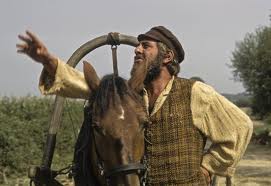
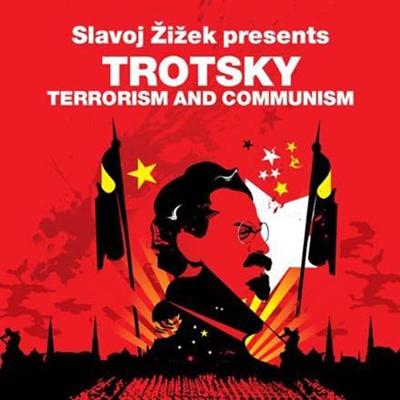


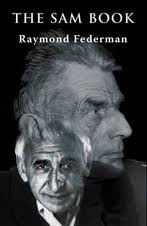
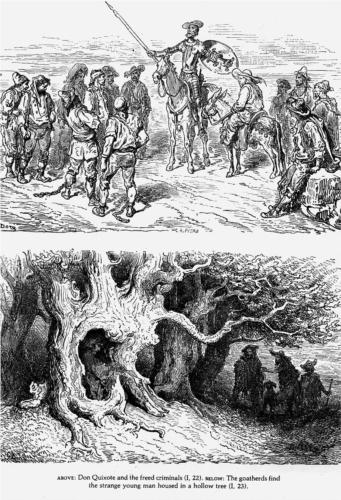
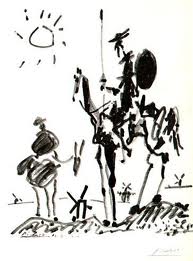
 Schlemiel Theory