On the Apocalyptic Tone of Comedy – Take 1

images-3

For some writers, there’s nothing like a good death sentence.   Merely describing a death, for some writers, is ecstatic and revelatory.  In doing so these writers feel as if they are bearing witness to death while proclaiming a new beginning.  There is a sense of pathos, meaning, and liberation from the dead in such descriptions.

By speaking in an Apocalyptic Tone, one is, so to speak, transformed.  But, most importantly, this transformation is based on describing some kind of disaster to the reader.

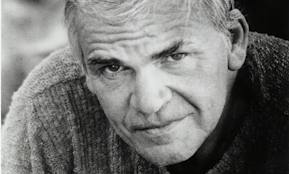
Milan Kundera, who is internationally known for novels such as the Unbearable Lightness of Being and The Book of Laughter and Forgetting, is one of these writers.  But what makes him unique is that the death sentence he pronounces or describes involves the enunciation of comedy, on the one hand, and his commitment to its legacy, on the other.

In The Art of the Novel, Milan Kundera argues that comedy changed everything.  According to Kundera, comedy announces the death of tradition, certainty, and religion.   But, at the same time, it announces a new tradition which is born in the wake of death.  For Kundera, the origin of this new tradition, which bears witness to the death of the old tradition, has a proper name.

Kundera names the herald of death and the father of a new tradition: Don Quixote.

Kundera’s words echo Nietzsche’s “Madman” aphorism in the Gay Science where Nietzsche’s madman announces “God is dead. God remains dead. And we have killed him.”  But as God dies, something new is born: the comic novel.

As God slowly departed from the seat whence he had directed the universe and its order of values, distinguished good from evil, and endowed each thing with meaning, Don Quixote set forth from his house into a world he could no longer recognize.  In the absence of the Supreme Judge, the world suddenly appeared in its tiresome ambiguity; the single divine Truth decomposed into a myriad of relative truths, parceled out by men.  Thus was born the world of the Modern Era, and with it the novel, the image and model of that world.

Kundera deftly moves from Don Quixote to Descartes and then Hegel to describe the new world that the novel is the “image and model.”  What does this mean?  Kundera repeats the words “to take” twice to indicate what is at stake:

To take, with Descartes, the thinking self as the basis of everything (and not God), and thus to face the universe alone, is to adopt the attitude that Hegel was right to call heroic.

To take, with Cervantes, the world as ambiguity, to be obliged to face not a single absolute truth but a welter of contradictory truths (truths embodied in imaginary selves called characters), to have as one’s only certainty the wisdom of uncertainty, requires no less courage.

Let’s spell out what Kundera is saying: For the philosopher “to take” him/herself as radically alone, without God, is courageous.  And for the novel “to take the world of ambiguity” and to be “obliged” (that is, ethically charged) to “face not a single absolute truth but a welter of contradictory truths” is also courageous.  Kundera pronounces this courage and he identifies with it.  It is his.

But, according to Kundera, the novel is more heroic than the philosopher because it challenges man’s moral “desire” for “a world where good and evil can be clearly distinguished.”   This desire is a religious desire and a philosophical desire that is inherited from what the Enlighteners would call the ancients.  For Kundera, modernity challenges orthodoxy on this specific point regarding good and evil.  And, for Kundera, it is Don Quixote who bravely travels into the world and says no to the desire for a world “where good and evil can be clearly distinguished.”

The comic novel, in other words, is the herald of the death of God and the courageous embrace of a world in which good blends into evil and vice versa.  According to Kundera, the “inability” to distinguish between good and evil “makes the novel’s wisdom (the wisdom of uncertainty) hard to accept and understand.”

In other words, a normal individual would rather accept the world of the Bible where good and evil are clearly distinguished than accept the novel.  For Kundera, the comic novel “courageously” says no to such a world.  It denies its existence.  In making such a claim, Kundera is basically rewriting Neitzsche’s madman aphorism in terms of the comic novel.  As I noted, Kundera insists that Don Quixote “sets forth into the world” while “God slowly departs.”

In other words, the fool arrives after the death sentence from God has been pronounced.  For Kundera, the two coincide.  The fact of the matter is that we are led into the modern world by a fool.  Furthermore, Kundera implies that the wisdom of the fool is the wisdom of the comic novel.  For Kundera, this wisdom is existential.  The fool and not the normal individual who desires a clear understanding of right and wrong  is the hero.  The fool courageously embraces ambiguity.  But this is not simply a description of an ubermesche (overman) or a modern existential ideal.  No.  For Kundera, what is more important that such courage is the tradition that is passes on.  As Kundera argues, Don Quixote lives on from generation to generation but he disguises himself.

Kundera traces a path from Don Quixote to Kafka and he spots Don Quixote in the disguise of Kafka’s Land Surveyor:

Isn’t that Don Quixotre himself, after a three-hundred-year journey, returning to the village disguised as a land surveyor?

What we have here is a comic tradition.  But things have changed.  Unlike Don Quixote, the Land Surveyor’s “adventure is imposed on him.”  He is forced to wander in ambiguity.  How can one courageously accept this?  To be sure, the latter day Don Quixote cannot freely embrace ambiguity as his predecessor did.  He is not heroic.

The new message is Apocalyptic and Kundera is describing it for us. The herald of this message is Kafka.  Now the land Surveyor lives in a world which is not simply ambiguous; it is dangerous.  The world may kill this comic character! It deprives the fool of his freedom.  Perhaps Kafka’s Land Surveyor (from The Castle) marks the death of a legacy?

After Kafka, Kundera wonders: is the novel dead?

But if Cervantes is the founder of the Modern Era, then the end of his legacy ought to signify more than a mere stage in the history of literary forms; it would herald the end of the Modern Era.  That is why the blissful smile that accompanies those obituaries of the novel strike me is frivolous.  Frivolous because I have already seen and lived thorugh the death of the novel, a violent death (inflicted by bans, censorship, and ideological pressure) in the world where I spent much of my life and which is usually called totalitarian.

In effect, Kundera is telling us, by virtue of his own personal witness, that the novel was killed by the Totalitarian world.  This world, in contrast to the novel, lives in accordance with “one single Truth.”

But this is not enough of a death sentence. Kundera says that the novel is a “cemetery of missed opportunities.”  They include four appeals: to play, to the dream, to thought, and to time.

Kundera notes authors for each appeal.  They include, respectively, Laurence Sterne and Denis Diderot (appeal to play); Franz Kafka and the Surrealists (appeal to dream); Musil and Broch (the appeal to thought); and Proust (the appeal to time).

In an Apocalyptic tone, he notes that they all belong to a “cemetery of missed opportunities.”  Milan Kundera has personally witnessed their death.  He has witnessed the political death of the novel and the death of all of these appeals.  However, at this moment of description, in the face of this death, Kundera pronounces a new life for the novel. He pronounces a new purpose in the post-totalitarian era.

In a world in which everything is caught up in a “veritable whirlpool of reduection” the novel’s raison d’etre is to “keep the ‘world of life’ under a permanent light and to protect us from the ‘forgetting of being.’”

To courageously accomplish this mission, the novel must battle that which will reduce its complexity.  But there is something more important that this great task.  In a moment which challenges the modern idea of overcoming tradition, Kundera embraces one.  Kundera tells us that the “novel’s spirit is the spirit of continuity.”  In other words, although Kafka’s novel suffered the fate of history and politics, although it died, and althought the novel is a “cemetery of missed opportunities.” it is still a legacy.  And it is this legacy that was given to Kafka by Don Quixote.  Kundera, in effect, takes this legacy up. 

He does this after he announces that he is not attached to the future, God, Country, the People or the Individual.  He is, rather, attached to the “depreciated legacy of Cervantes”:

But if the future is not a value for me, than to what am I attached? To God? Country? The People? The individual?  My answer is as ridiculous as it is sincere: I am attached to nothing but the deprecated legacy of Cervantes.

What I find so astonishing about this confession is that Kundera’s move to attach himself to this legacy parallels the decision made by Walter Benjamin at the end of his essay on Kafka.  There, Benjamin mentions his favorite Kafka aphorism, which is entitled Don Quixote.  There, Benjamin likens himself to a Sancho Panza who, like Kundera, attaches himself to the legacy of Don Quixote.  Before Benjamin takes on this legacy, he begins by citing Kafka’s aphorism:

A free man, Sancho Panza philosophically followed Don Quixote on his crusades, perhaps out of a sense of responsibility, and thus enjoyed a great and profitable entertainment to the end of his days.

To this, Benjamin adds a new description of Sancho Panza:

Sancho Panza, a sedate fool and a clumsy assistant, sent the rider on ahead.

To be sure, Benjamin rewrites Cervantes’ Sancho Panza as a Sancho Panza in Kafka’s clothing.  And strangley enough, Benjamin notes that Sancho Panza “sent the rider ahead” which implies that Sancho Panza sent the legacy of the fool out into future generations.  In an earlier blog, I called this the schlemiel tradition.

What I would like to note here, however, is that Kundera also sees this tradition.  And, as like Benjamin before him, Kundera lovingly attaches himself to it.  However, Kundera’s attachment is made in the wake of death; namely, the death of God.  Benjamin isn’t as explicit about the Apocalyptic in his taking on the tradition.  Rather, he does so by way of allusion.

Kundera spells out what we can see in Benjamin’s words.  The assumption of this tradition is “ridiculous and sincere.”  Kundera’s words imply that he is a schlemiel author, a simpleton, who, in taking this tradition on, is “sincere” yet “ridiculous.”   This, I would argue, outweighs the ambiguity and complexity of the novel.  This sincere and ridiculous assumption of the schlemiel tradition includes all of the appeals of the novel to time, play, dream, and thought.

Most importantly, Kundera is telling us that in a world where good and evil are hard to distinguish, the most moral person of all is he who commits himself, in the most ridiculous and sincere way to the schlemiel tradition.

When God departs and Don Quixote arrives, Milan Kundera, like Sancho Panza is faced with a question and a new imperative: in the midst of God’s departure, should one follow the schlemiel and – as I suggest elsewhere, in my reading of Benjamin’s understanding of tradition – become the schlemiel?

Kundera answers yes in the most ridiculous and sincere way.  For Kundera, ridiculousness and sincerity – not cynicism and nihilism – survive by virtue of one thing: by taking on the “deprecated legacy of Cervantes.”

The question, for schlemiel theory, is how this tradition of the fool compares to the other hidden tradition of the fool which follows in the wake of prophesy.  As I point out in my earlier blog entry on the “schlemiel as prophet,” that tradition is Jewish.  But for both the fool arrives after God departs.  And for both, the fool initiates a new tradition.

(Please note that, though I said I would address the cynical schlemiel in this blog entry, I took a detour.  I hope to come back to it in tomorrow’s blog entry.)
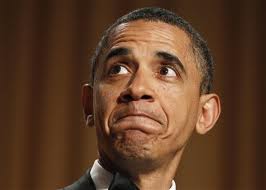
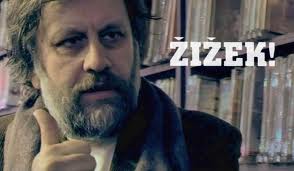
President Obama and Slavoj Zizek: The Kynical Comic versus the Simpleton

DownloadedFile-4

Over the last few days, I’ve been thinking about trust, cynicism, and the schlemiel.

Does the schlemiel provide solace? Does the schlemiel restore trust?  There isn’t an easy answer to this question.  I started my thread of blog entries thinking about how President Obama, in his comic routine at the Correspondents’ Dinner, appealed to the self-deprecating simpleton.  He did this in order to end cynicism and gain trust.

The fact of the matter is that at least one variety of the schlemiel – the traditional, Eastern European one – works to endear the viewer, listener, or reader. The key ingredient to comically win over the audience is naivite.   The schlemiel may make mistakes and may try hard to win, but he often fails. 

The President played the schelemiel the other night. The President’s charm, at least in this routine, is to be found in his failure to make his dreams a reality.  And this is an appropriate topic for comedy given the President’s emphasis on hope and change.  The President, so to speak, is a dreamer.  He lives on dreams.  And perhaps many of us entrust him with power because we also like to dream (about a better future).  In effect, perhaps we identify with a schlemiel because we are schlemiels, too.  And this is the message: we can trust a naïve dreamer as only a dreamer can dispose of our cynicism. And The President seems to have been playing that comic role the other night.

But there is more on the table. The appeal of the schlemiel is not simply his or her inclination to dream big. To be sure. The dreamer who wants to make his or her dreams come true is socially awkward. As Adam Kotsko claims in his book entitled Awkwardness, many comedians play on the awkwardness of trying to succeed in a social situation.  We saw this throughout the President’s routine.  And to see this awkwardness in him is to see the everyman.  Perhaps the President’s awkwardness brings us relief; namely, to know that, like us, the President is also trying to be socially accepted and trusted while, at the same time, dreaming of making things better.

Whether or not the President’s routine ends your cynicism, however, is another question.  Perhaps we would all feel better if we believed that the President was a schlemiel like us.  But, as I pointed out yesterday with respect to Zizek, Karl (not Groucho) Marx believed that all ideology is naïve and that it has no idea that it is really doing anything wrong.  Ideology, for Marx, naively thinks it is right.  It can’t understand itself.  It can’t see itself.

In other words, Marx would read ideology as a fellow German of the 19th century would read the schlemiel. To be sure, the German reading of the schlemiel has a similar structure to Marx’s reading of ideology.  The German schlemiel is absent-minded and naïve; he has a blind spot and can’t see it.   We can.  As Sander Gilman points out in his reading of the German schlemiel in the 19th century, the point of the schlemiel in German theater was to show what NOT to be.  We can see what the schlemiel cannot.  And, as a result, we can reject the behaviors that the schlemiel naively repeats ad infinitum.  This is what Marx, analogously, thought with respect to ideology. His job, as a critic, is to “unmask” the naïve aspect of ideology and show what it is blind to; namely, the exploitation that private property and the class system is based on.   This “consciousness” could be used to correct the system and transfer all private property from the exploiters to the exploited.  In effect, consciousness is maturity and its first task is to negate naivite (which, analogously, would equate with the negation of the schlemiel).

Zizek doesn’t buy this.  He says that the notion that ideology is naive no longer holds. Today, Zizek argues ideology is not naïve.  It wears the mask of ideology while knowing full well that it is lying.  Zizek’s perspective, to be sure, is highly suspicious of anyone who purports to believe in this or that ideal.  To do so, especially with a smiling face, is tantamount to being a trick of the ruling power.  Zizek would say that anyone who upholds a principle or Enlightenment ideal is the real cynic as such a person does not truly believe in what he or she is saying but does so anyhow.

To think that the political is naïve, for Zizek, would be a mistake.  For Zizek, everyone acts “as if” they believe in this or that ideology when in fact they don’t.  One could also argue that the simpleton belongs to an ideology.  Using Zizek’s logic, one could say that acting as if one is a naïve simpleton is a ruse since no one can really be naïve today.  For him, this would be equivalent to nostalgia.

But, as I said above, the naïve schlemiel has a different meaning for Americans than it does (or rather, did) for Germans.  To be sure, the self-deprecating naïve schlemiel has more in common with the Eastern European, Yiddish schlemiel than it does with the German one.  In truth, Eastern European Jews (both secular Yiddishists and Hasidim) were charmed by the simpleton.  The foolish innocence of this character is something that they held onto.  It was the last bit of goodness in a world that, for them, was very bleak, dishonest, and violent.  In contrast to their German-Jewish brethren, they were not interested in exposing this naivite in the name of this or that consciousness.

Zizek’s dropping of the naïve in the name of the cynical and the kynical works in two ways.  On the one hand, it casts suspicion on any ideology that purports naivite; on the other hand, it leaves the possibility of goodness behind.

Zizek’s affirmation of kynicism, which he draws from Peter Sloterdijk, has nothing innocent or naïve about it.  In fact, the whole point of kynicism is, as he says, to mock and destroy the cynic who, for Zizek, dishonestly affirms freedom, truth, justice, etc.  As opposed to Marx, Zizek doesn’t believe that consciousness is the answer.  And the kynic doesn’t look to posit an argument.  Rather, the kynic is more interested in the power of mockery to displace those in power.  He could care less about the ideas that are affirmed by neo-liberals.  And this includes the appeal to innocence and simplicity.  For Zizek, these ways of being should not be corrected so much as left behind.

Here’s the question: if you get rid of the naïve, if you disregard Obama’s entire comic routine which makes endless appeals to simpllicity, do you also dispense with trust?

Reading Zizek, I’d have to say that the answer is yes.  Zizek is not interested in that which, for The Enlightenment, forms the basis of society.  To be sure, the notion that trust is the bond of society –as the basis of the social contract – is not simply an Enlightenment ideal.  As David Novak argues in The Jewish Social Contract, the social contract itself, and the trust it embodies, is based on something prior “historically” and “ontologically” to the social contract; namely, the covenant.  The trust in God to, so to speak, do his side of the bargain, is the basis for believing in the promises of any leader or government.

But you dont have to be a philosopher or a poltical scientist to know that if cynicism reigns, this trust and society itself will go down the tubes.  In the Torah, the prophet of all prophets, the law giver, is Moses.  One of his most salient character traits, which he no doubt won the people over with was his humility.

But there is more to the story.  Moses’s humility is inseparable from his faith.  Moses is humble because he knows that, no matter how hard he tries, it’s not all in his hands. He’s not sure if he will succeed. At the very least, he trusts that he is doing the right thing. And this faith, this belief, to be sure, is naïve.  It makes Moses, at times, socially awkward.  (To be sure, there are many occasions when, in speaking to the Jewish people, he feels very awkward and worries to no end.)  A rationalist like Karl Marx would see this belief as naïve since man, not God, is the master of the world.  Man, not God, can create and preserve justice by simply getting rid of such naivite and becoming mature and self-conscious. Putting trust in God or a covenant would, for Marx, be naive. Zizek, on the other hand,  would see this belief in a naïve leader and even the presentation of oneself as a naïve leader to be cynical.  Indeed, he would see this as a form of deliberate self-deception.

Humility and naivite, in other words, are, in Zizek’s view, impossible.  No one, today, can believe that the President is really humble or naïve.  Acting “as if” one is naïve, for Zizek, is an act that is used to legitimate a ruling ideology.

Strangely enough, the mockery of the self-effacing, self-deprecating, and naïve comic character, otherwise known as the schlemiel, would be a kynical answer to cynicism.  In other words, for Zizek, one kind of humor – the one that ridicules – is better than the other (which preserves trust, humility, and goodness).

So, the choice is yours.   Do you want the kynical comic or the naïve schlemiel? Which of the two would be better for society?  Has this question, as Zizek purports, already been decided?  Have we grown up and realized that preserving the naïve is really an act of cynicism or have we, on the contrary, decided to affirm the schlemiel because, without it, hope and trust will never be on the table? Or is this question, quite simply, ridiculous? Does it really matter to us if the President’s comic routine, in which he plays a simpleton, has an element of truth and does, in fact, foster trust while effacing cynicism? If it does, then we will have to admit that the relationship of aesthetics to politics matters to us and deserves greater attention.

(Spoiler Alert: In the next blog, we will look into another type of American schlemiel – the cynical yet naïve kind.)

Zizek’s Comic Dilemma: Kynicism or Cynicism?

images-2

I ended yesterday’s blog with a reflection on President Obama’s last words on trust and cynicism. Here are the President’s last words:

And so, these men and women should inspire all of us in this room to live up to those same standards; to be worthy of their trust; to do our jobs with the same fidelity, and the same integrity, and the same sense of purpose, and the same love of country.  Because if we’re only focused on profits or ratings or polls, then we’re contributing to the cynicism that so many people feel right now.

How, I wondered, was the President’s comic routine related to this crisis in trust and the “cynicism that so many people feel right now?”  In yesterday’s blog, I argued that the schlemiel was used, in effect, to regain trust.  But let’s be clear here.  The humor used by the self-deprecating schlemiel has nothing to do with satire or sarcasm.  To be sure, much of what the President was doing was self-deprecating.   This kind of humor doesn’t cause cynicism.  On the contrary, it does its best to challenge cynicism and to recover some kind of hope (however bleak it may be).  The schlemiel evokes a belief in goodness, innocence, and simplicity while, at the same time, juxtaposing it against dishonesty, deception, and violence.  Because the Schlemiel (at least in its traditional variety) evokes some kind of hope (however little it may be) in the midst of depravity, it makes sense why the President and his writers would turn to the schlemiel.   The schlemiel preserves a kind of naivite.

In contrast to the humor of the schlemiel, however, there are other forms of humor which, to be sure, look to exacerbate cynicism.  Slovoj Zizek, who, in academia and beyond it, is thought of as an ‘academic rock star’ of sorts, is well known for his delight in humor.  He is less known, however, for his explorations of humor and cynicism.

In his book, The Sublime Object of Ideology, Slovoj Zizek pits cynicism against what the German philosopher Peter Sloterdijk calls kynicism. Zizek’s reading of cynicism is much different from President Obama’s.  And his privileging of kynicism over cynicism brings this out.  Hope is not an option; kynicism is.

Writing on Umberto Eco’s The Name of the Rose, Zizek notes that “what is really disturbing” is the “underlying belief in the liberating, anti-totalitarian force of laughter, of ironic distance.”  In other words, the emancipatory aspect of sarcasm, for Zizek, is disturbing because “in contemporary societies, democratic or totalitarian, that cynical distance, laughter, irony, are, so to speak, part of the game.  The ruling ideology is not to be taken seriously or literally”(28).   On the other hand, taking ideology literally, and not laughing, is “tragic.”  In this scenario, Zizek seems to be in a double bind as laughter and sarcasm are too ideological for him.  Yet, on the other hand, he prefers laughter to taking ideology seriously.

But there is a problem, since even laughter and sarcasm are ensnared by ideology, they are guilty of being naive.  Zizek cites Marx who says that “the very concept of ideology implies a kind of basic, constitutive naivite: the misrecognition of its own presuppositions, of its own effective conditions, a distance, a divergence between so-called social reality and our distorted representations, our false consciousness of it”(28).

But, contrary to Marx, Zizek claims that the point is not to unmask ideology – so as to see reality “as it really is.”  Rather, “the main point is to see how the reality itself cannot reproduce itself without this so-called ideological mystification.  The mask is not simply hiding the real state of things; the ideological distortion is written into its very essence”(28).

Following this insight, Zizek asks: “Does the concept of ideology as naïve consciousness still apply to today’s world?”

His answer, of course, is no.  Ideology is no longer to be thought of as naïve. Zizek argues that it knows it is lying.  It is deceptive.  But, more importantly, “ideological distortion” is not separate from reality; it is “written into its very essence.”

Citing Peter Sloterdijk, Zizek argues that “ideology’s dominant mode of functioning is cynical, which renders impossible…the classic critical-ideological procedure.  The cynical subject is quite aware of the distance between the ideological mask and the social reality, but he none the less insists on the mask.”

In other words, things have, literally, changed.  Ideology is no longer innocent or naïve.  It is deliberate. And it cannot be unmasked since it is “written into the very essence” of reality.  Paraphrasing Sloterdijk, Zizek says that “they know very well what they are doing, but still, they are doing it.”  In other words, if everything is ideology, everyone is lying.  No one believes in ideology, yet they act as if they do while knowing full well they don’t.

Taking into consideration what Zizek is saying, we would have to say that our assessment of cynicism is wrong.  Cynicism is not based on distrust of the government.  No.  For Zizek, cynicism is knowing that you are lying while acting “as if” you are telling the truth.  This masking operation, for Zizek, discloses a near universal dishonesty that touches everything that advances freedom, justice, equality, etc.  According to his logic, we act as if these ideals, principles, etc are real when, in fact, we know they are not.

In a surprising turn Zizek excludes himself from the all-encompassing cynicism that touches all reality by aligning himself with what Sloterdijk calls kynicism: “Kynicism represents popular, plebian rejection of the official culture by means of irony and sarcasm: the classical kynical procedure is to confront the pathetic phrases of the ruling official ideology – its solemn, grave tonality – with everyday banality and to hold them up to ridicule, thus exposing behind the subtle noblesse of ideological phrases the egotistical interests, the violence, the brutal claims to power”(29).

Zizek notes that the kynical procedure does not play according to the rules of logic.  It is “more pragmatic than argumentative: it subverts the official proposition by confronting it with the situation of its enunciation; It proceeds ad hominem”(29).

Zizek notes that what we have today is a battle between cynicism and kynicism: “Cynicism is the answer of the ruling culture to this kynical subversion: it recognizes, it takes into account, the particular interest behind the ideological universality, the distance between the ideological mask and the reality, but it still finds reasons to retain the mask”(29).

Given this “logic,” Zizek would say that upholding “individuality,” “freedom,” “justice,” and even “rights” by the “ruling culture” is cynical.  It is a mask.  Zizek would say that they all don’t really believe in these things but act “as if” they do.  And for his reason, they are all cynical: “the model of cynical wisdom is to conceive probity, integrity, as a superior form of dishonesty, and morals a supreme form of profligacy, and truth as the most effective form of a lie”(30).

The kynical person, in contrast, discards the “mask.” Moroever, the kynical person laughs.  But, somehow, this laughter is pure of ideology. This is odd, since, at the beginning of this section (as we note above) Zizek says that emancipatory laughter and sarcasm (which sounds a lot like kynic laughter) are wholly ideological.  Here, somehow, sarcasm (as kynicism) is not.

On the one hand, laughter, satire, and sarcasm are a “part of the game.” On the other hand, they are the epitome of popular revolt.  Can we say that neither cynicsm nor kynicism are naïve?  Wouldn’t it be naïve, according to Zizek’s standards, to think one can simply throw off the ideological mask and escape cynicism?  Isn’t it the case that they both know that what they are doing is a lie but do it anyway?  To be sure, isn’t Zizek saying that all ideology today is dishonest and nothing escapes it?  Wouldn’t that also include kynicism?  Or is kynicism beyond ideology and dishonesty?

If kynicism goes by way of the ad hominem and not by way of argument, is it beyond ideology?

To be sure, Zizek explicitly notes kynicism’s dishonesty when he says that kynicism deliberately uses ad hominem arguments to mock the ‘ruling culture’ (which includes the culture of the Enlightenment).  Kynicism doesn’t argue.  It attacks and it knowingly tells lies.  But, and here is the question, does it do so while holding up a mask?  Do the kynics sarcastically mock the ruling ideology while acting “as if” they are “right,” “true,” and “just”?  If they do, then they are also wearing a mask and they too are cynical.

So, what is the meaning of all this dishonesty?  And, given what the President said the other night at the Correspondents’ Dinner, is there any way to end cynicism if both sides are engaged in some sort of deception – knowing that they don’t believe in justice, rights, truth, etc but act ‘as if’ they do?

To be sure, given his love for sarcasm, it seems as if Zizek prefers kynicism over cynicism.  But isn’t Zizek caught in the lie of ideology, too?  Didn’t he say that sarcasm plays the same game?  Zizek certainly celebrates mockery in his work and encourages satire, but a close reading of The Sublime Object of Ideology shows us that he also recognizes the sarcasm may not be free of ideology.

This recognition is fundamental to understanding what is at stake.  The truth of the matter is that Zizek’s appeal to kynicism is an attempt to leave the Enlightenment and its rhetoric of emancipation behind.   To do this, he looks for a kind of sarcasm that is free of emancipation or any enlightenment ideal.  How is this possible?  Is the sarcasm he affirms simply a violent force that denies all truth and no longer acts ‘as if’ it is anything?  A “naked” kind of sarcasm free of any Enlightenment ideal?

In the introduction to his book Philosophy and Law, Leo Strauss argues that the Enlightenment’s main weapon against orthodoxy is humor. And in many ways, Strauss agrees with Zizek:

As Lessing, who was in a position to know, put it, they attempted by means of mockery to ‘laugh’ orthodoxy out of a position from which it could not be dislodged by any proofs supplied by Scripture or even by reason.  Thus the Enlightenment’s mockery of the teachings of the tradition is not the successor of a prior refutation of these teachings; it does not bring to expression the amazement of unprejudiced men at the power of manifestly absurd premises; but it is the refutation: it is in mockery that the liberation from ‘prejudices’ that had supposedly been cast off is first accomplished; at the very least, the mockery is the admittedly supplementary but still decisive legitimation of liberty acquired by whatever means (30).

Were the Enlighteners kynical, did they really (cynically) believe in freedom and rights, or did they naively believe in freedom and rights?  After all, Strauss claims that they knew they had no real argument with Orthodoxy but preferred, instead, to mock it.  Strauss’s reading implies that the Enlightenment doesn’t really have a full grasp of its principles but acts “as if” it does for purely pragmatic reasons.  Like the kynics that Zizek writes of, Strauss’s Enlighteners also use ad hominem arguments and sarcasm to challenge the “ruling ideology.”  But there is one difference: they do so in the name of “liberty.”

In effect, Zizek is telling us that all forms of political humor battle cynicism with kynicism.  Kynicsm is not interested in self-deprecating humor, which looks to re-instill trust.  And if we take Zizek’s words on ideology seriously, we would have to say that, in the end, it’s the same result.  Cynicism and kynicism are both caught up in ideology, but an ideology that is not simply naïve but rather dishonest.

For Zizek, no one really believes in the truth anymore.  We only act “as if” we do.  Zizek suggests that “the people” are all kynical.  He suggests that their sarcastic rebellion against the ruling culture, which acts “as if” truth, justice, freedom, etc exist (and defend it), is somehow pure.  But, wait, doesn’t this rebellion act as if it is just?  Aren’t many latter day rebels naïve?  Or are they just acting “as if” they believe in justice?  Perhaps we’re all being duped?

By not looking into it deeply, Zizek implies that all popular sarcasm directed against any group in power is just.  But isn’t the act of speaking truth to power an act that is based on Enlightenment ideals?  And how can one justify activism that is supported by kynicism?  Is that activism…random?

Is the difference between kynicism and cynicism the fact that cynicism acts “as if” truth, justice, etc are real while kynicism doesn’t waste its time with such self-deceptions?

What I find most interesting is Zizek’s brief moment of reflection on subversive laughter and its possible destructiveness.  His hesitation is ultimately left behind for the revolution.  His laughter is a laugh that is, seemingly, not based on any truth.  Nonetheless, the appeals for justice and truth made my many kynics disclose some form of ideology.  So, what is it?  Is kynicism deceiving itself or not?  Is its only purpose to sarcastically destroy any ruling ideology in the name of noting save…destruction.  Or does it act “as if” it challenges the ruling ideology in the name of progress, justice, etc?  Zizek’s laugh, it seems, is unsure of whether or not it is based on truth or deception.  It originates in a humor that is not seeking to end cynicism so much as exacerbate it.  For if ideology is inescapable, so is the impulse to act “as if” justice, truth, and freedom exist when one “knows” that they don’t.  If we take Zizek to the end of his thought on sarcasm, this is the conclusion.

And with this, I return to my original concern regarding the use of comedy in the political sphere to battle cynicism.  Will the political use of comedy produce trust or dissolve it?    For Zizek, sarcasm, not self-deprecation, is the choicest of all comic weapons.  His strategy is completely different from President Obama’s insofar as the President played the schlemiel while Zizek plays the kynical comic.

Before I Speak, I Have Something Important to Say

images-1

Last night at the White House Correspondents’ Dinner, President Obama did some stand-up comedy.  To be sure, he has done this before.  But last night’s comedy routine was thought-provoking and it illustrated that now the President not only aestheticizes politics but also politicizes aesthetics.  In doing so, we have a blurring of the line between politics and aesthetics which makes it complicated for us to know which is which.  But, more importantly for this blog on the schlemiel, is the fact that he does this by playing the schlemiel whose dreams don’t match up with reality.  The genius of the schlemiel routine is that the subject of this blurring of lines is the President’s politicized and aestheticized identity. To top it off, the President’s scriptwriter (or writers) included a joke that comes from one of the most notable schlemiels in American-Schlemiel history: Groucho Marx.  The place of the schlemiel in this routine should not go by unnoticed.  So, I’ll briefly sketch out some of its outlines so you can see the figure of the schlemiel emerge in the President’s routine.

What made many of President Obama’s jokes so interesting was that they were not simply jabs at the Right’s views of him.  Rather, they were all based on the comic structure of self-reflection and self-deprecation.  By putting himself down, a trick used by many stand-up comics, he was able to efface many negative images of him and gain sympathy from the audience.  It’s the kind of charm that we see in schlemiel-comedians like Charlie Chaplin, Woody Allen, or Sasha Baron Cohen.

One good example of this is when President Obama theatricalizes the claim that he was (and ‘still is’) a Muslim and a Socialist.  He does this by way of the structure of reflection:  “I have to admit, I look in the mirror and I have to admit that I’m not the strapping young socialist I used to be.”

President Obama also played on the theme of improving his image by imitating Michelle’s new hair style.   But, as he comically notes, this image was not enough.  He’s still a schlemiel.  His dream of success is not meeting reality.  He needs help.

images-1

And who but Steven Speilberg comes to the Schlemiel’s rescue.   In Speilberg’s “Obama” mock-up the image of the President is, in some ways, restored.  He is the dream and the reality.  Daniel Day Lewis is trying to imitate him:

Noting that President Obama is already a “lame duck,” Spielberg introduces the schlemiel theme: President Obama is aging and unpopular. There seems to be no hope for him.   The comic concert of this video works on the doppelganger.  Here, Daniel Day Lewis is said to have become President Obama when we can all see that this is a sham.  What makes Obama funny in this piece is that he acts “as if” he is imitating President Obama.  And this works to efface the line between image and reality.  The whole distinction itself, Spielberg seems to be saying, is a joke.  In other words, the media has gone to far and has made him into a schlemiel.

But this message is driven home by the last joke the President makes; drawn straight from Groucho (“and not Karl”) Marx:

“Before I speak, I have something important to say.”

However, and this is the unspoken implication, when the President opens his mouth the press effaces that “something important” that he wanted to say.  The media caricatures everything the President says and this conflicts with his intentions.  His ‘real’ words will always be mediated for the better or for the worse.

In other words, the President will always be made into a schlemiel by the media.  He will always be misunderstood.  Like a schlemiel, he is largely innocent while the media is guilty.

But of what?

The final note, which follows the joke, spells it out.  The media is guilty of cynicism and a lack of trust:

And so, these men and women should inspire all of us in this room to live up to those same standards; to be worthy of their trust; to do our jobs with the same fidelity, and the same integrity, and the same sense of purpose, and the same love of country.  Because if we’re only focused on profits or ratings or polls, then we’re contributing to the cynicism that so many people feel right now.

After saying this, only a few people in the room clap.  After all, the President was implying that the majority of “us” (which could either mean people in the media or Americans in general) have become cynical.  This isn’t funny.

To be sure, the choice of words and the response is very telling.  Given the President’s jokes last night, one can say that he played the schlemiel routine in an effort to regain trust.  In other words, he used the schlemiel to charm the audience.

The interesting thing about all of this, is that the schlemiel has been used by Woody Allen, Charlie Chaplin, Ben Stiller, Adam Sandler, Sasha Baron Cohen (and many other American comedians and writers) to create an awkward but charming character.  It works to make these artists popular but can it work within the realm of politics?

What happens in routines like this is that the schlemiel is used to blur the line between politics and aesthetics or, at the very least, to put their relationship into question.   At the end of his essay on “The Work of Art in the Age of Mechanical Reproduction,” the Jewish-German thinker Walter Benjamin spoke explicitly of his worries about the aestheticization of politics in the modern age.  He linked it directly to the media, film, photography, and speed.  However, he saw the fear as relating to the glorification of destruction in fascism.  And this may not concern us as fascism is not on the table with such jokes.  However, what we can walk away from this performance with is the fact that Benjamin warned us that the blurring of the lines between aesthetics and politics happens when we are radically alienated from ourselves.  And this happens, for him, by way of mass media.  He didn’t have twitter, facebook, live feeds, real time news, etc.  But he could see the enlargement of mass alienation and mass cynicism coming.

The cynicism that President Obama mentioned, the cynicism that he tried to relieve by way of his schlemiel routine, is still with us.  Benjamin understood (like Kafka, as he says to Gershom Scholem) that in a time of crisis, only a fool can help.  The question is whether the fool, that is, the schlemiel’s help can do humanity any good. This question remains alive today and it was alive last night as President Obama did his comic routine. What this crisis is all about is clearer to us, however, than it was for Benjamin.  Its clear to the President as well: it’s a crisis of trust and the stakes are high.  Cynicism may be too much for the Schlemiel.  If that is the case, we may be in big trouble.

Exposure, Failure, and Rhythm: Roland Barthes by Roland Barthes

images

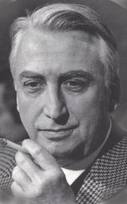
Roland Barthes, the famous French thinker and essayist, is best known for S/Z, Mythologies, A Lover’s Discourse, Camera Lucida, Writing Degree Zero, Empire of Signs, and The Pleasure of the Text.  For many years, these books have had a great impact on critical theory, philosophy, comparative literature, anthropology, sociology, and even the academic studies of photography and cinema.  Although I enjoy these books and have learned a lot from them, my two favorite texts of his are his lecture notes for a course he gave in Morocco in 1978 (entitled The Neutral) and his autobiography Roland Barthes by Roland Barthes.

What interests me most about these two books are his reflections on weariness, the neutral, failure, rhythm, gesture, and himself.  Taken together, they disclose something that I also find in Walter Benjamin: an awareness of failure juxtaposed with an aesthetic sensibility that craves intoxication.  As in my readings of Benjamin, I have been reading Barthes with a desire to find his weak point; namely, his sense of vulnerability, innocence, and shame.  I have found this sensibility in a few of Barthes’ passages.  And it is in these passages where Barthes becomes small, humble, and most revealing.

In this blog entry, I will not be focusing on the lecture course; rather, I want to look at a few of Barthes autobiographical reflections which disclose exposure, failure, and a desire for protection, distraction, and aesthetic relief.  Like any good writer with a taste for the esoteric, Barthes leaves it to the reader to connect the dots, so to speak, between one reflection and another.  I would suggest that Barthes wants us to pay close attention to the rhythmic alteration between one reflection and another.  It is in the lacunae between one reflection and another that we can interpret and glean some type of wisdom.

The reflection entitled “Le retentissement – Repercussion” caught my eye.  In this passage, Barthes (who calls himself “him” rather than “I” so as to denote otherness and the fact that he sees his autobiography, as his epigram states, in terms of being a novel of sorts: “It must all be considered as if spoken by a character in a novel”) fears the “repercussion” his words and the words of others about him or his words will or may have:

Every word which concerns him echoes within him to an extreme degree, and it is this repercussion which he dreads, to the pint of timidly avoiding any discourse that might be offered about him.   The language of others, complimentary or not, is tainted at its source by the repercussion it might have…The link to the world is thus always conquered starting from a  certain fear (156).

Barthes’ fear of repercussion is a fear of exposure.  He knows that his words expose him to possible ridicule and rejection.  His words, in the mouths of others, have repercussions -meaning that they are sounded again but by another and in a way that is other.  Needless to say, the re-percussion (in the sense of a sounding or beating-again) makes him fearful and timid.  Such a confession implies that he, a well-known and highly respected writer in Europe, is exposed and vulnerable.  He is not self-possessed.  Apparently, nothing can secure him from this fear since he has no control over the repercussions of his words.  He has no control over how they will echo back to him.  Barthes language implies that, most likely, the recounting of his words will have negative repercussions – that is, they will expose him to possible damage.  He feels that the repercussions of his words will make him vulnerable and powerless.

Immediately following this reflection is yet another which deals with fear and vulnerability.  It is entitled Reussi/rate – Success/failure.  Barthes, here, reflects on Barthes “re-reading” himself. The effect of this re-reading is, yet again, a kind of exposure. This time it is an exposure to failure:

Rereading himself, he discerns in the very texture of each piece of writing a singular cleavage: that of success/failure: in gusts, felicities of expression, good patches, then bad ones, swamps and deserts which he has even begun to inventory.  Then no book is successful throughout? – Perhaps the book on Japan.

In the midst of his reflection on failure, he turns to success as a balm. And what he finds is a discourse that does not doubt itself and does not fear that its words fall flat. Rather, he finds “the continuous, effusive, jubilant happiness of the writing: in what he writes, each protects his own sexuality.”  But, given what he has just written, we have reason to be suspicious of these lines.  They are literally a distraction. The italics don’t change a thing. To be sure, his “sexuality” cannot be protected by his “continuous, effusive, jubilant” happiness of writing.  After all, didn’t Barthes say that he fears the repercussions of his words? And when he reads himself, he sees discontinuity and failure?  Is Barthes saying that writing, in differentiation to reading, is absent minded?  Is he suggesting that writing is distracted while reading is not?

Frustrated with this thought, Barthes turns to a third option, but even this option cannot lift him from being shamed and exposed.  And he, ironically, notes this:

A third category is possible: neither success nor failure: disgrace: marked, branded with the imaginary.

To be sure, his disgrace, his exposure to failure, is “branded” by the “imaginary.”  In other words, writing does not simply distract him from shame, it marks his shame, brands it.  This implies that the imaginary, that is, writing, is not a balm.  Rather, his personal disgrace is in a violent relationship with writing; it is as if writing, which is still a distraction from exposure, has forced itself upon his disgrace.

Writing tries to brand or mark shame. And this suggests ownership.  But can one’s exposure to failure ever escape writing and the distraction it offers?  Given what we have been saying about Benjamin and his interest in distraction, this is a legitimate question to ask.

Interestingly enough, the two reflections that follow are superficial and imaginary. They displace the negative affect of these two reflections by way of distraction.  The first reflection is entitled “Du choix d’un vetement – Choosing Clothes” and the second reflection is entitled “Le rhythme – Rhythm.”  Both of these reflections are, so to speak, escape routes.

In “Choosing Clothes,” Barthes likens the books one chooses to the clothes one wears.  He reads this in terms of “preparing himself to sustain…the discourse of truth starting from an economy which is that of his own body.”  In other words, these books clothe the body and protect it from negative repercussions that will inevitable ensue in “the discourse of truth.”

The reflection entitled “Rhythm” turns to another way of relating to exposure.  Barthes notes that he (that is Barthes) “always put his faith in that Greek rhythm, the succession of Ascesis and Festivity.”   In his 1978 lecture, Barthes also relates Ascesis to the “succession of paroxystic and opposite states: many collective celebrations, but between each of these festivals a period of retention, abstention, sobriety”(84).  In other words, there is a “rhythm” between one extreme state and the other in the “succession of Ascesis and Festivity.”  He contrasts this rhythm to the “banal rhythm of modernity” which alternates between work and leisure.  This rhythm is different.  Barthes refers to a “Slavic or Balkan” custom in which one “shuts oneself up for three days of festivity.”  He then suggests that one go back and forth between this kind of festivity and sobriety.   Or, I would suggest, a rhythm between exposure (reading) and distraction (writing).

The rhythm he speaks of is built into his text.  The reflection that follows this one, in fact, is all about exposure.  It is entitled “Que ca se sache – Let that be known.”  In this reflection, Barthes admits that “every utterance of a writer (even the fiercest, the wildest) includes a secret operator, an unexpressed word, something like the silent morpheme of a category as primitive as negation or interrogation, whose meaning is: “And let that be known!

In other words, Barthes realizes that in everything he writes, even with words written with great conviction (words that are fierce and wild), there is a snag.  There is something that will expose one to judgment.  By noting this, Barthes is, in effect, arguing that no matter how wild or angry he is – no matter how courageous, powerful, or self-possessed he may sound on paper– there will be something in his words – something undetected – that will render him powerless.

But does powerlessness have the upper hand in these reflections?

From what we have seen, Barthes insistence on rhythm and on protection suggests that powerlessness is, at times, sovereign.  In other words, at times one is made to be a fool.  At moments when one feels at the top of ones game, there will always be repercussions.  But, and this is Barthes point, one must know that one is always exposed to failure, judgment, and repercussions, while, at the same time, operating according to a rhythm.  Barthes suggests that style, writing, and sexuality are attempts to pull away from shame and exposure.  They distract us. However, as we saw above, imagination brands shame.  In other words, writing looks to mark exposure with its power.  But, the fact of the matter is that even though shame is marked by the imagination, shame remains.  Nonetheless, it is branded and, so to speak, re-markable.

And this is where the art meets ethics.  The exposure one has to failure, the timidity that comes with writing to others and re-reading oneself, is ethical, but this exposure is always branded by the imagination which looks to protect the body and vulnerability from too much exposure.    Or as Barthes suggests, the terror of reading oneself is tempered by the distraction of writing oneself.

What I find so interesting about Barthes’ suggestions is that they speak directly to the schlemiel and the reader of the American schlemiel.  Even though Barthes often fails to be comical (since he’s much too serious about himself), he does provide a structure which is best exemplified in the comedy of the American Schlemiel.

An American schlemiel, like Phillip Roth’s Portnoy or Larry David, is humiliated and exposed in what they say and in what they do.  But because their words are couched in the imagination, witty gesture, and style, they are innocent and, to some extent, are protected from extreme damage.  But, in the end, these schlemiels are still exposed. They are the subject of ridicule.  Their victories are, by all means, temporary.   As Barthes might say, the American Schlemiel is caught up in a rhythm of distraction and exposure.

To be sure, we love this rhythm; otherwise, we wouldn’t watch Woody Allen’s films, Larry David’s Curb Your Enthusiasm, or Andy Kaufmann’s embarrassing comic routines (to take only three examples). These shows invite us to witness how shame, in rhythmic variation, is “branded” by the imagination.   It shows us how distraction and exposure alternate.

Here’s Andy Kaufmann with a few rhythms of his own:


Educating the Next Generation of Schlemiels

DownloadedFile-2

“Think snow and see Boca” – Charles Bernstein

Today, the New York Times announced the publication of a new memoir in 2014 by the Jewish-American writer Gary Shteyngart.   Shteyngart is well known for his best selling novels The Debutante’s Handbook, Absurdistan, and Super Sad True Story, all of which feature schlemiels as main characters.  The title of his new memoir is Little Failure.   Regarding his new book, Shteyngart writes:

I’ve finally written a book that isn’t a ribald satire and because it’s actually based on my life, contains almost no sex whatsoever. I’ve lived this troubled life so others don’t have to. Learn from my failure, please.

The last line of Shteyngart’s blurb is of great interest to me. It suggests that the fool is a teacher and has something to transmit to his readers.  This suggestion resonates with what I have been blogging.

In a recent blog on Walter Benjamin and Don Quixote, I paid close attention to the end of Walter Benjamin’s essay on Kafka where Benjamin foregrounds the relationship between Don Quixote and Sancho Panza. Since Panza followed Don Quixote around and, as a witness and student of the fool, learned from him, this relationship hits on the question of education.  In effect, Panza was learning from Quixote’s failure.

In a letter to Gershom Scholem, Benjamin notes that, for Kafka, the fool has wisdom and that the wisdom of the fool, rather than the wisdom of the philosopher, is “the only thing that can help.”  However, the question is “whether this can do humanity any good.”  This implies that the schlemiel is a teacher.  The only question for Benjamin concerns the value of such an education.

Shteyngart, in the final line of his blurb for the New York Times, suggests that he also has something to teach his readers.  He sarcastically notes that, like Christ, he has lived a troubled life “so others don’t have.”  All we have to do is “learn” from his failure.  The structure of this statement and its implication are the same as the structure that exists between Don Quixote and Sancho Panza.   Moreover, Benjamin’s reading of Kafka and his appropriation of Sancho Panza and Don Quixote beckon the same questions: What can we learn from failure?   What kind of wisdom does a fool have to offer us?  Do we simply learn what not to do? Or do we learn something else?

To better understand this, I suggest that we take a look at one of Benjamin’s early reflections on education.  In a letter to Gershom Scholem dated September 1917, Benjamin responded to two lines from an essay Scholem had written on Jewish education: “All work whose goal is not to set an example is non-sense.” “If we wish to be serious:…then today, as always, the most profound way – as well as the only way – to influence the souls of future generations is: through example.”

In response to these lines, Benjamin emphatically states that “the concept of example (to say nothing of that of “influence”) should be excluded from the theory of education.”

Benjamin explains himself by pointing out that “the life of the educator does not function indirectly, by setting an example.”  What does this mean?  For Benjamin, what often happens is that “instruction” is separated from “education.”  He argues that “learning has evolved into teaching, in part gradually, but wholly from within.”  In other words, teaching is a part of a larger unfolding of tradition.

To be sure, Benjamin claims that the “concept of tradition” is more important than the “concept of the example.”  It is more important for a teacher to think of him or herself as a part of a tradition than to think of him or herself as a role model or as the illustration of an idea.

Benjamin sees tradition as the unification of learning and teaching: “I am convinced that tradition is the medium in which the person who is learning continually transforms himself into the person who is teaching, and this applies to the entire range of education.”

Assuming that there is a tradition of the fool (and that Don Quixote is a part of it), Benjamin would see Don Quixote as transmitting it to Sancho Panza.  And within this tradition, Panza would continually be transforming himself into Don Quixote (a fool).  But there is more.  Benjamin insists that “in the tradition everyone is an educator and everyone needs to be educated and everything is education.”  In other words, since Benjamin believes in tradition, he insists that all education be reconfigured within the context of tradition; otherwise, education will have no real basis and will become meaningless.

Knowledge, Benjamin avers, is not independent of tradition.  It can only be transmitted “for the person who has understood his knowledge as something that has been transmitted.”  In this sense, Benjamin believed that if one is to learn from a fool, one must live within the tradition of the fool.  To transmit the comic, one must be within the comic tradition.

Moreover, Benjamin believes that a person who situates himself within this tradition, as opposed to someone who rejects tradition (as in the case of modernity), “becomes free in an unprecedented way.”  In other words, freedom is not something that one is born with and it is not based on the rejection of tradition; rather, it is something that comes when a person submits him or herself to a tradition.

Benjamin likens tradition and the freedom it offers to the sea and a wave:

Theory is like a surging sea, but the only thing that matters to the wave (understood as a metaphor for the person) is to surrender itself to its motion in such a way that it crests and breaks.  This enormous freedom of the breaking wave is education in its actual sense: instruction – tradition becoming visible and free, tradition emerging precipitously like a wave from living substance.

After writing this, Benjamin acknowledges that the source of tradition is religion.  He acknowledges that, for this reason, it is “difficult to speak about education.”  How can there be a secular or modern notion of tradition?  Is this, by definition, impossible?  These are questions that were of great concern to Benjamin in many of his essays which look to gauge the effects of technology, media, and mass production on tradition.

Despite the threat of modernity to tradition, Benjamin insists that any form of education which looks to create future students (and this includes all modern forms of education) must find its roots in the religious notion of tradition: “our descendants come from the spirit of God (human beings); like waves, they rise up out of the movement of the spirit.”

Instruction, says Benjamin, is the “nexus of the free union of the old with the new generation.”   Instruction, in other words, must bring modernity into a relation with tradition instead of negating it.  For Benjamin, the “error” is to think that “our descendents are dependent on us in some fundamental way.”  Rather, the proper way of thinking of his or Scholem’s role in education is to think that it all depends “on God and on the language in which, for the sake of some kind of community with our children, we should immerse ourselves.”

Benjamin’s musings prompt an important question for the schlemiel theory: What is the tradition of the schlemiel and who transmitted this tradition to Benjamin?  Who was Benjamin’s Sancho Panza?  Was it Kafka?

Benjamin suggests this in his letters to Scholem and in his essay on Kafka.  Taking Benjamin to his word, we can say that by immersing himself in the tradition of the fool, Benjamin was, as he says, continuously transforming himself into a fool.  Moreover, Benjamin was also looking to transmit that tradition to his future readers.  Kafka’s work, as an extension of such a tradition, gave Benjamin freedom. It enabled him to break forward like a wave.

This insight, unfortunately, has not been ventured by anyone in Benjamin studies.  Benjamin didn’t spell it out.  Rather, like any good student of tradition, one must learn it out from the teachers hints and actions.  For me, the hints can be found in Benjamin’s obsession with the relationship between Don Quixote and Sancho Panza, a relationship that also fascinated Kafka.  Moreover, we can see Benjamin’s submission to the comic tradition in his last letters to Gershom Scholem.

Can we say the same for Gary Shteyngart?  Should we take him, as Sancho Panza took Don Quixote, as a teacher?  The irony of this tradition is not simply that it is, as Arendt might say, “hidden.”  Rather the greater irony is the fact that the tradition of the fool is a modern tradition that, according to Milan Kundera (in a chapter of The Art of the Novel entitled “The Depreciated Legacy of Cervantes”) starts with Cervantes.  It starts with the decay of one tradition and the beginning of another, modern comic tradition.  According to Kundera, the teaching of this tradition is the teaching of contingency or what I, in my last two posts, would call “empirical consciousness.”

And like any tradition, we learn most from what the teacher does. We can learn more from the teacher’s gestures and actions that we can from his or her content.  What I look to do, in my readings of Benjamin, is to pay close attention to the gestures that he has left in his work on Kafka.  For Benjamin, one must pay attention to Kafka’s gestures.  For they convey something “pre-historic.”

The comic tradition is pre-historic in the sense that it transmits powerlessness to its adherents.  All those who learn from failure will eventually fail.  Schlemiel education opens the door for that which, in the Jewish tradition, is to come.  By learning from the schlemiel’s failure, we prepare for the arrival of what is to come.  In this sense, Shteyngart’s memoir, his “little failure” is preparatory.  But it belongs to a larger tradition.  Our acute awareness of failure, our becoming failures, literally falls within this tradition.  So, if we were to see Shteyngart’s memoir (or any of his schlemiels) as an “example” of “what is possible,” we would lose what Benjamin would consider the crux of education: tradition.

But, wait, what does it mean that we are educated with the schlemiel tradition?  Is this some kind of joke?  Was Sancho Panza the greatest fool of all for taking a fool as his teacher?  Did he intentionally distract himself?  If so, Immanuel Kant would say that while Quixote was “absent-minded,” Panza was “debilitated.”  However, if we take Benjamin seriously, we would have to say that Panza looked to go from being debilitated to becoming absent-minded. To be sure, for Benjamin “tradition is the medium in which the person who is learning continually transforms himself into the person who is teaching, and this applies to the entire range of education.” This kind of transformation, for Kant, would be one of worst sins one could commit against Enlightenment.  It is, literally, going backwards – toward the distracted and absent-minded innocence of childhood.

In contrast to this regression, the Jewish tradition has made room for the fool.  I have already touched on this in my blog entry on the “Schlemiel as Prophet.”   And I will return to it again in the near future since Benjamin, without a doubt, saw something prophetic in Don Quixote’s transmission of foolish tradition to Sancho Panza and, as a matter of course, Benjamin situated himself within that tradition.  This tradition is at once Jewish (particular) and not (general).  The only question we need to ask is whether or how someone like Gary Shteygart or a blog like Schlemiel Theory is passing the tradition of the fool or the schlemiel on.  For, regardless of the decay of this or that tradition in the modern world, comic failure is something that will still be transmitted from generation to generation….

The Distracted Schlemiel: Empirical Consciousness, Reading, and Distraction (Take 2)

DownloadedFile

The schlemiel can’t think, philosophically.  S/he is distracted by the heterogeneity of experience and seems to be endlessly playing around with all kinds of details, events, and relationships.  However, s/he is not upset over the fact that he or she cannot understand the meaning-of-it-all.  The schlemiel is not a detective (though some attempt to be).  And is not frustrated by his or her inability to know.  The schlemiel’s only frustrations are based in experience.

What concerns the schlemiel most is contacting and being contacted by whatever happens (no matter how arbitrary).  However, the experience of contact need not be bound to reality; it can also be bound to dreams.  The relationship of the reader or viewer to the schlemiel is joined by way of such real or imagined experiences.

To be sure, in the schlemiel there is joy that is purely relational.  The reader follows not so much the character as the way the schlemiel glides across the surfaces of things and into and out of relationships with the animate and inanimate.  The schlemiel’s trajectory moves through the domain of experience by way of his/her actions not by way of his or her thoughts.

However, what may avert the reader or viewer’s eye is the fact that because this distracted movement is not simply absent-minded (and, as Kant would say, unintentional); it is innocent.  This point, while seemingly arbitrary, is something that Rodolphe Gasche, in his important reading of distraction in Kant and Walter Benjamin, misses.

The innocence of the schlemiel goes hand in hand with humility which is not based on a contemplation of God; rather, it is an unintentional or distracted humility. It is based on a powerlessness that permeates this character and his/her absent-minded actions.  The fact of the matter is that the schlemiel is constantly distracted from himself by a sea of relations.  The schlemiel has no power over reality.  S/he cannot, in a Kantian fashion, live according to a regulative ideal as he/she is too busy dealing with this or that experience.  His/her humility and innocence are based on this failure.  It consists in the schlemiel’s being constantly distracted.

We see a good example of this in Shalom Aleichem’s Motl the Cantor’s Son.  In this novel, Motl, the main character, is an innocent young man who is often distracted.  The words used to describe his distraction trace his movement from one thing to another in rapid succession.  Here’s one instance in which Motl thinks he is meeting up with Meni, the neighbor’s calf.  But then, all of a sudden, he wakes up and realizes it’s just a dream.  The transition from dream to reality is really the movement from one distraction to another:

A guest comes to me – Meni the neighbor’s little calf is looking at me with knowing eyes and says, Come! We run downhill to the pond.  Not wasting any time, I roll up my trouser legs, and plop!  I’m in the pond.  I swim, and Meni swims after me.  The other side is lovely.  There’s no cantor here, no Dobtzi, no sick father.  I wake up – its’ just a dream.  Run away! Run away! Where to? Home, naturally.

After running home, he realizes that, because he was distracted, he is late.  But this doesn’t keep him from being distracted by the rhythm of his movement or his voice:

But Hersh-Ber is already up before me.  He has a huge tuning fork that he bangs on his teeth and then places near his ear. He tells me to dress quickly and go with him to shul…Come! My brother Elyahu says to me.  ‘You’ll see Papa!’ We go home together.  He walks, and I skip.  I run, I fly.

In these passages, and countless others, we see Motl being distracted by one thing after another.  In Aleichem’s The Further Adventures of Menachem-Mendl, an epistolary novel, we see similar forms of distraction in relation to Menachem-Mendl.  However, at the very beginning of the book, we see that distraction is not simply a part of Menachem-Mendl’s life and reflections (as they are with Motl); rather, in America, distraction is built into the very process of making the news (and the structure of the news itself).  Mendel reports this amazing discovery to his family in Europe in a letter:

I had thought that everything they printed in their papers they had actually written themselves.  It isn’t that way at all.  What a joke!   You would really find this amazing!  A fellow sits at a large table (there it is called a “desk”), piled high with newspapers from all over the world, snipping away with a pair of scissors like a cloak-cutter and opposite him sits a boy with fat lips, also with scissors in hand, cutting up a novel.  I could swear it was familiar, one of those trashy Shomer romances.   The boy with the fat lips reads the book while chewing something and snips away, here a page, there a page – and by morning, you have a story!

Following this passage, one will notice several others in which things seem to happen all of a sudden.  It’s as if Menachem-Mendl is constantly being distracted by this or that action or event.  To be sure, reading the novel, one feels as if one is constantly turning one’s head to one surprise or another.  And in the process, the point of it all seems to be lost and supplanted by endless distraction.

What we have here with these schlemiels is what Immanuel Kant would call an empirical consciousness.  As I noted in yesterday’s blog, Gasche, following Kant, describes empirical consciousness as follows: “Empirical consciousness is not only diverse and distracted in the different representations that it may accompany but also distracted in itself, and thus is in no situation to secure self-coherence, or self-identity, authoritatively”(100).

In his Anthropology, Kant expands on the notion of empirical consciousness by noting that: “Distraction is the state of diverting attention from certain ruling ideas by means of shifting to other dissimilar ideas.  If the distraction is intentional, it is called dissipation; if it is called involuntary it is absentmindedness.”

Kant saw the affect of absentmindedness in the act of reading novels and found such activity as detrimental to thinking.  If anything, reading would confuse the subject and prevent it from “securing self-coherence” or “self-identity.”

And as we can see in the passages above, one experience or another comes to distract Motl and Menachem-Mendl.  They are, for this reason, what Kant would call absent-minded.  Reading them, one cannot help but think that their distraction is innocent and not intentional.  And the reason for this has to do with the fact that there is an overflow of fragments and movements that overwhelm their consciousness and the text.  The overflow is so great that they, literally, have no time to “secure self-coherence” or “self-identity.”

What makes these texts so interesting is that both are obsessed with movement and distraction.  However, one is more quasi-natural (Motl’s distraction, which is associated with dream of nature) while the other is not (Menachem-Mendl’s distraction, which is associated with text).  It can nonetheless  be argued that both forms of distraction, which are the bread and butter of the schlemiel, are based on 1) the character and the writer paying close attention to movement and 2) the writer being acutely aware of how writing is intrinsically an act of constant distraction.  Both forms of distraction localize on pre-modern characters from Eastern Europe, but they are thoroughly modern insofar as they take distraction as their concern and pose a challenge to Immanuel Kant’s privileging of transcendental consciousness.

When it comes to absent-mindedness and distraction, Walter Benjamin parts company with Kant.  He privileges absent-mindedness; Kant does not.  For Kant, the philosopher and the “Enlightened” individual are not absent-minded, the masses are.  Kant believed that the masses should follow the lead of the philosopher, not the other way around.  Enlightenment was achieved only if absent-mindedness was sacrificed on the alter of the autonomous subject.  Benjamin thought the contrary was the case: profane illumination comes to those who are distracted.   In other words, we can learn more from being distracted than from being rational and self-present.  We can learn more from Motl and Menachem-Mendl than we can from Kant.

Benjamin, however, doesn’t simply privilege the masses and their absent-mindedness because he thinks that empirical consciousness is better than transcendental consciousness.  For Benjamin, it is better because it is directly related to humankind’s experiential relationship with history and technology which has become more and more absent-minded.  To be sure, Benjamin thought of his critical role as going hand-in-hand with describing and recording distraction and the dissolution of the transcendental subject into the empirical subject.  Instead or reading this in a tragic way, Benjamin read such dissolution as a form of liberation and gave it great attention.  Strangely enough, he was very focused on distraction.  And what better place to study distraction that in the novel (which Kant saw as a source of distraction) and cinema (the modern source of distraction)?

In the passages we have cited from Aleichem, we can see that Aleichem’s fiction is obsessed with linking fragmented actions or texts together to make for a flickering kind of movement.  To be sure, Aleichem’s fiction foreshadows the cinema.   His characters are constantly being distracted and are on an endless detour.  And this detour goes hand in hand with an exposure of the body to many different threads of experience.

In Aleichem’s stories one is, like the schlemiels he features as main characters, constantly taken by surprise.  This constant surprise makes for the schlemiel’s absent-mindedness.  It also makes for a kind of innocence that is based on one thing alone: distraction.   In this manner, one can argue that the novel privileges experience as a way of life rather than the life of the mind as a way of life.  In Aleichem’s work, however, experience is not simply relegated to the realm of art; experience, for Aleichem, is an ethos. It is permeated by an absent-mindedness and an innocence in which the schlemiel substitutes – unintentionally – relationality for transcendental consciousness.

While this sounds wonderful, there is a problem, which we haven’t discussed. It has to do with the schlemiel’s inability to understand suffering and the workings of evil.   For instance, while Motl is distracted by this or that thing, he cannot understand the death of his father, his mother’s suffering, or his poverty.  This problem, I would argue, is also found in Benjamin’s work.  And it is a problem that Benjamin looked to address in his work by looking into the relationship of innocence (the comic) to guilt (the tragic). He looked to ground this relationship in experience yet, he knew full well, that the best way to address them was by way of a reflection that was based on a reading of the comic (in general) and himself (in particular).

Absent-mindedness and the innocence and humility that comes along with it may be an ethos of sorts but this ethos comes with a price.  And it beckons us to think about why the distracted character is so important for writers like Aleichem and thinkers like Benjamin.

In the next few blogs, I would like to take a deeper look into this ethos of absent-minded innocence and its implications.  Walter Benjamin, from a young age until his untimely death, clung to the relationship of innocence to absent-mindedness.  As I hope to show, his empirical – and I would add, literary – consciousness is tied directly to this comic element.

The Distracted Schlemiel: Empirical Consciousness, Reading, and Distraction (Take 1)

DownloadedFile-2

One of the definitive gestures of the schlemiel is distraction.  Nearly all of schlemiels we see in Yiddish literature are, in some way, shape, or form, distracted from the world they are living in or something that, for us, would seem obvious.  They are “absent-minded.” One prime example of this kind of distraction would be Sholom Aleichem’s character Motl.  In Motl, the Cantor’s Son, Motl’s father dies, his family goes into dire poverty, and his mother weeps constantly; nonetheless, Motl is so distracted by this or that physical detail that he cannot understand what is going on around him.  His distraction, however, is directly related to his youth and his innocence.  For Aleichem, it is simply natural.  He is not corrupted, so to speak, by the conventions of the world.  His consciousness is preoccupied or rather distracted by empirical details (not facts and not theories).

One of the things that I would like to do in this blog is to understand the meaning of this gesture of distraction.  What framework should we use to approach distraction?  Is distraction a way of challenging the status quo?  Or is it something that we should, as Bergson might say, laugh away?  Does distraction get in the way of what he would call élan vital?  Or is it élan vital?

A good place to start is with a thinker who has devoted some space to the reflection on distraction; namely, Walter Benjamin.  He mentions distraction in many places.  In his essay on “Work of Art in the Age of Mechanical Reproduction” and in his essay “Motifs in Baudelaire,” Benjamin notes that shock – whether by modern technology, film, or Dadaist art – distracts the viewer from contemplation of the object.   As Rodolph Gasche says in an essay on Benjamin entitled “Cutting in on Distance,” “with Dadaist art, and even more so with film since its distracting element rests on structural features such as cutting and montage, the object character of the artwork recedes entirely, and thus a radical diversion from what attracts – the singular object of the auratic work with its luring and enticing qualities – has effectively been achieved”(97, Of Minimal Things).

Distraction, in other words, is a modern phenomena that challenges the philosophical position of the contemplating subject.

Rodolphe Gasche ventures the claim that the precursor for Walter Benjamin’s foray into distraction was Immanuel Kant.  But, and here is the catch, Benjamin would be more attracted to Kant’s descriptions of empirical consciousness than to his view of the transcendental subject.

Gasche notes that for the Kant of the First Critique, “the distracted consciousness is unable to combine coherently a manifold of intuitions into one consciousness…Empirical consciousness is not only diverse and distracted in the different representations that may accompany but also distracted in itself, and thus is in no situation to secure self-coherence, or self-identity, authoritatively”(100).

In the Anthropology, Kant writes: “Distraction is the state of diverting attention from certain ruling ideas by means of shifting to other dissimilar ideas.  If the distraction is intentional, it is called dissipation; if it is called involuntary it is absentmindedness.”

Gasche argues that Benjamin was interested in involuntary distraction, that is, absentmindedness.  For Benjamin, the crowd watching a movie is not intentionally distracted.  No.  They are unintentionally distracted.  As Gasche argues, their distraction is “habitual.”

Strangely enough, Gasche notes that although Kant obviously didn’t live through the birth of the cinema, he did live in an era when novels were becoming more and more popular.  For this reason, Kant saw the novel as a distraction: “the reading of novels, in addition to causing many other mental discords, has also the consequence of making distraction habitual.”  Gasche adds that, for Kant, reading fiction “makes for habitual absentmindedness.”

When one reads, one cannot be self-present.

One wonders what Kant would say about someone who reads a novel about a character that is absent-minded.   To be sure, Benjamin affirms this kind of absentmindedness as it is a radically empirical way of relating to the world.   Instead of acting in relation to the world from a position of self-presence and knowledge, the distracted reader-slash-viewer acts on the world in an oblique (yet habitual manner).   One could say that the schlemiel, while distracted, does act in a habitual way.  One can certainly say that about schlemiels like Motl or Gimpel.

Gasche notes that “in these times” problems still need to be “solved.”  However, they are not to be solved by the self-present individual. Rather, the best person or people to solve the problems of our times are the distracted masses: “the only problem solving that has a chance of succeeding is that which occurs in an incidental fashion but has become habitual, hence repetitive and reproducible and not unique or singular, and which consequently does not focus or concentrate on what causes the problems”(101).

In other words, Gasche, paraphrasing Benjamin, is suggesting that the distracted masses can change the world, not the people who understand these causes of problems.  What needs to be cultivated, says Gasche, are “repetitive habitual modes of reaction” that prevent us from focusing on the “spell of what obtains here and now.”

This suggests that the masses should not be pragmatic; rather, the distracted masses are necessarily absent-minded and utopian.  Yet not going toward utopia by way of an idea so much as by way of “repetitive habitual modes of reaction.”

Gasche suggests that the “first citizen of a world without magic” is the collective subject.  However, Gasche notes that “a strange silence hovers about this world emancipated from myth.”   To be sure, I would argue that the strange silence has to do with the possibility of fascism.  Indeed, the distracted masses can go in any direction.  They can even, as Benjamin notes, celebrate death and aestheticize violence.  Indeed, there are many kinds of habits that can develop out of distraction many of which are terrifying.

But this isn’t what Gasche hears from the “strange silence.”  Rather, he hears something else: “In its utter profanity and blankness, the world devoid of myth points to what it cannot name, that from which the very meaning of the “profane” remains suspended”(102).

How does this all relate to the schlemiel?   Do we, in viewing the schlemiel, see what the world devoid of myth points to but cannot name?   Or does the strange silence that attends the schlemiel point us elsewhere?

Taking Benjamin and his anti-Kantian affirmation of distraction to heart, one can say that Benjamin would not shy away from the observation that we are all schlemiels.  He would say that we are all absent-minded because we are all shocked by cinema, technology, and the speed of modernity. Given this reading, can we say that social networking – constantly checking our facebook page, our email, and texting; constantly updating and looking for updates – has made us all into the absent-minded schlemiels who can do nothing more than habitually react to events, cellphones, and computers, etc?

In short, like a schlemiel, we can’t really think.  Like schlemiels, we merely react to this or that experience with this or that habit.  And this, somehow, will solve all of our problems.   This or that absent-minded reaction – to this or that crisis or shock – is the best we have.

But can we simply accept the celebration of distraction?  Can we simply celebrate absent-mindedness?  Or should we run from it – as Kant would suggest – like the plague?  And what does it mean to know that the masses are absent-minded?  Is Benjamin, the critic, also absent-minded?  Or does the intelligensia decide what habits to inculcate the schlemiel-population with?

I ask these questions at the end of this post because I think Gasche misses only one point; namely, that Benjamin struggled with the meaning of education.  As I mentioned in an earlier blog entry, Sancho Panza, the rationalist, follows Don Quixote (a fool).  But what did he learn from him?  Would Sancho Panza carry on Don Quixote’s legacy and be a fool for the next Sancho Panza or would he teach the next generation a different habitus?  Is Benjamin, like Sancho Panza, just watching the schlemiel (watching the distracted masses and its habitual reactions), bearing witness, and nothing more?   Is that all Benjamin or we can do?

Not Quite Jewish….Almost American: From Portnoy to Admiral General Alladin

DownloadedFile-1

Phillip Roth’s Portnoy’s Complaint is a long discourse-slash-novel that begins and ends on the couch of a psychiatrist.  But the novel is not simply a discourse on the psyche of the schlemiel.  Rather, it gives us a sense of how his identity crisis tarries between sexual identity and national identity.    Is Portnoy a Jew or an American?  Neither?  Does he reject one identity while failing to embrace another?

In a moment of revelation, Portnoy dramatizes his failure to be an American.  Something is getting in the way.  And this something makes him angry:

And its true, is it not? – incredible, but apparently true – there are people in life who feel at ease, the self-assurance, the simple and essential affiliation with what is going on, that I used to feel as the center fielder for the Seabees?  Because it wasn’t, you see, that one was the best center fielder imaginable, only that one knew exactly, and done the smallest particular, how a center fielder should conduct himself.  And there are people like that walking the streets of the U.S. of A.?  I ask you, why can’t I be one!”(71).

Unlike Americans, Portnoy cannot “feel at ease” and have “self-assurance.”  Unlike Americans, he cannot “affiliate” himself with “what is going on.”  Here, we have the basis of a post-WWII schlemiel: He is ashamed of the fact that he is ill at ease, unsure of himself, and is unable to bravely “affiliate” himself with “what is going on” in America.  He has failed to be an self-possessed American male.

Immediately following this, Portnoy says that he is not simply a failure; he is a Jew:

But I am something more, or so they tell me.  A Jew.  No! No! An atheist, I cry.  I am a nothing where religion is concerned, and I will not pretend to be anything that I am not!…And I don’t care how close we came to sitting shiva for my mother either – actually, I wonder if the now if maybe the whole hysterectomy has not been dramatized into C-A and out of it again solely for the sake of scaring the S-H out of me!  Solely for the sake of humbling and frightening me into being once again an obedient and helpless little boy. (71)

Being a Jew, for Portnoy, is not an essence; it is, rather, about being molded by one’s parents “to be” Jewish.  And Portnoy states emphatically that “I” will not “pretend to be anything that I am not!”  His Jewish guilt – or rather resentment – is based on his education and his birth.  To be sure, Portnoy is “told” that he is a Jew, which implies that he was told what to say and what to do.  He had no will of his own.  His whole education had a purpose.   Portnoy flatly states that it was dedicated “solely for the sake of humbling and frightening me into being once again an obedient and helpless little boy.”

In other words, Judaism didn’t help Portnoy to become a man.  He has never been properly raised to live in the world and be independent and self-present.  In other words, he was never taught how to be autonomous.  As a result of his upbringing, as a Jew, he has become a “helpless little boy.”   He has become heternomous and dependent on his mother.   This tension, in fact, has deeper roots in the struggle between heteronomy and autonomy.  This struggle, for the post-WWII Jewish-American schlemiel is a struggle that Jews also had in Germany.  In Germany, the schlemiel was a shameful character.  As Sander Gilman argues in his book Jewish Self-Hatred: Anti-Semitism and the Secret Language of the Jews, Jews, in the Enlightenment period (the Jewish-German Haskalah) made plays that satirically target the schlemiel.  His traits – which included being effeminate, over emotional, confused, unable to speak properly (mangling German), and being heteronomous – were to be laughed off the stage.

Like the schlemiels in these German-Jewish comedies, Portnoy is almost a man.

Portnoy’s only way of asserting his manhood is through anger; namely, through being sarcastic about the bad hand he was dealt.  And this is a new tactic, since in German-Jewish theater, the schlemiel is laughed at since he or she is unaware of his or her ‘folly’.  Here, it is different.  Here, the schlemiel “knows” what the source of his problem is.  And what ensues is a kind of impotent rage which is new to the schlemiel.  It is not a trait one would find in Yiddish literature.

As a part of his comic ranting, Portnoy turns on his mother.  She is responsible for making him a “helpless little boy.”

BECAUSE WE CAN’T TAKE ANY MORE! BECAUSE YOU FUCKING JEWISH MOTHERS ARE TOO FUCKING MUCH TO BEAR!

Portnoy is in effect revolting against her and humiliating her as a way of “freeing himself” of his Jewish guilt.   He wants to be a man and reverse that education and go from being a child to a man on his own.  In other words, he wants to give birth to himself.  His path from heteronomy to autonomy is based on ridicule.  By destroying his mother, he believes he will be autonomous.  For Portnoy, this is synonymous with becoming an American.

But this is not enough.  He may successfully ridicule his mother and feel free.  However, in reality, he cannot be an American because he is not successful in the sex department.  His failure is measured by a skill.  To be sure, he believes that what he’s good at, and what helps him to give birth to himself as independent, is masturbation: both literal and literary masturbation.  His words ejaculate on the page.  Portnoy takes deep pride in this but he knows, ultimately, that this doesn’t make him an American of the sort we saw above.  Rather, it makes him an American-Schlemiel.

Half the length of the tunnel it takes me to unzip my zipper silently – and there it is again, up it pops again, as always swollen, bursting with demands, like some idiot macrocephallic making his parents’ life a misery with his simpleton’s insatiable needs.  “Jerk me off, “ I am told by the silk monster.  “Here? Now? Of course here and now. When would you expect an opportunity like this to present itself a second time?”(126)

He believes that he must masturbate.  He must be ‘bad’ if he going to PUT THE ID BACK INTO THE YID. But to be a Jewish-American man – living in the shadow of the Jewish State – he must pass the ultimate test: he must have sex with a Sabra.  This leads us to Portnoy’s Final complaint, his final failure.

Since he can’t be an American, what is the model for a self-confident, autonomous Jewish male who can “affiliate himself” with what is going on?  Portnoy realizes that this model would be a Sabra.   But he rejects this model thinking that if he can match her, sexually, that he will finally win.  But what happens is that when it comes to the moment of sex with Naomi, a Sabra, he fails miserably.  As I noted in a previous post on Roth, Portnoy comes to the realization that he can’t be a self-confident Jewish man, that is, an Israeli.  And this is his final complaint.

But this failure and the following verbal compensation for failure (by his calling her names) gives birth to the new Jewish-American Schlemiel.   Although he, like many past schlemiels, is not quite a man and not quite a child, he is, a man-child with a big mouth and a passion for masturbation.

He’s an American schlemiel: he is neither an American nor a Jew.  He’s somewhere inbetween.

But since Portnoy, things have changed. His method of transformation is comic and literal masturbation.  But, when Roth wrote this, it was not considered to be American.  In Sasha Baron Cohen’s The Dictator, however, masturbation is a rite of passage for Admiral General Alladin, the Dictator.  Through masturbation, he can become an American.  He can fit in with the others in the Brooklyn Co-op.

From Portnoy to Alladin of Sasha Baron Cohen’s The Dictator, we have a comic-sexual lineage of Jewish-American stand-up – or sit-down comedy.   The measure of being an American Schlemiel, his power, for Portnoy was his masturbatory rant.  What Sasha Baron Cohen does is yet another parody of the masturbatory rant.  But in his rant masturbation is no longer “bad” – in fact, it becomes the rite of passage to America.  A rite that Cohen’s character – the Dictator – picks up in the back room of a Brooklyn Health Food Co-op.

Perhaps Sasha Baron Cohen is telling us, in an awry way, that in that space and at this time, the Schlemiel is literally a Modern American Hero.  In other words, Portnoy may no longer have to complain since being a man and autonomous may no longer be a concern for the postmodern American Jew.  It may no longer be a thing that Jews are ashamed of since more and more Americans – at least in big American cities like New York (where the Dictator takes place) – are leaning toward a kind of metrosexuality.

Regardless of what may be the case, we must not forget that at the end of a film like The Dictator, Alladin is almost an American.  And this “almost” is what, still, makes a Schlemiel a schlemiel.   But the game has changed.  The test for the Schlemiel, at least in the Dictator is not sexual, it is political.  The test is democracy not masculinity.  And it seems as if, in the end, by becoming an advocate of democracy, the schlemiel becomes an American or…almost American.