Antonin Artaud: “Authentic Madmen,” Exclusion, and Spiritual Waste

images-4

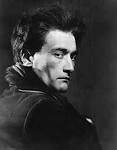
Antonin Artaud, a Parisian actor, poet, and author of the celebrated “The Theater and Its Double” – the creator of the “Theater of Cruelty” – scaled the edge of madness in his work and eventually ended up in the madhouse. Speaking to his affliction, in 1947, Antonin Artaud wrote a literary-performance kind of piece entitled “Van Gough, the Man Suicided by Society.” It isn’t simply about Van Gough, it’s about Artaud and the artists who he loved and admired. He saw most of them as “authentic madmen” who were “suicided by society.” Artaud, impassioned, mad, and raving, writes…to “you,” society:

You dismiss as delirious a consciousness that is active even as you strangle it with your vile sexuality. And this is precisely the level on which poor van Gogh was chaste,

            Chaste as a seraph or a maiden cannot be, because it was they

Who fomented

And nourished in the beginning the vast machinery of sin….

Artaud goes on to claim that van Gogh was “untouched by sin” and “madness.” He also claims that there are “authentic madmen” who “guard themselves against sin”:

The body of van Gogh was untouched by any sin, was also untouched by madness which, indeed, sin alone can bring. And I do not believe in Catholic sin, but I do believe in the erotic crime which in fact all the geniuses of earth, the authentic madmen of the asylums, have guarded themselves against, or if not, it was because they were not (authentically) mad.

Artaud describes the “authentic madman” in the following terms:

It is a man who preferred to become mad, in the socially accepted sense of the word, rather than forfeit a certain superior idea of human honor.

What is this “certain superior idea of human honor?”

The cruelty against the madman shows us what it is by way of negation:

For a madman is also a man whom society did not want to hear and whom it wanted to prevent from uttering certain intolerable truths.

Society kills truth, in other words, by way of silence. And, ultimately, truth, for Artaud, is persecuted and driven mad.   For Artaud, madness is deeply tied to exclusion.

Near the end of his life, Artaud thrived in waste, which is excluded from the body. His poem, “Here Lies” spells out his wasted, abject life as spiritual. A final vision of madness (minus the authenticity), a cosmic vision of waste:

I, Antonin Artaud, am my son, my father, my mother, and myself

Leveler of the idiotic periplus on which procreation is impaled,

The periplus of papa-mama

And child,

Soot of my grandma’s ass,

Much more than of father mother’s…


To make us a little more disgusted with ourselves,

Being the unusable body,

Made out of meat and crazy sperm,

The body hung, from before the lice,

Sweating on the impossible table

Of heaven

Its callous odor of atoms,

Its alcoholic smell of abject

Detritus

Ejected


Jean-Francois Lyotard: The Debt to Childhood – Part I

images-3

Critics like A.O. Scott and Josh Eells are frustrated when it comes to Hollywood. They feel that the possibility of adulthood – which they equate with progress – is stifled by countless films that encourage “perpetual adolescence.”   Scott, at the end of his essay “The Death of Adulthood in American Culture,” tells that “to get off his lawn.” But his mocked crankiness discloses his witty insight: that he’s half serious. Likewise, Josh Eels in a feature article of Seth Rogen’s The Interview, insists that Rogen is finally at a “crossroads” and must decide whether or not he wants to grow up. The Interview, muses Eells, seems to be a step in that direction.

Although many people would nod their heads in agreement to Eells and Scott’s pronouncements, I would like to suggest that we stop and think about what, exactly, this framework of maturity is. For me, one of the most interesting reflections on the meaning of growing up comes from the introduction of Jean-Francois Lyotard’s The Inhuman. Like many thinkers, Lyotard is interested in what it means to be human. Aristotle linked the meaning of being human to thinking. And many followed in his path. Lyotard takes a different path toward childhood and its battle with “adult consciousness.” His question opens up this path:

What shall we call human in humans, the initial misery of their childhood, or their capacity to acquire a ‘second’ nature which, thanks, to language, makes them fit to share in communal life, adult consciousness, and reasons? (3)

In response to his question, Lyotard notes that what matters is not simply how this “dialectic” means so much as whether it “leaves a remainder”(3).   “If this were so,” writes Lyotard, the remainder would be “inexplicable” to the adult.   It remainder leaves its mark on humankind because one has to “struggle constantly to assure his or her conformity to institutions or even to arrange them with a view to a better living-together”(3).

But this is not freedom.

And there is nothing comical about this kind of life.  Is it….really human?

Lyotard tells us that what we need to draw from the “remainder” is the “power of criticizing them,” “the pain of supporting them,” and “the temptation to escape them.” And that power can be found manifested in “literature, the arts, philosophy.” But what makes them special, this remainder, is what Lyotard calls “the traces of an indetermination, a childhood, persisting up to the age of adulthood”(3).

Lyotard, in other words, suggests that the freedom of literature is informed by a “childhood” that remains.

…..to be continued….

Happy Birthday to Schlemiel-in-Theory! A Brief Musing on the Future of the Schlemiel and Its Rich Past

images-2

Today is Schlemiel-in-Theory’s Birthday!!! It turns two years old today. The blog has, in the time of a year, gone from one thousand to nearly four thousand followers! And, as with any birthday, I would like to make a resolution that this year I will redouble my efforts to find and write on new and old schlemiel sightings. It is my hope that this blog will advance not just schlemiels but schlemiel theory. You can look forward to more of both.

That said, I’d like to suggest that I think that, despite all the death threats people have made on the schlemiel, this character has a future. Throughout the year, I have written blog-essays on writers like Gary Shteyngart, Seth Rogen, Harold Ramis, Robin Williams, Charles Bernstein, Woody Allen, and Sheila Heti (to name only a handful of schlemiel advocates, performers, and writers).

I have also delved into the rich past of the schlemiel and opened up different areas of interest that may pertain to this character. We can see this in writers and thinkers like Franz Kafka, Walter Benjamin, Hannah Arendt, Robert Walser, Ruth Wisse, Bernard Malamud, Theodor Adorno, Adam Kotsko, and Martin Buber (amongst others).

I also took my work outside of Schlemiel in Theory. I published a piece on Woody Allen and the schlemiel in a Woody Allen book collection. And I wrote three pieces on the schlemiel in Walter Benjamin, Robin Williams, Adam Sandler for the wonderful European online magazine, Berfrois.

This year I will continue looking into the past, present, and future of this celebrated comic character. I will also be posting several new guest posts that span philosophy, comedy, literature, film, aesthetics, and theology.

I want to thank everyone who has visited the blog and followed it for your continued support! The schlemiel lives on!!!

Awkward Schlemiel Salutations,

Menachem Feuer

PS: Here is a clip from a film I really like by Noah Baumbach. It’s called Frances Ha (2012).   I think the female schlemiel we see in this work – as well as in the extraordinary literary work of Sheila Heti – suggests a good…awkward future for the schlemiel.

Memory, Nuance, and Aesthetics in Jewish Theology: On Michael Fishbane’s “Sacred Attunement” – Part I

images-1

When I was an undergraduate, I remember reading James Joyce’s Portrait of the Artist as a Young Man and wondering whether art could be reconciled with religion. In my studies, I came across several arguments that insisted on separating the two. Soren Kierkegaard, in his book Either/Or, puts aesthetics in a battle with faith and religious philosophers like Maimonides often warn against the excesses of the imagination. Moreover, Cynthia Ozick has claimed that to do art one risks the greatest sin of all: idolatry. Is there any way to reconcile the two?

In the work of Walter Benjamin, there are great efforts to do this. His notion of “profane illumination” suggests that we pay close attention to everyday phenomenon for it may be the case that this or that combination of things may create a kind of shock – which unravels everyday experience – that is, though secular, revelatory. He also found something sacred in the close attention one gives to the work of a great writer such as Franz Kafka. In his essay on Kafka, Benjamin notes that “attention is the silent prayer of the soul.” And, nearly three decades after his untimely death, we see this quote in a celebrated prose piece (talk) by Paul Celan entitled “The Meridian.” To be sure, both Celan and Benjamin both saw something special in close reading and attention. And they expected this from their readers since, as anyone who reads them knows, there are esoteric threads throughout their work.

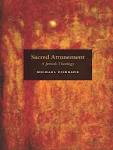
What I learned from Benjamin and Celan – and later learned from thinkers like Ernst Bloch and A.J. Heschel – is that there is no contradiction between art and religion. (Bloch saw the desire for happiness found in folklore and popular culture as a messianic kind of index of utopia.) But what was missing in a lot of what I was looking in to was a well worked out reflection on the relationship of aesthetics and religion. Many of the above-mentioned thinkers – with the exception of Heschel – were not religious. And although some may argue that, for this reason, what they do doesn’t speak to theology, Michael Fishbane’s book Sacred Attunement: A Jewish Theology demonstrates the contrary. I’d like to briefly touch on a few points here which I hope to deepen in more blog entries.

A.J. Heschel in his book Between God and Man points out that Judaism has a radically different reading of Wonder from Aristotle. While Aristotle thinks wonder should be eliminated by knowledge, Judaism calls for more wonder since it evokes praise. Heschel bears evidence for this by taking note of prayers and several psalms and passages from the prophets that demonstrate Judaism’s celebration of wonder.

Like Heschel, Fishbane also turns to wonder. Fishbane argues that we need to draw our attention to what he calls “breakthrough experiences.” They interrupt our habitual life and remind us of something deeper sense of how experience may be related to the sacred.   These experiences can “awaken” us and offer us a possibility. However, there are not “inherently theological.”

But the fissures happen in any case, and in unexpected ways; and then the human being is awakened, if only for the time being, to vaster dimensions of experience and the contingencies of existence. These breakthroughs of consciousness may even transform one’s life; but they are not inherently theological. (x)

Their power, argues Fishbane, is to “remind the self that the ‘merely other’ of everydayness is grounded in an Other of more exceeding depths and heights.” This reminded is the beginning. It may lead to theological reflection but it may also lead to philosophy. Wonder, after all, is an experience. The question is what to do with this experience which Fishbane, like Heschel, argues is at the base of religion and philosophy.

What art can do, according to Fishbane, is to “reformulate the sounds and sights of existence, and thereby create new openings in one’s ordinary perceptions.”

Aesthetic experience gives us these moments of reborn mindfulness on occasion.

But theology, argues Fishbane, does something more than art:

Theology does something more: it receives these perceptions of transcendence and tries to sustain (and even revive) them in the normal course of time. It does so not solely in terms of the experiences per se, but especially in terms of the duties these perceptions impose. (x)

This “more” that Fishbane suggests is associated with something ethical, “in terms of duties.” Citing Jean Wahl, Fishbane argues that “the special sense of le transcendance immanente…thus sets the standards of spiritual truth and value.” This special sense comes through “the worldly forms of immanence” and they “gather nowhere and everywhere. Theology calls this unsayable ground God.” Art may direct us to otherness and transcendence, but theology, he argues, guides us toward the “transcendence of transcendence.”

Both art and theology “save” us from something but the salvation differs fundamentally. Art “saves” phenomenon and grounds them in “something ‘More’ (than mere human perceptions), the second saves God (both the word and the reality) from being delimited by human language and consciousness”(xi).

Regardless of this difference, Fishbane’s book is structured in such a way that one must move through art before they can do theology. In doing this, Fishbane suggests that, in approaching God we must, in some way, have a sensibility which is keen to nuance in nature, relations to others, and aesthetics. But this is prompted, always, by a breakthrough. His first chapter entitled “Toward Theology” moves in this direction.

Fishbane returns to the notion of breakthrough. Calling it a “caesural moment,” Fishbane argues that these give us an experience that prompts us to “remember” or “do” something:

When the precipitating moment is an elemental event of nature, such as an earthquake or flood, or the cycles of birth or death, and even when the occasion is a historical fact, such as some monstrous evil of deed or neglect, the charged moment palpably calls to our elemental nature and conscience, directing us to: Remember, Do Something, or Have Sympathy. (22)

When life becomes other and we are “called” to “Remember, Do Something, or Have Sympathy,” we need to “take notice” of what he calls a “double dimension.” If we don’t take notice, “we are all but dead in the midst of life.” In other words, life depends on attention. This, argues Fishbane, is what “constitutes fundamental care of self.” And this is what he calls a “first prefiguration of theology.”   The preface to theology is attention. “The care of self” is all about attending to nuance and doing something to change one’s world in the face of it. But this imperative to respond and acting on it are not deemed an end in itself by theology; it is preliminary.

….to be continued….

The Circumcised Jew in The Interview: On Zac Efron and Seth Rogen’s Appearance on “Workaholics”

images

While they were making Neighbors, last spring, Zac Efron and Seth Rogen stopped by the Workoholics set and did a take with them hashtagged – with an obvious wink to Rogen’s film – #cubicleneighbors.   Although the show, in itself, never caught my eye, the confluence of the Workaholics cast with Rogen and Efron made me think twice about the show and its potential vis-à-vis the comic character that I am most interested in understanding: the schlemiel.   He is the odd one out. Rogen’s appeal to Jewishness in the episode – and his contrast with the hyper-masculine and sexy Zac Efron who also, in this episode, claims to be Jewish – seems to revive the schlemiel for modern audiences.   But it does so in a way that contrasts the muscle Jew to the less potent schlemiel. What’s missing in this contrast, however, is the dichotomy between the Israeli and the American Jew. Now it is one American Jew versus another; one Jewish body versus another. But is this bodily difference just another caricature that speaks to a population that needs to laugh at someone who is worse off and laughable than themselves? Is Seth Rogen’s body, juxtaposed to Efron’s, the final, schlemiel frontier?

Workaholics, a show starring Adam Devine, Blake Anderson, and Anders Holm, has been on TV since its debut in 2011. The comedy speaks to our time insofar as it does what the office does: it gathers a group of recent college-graduate-slacker-types who, in search of work, find each other in a telemarketing job. Their work puts them in comic situations which show that, like many slackers, they don’t take their job seriously. There doesn’t seem to be any separation between their day-to-day lives and their work. And as in any Apatow or Seth Rogen film, we see how they, despite there petty, ridiculous spats, remain bros.   But is this comedy worthy of our attention? Is it, as many scholarly film critics might say, too status quo and normative?   Does it merely reaffirm white, male heterosexist stereotypes and norms? Is it, like American Pie or Knocked Up, simply juvenile, or what film critic A.O. Scott would consider to be an example of how Hollywood is more interested in “perpetual adolescence?” Or is something else going on?

In a 2012 article for the Huffington Post, Joe Winkler argues that it is the “funniest show on TV.”   But it is all intelligent; albeit in the most tricky manner. Bringing the two together, Winkler claims that what makes it special is the fact that it “retains the highest laugh per minute ratio, all in a deceptively genius manner.”

Initially, people dismissed Workaholics as wholly derivative, not expecting it to last for more than half a season. Now, in the middle of season three, the show not only does well in the ratings departments, but monopolizes that time slot for the 18-34 male demographic. Here goes the stereotype about this show: “Dudes/Bros” love it, most people don’t care, and others see it as puerile, eroding the quality of TV, or a testament to the morally reprehensible world of TV. I feel like I need to defend the first of these assertions not because of its presumptuousness, but because we can’t fathom that a “dirty” show deserves to be spoken about in the same category as “intelligent” comedies, especially in the Golden Age of TV. In a way, the onslaught of intelligence has spoiled us to different forms of intelligent humor. Workaholics is hands down the funniest, least predictable, most exciting comedy on TV right now. Not the most important, or the wittiest or the most politically relevant, but it retains the highest laugh per minute ratio, all in a deceptively genius manner.  

Watching the show, one can obviously see how it could be criticized as “dirty” or unintelligent. But, on the other hand, I can see where the “deceptively genius manner” might fit in. But I didn’t see it until I saw Seth Rogen and Zak Efron with them on set for an episode hashtagged #cubicleneighbors.

As it progresses, we see that Rogen is the odd one out. In comparison to Zac Efron, he is deemed to be older, less attractive, and less sexy by Adam, Blake, and Anders.   After telling him his age, they all huddle and consider his case. Rogen can see that they are not in any way interested in sharing a cubicle with him.

When they make their “mid-point assessment,” Rogen’s humiliation is almost at its breaking point. Efron takes it to the edge when he looks at and gives detailed compliments to Adam, Blake, and Anders making them all feel unique and beloved. Rogen, trailing behind, says “I also think you’re cool” and so forth, but is hushed up several times.

When we see that he is downcast and on the verge of crying, Rogen calls Efron names such as “kiss ass.” But Efron keeps on going and all of them nod in agreement when he says that he thinks they can all “work well together.”

At this moment, when Rogen seems to have totally failed, he pulls a Jewish joke (three minutes in): “I think if you had a Jewish person, you could probably be more edgy because you have a minority in your group.” This works and they pause. But Efron steals Rogen’s Jewish wind when he says, “Here’s a bombshell, ‘I’m Jewish’.”

At this comment, they are all astonished. They are excited by this even more than Rogen’s proposal because here we have a Jew who is young and goodlooking (as opposed to Rogen). But Rogen retorts, playing on the Jewish stereotype that he, Seth Rogen, apparently, embodies: “You don’t look Jewish.”

Seeing that this isn’t working, Rogen demands to see if Efron is circumcised: “Let me see your dick…If you’re really Jewish, you will show me your dick”(4min in). Adam, Blake, and Anders echo the request and the Jewish test by saying, together, while clapping, “we’ve got…to see that dick.” In this moment, we slip into homoeroticism, which Rogen appeals to a lot in his latest film, The Interview. As in that film, homoeroticism is the thin line between being a “bro” (and getting into the cubicle with Adam, Blake, and Anders) and being “gay.”

When Efron pulls it out, they all marvel at how big it is and that it is also circumcised. Rogen joins in and says that its “gorgeous” and asks if “Leonardo DeVinci circumcised” Efron.   Following this rhetorical question, Rogen exclaims, “it’s beautiful.”

This gets everyone excited; but, at a certain point during the excitement, Rogen realizes he has lost and yells at Efron to put it away. He then realizes that what just went down was wrong.   In a last ditch attempt to beat Efron, he pleas with Adam, Blake, and Anders: “you don’t want his dick overshadowing yours.”

To finish his argument, he courageously (?) tells them that his dick, not Efron’s, is the one they should want in their cubicle. The response to seeing Rogen’s member is shock and fear (by Efron) and some of them which then turns in to jokes one would say to a “little baby.”   It is “cute, cool, and funny.” Which “dick do you want to share the cubicle with,” asks Rogen.

But, in the end, they argue that Rogen fails because his “personality is still dogshit.” Rogen is clearly humiliated and saddened. He is now, officially, the odd one out. They want the “Jew” with the “good vibe” and the “big dick” not Rogen.

Efron is not the Israeli but the stereotype that is being drawn on – of the muscle Jew – is.   (Although there is a tumblr page that suggests he is in its title.) Rogen seems to be playing with the idea that the anxiety about being or not being a good looking and attractive male now internal to being a Jewish-American. However, even though the idea itself, as in the film Neighbors (with Zack Efron), is shown to be silly, there is a utopian kind of wish that lingers in all of Rogen’s films. It is the desire to be and remain a bro regardless of differences in age, body type, and personality. But can we say that these differences, in being caricatured, are diffused? Or is it, rather, the case that the sexual schlemiel, as depicted by Rogen, will always be the odd one out…even in a space which is occupied by slackers?   Rogen, as schlemiel, isn’t desired; the other Jew is.

Rogen is not alone in using this strategy. It was also recently used by Gary Shteyngart in a clip he did with James Franco to advance his memoir. And, it seems, it will be used again when Ben Stiller turns Shteyngart’s book, Super Sad True Love Story into a TV series for Netflix.

But, in an episode of Naked and Afraid, starring Rogen and Franco, Rogen jokingly says that although he is afraid of being naked on camera, he wants to overcome this fear. He believes that being comfortable with his nakedness on camera will enable him to be more comfortable with himself…and his schlemiel body.

This, I would argue, is a half-truth and not just a joke. To be sure, Rogen, in countless TV and film appearances, puts himself out naked or half naked in front of a camera. This suggests that his main comic task is to come to terms with his body in distinction to people like Zac Efron and James Franco.   This is at once ridiculous and serious. Could this really be Rogen’s main comedic interest? And does it have anything to teach us about the schlemiel’s future vocation?  Or is this just a ridiculous issue?  Will the schlemiel, regardless of his relationship with his body or age, always be, as Shteyngart would say, a “little failure?” Will he always still be the guy, as Rogen suggests in his Workaholic’s episode, the “little dick?” And will he, as Shteyngart and Rogen both seem to suggest, always be caught up between being a bro and being gay?

“Sweetness is the Final Word of Skepticism”: Roland Barthes on Skepticism, Sweetness, and Stupidity

images-2

When I first ask my students about the meaning of skepticism, they often give me answers that confuse it with pessimism, bitterness, and negativity. Roland Barthes argues the contrary: that skepticism has nothing to do with bitterness. According to Diogenes Laertius, the 3rd century biographer of Greek philosophers, “sweetness is the final word of skepticism.” And the state that attends skepticism – which informs its “sweetness” – is “insensitivity” (“apatheia”) or “gentleness” (“praotes”).   Drawing on Laertius, Barthes creates a nuanced reading of skepticism which should appeal to us today and help us to go beyond a metaphysics based on what he calls a “balance” of opposites. Instead of focusing on balance and the concern with truth, Barthes calls for what he calls “drifting” and this modality is the way to sweetness, happiness, and apatheia.   Barthes reflections on these aspects of skepticism suggest that he sees the skeptic as a kind of artist who lives outside of the realm of judgment and truth. The artist is a daydreamer in the sense that s/he is apathetic and is more concerned with perception than in its meaning.

According to Barthes, “epoche” is the “key concept of Greek skepticism.” He defines it as the “suspension of judgment.” When the mind is suspended, it “neither affirms nor denies anything.” And although judgment is suspended, the “skeptic stays in touch with what he feels, with what he believes he feels.” He doesn’t try to judge or understand what he feels in a “dogmatic away.” Rather, he just “announces his impressions.”

Instead of “abdicating” from “intensities,” the skeptic keeps “life as a guide” and this, says Barthes, is the “ethical dimension” of skepticism.   Letting life be a guide is equivalent to allowing one self to drift into and out of “intensities.” This drifting aims at “happiness” and “rightness.” But for this to happen, one need s to set things in opposition. However, one does so in a way that doesn’t look to “balance” the opposites. He calls balance a “myth.”

To the mythical image of balance, we can oppose another image: that of the drift: an opposition (conflict/paradigm) can be “neutralized” by a balanced blockage of forces…but also by parrying, drifting away from the antagonistic binarism. (202, The Neutral)

According to Barthes, what is at stake in the rift between “balance” and “drift” is “security.” One can either cling to “balance” and “truth,” and be secure, or one can cling to “drift” and abandon all security. This suggests that in drifting one may experience the unsettling nature of drives and trauma (Freud) or reactions (Deleuze). Nonetheless, in doing this, Barthes suggests, by way of ancient skeptics, that there will be a happy (“sweet”) state of indifference (“apatheia”).

This state, says Barthes, “presents the most affinity with Neutral.” It evinces what he calls a “gentleness.” This comes with passing tactfully (not strategically) and gently from one state to another. He calls it a “neutral awakening” from sleep into a state between sleep and dreams, a kind of daydream state.   It has a kind of timing that is abberant, a kairos which Barthes calls a “kind of hunger for contingency.”   And the goal of this hunger is to be found in writing which looks to “outstrip the world.”

A whole work (of writing) is needed for worldliness to be outstripped and outclassed by writing: it’s a revelation that is only brought about at the very end: writing drives out worldliness…but over the course of a long initiation, of a drama complete with episodes. (172).

The neutral, which the skeptic experiences, “listens to contingency, it doesn’t submit to it.” It’s hunger, in other words, is continual. Sweetness consists in dodging the system and by following the span of kairos as it moves from one state or scene to another. Only the truth, in the skeptics view, is bound to time and fate.

This dodging reminds me of Buster Keaton who, it seems, might be considered a figure of the skeptic, as understood by Barthes. He is innocent, tactful, and caught up in a drift. He is constantly thrown out of balance and drifts from one state to another. His time is not the time of fate; it is the time of chance. But, in the end, he gets by and gives a model for comedy.

What one might miss in all this is that even though Barthes suggest “tact” as a part of being skeptical. There is also a kind of “stupidity” that comes with drifting and with the “suspension of judgment” (epoche). In his autobiography, Roland Barthes by Roland Barthes, he writes lovingly about stupidity:

What is it? A spectacle, an aesthetic fiction, perhaps a hallucination? Perhaps we want to put ourselves in the picture? It’s lovely, it takes your breath away, it’s strange; and about stupidity, I am entitled to say no more than this: that it fascinates me. Fascination is the correct feeling stupidity must inspire me with…it grips me (it is intractable, nothing prevails over it, it takes you in an endless hand-over-hand race). (51)

In passages like these, we can see that Barthes is associating perception and drift with a kind of stupidity that is “intractable” and “prevails.” But instead of giving it a negative valance as many philosophers would do, regarding perception as such, Barthes calls it lovely and embraces it. After all, the suspension of judgment, which comes on one out of nowhere, prompts an experience of stupidity. It is not an experience in which everything comes together so much as an experience of how things drift apart. But instead of seeing it in a tragic or comic manner, doesn’t Barthes, in associating all of this with stupidity, give us a sense of how skepticism is not bitter but sweet and…comical? Or is skepticism…fatal…since it “grips me” and “prevails over me”…stripping me of my freedom….taking me on an “endless hand-over-hand race?”

Mystical Burlesque (Reading Zohar with Gershom Scholem)

Please take a look at this wonderful blog-essay on Gerschom Scholem’s reading of the mystical vis-a-vis the words he used which combine the ridiculous and the religous. Brilliant reading! Enjoy!

zjb's avatarjewish philosophy place

Burlesque

Re-reading Gershom Scholem’s Major Trends in Jewish Mysticism (1941) perhaps more systemically than I did many years ago when I read it for the first time. While most of the main lines of argument have been assimilated and critically sifted in Jewish Studies-Jewish thought and culture, what I’m noting for the first time about Scholem’s study relates to Kabbalah as an aesthetic artifact. I’m restring my comments here to his first chapter on the Zohar, although I will note that about Lurianic Kabbalah, he calls “the architecture” of its “mystical structure” “baroque” (p.271).

About the Zohar, I would draw attention to Scholem’s use of the word “fancy,” which appears twice (pp.157, 169) when talking about the Zohar as a “mystical” novel and narrative figures. The term is associated with “delight” and skillful working, and elaborate detail (p.157).

What a weird elaboration. As a platform, Scholem notes how the Zohar builds…

View original post 379 more words

Martin Buber on Wombs, Babies, Child Development, and the “Longing for Relation”

images-1

Many great thinkers and writers of the 20th century were interested in children and in the experience of becoming childlike. One need only think of Freud and his obsession with the child’s development. Walter Benjamin wrote of childhood throughout his career, Kafka wrote of characters who had child-like sensibilities, nearly every story by Robert Walser has children or childlike narrators, James Joyce’s Bloom is a man-child who gets lost in experience, and Fyodor Dostoevsky was obsessed, in his novel, The Idiot, with Prince Myshkin’s childlike sensibility. And in his novel, Ferdydurke, Witold Gombrowicz has a narrator and children whose childishness evokes deep questions about the meaning of humanity. There are many other examples of childhood exploration by modernist writers and thinkers. And one need not look farther than thinkers like Jean-Francois Lyotard, Giorgio Agamben, Emmanuel Levinas, or Jean-Luc Nancy to see how fascinated they are with the meaning of “infancy” or what Lyotard calls the “debt to childhood.”

What one needs to keep in mind, however, is what these writers and thinkers were trying to explore or demonstrate in their writings on infancy and childhood. One very interesting exploration of childhood can be found in Martin Buber’s most famous book, I and Thou.   In search of the most primal experience of the “you” and relationality, Buber addresses the child in the womb and outside the womb as a kind of model or as evidence for the ontological roots of relationality and the I-thou encounter:

The pre-natal life of a child is a pure natural association, a flowing toward each other, a bodily reciprocity; and the life horizon of the developing being appears uniquely inscribed, and yet also not inscribed, in that of the being that carries it; for the womb in which it dwells is not solely that of the human mother. (76)

Buber, misreading a famous Midrash about a baby in the womb (who, according to the actual Midrash, remembers the entire Torah before birth), argues that the baby has a relation to the cosmos which, at birth, is forgotten:

This association is so cosmic that it seems like the imperfect deciphering of a primeval inscription when we are told in the language of Jewish myth that in his mother’s womb a man knows the universe and forgets it at birth. (76)

What remains with us, according to Buber, is “this association” which he calls “the secret image of a wish.” Buber warns us that it is not a wish to return to the womb so much as a desire to relate.   The words he uses to describe this relation – which retains difference – are poetic and ambiguous: “What this longing aims for is the cosmic association of the being that has burst into spirit with its true You”(76).

From here, Buber talks about the child outside the womb that “detaches itself to enter a personal life.” He focuses on the meaning of this “detachment” by pointing out that it is “not sudden and catastrophic like that from the bodily mother.” So…the metaphor, it seems, stops here. Rather, says Buber, “the human child is grated some time to exchange the natural association with the world that is slipping away for a spiritual association – a relationship”(77). In other words, the desire for relation, which must relate to “detachment” at some point of development, is not traumatic (contrary to someone like Emmanuel Levinas who, in his book Otherwise than Being, notes that we are “traumatized by the other”). For Buber, one eases in to this relationship. We “step into” the “cool and light creation” out of the “glowing chaos.” We are not “thrown,” as Martin Heidegger would say, and we are not “exposed” as Levinas would say. We “step” in to relationality.

Although this is a step, Buber notes that there is still, regardless, a “longing for relation”(77). That is there from the primal womb stages to our detachment. As evidence of this “longing for relation,” he describes how babies look and try desperately to find focus:

Before any particulars can be perceived, dull glances push into unclear space toward the indefinite; and at times when there is obviously no desire for nourishment, soft projections of the hands reach, aimlessly to all appearances, into the empty air toward the indefinite. (77)

This “longing for relation” eventually finds an object. And it is “primary.” The metaphor Buber uses to describe this turns the I-You experience, which is prior to language, into something infantile:

The longing for relation is primary, the cupped hand into which that being that confronts us nestles; and the relation to that, which is a wordless anticipation of saying You, comes second. (78)

Language, the first word, “you,” is born out of a longing to relate. It “comes second,” the desire comes first. Out of this, Buber crafts his own Biblical kind of declaration. Relation, basically, is the basis of everything (philosophy, religion, psychology, etc):

In the beginning is the relation – as the category of being, as readiness, as a form that reaches out to be filled, as a model of the soul; the a priori of relation; the innate You. (78)

And the “innate You” is “realized” in the “You we encounter.” For Buber, this realization is the goal. Children, however, go through a stage of “craving” and “disappointment” before they can experience it:

The development of the child’s soul is connected indissolubly with his craving for the You, with the fulfillments and disappointments of this craving, with the play of his experiments and his tragic seriousness when he feels at a total loss. (79)

His hope, one can surmise, is that the mature adult relation to the You is one that grows up and leaves behind these “cravings” and this “tragic seriousness” that goes along with “experiments” and “disappointments.”   One will be satisfied, eventually, with the desire to relate and relation as such. This, it seems, is the joy of what Buber thinks may be attained not just in the I-thou experience but in the philosophical-religious acceptance and understanding of….relation. But, as Buber suggests, this acceptance and understanding has to do with an apprehension of the infant and its primal, secret longing for relation. It has to with relation, not language, which comes “second.”

Dostoevsky’s Two Idiots – Part II

images

In the midst of Prince Myshkin’s epileptic fit, everything becomes double. And this doubleness brings out Dostoevsky’s approach to the fool-as-mystic. If one is to understand what is at stake with the fool, one must, for Dostoevsky understand the tension of opposites: namely, the struggle between good and evil.   This struggle occasions and weights down on “the idiot.”

Prince Myshkin’s mystical state, as I noted in the last blog entry, is punctured by thoughts that run contrary to this mystical state. There is a juxtaposition of the physical and the metaphysical. In one second, he experiences bliss, in the next moment, however, he experiences fear and confusion. The narrator of The Idiot depicts this fluctuation by a kind of writing that leaps back and forth between one thing and another. It pits one second in time against another:

His reasoning, that is, his evaluation of this moment, undoubtedly contained an error, but all the same he was somewhat perplexed by the actuality of the sensation. What, in fact, was he to do with this actuality?   Because it had happened, he had succeeded in saying to himself in that very second, in its boundless happiness, which he fully experienced, might be worth his whole life. “At that moment,” as he once said to Rogozhin in Moscow, when they got together there, “at that moment I was somehow able to understand the extraordinary phrase time shall be now more. Probably,” headed smiling, “it’s the same second in which the jug of water overturned by the epileptic Muhammad did not have time to spell, while he had time during the same second to survey all the dwellings of Allah.” (227)

But in the next paragraph, Dostoevsky suggests the opposite of light and revelation: darkness. Prince Myshkin sits alone in a bench in the darkness. A “thunderstorm” seems to be lingering. Meanwhile, the Prince tries to “forget something present, essential.” What could it be?

Dostoevsky tells us that it is the idea of murder: “an extremely strange recent murder, which had caused much noise and talk.” It is this thought – or rather, memory – of murder which marks a second odd moment; one which devours his mystical experience: “as soon as he remembered it, something peculiar happened to him again.”

At this moment, a “new, sudden idea came into his head…” This idea is one that is contrary to murder and malevolence; namely, the idea of innocence.   The Prince associates the idea with Lebedev, a foolish acquaintance (who is obsessed with John’s Revelations) and his nephew who is young…and innocent. He walks in that direction so as to reach the nephew and be saved from…the other idea…the one about murder. But what ends up happening is that, as in the mystical-slash-epileptic experience, he loses a sense of where he is and where he is going.

The “sudden idea” spurs the Prince to “peer into everything his eyes lighted upon, he looked at the sky, at the Neva. He addressed a little child he met.” As he does this, the narrator wonders if the Prince’s “epileptic state was intensifying more and more.” At this point, the narrator drifts away from a character who, it seems, has lost control and is looking to seize the “sudden” idea of innocence in reality so as to save himself from the other idea…of death.

But the two ideas clash. As he “recalls Lebedev’s nephew,” the “strange thing was that he kept coming to his mind as the murderer Lebedev had mentioned when introducing the nephew to him.”   At this point, the narrator suggests that, in Basil, Switzerland the Prince didn’t have to think about murderers. He could live a simple, innocent and carefree life. But in Russia, his idea of innocence was muddied. In Russia, the Idiot is troubled:

He had heard a great deal about such things (as murderers) since his arrival in Russia; he followed them persistently. And earlier he had even become much too interested in his conversation with the waiter about the murder of the Zhemarins. (228)

Since the Prince started “to believe passionately in the Russian soul,” he started thinking what these murders meant. This leads him to think of Rogozhin who, he knows, is malicious and dangerous. To be sure, his mystical-epileptic state occurred after leaving Rogozhin who, upon leaving, made a pact of friendship with the Prince. They had exchanged Crosses and shook hands as a sign of trust. But, even then, we can see that the trust is tainted with deep uncertainty:

The prince took off his tin cross, Parfyon (Rogozhin) his gold one, and they exchanged them. Parfyon was silent. With painful astonishment the prince noticed that the former mistrust, the former bitter and almost derisive smile still did not seem to leave the face of his adopted brother – at least it showed very strongly at moments. Finally Rogozhin silently took the prince’s hand and stood for a while, as if undecided about something; in the end he suddenly drew the prince after him, saying in a barely audible voice: “Come on.”(222)

Rogozhin brings the Prince to his old mother who smiles at the Prince and blesses him. They leave and Rogozhin asks the Prince to embrace him. But, right before doing it, Rogozhin puts his arms down: “He could not resolve to do it; he turned away so as not to look at the prince. He did not want to embrace him. (223)

This ambivalent love comes back to haunt the Prince when he thinks about the “Russian soul.”   He thinks about the Russian other after he thinks about himself and his discoveries. He wonders if he can trust someone like Rogozhin, an exemplar of the “Russian soul.” This soul is not clear like his own; it is “murky”:

Oh, he had endured so much, so much that was quite new to him in those six months, and unlooked-for, and unheard-of, and unexpected! But another man’s soul is murky, and the Russian soul is murky…Here he had long been getting together with Rogozhin, close together, in a “brotherly” way – but did he know Rogozhin? (228)

In the midst of this reflection, which is obviously troubling, he tries to distract himself with the idea that there is an innocent Russian other: Levedev’s nephew. The narrator calls this distraction a “reverie.” But it is interrupted, and the epileptic fit starts coming closer once the reverie is pierced with the idea of murder. And the ideas, once again, clash:

Was it he who killed those six beings, those six people? I seem to be mixing things up…how strange it is! My head is spinning…But what a sympathetic, what a sweet face Lebedev’s elder daughter has, the one who stood there with the baby, what an innocent, what an almost childlike expression, and what almost childlike laughter! (228)

The narrator finds it “strange” that the Prince had “almost forgotten that face and remembered it only now.” It is strange because the narrator, like the innocent Idiot Prince in the first part of the book, remembered the faces of the innocent and turned to them for inspiration and faith in humanity. To be sure, the narrator seems to be suggesting that the memory of such faces – in their utmost simplicity and innocence – is necessary if one is to do away with the complexity and murkiness of the Russian soul that we see with murderers and characters like Rogozhin.

However, this simple faith can’t compete with evil. The narrator demonstrates this by going hysterical over the thought that Rogozhin will kill the prince yet…he “won’t kill in a disorderly way. There won’t be chaos.”   These thoughts, apparently, echo those of the prince who, after thinking about all the things that Rogozhin did to show he was a “brother” and “faithful” (including the blessing by the mother) were a lie: “meanness”(229). This realization seems to destroy the prince’s innocence: “Despair and suffering seized his whole soul.” And he loses what Dostoevsky calls “the special idea” that suddenly came upon him. This idea is the idea – and the image/face – of innocence.

However, Dostoevsky decides to retain the trace of this idea and demonstrate the struggle that the Idiot must go through in order to save it, and the hope for humanity, from destruction. The doubleness, here, shows us that the fool, for Dostoevsky, must, at some point, struggle with cynicism. No mystical experience can shelter him from the deception and misdeeds of humankind.  It is this “reality” that defies the trust that should be the defining feature of humanity – the trust is the trait of innocence, the holy fool, and the child  – rather than “murkiness.”

…..to be continued

Dostoevsky’s Two Idiots: The Charming, Naïve, and Friendly Idiot and…the Deep, Mystical, and Epileptic One (Part I)

images-1

When it came to the fool Fyodor Dostoevsky, it seems, was of two minds.  After fleeing from Russia and the outpouring of his first novel, Crime and Punishment, Dostoevsky set out for Basil, Switzerland.   Dostoeveky decided that, after writing a novel that was full of depth, complexity, bleakness, and evil, he wanted to write a comic novel that, as he wrote to his niece, would be even more comic than Miguel Cervantes’ Don Quixote.

But Don Quixote is no common fool. As Dostoevsky also said to his niece, he thought that the true model for Cervantes, and by implication, his own fool was Jesus. For Dostoevsky, he is the true model for his novel, the Idiot. Dostoevsky tells his niece that Christ is “beautiful” because he is “already a miracle”:

There is only one perfectly beautiful person – Christ – so that the appearance of this immeasurably, infinitely beautiful person is, of course, already a miracle.

However, as I noted in another blog entry, Dostoevsky doesn’t model his character totally on Christ. Rather, he turns to the most beautiful character in what he calls “Christian literature”: “Don Quixote.” But, reflects Dostoevsky, he “is beautiful solely because he is at the same time ridiculous.”

For Dostoevsky, what makes the fool Christlike is her ability to gain our sympathy. That, he claims, is the “secret of humor”:

Compassion is shown for the beautiful that is ridiculed and does not know its own worth – and so sympathy appears in the readers. This arousing sympathy is the secret of humor.  

When beauty is ridiculed we don’t simply laugh; we also feel sympathy. In other words, there is something painful that is tied to “beauty” in this world. In The Idiot, Prince Myshkin is not simply ridiculed in each of his encounters. In fact, the first part of the book show how he, in his simplicity, was loved by children and befriended most of strangers. Myshkin is light, not deep. His comedy is to be found in his naïve trust of others and his optimistic way of greeting the future. He lives on the surface and it seems he has no depth or complexity.

He obviously doesn’t fit into Russian high society. But it is the men who he really doesn’t fit in with. He connects with the women and children more than the men. It is the jealousy of men and their murderous nature that one can see slightly foreshadowed in the first section. The leitmotif of this section is foolish trust and hope. As Dostoevsky would claim, we should sympathize with Prince Myshkin because, though he is a kind of holy fool, he is ultimately thought of as an outsider.   But he doesn’t feel like or even care about whether he is.   Although Prince Myshkin isn’t a fervent worshipper, his life, like Christ’s, is what Edith Wyshchogrod, drawing on saintly narrative (hagiography) would call a “saintly sample.” Myshkin is a folkloric kind of holy fool because he trusts people and only wants them to be happy.

However, this “sample” of the Holy Fool has another dimension.

There are moments when he is mesmerized with the image of evil. And I say image because Prince Myshkin loved to see and draw faces. The moments when he faces death suggest that the Prince may have depth and is grazed by evil. We see this in his witnessing of a beheading.   We also see this in his confrontation, later in the novel with Rogozhin who, out of jealousy, follows him and attempts to kill him. The limit between one kind of fool and the other – the buffer zone Dostoevsky puts between them – can be found in the experience of “epilepsy.” Dostoevsky sees the experience, which Prince Myshkin undergoes in the midst of his flight from Rogozhin, as mystical.

As far as experiences go, it is much different from his foolish relations to others since it is not social and external but deeply internal and complex. Dostoevsky’s writing, in this section, differs from the writing we find throughout the book which is mostly interested in Prince Myshkin’s social relations. Dostoevsky’s portrayal of the other idiot, the epileptic one (please note that Dostoevsky tests the meaning of the name “idiot” as it works on a medical register, a social register, and a mystical register).

When the Prince leaves an intense face-to-face encounter with Rogozhin, who is desperate, angry, and jealous and blames the Prince for taking away his fiancé, Kolya, (which simply isn’t true), he goes to the station to take a train. He feels radically alone and in pain. Because he is from Moscow and not St. Petersburg, he is unfamiliar with the city and what ensues resonates a lot with Edgar Allen Poe’s “Man of the Crowd”:

He was little acquainted with the city. He stopped occasionally at street corners in front of some houses, on the squares, on the bridges; once he stopped at a pastry shop to rest…He was tormentingly tense and uneasy, and at the same time felt an extraordinary need for solitude. He wanted to be alone and give himself over to all of this suffering tension completely passively, without looking for the least way out. He was loath to resolve the questions that overflowed his soul and heart. “What, then, am I to blame for it all?” He murmured to himself, almost unaware of his words. (223-224)

As time passes, the Prince gets more and more anxious and dissociates himself from reality as he is occasioned by a series of unexpected feelings and occurrences. He loses track of time and has a hard time locating things (and himself) in space:

He suddenly forced to catch himself consciously doing something that had been going on for a long time but which he had not noticed till that minute….he had begun now and then suddenly searching fro something around him. And he would forget about it, even for a long time, half an hour, and then suddenly turn again uneasily and search for something. (224)

In the midst of this confusion, the Prince starts having recollections about his location in time and space:

He recalled that at the moment when he had noticed that he kept searching around for something, he was standing on the sidewalk outside a shop window and looking with great curiosity at the goods displayed in the window. He now wanted to make absolutely sure: had he really been standing in front of that shopwindow just now, perhaps only five minutes ago, had he not imagined it or confused something? Did that shop and these goods really exist? (224)

As one can see, Dostoevsky has the Prince wax philosophical in this passage. To be sure, Dostoevesky, unlike anywhere in the novel, shows how the Prince has depth and is complex. In these moments, the Prince goes from being an ordinary “idiot” to a philosophical, or rather, a mystical-slash-epileptic “idiot.”   Like a mystic, he becomes “extraordinarily absentminded,” grows “morbid” and “anxious,” and confuses “objects and persons”(225).   These states of dissociation increase as a realizes that he can’t know for certain that things are what there are and where they are; in addition, as we can see above, he loses track of when or even if he experienced a sensation, memory, or thought in relation to them.

When he actually “discovers” the shop, he “laughs hysterically.” But then he is reminded of Rogozhin’s “eyes fixed on him” and he sinks back into anxiety.   At that moment he realizes that “something absolutely real had happened to him, which was absolutely connected with all his earlier uneasiness”(225). This real experience, which Rogozhin’s anger, jealousy, and intimated threats, is a kind of wake up call. (Since, after all, the idiot in Cervantes’ sense is caught up in the ideal, not the real, this is a wake up call.)

Although this is a pressing thought which pits one idiot (the deep, real, solitary, and complex one) against the other (which is superficial, charming, and friendly), the narrator tells us that the Prince focuses more on his “epileptic condition.” He realizes that what he was experiencing is the “stage just before the fit itself….when suddenly, amidst the sadness, the darkness of the soul, the pressure, his brain would momentarily catch fire, as it were, and all his life’s forces would be strained at once in an extraordinary impulse”(225).

The terms used to describe this state, however, are not physical; they are, rather, drawn from the register of mysticism.   The narrator points out that in these moments of the fit there is a sublime “flash” like “lightening” when everything is illuminated and becomes one. Through this state, he feels joy and hope and, like a mystic, perceives the “ultimate cause”:

His mind, his heart were lit up with an extraordinary light; all his agitation, all his doubts, all his worries were as if placated at once, resolved in a sort of sublime tranquility, filled with serene, harmonious joy, and hope, filled with reason and ultimate cause. (225-226)

Dostoevsky backs up, however, and points out that the moment before this great revelation is a “second moment” which is “unbearable.” When he reflects on this second moment, from a healthy state after the fit, he realizes that perhaps the “highest being” were “nothing but an illness, a violation of a normal state.” And that the “highest state…should be counted as the very lowest.” Faced with this dilemma about how to read the relationship of the two moments, the Prince comes to what the narrator calls the “paradoxical conclusion”:

“So what if it is an illness?” he finally decided. “Who cares that it’s an abnormal strain, if the result itself, if the moment of the sensation, remembered and examined in a healthy state, turns out to be the highest degree of harmony, beauty, gives a hitherto unheard-of and unknown feeling of fullness, measure, reconciliation, and an ecstatic, prayerful merging with the highest synthesis of life?”

These words, without a doubt, don’t disclose a simpleton-slash-idiot so much as a deep thinker who is seeking a serious mystical experience. Although the narrator calls these “vague expressions,” they demonstrate a kind of certainty that we seldom find in fool.   Moreover, the experience is deeply solitary and asocial. In this kind of reflection and experience, we see a fine line being drawn between one idiot and another.

….to be continued….