“A Crushed Purple Bug” – Jewish-American Identity Before and After Misha’s (Fictional) Circumcision (Part 1)

DownloadedFile-4

In “The Metaphysics” Aristotle distinguishes “perceptions” from “experiences.”  Men and animals share the fact that they both have perceptions (sensation plus memory).   The first thing that differentiates them from each other is “experience.”  Animals can’t have experiences because, Aristotle tells us, they cannot make inferences based on the totality of their perceptions.    We do.  We infer who we are and what we are by way of our “experiences.”  But, for Aristotle, there is a higher mode than experience and that is thinking.  When we look for the causes of things, we move beyond inferences.  Aristotle acknowledges that scientists may be thinkers but that the greatest thinker is the philosopher since the philosopher looks not for this or that cause so much as the “causes of causes” (that is, the foundation of all things: from which things emerge and return).

But Aristotle makes a concession to experience when he argues that philosophy (always) begins with wonder.  However, it ends with wisdom and knowledge.  To remain in wonder, for Aristotle, would be to remain in the painful state of ignorance.  For him, happiness coincides with leaving wonder behind for knowledge.

To be sure, Aristotle gave birth to a whole line of thinkers who privileged thought over experience (from Descartes and Spinoza to Leibnitz, Kant, and Hegel).   Given this tendency toward thought and away from experience, Immanuel Kant – in the 18th century – thought of the novel as a distraction from the “true things.”  Since the novel was focused on experience it exposed us to things we could only make inferences about.  Dwelling in experience is tantamount with dwelling in confusion, ignorance, and doubt.  It would evince – as Aristotle would say – a lower, imperfect form of existence.

In contrast to Kant, Freud argued that we can learn a lot about “who” we are from our past experience.  Unlike Kant who thought of literature as a distraction, Freud oftentimes turned to literature and novels to understand what it means to be human.  All of our deepest problems and complexes are alluded to in such experiences as we find in dreams and novels.  Nonetheless, Freud believed, liked Kant and Aristotle, that we should work our way through such dreams or literary experiences so as to arrive at knowledge.   And this knowledge would, so to speak, set one free from this or that condition that hindered our being a reality-adjusted ego.   Although the analysis of self was “interminable,” for Freud, it had a goal.

To be sure, Freud would agree that first “experiences,” usually, count for a lot: especially when it comes to one’s identity.  A person’s first experiences of a country, a religion, or a culture, especially if they are a “part of it,” can certainly color his or her a) perception of him or herself and b) one’s identifications in this or that geographical, religious, or cultural context.

Oftentimes our experiences are arbitrary; however, sometimes they are primal or “originary.”  They can become “first experiences” and may, as the philosopher Martin Heidegger might say, alter how things – and oneself – “appear-in-the-world.”   For Heidegger, anxiety was a central mood through which the world was disclosed “as a world” and through which one is disclosed to oneself “as a being-in-the-world” (or as Heidegger would say a “being-thrown,” which suggests a “first experience” of things that was is not familiar with, things one did not know or intend).

In a Freudian sense (vis-à-vis the emergence of repressed materials in dreams), the world can become “uncanny” when buried experiences come to the surface.  Freud called this “primary” or “primal” experiences or scenes.  In this sense, there can be something shocking or even traumatic about first experiences.   And it can certainly be argued that literature is a way of coming to terms with – and perhaps even knowing the “source” of – this shock.

The more schlemiel literature I read, the more I see that sometimes the schlemiel is involved with the literary elaboration of this coming-to-terms with this or that primal experience.  What interests me most –as a schlemiel theorist – is to ask what the schlemiel learns or fails to learn – on the one hand – and what we, as readers, learn – on the other.  What blindspots do we see vis-à-vis the recollection and assessment made by this or that schlemiel regarding their experiences?

To be sure, working through a character’s “first experiences” may involve bearing witness to something shocking that will make a character appear awkward and comical.   The reader may find this schlemiel to be a tragic-comic kind of character since the schlemiel may not know what causes him to err.

In a Heideggarian sense, we may see the schlemiel as a character who is thrown into a situation that he cannot overcome.  And, on this note, the schlemiel may come across as a character that is wounded by a traumatic situation that they may or may not know – a situation that he or she may not be able to overcome.

In Gary Shteyngart’s novel Absurdistan, that situation is Jewishness and it is brought out through the main character, Misha’s first “American experience.”   Strangely enough, his “first American experience” was shocking and traumatic; it was, according to the narrator, circumcision.  Apparently, his first American experience becomes his first Jewish(American) experience.  In other words, it alters his Russian-Jewish experience and his perception of Jewishness.   And although he is aware of this, he is also blind to how it drives his desire to leave “the Mountain Jews” behind for another, more “multicultural” experience that can only be found in the context and arms of his former Latino-Black lover.    This is what I will call the “other” New York; the New York not inhabited by Hasidic Jews – who circumcise him – or “mountain Jews,” who remain in Eastern Europe (in Abusrdistan).

The problem of circumcision is spurred by Misha’s “foolish” love from his father (apparently, a schlemiel/idiotic trait).  In one of my previous blog entries on the novel, I pointed out how Misha committed himself to this painful experience out of love for his father (“too much love”). According to the narrator, this love makes Misha into “the idiot” of Dostoevsky’s novel by the same name: Prince Myshkin.   We follow Misha as he “foolishly” travels to the circumcision.  What happens before, during, and after the circumcision should be duly noted as they trace his trajectory from naivite to an experience that discloses his greatest obstacle, which is branded on his body: his Jewishness.  Circumcision affects how he sees himself, America, and Jewishness.

To begin with, his trajectory is spatial and tells us about what he identifies with.  Although his first American experience is circumcision, he starts off his American journey in an African-American neighborhood.   His observations speak for themselves:

I fell in love with these people at first blush.  There was something blighted, equivocal, and downright soviet about the sight of underemployed men and women arranged along endless stretches of broken porch-front and unmowed lawn….The Oblomov inside me has always been fascinated by people who are just about ready to give up on life, and in 1990, Brooklyn was Oblomovian paradise.  (19)

The descriptions change, however, when he enters into the Jewish parts of Brooklyn and toward his circumcision.   He feels more repulsed by this neighborhood.  He doesn’t identify with it though these are his “co-religionists”:

And that (the “Spanish speaking section”) gave way to a promised land of my Jewish co-religionists – men bustling around with entire squirels’ nests on their heads…velvety coats that harbored a precious summer stink…What the hell kind of Jewish woman has six children?  (19)

This shift in location is a central motif in this novel which many critics have overlooked. This shift is marked by his circumcision, which leaves him with “his crushed purple bug.”  This physical wound is also the limit that separates him from what Hannah Arendt – in her book The Human Condition – would call his “primary birth” and his “secondary birth.”  It seems that, for Shteyngart’s Misha’s movement from his primary birth (his “first American experience”) to his secondary birth (which will, later in the novel, be his “first experience” with Rouenna, an African-Latino-American girl he meets, falls in love with, and lives with).    But this movement, I will argue, seems to be always plagued not only by his Jewishness but by his wounded penis; his “crushed purple bug.”  The proof is in the pudding: if he still thinks about his circumcision and his Jewishness as a burden or wound at the end of the novel, he has not worked through it; if he doesn’t, apparently, he has.  Also, we need to ask whether this defines Misha, at the end of the novel, as a schlemiel or a “reality adjusted ego.”  Can he leave the wound being for knowledge?  Or do we end the novel with a lack of knowledge and a blindspot?  Is he, in the end, distracted by his experiences?  Or has he found his true, post-Jewish/post-schlemiel self in the “other”?

(In the next blog entry I will give address these questions.)
Circumscribed: Circumcision as Dismemberment in Shteyngart’s Absurdistan – Part II

DownloadedFile

In the Jewish world, circumcision has prompted many jokes that have found their way into the mainstream.  On the internet you’ll find a lot of these Jewish jokes.   Here’s one from Comedy Central’s Website; its entitled “Circumcision…At Your Age?”

Two men are sharing a hospital room.  “What are you in for?” the first man asks.  “I’m getting a circumcision,” his roommate replies. “Damn,” exclaims the first man, “I had that done when I was born and I couldn’t walk for a year.”

This joke hits on what we left off with in the last blog entry: the fact that Misha sees himself as the but of the joke because he – like Abraham, the first Jew to be circumcised – is to be circumcised at a late age: the age of eighteen.  He likens himself to Dostoevsky’s “Holy Fool” – Prince Myshkin because he feels that his great love for his father led him into bad luck; which, for him, translates into a circumcision.

Whenever I discuss Freud’s notion of “castration anxiety,” I feel very awkward.  How, I always wonder, will the class take it when I tell them that the image of a mutilated penis is constantly at the back of their minds.

To be sure, Freud, in his early work, associates circumcision with castration anxiety.  In “An Outline for Psychoanalysis” he argues that “the primeval custom of castration” is a “symbolic substitute for castration.”  And it “can only be understood as an expression to the submission to the father’s will.”

This submission to the father’s will (which we saw is a major part of Misha’s circumcision) is based on the fear that if he violates his father’s will, he will be punished.   To be sure, the image of the mutilated penis is too much to see. Freud argues, however, that the endangered eyeball can become a substitute for the penis-that—daddy-may-cut-off.   When framed in this manner, Freud’s reading of the “Sandman” story in terms of castration is literally an “eye opener” for my students.  They see how, for Freud and for those psychoanalysts who followed him, the eyeball could relate to the penis in terms of a drive to see a “scopic drive” (or “scopophilia”).  To be sure, vision is one of our greatest powers.  (Aristotle, in the Metaphysics makes it the highest of all our senses; and Plato gives it the highest honor in his dialogues.)

The threat to the eyes is, for Freud, a threat to the penis.  To illustrate, I show Un Chien Andalu, the 1929 film by Luis Bunel.

Paul, centuries before Freud, associated circumcision (and Judaism) with mutilation.  We see this in his epistle to the Philippians 3:2:

Beware of dogs, beware of evil workers, beware of the mutilation!  For we are the circumcision, who worship God in the Spirit, rejoice in Christ Jesus, and have no confidence in the flesh, though I also might have confidence in the flesh.

Following this, Paul tells of how it is the case that he, as a Jew, has left “the mutilation” (his physical circumcision) behind.  He admits that he –as a Jew – must overcome his “confidence in the flesh” which he associates with circumcision.  By calling it “the mutilation,” he distances himself from it.  And this, as he moves on to something “higher” and more “spiritual” than the flesh (the circumcision) and the law (covenant) that is associated with it.

Freud may or may not have read Paul, but he did read psychologists that did associates circumcision with mutilation.   In The Jew’s Body, Sander Gilman takes the work of Paolo Mantegazza (1831-1901) as an illustration of how these views entered into the medical literature.  Mantegazza, notes Gilman, had a major influence on Freud.

Mantegazza’s words on circumcision suggest that circumcision-as-“mutilation” differentiates Jews from non-Jews and that this difference has political consequences.   To be sure, he insists that the ticket – for Jews – to equality is to stop circumcision:

Circumcision is a shame and an infamy; and I, who am not in the least anti-Semitic, who indeed have much esteem for the Israelites…shout and continue to shout at the Hebrews, until my last breath: Cease mutilating yourselves: cease imprinting upon your flesh an odious brand to distinguish you from other men; until you do this, you cannot pretend to be our equal.  (91)

What’s fascinating about this statement is that though it is said in modern times, it has been around since the Hellenistic period where –for a time period – it was against the law to be circumcised.  Moreover, it reiterates the reading of circumcision as mutilation but in a secular as opposed to a religious context.  Still, it is read as a form of violence and distinction.  It is read as a barrier to “true” equality or spirituality.

This clip from Family Guy reminds us that the association of castration, Jewishness, and mutilation is far from gone.

All of the above is a preface to the close reading I would like to make of Misha’s circumcision in Gary Shteyngart’s Absurdistan.  He sees his circumcision in Freudian terms (as a concession to his father – as I pointed out in yesterday’s blog) and in terms of mutilation.  This prompts him to feel as if he has been “had” and is a Prince Myshkin (schlemiel) type.  His negative descriptions of his circumcision, which in many ways echo Paul, distance himself from Judaism and form the basis of his literary “circumscription.”  This “circumscription” will, like Paul’s powerful and negative words on Jewish circumcision, form the basis of his movement away from what he considers “prehistoric” Jewishness.    His text marks his off and situates him within a different journey: one that will bring him back to America rather than Israel.  As I will discuss, Misha’s textual journey to his other homeland emerges out of a recognition that he had become a circumcised-schlemiel.  But this recognition is conveyed to Misha (and to us, his readers) by characterizing his circumcision as a form of mutilation.

These descriptions, this “circumscription,” and his recognition that he was a fool who was “had” will be the topic of my next blog entry.

Circumscribed: Circumcision as Dismemberment in Shteyngart’s Absurdistan – Part I

absurd-copy2

In Hebrew the word for circumcision is “brit.”  Brit is the same word used for “the covenant” between God and Man.   In fact, the first covenant between God and Man mentioned in the Torah is between Abraham and God.  When Abraham, at his late age in life, circumcises himself, God makes a covenant with him which becomes the foundation for all covenants in the Torah.  In fact, it is associated with the preservation of the Jewish people:

This is My covenant which you shall keep, between Me and you and thy descendants after thee, every male among you shall be circumcised. And ye shall be circumcised on the flesh of your foreskin, and it shall be a sign of the covenant between Me and you. And he that is eight days old shall be circumcised among you, every male throughout your generations (Genesis 17:10-12).

Like Abraham, Gary Steyngart’s main character Misha (from his second novel, Absurdistan) is also circumcised at a late age.  But while Abraham would refer back to his circumcision as the site of his greatest promise and the greatest joy, Misha looks at it as the source of his greatest suffering.  It is not his entry into the covenant so much as the sign of his mutilated masculinity (which really isn’t mutilated), his father’s mad obsession with Judaism, his hatred of Hasidim, and his membership in “pre-historic” tradition that he literally finds primitive in contrast to his more modern “multicultural” experiences.

Misha likens his circumcision to a wounded penis.  Although he fulfilled his father’s request by having a circumcision, he is very resentful. But instead of aiming this resentment at his father, he levels it on Hasidim and on Jewishness.  When he negatively describes his penis, his Jewishness is also being trashed.  It’s a world he would like to leave behind.  He’s more interested in living in New York with Rouenna, his Black-Latino lover who left him for someone else.  His love for her and New York is greater than his love of Judaism because, quite simply, he finds little to love in it (besides his father’s love for it).  The source of this problem, I am arguing, is his circumcision.

However, in an interview with Phawker.com Gary Shteyngart, when asked “Why did you decide to use the really kind of horrifying circumcision scene?” says that its not his circumcision that is the problem: it was Misha’s relationship with his father.  Misha’s father – and his “demand” that he be circumcises – is a part of what he calls his “awful” “ethnic circumstances”

The book does take a kind of skeptical attitude towards religion, Judaism, Christianity and even Islam sometimes comes in. The idea of the father wants this; the son doesn’t want this. This is the father imposing his will on the son and the results are not good. In some ways, it’s more about the relationship between the father and the son than it is about the actual act. In the scene leading up to it, is a long discussion between the father and the son about why he has to do this. In a way, a lot of the characters in this book are trapped in ethnic and religious circumstances that they didn’t call for. What’s so interesting about going around the world is that people are just trapped in these awful circumstances.

However, his relationship to these “awful” circumstances not only informs his father’s insistence on Jewishness; it also influences his negative description of the circumcision and, more importantly, his belief that he became a “holy fool” (a schlemiel) as a result of his first American experience of forced circumcision.  In other words, he had “been had” (as he says in the prologue) because he loves “too much” AND because of his “awful circumstances.”  And this makes him the holy-fool-who-agreed-to-a-circumcision.

In the second section chapter entitled “Dedications,” Misha likens himself to Prince Myshkin from Dostoevsky’s The Idiot:

Like the prince, I am something of a holy fool.  I am an innocent surrounded by schemers. I am a puppy deposited it a den of wolves…Like Prince Myshkin I am not perfect. (15)

However, when he looks more deeply into “how” he became such a holy fool, we readers learn that this cause and the life are so entirely different from Prince Myskin since Prince Myshkin wasn’t circumcized at a late age.  And while Prince Myshkin is a “holy fool,” Misha is something else:

How did I become such a holy fool? The answer lies rooted in my first American experience. (15)

His first American experience was the circumcision.  And this experience was set up by his father: he decided, in 1990, that: “his only child should study to become a normal prosperous American at Accidental College.” But before he went to the college, he would first have to get circumcised.

The description of what prefaced this decision is troubling.  And this casts a curious shadow over the circumcision.   Misha notes how, after his mother had died, he and his father were living together in a “tight, humid apartment in Lenningrad’s southern suburbs.”  And both were becoming something “other” : “neither of us could understand what the other was becoming.”

After writing this, we see what he has become: his penis or “khui.”  He tells us that “one day” when he was “masturbating furiously on the sofa, my legs splayed apart so I looked like an overweight flounder…Papa stumbled in upon me.”   His father tells him to “put it away” and has a “man-to-man” talk with him about his journey to America and the new life he will live:

“Mishka,” my papa said, “you’ll soon be in America, studying interesting subjects, sleeping with local Jewish girls, and enjoying the life of the young”(16).

After sharing a few deep moments with each other, the father asks that Misha do one thing for him.  Misha thinks he means losing weight, but it is something else, something more Jewish:

“Idiot,” Papa said…”You’ll never be an American.  You’ll always be a Jew.  How can you forget who you are?  You haven’t even left yet. Jew, Jew, Jew.”(17)

These last words have the ring of anger to them.  And they imply that his father doesn’t want his son to assimilate.  He wants his son to always think of himself as a Jew.  And to guarantee this, he gives him the “other reason” why “you’re going to America”(17):

“Once you land in New York, go to this address. Some Hasids will meet you there, and they will circumcise you”(17).

At this point, Misha flies into horrific reflections on what will happen to his penis (Khui).  In his mind, he had now developed a big penis and would no longer be picked on by his classmates who considered him a Jew-with-a-small-penis:

The pain was clouding my eyes, the pain of having the best part of me touched and handled and peeled like an orange.  Since becoming gigantic, I had gotten used to a kind of physical inviolability….No one dared touch me now.  Or wanted to touch me, for that matter.  “I’m eighteen years old,” I said.  “My khui will hurt terribly if they cut it now.  And I like my foreskin.  It flaps”(18).

But in the end, he bends to his father’s greatest desire for him.  He realizes that his father is no longer ashamed of being a Jew: he is a Baal Teshuva of sorts.  And Misha’s penis is the sacrifice, so to speak.

At the time, he forgets his terror because his love for his father is too great.  This love is wrapped up in several physical aspects of his father:

Some wags say that men spend their entire lives trying to return to their mother’s womb, but I am not one of those men.  The trickle of Papa’s deep vodka breath against my neck, the hairy obstinate arms pressing me into his carpet-thick chest, the animal smells of survival and decay – this is my womb.  (18)

In other words, when he is near his father he becomes like a child.   And this is what makes him a holy fool of sorts (almost like Abraham). The only question in his mind is “what is a Hasid?”

They are the one’s his father is giving his son over to; they are the gatekeepers of America.  Before Misha can experience America, he must have a Jewish experience: circumcision.  As I will show in the next blog, this is the experience that he must overcome if he is to be his own person.   Unlike Abraham, the circumcision is something he only does for his father and will be something he would rather leave behind.  It brings him more shame than good.   This revised – fictional -reading of circumcision is what I call “circumscription.”

To be continued….

Who is Moishe Pipik? (Take 2)

DownloadedFile-3

In yesterday’s blog entry I quoted a part of Philip Roth’s words on Moishe Pipik.  Here is the full quote.  It gives a sense of how the schlemiel returns to Roth’s later work (challenging Sanford Pinsker’s claim that Roth had spent his entire life trying to leave it behind).  To be sure, as I noted in the last blog entry, Moishe Pipik is the name for the “other” Philip Roth:

Moishe Pipik! The derogatory, joking nonsense name that translates literally to Moses Bellybutton and that probably connoted something slightly different to every Jewish family on our block — the little guy who wants to be a big shot, the kid who pisses in his pants, the someone who is a bit ridiculous, a bit funny, a bit childish… that little folkloric fall guy whose surname designated the thing that for most children was neither here nor there… the sole archaeological evidence of the fairy tale of one’s origins, the lasting imprint of the fetus who was somehow oneself without actually being anyone at all, just about the silliest, blankest, stupidest watermark that could have been devised for a species with a brain like ours.

The other Philip Roth poses a counter to the serious author.  He creates mischief and this speaks to Roth’s own project; which, amongst other things, provides a new language for Jewishness which we can only understand if we play Moishe Pipik’s game.  This is what Roth teaches us in a key moment in the novel when he can’t take Pipik’s mischief anymore.

In Operation Shylock, the greatest mischief of all is Moishe Pipik’s psychotic-slash-messianic idea which, in his mind, will solve the new “Jewish problem” caused by the strife between Israelis and Palestianians.  His inspired idea is the “new Diasporist movement” in which all Jews in Israel should return back to Europe. This kind of mischief sounds like the mischief of Helen Thomas.

But he truly believes – or so it seems -that this will be good for the Jews.  The author, Philip Roth, wants nothing to do with Pipick’s madness.  But when Pipik brings him to the edge, as I mentioned above, the author imitates the madness of Pipik and plays it back to him.  The author, Philip Roth, becomes the psychotic-schlemiel-messiah, Moishe Pipik.   The key is to “say everything” (no matter how extreme) and, in the process, do a little stand-up. This leads him to the new Moses and the “father of the new Diasporist Movement,” Irving Berlin:

On I went, usurping the identity of the usurper who had usurped mine, heedless of truth, liberated from all doubt, assured of the indisputable rightness of my cause – seer, savior, very likely the Jews’ Messiah. 

So this is how it’s done, I thought.  This is how they do it.  You just say everything.

No, I didn’t stop for a very long time. On and on and on, obeying an impulse I did nothing to quash, ostentatiously free of uncertainy and without a trace of conscience to rein in my raving…I was talking about Armenians, suddenly, about whom I knew nothing: “Die the Armenians suffer because they were in a Diaspora?  No, because they were at home and the Turks moved in and massacred them there.”  I heard myself next praising the greatest Diasporist of all, the father of the new Diasporist movement, Irving Berlin.  “People ask where I got the idea.  Well, I got it listening to the radio.  The radio was playing “Easter Parade” and I thought, But this is a Jewish genius on a par with the Ten Commandments.  God gave Moses the Ten Commandments and then He gave Irving Berlin “Easter Parade” and “White Christmas”…And what does Irving Berlin brilliantly do?  He de-Christs them both! Easter he turns into a fashion show and Christmas into a holiday about snow. (157) 

What makes Berlin “the father of the new Diasporist movement” – who is on par with Moses – is that he empties Christmas of its religious content.  He secularizes them.  And this, says Roth-as-Moishe-Pipik, is the key to his schlemiel-mania.  He realizes the power of comedy to create all kinds of secular mischief.  American culture, produced by Jews like Irving Berlin, is the source of a new Diaspora in which rooted meanings and traditions (such as Christmas) are uprooted and rerouted into different popular meanings.

The key to Philip Roth’s re-invention of the schlemiel is to “never stop talking.”  But, to be sure, it is a re-invention because the schlemiel has always, as Ruth Wisse points out, talked its way out of war and conflict and into the hearts of Americans.   In other words, for Wisse, the schlemiel tradition finds its greatest moments when it addresses the political by way of talking and winning an “ironic victory.”

Philip Roth’s Moishe Pipik is also a  “political schlemiel” of sorts.  But just because the schlemiel is “political” doesn’t mean its political. Rather, the schlemiel plays with politics and the world. He knows, like Roth does when he becomes Moishe Pipik, that, in the end, it’s all just a comic performance whose main purpose is: Diaspora.  He learned this from the new Moses: Irving Berlin.  Although Roth, the author, might cringe at this, he eventually realizes that he cannot distance himself from Moishe Pipik’s mad claims.

Just as Jews throughout history couldn’t separate themselves from the implications of Moses and the Ten Commandments, now, Roth suggests, they can’t escape from the history of the “new Moses” and the “new Diaspora movement.”

But this is the simple meaning of the text. The deeper meaning is that what Roth-the-author-says-while-he-becomes-Moishe Pipik bears a secret: although Irving Berlin was the “father of the new Diaspora movement,” and may be considered the “new Moses” in Moishe Pipik’s manic-schlemiel-mind*, we can only conclude that Moishe Pipik thinks he’s the real Moses (the Messiah).

But – let’s not fool ourselves – we all know he’s a Pip-ik.

Who is Moishe Pipik? (Take 1)

DownloadedFile-2

Growing up, I heard the term pipik thrown around by my father’s best friend (and teacher). David Kaplan  introduced himself to us as the “Son-Of-A-Maggid” (a Maggid is a Jewish storyteller who would go from town to town telling stories and teaching children).    He was a Jew (a “Yid” as he would always say) who grew up in Brooklyn and, when he turned thirteen, traveled to Upstate New York to peddle leather.  He learned how to make a deal and he taught my father how to do the same.  The main lesson, for Kaplan, was that one can’t make a deal if one doesn’t know how to tell a joke and a captivating story to compliment it.  Oftentimes, he would slide in dirty jokes about pipiks.  Whenever he said the name, he would start laughing nervously.  My father used to imitate everything Dave did.  I can remember how, at a certain point, my father would say the word “pipik” and start laughing.  The very sound of it made him laugh.

When I asked him what it was (I must have been eight or nine when I did), my father pointed gestured at his penis.  But a “pipik” is not a penis; it’s a “bellybutton.”

And Moishe Pipik is the nickname of the “other” Philip Roth in Philip Roth’s postmodern novel Operation Shylock.   In the novel Philip Roth, the writer, meets up with his doppelganger who, he learns, is going around Israel stirring up trouble in his name.  Moishe Pipick is a “mischief maker.”   He is, for the Jewish-American literature scholar Andrew Furman, the crown of the “mischief making tradition” (which I discussed in yesterday’s blog entry).  Is he a schlemiel?  Can a schlemiel be a “mischief maker”?  Or is this kind of foolishness the other side of the schlemiel who is, in general, an innocent character?

Moishe Pipik brings together Moses (the most significant character in the entire Jewish tradition who, as Maimonides notes, is the “greatest of all prophets”) with the Pipick, a bellybutton (the most insignificant part of the body; as opposed to the circumcised penis which, for the Jewish tradition, is associated with the covenant between man and God sealed by Abraham).

As Derek Royal points out in his essay for Shofar on Roth entitled “Texts, Lives, and Bellybuttons: Philip Roth’s Operation Shylock and the Renegotiation of Subjectivity,” this term is a “name that the Roth family used to designate a ridiculous, funny, but nonetheless innocuous character – significantly enough, one that isn’t real – and it gets its effect from being two dissimilar antithetical words yoked together: Moses, the law-given, juxtaposed to bellybutton, a purposeless anatomical mark”(61).

While Moses (Moishe) is associated with law and words, the Pipik is associated, by Roth, with the “Philip that is not words.”    One Philip Roth is drawn toward Moses, the other toward the Bellybutton.

Royal suggests that we think of the bellybutton (the Pipik) in terms of ethnic origins.  After all, the bellybutton bears the trace of connection to the mother.  However, as Royal argues it is “a remnant of the origin that leads nowhere and is nothing more than a meaningless trace.”  To support his claim, Royal cites Roth’s definition of the “Pipik”:

The pipik is the silliest, blankest, stupidest watermark that could have been devised for a species with a brain like ours.  It might as well have been the omphalos at Delphi given the enigma the pipik presented.  Exactly what was your pipik trying to tell you?  Nobody could every really figure it out. You were left with only the word, the delightful playword itself, the sonic prankishness of the two syllabic pops and the closing click encasing those peepingly meekish, unobtrusively shlemielish twin vowels.

Royal reads this against the meaning of circumcision, which “acknowledges a male individual’s place within an ethnic community.”  Following Roth’s Zuckerman, Royal calls circumcision a “unifying act.”  This suggests that the bellybutton is a disunifying act.  And it moves, Royal tells us, from the “modernist focus on origin and depth to the postmodern privileging of surface and dissemination.  He has moved from souls to bellybuttons”(61).

But it is not simply a surface.  Royal likens it to a “scar of identity” which “no more determines the self than do authorized or fixed notions of Jewishness.”  In other words, Royal reads Moishe Pipik in terms of a struggle with Jewish identity.  In this novel, it is a struggle between one Philip Roth and another.  But this is not a duality.  Their identities efface each other and, for Royal, indicate a plurality of Jewish identities. This pluruality is, for Roth, what defines Jewishness. The strife between Jew and Jew is the product of such a plurality.  The evidence for this can be found in one of the character’s discourses (Smilesburger’s) on Jewish identity.  Each Jew, for him, contains a multitude, a “mob of Jews.”

The divisiveness is not just between Jew and Jew – it is within the individual Jew.  Is there a more manifold personality in the world?  I don’t say divided.  Divided is nothing.  Even the goyim are divided.  But inside every Jew there is a mob of Jews.  The good Jew, the bad Jew. The new Jew, the old Jew.  The lover of Jews, the hater of Jews. The friend of the goy, the enemy of the goy.  The arrogant Jew, the wounded Jews.  The pious Jew, the rascal Jew….Is it any wonder that the Jew is always disputing?  He is a dispute, incarnate. (334)

Royal is right to read Roth’s Moishe Pipik in terms of this plurality.  It makes sense.  I just want to add that Royal overlooks the schlemiel above.  As Roth notes in the above-mentioned passage, the word Pipik has a schlemielish* sound to it:

You were left with only the word, the delightful playword itself, the sonic prankishness of the two syllabic pops and the closing click encasing those peepingly meekish, unobtrusively shlemielish twin vowels.

Pipik is a “delightful playword” that has a “sonic prankishness to it.” It is also “peepingly meekish, unobtrusively schlemielish.”  In other words, we see from this that Roth associates the “Jewish mischief” of Moishe Pipik with the schlemiel.  But the twist is that the sounds may be “prankish” but they are also “peeplingly meekish.”  These latter words offset the “sonic prankishness” of Moishe Pipik.  Roth’s schlemiel is plural and we can see this from his words describing the word “pipik,” which are plural.

Pipik sounds both aggressive and passive.  And by joining the word Pipik to Moishe, it brings postmodern Jewishness to the reader.  Taken together, we have law and comic lawlessness, together.  But they are not alone.  And one doesn’t reject the other; Moishe and Pipik live side-by-side. Like the “mob of Jews” inside every Jew, they are “dispute incarnate.”

But, I might add, the schlemiel with his Pip-ik turns conflict into something Jewish and comical rather than something Greek and tragic. The mischief of the schlemiel operates to open up Jewishness to the “mob of Jews” that all Jews carry within them.

To be continued….

*Note that Roth spells “schlemiel” with an “h,” he’s taking on the  European rather than its American spelling. And perhaps this indicates that the tradition he is drawing on is one that begins in Europe and makes its way to America (and into Roth’s contemporary post-Holcaust Jewish-American fiction).

Jewish-American Style: Philip Roth and the Mischief-Making Tradition in Jewish Culture

DownloadedFile

Now and then we all like a little mischief.  Growing up, I always associated this with breaking the law.  If mischief was going on, it was behind people’s backs.  And if it was going on, I never imagined it was something that Jews did.  It wasn’t – as professor Daniel Boyarin notes in speaking about the humble and effeminate Jewish man of the Middle Ages  – “Yiddisheh nachas” – mischief was “goyishe nachas.”

But, just today, I noticed that Phillip Roth uses the word “mischief” to describe a certain form of Jewishness.  I found this excerpt from an interview in the 1990s which is quoted by Andrew Furman in his essay “The Imagination of Melvin Bukiet.”  It comes out of Roth’s explanation as to why Jewish humor is “flourishing.”  Roth reads Jewish humor in terms of a reaction – in some way – to an “abundance of prescriptions” (Halachot – Jewish laws – which Jews have, throughout their history, kept), the negative history that was endured in keeping them and living apart, and what he calls the “exaggerated seriousness” of “thoughtful Jews.” In other words, the “flourishing” of “Jewish mischief” in Jewish circles comes out of a collective desire of many Jews to free themselves from all of this “weight”:

Perhaps because of the abundance of prescriptions both internally and externally generated by Jewish history, perhaps because of the singular sort of care that living as a Jew has generally required, perhaps because of the exaggerated seriousness with which a thoughtful Jew is often burdened, Jewish mischief – as couched, say, in the inexhaustible jokes about their peculiarities that Jews themselves so much enjoy – flourishes, surprisingly enough, in even the most superdignified Jewish circles.   

This is an interesting set of suppositions.  As it suggests that Jewish humor is produced and flourishes for internal and external historical reasons that are existential – in the Nietzschean sense of “lightening” the load of the law.

But there is more to the story.  Roth repeats the age-old dichotomy between law and freedom that was recited by Paul, Augustine, and countless others who followed in the footsteps of the Church Fathers.  And in this there is a metaphysics of the will at work which privileges freedom as that which defines the self by way of an act of rejection and distinction.  (What Nietzsche called the act of “individuation.”) However, it is Freud who speaks loudest here: humor as the release of psychic energy, a kind of catharsis.

I’m not going to throw Roth’s presumptuous (Pauline) baby out with the bathwater.  Roth is on to something.  There is a connection of mischief to history.  The roots of the word mischief point the way.  The Oxford Dictionary defines mischief as “playful misbehavior or troublemaking esp children.” The origin of the word comes from “late Middle English” and it he denotes “misfortune or distress.”  The root of mischief is the root of the schlemiel: the misfortune or distress of history.

But how do we read Jewish humor in terms of a history of bad luck?  This is the question of the hour.

Andrew Furman, in his essay on Bukeit, draws on this interview by arguing that there is a “mischief making tradition in Jewish culture” that challenges “Jewish law.”  Furman’s description of this tradition of mischief is telling since it brings us face to face with what he thinks the purpose of Jewish humor is:

Now, there is mischief and there is mischief. That is, certain Jewish mischief like the countless jokes to which Roth refers – brings immeasurable joy to Jewish audiences (while often eliciting only nervous laughter from non-Jews).   Jokes about the nebbish Jews, the cunning Jew, or the parsimonious Jews, told by Jews, subvert the dominant culture’s use of these stereotypes. (52)

Furman adds that this subversion had one goal: “They did not so much challenge the veracity of the stereotypes as they stripped them of their venom through appropriation.”   This suggests that Furman would read the schlemiel and jokes about the schlemiel as an act of subversion which would make it easier for Jews to live in the American space of the dominant culture.

Ferman argues, in addition, that there is a spectrum: some mischief is enjoyed by what Roth calls “superdignified Jews” but “other” kinds of mischief are not. And this leads us to Phillip Roth, whose Portnoy’s Complaint and Goodbye Columbus created that “other” kind of mischief. Furman cites Irving Howe’s “landmark essay” entitled “Phillip Roth Reconsidered” as an example.  Howe called Roth’s characters “merely caricatures – the product of Roth’s ‘thin personal’ culture.”

Howe objected to Roth’s “mischief” and so did many others Jews in Howe’s Jewish circle: “in short, Roth’s brand of Jewish mischief was considered by many to be bad for the Jews.”   Ruth Wisse sees it differently.  Near the end of her Schlemiel as Modern Hero, she argues that Roth wanted to reject the schlemiel.  Sanford Pinsker argues the same in his Schlemiel as Metaphor book (there are only two academic books on the schlemiel; hence my project: schlemiel theory).   For Pinsker the proof is in the pudding: all of Roth’s novels following Portnoy do not have schlemiels.  In them, there is mischief of another sort, the sort that I associated, above, with “goyishe nachas.”

Let’s pause for a moment and think about what is going on in Roth and Furman’s reading.  What happens in this kind of reading is that it situates the meaning of “mischief” in legal or cultural terms.  Furman and Roth’s presumption is that modern Jews turn to humor because they ultimately want to leave the law, exile, and history behind so as to feel comfortable in America.  Jewish mischief flourishes because Jews want to live as Americans.

But what happens when the law is left behind and Jews are fully assimilated?  Will Jews still “need” Jewish humor?  This theory of the Jewish need for humor presupposes that they won’t need it….some day…when stereotypes disappear and Jews are embraced as equals.

The proof is in the pudding.  Does a tradition of Jewish humor exist in a post-assimilation era? And if the schlemiel is a cultural icon today….if everyone loves schlemiels like Seth Rogen or Adam Sandler….not so much for their Jewishness….as for their being schlemiels, what does this mean?  This seems to lead us to another set of melancholic questions – which I’ll end with:

When there are no laws or stereotypes for Jews to subvert, what will be left of the tradition of mischief – that is, the Jewishness spoken of by Furman in relation to Roth?  Does no mischief mean no Jewish autonomy or Jewishness?  Do we live in such an age?

Is it too late?

Is the Jewish tradition of mischief no longer Jewish but…American?

Am I being too serious?  Of course, you’re a schlemiel theorist.  Enough already…mischief, anyone?  post-law-post-stereotypes-

…..mischief, Jewish-American mischief? ((((NU!)))))

Simple Faith or Delusion? A Note On the Negation of Reality in “The Travels and Adventures of Benjamin the Third”

images-9

As Ruth Wisse points out, the origin of the “literary schlemiel” can be found in Rabbi Nachman’s stories.   Of these stories, “The Wise Man and the Simpleton” is the best example of what I would call a schlemiel-of-faith.   In this story, the simpleton is the schlemiel not because he is a dreamer or absent-minded but because he believes in God when all evidence seems to prove the opposite.  This trait, argues Wisse, is secularized in the work of Yiddish writers.  Trust remains a central feature of the schlemiel in Yiddish literature, but it is not related to God so much as a trust in human goodness or in a better future.  Given this reading, I find it interesting that some scholars would argue that Yiddish writers looked to someday leave the schlemiel wholly behind.  This would imply that this element of trust and hope would also be left from the dustbin of history.  To be sure, I use the word history because these types of readings are what I would call historicist.

Leah Garrett’s exceptional essay,  “The Jewish Don Quixote,” is an example of how the historicization of the schlemiel – though insightful and in many ways correct – has its share of pitfalls.   In her essay she compares and contrasts Cervantes’ Don Quixote from Mendele Mocher Seforim’s The Travels of Benjamin the Third.   Her essay suggests that while both Cervantes and Seforim’s characters “denied reality,” they did so for different reasons. The main difference between these denials was that Cervantes’ characters were not forced to do so while Seforim’s were: his characters should be read against the historical backdrop of anti-Semitism.  In her reading, Seforim, as the writer/narrator, saw this book as a way of suggesting to his readers that they should have hope: that one day – when Jews were regarded as equals and anti-Semitism was diminished -Jews would no longer have to “deny reality” and be schlemiels.

However, I would like to take issue with the fact that, according to Garrett’s reading, there seems to be no redeeming qualities for either of these characters.  Moreover, this historical-political reading leaves out the role of faith and hope in the existential life of the Jew.  (Although she acknowledges the only hope is for the end of political inequality, the hope is on the part of the writer not the character.)  By not addressing these issues, she suggests that both religion and schlemiel-literature work in the same fashion:  to deny a harsh reality by way of dreams, faith, and trust in the other.  This, I would aver, is missing something important about the schlemiel that, I hope, should remain even after Jews are considered political “equals.”

Sforim, the pen-name of Shalom Jacob Abramovich, was recognized by all the great Yiddish writers (from Peretz to Aleichem and Singer) as Der Zeide (the grandfather) of Yiddish literature.  He was the first Haskalah (Jewish Enlightenment) author to write in Yiddish rather than Hebrew. And this was novel since he had, earlier in his career (along with many other members of the Haskalah), thought of Yiddish as a mongrelized language that kept Jews from becoming fully modern.   But he put this to the side because he wanted to reach a larger group of people.  He looked to show how deluded Eastern European Jews in the Pale of Settlement had become by virtue of being denied political equality.  In The Travels and Adventures of Benjamin the Third, Seforim, without a doubt, used Cervantes as a model.  The characters of his novel, Senderl and Benjamin parallel Sancho Panza and Don Quixote.

Garrett is correct to note that this parallel and the nature of the Seforim’s project.  Seforim, like many Haskalah writers that followed in his wake, was looking to educate the masses.  But he knew that the Jews couldn’t just do it all themselves since reality – and not simply their delusions – got in the way.  Garrett points out how this problem is demonstrated – in the novel – by way of the differences between two languages: Yiddish and Polish.  This difference was real and presented problems that were non-existence for the Quixote character:

Where in Don Quixote it is the fantastic and the real, in The Travels of Benjamin the Third it is the Jewish and the anti-Semitic. The difference between the two realms is manifested by their languages.

Citing Seforim’s novel, in the original Yiddish, Garrett demonstrates how, in one scene where Senderl meets up with a Pole, we see this “real” difference has anti-Semitic tones:

Sendrel rose, walked over to the peasant, and said as politely as he could: “Dobry dyen! Kozhi no tshelovitshe kudi dorogi Eretz-Yisro’eyl?” “Shtsho?” asked the peasant, eyeing him bewilderedly. “Yaki Yisro’eyl? Nye batshil ya Yisro’eyl.”

“Nye, Nye,” interrupted Benjamin impatiently from where he sat. “He thinks you’re asking about a person named Israel, not about the land” . . . The peasant spat, told them both to go to the Devil, and drove away muttering: “Eres-Srul, Eres-Srul!” (334)

Commenting on this passage, Garrett notes the difference between Cervantes and Seforim’s novels is a difference between fantasy and real social mobility:

The two languages, and their aesthetic systems, can not and do not speak to one another. Yet, whereas for the peasant the problems with communication are annoying and at times comedic, for the Jew, they are dangerous and are a literal barrier to Jewish mobility. Thus, where Don Quixote’s abnormal chivalric speech is made fun of, and often even lightheartedly encouraged, Benjamin’s abnormal talk puts him in danger. To exit the shtetl and enter the broader realm is to risk death because one’s speech is a foreign language in the surrounding milieu.

The most important point made by Garrett concerns how the delusions of Benjamin and Senderl – as opposed to Don Quixote – were received by the people in the novel:

Unlike Don Quixote, whom few take seriously, nearly everyone believes in Benjamin’s delusions of grandeur. In fact, the mere act of having set out on the road has made Benjamin a hero. He is even suspected at times of being the Messiah.

This delusion, in other words, is collective.  It is rooted in the historical condition of Jews in the Pale of Settlement.  Their belief that Benjamin – a schlemiel – might be the Messiah is a “denial of reality” which, Garrett argues, is motivated by extreme anti-Semitism.

Garrett’s argument – regarding the denial of reality by virtue of historical circumstances – was first put forth by the Jewish, Haskalah historian Simon Dubnow.  Dubnow made this argument with respect to the Hasidim, the Kabballah (Jewish mysticism), and the popularity of the Messianic idea in Eastern Europe.   It has also been rehearsed by academics who see the schlemiel and his world as a “substitute” kind of sovereignty for historical and political powerlessness.

While these readings about the “denial of reality” make sense, they also leave out the fact that many Yiddish writers didn’t look to throw the baby out with the bathwater.  The case in point is The Travels and Adventures of Benjamin the Third.   Although the emancipation and Enlightenment of the Jews mattered to Seforim, what mattered more was the trust that Benjamin and Senderl had for each other and what they were doing.  This trust is connected to the fact that they were simpletons. And this trust, in some way, is a derivative of their faith.

Although Seforim situates his reflection on faith in the midst of Benjamin’s fantasies about a pond that he believes is a mythic river, the fact of the matter is that faith still matters to him.  It is not something one can excise without destroying Jewishness; however, one also sees that this faith, for Sforim, must be counterbalanced by a pinch of skepticism:

“Faith! You must have faith, Senderl! Faith is second nature to the Jew! Having faith, our Father Jacob crossed the Jordan with nothing more than a staff; it is on faith alone, as you can see for yourself, that our fellow Jews open such huge stores.  Everything about you is based surely on faith, and even many a great structure is reared, from basement to topmost story, on nothing but faith!”

Following this reflection, Benjamin and Senderl are duped by two men who convince them to go with them and not through the pond.  The two schlemiels end up before a military council. They are set for conscription, but in the end they are rejected and let go.  What sticks out in all of this is not that they ended up there because they denied reality; rather, they ended up in this situation because they trusted people (apparently Jews) who ended up being con-artists.  Their faith is the problem but it is also their only solution to their travails.  It shows us what is best in humanity while also showing that it is taken advantage of by people who eschew all trust in the name of their personal interests.

Is Seforim – in showing how these two are duped -saying that Jews should be more realistic and should no longer trust others if they are to enter into the modern world?

I think the answer to this question is no.  This is something I.B. Singer – years later in his story “Gimpel the Fool”- was trying to point out. The schlemiel may be deluded but if you get rid of this trusting element, what is left of Jewishness and the remnant of faith?  What I would like to suggest is that Seforim was looking to balance out the foolish optimism and hope of these schlemiels with reality.  He was looking to balance out hope and skepticism.  This is not so much a negation of the negation of reality as a suspension of this total negation.  Ultimately, the hard part for Yiddish writers who were to follow in his wake was to retain the remnant of hope and trust and this could only be done if there was a partial negation of the delusions that followed from out of history.

In other words, in the wake of anti-Semitism, in the world we live in today, we need to ask how we look back at these efforts.  The delusions of the Jewish people may have emerged out of extreme anti-Semitism. The “negations of reality” were real. But what remains of them today? And can we call trust in the other a negation of reality?

We can, if and only if, we believe that reality is full of lies and deception.  That would, of course, destroy the social fabric of reality.  And Jews, as Sforim says, sees faith and trust as the basis of every “great structure” from the “basement” to the “topmost story.” Without it, there would be no building/society.  However, it is also the very same things that could destroy the Jews.  In other words, the schlemiel – and the Jew who follows him on his “adventures”- lives between hope/trust and skepticism.  This is something that, in my view, will trump historicism; something that will stand the test of time even after anti-Semitism is seemingly gone as it is in America.

In the end, Walter Benjamin was right about the Jewish people: Jews will always have an eye toward justice. And even though, given the bleak state of reality and history, justice contradicts present reality we still trust that it is “to come.”  A Jewish State, in this view, is not enough (although for many Israeli and Jewish-American writers who left the schlemiel behind, it is). Perhaps we are schlemiels for believing in a justice-to-come, but this is, so to speak, built into our temporal relationship to the future.  As Jacques Derrida would argue, no historical event or political situation could efface this trusting relationship: it is existential. So if we weren’t to trust in what it is to come, we would also be denying reality.  Unless that is, we believe that only catastrophe is to come. And if we thought that, we would all be cynics.  But we can’t deny that this is also possible – after all, its a lesson of history.  Regardless, Seforim, I think, would agree that the possibility of justice is based on a trait that is at the core of the schlemiel and being a Jew: a simple faith which is wounded by historical skepticism.

Dancing Fools – Take 1

images-6

Whenever I see pop singers who dance in tandem with choreographed dancers, I often cringe.  Synchronized dancing is “serious.”  Even though it is “fun,” it often lacks the comic touch.  To be sure, the only kind of dancing I like to watch, if it is to be worth my viewing time, must be comic.   Although this is my present view, I didn’t arrive at it overnight.

When I was growing up, I loved to dance.  And my brother and I would often dance in front of the TV to Michael Jackson, Soul Train, and, yes, John Travolta.  I loved Grease and Saturday Night Fever.

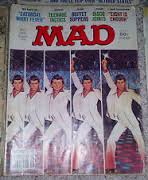
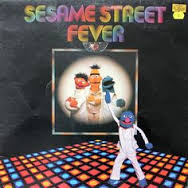
I also liked MAD magazine.  So when I first saw the issue parodying John Travolta and Saturday Night Fever, I was introduced to a new type of dancer: the dancing fool.   Alfred E. Newman as John Travolta.   This parody of a serious dance film also caught on at Sesame Street.

images-7

Although this blipped on the screen of my youth, the shock didn’t settle in until I was in Junior High.  When I first heard Frank Zappa’s “Dancing Fool,” it struck me how powerful a parody of serious disco could be.

This song altered how I looked at music and dance.   I moved my body differently.  And this made me rethink the Disco Genre that I so loved as a child.  I wanted to alter it and I changed my moves to something more “funky.”   One of the things I  noticed, in dancing in a “funky” and comical way, was that I was happier and my friends around me were happier when I danced in a comic fashion.   I felt some kind of liberation form main-stream culture in this kind of musical parody.

In university, I had a group of friends that loved to play with movement and we would have dance parties.  Many of my friends were from NYC and they introduced me to a new movement that was brewing. They showed me a new way of parodying disco culture that  had a Jewish and urban flavor.   Out of this urban cultural movement emerged projects like Heeb Magazine, Jewcy, and Reboot.  It produced books like Bar-Mitzvah Disco, Cool Jew, and projects like MODIYA at NYU (which looked to chronicle it).  These magazines, books, and websites were looking for a new way of making Jewishness “cool” and ironic.

The “unlikely hero” of this endeavor is the dancing fool.

This, for me, had a lot of resonance because the dancing fool is not simply a figure that is novel to this new movement; it is also found in the secular culture and even in Hasidic culture.  There is something deeply spiritual and deeply secular about dancing like a fool – yet, in such a way as to open up new ways of moving.

We see this at work in Woody Allen’s Zelig where a schlemiel named Zelig spurs a new movement based on his ability to change at the drop of a dime.  The song which expresses this: “The Chamelon.”

I want to end this blog entry with a clip from Betty Boop entitled “Betty Boop and the Dancing Fool.”  This, I think, is one of the main sources that Allen draws on.  It epitomizes a time of great change in America in the early 20th century, and it brings out how some of this frenetic and revolutionary energy was wrapped up with a new medium: animation and film.   There was an animism at work that had something comical, so to speak, built in to it.  Perhaps what made it so comical was the fact that movement – which has no norm or else breaks with the norm – is comical.  And this kind of energy moves like a foolish electric current that plays with and transforms different cultural trends.

Through this kind of animation a new kind of dance and a new kind of dancer emerged.   And although much of this had to do with a medium, we cannot ignore the fact that that medium was created and advanced by many Jews.  In this medium, many things can be parodied, but what remains throughout is movement, animation. This came to the fore for me when I met my first dancing fool through MAD magazine.  He had the body of John Travolta but the face of Alfred E. Newman. The comic face displaces the serious body yet, in the end, what remains?

…the dancing fool..

To be continued….

What Happens When a Schlemiel Goes to War? On the Comic Battles Between Hanukkah, Christmas, and Thanksgiving

DownloadedFile-4

What happens when a Schlemiel goes to war?  Not much.  To be sure, there is a large tradition within Jewish humor about the schlemiel-going-to-war.  In a blog entitled “Ruth Wisse’s Political Schlemiel,” I cited and explained two such jokes.  Ruth Wisse, in fact, begins her opus, The Schlemiel as Modern Hero, with a reflection on the “political schlemiel.”   The reason why she starts with this humor has to do with what she thinks is most important regarding this character; namely, the fact that through these jokes about the schlemiel at war we can see that the schlemiel’s purpose was to “challenge the political and philosophical status quo.”  However, Wisse qualifies this by noting that this challenge is ultimately more cultural than political: by not knowing how to fight or why one should fight, the schlemiel is showing us cultural dissonance.  Wisse’s qualification is telling since it indicates that the nature of this challenge, in her mind, may appear political but is actually the result of a cultural difference between Eastern European Jewish culture and Western culture, which celebrates war and masculinity.   In other words, the schlemiel joke is involved in what seems to be a cultural kind of battle.  The cultural challenge, however, has its benefits: it gives Jews a sense of dignity and helps them to win an “ironic victory.”

This is an interesting claim.  And how we read it makes all the difference.  Lawrence Epstein, for instance, sees – in his book The Haunted Smile – Jewish humor as a way of getting accepted into American culture while, at the same time, giving it a backhand.  This, for him, is a cultural kind of revolution which uses comedy as a weapon.  But, in the end, the success of the battle is measured by the fact that Jewish comedy became a major basis for Jews – in his view – being accepted into Jewish culture.   Building on this, I’d say that such comedy goes from challenging the status quo to becoming the status quo.

That said, the theme of Jews at war or as militant is still – it seems – at variance with the cultural norm in America.  And in films where Jews are in battle, Jews are often portrayed as schlemiels.  Although these characters may appear more masculine, as in Adam Sandler’s You Don’t Mess With the Zohan (2008), they are still drawn to peace, their mothers, and the effeminate.  They are not warriors in the Roman, Greek, German, or American (etc) sense.

The main character (Zohan) is an uber-masculine-Israeli who ultimately wants to go to NYC to cut hair.  But he is drawn in to the ultimate mission, which is to battle with the ultimate Palestinian terrorist named “Phantom” – played by John Turturro.

The Zohan engages in a few comic-battles with Phantom.  But, ultimately, he leaves it all for something that most men would never do: cutting hair.  And, while in America, he pursues a peaceful path toward reconciliation with the Palestinians (which is encouraged by his Palestinian-American girlfriend).  His masculinity is curbed as he goes along on his journey and so is his militancy which, Sandler suggests, emerges out of being an Israeli.

In The Hebrew Hammer (2003), we also see this masculine-schlemiel.   In this film, the battle between Hanukkah and Christmas is the theme. And the veneer of masculinity is provided by the Blaxploitation genre which Jonathan Kesselman, the writer and director, exploits to the hilt.   But what happens in the process, as with what happens in the Zohan, is that the battle itself is shown to be ridiculous.

We see this on both sides of the divide. Santa is killed by his son, Damian Claus, played by the comedian Andy Dick.  After the murder of Santa Claus, Damian Claus, looks to eliminate his Jewish competition.  Throughout the film, we see that beneath all of their masculine toughness is a man-child, a schlemiel.   We see this especially with the Hebrew Hammer. He loves his mother and is a good Jewish boy who also likes to daydream.  In the end of the battle (and echoing the actual story of Hanukkah), Hanukkah lives on and the Jews survive possible extinction.  But the task of the battle waged in the the Zohan and the Hebrew Hammer is the same: to comically challenge the notion of war itself.

And just yesterday, I noticed a video on Thanksgiving versus Hanukkah.  And this is apropos of the fact that this year Thanksgiving and Hanukkah fell on the same day (which rarely happens).

In addition to using the battle theme, the genre used in this short was “horror.”  The battle between Jews and Americans in this clip brings out both traditions and, ultimately, does no harm. For a brief moment, however, the question is posed as to the meaning of these traditions. But this is harmless.  In the end, the comic battle is the take away and the premise of sharing a house for the eight days of Hanukkah is the Jewish-American experiment.  And guess what: we all win because we can all drive each other crazy.

This is something we see in today’s animation of “Larry David’s Thanksgiving” with his Jewish family in NYC.  In the end, however, the war is a farce.  This lesson, it seems, has roots in the schlemiel comedy I outlined at the outset of the blog.  Perhaps it would be best if we all, like the original schlemiels-at-war, just played at being soldiers rather than being soldiers.   And perhaps that is what many of the above mentioned film-makers are saying. However, there is a difference: when the first schlemiel jokes about war were written they expressed an opinion from the margins of different military cultures; today, these types of jokes seem to have become the norm.

On this note, I’ll end this blog entry with a parody of Star Wars by Mel Brooks called Spaceballs (1987).  It brings this comedy of war to a universal scale and it brings it, of course, to American audiences. But this battle is no longer between Jews-eager-to-be-accepted and skeptical Americans, but…an American (Star-Wars-Like) battle.


Regarding My Blog Entry on the Rogen/Franco Parody

DownloadedFile-2

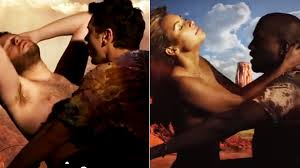
I’m happy to see that yesterday’s blog post on the Rogen/Franco Parody of Kanye West’s “Bound Two” video has prompted some response.   What I’d like to do in this blog entry is address the questions and concerns of some readers regarding the post.

First of all, in my blog entry I acknowledged that this video was a shot-for-shot parody. That’s obvious.  What I wanted to do was to bring in the extra-added element of the fact that Rogen often plays schlemiels (I have written several blogs on this – see here for more); and, given this fact, I wondered how or if this parody could be fit within the context of his other schlemiel-roles.  Is he still playing a schlemiel?  And what kind of schlemiel?

Next, I never said James Franco was not Jewish in my blog entry.   He is.  But I didn’t discuss his Jewishness because I was focusing mainly on Seth Rogen who, as I noted in the blog entry, plays the greater schlemiel.  Indeed, I do see both of them as schlemiels, but Rogen more so than Franco because Rogen embodies passivity (like many a schlemiel).  To be sure, both are a schlemiel-team which is a lot like the husband/wife schlemiel couple that has a precedent in Yiddish Literature.  Indeed, I suggested this parallel in mentioning Mendele Mocher Sforim’s The Travels and Adventures of Benjamin the IIIrd.    But perhaps I should be more explicit in saying that in that story, as in this video, both characters are schlemiels and both are Jewish (although, in this video, the Jewishness is obviously not central; I’ll return to this below).  Likewise, in Benjamin the IIIrd, one character, named Senderl, is more “feminine” than the other.  To be sure, he is called, in relation to the other schlemiel, Benjamin, a “housewife.”   Senderl is a feminine man-child.  We see this, clearly, at the first part of the Yiddish novel.  Speaking of Senderl, as a replacement for his wife, the narrator notes:

He also had to peel the potatoes and make the noodles, clean and stuff the firsh, carry the firewood to the stove, just like any housewife – and the folks had in fact nicknamed him die Yiddine, “Senderl the Housewife.”  And it was this Senderl the Housewife whom our Benjamin had chosen as confidant.  Why Senderl, of all people, you ask?  Because Benjamin, for some reason or other, had always felt drawn toward him….It’s quite possible, too, that Benjamin took into consideration Senderl’s lack of resistance; Senderl would be bound to agree to his plan and submit to all his wishes. (39)

This passage shows quite clearly that a schlemiel was and can be portrayed as a “woman” of sorts.  It also shows that, in relation to the other schlemiel, the more feminine schlemiel has a “lack of resistance” and is “bound to agree.”  This passivity is played on in Mendel Mocher Sforim’s book.  But, as I noted in yesterday’s blog entry, it doesn’t predominate at the end. The schlemiel is not entirely passive because the schlemiel (here Senderl) or the narrator (on the schlemiel’s behalf) has witty words to save him from total passivity.

Given this situation, I argued that Rogen’s passivity seems to overshadow that of his Yiddish ancestor.  Some people objected to this by saying that this is simply a parody and nothing more.  In addition, they noted that it is not Jewish.

In response, I’d like to point out the following:  1) we are dealing with what Daniel Itzkovitz would call “new schlemiels” and these schlemiels are more or less “empty shells” of the old schlemiel; instead of challenging the “political and philosophical” status quo – which is what the traditional schlemiel, for Wisse and Itzkovitz, did – they are the status quo; 2) how can one exclude the context of Rogen’s entire career (which is entrenched in playing the schlemiel) as if it weren’t relevant (that’s like excluding the context of a writers work when reading one of his works, and that’s inconsistent); and 3) why can’t parody draw on the schlemiel?  In fact don’t we see parodies at work throughout schlemiel fiction, film, and stand-up?  Take Woody Allen’s Bananas (1971) for instance.

Now, regarding these points and rhetorical questions, I’d like to suggest that we are dealing with a “new schlemiel” which – whether Rogen intended this or not – differs from the old schlemiel in Benjamin IIIrd (and a whole tradition of effeminate schlemiels that followed).  Although this schlemiel is an “empty shell” of sorts, it does show a shift, at least in this moment, toward nearly total passivity.  On this note, I’d like to make a suggestion: I’ll grant that Rogen is not simply parodying the video, but if we were to take a closer look, we could see that he is giving a critique of sorts of Kardashian’s passivity in the video. Though she winks and gives sexy looks to Kanye, she is ultimately being ridden.  Perhaps viewers will overlook that, but that will be to the chagrin of many feminists who, for decades, have been making the portrayal of women as passive subjects an issue.

If manliness is no longer an issue in our society – and being a man-child or an effeminate male is accepted – then this video is harmless. If it’s not an issue, than Rogen’s presenting a challenge.

From what I have seen and heard, people just want to read this as a parody of a video. And no one has pointed out this possible gender challenge that has some basis in a Yiddish tradition that Rogen and Franco, most likely, have no knowledge of.  That said, I’m simply noting how their approach to comedy has deeper resonances in the Yiddish and Jewish-American tradition of the schlemiel which often trades with the effeminate male whose dreams (and this video is surreal) don’t mix with reality.

We see something similar in these videos: Kim and Kanye, on the one hand, and Franco and Rogen, on the other, are both on a journey through open spaces and their dreams (or rather, fantasies)  don’t fit with reality.  We see both traits, quite clearly, in Mendel Mocher Sforim’s The Travels and Adventures of Benjamin the Third but in a wholly other, Jewish context.  In America, this kind of narrative, or so it seems, has been generalized and can be had by just about anyone.

The question for me, however, is the same with regards to this schlemiel and that question is: when it comes to the schlemiel, when does passivity become total abjection?  When, in other words, does the schlemiel lose its “freedom” and “dignity?”  Does Rogen mock that freedom or is he just doing parody?  Are his sexy looks sufficient to give the character some agency?