Kafka’s Commandment – Take 1

1408020178

From 1917 until June 1919, Kafka stopped writing entries in his diaries and decided, instead, to write eight notebooks (or what Max Brod, Kafka’s best friend, called the “Blue Octavio Notebooks”).  In these notebooks, Kafka describes and performs his relationship to commandments and being commanded.   The question for Kafka concerns who is giving the commandment: me or the other?

The fourth of Kafka’s Eight Notebooks immediately begins with this pressing question:

By imposing too great a responsibility, or rather, all responsibility, on yourself, you crush yourself.   The first worship of idols was certainly fear (angst) of the things of the world, but, connected with this, fear (angst) of the necessity of things.  So tremendous did the responsibility appear that people did not even dare to impose it upon one single extra entity, for even the mediation of one being would not have sufficiently lightened human responsibility, and that is why each thing was given responsibility for itself, more indeed, these things were given a degree of responsibility for man. 

Who is the “you” Kafka is speaking to?  Is it himself?  It is as if Kafka is talking to his soul, educating it.  He tells his soul of how the fear of things, terror of the world, leads to idol worship.  And Kafka acknowledges that in apposition to this is another kind of terror: the terror of responsibility!

As Kafka notes, it is “so tremendous” that they “did not even dare to impose it upon one single entity.”  But why?  Kafka tells us because “even the mediation of one being would not have sufficiently lightened human responsibility.”  In other words, the knowledge that nothing can take away this “tremendous” responsibility is equavalent to knowing that one cannot get rid of it.  Howeover, Kafka takes an interesting turn by noting that man is not alone in his responsibility.  In fact, everything “was given responsibility for itself.”

But, more than being alone, Kafka believes his soul should know that these things are not simply responsible for themselves: “they were given a degree of responsibility for man.”

Let’s recap the movement in this piece: first, he acknowledges the terror of responsibility; then he passes into realizing that everything is responsible; and then he comes to the realization that “these things were given responsibility for man.”  In other words, the final realization is that man is infinitely responsible and that all things “are responsible for man.”  Man may be terrified in his responsibility, but he is not alone – and he is respected.

This sounds like a terrifying and a beautiful lesson about responsibility.  But that’s not the end of it.  To be sure, in Kafka’s final movement of his first fragment of the Fourth Notebook, he names this “world” of responsibility naïve yet the “most complicated” of all worlds:

Man could not do enough for his own satisfaction in the creation of counterweights; the naïve world was the most complicated that ever existed; its naivite worked out, in life, exclusively in the brutal logical consequence.

To be sure, this complicated yet naïve world sounds like the world of the schlemiel. In I.B. Singer’s “Gimpel the Fool” on in Shalom Aleichem’s Motl: The Cantors Son, for instance,  Gimpel and Motl are naïve and trustworthy.  Their responsibility to others is illustrated by how much they trust others and all things.   But it is complicated by the fact that they are being lied to or the fact that everyone suffers while they, caught up in goodness, can’t notice.  For the schlemiel, its all good; for us, we can see its not so easy.

Kafka hits on this theme. But what is most interesting is that, from his perspective, the schlemiel must also grappled with responsibility. To be sure, this is what he illustrates.  He grapples with the question of who gives him responsibility and, after this, he grapples with what he calls “commandments.”

Following the first entry, Kafka writes:

If all responsibility is imposed on you, then you may want to exploit the moment and want to be overwhelmed by responsibility; yet if you try, you will notice that nothing was imposed on you, but that you are yourself this responsibility.

This is a settling thought for Kafka.  It is heroic.  And, to be sure, he ends the entry with an image of a hero who runs “before a cart” because he is harkening after the responsibility that he is.

However, his heroism doesn’t last long.  A few entries after this first entry, Kafka, on February 7th, has a fight with himself (or rather a fight with his soul) over the “inner commandment”:

Why do you compare the inner commandment to a dream? Does it seem senseless as in a dream, incoherent, inevitable, making you happy or frightening you equally without cause, not wholly communicable, but demanding to be communicated?

What is most fascinating in this questioning is the fact that, through these questions, Kafka is describing the “inner commandment.”  The most important features being that it is “not wholly communicable, but demanding to be communicated.”

The “inner commandment” wants to become a tradition; and, as Walter Benjamin notes, tradition is all about “transmission.”  But, most importantly, the commandment is like a dream.  In making such a comparison, Kafka is making a schlemiel analogy.  If the commandment is like a dream, then the one who is commanded is a dreamer.

Therefore, the one who must communicate the “inner commandment” (which is not wholly communicable) is a schlemiel.  The one who lives in accordance with tradition is a dreamer.

Kafka, however, struggles with the obeisant schlemiel dreamer:

All that is senseless; for only if I do not obey it can I maintain myself here; incoherent, for I don’t know whose command it is and what he is aiming at; inevitable, for it finds me unprepared, descending upon me as surprisingly as dreams descend upon the sleeper, who, after all, since he lay down to sleep, must have been prepared for dream.

As you can see, Kafka contemplates not keeping the commandment but then realizes that its too late: it has surprised him and he has been overtaken by a dream.

I’ll end on this note.  But I will return to it in my next blog.  To be sure, Kafka’s struggle with the “inner commandment” is a kind of kvetch.  He must obey it, but he thinks its impossible to obey.  He does so anyway.

As a schlemiel, Kafka must struggle with his dream-slash-commandment.

To be continued….

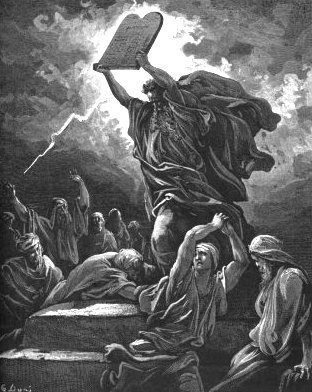
Note: I decided to write on this topic today because it is Shavuot: the Jewish festival which commemorates God’s “giving of the Torah to the Jewish people on Mount Sinai.”   

And, as the Rabbis teach, the Torah, the teaching is the commandments.  It is on this day that the Talmud says that the Jews were given the responsibility of taking on the Torah and its commandments.  And what better time to discuss the Kafka’s notion of the schlemiel and his “inner (dream) commandment” than today.  The Jewish people, like Kafka, were surprised by the commandments.  The surprise goes hand in hand with the commandment…And for Kafka the commandment surprises him and overcomes him as a dream overcomes a sleeper…. 

A Response to Zachary Braiterman’s “Messianism, History, & Schlemiel Aesthetics (Kenneth Seeskin)”

DownloadedFile-1

I look forward to reading Zachary Braiterman’s posts every week on his blog Jewish Philosophy Place and I admire and respect the work he has published on Jewish Philosophy, aesthetics, and theodicy.  I have learned a lot from his work.

I was especially interested in the blog entry he posted entitled “Messianism, History, & Schlemiel Aesthetics” since his entry bears mention of the work I have been doing on the schlemiel.  With respect to this blog entry, Braiterman is interested in the work I have written on the schlemiel and the Messianic Idea.  In this entry, he has drawn on it to offer an insightful critique of Kenneth Seeskin’s recent book Jewish Messianic Thoughts in an Age of Despair.

What I find most interesting about Braiterman’s reading is his approach to the Messianic Idea as a schlemiel aesthetic that really has nothing to do with the tasks of rational Jewish philosophy.   This is an interesting wedge since it challenges the use of the Messianic idea in Jewish philosophy (or in contemporary Continental philosophy) by such thinkers as Walter Benjamin, Franz Rosenzweig, Emmanuel Levinas, Jacques Derrida, Ernst Bloch, and Giorgio Agamben.

To be sure, Braiterman and Seeskin are both drawn to a Maimonidean approach to Jewish philosophy.  And this approach is suspicious of the Messianic Idea and prophetic flights of the imagination.  The Guide to the Perplexed, parts of the Mishna Torah, and the “Letter to Yemen” clearly demonstrate that Maimonides was very careful to avoid the dangers that would come by taking the Apocalyptic aspects of the Messianic idea seriously.

What Braiterman wonders about is why Seeskin would still take to the Messianic idea since, for Braiterman, it seems to be derived more from the imagination and the Midrash than from reason.  As Braiterman notes: “Messianism is rooted in the imaginary of biblical, midrashic, and liturgical source material, whereas the introduction of Kantian conceptual-moral frames struck me as off point.”

Braiterman argues that Seeskin misreads the “wilderness generation after the exodus from Egypt” and their “crying and rebellion in the desert for water.”  For Seeskin (and one could imagine, for Herman Cohen – I will return to this), they are giving up hope and are rebelling against “the belief in God and the Messianic idea.”    On this note, Braiterman sides with Emil Fackenheim who, he argues, would see their crying and despair as providing them with a “critical insight into history and the human predicament.”

In the second part of this blog entry, Braiterman addresses the question of why Seeskin would even try to reconcile Kantian ethics with the Messianic idea:

Its not clear why one might need this messiah business if all messianism constitutes is the notion that redemption depends upon human will and act, constitutional democracy, and perpetual peace.  Why do we need such an inflationary and theological word for such a flat and deflationary thing?

This is a very good question.  It’s the same question one could pose to the Jewish-German Philosopher Hermann Cohen.  After all, Cohen insisted that the Messianic Idea was a specifically Jewish contribution.  He associates it with hope.  In contrast to the Greeks, who despised hope, Cohen tells us that the Jewish tradition introduced the Messianic idea of hope:

To the earliest Greeks, hope meant no more than idle speculation.  And it is only after the Persian wars that this emotion is looked on as more than the opposite of fear, or as one of Pandora’s evils…..Nowhere in paganism does the concept of hope suggest a general enhancement of all human existence.  The widening-out into the non-personal, ethical realm, this spiritualization of a basically materialistic-personalistic emotion is the effect and indeed one of the surest marks of the idea of God’s unity or –what amounts to the same thing – of His pure spirituality.

Seeskin inherits the legacy of hope that Cohen espouses in such passages as, on the one hand, uniquely Jewish, and, on the other hand, consistent with Kantian ideas.   Nonetheless, Cohen, like Seeskin and Maimonides, has a problem which Braiterman is acutely aware: the aesthetic aspect of the Messianic idea.

As Braiterman notes “when all is said and done, the messianic idea is “just” an image, and a philosophically foolish one at that. It’s the image that rivets the eye in the prophetic literature, especially as it appears liturgically in the closed off space of the synagogue, on a Saturday night in a candle-lit Havdalah ceremony, or packed tight at the end of the Passover seder, at which point it becomes a figure sung by drunk people.”

The last words of this description of the Messianic aesthetic remind me of Walter Benjamin’s call to “win over the forces of intoxication for revolution.”  Indeed, for Braiterman, the aesthetic qualities of the messianic idea overshadow the philosophical, ethical, or political dimensions of the idea.  They are intoxicating; just like a fascinating object.  Braiterman notes the Messianic idea is “almost like a photograph, you can pick it up and consider it, and use it to this effect and to that.”

Braiterman notes that Seeskin clearly knows that the Messianic idea has “no philosophical use value, at least not in terms of determinate propositional truth contents.”  So, why, he wonders, would Seeskin even try to use it for philosophical purposes?

Musing on this, Braiterman evokes the schlemiel and my schlemiel theory blog (and book) project:

Maybe the messianic idea represents the schlemiel figure par excellence in the history of Jewish thought…How else to explain Seeskin’s book, a serious book about a serious topic written by a serious man ends with a joke.

The point of the joke, says Braiterman, is to show that, in the end, we will all realize that when “all enchantment has been removed from the world…and there is quick judgment, and arrogance are now rare,” we will no longer be enchanted by the Messianic idea.  At that point, anyone who wants to be the messiah can be.

Nonetheless, for Seeskin, it is still necessary to cast hope in the Messianic.

Braiterman avers: “Who gets to be Messiah? Any schlemiel who wants it.  That’s the punchline.”

Following this, Braiterman says that he would resist Seeskin’s claim that the “rational religion” is messianic and “reflects moral teleology.”  Moreover, Braiterman reiterates that he doesn’t accept the notion that our age is an “age of despair.”  Instead of looking toward the future, what is to come, to hope, Braiterman takes the side of the present.  In doing so, it seems that Braiterman is parting with Herman Cohen and Maimonides (who does, in fact, purport a restorative and political reading of the Messianic idea at the end of the Mishna Torah).

Braiterman finishes his piece with a basic rejection of the messianic idea as a schlemiel aesthetic: “Because maybe with this much hindsight in the history of an idea, maybe it’s easier to understand that messianism is an aesthetic, and maybe, after all is said and done, a schlemiel aesthetic at that.”

In many ways Braiterman is correct; the messianic is a schlemiel aesthetic.  To be sure, what makes it so is the fact that the schlemiel is a messianic character who is not oriented toward the present.  Rather, the schlemiel is a character which is oriented toward the future. It mixes dreams and reality and, in its simplicity, it draws its life on our hope.  Sometimes this can have negative consequences, as I have shown in blogs on the schlemiel, the Apocalyptic, and Messianic Activism.  Nonetheless, the best schlemiels, do not simply mix dreams and reality; as Ruth Wisse would say, they juxtapose hope and skepticism.

To be sure, I would argue that the Messianic idea is brought down to reality by way of Braiterman’s skepticism.  Even though he wishes to be rid of an aesthetic idea – which has nothing to do with Jewish philosophy and the concern with the present – he shows how hard it is to just let it go.   In other words, the Messianic idea, like the schlemiel, is, as Braiterman says, “infectious.”  We can’t let go of it.  And this, for Braiterman, is the irony.

Strangely enough, Hermann Cohen argues that irony has nothing to do with hope.  Greek “tragedy is predicated on fear and compassion, its comedy on the very opposite of hope, namely irony.”

Cohen finds nothing ironic about the Messianic idea, but we do.  And this irony goes hand-in-hand with the schlemiel.  The schlemiel discloses the irony of the Messianic idea by way of the juxtaposition of hope and skepticism.   In other words, a rationalist like Cohen would be befuddled by the Schlemiel.  To be sure, this character is meant to disclose a historical tension Jews have with the present and the future.

Regarding this, I wonder: if we were to reject the Messianic idea, would we also have to reject the schlemiel?

At the end of her opus, The Schlemiel as Modern Hero, Ruth Wisse says something very insightful regarding this issue.  For Wisse, in a world that is wholly skeptical or wholly optimistic, the schlemiel cannot exist.  Pertaining to Zachary Breiterman’s review of Seeskin’s book, I would say the same thing.  In a world that is wholly skeptical or optimistic the Messianic idea cannot exist.  In many ways, it seems that the schlemiel and the Messianic idea go hand-in-hand.

However, what I find most interesting about Wisse’s claim about the schlemiel is that, for her, after the founding of Israel, it no longer becomes a character of interest.  She shares this claim with a few other Zionist thinkers.   However, this is another issue which I cannot address here .

Needless to say, I think Wisse and Braiterman would like to exchange the aesthetic for the political and the future for the present.   Nonetheless, I think Wisse’s previous claim remains and that simply having a state does not mean that one is wholly optimistic or wholly skeptical.  To be sure, we still waver between hope and skepticism.  And as long as our skepticism or optimism is tainted, there will be schlemiels and Messianic ideas.

Perhaps, on the other hand, what hooks us up to the Messianic idea or the schlemiel is not hope or skepticism so much as time.  As Levinas or Derrida may argue, as long as there is a future-to-come, there will always be a Messianic idea and, as i would argue, there will always be a schlemiel.

Or perhaps, as Braiterman suggests, as long as we love aesthetics we will be intrigued by Messianic ideas and schlemiels of all stripes and colors.

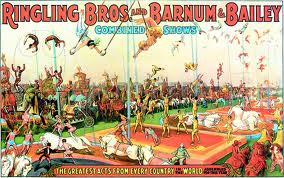
Perhaps, like Walter Benjamin and Ernst Bloch, we love utopia and the messianic idea like we love the circus….

But regardless of how we view the Messianic idea we can all agree that the greatest danger the Messianic idea poses is with Messianic Schlemiels (or what I call Messianic activists) who mix their utopian-slash-Apocalyptic dreams with reality.  Perhaps the greatest of all Messianic Schlemiels was named Shabbatai Zevi, the false messiah.  Maimonides, Seeskin, and Braiterman would all agree that what happened with Shabbatai Zevi shows us the greatest danger of the Messianic Idea.  They would all, rightly, note that when a dream or an aesthetic becomes immanent in a utopian political gesture, we have crossed the line; and, as Gershom Scholem suggested with respect to Shabbatai Zevi, this kind of foolishness verges on nihilism and not perpetual peace.

“It’s Almost Incomprehensible!” The Circus and Kafka’s Natural Theater

images-2

As I noted in the last blog entry, Ernst Bloch believed that “the circus is the only honest, down-to-earth honest performance.  A wall cannot be built anywhere in front of spectators who sit in a circle and surround performers.  Nevertheless, there is an estrangement” (179).

The confluences between Bloch and Walter Benjamin, in this claim and in these descriptions, are fascinating.  To be sure, Benjamin was also interested in the circus.  He also thought that although the circus was honest and utopian, it was fraught with estrangement.

We see the circus, utopia, and estrangement breached in Benjamin’s Kafka essay; namely, in the final section of the essay (which was published posthumously) entitled “Sancho Panza.”  In this section, Benjamin addresses the circus by way of the “Natural Theater of Oklahoma” that we see in Kafka’s novel Amerika.

Before addressing the Natural Theater, Benjamin cites a few lines from a Kafka short story about the “strange” ways of Kafka’s students and scribes.  They are the carriers and transmitters of tradition to the next generation and he is astonished by them:

‘To him, hammering is real hammering and at the same time nothing, which would have made the hammering even bolder, more determined, more real, and, if you like, more insane.’

Benjamin comments on this line that:

This is the resolute, fanatical mien which students have when they study; it is the strangest mien imaginable. The scribes, the students, are out of breath; they fairly race along.  (137)

Benjamin describes the scribes and students “as out of breath.”  They “race along” to receive and deliver the message of the tradition.  Benjamin goes to Kafka for the details.  And what we learn, from Kafka’s descriptions is that the narrator is astonished by the people who receive tradition.  Instead of seeing someone like Moses, Kafka’s narrator sees a bunch of schlemiels jumping up and down to get the message of tradition.  It is “strange…almost incomprehensible!”:

Often the official dictates in such a low voice that the scribe cannot even hear it sitting down; then he has to jump up, catch the diction, quickly sit down again and write it down, then jump up again and so forth.  How strange that is!  It is almost incomprehensible! 

Instead of explaining the meaning of tradition and this strangeness, Benjamin turns to the  Natural Theater of Oklahoma in Kafka’s Amerika:

It may be easier to understand this if one thinks of the actors in the Nature Theater.  Actors have to catch their cues in a flash, and they resemble those assiduous people in other ways as well.  Truly, for them, “hammering is real hammering and at the same time nothing” – provided that it is a part of their role.  They study the role, and only a bad actor would forget a word or movement. For the members of the Oklahoma troupe, however, the role is their earlier life; hence the “nature” in this Nature Theater. (137)

The nature of the nature theater is the earlier life of these characters.  The role they study is their tradition.  In other words, their earlier life is their tradition.  They inherit their childhood and learn it, play it.   In Bloch’s language, we could say that this is the “honest” element of the circus.  They play their earlier selves and they do so openly.  There is no curtain that stands between them and the audience.

Of them, Benjamin writes:

Its actors have been redeemed.

However, someone has not been redeemed and that is the student:

…whom Karl watches silently on this balcony as he reads his book, “turning the pages, occasionally looking something up in another book which he always snatched up quick as a flash, and frequently making notes in a notebook, which he always did with his face surprisingly close to the paper.”

The careful reader will understand what Benjamin is hinting at; namely, the fact that Karl is the student.  He is taking notes and “snatches” things up “in a flash.”  He is the unredeemed schlemiel who transmits the tradition.  Echoing the title of the section, he is Sancho Panza.

And perhaps this is what is most astonishing.  The fact that the schlemiel must spend his or her days recording and transmitting a tradition he or she doesn’t understand but only receives in flashes.  When it comes, he or she must “jump” up and snatch it as it flashes.

This is something the schlemiel must do as the schlemiel is not redeemed but these actors are.  By way of the Natural Theater of Oklahoma, Benjamin is saying something different than what Ernst Bloch says about the circus.  Although Bloch says there is an honesty and an estrangement to the circus that is unparalleled, he doesn’t explain why.  Benjamin does.

The honesty of Natural Theater, of the circus, is its nature.  It is the fact that it studies its earlier life and performs it.  This involvement is redemptive for the actors. However, those who carry on the tradition do not live this life.  It is they who are estranged.

Franz Kafka’s Karl Rossmann, who the Kafka scholar Heinz Politzer calls “infantile,” is a student; as is Sancho Panza and Walter Benjamin.  They are all students of tradition.  But in being students who transmit the tradition, they are not redeemed.  Not yet.

Rather, they are comic characters whose task is unnatural and yet necessary. Their leaping around after flashes and recording them, for Kafka, may be astonishing and strange but it is “almost incomprehensible.”

In other words, it is not completely incomprehensible.  It is in these small flashes that we know that a rationalist like Sancho Panza knew that the keepers of tradition and heritage were on to something.

Bloch knew this as well.  I would like to suggest that every comedian, writer, or performer of schlemiel comedy also understands this: without tradition, there would be no comedy and there would certainly not be a schlemiel.  Perhaps this is the “only honest down-to-earth honest performance” there is?

One doesn’t have to be in the circus to be a part of the circus.  All one has to do is watch it and, for those who want to carry on its tradition, all they have to do is leap up at the “flashes,” sit down, record them, and do that again….and again.

Its “almost incomprehensible!”

Ernst Bloch’s Musings on The Circus and Utopia – Take 1

DownloadedFile

History is the subject of a structure whose site is not homogenous time, empty time, but filled with presence of the now (Jetztzeit).  Thus, to Robespierre ancient Rome was a past charged with the time of the now which he blasted out of the continuum of history.  The French Revolution viewed itself as Rome reincarnate….Fashion has a flaire for the topical, no matter where it stirs in the thickets of long ago; it’s a tiger’s leap into the past (Walter Benjamin, Thesis XIV of the “Theses on the Philosophy of History”)

Throughout the ages, many great artists, poets, and thinkers have shown great love for the circus.  They feel that there is something about the circus.  It can tell us about who we really are, what we believe in, or what we hope for.  Perhaps the circus, as Walter Benjamin might say about “the presence of the now” (Jetztzeit), is our common origin.  Perhaps the circus is the revolution.  Perhaps it is the place where, as Benjamin says of fashion, there is a “tigers leap into the past.”

The circus, like the revolution, is a space where comedy, surprise, and excitement are center stage.  It is a social, an aesthetic, and a political space.  On the one hand, the Roman satirist Juvenal used the words “Panem et Circenses” (Bread and Circuses) to criticize those in power noting that the circus distracted Rome’s political leaders from history.  And it was used as a tool for gaining power.  On the other hand, the circus has been envisioned as a space of inversion and resistance to the dominant culture.  In the circus political power appears as ridiculous: it’s the only place where you will find Nobility and Clergy dressed up as or riding pigs.  Mikhail Bakhtin was one of the first theorists to explore this aspect of the circus; and in his notion of the carnivalesque, cultural studies and postmodernism found a model that proved fruitful for at least a decade or two.   In Rome, the circus was dominated by power; but in the middleages it was not.  The circus belonged to the people.

Like Bakhtin, Ernst Bloch also found the carnival to be of great interest.  In an essay entitled “Better Castles in the Sky” (from the essay collection The Utopian Function of Art and Literature) Bloch makes a confession or admission to truth.  His admission reveals that his fascination with the circus is a fascination with what makes us utopian.  His admission discloses the circus in what I, following Bloch, would call an “anticipatory illumination.”  To be sure, I would say that the circus, for Bloch, is the ultimate anticipatory illumination of utopia: “the circus is the only honest, down-to-earth honest performance.  A wall cannot be built anywhere in front of spectators who sit in a circle and surround performers.  Nevertheless, there is an estrangement”(179).

By saying that the circus is the “only honest, down-to-earth honest performance,” Bloch is saying something quite radical.  This implies that all other artistic performances are not honest or down to earth.  It also implies that Bloch values honesty and being “down-to-earth” which are basic folk virtues. To be sure, the honesty marks a kind of innocence with what makes us utopian.  In fact, he repeats the word “honest” twice so as to underscore the importance of this fundamentally social and political virtue.  But more importantly, these values, for Bloch, find their only vehicle in the circus and in no other artistic space.  Their vehicle is comedy!

All other theatrical performances are mixed with ideology, power, and dishonesty; the circus is not.  It has the quality of honesty.  It is so honest that it is utopian.  Bloch suggests that utopian justice, in this sense, is all about a kind of honesty that can only be prefigured in the circus.

Why is this the case?  Why does the circus, for Bloch, basically articulate, unlike any other art, the utopian function?  How does it articulate the “anticipatory illumination” and what he would call “genuine heritage?”

Before Bloch makes his admissions of truth for the circus and its utopian function, he discusses the roots of the circus performance.   According to Bloch, “the sideshows at the fair” are uncanny and exciting because “they don’t originate here, nor does their magic, which is continually dusted off and revealed anew in the repeated performances of the sideshows”(178).  The magic we see at the circus “operates as if abnormal and foreign.  Yet, it is ordinary and full of swindles”(178).  To be sure, it is very canny.  It is plain, simple, and downright ordinary.  However, it is “still more substantial than the trouble that the philistine causes for the age-old joy of young and old people.”  In other words, the circus, for all its ordinariness, is more substantial than the law.

The circus is the spirit; the philistines – the ruling class – are the law.

Instead of pursuing this distinction further, Bloch takes a detour.  Bloch’s detour takes us into the life of the circus and the nature of its magic: in taking this detour, Bloch avoids talking about the origin of the circus.  All Bloch notes, before this point, is that they (those in the circus) “don’t originate here.”  Does this mean they originate elsewhere, in another world?  Where are the people of the circus from?

Bloch cuts in with quasi-historicism for an answer.  Bloch suggests, as if we know,  that a circus is a “boat like show”: “So these boat like shows set sail and are carried by the South Seas for the simple soul and the uncorrupted, complicated soul too.”  The circus, originally a boat show, is for the simpleton (the schlemiel) and the complicated soul (the skeptic).

Moreover, the ship visits all kinds of cities; the ships have no boundaries: “The tent-boats weigh anchor for a short time in the dusty cities. They are tattooed with pale green or bloodthirsty paintings in which votive pictures projecting rescue at sea disasters are mixed with those of the harem.”

At this point, Bloch slips into the mode of allegory and allusion to illustrate why the circus is the “only honest, down-to-earth honest performance.”

I’d like to closely follow his words so as to figure out what he is alluding to with a canny-slash-uncanny circus that originates on the sea but, in our day, finds itself on the ground.

Bloch creates a metonymy of sorts associating the “motor” of the boat with a sound that is “foreign, fatty, unhuman, breathless, sluggish”(178).  And from sound Bloch moves to the figure of a “dancing wax lady screwed down next to the entrance.  And she dances with sudden contortions, moves with twisted gestures of screwed down wax that turn into dance, and she throws her head back from time to time.”

The first thing that strikes me about this metonymy is that the figure moves and is nailed down; its dance embodies a dialectical tension and, for this reason, it appears comical.  It reminds me of a dancing Hula doll.

Bloch writes of this figure lovingly and situates it behind the barker of the circus, who brings her to a halt.   After noting this Bloch explains its “hidden meaning” by way of a juxtaposition of life and death:

Eventually she comes to a halt and trembles in this position right behind the barker, who fears nothing.  The type of world extolled here has the secrets of the bridal bed and also the miscarriage at one end and the secrets of the bier on the other end. (178)

This image is mythical.  Bloch passes from this image, however, to one that is full of particularities and seems to play with myth by way of plurality:

Strange human creatures and their art offer themselves to spectators in nothing but peepshows of abnormality. The sword swallower and fire eater, the man with the untearable tongue and iron skull, the snake charmer add the live aquarium.  Turks, pumpkin men, fat women, they are all there.

Once Bloch realizes he has gone way out in his description, he reels it in with some analysis, noting that “fairy tale realm reappears continually and also that of the horror story.”  This implies that the fair moves between innocence and horror.  He calls “the fair, a colorful, peasant fantasy.”  However, it is interrupted by the city (as well as by horror).

He notes the historical change from the country to the city in the movement of the fair from Europe to America:

In the large American cities it has become increasingly automated with loudspeakers and amusement centers.   However, the land of the wishes from the medieval South Seas, so to speak, has remained.  And it maintains itself out of the Middle ages, which go much further back, right to the fair of the higher order, in the kind of show of the Circenses without any curtain at all. (79)

What Bloch does over here is articulate what we saw in yesterday’s blog; namely, the “genuine heritage.”  To be sure, Bloch sees the fair as the heritage to which he, a circus lover and a lover of honesty, must turn.  His language, following upon his mention of a show of a “higher order,” a Circenses “without any curtain at all” verges on the religious and the revolutionary.

In Benjamin’s sense of the “tiger leap” backwards, Bloch sees a merging of all times in the ring of the circus.  In the “ring” of the circus the Medieval, the Roman, and the tradition of the circus on the sea come together:

For, as the miracles of the sidewshows are assembled together under one roof, in a ring, and as the managerie breaks out from here, the coliseum or the circus now originates from the South Seas. (79)

However, as with history, something is lost.  And what is it?  The hula doll I referenced above (the wax dancer):

Of course, the feature of the wax figure cabinet cannot be present here, that suspended animation, that mechanical organ, because everything in the circus is alive.  And, in contrast to the fair, which operates with concealment, with stage, showcase, and curtains, the circus is fully open.  The ring brings everything with it.

But although the hula doll is gone, something new and revolutionary, something much more revolutionary than the fair or the sea circus has arrived.  For Bloch the circus is the most revolutionary because it is “fully open.”  It is, for this reason, the most utopian space.

To be sure, following this claim that the “circus is fully open. The ring brings everything with it,” Bloch makes his greatest claim: “The circus is the only honest, down-to-earth honest performance.”

This admission of truth is his way of taking the “tigers leap” into the past.

And as Friedrich Holderlin has said (and Martin Heidegger reminds us in his famous essay on the “The Origin of the Work of Art”): “that which dwells near the origin departs.”

Or as Bloch tells us, utopia starts and will always end in the circus.


Ernst Bloch and Tradition – Take 2

images-1

What does Ernst Bloch mean by the “rectification” as opposed to the “reification” of heritage?  And how does he justify rectification?  And, most importantly (at least for this blog), how does this relate to the tradition of the schlemiel?

As I pointed out in my last blog entry, Bloch is in favor of a “cultural surplus” which emerges from the “utopian function.”  Such a cultural surplus would be “beyond any kind of ideology.”  According to Bloch, one creates such a surplus by creating culture.  But here’s the twist.  By creating culture, Bloch does not mean that we create something that is “new” in the sense of something that is completely “modern.”  To be sure, Bloch’s understanding of cultural creation is related to the utopian function, which is inseparable from tradition.

This creation includes actual artworks and cultural criticism.

But what makes his criticism or this or that artwork an act of “rectification” is the fact that they include what he calls an “anticipatory illumination.”  These illuminations, he insists, are not in the service of ideology.  Rather, they are the “useful information of justice.”  In other words, when criticism or art dig into tradition what they bring out, in their anticipatory illuminations, is “information” that can be used toward achieving justice.

It seems that the justification of this cultural work of rectification can be found in this end and no other.  However, some people may rightfully find this vague.  To be sure, they may accuse Bloch of embellishment.  Anticipating this claim, Bloch notes, in his essay “Art and Society,” that anticipatory illumination is not a rhetorical figure; rather, it is a “structured illumination”:

If this anticipatory illumination, as structured illumination, has nothing in common with embellishment – rather, if it is based more on the tendency and latency of the time and on the unknown essence (das Eigentliche) in which the world (not art) could attain its aim – that this is realism. (49)

Bloch’s turn toward realism is telling since it seems to echo the turn to realism made by Georg Lukacs.   But Bloch explains:

To be sure, though, this is certainly not naturalism.  It is that realism of tendency and latency (the realism that touches on both) that includes the latent frames of the powerful reality of Velasquez, Balzac, and Tolstoy, just as it made the widest reality of the powerful latency of Goethe’s Faust. (49)

Bloch’s words may confuse many a reader, but what one must realize is that he is not using realism in the typical sense nor is he is citing Velasquez et al as examples of realism. Rather, he is including their work and Goethe’s Faust as illustrating both aspects of “anticipatory illumination”: tendency and latency.

The meaning of these terms can help us to understand what Bloch means by “rectification.”   Taken together, what these works do is to create what Bloch calls the “hypothetical in the cultural heritage.”  They do this by “converting” the material of the tradition into art:

The continual and effective conversion of the material into the hypothetical in the cultural heritage, that is, in the utopian surplus as both heritage and anticipatory illumination, sublates the material in such a minimal way that it opens up its potential in the most vigorous manner and articulates its horizon. (50)

By becoming a hypothetical, by becoming a real possibility, the cultural heritage becomes relevant.  On the one hand it does not, in a Hegelian manner, become surpassed; on the other hand, by giving it attention, it doesn’t become some kind of ideal.  It is materialized:

Due to this process, material is not left idealistically or even surpassed.  Rather, it continues to enlighten, opens itself up more and more to us, to the coming foundation of consensus, to that which has yet to become, that which has still not been accomplished, but which has not been thwarted in existence, in existence as realm. (50)

At this moment in the text, Bloch concludes that now, in this stage of his argument, the difference between “tradition” and “producing the future is dissolved”:

Thus the difference between tradition and producing the future is dissolved; certainly the contrast is dissolved.  The revelation of truth in the cultural heritage is a territory with boundary lines stripped away in a wider territory of anticipatory illumination that is to be articulated in a responsible and concrete way. (50)

Bloch, using Marxist rhetoric, goes on to claim that the past, after entering such a productive process of anticipatory illumination, will no longer be alienated.  And he exclaims: “Now this would be real cultural heritage, with tradition of the future.”

But, more importantly, the production of such a cultural heritage, this tradition of the future, creates hope.  Without such work, things would be bleak.

The question is how do we do such a work in a “responsible and concrete” way?  Have we accomplished our goal of “rectification” if we have taken this or that element of the past and created an “anticipatory illumination?”   Perhaps the success or failure of such a project of recovery and rectification of the past is measured by the hope it produces?

In doing my work on the schlemiel, I wonder, given what Bloch has written, how it could produce an “anticipatory illumination” and a “cultural surplus.”  How could writing on the schlemiel – doing schlemiel criticism – rectify the Jewish tradition and offer hope?

These are all good questions to ask and consider since, of all the aspects of Jewish culture, the humorous aspect is the most referenced in the public sphere. The schlemiel has been chosen as a significant representative of Jewishness in the modern world.  This is testified by its saturation in Hollywood and on TV.   But is the schlemiel, using Bloch’s language, still alienated?  When we watch Larry David’s Curb Your Enthusiasm or Judd Apatow’s Knocked Up, do we have an “anticipatory revelation” or is this missing in their work?

If we watch these shows and we have no sense of what is and what can be (of tendency and latency), then these works have not “rectified” the schlemiel.  Bloch would suggest, given this scenario, that if they do not then the work of criticism should.  Given this suggestion, I will continue looking into the “tradition of the schlemiel” and the “Jewish tradition” in search of “anticipatory illumination.”  I say “continue” because I have, in many ways, already been doing this.  I have been looking for how the schlemiel relates to tradition, on the one hand, and the prophetic and the messianic on the other.  The question of whether or not the schlemiel – in his or her failures – offers hope is a constant question.   I have also wondered how the utopian hope’s of the schlemiel can lead to disaster.  Moreover, I have – and will continue to address – the latency of the schlemiel in work on the schlemiel and Walter Benjamin.

Looking back on what I have written on Walter Benjamin’s reading of Sancho Panza and Don Quixote – in his Kafka essay – I can clearly see that Benjamin was looking at the structure of tradition and heritage.  He was looking into how the legacy of the fool related to his future.  To be sure, it would make sense to say that his reading of Kafka by way of Don Quixote is an anticipatory illumination.  It has a tendency and a latency to it and, as we see in at least one of his letters to Gershom Scholem, it gave him hope.

But the question, in that letter, remains.  It is the same question that Bloch would ask of the figure of the fool.  It may give hope but can it “do humanity any good?”  (Although it may rectify tradition, will it rectify humanity?)  This is the utopian question of the schlemiel.  But it may also be the schlemiel hypothesis.

Ernst Bloch’s Reflections on Tradition – Take One

DownloadedFile

In the last blog entry, I contrasted Slavoj Zizek to Walter Benjamin with regard to the tension between tradition and the liquidation of tradition. Zizek follows one strain of Benjamin; namely, the liquidationist strain.  Zizek prefers Benjamin’s “Destructive Character” and Benjamin’s notion of “Divine Violence” to Benjamin’s interest in preserving the tension between tradition and its liquidation.

At the end of my last blog entry, I stated why I was interested in such a tension; namely, because Benjamin’s reading of Kafka and Don Quixote is based on preserving this tension.  And, as I have been arguing, this tension has everything to do with the tradition of the fool and the schlemiel.   To further understand what Benjamin sought to find in this tension, I would like to turn to an essay by Ernst Bloch entitled “Art and Society” (from The Utopian Function of Art and Literature, trans. and edited by Jack Zipes and Frank Mecklenburg).

Walter Benjamin was influenced by and influenced Ernst Bloch. They had a productive relationship.  They were interested in this tension as it pertained to the future – to utopia.

For Bloch and Benjamin all works that emerge from the tradition are mortified.   They are fragmented and are in need of future redemption.  However, these works are not the works of the “victors” of history.  Rather, they are the incompleted works of those who lost.  These are the works of failures.   And, for Bloch, they are ‘our’ heritage.

In his essay “Art and Society,” Bloch cites Benjamin to illustrate some of the “spiritual” things we should take from this heritage:

They (the spiritual things) are alive as confidence, courage, humor, cunning, and fortitude, and they have a retroactive effect as time moves along.  They call into question each victory of the ruling class time and time again. (46)

However, Bloch adds on to what Benjamin says and gives it shape. He does this by calling attention to the next generation; namely, to the heirs of tradition:

In addition, cultural heritage only becomes what it is when the heir does not die along with its benefactor, when he stands on the side of the future in the past, when he stands with what is indelible in the cultural heritage and not with the takeover of parasitical rulers (46).

Bloch calls for a “productive cultural heritage” and contrasts it to a “refined completion” of “the great work of culture.”  For Bloch, a “productive cultural heritage” operates “as the successive continuation of the implications in the contellations of the past gathered around us as non-past.”  In other words, we continue a tradition whose implications are present (non-past).

Bloch notes that, as Benjamin would say, the past gives one agency.  The past, in a sense, elects one and empowers one to act.  It “anticipates” him:

The genuine agent of cultural heritage reaches into the past, and in this very same act the past itself anticipates him, involves and needs him. (46)

Bloch calls heritage a chariot which “carries only that which has an order to be sealed.” To take this heritage on, Bloch says one must be strong.  One may be overwhelmed by it.  To be sure, the person is strong because s/he takes heritage and besides having the strength to continue it s/he invents (47).

Bloch contrasts himself to Martin Heidegger who, in his opinion, created a “pseudo-philology and a pseudo-interpretation” of Holderlin, Anaximander, Parmenides, Plato, and Kant.  According to Bloch, Heidegger’s relation to history was to “caricature” it.  In contrast, Bloch argues that “genuine heritage is and remains precise and progressive transformation, and to be sure, a transformation of that immanent material in the material of heritage intended for completion without ideology, with implication”(48).

Bloch imagined a “rectification of heritage” and not a “reification of heritage.”  He imagined a rectification that would not serve this or that ideology.  This could happen in a world with a “cultural surplus beyond any ideology.”  This, Bloch says, comes out of the “utopian function.”

The utopian function, however, is not based on envisioning, quite simply, the liquidation of history or heritage.  To be sure, Bloch like Benjamin wanted to create a “cultural surplus beyond any ideology.”  And the best way to accomplish this is to dig into cultural heritage.  Namely, the heritage that many people might find insignificant or trivial.

It is these failed elements that carry the charge and call for transformation.  The interesting thing to keep in mind is that Bloch and Benjamin didn’t randomly choose this or that aspect of tradition.  They were both interested in storytelling, fairytales, folk legends, and fools.

Their heritage was plural. For this reason, Walter Benjamin and Bloch often drew on many different folk traditions in their work.  I am especially interested in Benjamin’s reading of Kafka insofar as he starts his essay not with a meditation on Jewish folklore but on Russian folklore.  And he ends the essay with a meditation on Don Quixote and Sancho Panza.

Nonetheless, Benjamin doesn’t shy away from citing Jewish folklore as well.  To be sure, he too was trying to create a cultural surplus and believed, like Bloch, in the “rectification of heritage.”  And this is more than evident in his Kafka essay where, I would argue, the schlemiel and the heritage of the schlemiel emerges.

(Please note that I will touch on this heritage in this blog.  But I will delve more deeply into it in my book. After all, I can’t reveal all my secrets.)

Like Bloch, Benjamin wasn’t interested in liquidating tradition so much as in rectifying it.  As I have already shown, Benjamin was aware of what is at stake with tradition.  The question, however, is how we are to read the cultural surplus (vis-à-vis the fool) that Benjamin left for us and what we should do with it.

Now that Benjamin’s criticism has nearly exhausted itself in terms of the obsessive reading of his work in terms of crisis and destruction, its time to dig up what has been passed over as irrelevant (the detritus of Benjamin criticism is to be found in the tension between heritage and its liquidation; it is to be found in the greatest comic failure of all and the tradition that gave birth to it: the schlemiel).

In the next few blogs, I will sketch out more of Bloch’s project vis-à-vis tradition and utopia.  The point of this exercise is to help us to understand Benjamin’s interest in Kafka, the schlemiel, and tradition.

Apocalypse Now – When Crisis Comes, Whither Humor?

images-1

Imagine everything coming to a grinding halt.  Imagine a moment in which all would be still.  Given our ever-increasingly hurried lives, this full stop is hard for us to imagine.  But it doesn’t keep us, by any means, from trying.  To be sure, countless films and science-fiction novels imagine this moment in endless variations.  But the cessation of time is not simply the matter of fiction and fantasy.  To be sure, real life crises interrupt everything.  Surprises are also at the core of religion.  Radicals, revolutionaries, and religious devotees all know that bringing the world to a grinding halt testifies to some kind of truth that goes beyond what we habitually perceive and practice.

On the one hand, death, murder, natural disaster, and terrorism stop everything.  On the other hand, miracles and unexpected occurrences stop everything.

In the Jewish tradition, Revelation usually stops everything. To be sure, Revelation interrupts.  We see this in simple passages when God comes out of nowhere to call on Abraham or Moses.  Moreover, many commandments are constructed, specifically, to interrupt this or that form of work or common practice.  The greatest interruption of work being the weekly Sabbath where all forms of work are forbidden.  The interruption of work reaches its climax in the Jubilee year – which falls on the fiftieth year, at the end of seven seven-year cycles – when all work is forbidden.

In terms of Revelation, the Midrash tells us that the revelation on Mt. Sinai made everyone pause.   In that moment of cessation, everyone shared a moment of prophesy. The Midrash goes so far as to say that every child in the womb partook in the vision of God.  Of greater interest is the characterization of the Messianic Era, which is, on the one hand, likened to a cessation of war.  On the other hand, it is likened to a series of miracles which will fundamentally change reality.  On the one hand, there is a type of cessation that is reasonable; on the other hand we have a cessation that is not.   The Rabbis prefer the peaceful manifestations of the Messianic; however, there are also manifestations which are riddled with crisis and disaster.  These are what Gershom Scholem would call Apocalyptic or Utopian manifestations of the “Messianic Idea.”

Regarding the most unexpected interruption, the Midrash tells us that the Messiah will come in the blink of an eye (k’heref ayin).   He will come when he is least expected.

To be sure, these interruptions are so important that nearly every Jewish holiday commemorates them.   Moreover, they many Jewish holidays anticipate interruption.  But, by and large, the interruption doesn’t destroy the law, it doesn’t “fulfill” it; rather, it keeps the law in tact. And this ‘fact’ distinguishes a Jewish interruption of the world from other disruptions whose Apocalyptic manifestations are much more severe.

Drawing on a similar mystical structure of cessation, Walter Benjamin and Slovoj Zizek have imagined a messianic moment of cessation.  Benjamin called it “dialectics at a standstill” and Neuezeit (now time).   But it can also be thought of, negatively, as a state of exception or crisis.  In this state, progress ceases and power predominates.  Zizek opts for the more Apocalyptic version and demands that we do to.   And although Zizek employs humor and ridicule in his work, there is nothing funny about this at all.  To be sure, Zizek uses ridicule to prepare us for the big thing: the Apocalyptic moment of cessation which has everything to do with making a decision that is riddled with crisis and even self-destruction.

At the end of his book First as Tragedy, then as Farce Zizek meditates on this moment of cessation.  To be sure, this is his dream.  When time comes to a standstill, there will be a revelation, that is, a profane illumination.  For Zizek, the revelation, at the time of crisis, is that we do not need a leader; “we” don’t need the Other.  Rather: We are all redeemers.

Zizek uses these terms, and many others like them, to describe who we are in the aftermath of the destruction of liberal democracy and capitalism.  They are Apocalyptic. To be sure, Zizek sounds a lot like what Gershom Scholem, in his book On Kabbalah and its Symbolism, calls a nihilistic mystic.

The nihilistic mystic descends into the abyss in which the freedom of living things is born; he passes through all the embodiments and forms that come his way, committing himself to none; and not content with rejecting and abrogating all values and laws, he tramples them underfoot and desecrates them, in order to attain the elixir of life.

One can no longer just “let being be.”  Zizek, like the nihilistic mystic, wants to bring the end on.  He wants us to act and hasten its coming.  He forgoes the Talmudic dictum that one must not hasten the end.

Scholem’s words on the Apocalyptic – in his essay “Towards an Understanding of the Messianic Idea” –  can be applied to Zizek’s final words in his book:

The apocalyptists have always cherished the pessimistic view of the world. Their optimism, their hope, is not directed to what history will bring forth, but to that which will arise in its ruin, free at last and undisguised.

The one who wishes for the end will, necessarily, destroy both progress and tradition.

Both the liberal and the conservative are one and the same for the nihilistic mystic.  In On Kabbalah and Its Symbolism, Scholem says that the nihilistic mystic, in effect, destroys the language of the tradition because his mystical experience cannot use words or words from the tradition to speak.  The regular mystic, on the other hand, transforms the existing language and modifies the tradition.  In other words, language, the tradition, remain.  And with it what language transmits.  As Walter Benjamin notes, tradition is primarily about transmission and not about content.  Nonetheless, it does transmit something to the student of tradition.  With the nihilistic mystic, that is lost.  The difference between one and the other is the difference between liquidating tradition and language and preserving it.

According to John McCole in his book Walter Benjamin and the Antinomies of Tradition, Benjamin has two modes: one mode is the modality of liquidation (this errs on the side of modernity and destroys tradtion) the other mode is conservative (not in the regular sense of the word; rather, it looks to conserve memory, tradition, transmission. Both matter to Benjamin.  According to McCole, this is one of the most fruitful and unexplored aspects of his work.  To be sure, Benjamin, paradoxically, wanted nothing more than to preserve the tension between conservation and liquidation of tradition.

The most essential thing to transfer is the teaching of tradition which is on the very edge of liquidation.  And as I have argued in another blog entry, the tradition of the schlemiel keeps us on the fine line between Apocalyptic liquidation and conservation.  Zizek, however, doesn’t take up this line of thinking.  He seems to be more interested in liquidation.

Zizek, strangely enough, cites Benjamin a lot in his Apocalyptic section.  To be sure, Apocalypse is all about liquidation; namely, of the law.  The law, for Zizek (and at least one strain of Benjamin; namely his piece of “Critique of Violence,” which McCole sees as only one of two aspects, as I mentioned above), is connected to the Other.  Law, for Judaism, is inseparable from tradition.  Without law, there can be no tradition.  For Zizek, this isn’t even an issue. The Benjamin Zizek is drawn to is Benjamin-the-liquidationist.  Which we find in the “Critique of Violence” and in “The Destructive Character.”  Taking a look at these, one forgets about Benjamin’s profound interest in tradition.

I will end this blog entry with an illustration of Zizek’s tendency toward liquidation. In the spirit of a nihilistic mystic, Zizek tells us that this liquidation is based on our decision. It is a “proper political act”:

This is what a proper political act would be today: not so much to unleash a new movement so as to interrupt the present predominant movement.  An act of “divine violence” would then mean pulling the emergency cord on the train of Historical Progress.  In other words, one has to learn fully to accept that there is no big Other. (149)

Zizek, a Messianic activist of sorts, cites Benjamin’s phrase in quotes (“divine violence”).  This appeal  is reminiscent of at least one strain of Benjamin’s work.  Rewriting one of  Walter Benjamin’s “Philosophical Theses,” Zizek says that he wants to “pull the emergency cord of the train of Historical progress.”  But when one does this, one must have another notion of time to substitute for progress.   Knowing this, Zizek cites Jean-Pierre Dupuy’s claim that:

If we are to confront adequately the threat of (social or environmental) catastrophe, we need to break out of the “historical” notion of temporality: we have to introduce a new notion of time.  Dupuy calls this time the “time of a project,” of a closed circuit between the past and the future: the future is causally produced by our acts in the past, wheile the way we act is determined by our anticipation of the future and our reaction to this anticipation. (150)

The anticipation of the end is, in other words, measured by our act to bring it about.  Our act of liquidation is the time of the project.  And this helps us, says Zizek, to confront the disaster:

This, then, is how Dupuy proposes to confront the disaster: we should first perceive it as our fate, as unavoidable, and then, projecting ourselves into it, adopting its standpoint, we should retroactively insert into its past (the past of the future) counterfactual possibilities….upon which we then act today.  We have to accept that, at the level of possibilities, our future is doomed, that the catastrophe will take place, that it is our destiny – and then, against the background of this acceptance, mobilize our selves to perform the act which will change our destiny itself and thereby insert a new possibility into the past. (151)

Everything will be destroyed.  Everything will be liquidated.  Zizek insists that we must accept this fact.   And once we have accepted our doom, we can decide; we can “perform the act which will change our destiny and thereby insert a new possibility into the past.”  In the most Sartrean or even Nietzschean sense, everything is in the act (or deed).

To “perform the act that will change our destiny” is to embrace at least one sort of mysticism; a mysticism without tradition.  This transmits nothing except our decision to accept total disaster of everything as the source of revelation.  The act posits a new past, but I would suggest that this has nothing to do with tradition so much as it does with a new initiation of history.  In other words, the decision to liquidate history is the beginning of a new tradition.

In contrast to the scene Benjamin proposes with Don Quixote, Zizek’s Apocalyptic scene has no humor whatsoever.  In the end, it seems the other way around: First as Farce, then as Tragedy.  Since, in the beginning Zizek ridicules ideology, liberalism, and deconstruction, but here ridicule passes away and one is faced with ones utter annihilation.  The only thing that matters, in this scene, is that act.  Even though, Zizek praises the act that initiates a new tradition, the fact of the matter is that the accent is on the act of liquidation not tradition.  Nothing is transmitted accept the act of destruction.  History ceases to exist; it stops. But so does tradition.

In this moment, Zizek’s approach to comedy takes a nosedive.  To be sure, ridicule, in Zizek’s sense, leads us to desire the moment of liquidation in which all time will stop.  It leads us to anticipate – and embrace – a time of crisis.  In contrast, for Benjamin, the tradition of comedy, the tradition on Don Quixote and the Schlemiel was worth saving.  Unfortunately, more people see Benjamin’s “Philosophical Theses” and his words on history, there, as his final word. They overlook his desire to preserve the comic tradition which we find in his Kafka essay.  Instead of picking liquidation over conservation, we need to find a way of balancing out the antinomy between tradition and its liquidation.  And I think that the best way to do this is by way of making a close reading of Benjamin’s reading of comedy.

What we need to ask, however, is how cessation relates to the comic relation between Don Quixote and Sancho Panza.  This is a question which has not yet been asked.  Lest we not forget, Kafka notes that Don Quixote was constantly surprising Sancho Panza.  And on his journey, following Quixote wherever he went, Panza was, so to speak, out of work.  His eyes were not on history and neither were they on catastrophe, they were on Don Quixote.  His “act” was to follow Don Quixote.  His act was not an act of liquidation; it was an act of reverence and respect for the comic figure not the tragic one.  His act was not an act of a nihilistic mystic; it was the act of a student of tradition.

And as Benjamin says, Kafka taught us that only a fool can help.

I’ll leave it at that.

On the Apocalyptic Tone of Comedy – Take 2

0ef769794a267605eb492dfc0437a0e2

Slovoj Zizek and Milan Kundera come from the same part of Europe, both experienced communism, and both have a penchant for comedy.  But they differ on two things: their readings of comedy and their identification with Communism.

As I pointed out in my last blog entry, what makes Milan Kundera’s view of the comic so interesting is that he feigns an Apocalyptic tone, brings us to the brink of cynicism, and then confesses his commitment to the tradition of the fool.  He, like Walter Benjamin (and perhaps Franz Kafka), plays the Sancho Panza to Don Quixote.  He, like Benjamin, believes that the “fool can help.”  But what we might forget is that, given this tradition, he becomes Don Quixote and we become Sancho Panza.   His message parallels Benjamin’s; namely, in a world where man is dwarfed by the mass media, technology, speed, and politics, it is through the tradition of the fool that we can be free.

But to come to this conclusion, Kundera realized that Don Quixote was nearly killed by Totalitarianism. And by this he means Communism, which he experienced first hand and has written on in nearly half of his novels.  In The Book of Laughter and Forgetting, Kundera contrasts the circle of Communism and its joy to the solitude that comes with his suspicion of this circle.  To be sure, his accounts of Communist joy are tainted.  And, reading them, one can certainly hear an Apocalyptic tone. To be sure, in the midst of all this joy, he finds something duplicitous and deadly.  The “lightness” of the Communist circle which dances above the ground has something frightening about it.  And he knows what this is; he lived through it.  And it seems he never wants to go back to it again.

Rather, Kundera opts for movement of a lonestar, Don Quixote.  But his decision to follow him is in the wake of the Apocalyptic.   As I noted, it begins with the passing of God and then with it returns with the purges of Communism.  But on both occasions, disaster is displaced by the arrival of Don Quixote.  To be sure, Kundera concludes that one can always count on the arrival of Don Quixote. He is like the gift that doesn’t stop giving.   In the end, Kundera says that, despite it all, his commitment to the fool is “ridiculous” and “sincere.” Don Quixote rides away from the disaster; he doesn’t ride into it.

In contrast, Slavoj Zizek maintains an Apocalyptic Tone of comedy from the beginning to the very end of his book First as Tragedy, Then as Farce.   The reason for this has a lot to do with the fact that, even though he takes on the legacy of comedy, it is really the legacy of a comedy that is associated with Marx’s bearing witness to the demise of capitalism and liberal democracy.  To be sure, this comic element which is associated with witnessing the demise of liberal democracy and capitalism is gleeful.

But, as Zizek notes, this is not by any means a passive affair.  Comedy is not, by any means, an end-in-itself.  It should encourage “us” to act.  But this isn’t any ordinary kind of action.  No. It is an act which doesn’t simply go against history; it looks to bring it to a grinding stop.  And, for Zizek, this act of cessation (this “pure act”) is the partisan act of committing oneself to Communism.  And, since it is partisan it leaves Quixote’s form of comedy for the political tones of ridicule and mockery that takes not just the ruling power into account but the left that has affirmed liberal democracy.  In his partisan affirmation of Communism, he accuses them of “blackmailing” the left.  At that point, Zizek leaves the legacy of Cervantes behind for the legacy of radical Communism.  There is nothing funny about this at all.

I would like to touch on a few of these elements in this blog entry and return to them in the near future.

Zizek introduces his book by citing a passage from Karl Marx’s “A Contribution to the Critique of Hegel’s Philosophy of the Right.”   What Zizek cites has to do with coming to an awareness that history doesn’t simply repeat itself.  It first occurs as a tragedy, and then it returns, in yet another manifestation, as a farce.  Marx teaches us the lesson:

It is instructive for [the modern nations] to see the ancien regime, which in the countries has experienced its tragedy, play its comic role as a German phantom.  Its history was tragic as long as it was the pre-existing power in the world and freedom a personal whim – in a word, as long as it believed, and had to believe, in its own privileges.

What happens, in effect, is that there is a difference between one belief and another.  The first crisis in belief is real, it is tragic because the ancien regime really was a “pre-existing power in the world” and “it believed, and had to believe in its own privileges.”  But what happens to Germany in the 19th century – at the moment of Marx’s writing this passage – is a failure of such belief since, as Marx argued, it had no historical reason to believe.  Rather, it made-believe that it was like an ancien regime.  In other words, it acted “as if” it was based on a long history and believed in its principles. And this is the farce:

The present German regime, on the other hand – an anachronism, a flagrant contradiction of universally accepted axioms, the futility of the ancien regime displayed for all the world to see – only imagines that it still believes in itself and asks the world to share in its fantasy.

What one may not notice is that Marx is, in effect, mocking the regime and accusing it of “imagining” itself to “still believe in itself.”  Marx sees this delusion; they do not.  He, so to speak, laughs at it.  And this is the legacy which, I would argue, Zizek must address.  Will he, like Marx, laugh at the delusion of the ruling power?  Does Zizek’s laughter take on an Apocalyptic tone when it mocks liberal democracy and capitalism?

Commenting on this fantasy of belief, Zizek speculates that “during the same period, Kierkegaard deployed the idea that we humans cannot ever be sure that we believe: ultimately, we only ‘believe that we believe’. The formula of a regime which only ‘imagines that it believes in itself’ nicely captures the cancellation of the performative power…of the ruling ideology: it no longer effectively functions as the fundamental structure of the social bond.”

In other words, for Zizek there is a crisis in belief.  He notices this in terms of the economic and social crisis that has been ensuing over the last decade.  But he inverts his reading of this crisis.  Instead of reading it like Marx, he shows that today differs from the 19th century because we know we don’t believe and yet we act as if we do anyway.  This is the same formula Zizek used back in 1989 (in his book The Sublime Object of Ideology) to describe cynicism.  In a blog from earlier in the week, I described Zizek’s challenge to Marx by way of his description of cynicism (gleaned from Peter Sloterdijk).  Here it is in yet another form:

It would be more appropriate to describe contemporary cynicism as representing an exact inversion of Marx’s formula: today, we only imagine that we don’t “really believe” in our ideology – in spite of this imaginary distance, we continue to practice it.

In other words, we know we don’t believe in liberal democracy, yet we believe in it anyway.   And this, for Zizek, is ridiculous. What Zizek looks to do is to show how capitalism has created a world in which wealthy people praise liberal ideals while, at the same time, have noting in common with poor people.  The fact that we know this and yet “go on believing” (or act “as if” we still believe in a system which is corrupt) is, for Zizek, the new farce.

Although the new farce that Zizek notes differs from the old one that Marx describes, the situation is parallel: both Marx and Zizek are watching the farce from a partisan vantage point.  For Marx, they have no idea about their delusion; while for Zizek they do but they sill go on believing.  For both, it’s a comedy that is ultimately tragic and Apocalyptic.

But this is not simply about watching and laughing at the liberal world as it destroys itself.  No.  Zizek, as I pointed out in an earlier blog entry, is kynical.  He not only watches the destruction, he gleefully engages in it by refusing to play the games of the Enlightenment.  As I pointed out earlier, he notes, explicitly, that he takes the road of the ad hominem.  In other words, Zizek, in being kynical, insists on being a partial and partisan.  He spells it out in the introduction to his book:

What the book offers is not a neutral analysis but an engaged and extremely “partial” one – for truth is partial, accessible only when one takes sides, and is no less universal for this reason.  The side taken here is, of course, communism.

As a partisan, Zizek takes sides with Communism against the liberal left.  He mocks deconstruction and liberal ideals because they didn’t go far enough:

Among the contemporary names for ever-so-slightly smearing those in power, we could list ‘deconstruction’, or the ‘protection of individual freedoms’.

He sees both names as indications of failure.  He mocks both by way of a dirty joke told by dissidents in which a peasant’s wife is raped by a “Mongol Warrior.” As a part of the raping, the Mongol Warrior asks the peasant to lift his testicles from the ground while he rapes the peasant’s wife. Since the ground is dusty, the Mongol Warrior doesn’t want to get his testicles dirty while he rapes the peasant.  Strangely enough, the peasant leaps in joy after the Mogol Warrior leaves the rape scene because, in his deluded mind, he has one a victory: “But I got him! His balls are covered with dust!”

The lesson is obvious.  The left, for Zizek, merely criticizes and leaves dust on the testicles of the ruling power that “rapes” the people.  Zizek argues that the “real point is to castrate them.”  Nothing short of totally depriving those in power of power is Zizek’s goal.  This is certainly not a joke.

Zizek teaches us that the first step in doing this is to divide oneself from liberals by openly declaring that which is not permitted. In the wake of Stalin, Mao, the fall of the Berlin wall, and millions of people who were murdered by Stalin, Mao, and others he affirms communism.

Today, our message should be the same: it is permitted to know and to fully engage in communism, to again act in full fidelity to the communist Idea.

Knowing full well that someone could read this and say that Zizek just wants to be obscene and “get off” on being a rebel, Zizek comments that “the very fascination with the obscenity we are allowed to observe prevents us from knowing what it is that we see.”  In other words, he asks us to look past the obscenity to something deeper.  And that something is Zizek’s commitment to Communism is unrepentant. It is proud and demands the other side, that is, the liberals to repent: “our side no longer has to go on apologizing; while the other side had better start soon.”

As a part of his public conversion, Zizek turns on those he had, for years, aligned himself with and literally accuses them of “blackmailing” him.  He demands their apology for taking him hostage to their false belief that they were really challenging the powers-that-be.  How dare they expect him to believe that he was doing something by, so to speak, lightly dusting the testicles of the ruling-elite-rapist!?

To be sure, this is not funny. Zizek is angry and he is engaging in ridicule.   Zizek is, so to speak, manning up in the name of Communism.  He is calling for a fight and insisting that he must castrate power and ridicule “liberal-democratic-moralists.”

Unlike Milan Kundera who aligns himself sincerely and in a ridiculous manner with Don Quixote, Zizek moves from self-ridicule to ridicule. Kundera’s apprehension with regard to Communism must be dismissed and, by way of implication, we would have to say that Zizek would accuse Kundera of blackmailing him.  Kundera is not simply a dupe he is a hostage taker.   The legacy of Don Quixote is not of interest to Zizek; the legacy of Marx and radical communism is.  Humor has one use only: to ridicule those who don’t stand on the side of Communism.

And this is where the Apocoplytic tone can be heard.  Zizek, in effect, is sounding the death knoll by demanding an apology.  He is saying that “we” are taking over.  Let me paraphrase a bit (and please note that I don’t include myself in this ‘we’; I’m just describing it): We are not cynical like you liberal democrats because we know that progress and history are a sham while Communism is the truth (of a variety that is not based on history but goes against history, as I will show in the next blog). We are not cynical; we are kynical.

As I will show in the next blog, the kynical communist is one who rages against history and insists that it stops.  It looks to make an Apocalyptic cessation.  And the first step in that direction is to become a partisan who rejects the farce and embraces what he will call “pure action.”

Here, the Apocalyptic tone of comedy is exchanged for the Apocalyptic tone of the partisan.  The way of kynicsm is the way of the insult and the demand.  As the title of the first chapter of his book rudely exclaims: “Its Ideology, Stupid!”

Here, the tradition is resumed, a tradition which failed.  But this is not by any means the tradition of the fool; it is the tradition of communist partisanship.  And, as such, it is a tradition which is based on ridicule not humility.  It is a tradition that Kundera does not want to uphold.  Kunera’s legacy is that of Don Quixote while Zizek’s legacy is that of Karl Marx.   The difference between them, I would argue, concerns the meaning and tone of comedy.  For Zizek, comedy must serve Communism not vice versa.  To have us believe – or rather go-along-with – that comedy simply challenges power, as deconstruction claims, is to lightly dust the testicle of a rapist.  This belief in comedy is, from the partisan perspective of Communism, a farce.

Hence, for Zizek, Kundera or anyone who believes in the power of comedy to go against the grain, is truly a fool. Zizek, on the contrary is not a fool, comedy, for him, shouldn’t challenge power; rather, it should separate believers in Communism from non-believers and should destroy power not challenge it.

For Zizek, if comedy is to be meaningful in a communist sense, it must take on an Apocalyptic tone.  It must herald the end in which believers will be separated from non-believers.


On the Apocalyptic Tone of Comedy – Take 1

images-3

For some writers, there’s nothing like a good death sentence.   Merely describing a death, for some writers, is ecstatic and revelatory.  In doing so these writers feel as if they are bearing witness to death while proclaiming a new beginning.  There is a sense of pathos, meaning, and liberation from the dead in such descriptions.

By speaking in an Apocalyptic Tone, one is, so to speak, transformed.  But, most importantly, this transformation is based on describing some kind of disaster to the reader.

Milan Kundera, who is internationally known for novels such as the Unbearable Lightness of Being and The Book of Laughter and Forgetting, is one of these writers.  But what makes him unique is that the death sentence he pronounces or describes involves the enunciation of comedy, on the one hand, and his commitment to its legacy, on the other.

In The Art of the Novel, Milan Kundera argues that comedy changed everything.  According to Kundera, comedy announces the death of tradition, certainty, and religion.   But, at the same time, it announces a new tradition which is born in the wake of death.  For Kundera, the origin of this new tradition, which bears witness to the death of the old tradition, has a proper name.

Kundera names the herald of death and the father of a new tradition: Don Quixote.

Kundera’s words echo Nietzsche’s “Madman” aphorism in the Gay Science where Nietzsche’s madman announces “God is dead. God remains dead. And we have killed him.”  But as God dies, something new is born: the comic novel.

As God slowly departed from the seat whence he had directed the universe and its order of values, distinguished good from evil, and endowed each thing with meaning, Don Quixote set forth from his house into a world he could no longer recognize.  In the absence of the Supreme Judge, the world suddenly appeared in its tiresome ambiguity; the single divine Truth decomposed into a myriad of relative truths, parceled out by men.  Thus was born the world of the Modern Era, and with it the novel, the image and model of that world.

Kundera deftly moves from Don Quixote to Descartes and then Hegel to describe the new world that the novel is the “image and model.”  What does this mean?  Kundera repeats the words “to take” twice to indicate what is at stake:

To take, with Descartes, the thinking self as the basis of everything (and not God), and thus to face the universe alone, is to adopt the attitude that Hegel was right to call heroic.

To take, with Cervantes, the world as ambiguity, to be obliged to face not a single absolute truth but a welter of contradictory truths (truths embodied in imaginary selves called characters), to have as one’s only certainty the wisdom of uncertainty, requires no less courage.

Let’s spell out what Kundera is saying: For the philosopher “to take” him/herself as radically alone, without God, is courageous.  And for the novel “to take the world of ambiguity” and to be “obliged” (that is, ethically charged) to “face not a single absolute truth but a welter of contradictory truths” is also courageous.  Kundera pronounces this courage and he identifies with it.  It is his.

But, according to Kundera, the novel is more heroic than the philosopher because it challenges man’s moral “desire” for “a world where good and evil can be clearly distinguished.”   This desire is a religious desire and a philosophical desire that is inherited from what the Enlighteners would call the ancients.  For Kundera, modernity challenges orthodoxy on this specific point regarding good and evil.  And, for Kundera, it is Don Quixote who bravely travels into the world and says no to the desire for a world “where good and evil can be clearly distinguished.”

The comic novel, in other words, is the herald of the death of God and the courageous embrace of a world in which good blends into evil and vice versa.  According to Kundera, the “inability” to distinguish between good and evil “makes the novel’s wisdom (the wisdom of uncertainty) hard to accept and understand.”

In other words, a normal individual would rather accept the world of the Bible where good and evil are clearly distinguished than accept the novel.  For Kundera, the comic novel “courageously” says no to such a world.  It denies its existence.  In making such a claim, Kundera is basically rewriting Neitzsche’s madman aphorism in terms of the comic novel.  As I noted, Kundera insists that Don Quixote “sets forth into the world” while “God slowly departs.”

In other words, the fool arrives after the death sentence from God has been pronounced.  For Kundera, the two coincide.  The fact of the matter is that we are led into the modern world by a fool.  Furthermore, Kundera implies that the wisdom of the fool is the wisdom of the comic novel.  For Kundera, this wisdom is existential.  The fool and not the normal individual who desires a clear understanding of right and wrong  is the hero.  The fool courageously embraces ambiguity.  But this is not simply a description of an ubermesche (overman) or a modern existential ideal.  No.  For Kundera, what is more important that such courage is the tradition that is passes on.  As Kundera argues, Don Quixote lives on from generation to generation but he disguises himself.

Kundera traces a path from Don Quixote to Kafka and he spots Don Quixote in the disguise of Kafka’s Land Surveyor:

Isn’t that Don Quixotre himself, after a three-hundred-year journey, returning to the village disguised as a land surveyor?

What we have here is a comic tradition.  But things have changed.  Unlike Don Quixote, the Land Surveyor’s “adventure is imposed on him.”  He is forced to wander in ambiguity.  How can one courageously accept this?  To be sure, the latter day Don Quixote cannot freely embrace ambiguity as his predecessor did.  He is not heroic.

The new message is Apocalyptic and Kundera is describing it for us. The herald of this message is Kafka.  Now the land Surveyor lives in a world which is not simply ambiguous; it is dangerous.  The world may kill this comic character! It deprives the fool of his freedom.  Perhaps Kafka’s Land Surveyor (from The Castle) marks the death of a legacy?

After Kafka, Kundera wonders: is the novel dead?

But if Cervantes is the founder of the Modern Era, then the end of his legacy ought to signify more than a mere stage in the history of literary forms; it would herald the end of the Modern Era.  That is why the blissful smile that accompanies those obituaries of the novel strike me is frivolous.  Frivolous because I have already seen and lived thorugh the death of the novel, a violent death (inflicted by bans, censorship, and ideological pressure) in the world where I spent much of my life and which is usually called totalitarian.

In effect, Kundera is telling us, by virtue of his own personal witness, that the novel was killed by the Totalitarian world.  This world, in contrast to the novel, lives in accordance with “one single Truth.”

But this is not enough of a death sentence. Kundera says that the novel is a “cemetery of missed opportunities.”  They include four appeals: to play, to the dream, to thought, and to time.

Kundera notes authors for each appeal.  They include, respectively, Laurence Sterne and Denis Diderot (appeal to play); Franz Kafka and the Surrealists (appeal to dream); Musil and Broch (the appeal to thought); and Proust (the appeal to time).

In an Apocalyptic tone, he notes that they all belong to a “cemetery of missed opportunities.”  Milan Kundera has personally witnessed their death.  He has witnessed the political death of the novel and the death of all of these appeals.  However, at this moment of description, in the face of this death, Kundera pronounces a new life for the novel. He pronounces a new purpose in the post-totalitarian era.

In a world in which everything is caught up in a “veritable whirlpool of reduection” the novel’s raison d’etre is to “keep the ‘world of life’ under a permanent light and to protect us from the ‘forgetting of being.’”

To courageously accomplish this mission, the novel must battle that which will reduce its complexity.  But there is something more important that this great task.  In a moment which challenges the modern idea of overcoming tradition, Kundera embraces one.  Kundera tells us that the “novel’s spirit is the spirit of continuity.”  In other words, although Kafka’s novel suffered the fate of history and politics, although it died, and althought the novel is a “cemetery of missed opportunities.” it is still a legacy.  And it is this legacy that was given to Kafka by Don Quixote.  Kundera, in effect, takes this legacy up. 

He does this after he announces that he is not attached to the future, God, Country, the People or the Individual.  He is, rather, attached to the “depreciated legacy of Cervantes”:

But if the future is not a value for me, than to what am I attached? To God? Country? The People? The individual?  My answer is as ridiculous as it is sincere: I am attached to nothing but the deprecated legacy of Cervantes.

What I find so astonishing about this confession is that Kundera’s move to attach himself to this legacy parallels the decision made by Walter Benjamin at the end of his essay on Kafka.  There, Benjamin mentions his favorite Kafka aphorism, which is entitled Don Quixote.  There, Benjamin likens himself to a Sancho Panza who, like Kundera, attaches himself to the legacy of Don Quixote.  Before Benjamin takes on this legacy, he begins by citing Kafka’s aphorism:

A free man, Sancho Panza philosophically followed Don Quixote on his crusades, perhaps out of a sense of responsibility, and thus enjoyed a great and profitable entertainment to the end of his days.

To this, Benjamin adds a new description of Sancho Panza:

Sancho Panza, a sedate fool and a clumsy assistant, sent the rider on ahead.

To be sure, Benjamin rewrites Cervantes’ Sancho Panza as a Sancho Panza in Kafka’s clothing.  And strangley enough, Benjamin notes that Sancho Panza “sent the rider ahead” which implies that Sancho Panza sent the legacy of the fool out into future generations.  In an earlier blog, I called this the schlemiel tradition.

What I would like to note here, however, is that Kundera also sees this tradition.  And, as like Benjamin before him, Kundera lovingly attaches himself to it.  However, Kundera’s attachment is made in the wake of death; namely, the death of God.  Benjamin isn’t as explicit about the Apocalyptic in his taking on the tradition.  Rather, he does so by way of allusion.

Kundera spells out what we can see in Benjamin’s words.  The assumption of this tradition is “ridiculous and sincere.”  Kundera’s words imply that he is a schlemiel author, a simpleton, who, in taking this tradition on, is “sincere” yet “ridiculous.”   This, I would argue, outweighs the ambiguity and complexity of the novel.  This sincere and ridiculous assumption of the schlemiel tradition includes all of the appeals of the novel to time, play, dream, and thought.

Most importantly, Kundera is telling us that in a world where good and evil are hard to distinguish, the most moral person of all is he who commits himself, in the most ridiculous and sincere way to the schlemiel tradition.

When God departs and Don Quixote arrives, Milan Kundera, like Sancho Panza is faced with a question and a new imperative: in the midst of God’s departure, should one follow the schlemiel and – as I suggest elsewhere, in my reading of Benjamin’s understanding of tradition – become the schlemiel?

Kundera answers yes in the most ridiculous and sincere way.  For Kundera, ridiculousness and sincerity – not cynicism and nihilism – survive by virtue of one thing: by taking on the “deprecated legacy of Cervantes.”

The question, for schlemiel theory, is how this tradition of the fool compares to the other hidden tradition of the fool which follows in the wake of prophesy.  As I point out in my earlier blog entry on the “schlemiel as prophet,” that tradition is Jewish.  But for both the fool arrives after God departs.  And for both, the fool initiates a new tradition.

(Please note that, though I said I would address the cynical schlemiel in this blog entry, I took a detour.  I hope to come back to it in tomorrow’s blog entry.)

President Obama and Slavoj Zizek: The Kynical Comic versus the Simpleton

DownloadedFile-4

Over the last few days, I’ve been thinking about trust, cynicism, and the schlemiel.

Does the schlemiel provide solace? Does the schlemiel restore trust?  There isn’t an easy answer to this question.  I started my thread of blog entries thinking about how President Obama, in his comic routine at the Correspondents’ Dinner, appealed to the self-deprecating simpleton.  He did this in order to end cynicism and gain trust.

The fact of the matter is that at least one variety of the schlemiel – the traditional, Eastern European one – works to endear the viewer, listener, or reader. The key ingredient to comically win over the audience is naivite.   The schlemiel may make mistakes and may try hard to win, but he often fails. 

The President played the schelemiel the other night. The President’s charm, at least in this routine, is to be found in his failure to make his dreams a reality.  And this is an appropriate topic for comedy given the President’s emphasis on hope and change.  The President, so to speak, is a dreamer.  He lives on dreams.  And perhaps many of us entrust him with power because we also like to dream (about a better future).  In effect, perhaps we identify with a schlemiel because we are schlemiels, too.  And this is the message: we can trust a naïve dreamer as only a dreamer can dispose of our cynicism. And The President seems to have been playing that comic role the other night.

But there is more on the table. The appeal of the schlemiel is not simply his or her inclination to dream big. To be sure. The dreamer who wants to make his or her dreams come true is socially awkward. As Adam Kotsko claims in his book entitled Awkwardness, many comedians play on the awkwardness of trying to succeed in a social situation.  We saw this throughout the President’s routine.  And to see this awkwardness in him is to see the everyman.  Perhaps the President’s awkwardness brings us relief; namely, to know that, like us, the President is also trying to be socially accepted and trusted while, at the same time, dreaming of making things better.

Whether or not the President’s routine ends your cynicism, however, is another question.  Perhaps we would all feel better if we believed that the President was a schlemiel like us.  But, as I pointed out yesterday with respect to Zizek, Karl (not Groucho) Marx believed that all ideology is naïve and that it has no idea that it is really doing anything wrong.  Ideology, for Marx, naively thinks it is right.  It can’t understand itself.  It can’t see itself.

In other words, Marx would read ideology as a fellow German of the 19th century would read the schlemiel. To be sure, the German reading of the schlemiel has a similar structure to Marx’s reading of ideology.  The German schlemiel is absent-minded and naïve; he has a blind spot and can’t see it.   We can.  As Sander Gilman points out in his reading of the German schlemiel in the 19th century, the point of the schlemiel in German theater was to show what NOT to be.  We can see what the schlemiel cannot.  And, as a result, we can reject the behaviors that the schlemiel naively repeats ad infinitum.  This is what Marx, analogously, thought with respect to ideology. His job, as a critic, is to “unmask” the naïve aspect of ideology and show what it is blind to; namely, the exploitation that private property and the class system is based on.   This “consciousness” could be used to correct the system and transfer all private property from the exploiters to the exploited.  In effect, consciousness is maturity and its first task is to negate naivite (which, analogously, would equate with the negation of the schlemiel).

Zizek doesn’t buy this.  He says that the notion that ideology is naive no longer holds. Today, Zizek argues ideology is not naïve.  It wears the mask of ideology while knowing full well that it is lying.  Zizek’s perspective, to be sure, is highly suspicious of anyone who purports to believe in this or that ideal.  To do so, especially with a smiling face, is tantamount to being a trick of the ruling power.  Zizek would say that anyone who upholds a principle or Enlightenment ideal is the real cynic as such a person does not truly believe in what he or she is saying but does so anyhow.

To think that the political is naïve, for Zizek, would be a mistake.  For Zizek, everyone acts “as if” they believe in this or that ideology when in fact they don’t.  One could also argue that the simpleton belongs to an ideology.  Using Zizek’s logic, one could say that acting as if one is a naïve simpleton is a ruse since no one can really be naïve today.  For him, this would be equivalent to nostalgia.

But, as I said above, the naïve schlemiel has a different meaning for Americans than it does (or rather, did) for Germans.  To be sure, the self-deprecating naïve schlemiel has more in common with the Eastern European, Yiddish schlemiel than it does with the German one.  In truth, Eastern European Jews (both secular Yiddishists and Hasidim) were charmed by the simpleton.  The foolish innocence of this character is something that they held onto.  It was the last bit of goodness in a world that, for them, was very bleak, dishonest, and violent.  In contrast to their German-Jewish brethren, they were not interested in exposing this naivite in the name of this or that consciousness.

Zizek’s dropping of the naïve in the name of the cynical and the kynical works in two ways.  On the one hand, it casts suspicion on any ideology that purports naivite; on the other hand, it leaves the possibility of goodness behind.

Zizek’s affirmation of kynicism, which he draws from Peter Sloterdijk, has nothing innocent or naïve about it.  In fact, the whole point of kynicism is, as he says, to mock and destroy the cynic who, for Zizek, dishonestly affirms freedom, truth, justice, etc.  As opposed to Marx, Zizek doesn’t believe that consciousness is the answer.  And the kynic doesn’t look to posit an argument.  Rather, the kynic is more interested in the power of mockery to displace those in power.  He could care less about the ideas that are affirmed by neo-liberals.  And this includes the appeal to innocence and simplicity.  For Zizek, these ways of being should not be corrected so much as left behind.

Here’s the question: if you get rid of the naïve, if you disregard Obama’s entire comic routine which makes endless appeals to simpllicity, do you also dispense with trust?

Reading Zizek, I’d have to say that the answer is yes.  Zizek is not interested in that which, for The Enlightenment, forms the basis of society.  To be sure, the notion that trust is the bond of society –as the basis of the social contract – is not simply an Enlightenment ideal.  As David Novak argues in The Jewish Social Contract, the social contract itself, and the trust it embodies, is based on something prior “historically” and “ontologically” to the social contract; namely, the covenant.  The trust in God to, so to speak, do his side of the bargain, is the basis for believing in the promises of any leader or government.

But you dont have to be a philosopher or a poltical scientist to know that if cynicism reigns, this trust and society itself will go down the tubes.  In the Torah, the prophet of all prophets, the law giver, is Moses.  One of his most salient character traits, which he no doubt won the people over with was his humility.

But there is more to the story.  Moses’s humility is inseparable from his faith.  Moses is humble because he knows that, no matter how hard he tries, it’s not all in his hands. He’s not sure if he will succeed. At the very least, he trusts that he is doing the right thing. And this faith, this belief, to be sure, is naïve.  It makes Moses, at times, socially awkward.  (To be sure, there are many occasions when, in speaking to the Jewish people, he feels very awkward and worries to no end.)  A rationalist like Karl Marx would see this belief as naïve since man, not God, is the master of the world.  Man, not God, can create and preserve justice by simply getting rid of such naivite and becoming mature and self-conscious. Putting trust in God or a covenant would, for Marx, be naive. Zizek, on the other hand,  would see this belief in a naïve leader and even the presentation of oneself as a naïve leader to be cynical.  Indeed, he would see this as a form of deliberate self-deception.

Humility and naivite, in other words, are, in Zizek’s view, impossible.  No one, today, can believe that the President is really humble or naïve.  Acting “as if” one is naïve, for Zizek, is an act that is used to legitimate a ruling ideology.

Strangely enough, the mockery of the self-effacing, self-deprecating, and naïve comic character, otherwise known as the schlemiel, would be a kynical answer to cynicism.  In other words, for Zizek, one kind of humor – the one that ridicules – is better than the other (which preserves trust, humility, and goodness).

So, the choice is yours.   Do you want the kynical comic or the naïve schlemiel? Which of the two would be better for society?  Has this question, as Zizek purports, already been decided?  Have we grown up and realized that preserving the naïve is really an act of cynicism or have we, on the contrary, decided to affirm the schlemiel because, without it, hope and trust will never be on the table? Or is this question, quite simply, ridiculous? Does it really matter to us if the President’s comic routine, in which he plays a simpleton, has an element of truth and does, in fact, foster trust while effacing cynicism? If it does, then we will have to admit that the relationship of aesthetics to politics matters to us and deserves greater attention.

(Spoiler Alert: In the next blog, we will look into another type of American schlemiel – the cynical yet naïve kind.)