Joan Rivers, “She Was the Bravest of Them All”

Bwt6GWiCAAA9pM1.jpg-medium

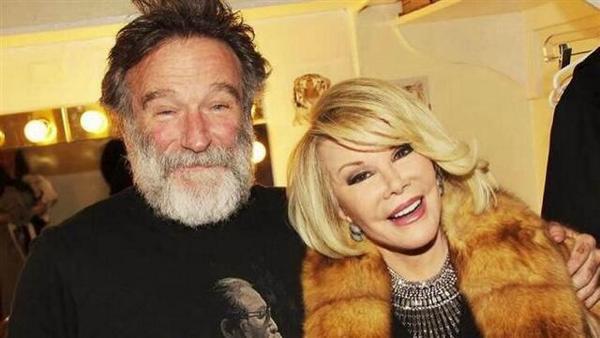
The death of Joan Rivers has left its mark. Many of us have been searching for words. And, as with any death, we try to remember the best things about her. So many things come to mind, but how, I wondered, could I find words. This was too much. After Robin Williams death, I was besides myself and now Joan. All of the joy they brought to my life, the life of my friends, and my family. It felt as if it was all gone.

….

As soon as I heard the news of Joan’s death, I went immediately to twitter to check the comedians I follow for insights into who she was and what she did. After learning of her death, Mel Brooks tweeted: “Joan Rivers never played it safe. She was the bravest of them all. Still at the top at the end. She will be missed.”

Something about Brooks’ words resonated deeply in me. Yes, he was right. She never played it safe. She was the bravest of all. Her bravery, however, didn’t have to do with the comic boundaries she broke with her words so much as with her person. As a female comic, she took risks that broke boundaries for other women comics. And this, I thought, is what Brooks meant when he said she was “the bravest of them all.”   And this needs to be recognized and remembered in the wake of her passing.

Lawrence Epstein, in his book The Haunted Smile, gives Joan her own chapter. The title of the chapter and its subtitle suggest that with female comedy had radically changed Jewish comedy in America: “Kosher at Last: Jewish Women Comedians.” Epstein begins his chapter without mentioning Joan’s name. Joan is presented as a woman without a name (“she”):

She was still struggling for recognition as a comedian. Billed as “Pepper January – Comedy with Spice,” she was faced with a hostile audience. The raucous men seated at the tables had a very definite set of ideas about the men and women who stood in front of them to provide entertainment: the men were supposed to tell jokes, and women were supposed to take their clothes off. Here, though, was this thin, loud woman trying to tell them jokes. The audience members began booing. (253)

After writing this description of “her” act, Epstein tells us her name: Joan Molinsky. As with many Jewish-American comic artists (and artists in general), she had to change her name. She went to her agent, Tony Rivers, and he told her that in order for her to get recognized as an American artist she had to change her last name to Rivers. From then on, she was Joan Rivers.

But the name change wasn’t enough. As Epstein notes, after World War II Borsht Belt humor, which Brooks, Reiner, and Allen (amongst many other famous comedians) participated in, “instilled a deep hostility toward women and mothers”(254). But these comedians weren’t doing something that went against the norm. Epstein tells us that they were a part of a “wider American culture” that was changing radically and was anxious about its identity. They, like many Jews, wanted to assimilate as they moved from the city to the suburbs. Given this situation, male comedians, argues Epstein, were worried that women comedians could “retard their entrance into American society.”

Within such a cultural milieu it was hard for a woman comic to survive unscathed.

And while men had an easier time assimilating, Jewish women, argues Epstein, were the “new Jews, the unaccepted minority, the people seeking power who were not allowed to gain entrance into society, in this case the society of comedians”(257).

For this reason, Epstein argues that women comics, like Totie Fields and Joan Rivers, were “unable to engage normal comic subjects.” As a result, a woman comedian was “stuck making fun of herself”(257). Totie Fields was the first to do this.

And Joan Rivers “built on Fields’s success.” Her humor, like Fields’ was based on self-deprecation.

However, she was also adept at speaking whatever came to her mind and this helped her to become more independent. However, Epstein argues that it wasn’t until she saw Lenny Bruce perform in 1962 that she became radically independent: 

The real turning point for her…was in watching Lenny Bruce perform in 1962. She saw in Bruce a sort of comedy she wanted to perform, a comedy that came from personal, intimate experiences, a direct and honest approach. Rivers was not interested in the political and religious confrontations that came to dominate Bruce’s material, but she was deeply impressed by his delivery style. She transformed his blunt obscenity into softer words such as tramp or slut. She also made a deliberate choice. She went for the large lower middle class. (258)

Epstein characterizes her transition as a “change from self-mockery to self-assertion.”   She talked about subjects women never talked about.   For a woman to do this was heroic and courageous.

What I find so interesting about Epstein’s reading is that it parallels, in many ways, the reading of David Biale in his book Eros and the Jews. But in Biale’s book, there is a different trajectory which moves from the male “sexual schlemiel” to Lenny Bruce.

Biale, to be sure, gives the schlemiel a fundamental role in the creation of American culture and a new, awkward sexuality which finds its best expression in the work of Woody Allen. He argues that the schlemiel doesn’t simply adapt to American culture; it also creates something new.   The sexual schlemiel, with his “comic fumbling,” de-eroticizes “gentile America.”   And in doing so, his comic fumbling and “sexual ambivalence infects gentile women and turns them into mirror images of himself: even gentile Americans become ‘Jewish’”(207). With this unique claim and powerful rhetoric (“infests,” “turns into mirror images”), Biale does something no schlemiel theorist has done before: besides noting how women become mirror images of the schlemiel, he also argues that America has become more “Jewish” by virtue of the schlemiel.

Biale goes on to elaborate that there is a “hidden agenda”(207) that goes hand-in-hand with this “mirroring,” which is “to identify American with Jewish culture by generalizing Jewish sexuality and creating a safe, unthreatening space for the shlemiel as American antihero”(207). And this identification illustrates what he means by “harmonizing” Jewish experience with American culture.   By being the American anti-hero, Biale is suggesting that the “sexual schlemiel” plays an important role in a new American culture that, in many ways, emulates the anti-hero.

Biale’s choice of words is instructive as it suggests that this “unthreatening space” was prefaced by living in a space of cultural anxiety and a desire to get rid of it. In fact, he notes that in “America a deep insecurity about the Jews position in American culture seems to underlie this instinctive turn tot comedy”(207).   Based on this reflection, Biale muses that the distance afforded by comedy may have relieved anxiety by winning over a “potentially hostile gentile audience”(207).   For this reason, Biale ventures a hypothesis about how, if Americans can laugh at Jewish sexual neurosis and see such a neurosis as it’s own, then “perhaps the Jew will be accepted as an organic part of the cultural landscape”(207).  

However, he notes that since Jews put such neurosis on the screen and in novels, one can argue that they weren’t too anxious so much as slightly anxious. Rather, he argues that they “assumed” that the “sexual schlemiel” was a “legitimate part of American culture”(207) And this prompted them to “generalize Jewish sexuality” by way of the schlemiel.

Biale notes that this generalization of Jewish sexuality by way of the schlemiel was challenged by another one; namely, that of Lenny Bruce. He, “perhaps more than any other comedian, broke with the tradition of the Jew as a sexual schlemiel in order to outrage conventional morality with Jewish eroticism”(216). While Roth and Allen have schlemiels who freely talk about sex, these characters don’t challenge the status quo. As we saw above, they create it by creating an identification between being a schlemiel and being an American.

For Bruce, being Jewish means to “be outside the American mainstream, both verbally (mouths) and erotically (bosoms). It means to identify with what was sexually liberated on the margins of American culture”(217). Biale’s reading makes it clear that the schlemiel – though an anti-hero – is a character that belongs to the American mainstream while Bruce’s anti-schlemiel does not. Bruce, in contrast to the schlemiel, is a part of and edgy and “hip” Jewish culture (217) which “was in as much conflict with Jewish convention as with Christian convention…and for Bruce the former was more sexually liberated than the latter”(217). This suggests a political reading of the schlemiel.

However, Biale notes that while Bruce was going against the American grain he was not a feminist. At the very least, he was “able to imagine a male Jewish counterculture that was subversively erotic”(217).   Moreover, Bruce’s kind of comedy – in contrast to the schlemiel’s – taps into a working class ethos. It is Lenny Bruce’s brand of comedy that “captured the bawdy tumult of the Lower East Side culture, from the ribald Yiddish theater to the lurid tales of the Bintel Brief” (219).   His work, along with the work of E.L. Doctorow (namely in his novel, The Book of Daniel), evinces a Jewish sexuality that refutes “America’s erotic and political hypocrisy”(220).

Given Biale’s reading, we can say that Rivers also passed from a self-deprecating schlemiel phase to a Lenny Bruce phase. She didn’t simply, as Biale says above, “mirror” the schlemiel. She left this comedic-type behind for a more aggressive kind of comedy. We can also argue that though Bruce was courageous for what he did, perhaps Rivers was even more courageous since she was a woman. And doing what Bruce did, as a woman, was much more difficult.

The question we need to ask is whether Joan Rivers created such a subculture as well.   Epstein suggests she did in the sense that she created a space for women comedians to speak and for Jewish women to feel comfortable with being assertive and bold.

And in this, Mel Brooks was spot on. He suggests that she had more courage than all of them. This means that she had more audacity than the Borsht Belt comedians (who he was a part of) and Lenny Bruce. As a woman, she broke more boundaries then they did. And she led the way for comedy to where we are today with comedians like Gilda Radner, Sandra Bernhard, and Sarah Silverman.

We will miss you Joan. You opened doors for women that were closed and you changed the face of comedy. Your legacy lives on and you were…the hardest working woman in showbiz.

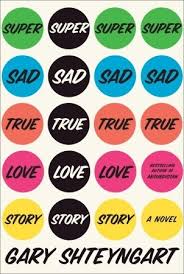
Almost Communicating, or What Happens When a Middle-Age Schlemiel Falls in Love With a Korean Girl – Part I

images

Over the last decade, we have seen countless films about “middling” or aging schlemiels. Think of Ben Stiller’s roles in Meet the Fockers (2004), Greenberg (2010), or The Heartbreak Kid (2007), Seth Rogen’s Neighbors (2014) or Guilt Trip (2012), or of Judd Apatow’s 40 Year Old Virgin (2005), Knocked Up (2007), or This is 40 (2012).  Apatow, more than any filmmaker, has made something of a cottage industry based on middle age schlemiels.

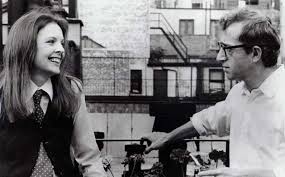
Also think of Sarah Silverman’s latest work for her youtube channel, Jash, where she is constantly looking into what her character, a 40 plus year old woman, goes through as she ages. The task of documenting the aging schlemiel is nothing new, however. One need look no father than the popularization of this in Woody Allen’s films – especially Annie Hall (1977).   

While the filmic exploration of the aging schlemiel is widespread and noticeable – to such an extent that the middling schlemiel is becoming something of an American cultural icon – the literary equivalent is less noticed by the everyday American. To be sure, books like Stern, by Bruce Jay Freedman, Herzog, by Saul Bellow, A New Life, by Bernard Malamud, Hope: A Tragedy by Shalom Auslander, and How Should a Person Be? by Sheila Heti – to name only a handful examples which span over four decades – take the aging schlemiel as their theme.

What’s most interesting about these literary treatments of the middling/aging schlemiel is that they give us an acute sense of how the schlemiel – and we ourselves – are becoming more and more out of sync with the times we are living in. After repeated failure, the schlemiel eagerly tries to carve out a “new life.” But as s/he ages s/he comes to realize that she hasn’t succeeded and that now, with age, things are more difficult than before. This creates a desperate situation and character whose new failures are much worse than before. Yet, with all of this failure and repeated failure, there is a kind of charm that comes through in this or that missed encounter, missed social cue, or belated response. Most charming is the middling schlemiel’s failure to communicate when love is on the table and cultural differences are front-row-center. The conceit of the narrative is to be found in how the middling schlemiel navigates these gaps.

We see an exceptional illustration of this middling schlemiel’s attempt at bridging the gaps between youth and middle age as well as between Korean and Jewish in Gary Shteyngart’s Super Sad True Love Story.   The fascinating thing is that one gap challenges another in his novel. The middling main character Lenny Abramov – a Russian-American-Jewish son of immigrants – stumbles across Eunice Park, falls in love with her, and does his most to deal with this gap and win her over. But his failures show the desperation of this gesture; nonetheless, she also fails. And the way she fails – with her family’s expectations and her own expectations – transforms her into a character who, though Korean, shares much in common with the schlemiel. Regardless, the communication gap, the age gap, and the cultural gap challenge this commonality and make for a fascinating read on the middling schlemiel which solicits culture, love, and communication as relevant to being (and understanding) a schlemiel.

For now, I just want to touch on the communication gap when they first meet. It becomes the foundation for the ensuing struggle to bridge it. When he leaves with her, after a party that he and she occasion in Rome, Italy, he feels she left with him because she really likes him and that, in some way, he is her hero. In his mind, he has saved her from another middling man – a physically intimidating sculptor – who, aggressively, challenges Lenny when he tries to talk with Eunice, his Korean love interest. He is snubbed by the sculptor but, in the end, he wins a kind of indirect victory when she leaves with him not the sculptor.

Notice the comedic rhetoric that is used to describe his movements in relation to hers. He thinks of himself as a hero, but comes across as an anti-hero:

Eunice Park and I marched ahead. She marched, I hopped, unable to cover up the joy of having escaped the party with her by my side. I wanted Eunice to thank me for saving her from the sculptor and his stench of death. I wanted her to get to know me and then to repudiate all the terrible things he said about my person, my supposed greed, my boundless ambition, my lack of talent…I wanted to tell her that I myself was in danger….all because I had slept with one middle-aged Italian woman. (21)

But telling her wouldn’t matter. Eunice could care less about the situation Lenny was going through.

Feeling young and hip – although he is middling – he tells her of a cool “Nigerian” restaurant in Rome to go to following the party: “I stressed “Nigerian” to underline my openmindedness. Lenny Abramov, friend to all”(21). But this doesn’t get through to her.

She calls him a nerd and throws several three letter abbreviations – hip in youth culture – at him to show the gap between them. And this “hurts” him:

“You’re such a nerd.” She laughed cruelly at me.

“What?” I said. “I’m sorry.” I laughed to, just in case it was a joke, but right away I felt hurt.

“LPT,” she said, “TIMATOV. ROFLAARP, PRGV, Totally PRGV.”

The youth and their abbreviations. I pretended like I knew what she was talking about. “Right,” I said, “IMF. PLO. ESL.”

His abbreviations emerge out of a different era and show what things that were of interest to him, then: ESL (fitting in to American culture), PLO (being a Jew whose Russian parents were very concerned with Israel’s future), and IMF (which shows he may have had interest in activism against globalization, when it first started emerging)

The gap is pronounced and the pain that comes with the missed encounter and communication lag show us the life of a middling schlemiel who desperately tries to overcome what, in fact, may not be possible to overcome. After all, age is existential. So is culture….

Charm…that’s another issue…. Can it bridge the gap?

….to be continued…


Introducing Larry Abramov, Your Humble Diarist in “Super Sad True Love Story”

DownloadedFile-2

Thomas Mann, near the beginning of his book Death in Venice, presents a figure of a man on a boat who, though old, is dressed as if he is young. Mann uses the most grotesque terms to describe him. The narrator tells us that Aschenbach, the main character, is appalled by the juxtaposition of youth and old age. And this evokes an experience of what the German philosopher Martin Heidegger might call an experience of angst or what Freud would call the uncanny. At first, he sees a man in a “bright yellow summer suit of ultra-fashionable cut, with a red necktie, and a rakishly tilted Panama, surpassed all the others in his crowing good humor.” But when he looks closer the “good humor” and gay-candor become terrifying:

But as soon as Aschenbach looked at him more carefully, he discovered with a kind of horror that the youth was a cheat. He was old, that was unquestionable. There were wrinkles around his eyes and mouth. The faint crimson of the cheeks was paint, the hair under his brilliantly decorated straw hat was a wig; his neck was hollow and stringy, his turned-up mustache and imperial on his chin were dyed; the full set of yellow teeth which he displayed when he laughed, a cheap artificial plate…Fascinated with loathing, Aschenbach watched him intercourse with his friends….He felt as thought everything were not quite the same as usual, as though some dreamlike estrangement, some peculiar distortion of the world were beginning to take possession of him.

What I love about Gary Shteyngart’s novel Super Sad True Love Story is the fact that, unlike Mann’s Aschenbach, we are given an opportunity to chuckle about the juxtaposition of age and youth (that is middle-age and youth). Instead of pulling back in horror and anxiety, Shteyngart gives a kind of sad-charm to the juxtaposition.  

At the outset of the novel, entitled “Do not go Gentle,” we read a diary entry by the main character, Larry Abramov. He is a middle aged man who tells us that he has made a “major decision: I am never going to die.”   His description of how he is going to live on beyond his body is comical. He tells us, with a faux confidence, that “others will die around me. They will be nullified. Nothing of their personality will remain.”

In pop-cultural confidence, Abramov tells himself (after all, it’s his diary) to stop “them” from telling us that “life’s a journey” where you end up somewhere. He assures himself that they are going nowhere, while he is going somewhere:

When I beg the pilot of the rickety UnitedContinentalDeltamerican plane currently trembling its way across the Atlantic to turn around and head straight back to Rome and into Eunice Park’s fickle arms, that’s a journey.(3)

But he won’t beg him. He’s a schlemiel. And this is his fictional attempt at romantic heroism.  Yes, he will return to the woman he is in love with: Eunice Park. But how?  After writing this, he can’t keep his mind on the romantic mission.  He’s a distracted anti-hero.  He changes the subject in what  seems a sudden revelation. And that revelation is not about returning to her on a romantic journey, but the meaning of a line in a popular Whitney Houston song.  It speaks to his obsession with “living on.”

But wait. There’s more, isn’t there? There’s our legacy. We don’t die because our progeny lives on! The ritual passing of the DNA, Mama’s corkscrew curls, his granddaddy’s lower lip, au buh-lieve thuh chil’ren ah our future. I’m quoting here from “The Greatest Love All,” by 1980s pop diva Whitney Houston, track nine of her eponymous first LP. Utter nonsense. The children are our future only in the most narrow, transitive sense. They are our future until they too perish. The song’s next line, “Teach them well and let them lead the way,” encourages adult’s relinquishing of selfhood in favor of future generations. (4)

He thinks this self-negation (for the children and their future) is foolish. But when he reflects on the meaning of Whitney Houston’s line about “ah chil’ren” this brings him to reflect, once again, on Eunice Park.  And in this reflection, we see why he charmed by her: she is young and innocent.  The two, taken together, bring out a comical juxtaposition of youth and middle age:

Lovely and fresh in their youth; blind to mortality; rolling around, Eunice Park-like, in the tall grass with their alabaster legs; fawns, sweet fawns, all of them, gleaming in their plasticisty; at one with the simple nature of their world. (4)

As one can see, he is drawn in by Eunice Park who is “blind to mortality” while he, apparently, is not. He sees her as an “innocent” schlemiel. And he seems to want that for himself because he is thinking about death and immortality. But, and this is the catch, he is also a schlemiel because he dreams of escaping mortality by way of technology. He has been swayed by what Dostoevsky would call the “miracle” of science. 

But unlike Thomas Mann’s narrator, we don’t see a character who is horrified of this juxtaposition of youth and age. This covering over of death evokes a different mood and has a charm that is missing in Mann’s novel.

….to be continued….

Why Do We Find Schlemiels So Charming? The Sexual Schlemiel and Freud’s Reading of Narcissism

images-2

Schlemiels are sometimes described as “innocent” and “charming.” Hannah Arendt used these terms to describe Charlie Chaplin. And the scholar Sidrah DeKoven Ezrahi uses these terms to describe different Yiddish characters in the novels of Sholem Aleichem, Mendel Mocher Sforim, and I.B. Singer.   Ezrahi, like Dan Miron, also points out that the first schlemiels of modern Yiddish literature (not folklore) – Benjamin and Senderl of Mendel Mocher Sforim’s The Adventures and Travels of Benjamin the Third, are homoerotic. In a few points in the novel, Benjamin calls Senderl his wife.   This suggests that the character has a “feminine” character.

On the other hand, Philip Roth marks a shift in the schlemiel’s sexuality. Portnoy is sexually aggressive and sees himself, unlike his Yiddish compatriots, in negative terms vis-à-vis the Sabra (native born Israeli), Naomi in Portnoy’s Complaint.  His life is filled with masturbation, self-love, and loathing of those with power.  The Sabra, Naomi un-man’s him.  He is “Im-po-tent in Is-ra-el.”  In the wake of his impotence, he calls her names.  She tells him that his schlemiel humor is not “Jewish” humor – it is, rather,the humor of the ghetto.  She calls Portnoy a schlemiel.  And of all the names she calls him, this one puts him into place: he is a sexual schlemiel (in the negative sense).  But if he is impotent, reflects Roth, at least he has comedy.  He can compensate for the loss. 

In Eros and the Jews, David Biale takes notes of the shift in sexuality that we find in Roth’s Portnoy: “the image of the sexually and militarily potent Israel.”   And, coinciding with this, we have  that the image of the “impotent American Jew,” with predates this new opposition (born after 1967). However, the origins of what Biale calls the “sexual schlemiel” have deep roots.  They go through America and, as I have briefly noted above, find their way back to Yiddish literature:

The image of the sexually and militarily potent Israeli is a projection based on its opposite: the myth of impotent American Jew. The Jew as sexual schlemiel has its roots in the Yiddish theater of the Lower East Side of New York, in comedy of the borsht belt in the Catskill Mountains, and in the anti-heroes of fin de siecle Hebrew and Yiddish literature. (205)

But what makes the schlemiel charming is not its “impotence.”   In Yiddish literature, the schlemiel is not seen as impotent. He has a certain charm. It is in America that this impotence makes its debut.   However, in the case of Woody Allen (as opposed to Roth’s Portnoy) we don’t find virility or impotence. Biale says we find a “neutralization” of the stereotype that Jews are “hypersexual” (something we find in Roth’s work).   We find Allen’s sexuality to evince a kind of sexual “awkwardness” that has, in many ways, become a norm.

But what is meant by this awkwardness? And why do we find it so charming?

I’d like to venture a possibility: perhaps the schlemiel’s sexual charm has something to do with a kind of narcissism that we renounce; but, nonetheless, after renouncing, find it attractive in other people, animals, or things? This would be more of a Freudian thesis. I don’t fully agree with it, but it is worth considering for a moment.

In his essay “On Narcissism: An Introduction,” Freud suggests that people are attracted to a narcissism; they had to renounce “part of it” in order to live in society:

It seems very evident that one person’s narcissism has a great attraction for those who have renounced part of their own narcissism…the charm of the a child lies to a great extent in his narcissism, his self-sufficiency and inaccessibility, just as the charm of certain animals which seem not to concern themselves about us, such as cats and the large beasts of prey. In literature, indeed, even the great criminal and humorist compel our interest by narcissistic self-importance with which they manage to keep at arm’s length everything which would diminish the importance of their ego.

Perhaps we see this narcissism in characters like Larry David who, in Curb Your Enthusiasm. David likes to keep “at arm’s length” everything that would “diminish the importance” of his thoughts and perceptions. His looks of disgust, to be sure, have a certain kind of charm.   And his desire to keep and defend them create a kind of childishness and awkwardness vis-à-vis those around him. Freud would argue that we like it because we want some of that narcissism…which we “partially” renounced as we matured into adults.

But perhaps Biale is right and it is better for us to understand the sexual schlemiel and his or her charm through a cultural lens.  Woody Allen’s sexual schlemiel is much different from Roth’s…or Mendel Mocher Sforim’s.   And now lady-schlemiels are just as charming, perhaps, also, for culture reasons.  But isn’t narcissism always there, regardless?

To be continued….

Robin Williams and The Post-Holocaust Schlemiel in “Jacob the Liar”

DownloadedFile-1

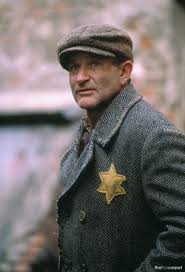
Both Roberto Benigni and Robin Williams are popular, internationally acclaimed comedic actors. Their work does a lot to open up the possibilities of comedy and expand its scope. Perhaps in an effort to test the limits of comedy, they took on one of the most difficult tasks imaginable for a comedic actor in the 20th century: addressing the Holocaust. After Roberto Benigni’s film Life is Beautiful (1997) and Jacob the Liar (1999), starring Robin Williams as Jacob, made their debuts, there was a major debate over whether or not, as Sander Gilman puts it, the “Shoah can be funny.” While Gilman finds these films to have “aesthetic” merits, the answer to his own question is an emphatic no.

Since both Benigni and Williams both played the innocent and naïve Jewish fool otherwise known as the schlemiel, another question comes up which Gilman does not address. Speaking to this issue and hitting on a deeper problem, Sidrah DeKoven Ezrahi, in an essay entitled “After Such Knowledge, What Laughter?” argues that “what is at stake in the reinstatement of laughter ‘nach Auschwitz’, after Auschwitz, is not the fidelity of a comic representation of the Shoah but the reinstatement of the comic as a building block of a post-Shoah universe”(Yale Journal of Criticism, Volume 14, Number 1, 2001, p287).

In other words, the question isn’t about whether Robin Williams or Roberto Benigni can accomplish the feat of using comedy, nach Auschwitz, to relate to the Holocaust so much as whether the schlemiel character that they draw on – which is one of the most important stock characters in the Jewish tradition – can or even should exist after the Holocaust.

This question is important to many scholars of the Holocaust and should be important to authors, poets, artists, and filmmakers who address the Holocaust in their work. The task of judging the meaning and value of the Enlightenment’s projects – vis-a-vis literature, philosophy, and politics – ‘nach Auschwitz’ was launched by Theodor Adorno in essays and in sections of his books. Adorno is most well known for his claim that writing poetry after Auschwitz was barbaric. He was directing his words toward the poet Paul Celan. However, while some, like George Steiner, took Adorno literally (and making a categorical claim), others, like Lawrence Langer did not. And Langer is correct. Adorno was looking for a new kind of poetics “after Auschwitz.”

Here, the issue is comedy.

Adorno also has a little known essay about comedy and historical disaster entitled “Is Art Lighthearted?” In this essay, Adorno suggests that the lighthearted nature of comedy, after Auschwitz, must be challenged. As in his claim regarding poetry after Auschwitz, here Adorno finds an exception to the rule in Samuel Beckett’s kind of comedy:

In the face of Beckett’s plays especially, the category of the tragic surrenders to laughter, just as his plays cut off all humor that accepts the status quo. They bear witness to a state of consciousness that no longer admits the alterative of seriousness and lightheartedness, nor the composite comedy. Tragedy evaporates because the claims of the subjectivity that was to have been tragic are so obviously inconsequential. A dried up, tearless weeping takes the place of laughter. Lamentation has become the mourning of hollow, empty eyes. Humor is salvaged in Beckett’s plays because they infect the spectator with laughter about the absurdity of laughter and laughter about despair. This process is linked with…a path leading to a survival minimum as the minimum of existence remaining. This minimum discounts the historical catastrophe, perhaps in order to survive it (Notes on Literature, Volume 2; 253)

Adorno’s approach to Beckett suggests that it is possible for comedy to exist after the Holocaust. But this is only because Beckett’s kind of comedy goes beyond the typical dichotomy of tragedy and comedy. And in doing so it creates a “laughter about the absurdity of laughter” and a “laughter about despair.” It is a “laugh that laughs at the laugh.”

Can we apply Adorno’s approach to Beckett’s humor to the schlemiel, which Robin Williams plays in Jacob the Liar? Can (or should) the schlemiel, like comedy in general, live on after the Holocaust? And, with that in mind, can we say that Williams’ portrayal of the Holocaust schlemiel was unethical, amoral, or ethical?

Prior to the Holocaust, the schlemiel was a “building block” for generations of Jews who lived in the Pale of Settlement (in the 19th century), left for Europe, and landed in America. The schlemiel gave millions of Jews a way to understand themselves and survive the many defeats of history (which included pogroms). It’s humor gave them a sense of dignity when they were powerless.

In her book, The Schlemiel as Modern Hero, Ruth Wisse points out that although the Jews suffered multiple defeats in history they could still turn to the schlemiel who won an “ironic victory.”

The traditional Western protagonist is heroic insofar as he attempts to change reality. The schlemiel becomes hero when real action is impossible and reaction remains the only way a man can define himself. As long as he moves among choices, the schlemiel is derided for his failures to choose wisely. Once the environment is seen as unalterable – and evil – his stance must be accepted as a stand or the possibilities of “heroism” are lost to him altogether. (39)

The schlemiel comically responds to historical disaster. Through word play, plot, and humor in this or that story or novel by Yiddish writers such as Mendel Mocher Sforim or Sholem Aleichem, Jewish readers could, as David Roskies says, “laugh off the traumas of history.” Sidrah DeKoven Ezrahi illustrates this in a book entitled Booking Passage: Exile and Homecoming in the Modern Jewish Imagination where she includes a dialogue between Motl, the main character of Sholem Aleichem’s last novel (Motl, the Cantors Son) to illustrate. He is so innocent and naïve that he can’t grasp the nature of a pogrom and the concept of evil:

I ask him what is a pogrom? All the emigrants keep talking about “pogroms” but I don’t know what they are/ Kopl says, “Don’t you know what a pogrom is? Then you’re just a baby! A pogrom is something that you find everywhere nowadays. It starts out of nothing, and one it starts it lasts for three days.”
“Is it like a fair?” “A fair? Some fair! They break windows, they bust up furniture, rip pillows, feathers fly like snow…And they beat and kill and murder.” “Whom?” “What do you mean, whom? The Jews!” “What for?” “What a question! It’s a pogrom, isn’t it?” “And so it’s a pogrom. What’s that?” “Go away, you’re a fool. It’s like talking to a calf.”

Motl, like many Yiddish schlemiel characters, is innocent. And Ezrahi argues that the idea of preserving Jews from historical trauma was not just a modern practice; it was used in relation to the attempted genocide against the Jews in Purim which is remembered on Purim. As a part of the holiday, Jews celebrate the “aborted catastrophe” and turn “defeat into triumph.” The Jewish world is “turned topsy-turvy (nahofokh-hu) for one day each year and saints and villains become interchangeable.” (“Cursed is Haman” and “Blessed is Mordechai” are exchanged in a day of celebration where the Rabbis suggest that the Jewish people should drink so much as to not know the difference between them.) Ezrahi suggests that this carnivalesque and comical act spares Jews of having to get caught up in the trauma of history; it distances them from the disaster.

But can this act be done after Auschwitz?

Like the Purim story, Ezrahi argues that the schlemiel was a modern, Yiddish version of the comedic rewriting of history. Jacob the Liar, however, falls after the Pogroms that Aleichem included in his novel from the early 20th century and after the Holocuast.

Writing on the film (and book), Ezrahi notes that it is a “self-declared counter-narrative” to the Holocaust. It effaces the historical dimension of the ghetto and the Holocaust:

The mise-en-scene has been identified by readers as the Lodz ghetto, where Jurek Becker (the author of the novel) himself was incarcerated as a child. But like the other ghettos and camps in the fictions under consideration, the ghetto is never named, and takes on a generic quality.

Ezrahi argues that this generic quality is the “baseline” for the novel. It looks to return everything back to normal and we see this in the central theme of Jacob and his lies which look to desperately turn the clock back:

The lie that Jakob fabricates, his possession of a radio that broadcasts good news to the ghetto, is simply an editorial projection of the normal onto the abnormal. The recipients of the lie are the inhabitants of the ghetto (or all its gullible inhabitants) but its primary target is a young girl, Lina, whom Jakob adopts when her parents are deported.  (Note that Ezrahi uses the original Jakob while the American film changes it to Jacob.)

Ezrahi focuses in on the fact that Jacob’s heroic efforts “are aimed at preserving the innocence of her childhood world at all costs.” To be sure, in saying this, Ezrahi is hitting on something we find not just with the Yiddish schlemiel but also with Charlie Chaplin. Williams, much like Charlie Chaplin, plays the schlemiel and uses comedy to preserve the innocence of different characters (including himself).

Ezrahi makes a daring move and suggests that the issue of using comedy (and denying history) goes deep: it hits at theological issues. In the wake of the Holocaust, Terrence Des Pres argues that laughter is “a priori…hostile to the world it depicts.” While tragedy “quiets us with awe…laughter revolts” against the world.

Ezrahi suggests that the basis of this revolt – with respect to the schlemiel – is not simply a rejection of history because it can’t live in it. Rather, it evinces a messianic kind of hope that is implicit in the Jewish tradition: the hope for a better world and return to a world and a history without evil. This wish is at the core of Jewish eschatology and a utopian dream wish for a better world which smashes history.

What’s most interesting is that the audience “colludes” with the schlemiel. And this suggests that we have been very influenced by this belief in a better world so much so that we are willing to go along with this or that lie to save “innocence.”  And, in the wake of disaster, the schlemiel is the vehicle for such collusion.  Perhaps Williams took to the role of Jacob because he – like other authors of the schlemiel and actors who played the schlemiel – wanted to preserve innocence and found comedy to be the best way of preserving hope. However, he knew that the only way to do this, after the Holocaust, would be to lie…like the character he played, Jacob. For without this hope and without this lie, there can only be the belief that history wins and that comedy, after Auschwitz, is impossible.

Robin Williams: Energy, Comic Improv, and Mystery

images

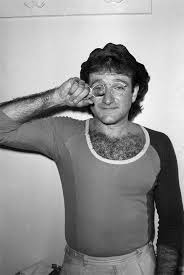
Upon hearing of Robin Williams passing, I, like millions of other fans, felt we have lost one of the best comedians of the last century. I’m not able (nor do I want to attempt) to write up an overview of his comedy career noting its highlights and main themes. However, I would like to say a few things about the energy and the mystery that ran through his improvisational kind of comedy.   Unlike many comedians who would let their mania go out of control, Williams tempered it with a charm and calm.   His comedic energy was infectious and solicited great laughter in his audiences. And his act had a kind of kinetic appeal to it that was new and surprising for many people living in America. But, in its wake, it left us with a kind of darkness or mystery. And for this reason, it touched on a kind of truth that is or may be possible through a kind of comedy that makes the audience “explode” with laughter.

In The Last Laugh: The World of Stand-Up Comedy, Phil Berger introduces Robin Williams near the end of the book.   To show how unique he was, Berger points out how different he was from other comedians who were managed by Rollins Joffe & Brezner (a talent management firm).   They managed comedians like Billy Crystal, Woody Allen, David Letterman, and Martin Short. And most of the comedians they managed had a similar shtick. Robin Williams was different, and this had much to do with his energetic style and his uses of improvisation in his act. He would efface the line between himself and the audience and go with whatever he came across:

In the case of Robin Williams, the problem was that his energy-charged act was so different from those of other comics that Los Angeles talent managers couldn’t get a fix on him. Williams lived on the improvised moment, doing takeoffs on Shakespearean plays, cracking up audiences in spur-of-the-moment iambic pentameter. Plucking a flower from a ringside vase: “….and look, a gentle rose, dying here anon…like myself.” He would plunge into the crowd, reacting to what he saw or heard. Lifting a carafe of wine from a patron’s table: “Hello, Laurence Olivier for Ripple wine.” He might even retire to a table in the audience and heckle himself: “I’ve heard all that stuff before. Your material is derivative.”

Williams’ ability to switch roles on the dime made him unique. In Williams, Brezner saw a “manic” energy that had the affect of something like a “wind tunnel”:

With Williams, the challenge was to take his nearly manic, stream of consciousness style (Brezner: “He had comedic energy that rebounded through the room. It felt like you stepped into a “wind tunnel.”) and not let it get out of hand. This meant giving the act structure – a beginning, middle, and an end – that had enough slack in it for Williams to dazzle audiences with his improvisational wit and energy. “If he just did his thing,” said Brezner, “the effect was that people laughed a lot, but they wouldn’t know who he is.”

Brezner’s last line is very interesting. It suggests that Williams, at the outset of his career, didn’t have a persona like Woody Allen. Rather, Williams was trading in a kind of energetics and play that has resonance with Woody Allen’s Zelig – a character who was likened to a chameleon.

In Zelig and Williams there is a mysteriousness that is born out of a transformational and manic energy. It is highly mimetic and performative.   The laughter he evoked, as well, had a mysterious character to it. And it may have this mysteriousness because it touches on something hidden, dark, sad, and even tragic.

Writing on laughter, Jean-Luc Nancy, argues that laughter is a “gaze brought to bear on tragedy itself, in its tragic truth…the laughter is the knowledge of this truth. But it doesn’t know this truth as the content of knowledge”(“Laughter, Presence,” 366).   For Nancy, it is in the moment of laughter and comedy that “it is known, it is in laughing that laughter is the truth.”   And this truth comes forth in energetic “bursts” or “explosions,” which, when they withdraw, leave a mysterious silence.

The one bursts with the other and from the same burst, truth withdraws into laughter, into the “dim glistening of the mystery.” That is why the laughter remains mysterious – more, it is the exposition of a mystery. The burst of laughter reveals that the structure of its truth is to be hidden. (366)

Whenever I saw Williams doing comedy, I always had a sense of this kind of darkness in the wake of his routine which came across as a series of comic explosions. It was as if he pulled back from his laughter – and the explosions – so as to expose us to a dark truth. Sometimes there would be a kind of violence to his “nearly manic” routine. We see it here, in this mime routine within a film.

We also see energetic uneasiness in his earlier routines. The laughter it evokes, like the laughter that Andy Kaufmann would evoke in many of his routines discloses how Americans survive from one rapid change (or “explosion”) to another. The movement from character to character – as Zelig does – evinces a departure from identity and a series of rapid fire changes.

Williams stand-up routine, near the end of his life, brings out a kind of comedy that uses energetics to deal with a series of shocks that are distinctly America.   His comedy reminds us of what many of us share. And it shows us how survival of these shocks, as he presents them, is an American-kind-of-thing to do.

Yet, at the core of this sudden outbursts and shocks, which he comically stages for us, there is a mystery about where all of this is going. He takes us on a journey of sorts through many states, but it is really the future that is the mystery. It is not simply (or only) as Brezner believed, related to Williams’ identity. Not only do we not know who Williams is (in the wake of each of his routines), we also don’t know where we are all going. He reveals something common to us that emerges in the wake of a series of shocks that permeate out time.

Thinking back over all the comedy I saw him perform I now feel as if I understand him better than I ever did. What Williams gave me, as a child, was a way of feeling I was a part of something larger than myself and that the best way to touch that was through exaggerating experience and playing out the things that shocked me. By improvising these things, I felt as if I could touch something real and alive. But the bigger question always lingered – as it did for Zelig – who was he and who are we? And where are all of these changes taking us?

You will be missed, Robin. Thanks for making comedy real and for tapping me in to existential questions that I share with many Americans; questions that emerge out of rapid changes and the flight of history. Thanks for exposing me to the mystery of being alive, now, at this time.


Doofus(es) and Dork(s) in David Eggers’ “The Circle” – Take 2

images-1

Since they sometimes overlook reality in the name of something “good” that they are a part of, optimism and hope have a comical aspect. In certain scenarios, however, overlooking such things can have negative and even tragic consequences.   The blindspots we have, if they deal with fundamental things, like the importance and meaning of privacy and freedom are a case in point.   In the enthusiasm for a utopian kind of project, which promises to transform reality or in which a transformation is actually coming out, there may be a blindness to the meaning of freedom and privacy. We see this especially, today, in our head-over-heels love for facebook, google, and social networking. We are in the midst of a major change in social life in America (and around the world) and we haven’t yet figured out the stakes with respect to freedom and secrecy. We are all to happy to give away our information and make our private life public.

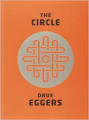
In the last blog entry on David Eggers’ last novel – The Circle – I discussed the often overlooked fact that the novel has comic elements. Although these moments are few and far between, they are very special because they involve a kind of optimism and utopian hope that overlook the meaning of privacy and freedom. The author calls the two main characters out on being naïve fools in the beginning of the novel and so does an old boyfriend of one of the characters (Mae) named Mason.

As I pointed out in the last blog entry, the narrator of Eggers novel makes the comic blindness of these characters evident in the very beginning of the novel. Annie, who gets Mae into “The Circle” (a name for a company like Google), is the first to be comically profiled:

There was a time, only four years ago, when Annie was a college student who wore men’s flannel housepants to class, to dinner, on causal dates. Annie was what one of her boyfriends, and there were many, called a doofus. But she could afford to be. She came from money, generations of money, and was very cute, dimpled and long-lashed, with hair so blond it could only be real. She was known by all as effervescent, seemed incapable of letting anything bother her for more than a few moments. But she was also a doofus. She was gangly, and used her hands wildly, dangerously when she spoke, and was given to bizarre conversational tangents and strange obsessions – caves, amateur perfumery, doo-wop music. (13)

She is also described as a “scattershot” and a “ridiculous person” who carries around a “piece of her childhood blanket around with her in her pocket.” But Annie is not alone. The narrator tells us that most of the three people who founded the circle also have this aspect. He brings this out in his description of a painting of all three of them which is, more or less, a caricature that they may be blind to but the narrator is not:

The painting was awkward, the kind of thing a high school artist might produce. In it, the three men, the founders of the company, were arranged in a pyramid, each of them dressed in their best-known clothes, wearing expressions that spoke, cartoonishly, of their personalities.   Ty Gospodinov, the Circle’s boy-wonder visionary, was wearing nondescript glasses and an enormous hoodie, staring leftward and smiling; he seemed to be enjoying some moment, alone, turned into some distant frequency. People said he was borderline Asperger’s, and the picture seemed intent on underscoring the point. (19)

Ty, the narrator tells us, also sees himself as a kind of outsider, oddball: “Ty realized he was, at best, socially awkward, and at worst an utter interpersonal disaster”(20). He hired the “other two Wise Men, Eamon Bailey and Tom Stenton” to balance him out. Ty designs the core of the Circle’s system which is called “TruYou” which sounds a lot like Google Plus.  In this novel, the Google system is portrayed as something that streams all of one’s bills, identities, accounts, etc into one system:

One account, one identity, one password, one payment system, per person. There were no more passwords, no multiple identities. Your devices knew who you were, and your one identity – the Tru you, unbendable and unmaskable. (21)

While the owner, Ty, and his partners, taken together, may look cartoonish, this system is utterly serious, powerful, and a force on its own. It takes on a kind of moral, disciplinary force: “TruYou changed the internet, in toto, within a year….the True You wave a was tidal and crushed all meaningful opposition. It started with the commerce sites….Overnight, all comment boards became civil, all posters held accountable. The trolls, who had more or less taken over the internet, were driven back into darkness”(22). The narrator makes sure to mention that TruYou “subsumed” all social media: “Facebook, Twitter, Google, and finally Alacrity, Zoopa, Jefe and Quan”(23).

This new system, TruYou, has the goal of creating total transparency. It will eliminate “identity theft” and unfair and prejudiced practices on the internet. And Ty, in his utopian awkwardness, believes this will be good for everyone and make society a place devoid of crime and malice which, to his mind, are based on hiding things from others.

Following these serious descriptions of TruYou, the narrator completes his description of the other two Wisemen in the picture. Emaon Bailey, “standing next to him (Ty) in the painting, semmed utterly at peace, joyful even”(24). He smiles a lot. His whole body seems to smile: “When he smiled, which was near-constantly, his mouth smiled, his eyes smiled, his shoulders seemed to smile. He was wry. He was funny”(24). Bailey likes to play “Dixieland trombone”(24).

The last of the Three Wisemen is Tom Stenton. Of the three, he is the most serious. He is “unabashed about being wealthy, about being single and aggressive and possibly dangerous”(23).   The law and the government don’t stand in his way: “He was unafraid of presidents. He was not daunted by the lawsuits from the European Union or threats from state-sponsored Chinese hackers”(24).

Taken together the three of them create an odd image as of “mismatched flowers” but in the end the image of them together “worked”: “The three of them, in life and in this portrait, made for a strange bouquet of mismatched flowers, but there was no doubt that it worked”(25). But, the more Mae looked at the image, “the stranger it became.” She, who is also called a fool by the narrator, at the very least notices that there is something odd about this image that may “work” but not for her. She can’t put her finger on it:

The artist had arranged it such that each of the Wise Men had placed a hand on another’s shoulder. It made no sense and defied the way arms could bend or stretch. “Bailey thinks it’s hilarious,” Annie said. “He wanted it in the main hallway, but Stenton vetoed him”(26).

As Annie leads Mae up to their secret room, she sees all kinds of comical things that are juxtaposed to things that are utterly serious. The juxtaposition gives one a sense how, behind all of these smiles and comical gestures, there is something sinister lurking, something they aren’t aware of in their absent-minded (though apparently noble) utopian idealism.


…..to be continued…


Courting Failure: On Walter Benjamin and Hannah Arendt’s Readings of the Schlemiel – An Essay Published in Berfrois

DownloadedFile-5

I recently wrote an essay on Walter Benjamin and Hannah Arendt’s readings of the schlemiel and published it on the online journal Berfrois.  This essay touches on thinkers and themes that will appear in my book on the schlemiel.  It is a foreshadowing, if you will.

Here is the link to the article: http://www.berfrois.com/2014/07/menachem-feuer-walter-benjamin-hannah-arendts-readings-of-the-schlemiel/

Enjoy!

Menachem Feuer, The Author of Schlemiel Theory


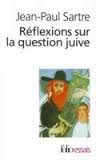
Jewishness, the Holocaust, and History: Irving Howe on the Holocaust and Jean-Paul Sartre’s Reflections sur la question juive

DownloadedFile-4

At the beginning of a chapter to his “intellectual autobiography” entitled “Jewish Quandaries,” Irving Howe begins with questions “from young friends” about the Holocaust: “When did you first become aware of the gas chambers? How did you respond to the reports from Europe that the Nazis were systematically exterminating Jews?”   Howe points out that “for some years now” these questions are also his questions (247). And when he thinks of them now, reflecting on how he first responded to them, he has a “recurrent clamor of confused memories.”   He says he cannot answer them with “clear thoughts and eloquent emotions.” Howe counts himself as one of the people who, when faced with “great cataclysms…blink and stumble…retreat into old opinions….turn away in fear”(247). Howe isn’t happy with this situation and describes his moral quandary and his failure.

Howe points out that facts and information were “pouring out after the war” but he didn’t grasp the meaning of the event until the early fifties. He personifies his awakening to this as something belated and shameful. In this trial by memory, he is guilty. And according to his conscience, he is accused of not being moral enough.

Memory points a figure: “You were slow, you were dull in responding to the Holocaust.” I plead guilty, but would add mildly that now, when incessant talk about the Holocaust risks becoming a media vulgarity, we may value silence a bit more than anyone could have supposed in the earlier years. Conscience scoffs: “Come, you’re not really trying to say you were silent because your feelings overwhelmed you? Wasn’t it more likely that your feelings were rather skimpy?” (248)

In not being able to “grapple with the Holocaust,” Howe believes he had lost his humanity. To not have thought or language to address crisis is, for Howe, tantamount to losing one’s humanity. And this failure hurts him.

Howe admits that he was not alone in this failure: “No one knew what to say, no one could decide whether to cry out to the heavens or mourn in silence. We had no language.”

Howe notes how when he first heard of this, when he was in Alaska, he “felt an uncanny sort of fear.” This feeling came when he saw pictures he saw of the “GIs, ordinary American boys” looking at the “death camps piled high with corpses.” In these pictures, he noticed that they “registered a stunned horror.” In Alaska, he had no one to talk to.

When he came back to New York from Alaska, Howe slowly realized that his Marxist framework would be inadequate to address the Holocaust:

Some of us continued to think more or less in Marxist categories – loosened and liberalized, but Marxist still. I would not go so far as to say that a Marxist framework foreclosed the possibility of grasping the Holocaust in its moral terribleness and historical novelty. The more terribleness we recognized as well as anyone else; the historical novelty we did not. Writing about Nazism in the thirties, when its full criminality was visible, Trotsky had foreseen it would end as “barbarism.” But that was only a word, though an accurate one, which neither we nor anyone else could yet have filled out with a sufficiently ghastly content. (249)

This thought prompts Howe to reflect on the creation of new categories for confronting a “new historical phenomenon.” And this is where he comes to terms with the limits of Marxism for understanding everything:

Marxism could tell us a good deal about reactionary societies, but what could it say about the roots of evil, the gratuitous et systematic sadism of the SS? I don’t know that any other structure of thought told us much about that sadism either, but at least it would not try to reduce everything to a “social base” or the “death agony of capitalism.” (250)

In many ways, this failure prompted Howe to rethink his Jewishness:

In the years before the war people like me tended to subordinate our sense of Jewishness to cosmopolitan culture and socialist politics. We did not think well or deeply on the matter of Jewishness – you might say we avoided thinking about it. Jewishness was inherited, a given to be acknowledged, like being born white or poor. (251)

Following the war and the Holocaust, the thought of the uniqueness of the Holocaust and Jewishness starts become a concern for Howe. He points out how, in 1945, he came across a few lines in an article by Dwight Macdonald (in his essay “The Responsibility of Peoples”) that sparked thought about the meaning of such uniqueness. The article wasn’t the best but it didn’t create a quandary for Howe:

Unsystematic as these remarks were, they had the virtue of insisting upon the uniqueness of the Holocaust – an event without precedent yet prepared for by the anti-Semitism of the West. (253)

Howe muses that Macdonald was “probably influenced by Hannah Arendt, who a few months earlier had published a brilliant essay, “Organized Guilt and Universal Responsibility,” in the Jewish Frontier”(253). How saw this essay as a “step forward in the effort to “understand,” precisely because it called into question the very relevance or possibility of understanding.”

But these essays didn’t reach Howe when he was in Alaska. He read them after they were published.   The only essays he came across, which appeared serially in Partisan Review and Commentary in 1946 and 1947 were essays that belonged to Jean-Paul Sartre’s Reflexiouns sur la question juive (translated as Anti-Semite and Jew).

Howe points out, immediately before he even starts commenting on Sartre’s book, that even flawed books can prompt insight. And this foreshadows his commentary on Sartre which, if anything, prompted him to think on a much deeper level not just about the meaning of the Holocaust but about the meaning of Jewishness:

There are times when a flawed piece of writing is more valuable than a “correct” one – honest confusions, incomplete strivings can stimulate others to think better. So it was with Sartre’s little book. Decades later it is easy enough to spot its errors, but at the tie time the book came out, it was tremendously stimulating. (254)

Howe begins his commentary by going straight to Sartre’s definition of a Jew, a definition that Howe will take as the main point of his criticism:

“The Jew” – an abstraction he could not avoid – is defined by Sartre by his “situation.” This “situation” is an ensemble of conditions and environments signifying both the relentless pressures of the anti-Semite and the tepid defenses of the democrat who is prepared to defend the Jew but not as a Jew, only as abstract “man.” A Jew, writes Sartre, “is anyone who for any reason calls himself such or is called such in any community whose practices take note of the distinction.” Yet, despite the persistence of this “distinction” Sartre comes to the odd conclusion that the Jews “have no history. What creates the Jew so to speak, and enables his twisted precarious survival, is the all-but-universal enmity he incurs. (254)

What bother’s Howe most in Sartre’s claim that Jews don’t have a history. By saying that a Jew is a Jew by virtue of this or that “situation” is, for Howe, a bad reading that must be exposed.   Sartre’s book suffers from “an extreme ahistoricity. It reduced both the Jew and the anti-Semite to bloodless, timeless essences, and failed to ask what might be the origin of anti-Semitism or, still more important, the reasons for its persistence”(255).

And this failure to grasp the Jew and to reduce the Jew to something ahistorical is something that Howe associates with a Marxist framework: “Sartre’s conclusion, so lame after his analytic fireworks, came to little more than a version of the Marxist notion that anti-Semtisim is the consequence, or index, of the social wrongs of capitalist society, and that with socialism this blight would wither away”(255).

Howe takes Sartre’s logic to its Marxist conclusion by suggesting that, in Sartre’s view, since Jews had no “history” or “community of interest,” and once they were “n longer plagued by pathological enemies,” they would then “freely dissolve themselves into the encasing classless society”(255). Howe sarcastically notes that Sartre can’t imagine the possibility of “Frenchmen becoming Jews”(255). This would turn Sartre’s scenario “upside down.”

What Sartre failed to see, according to Howe, is the fact that one “could locate” the “situation” of the Jews in a “traditional essence.” Sartre saw the Jews as merely an effect of a situation and a people without history or freedom: “He did not see it sufficiently as a persistent choosing of identity, a heroic self-assertion”(255).

This failure is what prompts Howe to undertake his query into the relationship of Jewish identity to history, tradition, and agency.


…to be continued….


Irving Howe’s Recollections of Hannah Arendt

DownloadedFile-2

Irving Howe and Hannah Arendt both published important essays in The Partisan Review.   Howe published and edited the important 1953 issue of The Partisan Review where he included Saul Bellow’s monumental translation of I.B. Singer’s “Gimpel the Fool” and an important introduction on Jewishness. Arendt published essays at The Partisan Review on philosophy, literature, and politics such as “Franz Kafka, a Reevaluation,” (1944), “What is Existenz philosophy?” (1946), “The Concentration Camps”(1948), and “The Cold War and the West”(1962).

Howe first met Arendt when she was the editor of Schocken Books.   Howe’s recollection of their meeting and his description of Arendt in his wonderful book, A Margin of Hope: An Intellectual Autobiography, are worth recounting as they give us something of an intellectual portrait and show us that Howe was impressed by her presence. Howe situates her in a chapter entitled “Jewish Quandries.” What’s most interesting about this placement is the fact that he discusses his literary project in Yiddish literature side-by-side with his meetings and encounters with Arendt. In her, he saw something of a secular Jewishness that he felt had died in Europe. He calls it an “idea” that he loved but, in reality, couldn’t make real because such Jewish secularism (attempted, he believed, by the movement of Yiddish theater and literature in the lower east side) was “decaying.”

Howe tells us that when he first met her, Arendt was looking for someone to do “literary chores (copy for book jackets, cleaning up translations, and so forth), and for the handy sum of $150 a month”(270).   Howe was her man. And he notes that though the pay was low, it “came with the privilege of visiting Hannah at her office every week”(270). At the time, she was not well-known because she hadn’t published On Totalitarianism, but “everyone in the intellectual world respected her and some feared her”(270).

With a little dismay, Howe notes that even though Arendt “loved to ‘adopt’ people,” he was not one of the chosen”(270). He muses that he wasn’t “perhaps because I was deaf to philosophy, or had been contaminated by Marxism, or was visibly intent upon resisting her intellectual lures”(270).

But Howe notes that there was one thing she would love to discuss with him “Kafka and Brecht,” on the one hand, and “Yiddish folk tales and American politics” on the other. The confluence of the two is telling because they touch on things that meant a lot to Howe in his work on the schlemiel, Yiddish literature, modernist literature, and politics.

Howe’s description of Arendt is, in many ways, literary.  Arendt had, for him, a kind of theatrical quality.

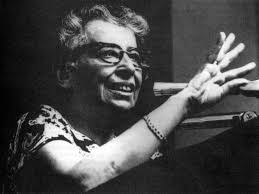
He notes that, although she was “far from ‘good looking’ in any commonplace way,” she was a “remarkably attractive person, with her razored gestures, imperial eye, dangling cigarette. ‘Szee here,’ she would declare with a smile meant both to subdue and to solace, and then she’d race off into one of her improvisations”(270).

“Mere Americans,” says Howe, were “dazzled by the immensities of German philosophy” she knew. But Howe notes that what really dazzled them was not her “thought” so much as the “style of her thinking”(270). His description of her style is worth noting, at length, because he’s trying to translate it into literature. She fills the rooms she dwells in with the “largeness of her will” and is “larger than her setting.”

She brissled with intellectual charm, as if to reduce everyone to an alert discipleship. Her voice would shift register abruptly, now stern and admonitory, now slyly tender with gossip. Whatever room she was in Hannah filled through the largeness of her will; indeed, she always seemed larger than her setting. Rarely have I met a writer with so acute an awareness of the power to overwhelm. (270)

But something was missing in this performance. He couldn’t quite grasp its “substance”:

Even while appreciating her performance, I often failed to grasp its substance.

Howe, nonetheless, tells his reader that he did learn something from his discussion with her about politics: “that politics has to be scrutinized in its own right and not just as an index of social conflict”(271).

But while she had command over thought and politics and a style that he emulated, Howe noticed that when it came to Jewishness Arendt’s attitudes were “hopelessly mixed.” And this had to do with her “hostility toward established Jewish institutions, especially Zionist ones.”

Hannah’s attitudes toward modern Jewish life, her feelings toward the Jews as they actually lived in all their frailty and imperfection, were hopelessly mixed. (271)

Howe notes how the book on Eichmann and all the attendant criticism deeply affected her. And in his reflections on her book, Howe takes the side of Norman Podhoretz who “saw Arendt’s book – rightly, I think – as an instance of that deep impulse among some Jews, especially intellectual ones, to make ‘inordinate demands…that the Jews be better than other people…braver, wiser, nobler, more dignified….But the truth is – must be – that Jews under Hitler acted as men will act when they are set upon by murderers”(275).

He notes that “such controversies will never be settled” and describes, in a sad manner, his last encounter with Arendt. At a party they shook hands, and she sharply took it away as she “turned on her heel and walked off.” The gesture was like a “wound” that remained with him:

It was the most skillful cut I have ever seen or received, and I was wounded quite as keenly as she wanted me to be. (275)

Arendt left him with a wound. And perhaps this marked his wounded sense of Jewishness as the chapter goes on to articulate.

…to be continued….