The Danger of (Over)Interpretation: On Adorno’s Plea Against Artistic Semblance and “Micrological Study”

images

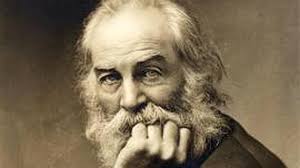
When someone sees a great artwork or reads a compelling novel or poem, he or she usually wants to know why it has such an affect.  Is it the choice of words?  Is it the theme? Is it the critique it levels on society? Humanity? Religion? As a literary and cultural critic, I know very well what its like to explore these questions.   When I teach courses on literature and philosophy, I often tell my students to see themselves as literary or philosophical detectives or psychoanalysts so as to figure out what is said and what is not said.  (The latter being more important than the former.)  For in doing so, one can get at the meaning of poems and art.  As Walt Whitman once suggested in his poem “Song of Myself,” we all want to get at the meaning of poems.  With this in mind, he tells his reader something counter-intuitive.  Don’t look for the meaning.  Just spend time with “me.”  I will show you that “you” are the meaning of each poem:

Stop this day and night with me and you shall possess the origin of all poems,

You shall possess the good of the earth and sun…..there are millions of sons left,

You shall no longer take things at second or third hand…nor look through the eyes of the

            dead…nor feed on the specters in books,

You shall not look through my eyes either, nor take things from me,

You shall listen to all sides and filter them from yourself.

While the thinker Theodor Adorno would disagree with this view, he would suggest that people not over-interpret art.  For in doing so, art becomes semblance and loses its singularity and becomes what he calls “semblance”:

When artworks are viewed under the closest scrutiny, the most objectivated paintings metamorphose into a swarming mass and texts splinter into words.  As soon as one imagines having a firm grasp on the details of the artwork, it dissolves into the indeterminate and undifferentiated, so mediated is it.   This is the manifestation of aesthetic semblance in the structure of artworks.  (101, Aesthetic Theory)

Adorno calls the act of over-interpreting “micrological study.”  By micrological study of any work of art, the artwork loses its “particularity” and its “concretion vanishes.”

But interpretation is not the only problem.  The artwork is also a problem.  For Adorno the truth of art “requires the purposeless.”  If an artwork is “different from what it is,” then it is truthful.  If an artwork is consistent with itself, it becomes not itself, but, for Adorno, a lie.   If there is a contradiction between what the artwork is and what it purports to be, then it is semblance.   The contradiction or rather irony marks the plight of modern art; its “dialectic.”

The dialectic of modern art is largely that it wants to shake off its illusoriness like an animal trying to shake off its antlers.  (102)

What Adorno is looking for is a kind of artwork that is so singular and unique that it can’t be identified with anything.  It must be powerless:

By the autonomy of their form, artworks forbid incorporation of the absolute as if they were symbols.   Aesthetic images stand under the prohibition on graven images…Hermetic works do no assert what transcends them as though they were Being occupying the ultimate realm; rather, through their powerlessness and superfluity in the empirical world they emphasize the element of powerlessness in their own content.  (104)

Addressing the claim that such hermetic works do not change the world and are regressive, Adorno argues that they are actually “progressive”(104).

In spite of the summary verdicts passed on it everywhere by those who are politically interested, radical modern art is progressive, and this is true not merely in the techniques it has developed but of its truth content.  What makes existing artworks more than existence is not simply another existing thing, but their language.  Authentic artworks are eloquent even when  they refuse any form of semblance.  (104).

Adorno sees no truth in artworks that simply serve as a mirror to who we are.  He sees these “enlightened” works as regressive.

In an age where we are so interested in creating a political system and a form of entertainment that truly represents us, how do we read Adorno’s admonitions?  People on Facebook, for instance, would hate what Adorno calls art.  Most people, after all, only click on things that they can “identify with” and provide a likeness to themselves.  There is no “ban on images.”  In fact, that is unheard of.  Perhaps Adorno would say that we are a regressive society because we simply can’t understand or tolerate singularity.

On the one hand, the tendency to over-interpret things keeps us from apprehending singularity.   On the other hand, most people prefer entertainment and art (if any) that is comprehensible and powerful (not hermetic and powerless).   We tend to believe, more like Walt Whitman, that we are the meaning of all poems and that our mundane experiences of reality are actually extraordinary.  Everydayness is not hermetic.  For Whitman, it is poetic.  But for Adorno, it seems to be regressive.

Who’s right?

Perhaps the best way to find out is to think about the singularity of art and its implications.  But what framework should we use to do this?  Because we are so wrapped up in seeing ourselves reflected in social media, media, film, Netflix, and politics, that its hard to imagine what singularity means anymore.


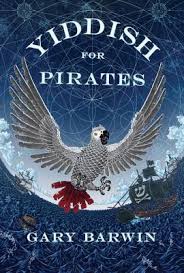
Yiddish for Parrots or Pirates? On Gary Barwin’s “Yiddish for Pirates”

Unknown

In a brilliant essay on literature and music, Milan Kundera argues that the “history of literature” can be understood in terms of “two halves.”  The first half of literature is comic.  He associates it with Cervantes’ Don Quixote and Francois Rabelais’ Gargantuan and Pantagruel.  In contrast, the second half of literature is realistic and historical.   Kundera associates it with Emile Zola, Walter Scott, and Honore de Balzac.   The two are at odds: “the chasm between the aesthetics of these two halves makes for a multitude of misunderstandings.”   Citing Vladmir Nabokov’s reading of Cervantes, Kundera notes how, for the realist, Don Quixote is “overvalued, naïve, repetitive, and full of unbearable, and implausible cruelty….poor Sancho, moving along from one drubbing to another, loses all his teeth at least five times”(58, Testaments Betrayed).   Kundera takes Nabakov to task by pointing out that while “Sancho loses too many teeth…we are not in the world of Zola, where some cruel act, described precisely and in detail, becomes the accurate document of social reality; with Cervantes we are in a world created by the magic spells of the storyteller who invents, who exaggerates, and how is carried away with his fantasies, his excesses….Cervantes’ great founding work was alive with the nonserious, a spirit that was later made incomprehensible by the Romantic aesthetic of the second half, by its demand for plausibility”(59).    By pointing out this chasm and the misunderstanding that comes out of it, Kundera suggests the possibility of bridging it with a new kind of novel.  The model, for Kundera, is Kafka’s Amerika.  Kundera calls it a “literature made of literature.” It manages, as Kafka envisioned, to draw on and subvert Charles Dickens’ David Copperfield by revising certain motifs in a comical manner.

“Literature made of literature” is a good phrase to use to describe what, in the Jewish tradition, is called Midrash and it aptly describes Gary Barwin’s newest novel, Yiddish for Pirates.  To be sure, the name of the novel suggests that pirating is a central motif of the novel.  But since it is more in a comical than in a realistic sense and because the narrator of the story, after all, is a parrot, I would call the novel an act of parroting.   But with a difference.  The parrot doesn’t merely take for this or that language or tradition and repeat it.  The parrot is a storyteller and his job, like that of the Torah, is to convey not just a memory but a moral teaching.

Throughout the novel, we find parroting at work in the plot, characters, and humor. By way of such comical parroting, Barwin is able to bridge the gap between the comic novel and the realistic novel.  What is most fascinating is the fact that the subject of the realistic novel, which he interpolates into the comic novel, is something that has never been addressed by way of a comical postmodern Canadian novel: the Jewish experience of the Inquisition, living as Marranos, and the journey to the New World.

Because of its comical elements, its focus on Yiddishkeit, and its nuanced reflections on spatial and temporal displacements, Yiddish for Pirates suggests a literary experience that can be found in the Torah and modernist fiction.   It gives the reader an opportunity to experience something akin to an embodied comical faith.  One can experience this through a reading that cares for a plot and characters whose relationships over time and space – which are “pirated” from biblical and historical sources – can be the source suffering, hope, and comical joy.    The irony is that this kind of faith requires a good sense of humor coupled with a strong sense of Jewish history and its vicissitudes.  One has to, to play on the novel and use a metaphor for embodiment, know how to ride the waves.

Faith, Time, and Learning

In a 1956 interview with William Faulkner, the interviewer, Jean Stein, asked Faulkner about who he thought the greatest writers of his youth were.  He replied that Thomas Mann and James Joyce were.  But he added that one must read them “as the illiterate Baptist preacher approaches the Old Testament: with faith.”  The fact that Faulkner saw the link between literature and the “Old Testament” rather than the “new” is telling.    What is the link between modernist literature (as we find in Joyce and Mann) and the Torah (“old Testament”)?

Modernist fiction is very interested in the relationship of fragmented time to plot, character, and narration.  The characters and the perspectives of the narrators are limited.  Likewise, faith, in the Torah, has a lot to do with fragmented time and limited perspective.   Characters and readers are rooted in time and its jagged temporal unfolding.  As the Jewish philosopher Franz Rosenzweig noted in his opus, The Star of Redemption, Judaism consists of three temporal relations that are totally distinct from each other: Creation (Past), Revelation (Present), and Redemption (Future).   Time is, for this reason, measured in terms of the process that the Jewish people have to go through before the arrival of Redemption.  And this process need not be linear it can take on a number of different rhythms.

But time just doesn’t happen.  According to Rosenzweig this temporal process includes another three other points of relation: God, Man, and World.  Time, in other words, unfolds in terms of man’s relationship with God, God’s relationship with the world, man’s relationship to the world, etc.   Harold Bloom, in his book Agon: Towards a Theory of Revision, helps us to better understand what this means.  He notes that the unfolding of time has, for the Bible (Torah), a moral and educative meaning.  Through time, the Biblical character learns about God, the world, and him or herself: “Because learning is a process in time…The thought-form of the Hebrew Bible depends upon a movement in the fullness of time, a movement in which moral learning can take place”(59).   To Bloom’s observations, I would add that this kind of “moral learning” is also connected to two other elements found throughout the Torah: 1) a movement from place to place (the process is, so to speak, a journey) and 2) the process of living through different relationships.   All of these elements suggest that Judaism is temporal, relational, and embodied.  Judaism is not a religion dominated by a spirituality that transcends the world, history, and humanity.  It is a religion that is primarily relational. 

The same can be said for Barwin’s novel.   The irony is that the main relationship in the novel is comical: it is between a parrot and a human being.  And, like many a Kafka story, the reader, at some point, is startled to discover that their narrator is an animal.  It is the animal who is the cipher of tradition and through the animal the relationship and the story lives on.   But unlike many of Kafka’s animals, this one tells jokes.  Perhaps, by trusting the comical animal narrator, one has, in a sense, a kind of comical faith that “parrots” the faith that is found in the Bible?


Moishe and Aharon: Pre-Modernity, History, and the Model Relationship

Instead of revising modern history, Yiddish for Pirates decides to focus on the relationship between Jews and four pre-modern worlds: the world of the Eastern European shtetl (in which Yiddish was the lingua franca), the world of the Inquisition, the world of Pirates at Sea, and the world of the frontier (which took Columbus on a search for the New World and others for the “fountain of youth”).   Barwin’s decision to focus on this time is timely since it suggests, with each world, a different relationship with history that needs to be given a new kind of figuration.

At the very outset, Yiddish for Pirates asks the reader to take the relationship between a 500-year-old Parrot narrator named Aharon and his companion (the hero of the novel) Moshe to heart.   Drawing on and revising the Biblical relationship of Moses to Aaron, the novel plays on the Biblical text that notes how Moses had a speech impediment and needed his brother to speak for him.    The irony is that while Moshe remains a dramatic and heroic character, the narrator is comedic and anti-heroic.    The juxtaposition of the two makes for a rich text and gives the reader a lot to think about.    And it is through their relationship – in a Rosenzweigian and Bloomian sense – that time unfolds and learning happens.

The first relationship of the novel is established with the reader and it is at once comical and serious.   Aharon says hello to the reader and one can hear a voice that is at once comical, very intelligent, and Yiddish.  It also suggests a voice that knows too much, remembers too much.  And in so doing bridges the chasm between the comic and the realistic/historical.

Hello.  Howaya?  Feh.  You think those are the only words I know? Boychick, you don’t know from nothing.   You ain’t seen knowing.  I may be meshugeh crazy, but I know from words.   You think I’m a fool shmeggege?  I’m all words.

Hello? If you want the story of a life, don’t wait for your alter kaker old gramps over there to wake up.  Maybe he’ll never wake. But me? Listen to my words.  They tell some story. Because I remember.  Sometimes too much, but I remember. 

To be sure, the comic voice gives the reader a way to identify with finitude that is not tragic.  It is familiar and intimate in ways that family members are with each other.  (The novel suggests a familial relation in the epigraph: “For the whole misphocheh (family), fore and aft.)  And this is the voice that accompanies not just the reader but Moses on his journey from Europe to the New World.

Barwin, thoughout the novel, also stresses the burden of memory and the responsibility of telling the tale.  But this is, like many a human endeavor, hard to accomplish.  We try to remember.  But we often forget.   As Aharon jokingly notes, “I speak many language and I’m fluent in both remembering and forgetting.”    But, in truth, the pain of losing the memory of Moishe, for the narrating parrot, is great since he takes Moishe as a loving companion.   It’s his  memory and the story itself, however, that distract and have a life of its own: “The horizon is always the story, and as soon as we get there, it’s somewhere else.”  Displacement is at work everywhere.  It is also the substance of exile.   Rather than take this in a tragic sense, Aharon conveys displacement in a tragic-comic sense.  Through his humor, he makes the best out of exile.  He embodies it through his humor.

For instance, in a scene where a battle is described, Aharon injects humor so as to avoid too much pathos and drama.  Notice the punch line: “It wasn’t much of a battle…There was a the customary disemboweling, cutting off of noses, hands, and of shmekles”(7).

Moishe is portrayed as leaving the shtetl in Eastern Europe for the high seas and adventure.  At the outset he’s depicted as a schlemiel.  He doesn’t want to fight on Shabbos.    And this, at the outset of the novels four parts (Air, Fire, Sea, and Land), suggests his initial comic condition as a luftmensch (a man who lives, comically, on air): “A boychik with big ideas, his kop – his head – bigger than his body”(11).   The body is a “scrawny map of himself.”  As the novel progresses, Moishe matures and his body becomes strong.  He goes from a schlemiel to a mensch.

But Aharon, the  parrot-narrator, remains a comical figure throughout.  And for good reason.  As Kundera notes, while the playfulness of the narrator – which we see in Cervantes and Kafka – gives freedom to the modern novel, the realistic narrator is bound to detail and pathos.    Aharon’s comedic view of himself and things – which is mediated through his constant self-deprecation and use of Yiddish – gives him a kind of freedom and also makes him into an endearing schlemiel of sorts.  He doesn’t age, while Moishe does.  He may be “grey” and old but he’s young because of his comic demeanor.

An important aspect of the novel is the coupling of humor with friendship.  It is more interesting than the journeys through the Spanish Inquisiton and the journey to the New World that are embarked on in the novel.  It survives all of the realistically depicted battles, acts of revenge, and exploits that are found throughout the novel.    And, in many ways, it – is what keeps Yiddishkeit alive.  After all, the parrot knows more Yiddish than anyone, even Moishe.

Aharon’s epiphany at the beginning of the novel and his reflection on loss at the end demonstrate this powerful motif that parrots the Torah and its stress on the power of relationship and family.  Barwin’s poetic cadences bring the importance of language to this relationship and its embodiment.  It shows us how time unfolds through a relationship which is textual, physical, and comical:

I saw Moshe and the boychick was soon imprinted like words of indelible ink on the farkakteh page of my brain.  Who decides such a thing? Like waking up the morning after shoreleave with an anchor tattooed across your hiney, it isn’t, emes, exactly the result of choice.  But I need to be needed and the poor shnook needed me.  (18)

While in the Torah, Moishe and Aharon are real brothers and their being together is meant to be, here it is a friendship that is meant to be and it is based on a profound need of the other.    The last few pages of the book depict the moment when they both reach the Fountain of Youth, but Moishe takes the more dangerous route and ends up dying.  Aharon, however, takes a different route and accidentally (like a schlemiel) stumbles into the fountain.  He lives while Moishe dies. But he doesn’t see Moishe’s death.  He is separated from him in his last moments:

I pushed myself through.  How? Like anyone else, first one foot than the other.  Immediately I began to fall.  I only knew which way was up because it was the direction I wasn’t going. Then I found my wings and began to flap. 

I saw bupkes.  Nothing. Nada. I flew in little circles, not knowing where the walls were, not knowing how far was down.  I heard the gurgling water.  The Fountain or the shpritizing of a kvetchy sea serpent. I could not tell.

Then a rumbling.  Some kind of upset tuml in the kishkas of the cave. Then raining down of water from above. Then – Sh’ma Yisroel – the vessels of the world burst open.  (332)

The Kabablistic imagery and the revelation are coupled with comedy.  He falls into the fountain and feels renewed but then he remembers Moishe.  And Barwin goes on to parrot many different motifs from the Torah regarding Moses failure to reach the Promised Land:

Moishe? Where was Moishe? What had happened?

…Though I burned with pain, I searched. 

My captain.  My Moishe. My other.

He was gone. 

Nothing but the unbridled river flowing over the open pit of the Fountain.  It was a jumble of broken rock.  Moses lost before he reached the Promised Land.

They all were gone.

….

Moishe. My captain. My shoulder.  (332-333)

But tragedy doesn’t have the last word.  Comedy does.  And even though it is bittersweet, it shows us how Barwin writes a “literature on a literature” in which a character develops, in the Bloomian, Biblical sense, and in which time is articulated through relationship.  In the end, he survives, like many a schlemiel and like many a Yiddish story, through humor.  He embodies the story:

Nu. So there’s the question.  And then what happened?   Let me tell you. Five hundred years.  It happens.I t’s takeh why I have these words.

Was I shpritzed by the Fountain when I fell? Or did it pish on the gantseh megillah, the whole story? 

They say when I tell it, it seems as if it goes on forever. Na. I was that story, have become the whole shpiel.  Have passed it down to a long line of pisher parrots who also tell it.  And tell it to you now.  What, they were busy with something else? Any life is just another life out of order.

As long as you have the words.  (335)

Aharon, drawing postmodernly on Woody Allen, adds the punchline that he parrots/pirates (albeit substituting the words “I don’t mind dying” with “I want to live forever”):

Emes, I always said: I want to live forever.  I just don’t want to be there when it happens.  (335)

But the final joke (which is also said earlier in the novel) and punchline of the novel addresses the anxious quintessence (the name of the last chapter) of the Jew/Yid:

Which reminds me: A man goes to the theater with his son.

“One adult and one child,” he says at the box office.

“That’s no child,” the ticket seller says, “He looks at least thirty.”

“I can’t help it that he worries.”

In this joke, Barwin manages to bridge the gap between the two halves of literature while, at the same time, articulating an understanding of Jewishness over time.  It is at once comic and tragic.  In this joke, we hear family, trauma, and history and we see…a shoulder shrug.  Like the parroting narrator, the subject of the joke, the Jew, is at once old and new.   While Jews have been stressed by history, humor has helped them (and this novel and its parrot narrator) to journey (and oftentimes flee) and yet live on.  And hopefully it will continue to do so.  This lesson – which is embodied in Aharon and this joke – is worth parroting.  Perhaps this is what comic faith is.  As with all jokes, its all in the timing.


Happy Birthday Saul Bellow!

images-3

Today is Saul Bellow’s birthday.  In honor of his birthday, I have decided to hyperlink several essays I have written on his wonderful work.  Enjoy!


Saul Bellow on Shalom Aleichem’s Motl.

Saul Bellow’s Literary Question: What Happens When a Schlemiel Nearly Dies While-Watching-A-Trial? 

A Schlemiel With a Russian Revolver: On the Un-Heroic Conduct of Saul Bellow’s Herzog – Part I

A Schlemiel With a Russian Revolver: On the Un-Heroic Conduct of Saul Bellow’s Herzog – Part II

A Schlemiel With a Russian Revolver: On the Unheroic Conduct of Saul Bellow’s Herzog – Part III

Saul Bellow’s Herzog on “Downward Transcendence” and the “Humiliating Comedy of Heartache”

On Harsh Realism, Ethical Hope, and the Meaning(s) of Jewishness in Saul Bellow’s Herzog – Part I

On Harsh Realism, Ethical Hope, and the Meaning(s) of Jewishness in Saul Bellow’s Herzog – Part II

Martin Buber and “Bogus Grandeur” – A Note on Saul Bellow’s Literary Treatment of Buber in “Herzog”

Walt Whitman Didn’t Touch: On the Passion of the Visual, Poetic Mysticism, America, and You

images-2

I love poetry that – amidst its declamations – speaks directly and passionately to the reader.    Paul Celan uses the word “you” in many of his poems.  Although the word “you” may refer to his soul, his mother, a lover, God, and/or you the reader, the passion of dialogue that he sets forth remains.  In the poem, “ON EITHER HAND” Celan speaks to you, speaks of us, and points out the space that both joins and separates us from each other:

How

the world opens for us, right through the midst

of ourselves!


You are

where your eye is, you are

above, are

below, I

find my way out.


O this wandering empty

hospitable midst.  Apart,

I fall to you, you

fall to me, fallen away

from each other, we see

through

The “hospitable midst” is a place that relates us.  But notice that we don’t touch.  We see (“you are/ where your eye is, you are”).  The relations are in space and are visual.

Kenneth Patchen, in a book he wrote in 1941 entitled The Journal of Albion Moonlight (which some have argued, was a major precursor to the Beat movement), claims that what’s wrong with America (at that time) is that America doesn’t know what it means to touch the other rather than see the other.  He blames the poet Walt Whitman for this (what he calls) “sin.”

I never learned to cry properly as a child. I want to cry now. we are all so apart from each. We never touch. I was never taught to touch another human being. No college in this big land has such a course: to touch, to place your hands on someone….Walt Whitman didn’t want to touch people; we wanted to paw over them….He did not know this because he always wrote as though he stood in a public room….He was a homeless-sexual. Americans run to his sin. (24)

Is this claim valid?  Was Walt Whitman confined to the visual, a “homeless sexual” whose poetry advocated seeing but not touching?

The first words of “Song of Myself” are passionately directed toward “you.”

I celebrate myself,

And what I assume you shall assume,

For every atom belonging to me as good belongs to you.

Whitman’s poetic mysticism is directed toward you.  He wants you, the reader, to trust him as one would trust a lover.  He wants you to believe that he knows what you are feeling and that he feels the same thing.  He speaks to you, the everyman; not you, the elitist:

Have you practiced so long to learn to read?

Have you felt so proud to get at the meaning of poems?


Stop this day and night with me and you shall possess the origin of all poems,

You shall possess the good of the earth and sun…..there are millions of sons left,

You shall no longer take things at second or third hand…nor look through the eyes of the

            dead…nor feed on the specters in books,

You shall not look through my eyes either, nor take things from me,

You shall listen to all sides and filter them from yourself.

Whitman’s passionate promises to you are astonishing.   It seems that, contrary to Patchen, Whitman wants to leave the text behind and speak to you, face to face.  However, much of Leaves of Grass is a long epic listing of differing things and people he sees.  But one could argue that he wants to be touched by what he sees.  However, strangely enough, in “Song of Myself,” he says he wants to be touched by something one cannot see; namely, the “air”:

The atmosphere is not a perfume…it has no taste of the distillation…it is odorless,

It is for my mouth forever…I am in love with it,

I will go to the bank by the would and become undisguised and naked,

I am mad for it to be in contact with me.

Yet, he spends the majority of the poem not talking about the “atmosphere” (or as Celan might say, the “midst”) so much as people and things he sees.   It’s as if he wants to be touched by what he sees, but he can’t say it.

At the outset of the poem, “Crossing the Brooklyn Ferry,” Whitman speaks to “you” in terms of a visual mysticism but he registers his passion with a bit of alienation by calling what he sees “curious”:

Crowds of men and women attired in the usual costumes,

How curious you are to me!

On the ferry-boats the hundreds and hundreds that cross, returning home, are more curious than you suppose,

And you that shall cross from shore to shore years hence

Are more to me, and more to my meditations, than you might suppose.

His mysticism here is populist but abstract.  He is “with” you.  But in a way that is less passionate than “Song of Myself.”  He notes how, like you, I have also “looked” and felt as “you” do:

It avails not, time nor place – distance avails not,

I am with you, you men and women of a generation,

Or ever so many generations hence,

Just as you feel when you look on the river and sky, so I felt,

Just as any one of a living crowd, I was one of a crowd,

Just as you are refresh’d by the gladness of the river and the bright flow, I was refresh’d,

Just as you stand and lean on the rail, yet hurry with the swift current, I stood yet was hurried,

Just as you look on the numberless masts of ships

And the thick-stemm’d pipes of steamboats, I look’d.

Perhaps Whitman wanted to touch and be touched by what he saw.  But he couldn’t.  And he felt alone.  Patchen feels alone as well (as he writes in the comfort of the lonely woods of Big Sur, California).  What I find so interesting is that Patchen believed that by openly declaring that one wants to touch the other (in this or that poem, fiction, etc) one is forging a new kind of America, one that is more tactile and less visual.  But the fact of the matter is that all mysticism is based on a longing to not just see but to also be touched by the other.  Celan, like many mystics, was interested in “nearness.”   The poetic visualization that we see in Celan emphasizes the relational aspect of my relation to “you.”  He realizes – perhaps like Whitman in “Crossing the Brooklyn Ferry” – that one is alone in a crowd.  One cannot become “one” with the other; one can only be in distance or proximity in relation to the other.  There is a distance that can only temporarily be bridged through touch.

What’s the takeaway? Both Whitman and Celan evoke some interesting questions that need to be asked since, after all, all words are for you to read.  The best and most relevant poetry is about us: me and you. It is about the passion of relationality and trying to figure out where I am in relation to…you…and vice versa.

Shouldn’t America be a nation whose poetry and whose poets look to bring me close to you in a visual and tactile sense? Or have we given up on the mystical possibilities of poetic relation in favor of the sitcom or Reality TV show where all relation is staged from one controversy or screw up to another?  Has the passion of relation been turned into the love of sarcasm and the audacity of insult?  Isn’t the America Walt Whitman envisioned founded on the passion for the other and the desire to find what we hold in common?  Is that our America?  What is our, to play on Celan, our “midst”?

Perhaps Walt Whitman – in his longing to bridge the gap – was looking for an American form of midst-i-cism (and not a mysticism, in the traditional sense).  Perhaps America is about almost coming close in a visual and a tactile sense.  Perhaps that’s what lies between Patchen and Whitman.


Going Backwards, Falling Forwards: On Theologies of Contraction

images-1

I have always been astonished by the argument, made by Walter Benjamin, that it is better to go backwards than forwards. Against the idea of progress and growth, Benjamin claimed, in his reading of Kafka, that there is a greater task for man.   Seen within the framework of progress, to go backwards is to be a stupid and stubborn pre-modernist.   It is to be blind (intentionally and unintentionally) to the greatness of all things modern.   But, contrary to this view, a case can be made for why going backwards, against the wave of modernity, is the best way to keep the modern march of history and time in check. Through creative invention (in a literary sense) – which Michel Serres equates with going backwards in time while at the same time dying –life can be renewed through a heightened ethical-aesthetic sense of vulnerability and weakness.

For Benjamin and Serres, the greatest task for human kind consists in recovering or redeeming what has been destroyed, forgotten, or lost by history. It happens through what Serres calls “reserve” or contraction.   This task has, for both Serres and Benjamin, an aesthetic dimension that is based on a kind of literary and theological adventure. It brings one into a space of childhood and vulnerability. Through such a redemption, the world – which according to Serres, is based on endless expansion – can be altered and we can become “human.”   The sun will be eclipsed by withdrawal and contraction.   What I find so fascinating about this claim is that it suggests that smallness has a theological and ethical resonance.

My difference with Serres has to do with his reading of monotheism and its relationship to writing. He writes of smallness in terms of framework based on the binary of power and powerlessness; and for this reason, he associates smallness with weakness. It is a Christian and not a Judaic view of aesthetics and theology.

His view, in other words, is one of pity. Like Jesus, the artistic creator dies but, at the same time, it is “always in the process of being born”:

The child. The creator, dying, goes toward birth and childhood, in the other direction of time.   This is why the work does not use itself up and resists the monotony of history, whose flow runs toward the greatest probabilities of power, of glory, of death. Going toward childhood and birth, it is always in the process of being born. (104)

His paradoxical view of the (artistic) creator is that he is “born old and dies young, the opposite of those who are realistic.”   Serres suggests that the fundamental difference between those who hold with history and those who are creators is that the person who holds to history and the world cling to “the probable” while the creator who goes backward clings to the “improbable.” The death he speaks of consists of a loss; namely, of the realist. The death is symbolized in a willingness to risk it all for whatever may come.

The risk one takes in becoming a child is not for the sake of “power and glory.”   Serres waxes religious when he states the case. In the most direct manner, he suggests the possibility that salvation depends on risk that is not calculated (and “prudent”):

Here it is: whoever wants to save his soul accepts that he may have to lose it, and if you only want to save it, you will certainly lose it. A winning formula that is the inverse of prudence, which strains toward power and glory. The one fights in exchange, and the other throws itself into the gift and its pure hazards. (107)

For the child, existence is the gift toward which the soul must “throw itself.” But this gift is dangerous; it is “not without its hazards.” What could those hazards be?

Serres, in a literary manner, suggests that the hazards of going backwards may include a form of depression not joy.   But one doesn’t simply go backwards. One must also “hold back” if one is to become human.

If man holds back. We arrange the world for ourselves alone, now exclusively political animals, inexorable winners of the war of survival, enclosed forever in the city built without limits….The human species takes over and is going to reign, is not wary of itself, does not hold back, withholds neither its power nor its science nor its politics. The hominid must learn to hold back, must learn modesty and shame; and his language must learn understatement; his science, reserve. To persevere unceasingly in its being or in its power characterizes the physics of the inert and the instinct of animals. Doubtless humanity begins with holding back. (117)

Serres defines humanity by way of its ability to curb its power. It is an imitation of God (who, writes Serres, withholds his power).   Although he doesn’t mention Jesus’s name, Serres suggests that God welcomes all and becomes weak: He “holds back with modesty and shame”:

I see that God welcomes the gods, that he does not bring his arm down on the devil, because Satan, obviously, still takes all the powers of the world with no protests from God. I observe that he allows the angels to rag on him and the sweet crowd of saints to compete with him, that he even disappears a bit in the crush of wings, aureoles, and robes, that one can hardly distinguish him amid the palms. I discover that God is good and maybe even infinitely weak. He holds back with modesty and shame. Not long ago, he even allowed himself to be killed without reacting in any notable way.   (118)

After making this confession of sorts, stating his belief in the possibility that God may be “infinitely weak,” and pledging to imitate God’s weakness, Serres describes a new view of Creation and what we “owe” God and life:

We owe life to the restraint of God, created as we were in the margins of his restraint. We also owe life to the all that gaps left by the other living things, the Earth, the atmosphere, the waters, and the flames that, in return, owe their existence to the marginal reserves that we leave them. (119)

Our restraint, in other words, towards the earth is the expression of a debt to God and God’s restraint. This economy of debt – based on the risk of faith and on God’s “infinite weakness” – comes with a set of moral descriptions and prescriptions:

Morality demands this abstention first of all. First obligation: reserve. First maxim: before doing good, avoid the bad. To abstain from evil, simply hold back. Because in expanding, good itself, just like the sun, very quickly becomes evil. (119)

In this divinely based ethics, expansion is associated with evil and contraction with goodness.

And, for Serres, this is the condition for the possibility of aesthetic and true cultural creation: “The first obligation conditions life, creates a readiness for a sense of emergence from which novelty will come.”   By having “reserve,” by contracting rather than expanding, we not only imitate God, we also become “ready” for something new.   Aesthetics, in this sense, is prefaced by ethics and theology.

The “new,” says Serres is born out of this backward movement: “The new can be born in chiaroscuro. The gentle man holds back. He reserves some strength to retain his strength, refused in himself and around him the brute power that is propagated.” He calls this “reason.”   It does “not submit to an empire, in particular that of its own expansion.”   For Serres, one kind of reason can resist another which seeks to reproduce itself and its space (he calls this kind of reasoning, psychotic and mad):

The gentle and reasonable man can thus disobey reason, so that   margins are born around him, to provide for novelty. He invents good tidings. Finder, troubadour.   (120)

Serres argues that “good tidings” are ‘born at midnight: without sun.” By “investing our power in softening our power,” we become “human.” And in becoming “human,” “man does not bring his arm down on the weak, or on the strong, out of resentment, or even on those proved to be bad. Humanity becomes human when it invents weakness – which is strongly positive”(120).

The problem with Serres’s argument is that it really isn’t an argument. It is based on a belief that reserve and contraction is greater than expansion.   Strangely enough, Serres argues that the best proof of invention can be found in understatement. And this is sensible. The best kind of saying is a dark one and one that imitates the withdrawal of God (and “perhaps God’s infinite weakness”). By keeping in reserve and not dominating the world with our words, by letting things suggest otherness, we ready ourselves for the revelation of things that are unexpected and improbable.

The only problem with this kind of faith is that it is based on a Christian notion of contraction as good and expansion as evil.   Perhaps it would be better to say that contraction is expansion. In becoming small, we become big.   The paradox remains and so do my questions because in the Jewish tradition of Kabbalah, God’s contraction creates the space for a dialectic between God and the world; in this dialectic God can dwell and expand in the world and through the world; there need not be a contradiction between materiality and spirituality.     Smallness, in Serres reading, is a kind of pathos and has tragic resonance. But it can also have a comic resonance. That is the option which really interests me since it doesn’t premise itself on a God who is constantly in reserve or weak or beyond relation. To be sure, there is something tragic-comical in the relationship with God.   By focusing solely on contraction, this is missed.

As Gershom Scholem notes, tsimtsum in the Jewish Kabbalistic tradition is not solely about withdrawal.   In Kabbalah there are two movements – of approach and withdrawal.  By becoming small, one makes room for the other (the little other and big Other).   One exposes oneself and one’s judgment to the ridicule and laughter of the other.   I’d like to go out on a limb here and say that this is a comic kind of exposure: it doesn’t express withdrawal alone so much as a simultaneous withdrawal and exposure within a certain kind of family (audience) context. (Michael Wyschogrod reads Jewish theology in terms of a familial relation; rather than in terms of a Creator who withdraws completely from creation there is a give and take between God and his “family,” so to speak.)

There is a weakness (contraction) and also a kind of empowerment (expansion) that comes with an encounter with the God of tsimsum.   In a tragic-comic relation, there can be a moment in which one feels like a child and loses one’s prudence, when expansion seems to have been lost, and one feels like a schmuck or schlemiel (in the bad sense). But, in the end, it is not only the goodness of the comic character that redeems it; it is the family (audience) that forgives.

Jewish comedy epitomizes contraction and expansion and can be read in terms of a theology that differs from Serres’s. It need not be focused only on the figure of weakness and reserve.   There is a give and take in Jewish comedy so that when one goes backwards (and contracts), one can also, simultaneously, fall forwards (and expand).     Here, it is the give and take of comedy that can makes us human; not the pathos of reserve.   Imitating God, here, suggests a comical kind of give and take that need not take world and its expansion as evil or tragic.


Coming Out of a Daze (A Reflection on Melancholy, Poetry, and You)

Unknown-3

Things these days change so rapidly and they fall away without giving notice. The world – from time to time (and for some, moment to moment) – disappears and relationships lose their vitality.   When one’s fantasies or dreams are crushed, this speeds up the process of real estrangement and loss.   And then the option to mourn is there before us. The bitterness toward this loss evokes the thought that what was…was a fantasy.   Slavoj Zizek calls the dissolution of fantasy – which he sees active in every relationship – melancholy.   Melancholia is a preface to what he calls – following Jacques Lacan – the Real.

But is the Real always in the wake of loss?

Julia Kristeva calls the person who goes through this state of loss the “blank subject.”

A blank subject…at the dump for non-objects….For he is not mad, he through whom the abject exists. Out of the daze that has petrified him before the untouchable, impossible, absent body of the mother, a daze that has cut off his impulses from their objects.

The problem is that the blank subject, for Kristeva, can’t seem to come out of his daze. He has no desire since his daze has “cut off his impulses from their objects.”

It is out of this state that one of my favorite poets, Paul Celan writes. He lost his family in the Holocaust and struggled with melancholia. He seemed to be in a perpetual state of mourning.   But his poetry looks to leave the “daze” that Kristeva writes of behind. His poems often seek for relation.

By seeing himself amidst relations, he is able to think through and recover his desire.   The object of his desire, in many of his poems, is “you.” This you could be the reader, his soul, his mother, or God.   In a poem called “Largo,” from the book Snow Part (Shneepart), one can hear Celan’s voice in conversation with you. He is always already involved with you…but the relation comes out of a daze.

Sameways, you, hearthfaring near one:

Larger

Than

Death we lie

Together, the autumn

Crocus swarms

Under your breathing lids


Celan notes the world around “us” and near “you.”


The ouzel (blackbird) pair hang

Beside us, under

The height of our white, fellow –

Traveling


Meta-

Stases.

The world around us and the black birds “hanging” besides us are “under” the height of “our” “white, fellow traveling,” spreading diseases. The relationality, here, is at once redemptive and melancholic. One of the relations, above, spreads death. Although it is deemed a “fellow traveling” it is not friendly; it is deadly.     This “fellow traveler” is contrasted to the space “we” share which is “larger than death.”  Take note that the fellow traveler is “ours,” which suggest that its presence relates not to me or you but us.  However, although the space “we” share is larger it is not un-related to and it does not negate death.   The other traveler awakens me to “you” and what “we” share. It brings me out of the daze and into the real relation with death. But, at the very least, there is desire.  And the relation to death, in this poem, is something that is shared, though singular.

This kind of poem and this kind of message is inspiring in the sense that it shows that one need not remain a “blank subject” in the “dump for non-objects.”   It also shows us that this intimacy (between me and you) and this relation to “meta-stasis,” isn’t a fantasy.   Your “lids” are “breathing.” They are alive, and they are near; while “meta-stasis” is “above” us and the pair of black birds (perhaps a sign of melancholia) is near us.

Melancholia may certainly wipe us out and make us blank (or black/dark) subjects but what poetry can do, what the other can do, if we are willing to go to her, is fill in the blank and end the daze of lost relations. Celan turned toward language because he wanted to come out of the daze and live again. And he knew that this language was toward the other.

His poetry gives this hope to the reader. And today, when things are so insecure and unpredictable, when Facebook and Twitter make us glaze over, more and more of us are becoming blank and dazed subjects.   The language we use, the reflections we partake in, only increase the waste that piles up before us. Only by turning our language toward “you “ – whoever or whatever you are – can there be the hope of recovering desire and relation. Without this hope, we become not just a blank subject; we become one of the non-objects in the dump. In the dump there are no fantasies and there is also no hope.

Reading this poem helped me to see that. And I hope others can as well because you or I can barely see the “traveling metastasis” that is with “us” if we are not together (not just on the page, but in reality).   Like the voice of the poem, I am looking and speaking to you, the “hearthfaring near one.” I must.

Celan insists “you” aren’t a fantasy and that we desire to be close to each other.  Near you, I am home (or at least until our “fellow traveler” reaches us).


Taking Risks or Eliminating Them: On Bullies, Sophists, and Philosopher-Writers

Unknown-2

Throughout the Platonic dialogues, Socrates takes aim at Sophists and writers.     The problem Socrates has with the Sophists is that they may sound good but, in truth, they don’t know what they are talking about.   They are masters of language, not thought.   By way of analogy, Socrates suggests that to follow a Sophist is to follow a blind man (the blind are leading the blind). In contrast, the thinker can see what is in front of him by virtue of a kind of dialectic or logic that transcends language and writing.

Like the German philosopher, Friedrich Nietzsche, Michel Serres argues that writing and rhetoric are spoken for in the Platonic dialogues.   Writing can’t speak for itself. Plato turns the Sophist into a puppet or straw man who is, from the start to finish, immolated by the bull, Socrates.   Socrates plays the analyst to the Sophist writer. He bullies him:

Socrates, the analyst, demands short speeches. He interrupts rhetoricians and rhapsodies, he barks, makes fun of them. His questions cut up the expose into brief phrases of dialogue, and dichotomy brings the proposition back to the minimal length, that of a word. (81)

Serres likens him to a “myopic bull” that refuses to be affected by writing:

The myopic bull, neck lowered on the ochre sand, throws his tons and his works, in rectilinear orbit….Bull Socrates, globular eyes, bald forehead, fawn’s muffle, ugly to the point of being scary, unseats with one blow of his head the disarticulated Sophist puppet. (83)

Serres sees Socrates’ battle as “senseless.” He suggests that the philosopher learn from rather than bully or destroy the writer.   He calls this person “philosopher-writer.” He “tries things out, he essays.”

He experiences, experiments. He tests, he assays: the two ancient chemistry, of alchemy even, that has returned to common usage…The philosopher writer experiments on language by constructing it, just as the gesture of the artisan continues, prolongs the lineage of his art, musical staff or line of meaning, and as much as it can, advances. (79)

In contrast, the “analyst (philosopher) stops, breaks theorizes” while the writer “pursues connections, fabricates, because he believes that one knows nothing of what one has not practiced professionally. Cant produces a sterile knowledge of dead things. To know language, one must make it, too.   One must test or assay it”(79).

Challenging the rationalist conception of the essay, Serres suggests a different kind of essay that may have a “nonsensical result” because it, since it assays, takes risks that expose one to the unknown:

A faithful assay or essay sometimes, often, produces a negative, opposed, nonsensical result. Objects take revenge just as language does, just as the earth does once one no longer works it. They reserve the unexpected, do not react as foreseen. Experimentation carries a risk – of the aleatory, the unknown. (79)

Serres suggests that the philosophy-writer needs to expose himself to creation rather than elevate him or herself above it.   Writing is exposure, vulnerability, and risk:

One exposes oneself when one makes, one imposes oneself when one unmakes. When one unmakes, one is never wrong, in effect. I know of no better way to always be right….Fragile, naked, precariously balanced, the writer relies only on talent that never has the solidity of method: with no school to protect him by means of dialogue and a fixed position in the group, without imitator or master, he explores alone. He can thus miss, make mistakes, or lose himself. He bears this possible error and this potential to fall like wounds on the flank of his work. The pain and courage of wandering in order to pay for newness…..He never knows who will enter the next page. Never mind the fall, he tests! If he loses he will not have done anything wrong, and if he wins he will rejoice. (80)

Instead of having Socrates battle with or bully the Sophists, he suggests that philosopher learn from the writer.   He likes the unity of the two to a comic couple that many scholars think gave birth to modern literature: Don Quixote and Sancho Panza.

In other words, we need to picture the relationship between the writer and philosopher in terms other than war. Comedy helps us to have this vision:

An old savage philosophy where peace cannot intervene except between a derisory Socrates seated on his ass and a beautiful, discomfited Plato perched on his mare, running after pure ideas – Don Quixote and Sancho Panza. (85)

There can be “no philosophy without this appeased pair, laughing about useless battles that have simply become rituals, through commemoration”(85).     Serres is spot on. The philosopher must learn to love writing and learn from writing in stead of warring with the writer. The philosopher must be willing to become a “philosopher-writer” who takes risks and exposes himself to failure, the aleatory, and the unknown.   That is the risk of assaying (essaying) language and reality.   One may discover things that are surprising. On the other hand, one can also fall into the darkness.

If the philosopher cannot deal with the risk posed by writing (creation), then he may become a bully and repeat a senseless battle.   Instead of doing this, the philosopher must be willing to learn from the writer.   Serres adds that the philosopher must be willing to learn from language with love and ask for its support.   Although this move seems stupid and naïve to the philosopher, Serres suggests that it is necessary if the “adventure” of knowledge is to truly begin.   It can only begin if the philosopher takes the risk and entrusts him or herself to the experience of language. It can only begin if the thinker is willing to take risks rather than eliminate them.

The interesting thing about all of this is that Kierkegaard suggests that, despite his bullying tendencies, Socrates took a risk when he made an assertion. He stated it as a hypothesis worth risking oneself over rather than something self-evident and true.   (i.e: If immortality exists…).    This would suggest a different kind of Socrates.

But, still, Socrates didn’t write; Kierkegaard did. The latter’s risks were tied more to language than to ideas. Kierkegaard, as a writer, therefore, had a harder time bullying the Sophist.  While he took risks in life, anyone who reads him will know how some of his greatest risks were discovered through writing.  He knew that wisdom also comes with taking risks, not eliminating them.  If he or she is to think (albeit not in a Socratic sense), the “philosopher-writer” should be willing to take these risks.   Although this may seem like a tragic decision to give up on an ancient battle, it is in fact a comic victory and what Serres would call a “faithful assay.”


Like a Complete Unknown: On Michel Serres’ Reading of the “Third,” “Nohbdy” and Rebirth

Unknown

It goes without saying that dialogue is a symbol of progress and understanding in the West.   Whether it is the Martin Buber or Emmanuel Levinas, the principle players in the discourse are “I” and “you” (or “me” and the “other”). For Buber, the task is not to turn the other into an “it.”   In the spirit of Immanuel Kant, Buber sees the highest achievement for humanity – and perhaps the gateway for what Kant would call “perpetual peace” – to be the treatment of the other as an “end in itself.”   While this is an understandably noble act, what we may overlook is that the world that Enlightenment thinkers like Kant or existential thinkers like Buber reflect on is occupied by only a few positions that are of interest: I, you, we, and us. The impersonal (the “it”) is excluded because it is not…personal. “It” falls outside the realm of rational discourse and humanity because it is seen as an obstacle or incidental.   To put it bluntly, while you, I, or us are large and shape the world, the “it” is small and inconsequential.   But, on the contrary, what may be regarded as an “it” with little to no value may in fact have more of a role than “we” think.

Michel Serres, in The Troubadour of Knowledge, calls the impersonal “the third.”     And he argues that it is excluded from discourse. The third comes in…last place:

In the course of dialogue, he or she, that or they, outsiders, designate the exclusion or the exterior of the closed group of our conversation, the state of not belonging to our communication, therefore a third place. (46)

However, the last may go from the excluded to becoming a being that encompasses discourse. The third is a part of what he calls the transformation. The third can be a breakthrough. It can become the “milieu of everything” and can disturb and overtake our discourse:

Nothing can become everything, which can drown in nothingness. The third person, excluded, badly placed on the edge of mid-place, rarely bears the name of the person, because he borrows his own name from a demonstrative, but can become the milieu of everything, and, in particular, of us – we who are given over to language, that objective and inter-subjective milieu in which our tongues have always been immersed. (46)

Through the third’s transformation, Serres says we can understand the relation of “nothing to everything” as well as the “secret of begetting” and the “becoming of time.”

Serres uses several actual and literary examples to show how the third – neither you, nor me, nor us – transforms from nothing to everything.   Serres brings up Snow White who “encounters old dwarfs” in the forest. He notes how the dwarf is a transitional character. Dwarves are “old, but children in size, a quasi equality (between Snow White the Dwarves)…permits her to remain protected while becoming a protector, still a child, already mature; mother quickly, and child still. She will thus be reborn, from herself, from them, from the forest, in her self and otherwise, a daughter who is mother of herself”(49). Serres suggests that in this juxtaposition of small and big, old and young, there is a gateway for the third to move from nothing to something.

But this is no mere fairy tale.   Serres moves from Snow White to the slave who experiences pain and nothingness: “Other and experiencing alterity painfully, the slave is familiar with the exterior.” Like a slave, the person who transforms from small to big feels the pain of the impersonal. It is, for Serres, a prerequisite to what he calls “instruction” and knowledge:

Thus the world enters the body and the soul of the greenhorn: impersonal time and also the strangeness of the excluded, iste, the derided slave, and soon that of the master, ille, still far away, at the end of the voyage. Before arriving, he is no longer the same, reborn. The first person becomes the third person before entering the school door. (49)

In school we learn of universals, but science doesn’t understand suffering, otherness, and evil like literature does (hence, literature and the pain it takes note of and reflects on, as well as the movement from nothing to everything is, for Serres, a prerequisite). While science speaks to the truth of the global, literature speaks to the pain of the local:

Literature has cried misery and suffering since its birth. Science has not yet learned the language of this sob. In this tragic place begins the reason of the third-instructed.   Suffering and misfortune, pain injustice, and hunger are found at the point where the global touches the local, the universal the singular, power weakness, knowledge blindness. (70)

A great example of how becoming nothing can become a transitional point can be found in Homer’s Odyssey. While Theodor Adrono sees Odysseus (the main character of Homer’s Odyssey) as the example of the cunning mind that elevates reason and the will to power over mythology, Serres sees Odysseus as challenging the power of speech and reason by becoming “Nohbdy” (the spelling marks his exclusion).   This marks a moment in the text when Odysseus has to confront Polyphemous, the Cyclops.

Odysseus – at the point in the narrative – has lost nearly all of his power. Serres contrasts this to the all-powerful Cyclops whose “eye” is like a “laser beam” – it sees more and better (seeing = power):

Who will cauterize this implacable light?…A man named Nohbdy. A man who has wandered for such a long time, by sea and outside islands, that he has lost everything, that is vessels and his sandals, his tunic, his plans, even his own name still forsake him today. He is no longer counted. (66)

In contrast to him is Polyphemous, “that means: the one who speaks a lot, the one of whom one often speaks a lot….He counts a lot. All of his glory emanates from his eye”(66).   Serres calls Polyphemous an “encyclopediest” who has “a one hundred thousand striking or rigorous words at his disposal.”

When Odysseus manages to “cauterize the giant gaze, in the center, with his pointed sword, he blinds himself”(67). Serres, in other words, sees this act as an act of self-abasement and becoming invisible (becoming nothing and “nohbdy”):

He effaces Polyphemous, his own pen name, his beautiful, renowned last name, not in order to adopt a new moniker, but to renounce all: here he is, invisible, Nohbdy. He leaves the glory and the power….and flees from the den in the belly of a wooly ram, not taken, not seen. Nobody sees him reborn from the black hole of the grotto, by means of an invisible and animal birth. (67)

In other words, Nohbdy is “reborn” (nohbdy becomes an “author”) by way of becoming other, becoming animal.   The nothing –the third – becomes the milieu through which communication and reflection is possible.     This is what goes on before Odysseus returns home or before he crosses the threshold and enters the school.   Serres suggests, here, how literature can take us through the paradox of nothing becoming something. But ultimately, this process is not tragic. Rebirth is comic. The movement from nothing to something is a movement through pain. It tells us the story of how one goes from a complete unknown, to becoming, as Bob Dylan would say, a “rolling stone.”


“Before the Soup (After Kafka)” by Gary Barwin

Chaplin How He Does It (photoplayvolume11112chic_1253)

Before the Soup (After Kafka)

by Gary Barwin


A gatekeeper sits before the gate. As always, it stands open. A traveller asks to be let in.       “No.”

“Later?”

“Maybe,” the gatekeeper says. “But understand that though I am powerful, I am only the most lowly gatekeeper. Before each of the many gates, one after the other, there are other gatekeepers, each more powerful than the next. For instance, I can’t manage even one look at the third.”

“I understand,” the traveller says. “But you look hungry. Have some soup.” The traveller takes a bowl and spoon from his greatcoat and offers some to the gatekeeper. As he does, he trips, and trying to not to spill the soup, stumbles through the gate. He staggers past the first gatekeeper and, still balancing the soup, staggers past the second gatekeeper and the second gate, and as he stumbles through the third gate, he spills soup on the third gatekeeper, so terrible to behold,

“Sorry, sorry,” he says as continues to stumble, now past the fourth gatekeeper, more terrible still, and the fourth gate.

The traveller continues to stagger. He continues to stumble past both gates and gatekeepers, spilling soup on many. He may be stumbling still. It is a mystery not easily understood and he has left his bowl and spoon on the outside.


gary barwin headshot

Gary Barwin is a writer, composer, multimedia artist and the author of twenty books of poetry, fiction and books for children. His recent books include the national bestselling novel, Yiddish for Pirates (Random House Canada) and the short fiction collection, I, Dr. Greenblatt, Orthodontist, 251-1457. A new poetry collection, No TV for Woodpeckers (Wolsak & Wynn) will appear next year. A PhD in music composition, Barwin has been Writer-in-Residence at Western University and Young Voices E-Writer-in-Residence at the Toronto Public Library, and has taught creative writing at a number of colleges and universities. Currently, he is writer-in-residence at several shelters/custody facilities with ArtForms’ “Writers in the House” program for at-risk youth. He lives in Hamilton, Ontario where he hopes one day to translate Kafka into Klingon.