
The World is Messed Up and Jerry Lewis is Dead
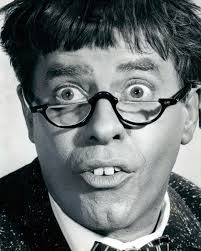
I was doing my thing today, minding my own business. I was thinking, writing, driving kids to swimming pools, hanging out with friends, enjoying the sun and sipping down a few Perronis, when i learned that Jerry Lewis died.
I was in shock.
I have written articles on Jerry here, here, and here. But words aren’t enough to express what I feel. I had to go “live.” Bye Jerry we will miss you! You were the ultimate American schlemiel! Without you, what would American comedy be?
On the Baal Teshuva Schlemiel in I.B. Singer’s “The Magician of Lublin” (Part II)
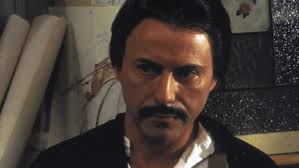
Under exile, Jews are constantly in flight. Hannah Arendt argues that Charlie Chaplin’s schlemiel exemplifies this flight. He is the innocent “suspect” who is always on the run. He marks a major change in the schlemiel character since Heinrich Heine’s “lord of dreams.”
The impudence of Chaplin’s suspect is of the same kind as charms us so much in Heine’s schlemiel; but no longer is it carefree and unperturbed, no longer the divine effrontery of the poet who consorts with heavenly things and can therefore afford to thumb noses at earthly society. On the contrary, it is a worried, careworn impudence – the kind of family to generations of Jews, the effrontery of the poor “little Yid” who does not recognize the class order of the world because he sees in it neither order nor justice for himself. (“The Jew as Pariah,” 288)
But one thing that she misses about this flight is that, at some point, something changes for the schlemiel. He gets lucky. His fate changes by virtue of some sudden decision.
Although Chaplin’s schlemiel is on the run and finds his way out, somehow, by the seat of his pants, the fact of the matter is that the “worried, careworn impudence” of Chaplin’s schlemiel, is much different from the downtrodden state we find in I.B. Singer’s Yasha in The Magician of Lublin. Unlike Chaplin’s schlemiel, Yasha – an acrobat, magician, and performer – goes deep into the abyss. He attempts to steal from a miser in order to get funds for a woman he is in love with (a woman who wants him to leave his Judaism behind and convert). Yasha is willing to give it all up for her.
When he tries to steal, he fails miserably and ends up fleeing the authorities. This is not the kind of schlemiel you find in many Chaplin films. He isn’t charming. The reader feels no sympathy for him. However, the sympathy starts coming back after he stumbles into a synagogue – in his flight from the authorities. He becomes a pitiable schlemiel in these moments and it is his return to Judaism that transforms him into a religious schlemiel. It comes out of his flight from a possible tragic fate:
Yasha stepped up onto the sidewalk and saw a courtyard of a synagogue. The gate stood open. An elderly Jew entered, prayer-shawl bag under his arm. Tasha darted inside. -Here they will not search! (459)
Singer associates the synagogue with waste and Yasha’s own wasting away. It is an organic rejoinder. Yasha degenerates and out of this waste he becomes a different person. He becomes small and humble before he can grow – toward God:
In the yard stood crates filled with loose pages torn from holy books. The smell of urine was overpowering. Yasha opened the door at what appeared to be both study and poorhouse. The light of single memorial candle flickering near the cantor’s lectern showed him rows of men lying on benches, some barefoot, some wearing battered old shoes, some covered in rags, some half-naked. The air stank of tallow, dust, and wax. – No, they will not search here,he repeated to himself. He moved to an empty bench and sat down. He sat there in a daze and rested his damaged foot. (460)
The beadle comes and wakes all of the sleeping poor to wake up and be a part of a prayer quorum (of ten people). He rises with them and its as if he has fallen to their level and is one of them. Can he be saved by God?
Singer describes the prayer service in meticulous detail. It is during these moments that he repents and realizes all the wrong he has done:
He sat there like one who had a severe blow on his head and knew that his senses were addled. He was awake to something within him slept the deep sleep of midnight. He rested and examined his left foot. Pain coursed through it, stabbing thrusts…..Yasha reminded himself of Magda (his magic partner). What would he tell her when he came home. In the years that they were together, he had often been rule to her, but he knew somehow that this time she would be hurt more than ever before….He stared off somewhere in the direction father cornice of the Holy Ark, recognizing the tablet with the Ten Commandments. He recalled that only last night…he had told Herman he was a magician, not a thief. But soon afterwards, he had gone off to commit a burglary. He felt dull and confused, unable any longer to understand his own actions. The men put on their prayer shawls and their phylacteries, they affixed the thongs and cloaked their heads, and he watched them with astonishment as if he, Yasha, were a gentile who had never witnessed this before. (462)
When Yasha is offered to put a prayer shawl and phylacteries on he, at first, refuses, but when he puts them on his memory flows back, he feels shame, and a new beginning opens up for him:
He begun to put on the prayer shawl. He looked for a spot where the embroidery was supposed to be, or a stripe which indicated the section that must be worn over the head….He was filled with adolescent shame and fear. They were laughing at him…He sought for clarification in the prayer book, but the print blurred before his eyes. Fiery sparks began to sway before him. I just hope I don’t faint, he cautioned himself. He felt nausea. He began to plead with God: Father in Heaven, take pity on me! Everything else, but not this! He shook off faintness….The sparks continued to dip before his eyes, rising and falling in a seesaw motion. Some were red, some green, some blue….He was overcome with regret and humility. Only now did he realize what he had attempted an now Heaven had thwarted him. It came over him like a revelation. (464)
Yasha becomes smaller and realizes that he was shortsighted in his wild adventures. He took advantage of people:
He stood there with bent knees and was aghast at the extent of the depredations and, what was perhaps worse, his lack of insight. He had fretted and worried and ignored the very essence of the problem. He had reduced others to dirt and did not see – pretended not to see – how he himself kept sinking deeper and deeper in the mud. Only a thread restrained him from sining deeper into the mud. (466)
And this thread is connected to God. Now Yasha realizes that he – like Rabbi Nachman of Breslav’s characters in the “Wise One and the Simpleton” had ridiculed those of faith because he was too wise, complex, and worldly; now he sees things from the perspective of simplicity and faith. He embraces his Judaism:
They ridiculed the faithful who attributed everything to God, yet they themselves attributed all sorts of wisdom and powers to an unseeing nature that was unaware of its own existence. From within the phylacteries Yasha sensed a radiance that reached into his brain, unraveled all the ants. All the prayers were the same: There as a God Who sees, Who hears, Who takes pity on man, Who contains his wrath, Who forgives sin, Who wants men to repent….I must be a Jew! he said to himself. A Jew like all the others! (467)
At this moment, his Judaism, his faith, underpins his schlemiel existentially. As the novel advances toward the end, he returns to Lublin. But before returning to Esther, he builds a private room to isolate himself from the world. He repents for a long time there until he is ready to return to the world. At the end of the novel, Esther calls him to leave his room and to join her in a Jewish life. He leaves. In completing his journey as a Baal Teshuva schlemiel, Yasha returns to Eshter who is the symbol of God’s feminine presence. In the end, his good fortune consists in the fact that he stumbled into a synagogue and retuned to the life he had left behind for a life of magic and a desire for fame. Like Rabbi Nachman’s tale of the simpleton, Singer crafted a novel of return whose main character – a figure of the Jewish people – is a troubled schlemiel who, in the end, returns to God and his people. Perhaps this is Singer’s way of saying that – despite this or that use of the schlemiel – the core of the schlemiel character is it’s deep-rooted desire to be good and return. It is a Jewish desire to return that – for Singer – animates this character which has taken on a variety of secular animations in Woody Allen, Adam Sandler, Seth Rogen, etc. It’s roots, Singer seems to be telling us, are Jewish and are religious. And the passing from one realm to the other – from the secular to the religious – marks his journey.
On Yasha and the Spiritual Journey of the Baal Teshuva Schlemiel in I.B. Singer’s “The Magician of Lublin” (Part I)
A Baal Teshuva literally means a “master of return.” It is the name for a person who seemingly, out of nowhere (perhaps because he wasn’t raised in Judaism, or had broken away from it, or had no knowledge of it) decides to “return” to God and Judaism (or being Jewish). When I first came across Sanford Pinsker’s argument – in his book, The Schlemiel as Metaphor – that Yasha, the main character of I.B Singer’s The Magician of Lublin, was a schlemiel of faith I paused. It is one of only two readings I have ever seen of I.B. Singer’s fiction that sees his characters in terms of faith. While Ruth Wisse see’s Gimpel as the figure of faith (in a diminished sense of secular faith – the belief in goodness), Pinsker takes Yasha as an exemplary schlemiel of faith.
The difference between their two readings – and both schlemiels of faith – is telling because Wisse sees Singer as making the claim that, in the wake of the Holocaust, Gimpel is a schlemiel who preserves the good in a world that is evil (in the story nearly every character lies to him and takes advantage of his trust and goodness). Gimpel doesn’t struggle with faith. We (readers) do. He is the embodiment of the faith. According to Wisse, he lives “as if” good exists. By putting those words in scare quotes, Wisse suggests a tension between hope and skepticism. Why? Because we want to believe in goodness while, at the same time, known that it may very well not exist. After the Holocaust evil is palpable and goodness doesn’t seem to rein. It is fragile. This is what the schlemiel of faith embodies for Wisse, today (or when she wrote these words, in 1972).
In contrast to Wisse, Pinsker suggests that the schlemiel of faith is caught up in a struggle of faith. I want to build on his work and suggest a new reading of Pinsker’s figure for this struggle – in the work of I.B. Singer – Yasha. It requires a geographical trace to understand his journey – the circular journey of a schlemiel of faith – from Lublin to Warsaw and back. He, like a Baal Teshuva, returns. But the paradox is that it is a to a Lublin he never knew or perhaps had forgotten. Perhaps the key to the schlemiel’s faith is this process and struggle and return: of memory and of Jewishness.
He is married to a religious woman in Lublin named Esther. But Yasha isn’t religious. Esther loves him and he her, but not her religion. He is surrounded by religious Jews in Lublin, but he is indifferent to it all. Yasha lives a different life. He is a magician and an acrobat. While he comes home for the High Holy Days, he spends all of his time on the road. He travels with a magicians assistant – a young Polish girl named Magda, the daughter of Peasants – who he has an affair. Yasha also has relations with a woman in a city who has become a widower and in Warsaw he falls in love with a widower, noble woman named Emilia. She poses the greatest challenge to his Judaism because she is Catholic and wants him to convert.
Emilia also loves expensive things and this drives him to commit a crime which fails. The scene is amazing and marks the pinnacle of his loss of Judaism (because it is a violation of the ten commandments to steal and kill). I’ll quote the scene to show the altered state he enters when he does this. His leap into crime, the total antithesis of Judaism, initiates the journey of the Baal Teshuva schlemiel. Singer turns it into a profound schlemiel moment (a sublime, ecstatic moment, if you will):
I mustn’t fail, he urged himself. Since I’ve taken the plunge, I must see it through. He cocked his ears and listened. Somewhere in the adjoining rooms Kazimierz Zaruski and his deaf servant slept. He heard no sound. What would I do if they were to awaken? he asked himself, but he could not supply the answer. He put his hand on the safe and felt the cool metal. Quickly we located the keyhole. He traced it with his forefinger to determine it’s type and contour. Then, he reached into his pocket for his skeleton key which he had just had in his hand, but it wasn’t there. Undoubtedly he’d tucked it away in another pocket. He began to search his pockets, but the key had vanished. Where could I have put it? The bad luck is starting already!….The important thing is not to panic! he cautioned himself. Just imagine that you are doing a performance….Demons? he whispered to half in jest, half in earnest. He began to feel warm. (An Isaac Beshvis Singer Reader, 453)
In schlemiel-like fashion, one thing he does after another leads to a chain reaction of bad luck and thoughts.. His thought is that the key may be under the landowners pillow – which he is sleeping on, drives him mad:
Suddenly, the thought came to him: a safe must have a key, and undoubtedly the old man kept it under his pillow. He might wake. And what assurance did Yasha have that the key was really there? There were many possible places for the key in the apartment. But now Yasha was sure that the key lay under Zaruski’s pillow. (453)
What astonishes me most about this passage is that it suggests that Singer’s novel may be an homage to Rabbi Nachman of Breslav’s celebrated story, “The Simpleton and the Wise One.” The wise one, in that story, is obsessed with certainty. Much like Yasha, his thoughts of perfection (and his obsession with perfect reasoning) drive him mad. Ruth Wisse calls the simpleton in that story a schlemiel because he lives a simple life not a life plagued by skepticism, exactitude, and intellectual shrewdness. The simpleton – because he stays in his small town, never ventures out, makes shoes (some ok, most not) – gives thanks for everything, even his poverty.
In Rabbi Nachman’s story, the two characters remain apart, while in Singer’s story, one becomes the other. In Singer’s story, the main character – after slipping into a possible crime, and failing to consummate it – goes from being the chakham (maskil, Jewish intellectual) to a simpleton of faith. While in Rabbi Nachman’s story we see a dialectical tension, in Singer’s story we see a transformation. We witness it through the vision of a crime.
When he – in a dreamlike fashion – enters the bedroom of the apartment owner (an old man), everything seems suspended as this is when the idea becomes a reality: he must find the key under the pillow, take it, and unlock the safe. What happens is more or less a dark primal scene, which is described in profound, poetic, and concrete material detail:
He walked in and found himself in the bedroom. It was darker here than in the other room, for he could not determine exactly where the window was located, could only conjecture, and then his eyes began to adjust. From the murky whirls there began to evolve the contour of a bed, bedding, a head upon a pillow – a naked head with sockets instead of eyes, like that of a skeleton. Yasha froze. Was the old man breathing? He could not hear his breath. Was he awake? Had he just at that moment expired? Was he, possibly, feigning death? Perhaps he lay there ready to rise and attack him? Old men were often extremely powerful. And the old man suddenly snored…Yasha stood there a moment, prepared to bolt at the first sound. I couldn’t kill him! I am no murderer. (454)
While he could, at that moment, just leave. Something draws him close to the old man and he breaks the barrier. He is tempted and enters into great danger when he touches the old man in search of the key under his pillow:
He ran his hand over the pillow, touched the old man’s face unintentionally. He pulled back his hand as if it had been burned. The missed uttered a sign as though he had only been shamming sleep. Yasha paused. he was prepared to attack, ready to grasp Zaruski by the throat and throttle him. But no, that man was asleep, a thing piping sound came through his nostrils. Apparently, he was dreaming. Now Yasha could see better. He slipped his hand beneath the pillow convinced that he would touch the hey – but there was no key…There was only one course for him. Escape! something inside him conclude. Everything has gone wrong!…Maybe you should just choke the old bastard! some presence, partly within and partly outside him, suggested, a puritan of him which di not have the final say, but was in the habit of offering bad advice and perpetrating cruel jokes upon him when he need all his faculties
Well, its a lost cause. I’m going now, he muttered. He rose to his feet and backed out through the half-opened door. How light it was here in comparison to the bedroom! He could see every object. (454)
Yahsa tries one last time – after leaving the possibility of murdering the old apartment owner – to break into the safe. By using utensils – which he now spots, because he has better vision – he tries to open the vault. Mind you, he is seen and he sees himself as a master musician who can, like Houdini, break through any lock.
But he fails, for the first time, miserably. But this failure is the basis for Yasha (the magian, the chakham’s) transformation:
Failure! A fiasco! For the first time in his life! It had been a terrible night. He was overcome by fear. He knew, deep inside him, that the misfortune would not be confined to this night alone. The enemy which for years had lurked in ambush within him, whom Yasha had had, each time, to repel with force and cunning, with charms and such incantations as each individual must learn for himself, had now gained the upper hand. Yasha felt its presence – a dybbuk, a state, an implacable adversary who would disrupt him while he was juggling, push him from the tightrope, make him impotent. Trembling, he opened the balcony door. His perspiring body shivered. It was as if winter had suddenly arrived. (456)
As in a Rabbi Nachman story of the beggar, we see a weakened Yasha limp over the balcony and fall on the pavement, twisting his foot, and then breaking away as he fears he is being chased. He slips into a room and he discovers that it is a synagogue (“shul”). It is early morning and the Jews have come to the dawn quorum (minyan) which is called the “Naitz” minyan.
What happens inside of this shul marks the second part of the schlemiel’s journey back to Jewishness. I’ll be discussing that in the next post.
….to be continued
The WSJ Calls Donald Trump a “Woody Allen” (Schlemiel) “Without the Humor”

I wonder if a new trend is developing in the journalistic world in which this or that journalist calls Donald Trump or someone in his administration a schlemiel (see this article – for instance -that calls Sean Spicer a schlemiel character). Mind you – as I’ve said many times on this blog – there are positive and negative readings on the schlemiel (some endearing, others insulting). Think – for instance – of Woody Allen, Larry David, Seth Rogen, Jason Alexander, Gretta Gerwig, or Charlie Chaplin’s portrayals (to mention only a small handful) of the schlemiel. It is a funny and endearing character. Even Bernie Sanders loves it (and it even becomes a question for him in a Rachel Maddow interview. Is he really Larry David – in other words, is he really a schlemiel?
But in Peggy Noonan’s recently op-ed piece for the Wall Street Journal entitled “Trump is Woody Allen Without the Humor” that charm and humor is subtracted. Noonan makes Trump into a schlemiel who….isn’t funny. The article has become very popular and – already – has over 1600 comments. I’d like to briefly look at her portrayal and see what it implies about her take on the schlemiel character. Noonan’s take on the schlemiel – with its shots at the schlemiel’s masculinity – sounds a lot like Bruce Jay Freidman’s negative (and dark) portrayal of the schlemiel in his popular novel from the early 60s, Stern.
Noonan’s subtitle suggests that what makes him a schlemiel are his tweets: “Half his tweets show utter weakness. They are plaintive, shrill little cries, usually after dawn.” This suggests that the schlemiel is a weak character who makes “shrill cries.” This dichotomy between weakness and strength (power and powerlessness) found in the schlemiel character is nothing new. Ruth Wisse draws on it in her introduction to The Schlemiel as Modern Hero.
Noonan’s description actually goes to the core of reading the schlemiel in terms of masculinity and femininity:
The president’s primary problem as a leader is not that he is impetuous, brash, or naive. It’s not that he is inexperienced, crude, and outsider. It is that he is weak and sniveling. It is that he undermines himself almost daily by ignoring traditional norms and forms of American masculinity.
He’s not strong and self-controlled, not cool and tough, not low-key and determined; he’s whiny, weepy, and self-pitying. He throws himself, sobbing, at the body politic. He’s the drama queen….Trump must remind people of their first wife. Actually his wife, Melania, is tougher than he is with her stoicism and grace, her self-discipline and desire to show the world respect by presenting herself with dignity.
Noonan doesn’t stop here. She defines the American male as the anti-Schlemiel. The masculine ideal as the American ideal:
The way American men used to like seeing themselves, the template they most admired, was the strong silent type celebrated in the classic mid-20th century films – Gary Cooper, John Wayne, Henry Fonda. In time the style shifted, and we wound up with the nervous and chattery. More than a decade ago the producer and write David Chase had his Tony Soprano mourn the disappearance of the old style….The new style was more like that of Woody Allen. His characters won’t stop talking about their emotions, their resentments, their needs.
But, says Noonan, while they were “comic” he “wasn’t putting it out as a new template for maleness. Donald Trump now is like an unfunny Woody Allen.” This sentence suggests that while Woody Allen was not putting out a “new template for maleness,” Donald Trump is. This point is debatable. In fact, A.O. Scott has delved into this topic in his resentful piece on what he calls the “end of adulthood” and “permanent adolescence” in American culture. For Scott, this has deeper roots and seems to be a problem that pre-dates Trump. The template goes deep.
Noonan sticks to this theme in the article and – like Scott – ponders the implications:
A lot of boys and young men, who’ve grown up in a culture confused about what men are and do. Who teaches them the real dignity and meaning of being a man? Mostly good fathers and teachers.
The irony – notes Noonan – is that when Trump addressed Boy Scouts in the Boy Scout Jamboree last week he opted to speak to them like a man, he failed.
“His inability – not his refusal, but his inability – to embrace the public and rhetorical role of the presidency consistently and constructively is weal.” Noonan ends her article by saying that the people around him won’t help because Scaramucci – in her view – is yet another schlemiel.
Her take reminds me of Bruce Jay Friedman’s portrayal of Stern in his novel of the same name because the character doesn’t make one laugh. The schlemiel Freidman created in that novel makes one feel pity or – as Ruth Wisse suggests – disgust. But he does have some charm to him which, arguably, redeems his character. Noah Baumbach has learned from this model and casts Ben Stiller in similar types of roles – see Greenberg (2010) or While we are Young (2015).
But Trump is not alone in playing the schlemiel role. Besides Larry David casting Bernie Sanders as a schlemiel, President Obama also tried his hand at it. But he did so with the help of Steven Spielberg. What I’d like to suggest with this is that schlemiel is a fluid character. It can be used, politically, in many ways. Its valence is pragmatic. And perhaps – as I suggest elsewhere – it may mark the difference between cynicism and what Peter Sloterdijk calls kynicism.
Menachem Mendl: A Schlemiel Imagines Himself at the Zionist Congress
Throughout his novel by the same name, Saul Bellow’s Moses Herzog writes countless letters. But he never sends them. The letters show us what he really feels but cannot act on or things he would like to do or dreams about doing but never does. His schlemiel character comes through in his reflections on his wife’s secret lover – and his good friend – Valentine Gersbach and in his academic reflections on the meaning of human nature. Is man innocent and naive or born evil? Herzog’s reflections – as a schlemiel academic who has lost control of his marriage – however, have good endings. He may be alone in a house in the Berkshires – by the end of the novel – but he is still loved.
Herzog’s adorable predecessor is Shalom Aleichem’s Menachem Mendl. The Further Adventures of Menachem-Mendl is a a series of letters between he and his wife Shyene-Sheyndl who lives in Kasrilevka. What does the schlemiel find when he goes out into the world in the early 20th century? What does he write about? I.B. Singer’s Yasha, the “Magician of Lublin,” like Menachem Mendl, goes to Warsaw – the big city – to discover a new world beyond the Shtetl. What does Menachem Mendl find there? Amongst other things, he finds Zionism.
Reflecting on the Ottoman “Turk,” who posses the land of Israel before WWI, he makes a comparison and reflects on what its like to be a Jew in his letter to his wife:
True, we don’t have the problems the Turk had but we have our own problems. And if you think about it, we have it worse than the Turk. A thousand times worse! The Turk, at least, has a home, a corner of his own, as your mothers says, “A poor landlord, but still a landlord….” But what are we? We are little more than a fancy sabbath gabardine, threadbare and torn. But what do we have for ourselves? Nothing with nothing, even less than nothing, shame and worry and anguish and heartache is what we have! What more do you need to know, my little silly? One tiny parcel of Eretz Yisrael is all we have, for God’s sake, and that too comes with trouble and factions and competitive organizations and wrangling and quarreling and intrigues, spite, and controversies! Since Thoedore Herzl, of blessed memory died, they can’t agree on anything. (59)
The schlemiel worries about the Jewish people. He worries about having just a little piece of land to call a home instead of endless exile. Menachem Mendl shares this hope in his letter. The schlemiel wants the Zionists to listen to his advice but…he can’t give it to his wife. He will – like a prophetic messenger – give it to them himself:
If they would listen to me, the Zionists, I have for them, with God’s help, a special scheme that will open their eyes! But I won’t talk about it ahead of time. I’m afraid there might be a dispute even before anything happens. I hope, God willing, to be in Vienna at the congress and can put it before them myself. (59)
But he knows that they won’t listen because “for us Jews nothing can happen without quarrels.” He realizes that he is a Yid, he speaks Yiddish, and they speak, primarily German. They think of them as schlemiels in the most negative sense of the word. If they were to speak Yiddish in their homeland, it would be like Chelm:
Yiddish no one wants to hear about…They hear the word Yiddish, “Zhargon,” they have a fit! And its possible they aren’t so far from it because how does it look for Jews to speak Yiddish? It would be a find thing, do you hear, if a quarrel were to break out over language…This would not be revenge on the goyim (nations), but revenge on Jews. It’s a cockeyed world with a cockeyed people with cockeyed minds! I figure I will soon get these people and clear out their minds a bit. But now isn’t the time for it. Their heads are elsewhere. (61)
Menachem Mendl never goes. And nothing happens. He doesn’t change politics. But he – like Herzog – has language and a host of dreams. He lives in his letters while yearning for a land where – he imagines – Jews will always quarrel. But his desire to live on a land – to live in peace there – supersedes all quarreling. Its a simple need and its written all over this letter to his wife. Like the artist, Freud’s daydreamer, he’s a small man with big dreams. But, most importantly, he reminds us that this Jewish man is in exile, this schlemiel – at least in the early 20th century (and, I would argue, today) thinks about Israel because he worries about the fate of the Jewish people (of which he is a part). Once one divorces himself from that, his fate is tied with America. As we see with Seth Rogen films. But, as Woody Allen has shown, in a film like Anything Else (2003), that need not be the case. The schlemiel – in the spirit of Shalom Aleichem’s concern with the Jewish people – is put in relation to Zionism. But – as Aleichem notes in this fictional exchange – he dreams of speaking before the Zionist congress. He doesn’t do it. What does this suggest? I’ll leave you with this question.
A Lost Tribe: On “Homoschlepien” Schlemiels and a Nutty Professor in Mayim Bialik’s SodaStream Spot

Occasionally, I stumble across a performance of the schlemiel that makes me realize that the schlemiel has a great future. Mayim Bialik – the star of Big Bang Theory and a darling of millennial culture – has taken a swing at the schlemiel in a recent mini-film-ad for Soda Stream. The series is delightful and it shows the deep relevance of the schlemiel today. It pits the anthropologist – and trusted intellectual teacher of millennials, played by Mayim – against the charm of the schlemiel (played by a very big “Homoschlepien” – namely, Kristian Nairn of Game of Thrones).
In this little clip, the schlemiel – in particular and in general – doesn’t understand why plastic bottles (which are everything in their world) are enslaving him (and her, all homoschlepeins) and why they are unnecessary. He lacks reason. She doesn’t. Is he to be despised by the science teacher-slash-anthropologists? The kids? The answer to these questions brings the tension between the rational skeptic and naive schlemiel into focus. One learns from the other and the lesson, Mayim shows us, is for the millennial children in pink shirts (who are straight up rationalists, not a “lost tribe”). Will they take her love for a “lost tribe” to heart?
Here is the conceit. While the anthropologist scientist is supposed to be critical of stupid Neanderthal-ish Homoschlepien, she is really charmed by him….and by them. To be sure, the schlemiel culture is shown to be a lot like ours. The young and old play games flipping a filled bottle of water. Perhaps we are all like Seth Rogen’s favorite schlemiel character: the stoner schlemiel. Like Mayim, we love the dadbod. And, just like Mayim, we fall in love the subject of Mayim’s “scientific study.” She is “studying him,” and we see what she is really doing: she is drawing pictures of him.
She is charmed by this cute big man.
To some it up, her demeanor is shared by millions of Americans. She is in love with the charming schlemiel. He’s a big lug who doesn’t know any better. After all he’s schlepping bottles around all day. He may be an “alpha male,” but he is really a softy.
Is he a part of a “lost tribe” – as the title of the piece suggests? Many Americans today see themselves as a “lost tribe.” To be sure, there is a Jewishness to this piece and an American-ness. Like many a great Jewish American artist, Bialik claims both.
I see two comical narratives that are brought together in Bialik’s gesture. One is Jewish and the other is not. Like Cervates’ Sancho Panza, she follows her Don Quixote. But this has many layers. The people (or rather, the person) she is studying has a Jewish (scientific) name but posses a non-Jewish body. The academic result of Bialik’s study of the schlemiel is clear to me: she sees the schlemiel as Jewish and not Jewish. And she is right. It’s both. And we don’t just study them, Bialik’s piece suggests that we – like her – embrace them. These is something unique – and even redemptive – in this gesture.
Did you hug a big-schlemiel today? Where’s “the fat jew“?
But the episode suggests – scientifically, of course – that death is looming. After all Mayim’s studies what was, not what is. She’s tracing the origin of this character. There may be a death sentence looming in the framing of the this episode. Artifacts of the past.
Will the schlemiel, as her kids suggest in her clip, continue to exist? Will we, schlemiels, “Homoschlepiens” – who like to litter and live like large Americans – stop wasting bottles? Isn’t this a ridiculous question?
Isn’t the real question whether in a very rational, hyper-scientific era, a world of schlemiels (of homoschlepiens) will remain?
Are we (schlemiels) going to be fixtures in the museum? Objects of study?
These are all good questions.
But the greatest twist of all is that the scientist is really a schlemiel. She loves the schlemiel’s charm. Like Sancho Panza, Mayim the anthropologist also becomes a kind of Don Quixote (albeit one that is rational, but also human). And in effect, this identification makes her one of the “lost tribe,” in makes her one of us: schlemiels.
It’s a lovely message and a hopeful one, especially for me. I love the struggle she gages between the scientific skeptic and the schlemiel: Rabbi Nachman’s “Simpleton and the Schlemiel” makes this the crux of his tale which, as Ruth Wisse and David Roskies have noted, gives birth to much of Yiddish Literature and is really the first pieces of modern Yiddish literature (since Nachman was so hyper-self-aware and struggling with himself).
In his tale, the schlemiel has the last word. But one wonders, seeing this, will the schlemiel also be in the museum or will he, always, sneak in (like the wandering eye of the “Neoschleppian” in the museum). Perhaps the schlemiel will always get the last wink of the eye (winking – that is – at the scientist)? Let’s hope.
Thank you Mayim for being the nutty professor! Comedy reminds us that we are human and that the “lost tribe” is – despite millennial dread – a part of “our tribe.” We, humans. The schlemiel reminds us.
On Kevin Hart’s Schlemiel Tale: The “Jay-Z Pineapple Juice Story”

Kevin Hart is well known for his self-depreciating kind of embodied comedy. His intense facial gestures which come one after another in rapid fire show a person who is struggling not just to articulate himself but to be accepted. He never misses an opportunity to show that although he is the smallest guy in the group, he can be tough. He can be not just a “man” but “the man.” Hart’s comic conceit is that in each of his efforts to be the man he always, at some point, gives up only to start again. His default position is that of a small man, of the man-child.
Take a look at this clip with Jimmy Fallon where he agrees to Falon’s challenge to go on a rollercoaster. He is, like a child, terrified of the ride. He doesn’t want to go and when he goes he – in comparison to Fallon – loses it. Although he takes on the challenge, he wants to turn back. And when he takes it, he falls back into his default position. Watching him, I can see that he is playing on the schlemiel character. However, unlike Woody Allen, in a film like Annie Hall (1976), he takes to his peer’s challenge. He desperately doesn’t want to be the odd one out whereas Allen doesn’t mind being so. The default position is an uncomfortable one for Hart.
The thought that Hart is a schlemiel of sorts prompted me to look through some of his videos. I came across a viral video (over 68 million views) of an appearance he did on Jimmy Fallon in 2014. The whole piece is an example of what I call, elsewhere, “the comedy of scale.” In the beginning of the segment, Fallon encourages Hart to talk about how successful he is thereby inflating himself into a great, unparalleled American comedian and filmstar. Hart makes himself out to be so successful that he got to meet President Barack Obama. He tells Fallon that no one impresses him more than the President. He is nonplused by famous people, but with the President he becomes childlike. This is a moment of slight-deprecation. But when the President calls him “Kev,” Hart re-inflates himself by saying that he and the President are tight.
Two minutes and forty seconds into it, Fallon asks Hart to tell his “Jay-Z Pineapple Juice Story.” Hart tells of how close he is with Jay Z and Beyonce. He sees them in a bar and Jay Z insists that they have drinks. But the story turns into schlemiel tale. Instead of spilling the soup on Jay Z’s lap – in the classic schlemiel tale soup is spilled – he spills Pineapple Juice. Beyonce also gets juice on her. When Hart apologizes to them, he becomes an accidental nudnick. He thinks that slipping Jay Z a twenty dollar bill will make it all better. The punch line is that it only makes things worse. Hart is a schlemiel who accidentally spills the juice and who mistakenly thinks a twenty will change it all.
Hart moves from accident to accident and, in the end, slips away, like a Charlie Chaplin character. But his comedy is mostly local to African Americans. We see this best in his stories and routines where, in terms of masculinity and maturity, he is the odd one out. His body is much different from the bodies of contemporary schlemiels ranging from the thin body of Woody Allen to the “dadbod” of Seth Rogen. He is built. But he is small. In a way, he is similar to Adam Sandler’s “Zohan” character (who is a schlemiel by virtue of his soft spot for cutting hair and his love for America).
Hart shows how, in America, the schlemiel can be both big and small, masculine and feminine. The default position of the schlemiel – across American culture – is smallness. But there is a dynamic that moves – as this clip shows – between being big (famous) and being small (embarrassed, clutzy). It is this dynamic that has become a staple of not only Kevin Hart but also people like Larry David. One could say that, for both of these contemporary American versions of the schlemiel, one’s enthusiasm is always curbed. And that’s what makes them so funny for American audiences who love the dynamic that moves between smallness and bigness. At some point, someone spills the pineapple juice on Jay-Z.
Generation Gaps: On Schlemiel Children & (Jewish) Mothers in Bruce Jay Freidman’s “A Mother’s Kisses” and Jesse Eisenberg’s “Bream Gives Me Hiccups”

Books give me ideas. I love to be between one book and another. It’s like being between one place and another. I’m always walking – it seems – from one idea to another. I like to retrace my steps because I might stumble – like a schlemiel – across something.
Wandering around New York City, I always make it a point to drop into some of my favorite bookstores and browse the stacks. I am always on the lookout for something rare and out-of-print or something new and relevant to my schlemiel project. Book stores are wonderful places and I always have books that I am searching for and I’m always looking for a new book store. And since writers always give the best tips for where to go, I always make it a point to ask them whenever I can.
I was fortunate this time because I scheduled an interview with the unique poet and performing artist of the new digital age, Kenneth Goldsmith – a compelling and insightful interview into art, culture, and the political in the digital age that I will soon be publishing at Berfrois. (I’ve written on his work recently and had to meet him, especially since he opened a new window onto the schlemiel in the digital age for me in his latest book. His reading of the Netural (Barthes) and the “infrathin”(Duchamp) are of special interest to me.) Goldsmith took me over to the Rizzoli Bookstore. Believe it or not, this was my first time there. After Goldsmith dropped me off and went to work on a new book project on Andy Warhol, I started browsing.
Within a few seconds my eye hit a book that I’ve been wanting to read for a while, Jesse Eisenberg’s short story/short fiction collection, Bream Gives Me Hiccups. After reading an interview with him on the book for Tablet, I knew, without a doubt, that he was looking to (re)create the schlemiel for a millennial audience. I bought the book immediately and the ideas started flowing. Since I usually think in a dialectical and historical manner, I knew that I had to find a book on the schlemiel from another era that could compliment that one.
My feet led me to the Strand Book Store (which isn’t far from the Rizzoli). And I knew exactly what out-of-print book I needed to find and why: Bruce Jay Friedman’s A Mother’s Kisses. This book, written in the 60s, provides not only a great example of the schlemiel in baby-boomer literature (other than, Philip Roth’s Alex Portnoy or Bellow’s Moses Herzog); it provides an example of the relationship between the schlemiel and his mother as formative of his character.
What is the difference between Eisenberg’s depiction of the mother-schlemiel son relationship and Friedman’s? The difference, I find, is significant. It marks a generation gap. While Friedman’s narrator and schlemiel character – and also Roth and his Portnoy – hold the mother responsible for the schlemiel’s sexual inadequacy (David Biale calls this character – drawing on Woody Allen and Roth – the “sexual schlemiel”), Eisenberg does not. He does this, at the outset of his collection, by making his schlemiel character a nine-year-old boy who is – like I.B. Singer’s Gimpel or Sholem Aleichem’s Motl – dedicated to honesty. His mother – like the community that Gimpel lives in – likes to lie. She is anxious. He is smart, observant. Eisenberg provides the reader with his restaurant reviews which are the product of his dinners with his single mother. I’ll cite the first review – of a sushi restaurant they go to – so as to illustrate this relationship.
One of the things the boy notices is that his mother and others around him are angry and much of this has to do with the fact that they act “as if” all is well when it’s not. (As Hannah Arendt notes in her reading of Heinrich Heine’s schlemiel, the schlemiel character often exposes the ridiculousness of cultural fakery and Eisenberg’s first section is a great example of this hypocrisy.)
The first thing they brought us was a rolled-up wet washcloth, which I unrolled and put on my lap because mom always said that the first thing I have to do in a nice restaurant is put a napkin in my lap. Bu this napkin was hot and wet. It made me feel like I peed in my pants. Mom got angry and asked me if I was stupid.
The angry woman (the waitress) then brought a little bowl of mashed-up red fish bodies in a brown sauce and said that it was tuna fish, which I guess was a lie because it didn’t taste like tuna and made me want to puke right here on the table. But Mom said that I had to eat it because Sushi Nozawa was “famous for their tuna.” At school, there was a kid named Billy who everyone secretly calls Billy the Bully and who puts toothpaste on the teacher’s chair before she comes into the classroom. He is also famous. (4)
For millennials this message resonates because hypocrisy is a major issue. The intelligent schlemiel character sees contradictions while, at the same time, also being naïve and comic (but not contradictory because he’s not lying; he’s simply mistaken). He rebels against his mother by noting these contradictions.
In contrast, the opening paragraphs of Bruce Jay Friedman’s A Mother’s Kisses lays out the problem right away: the issue is not honesty so much as freedom. The mother is responsible for enslaving the schlemiel child and making him fearful. She isn’t even present. She has a surrogate enslave him and this makes her into a royal and powerful kind of figure who just wants to subdue her child from a distance:
Once, when he was five, a Negro woman had been assigned to watch him through the summer, allowing him to wander only twenty paces in each direction. Each time he reached the edge of a building and tried to go around it she would reign him back to her side. He spent the summer a lidless city pavement animal, tied to a chain, wheeling drugged and lazy in the sun. Now, twelve years later, it seemed Joseph was chained again and that there was nothing left to do but stand in front of the apartment house and stretch and try to breathe and wait for the days to pass. There did not seem to be any way for him to get off by himself around some corner. (9)
He is stuck. Joseph’s failures – and Friedman lists one after another – are blamed on his mother. He can’t get around the corner, he can’t be free or successful, because of her. Joseph lacks a sexual libido and because he was never free he doesn’t know how to act on his sexual impulses:
Joseph whiled away some of his days sunbathing on the roof of his apartment building; she (Eileen Fastner, named “Fasty”) would take a chair next to him, lowering her halter straps sophisticatedly and giving him leads on what to expect in the way of freshmen in Beowulf lectures. But she was still “Fasty” to him. (11)
While David Biale notes (thinking of Woody Allen’s characters and Roth’s Portnoy) that the “sexual schlemiel” has a big libido and a small ego, Friedman’s schlemiel doesn’t even have a libido. He’s indifferent. He’s like a “lidless city pavement animal, tied to a chain, wheeling lazy drugged and lazy in the sun.” He is described as a “tall and scattered looking boy”(11). The father doesn’t help either. It seems he and his son have given up while the overbearing mother looks on in disappointment.
The generation gap can be seen in these two portraits of the schlemiel that span a gap of over forty years. The relationship between the schlemiel son and his mother discloses two entirely different concerns. Eisenberg is not concerned with freedom. He’s concerned with honesty and authenticity. His schlemiel character is charming while Friedman’s is not. While there is resentment of the mother in both accounts, there is a significant difference in degree. To be sure, while the reader of Friedman’s A Mother’s Kisses (or Roth’s Portnoy’s Complaint) doesn’t have sympathy for the mother, the opposite is the case for Eisenberg’s novel. The father isn’t present and one feels pity for the mother, while Freidman’s novel resentment overshadows any pity or empathy. One can understand why the mother lies in Eisenberg’s novel. She is insecure about her identity and herself. She needs some love and some confidence. And she could borrow some of that from her son, a schlemiel, who believes that honesty is the best policy. In Freidman’s novel, one doesn’t get that sense at all. The mother has nothing to learn from her schlemiel son. They are both sad characters without any hope of redemption.
The gap is telling. It made me think, as I was walking through the streets of New York, that millennials have much different priorities. I am from Generation X. I inherited the neuroses of my parents. But I don’t want them. I want something that they seemed to have skipped over or missed. But that’s right.
The sexual schlemiel is a legacy of sorts, but there are other aspects of the schlemiel that we find in, say, Woody Allen, that appeal to Eisenberg. Awkwardness remains, as we can see in Eisenberg’s story. But it has more to do with being honest than with having a big libido and a little ego. The charm of the schlemiel dwells in the awkwardness that comes with honesty and naivite.
But what’s most interesting is that this harkens back to Singer’s Gimpel and Bellow’s Herzog not Friedman’s Joseph or Roth’s Portnoy. In these characters, the charm is in the trust that the schlemiel has for the other. While they may be betrayed or lied to by this or that person, they always give them another chance. And while some people would call them fools for doing so, it seems as if Eisenberg would do the contrary. Although he is comically punished for being honest, he still is conscious of it. His inaction or hesitancy to speak – knowing that he may get knocked – comes out in these little pieces.
Like Bellow’s Herzog, Eisenberg’s nine-year-old takes notes. But that’s their charm. The schlemiel lives on in child-like-men and in men-like-children. As Herzog notes, it was his mother’s love that made him so naïve and sweet. But this is not a bad thing. It’s an awkward thing, for, as Eisenberg shows, sometimes mothers forget and children remember.
That doesn’t make them bad. It shows that sometimes mother’s let social anxiety get the better of them and sometimes children do, too. But society isn’t what counts today (or as Arendt shows with Heine and Chaplin, ever). Honesty does. Experience does. And all experience – for all the things we miss – is comical. We shouldn’t be resentful. Reading Eisenberg, I am reminded about how the schlemiel teaches us to be charitable.
These are my thoughts – between books, generations, and blocks of Manhattan – on the schlemiel.
Drifting in the Clouds: On the Schlemiel, Affect, and Pig Pen
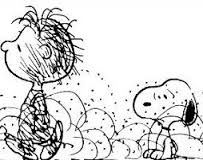
When Hannah Arendt first discusses the schlemiel in her celebrated essay, “The Jew as Pariah,” she describes the schlemiel as the “Lord of Dreams.” She takes her reading from Heinrich Heine’s poems which address the schlemiel. To be sure, Arendt argues that, for Heine, the schlemiel is the poet. He is the first in a line of Pariahs which stretches from Europe to American, from Heine to Chaplin. Whether the schlemiel is Heine’s figure for the poet or for all of Charlie Chaplin’s comic characters, they are both figures of freedom. From the perspective of society, which they both challenge, they have their heads in the clouds. Whether it is the parvenu of the 19th century or the Anglo-American, the schlemiel is not a part of the status quo. He is an artist and a comedian who stands aloof in the world of words and gestures.
Freud – drawing on this line of thought – likened the artist to a “day dreamer.” The artist, in other words, is a schlemiel. While this “lord of dreams” figure can be found in the work of many great Jewish American writers, like Saul Bellow, Bernard Malamud, Stanley Elkin, and in contemporary writers like Gary Shteyngart, Sam Lipsyte, and Jonathan Safran Foer, it does always get translated into the realm of film. Woody Allen and Noah Baumbach, however, seem to have created an exception to this rule. Seth Rogen and Ben Stiller don’t seem to fit the bill – unless you read the schlemiels in Adam Sandler’s Don’t Mess With the Zohan (2008) or in Apatow’s Knocked Up (2007) – to just two of countless examples – as a figure of the contemporary artist.
What might get missed in this kind of reading of the schlemiel is the fact that I have, like Arendt, limited the schlemiel figure to the cultural realms of literature and film. How – one must ask – does the schlemiel fare today, in the digital age? What kind of figure can it take on? If, as Walt Whitman suggests, everything is poetry and poet is the person who takes note and joyously catalogues all things, perhaps the lord of dreams, the poet – in this digital age – is something we have become. But this being is not the result of being an immigrant or a Jew, perhaps it is the result of being-immersed in social media? Perhaps we have – unbeknownst to ourselves- been (perhaps in a Heideggerian sense) thrown into the cloud, the digital cloud. And that would mean that we have become schlemiels who are endlessly distracted and drifting through digital clouds of affect and information. And perhaps the best figure for this is, as Kenneth Goldsmith suggests in Wasting Time on the Internet, Pigpen.
The theoretical backdrop for Goldsmith’s use of Pig Pen as a figure is the notion of affect, which he explains in the following manner:
Affect is the powerful but often invisible emotional temperature in any given social situation, for instance, when you walk into a room that feels so tense you could “cut it with a knife,” although there are no visible signs of that tension. It’s similar to being afraid and noticing your palms are sweating, a palpable reaction that – with the exception of a handshake – is most invisible to others…..Affect is an inventory of shimmers, nuances, and states. Contagious, leaping from one body to another, affect infects those nearby with microemotions and microfeelings, pulsating extensions of our bodies’ nervous systems. Our online lives are saturated with affect, our sensations amplified and projected by the network. Our Wi-Fi networks – carriers of affect – are invisible but ubiquitous, transmitting pulses and sensations through the air that have the potential to convert to emotions when displayed on our screens. (38).
Affect – as it goes through the network (whether or Facebook, Twitter, Instagram, etc) – “works against narrative: it isn’t conclusive or curative; instead, its static, continual, hovering, and conditional”(40). It’s like a digital cloud. To illustrate what this means, Goldsmith discusses what it’s like for him to run through the city while listening to Spotify, being mapped through google, receiving and sending messages, and recording ideas he has for a new book. He calls this “data storm” a cloud and argues that it is “similar to the Peanuts cartoon character Pig Pen, an embodiment of cloud based computing”(57).
Pig Pen – each moment he steps or shakes his head – “generates more visible dust”(57). Even if he showers, it remains. It follows him everywhere: “Regardless of the weather, his condition remains unaffected; even rainstorms can’t rinse him clean”(57). Pig-Pen, as Goldsmith describes him, sounds like an artist:
Wherever Pig Pen walks, he is met with repulsion. His critics – the entire cast of Peanuts – often accuse him of wallowing in his dirt, of taking hedonistic pleasure in his condition. They say he’s as self-absorbed and insensitive to others as to be a bastion of filth. But he sees it differently, claiming that he has affixed to him the “dust of countless ages.” Deftly assuaging his critics, he turns the tables on them, forcing them to see value where they saw none. (58)
Pig-Pen – an artistic digital-age schlemiel of sorts – is absorbed in the life of the internet:
As he moves through the world, he inscribes the contemporary into his cloud, adding the dirt of the day to his already thickly layered historical record….Like Homer, who transmitted his sagas orally, Pig Pen is the bearer of a certain historical record, told in his own specific cast. As an outcast, he assumes the role of the trickster, a figure who, defying normative community-based behavioral standards, is the keeper of a database of deep and secret knowledge. He is at once physical and ephemeral, omnipresent and local….His cloud is a haze, an ambience, a networked that can’t be defined by specific boundaries….a pulse, a stasis, a skein. (59)
And when they shame him – like Singer’s Gimpel or Bellow’s Herzog – he smiles. After all, he’s the lord of (digital) dreams – and he knows it. Playing on Goldsmith, Pig-Pen knows he’s the digital-schlemiel-pariah and so do we. Goldsmith suggests that the new type of artist – the new outcast or schlemiel-pariah (or as Arendt says of Chaplin, “the suspect”) – is adept at the web and is drifting through digital clouds that attend him wherever he goes. The new figuration of the schlemiel – a living schlemiel, so to speak – is not only to be found drifting through the pages of the novel or through the images on Woody Allen or Charlie Chaplin on the movie screen. Perhaps the new “Lord of Dreams” is obsessed with digital affect and this drifting through the “clouds” – suggests Goldsmith – goes against the “normative community-based behavioral standards.”
 Schlemiel Theory