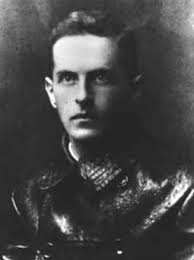
On Failure and Happiness: Kafka, 1921

Unknown

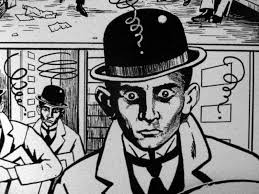
We have all experienced some degree of failure in our lives. But most of us would rather not reflect on it as it will most likely cause depression and self-loathing. On the other hand, when writers reflect on failure they can, somehow, find a way to make the reflection meaningful.

In a well known letter to Gershom Scholem and in his essay on Kafka, Walter Benjamin argues that the “beauty” of Kafka’s fiction is the “beauty of failure.” This expression doesn’t make sense. Failure is ugly, not beautiful. It’s painful. How could it, like beauty, make one happy?

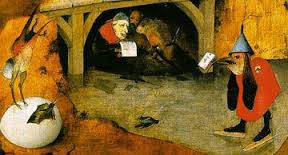
Kafka’s diary entries show us something that his novels and short stories sometimes disclose; namely, his struggles with failure and his desire for happiness.   In an entry on “crows,” which I addressed recently, Kafka points out how he sees himself as a bird who can sometimes float to the heights and “waver” over the abyss of eternity.   In that entry, Kafka points out that although he has no “help” in the heights, his friends offer him help in the lower realms (when he falls from the heights). Kafka says the same thing in his short story “The Investigations of a Dog.” Both the bird (of the entry) and the dog (of that story) are alone and feel alienated and unhappy. That is the price of being spiritual; however, both the bird and the dog admit that friends “help” one to feel happy.

As in these stories, Kafka often associates the literary experience (and dreaming) with unhappiness and failure while he associates happiness with friendship.   In his February 2nd diary entry, Kafka notes the “happiness of being with people.” The next day, Kafka tells us that it is “impossible to sleep; plagued by dreams, as if they were being scratched on me, on a stubborn material.”

Immediately following this, Kafka reflects on the meaning of failure and tries to pinpoint failure as the source of his affliction (in dreams and reality).   Like his dog character, he “investigates.” He uses a language to describe failure that is oddly Cartesian. He literally tries to perceive failing as such:

There is a certain failing, a lack in me, that is clear and distinct enough but difficult to describe: it is a compound of timidity, reserve, talkativeness, and halfheartedness; by this I intend to characterize something specific, a group of failings that under a certain aspect constitute one clearly defined failing…This failing keeps me from going mad, but also from making any headway.

Kafka’s description of failure, like Benjamin’s, is ironic. Failure keeps him sane. It protects him from madness! But, on the other hand, it also keeps him (like Gregor Samsa in his room) from “making any headway.” Nonetheless, Kafka feels that he must “cultivate” failure because if he doesn’t he will lose his mind. The word cultivation suggests that failure – for Kafka – is an artform.

Kafka must write late at night to keep from going mad. In this “bargain,” he “shall certainly be a loser.”   But, at the very least, his failure will be beautiful. The problem is that he will not, as I noted above, move anywhere. Kafka is stuck and he is not happy.

When Kafka, on March 5th, is confined to this bed for three days because of an “attack,” his friends come to his bedside. He feels a “sudden reversal. Flight. Complete surrender. These world shaking events going on within four walls.” On March 6, Kafka tells us that everything has changed: he experiences a “new seriousness and weariness.”

Kafka now wonders if he will die, if he would “choke to death” on himself? He fears that the “pressure of introspection” will diminish and that he will no longer be able to reflect on his failure (or anything for that matter). He will, as he said before, succumb to madness. He can no longer wage the battle against it….by “cultivating” failure.

Kafka, apparently for the first time in his life, wants to take a different approach to madness and death. He wants to move ahead instead of going nowhere and dying:

Mount your attacker’s horse and ride it yourself. The only possibility.   But what strength and skill that requires! And how late it is already!

Kafka now wants to be happy. And while he thought, before this, that cultivating failure was the “only possibility,” he seems to have changed his mind.  Now he reflects on nature and feels “jealous” of its happiness. Kafka rethinks the meaning of happiness and realizes how desperately he needs help.

In the past, when I had a pain and it passed away, I was happy; now I am merely relieved, while there is this bitter feeling in me…Somewhere help is waiting and the beaters are driving me there.

Eight days later Kafka seems to have found help. He tells us that he has a “pure feeling” and a “certainty of what has caused it.” Kafka saw “children.”

One girl especially (erect carriage, short black hair), and another (blonde; indefinite features, indefinite smile); the rousing music, the marching feet.

He then identifies himself as a “one in distress who sees help coming but does not rejoice in his rescue.” Nonetheless, he is happy because of the “arrival of fresh young people imbued with confidence and ready to take up the fight; ignorant, indeed, of what awaits them but an ignorance that inspires not hopelessness but admiration and joy to the onlooker and brings tears to his eyes.”

In other words, Kafka’s help is found in seeing children who are simple and innocent. They are “ignorant.” But he doesn’t say this as a self-congratulatory intellectual who looks down on the ignorant so much as someone who realizes that simplicity of life is redemptive. The fact that he allows himself to be affected by the children helps him to survive.   In his vision, failure is not cultivated.

Nonetheless, Kafka notes how, three days later, “the attacks, my fear, rats that tear at me and whom my eyes multiply” still afflict him. And now madness seems to set in as well as a kind of happiness. His fear of death – apparently – allows madness to break in:

March 19. Hysteria making me surprisingly and unaccountably happy.

Kafka doesn’t give up; but he realizes that even if he “moves, “ he will still have to return to his death room:

April 4. How long the road is from my inner anguish to a scene like that in the yard (of children playing) – and how short the road back. And since one has now reached one’s home, there is no leaving it again.

Kafka wants to leave and move but he realizes that he has to go back “home” and die alone. His failure seems to keep him from moving, again. The cowardly option – it seems – is to fight, alone, against madness through pondering and cultivating failure. It is the short road and it leads to unhappiness (or slight glimpses of the “beauty of failure”). But the long road leads him back to humanity.

Kafka is caught up in this dialectical movement (to and fro) in his stories and in his diaries.

For Kafka, it seems, literature is the space of failure (not just life); while life itself – like the ignorant children he sees in the yard -is about happiness and movement (outward). But as an intellectual and a reflective man, he must address his private failures. He may take the long road to see his friends and be inspired by children to plow forward, ignorant of what is to come; but he can also take the short road and cultivate failure so that he can deal with the anguish that eats him up inside. Either way, Kafka was always looking for what helps. The question for Kafka and perhaps ourselves is….what help is the most important and why? If it is “cultivated,” failure may be beautiful; but, without friends to help or to read to, failure may only lead to deep humiliation and pain not relief.

Perhaps, as Rabbi Nachman of Breslav (who Kafka read) might say, the Clever Man needs the Simpleton (the schlemiel) who – like the children Kafka admired – has no idea of what is to come but goes toward it with happiness.  Perhaps Kafka, a Clever Man, needs the schlemiel most when, in the face of death, the cultivation of failure is no longer the “only possibility.” That seems to be Kafka’s realization in 1921.

I Am (Not) Different From the Rest of My Species: On Kafka’s Almost-Melancholic- Dog

Unknown

While the distinction between man and animal has, for millennia, been a concern for both monotheism and philosophy, the blurring of that distinction has been of interest to mythology and folklore. And as anyone who has read Franz Kafka knows, the distinction between man and animal is the subject of many of his stories.   As I pointed out in my last blog with reference to the “wavering” crow and the crow who tries to challenge the “sky,” Kafka used the image of animals in his diary entries as a way of understanding himself and his differences with other human beings (“crows”).   What is most compelling about these entries and these stories is the fact that, as a reader, Kafka (and we ourselves) can either experience a kind of comical reflection or (as Blanchot suggests with the crows) a melancholic reflection on what it means to be a unique human being in relation to oneself, others, existence, and eternity.

Writing on Kafka’s animal parables, Walter Benjamin argues that K., in The Trial, has gestures that are necessarily absent-minded:

Without being fully conscious of it, “slowly…with his eyes not looking down but cautiously raised upwards he took one of the papers from the desk, put it on the palm of his hand and gradually raised it up to the gentleman while getting up himself. He had nothing definite in mind, but acted only with the feeling that this what he would have to do once he had completed the big petition which was to exonerate him completely.” (121, Illuminations)

Benjamin describes this as an “animal gesture” which “combines the utmost mysteriousness with the utmost simplicity”(122). This combination suggests not just an animal gesture but a mystical gesture that one might find in a Hasidic tale.

Building on this Benjamin argues that the reader may be so won over by this “mysteriousness” and “simplicity” of this gesture that one may “forget” that “they are not human beings at all.”   But when they do realize, they withdraw in terror:

When one encounters the name of the creature – monkey, dog, mole – one looks up in fight and realizes that one is already far away from the continent of man. (122)

Kafka “divests the human gesture” of its traditional support so that it can become an “animal gesture” that communicates “mysteriousness” and “simplicity.” These gestures are comical, not terrifying.   It is only when one realizes that they are enjoying something that is inhuman that the reader – according to Benjamin – is ashamed or frightened.

Turning to Kafka’s story “Investigations of a Dog,” we see a comical play on this fear by way of a melancholic dog narrator. The interplay of comedy and melancholy happens between the reader and the narrator.

How much my life has changed, and how unchanged it has remained at bottom! When I think back and recall the time when I was still a member of the canine community, sharing in all its preoccupations, a dog among dogs, I find on closer examination that from the very beginning I sensed some discrepancy, some little maladjustment, causing a slight feeling of discomfort which not even the most decorous public functions could eliminate. (178)

What, wonders the reader, have you become? Are you, a dog, now human? How are you no longer a dog? What was the “discrepancy,” the “maladjustment” which kept you from being a dog?

Whatever it is, the dog-narrator doesn’t tell us. He simply tells us what triggers his sense of otherness from other dogs:

Sometimes, no, not sometimes, but very often, the mere look of some fellow dog of my own circle that I was fond of, the mere look of him, as if I had caught it for the first time, would fill me with embarrassment and fear, even with despair. (178)

The look of the other dog, it seems, reminds him that his “maladjustment” is shameful to look at. He tries to “keep” his despair at being found out “quiet.”   In other words, he wants to hide his sense of awkwardness around other dogs. However, he does tell his friends and they “help” him: “Friends, to whom I divulged them, helped me”(278).

But he does note that he found a way to have “peaceful times.” He did this by “accepting” his maladjustment and discrepancy by way of “more philosophy, fitted into my life with more philosophy.” What makes the philosophy meaningful is not that it makes him happy; rather, it “induces” a “certain melancholy and lethargy” and this allows him to “carry on as a somewhat cold, reserved, shy, and calculating” dog.   The narrator considers this kind of melancholy to be the basis for his becoming a “normal enough dog.”

The dog notes that melancholy helps him to live better although in truth that life is one of unhappiness.

Solitary and withdrawn, with nothing to occupy me save my hopeless but, as far as I am concerned, indispensable little investigations, that is how I live. (278)

What makes this comical is the fact that his “hopeless…indispensible little investigations” help him to live.   But he is not a tragic, solitary character. He claims he is no longer a dog – by virtue of his investigations – but he still cares about dogs.

Yet in my distant isolation I have not lost sight of my people, news often penetrates to me, and now and then I even let news of myself reach them. The others treat me with respect but do not understand my ways of life; they bear me no grudge…For it must not be assumed that, for all my peculiarities…I am so very different from the rest of my species. (278)

Moreover, he is proud of dogs and distinguishes them from other animals. He “confuses them” and tries to “ignore” them. He notices that other dogs “stick together” while these “other animals” do not. As the reader will note, the narrator’s love and admiration of other dogs shows us that his investigations are not only melancholic.   It is only when he is reminded of his “maladjustment” that he feels a “slight discomfort” which must be compensated for by way of melancholic reflections on hopelessness. Even so, he also has friends who “help” him. His anxiety is not, as Blanchot has argued, unbearable.

Rather, his gestures are closer to what Benjamin called the “mysterious” and “simple” nature of the “animal gesture” which is, ultimately, a human gesture stripped of…its humanity.   Even the fact that he reflects in a melancholic manner is comedic because instead of locking him into a state of inertia, melancholia keeps him alive.  And it mitigates his shame at being “maladjusted.”   To be sure, melancholic thought (which he calls “philosophy”) makes him happy.

His melancholic kind of maladjusted individuality (cultivated by his investigations) co-exists with his admiration of other dogs and their tendency to community.   But there seems to be more at stake in this dialectical tension between the individual and the community.     The comical element is to be found in the precarious balance that is maintained between melancholy, friendship, fear of others (outside of his circle of friends), and admiration of others (also outside that circle).   He oscillates between complexity (melancholy) and simplicity (acceptance).   However, he does this in a blind way, without thinking. Because if he did and was overtaken by his “slight discomfort,” he wouldn’t be able to co-exist….or survive as a dog amongst dogs.

I’ll end with a few possibilities: Perhaps Kafka is suggesting that if one insists that he or she is different from the rest of the species, one is making a death wish and is subscribing to a life that is utterly bitter (think, on this note, of Michel Houellebecq’s novels which often include the most bitter narrators and characters).   Perhaps, the blind and mysterious gesture of forgetting while remembering this difference is a (comical) saving grace.   Perhaps hose who engage in cynicism – which is, traditionally, portrayed as “dog-like” – may not return to the world since the investigations of truly cynical dog and the ensuing melancholy do not bring peace so much as…more discomfort.   This is an intellectual path that is dire contrast to the “animal gesture” of simplicity. It’s mystery, so to speak, is comical while, for cynicism, there is no mystery.   The cynic is a lost dog while Kafka’s dog is perhaps too busy “investigating” to know….whether he is lost or not.

On Kafka’s Crows and The Kafka-Bird That Wavers Over the “Eternal Torments of Dying”

images

The presence of eternity is terrifying. The idea that something is there and won’t go away may inspire many a mystic but it may also evoke horror. This is especially the case if that presence turns away from humankind and promises no kind of salvation.   Many of us have no interest in facing this presence since it may strip us of all faith and hope. However, some modern thinkers and writers have wondered whether or how thoughts or writing itself stand up to the test and how these thoughts or jottings relate to “me.” When I write, does my writing turn against me? Or does it aid me and offer me some kind of shelter against the horror of eternity?

Taking his lead from Albert Camus and Franz Kafka, Maurice Blanchot in an essay entitled “The Limit Experience,” contemplates the possibility that speech, instead of guarding us against the “abject” is “something very abject and very deceptive, which is to say, once again, the desolation of hell.” This speech, says Blanchot, is “strange speech.” It doesn’t assert any mastery over the world and, because it rejects man, is located at the “limit” of humanity.

Blanchot uses Franz Kafka’s aphorism on crows to articulate what is at stake:

Crows claim that a single crow could destroy the sky. This is no doubt so, but it proves nothing about the sky for the sky signifies precisely: the impossibility of crows.

According to Blanchot’s reading:

Crows, here, are men and their idle and pretentious thoughts; the pretentious “logical” and “humanist” thought that asserts that a single thought can destroy the absurd. This is no doubt so, but it does not affect the sky of the absurd for the absurd signifies the impossibility of (logical) thought. (182, The Infinite Conversation)

And here, in this “region of experience,” where Kafka reached (and where Blanchot reaches) by way of writing, it is “possible” that the “essence of man is the impossible.”   Blanchot is fascinated with the possibility of this region. He is attracted to it and is willing to risk his humanity to experience his nullity. He wants to experience power of powerlessness.   But why would anyone want to do that? Wouldn’t that be nihilistic? And wouldn’t that defeat the purpose of writing? Isn’t this desire for the possibility of experiencing the sky (eternity) privileging silence over speech and writing?   Isn’t this experience terrifying and depressing?

Kafka, reflecting on what it means to write, tells us that he “wavers” in this region and this, in many ways, ruins his life. It seems to expose him to a life descending and growing weaker by the moment:

What will be my fate as a writer is very simple. My talent for portraying the dreamlike inner life has thrust all other matters into the background; my life has dwindled dreadfully, nor will it cease to dwindle. Nothing else will ever satisfy me. But the strength I can muster for that portrayal is not to be counted upon: perhaps it has already vanished forever, perhaps it will come back to me again, although the circumstances of my life don’t favor its return. Thus I waver, continually – fly to the summit of the mountain, but then fall back in a moment. Others waver too, but in the lower regions, with greater strength; if they are in danger of falling, they are caught up by the kinsman who walks beside them for that very person. But I waver on the heights; it is not death, alas, but the eternal torments of dying.

Kafka, it seems, doesn’t have a “kinsman who walks beside him” and can save him from falling. The Kafka-Bird is alone.   He wavers above the eternal presence of the abyss.   The irony is that he can fall down lower and live a normal life. He can turn to his best friend Max Brod or to his fiancé. He has possibilities for a full life with friends, children, and new possibilities. But Kafka seems to have chosen the path of literature and the inhuman. He seems to have chosen to waver over the abyss of eternity and the experience of powerlessness. However, if one reads him closely, we can see that he has not resolved to do this and that he entertains the possibility of a different, more human life. Unlike Blanchot, however, Kafka doesn’t abandon humanity by calling all of humanity crows. For if he did, it seems that he would be abandoning all hope. Language may fail, but is there still hope for humanity?

Where he wavers, the only hope he has is that he will have the “strength” to “portray the dreamlike inner life,” but, as we can see, there seems to be no hope of this strength returning.   It’s too late. Reading all this, one must ask about hope.   Walter Benjamin concluded, after reading Kafka for years, that Kafka’s “only certainty” was not that he would waver powerless above the “eternal torments of dying” but that only a “fool can help.”

Perhaps Blanchot omitted another possibility: the possibility of comedy and hope. To only believe in language as “strange speech,” devoid of all power or comedy, is to put a limit on humanity.   Rather, I would argue that it is from the limit of humanity and at the heights of failure and despair that Kafka – like Benjamin – sought for help.  This other possibility – the possibility of comedy and hope – emerges within the possible experience of nullity before the sky of eternity.  The sky says no to the crow’s “word,” but the fool says yes.   However, this yes is not meant to challenge the sky; it is meant to help the bird that falls from it.

Unsatisfied With “Myself” & the Conclusion: Kafka on Weariness, Faith, and Eternity

images

While many of us see weariness in terms of being overworked, surviving in a failing economy, or being over-stimulated by the ever-changing world, Franz Kafka saw weariness in terms of faith and his battle to understand himself in terms of “eternity.”

Weariness does not necessarily signify weakness of faith – or does it? In any case, weariness signifies insufficiency. I feel too tightly constricted in everything that signifies Myself: even the eternity that I am is too tight for me. (44, Octavio Notebooks)

Eternity makes him, contrary to what some mystics might say, uncomfortable. His attempt to “glimpse” at this eternity through literature, his own writing, reflections, or logic frustrates him immensely:

If I read a good book, say an account of travels, it rouses me, satisfies me, suffices me. Proofs that previously I did not include this book in my eternity, or had not pushed on far enough ahead to have an intuitive glimpse of eternity that necessarily includes this book as well –

What does Kafka mean when he tells us that he didn’t “include…this book” in “my eternity”? Is one’s eternity something that one constructs or imagines? Wouldn’t that be contradictory? Kafka is full aware of this but it seems as if he is testing what he experiences – in this or that book or experience – against what is eternal.   I wound aver that he is playing the one against the other so as to experience the deficiency of his knowledge and the weariness of his endeavor. Like Hegel, he plays with the possibility of making that with is “other” the “same,” attaining knowledge, knowing oneself, and becoming happy:

From a certain stage of knowledge (Erkenntnis) on, weariness, insufficiency, construction, self-contempt, must all vanish: at the point where I have the strength to recognize as my own nature something that was previously alien to myself that refreshed me, satisfied, liberated, and exalted me.

But Kafka can’t accept this assimilation of otherness. He doesn’t seem to have the strength; he is, for some reason, weary. He plays around with the alienation effect, so to speak; and he ponders the possibility of loss against the possibility of wholeness. What is lost and what is gained?

But what if it has this effect only so long as it is supposedly something alien from yourself and with your new knowledge you not only gain something in this respect but lose something as well?

Kafka continues his interior monologue by answering this question as would a person who had a revelation of his true identity:

True, it had that effect only in that it was something alien, but it did not only have that effect: its influence extended further, raising me then to this higher level.

But the catch is that it “did not cease to be alien, but merely began also to be Myself.” This “also” – and its “effect” – is odd. How could something other be…Myself? Kafka wants to retain this contradiction. But then he forces himself to recognize this and to take on the other possible conclusion:

But the alien world that you are is no longer alien to you. With this you deny the Creation of the World and refute yourself.

These words of self-refutation are not words of joy. They are weary. But why? I think that with the words regarding “Creation,” Kafka is addressing his Jewishness. As a Jew, Kafka wonders if he can deny the Creation of the World and refute himself. Nonetheless, he asserts the logic (suggesting that he can). But, in the next line, which begins a new entry, Kafka makes the weakness of his asserted conclusion explicit:

I should welcome eternity, and when I do find it I am sad. I should feel myself perfect by virtue of eternity – and feel myself depressed?

The “should” expresses what Kafka calls “the commandment.” It is alien to him. But he doesn’t say why. He merely describes it. The commandment he hears, which is that he embrace eternity and “Myself,” ironically challenges his Jewish faith. (I say ironic because Judaism is informed by commandments.) And this is what makes him weary. Kafka feels he must address this commandment and imagine the possibility of becoming one with an Eternity that is alien to him. And this doesn’t make him happy because he can’t fully accept the possibility; he can only entertain it. He suggests that he doesn’t have the “strength” to do so, but where would that strength come from?

To accept the conclusion, for him, is not the source of happiness. Self-knowledge, in other words, is insufficient for a creature who, for some reason, can’t deny the Creation or “refute himself.”  Perhaps that creature is too weak to do so because he is Jewish. This is the question that Kaka kept secret. We can read it between the lines.  The strength to refute Creation and oneself are Greek and it invests faith in Reason and the belief that self-knowledge is not only possible but necessary. Kafka, on the contrary, lives with possibilities, not necessities. And this is what Leo Shestov sees as the special quality – and perhaps the weakness – of Jewishness. But rather than being depressed, Shestov would suggest laughter as the best conclusion.

“A Cup of Coffee Destroys Your Sadness” – On Delmore Schwartz’s Cynical American Comedian

Unknown

We love the cynical comedy of comedians like Louis CK. He scratches and sometimes plunges into the depths of despair in his comedy routines. And from time to time his pieces have philosophical resonance. He appropriates what I would call a “phenomenology of aging.”  Although his work may resonate with the phenomenology of aging we find in Jean Amery, he doesn’t bring in the discourse of philosophy into his cynical routines.

When the two come together – as they do in Michel Houllebecq’s fiction – the reader can grasp what is philosophically at stake in cynical comedy.   He is a European writer. And like Charles Baudelaire, Louis-Ferdinand Celine, Thomas Bernhard, Samuel Beckett, and many (modernist) others, Houellebecq brings philosophy and cynicism (with teaspoons of comedy) into a nexus of intensity.  But what would, for me, be a greater find is an American writer or comedian who can bring to bear the interplay of comedy, philosophy, and cynicism.   My wish was recently granted when I came across a piece of short fiction by Delmore Schwartz entitled “Pleasure.”

Much like many fictional pieces in Baudelaire’s Paris Spleen, the narrator in this piece – who is a comedian of sorts – makes use of cynicism to prompt the reader to ask questions about ideas he or she may take for granted.  The narrator starts his routine as would a cynical stand up comedian but he slips into the kinds of words we might hear from an existential philosopher :

I come, I said, to be useful and to entertain. What else can one do? Between the acts something must be done to occupy our minds or we become to aware of our emptiness. It is true, we might converse with one another. But then we would learn again how little all of us have to say to each other. Love is not American. Neither is conversation, but that is exactly what I mean. (92, Selected Poems, Summer Knowledge)

The reader of this story, most likely an American (to whom Schwartz addressed all of his pieces), would be surprised to find that he accuses Americans of being incapable of love or conversation. It creates what Baudelaire would call spleen. And that is what a good stand up comedian can do. And this can either turn the audience against you or, if done carefully, win their attention.

Rejoining this, the narrator becomes self-deprecating. And this serves as a means of gaining sympathy back from the American reader:

One aught to be amusing, but unfortunately I know very few witty sayings, entertaining stories. I find that my idea of the comical is not, as they say, objective. (92)

His “idea” of comedy, nonetheless, is appealing to the reader. The narrator gives some examples of one-liners he has “invented” for “this occasion”: “ABC says to DEF: ‘Who was that lady I saw you with last night? DEF, offended by the lightness with which his passion is regarded, replies: “That was no lady, that was your wife!” But then he realizes that this joke makes him look too unserious. For this reason, he evokes Fichte – the German philosopher. But he tells a joke about his philosophy that hits at a subject he wants to mock, the “I” and the claim that “individuality is an abstraction” (made by Trotsky):

I recall the fact that Fichte drank champagne for the first time when his infant boy said “I” for the first time. (92)

Following this, he mocks the young Engels, as an upper-middle class “friend of the audience” who notes how cynicism is a disease produced by class conflict: The “most appalling evil produced class conflict was its corruption and degradation of the ruling class – barbarism, inexorable cynicism, contempt for all values on the part of those who enjoy the greatest benefits of society. (92)

He goes on to cynically contrast Engels’ contempt for the cynical byproduct of class conflict with Sophocles who says that “man is the most admirable of beings.” And he appends a cynical joke to this (which also mocks philosophical dialectics):

It is true.   The most disgusting also, one ought to add. It is dialectical. The possibility of one means the possibility of the other. (92)

The possibility of man’s goodness and degradation by the class system lead him to turn his sights on the deeds of history in which man is trampled underfoot.   His figuration takes on a question: “Hence, more and more facts are dragged on the stage, as this moving individual passes before the floodlights. Who knows, indeed, will there be sufficient room?”(92).

In other words, in our world of endless facts and information, humanity doesn’t have a chance. Man, the individual, seems to be pushed off stage.   But he doesn’t seem to like Trotsky’s conclusion that man, as individual, is a meaningless abstraction perpetuated by the working class:

He is right and yet you know and so do I as we sit here in this theater….we both know that we cannot regard the warm identity beneath our faces as being no more than an abstraction.   Man is always in the world, yes! Inconceivable apart from being surrounded by a greater whole than himself. (93)

But, he cynically thinks, man can detach himself from the world. That is man’s greatness. He need not remain in the world. But that may also be a curse since he many not be able to leave as he will die in the world he tries to escape from. That aside, the comedian narrator – faced with death and cynicism – calls out to pleasure. But he does so by way of a appealing to a kind of advertisement for pleasure:

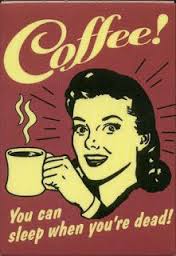
Food, for example, improves the spirit, coffee consoles the soul. Most men, to quote again, live lives of quiet desperation, the victims, all of them, of innumerable intentions. Hence the enormous spiritual and emotional quality of food and drink. There is also tobacco and alcohol, although wine too is not American….A cup of coffee destroys your sadness. (93)

From praising coffee, he turns, poetically, to pleasure itself. His writing gives one the sense that he has left cynicism far behind for something that he can believe in:

To each age and each stage a special quality of satisfaction, enough for everyone, and enough for all time, no need to compete.   States of being suffice. Let the handsome be familiar with the looking-glass…Let the unwarranted sadness come to an end, sound and fury signify a multiple enjoyments….Pleasure believes in friends, pleasure creates communities, pleasure crumbles faces into smiles, pleasure links hand to hand. (95)

But he ends on a cynical note:

And, yet, I know, all this is nothing, nothing consoles me, and our problem and pain are still before us. Let us continue to gaze upon it….Let us require of ourselves the strength and power to view ourselves and the heart of man with disgust. (95)

The “power to view ourselves and the heart of man with disgust” is something we see advocated by Michel Houellebecq and Charles Baudelaire. But what makes it different is that this cynical prayer comes from an American not a European.   And it goes against the American grain because it is not satisfied with a cup of coffee or the “looking glass” of pleasure.   In a society surfeited by images and Starbucks, one wonders how Schwartz’s narrator – and Schwartz himself – would fare.   Schwartz’s cynicism seems to have driven him from the world.   Ultimately, he lacked the “power” to give a sustained look at “the heart of man with disgust.”  Neither coffee nor alcohol “destroyed his sadness.”

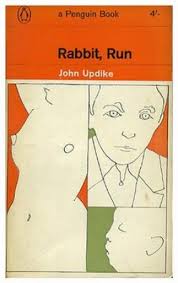
The Rise and Fall of American Dreams: On John Updike’s “Rabbit, Run”

Unknown

Americans are familiar with the trials and tribulations of success and failure.   We see failure and success all around us. But when we see the rise and fall of American dreams, we often don’t think about ourselves. It’s taken as commonplace that at a certain point in life people either give up on their dreams, move on to new ones…or to none at all.   The link between one possibility or another is to be found in the figure of movement.  Americans like to move and know that traveling to another place may provide solace in the face of the void that opens up when one’s dreams dissolve into thin air. But that’s the point. Movement can help us to forget the loss and to somehow outrun it.   The blind hope is that if one moves fast enough, one can escape the realization that he or she has failed and that life has passed one by.

But fiction allows us to pay closer attention to this process and allows the us to ask ourselves whether we are also caught up in flights. Fiction gives us time to think about our movements and our need to escape.   What makes the loss most intriguing for readers is when the person who experiences such loss is not fully aware of it or…the implications.   Blindness is painful for the reader and the subject’s blindness informs many narratives (whether in fiction or religion) throughout history.  The experience of an American losing his dream, grappling with present circumstances, and slowly realizing his loss informs the central arc of John Updike’s Rabbit, Run.

The book starts off with the main character, Harry “Rabbit” Angstrom’s flight to a basketball court and a group of children.   He is the odd one out. Rabbit is much older than them, but he tries, by way of his movements, to come closer the children. The main point is that this is the world that gave him his childhood dreams. It’s a world where movements in space can make one forget about the world:

Boys are playing basketball around a telephone pole with a backboard bolted to it. Leg’s, shouts. The scrape and snap of Keds on loose alley pebbles seems to catapult their voices high into the moist March air blue above the wires.   Rabbit Angstrom, coming up the alley in a business suit, stops and watches, coming up the alley in his business suit, stops and watches, thought he’s twenty-six and six three. So tall, he seems the unlikely rabbit…He stands up thinking, the kids keep coming, they keep crowding up on you. His standing there makes the real boys feel strange. (3)

The words “real boys” disclose the narrator’s intent which is to show that Rabbit acts “as if” he is boy in front of them. He acts “as if” he is one of them.   But they want none of it:

They’re doing this for themselves, not as a show for some adult walking around in a double-breasted cocoa suit. It seems funny to them, an adult walking up the alley. Where’s his car? (3)

When Rabbit gets the ball after it “leaps over the kids heads”(due to a shot that hits the rim), the narrator gives a detailed description of Rabbit’s movements:

The cuticle moons on his fingernails are big. Then the ball seems to ride up the right lapel of his coat and comes off his shoulder as his knees dip down, and it appears the ball will miss because though he shot from an angle the ball is not going toward the backboard. It’s not aimed there. It drops the circle of the rim, whipping the net with a ladylike whisper. “Hey!” he shouts in pride. (4)

The ball is aimed toward the sky and he makes the shot. Although the boys are hesitant and say its “luck,” he says it is “skill.” And he goes on to play and shoot more. He notices a boy amongst them who is a great player and the narrator takes note. But he also takes note of how the kid, like Rabbit, will become a star but then lose his luster and become anonymous:

He’s a natural. The way he moves sideways without taking any steps, gliding on a blessing: you can tell. The way he waits before he moves. With luck he’ll become in time a crack athlete in high school; Rabbit knows the way. You climb your way through the little grades and then get to the top and everyone cheers…and then you’re out, not forgotten at first, just out, and it feels good and cool and free. You’re out, and sort of melt, and keep lifting, until you become like to these kids just one more piece of the sky of adults that hangs over them in the town….They’ve not forgotten him: worse, they never heard of him. (5)

What Updike manages to do in this passage is to show the contradictions at the heart of the American dream.   It may lift you up but at a certain point you may have to realize that you’re just one-in-a-million. But, to be sure, the struggle between being someone and being no-one is at the core of modernist art, literature, and philosophy. The question we have, as readers, is how Rabbit deals with his sinking into insignificance. Will he give up, will he try to be someone, or will he just…run away? Will he hurt people along the way?

After 9/11: Indifferent Artists, Ruined Writers, and Destroyed Plots in Michel Houellebecq’s “Platform”

Unknown

We find a play within a play in Hamlet and a novel within a novel in many postmodern novels. But we don’t always find literary criticism within the novel. And when we do, the reader can take such criticism as a possible key to understanding the (main) novel. During a trip to Thailand with a tourist group, the main character of Michel Houellebecq’s Platform tells his readers that he tried reading two American novels – The Firm by John Grisham and  Total Control­ by David Baldacci. He found both books unsatisfying.   His criticism of the books shows the reader that he doesn’t appreciate novels whose plots and characters are obvious.   The narrator is more interested in the English novel – by writers such as Sir Conan Doyle and Agatha Christie – because they give the reader the “pleasure of recognition” and the “pleasure of discovery.”

But it is his insightful literary criticism of the latter that gives the reader a key into the kind of novel he is – so to speak – writing and about the kind of reader who can best appreciate it. It is the sudden twists of fate that produce indifferent artists and ruined writers that the narrator finds most intriguing. Can the artist or writer, he muses, be truly happy? Is their happiness “filtered” by art or obliterated by their dedication to harsh reality (which, in their view, always ends on a bitter note)? Or is it history which has the final say on how a novel is written….or received? After 9/11 or after historical irruptions of terrorism, will plots, characters, and writers be ruined?  And instead of the “pleasure of recognition” (or “discovery”) does the reader experience the opposite: the shock of recognition (or discovery)?

When the narrator first mentions the Grisham book, he mockingly notes that “it was an American best-seller, one of those that sold the most copies. The hero was a young lawyer with a bright future, a talented good-looking boy who worked eighty hours a week”(37). In contrast to the main character of that novel, he works for the government (and has an indifferent relationship to his work; which is to book cultural and artistic events for Parisians).   This novel makes him sick because of its obviousness:

Not only was this shit so obviously a proto-screenplay it was obscene, but you had the feeling that the author had already given some thought to the casting, since the part had obviously been written for Tom Cruise. The here’s wife wasn’t bad either, even if she didn’t work eighty hours a week, but in this case, Nicole Kidman wouldn’t fit, it wasn’t a part for someone with curly hair – more like someone with a blow dry….It was a suspense thriller – well, there was a little suspense. (37)

When he comes to the part in the novel where “Tom Cruise…was still plagued with worries about his affair with the mixed-race girl”(65) who he meets in his travels abroad, the narrator starts experiencing the confluence of reality and fiction. Since he is in Thailand and has seen Thai girls (the theme of sex tourism is central to the novel), his criticism of the novel becomes sharper.

The idiot (Tom Cruise character) behaved as though the future of his marriage was at stake…Eventually, the hero’s unremitting remorse, though it was of no interest whatsoever, began to interfere with the plot…it was enough to make you angry, and it wound up making you sick. (65)

From this disgust with the novel, we learn that the American character should feel no remorse about his affair. It ruins the plot because it should, as the narrator thinks, be seen as natural. To be sure, this shows that the narrator has no problem with affairs and embraces the notion of sex tourism as a matter of course.

The narrator then turns to the Baldacci book and finds it equally disgusting. What he finds reprehensible is the American perspective on a European company “that had resorted to fraudulent practices in order to corner the market. Said market should have been the territory of the American company for which the hero was working”(66). The European company “said bad guys” had the “audacity to smoke several cigarettes”(66). These simple dichotomies prompt him to “bury the two books” in a “small hole.”

This irks him.

Now he has to find something to read. If he doesn’t he will have to face the fact that his death may be meaningless and that he may die alone, without “knowing a wife’s body.”

The problem now was that I had to find something to read. Not having anything around to read is dangerous: you have to content yourself with life itself, and that can lead you to take risks. At the age of fourteen, one afternoon when the fog was particularly dense, I got lost while skiing, and I had to make my away across some avalanche corridors. What I remember most were the leaden clouds, hanging very low, and the utter silence on the mountain….Despite this, I wasn’t in the least afraid. I was annoyed that things had turned out this way, annoyed for myself and for everyone else. I would have preferred a more conventional death, more official in a way, with an illness, a funeral, tears. Most of all, I regretted never having known a wife’s body. (66)

Fiction, in other words, is a distraction. And the American fictions aren’t working. However, when he discuses literature with a woman who, later in the novel, becomes his lover, we learn that Sherlock Holmes and Agatha Christie are two of his most favorite authors. And his literary criticism shows us that literature does, in fact, let the darkness it…through the cracks.

Every story introduces some new peculiarity (the cocaine, the violin, the existence of the older brother, Mycroft, the taste for Italian opera…). Each new detail that is revealed casts new areas of shadow, creating a truly fascinating character. Thus, Conan Doyle succeeded in creating a perfect mixture of the pleasure of discovery and the pleasure of recognition. (69)

In contrast, he feels that Agatha Christie “placed too much emphasis on the pleasure of recognition”(70). However, the narrator tells us that “The Hollow was different” and that “was largely due to the ambitious character of Henrietta, the sculptor, in whom Agatha Christie tried to portray not only the agony of creation…but that suffering that is particular to being an artist, an inability to be truly happy or unhappy, to truly feel hatred, despair, ecstasy or love”(70). And this “inability to be truly happy or unhappy, to truly feel despair, etc” is due to the “aesthetic filter that separate the artist from the world”(70).   These words, to be sure, describe the way the reader of Houelebecq’s novel should read the narrator.   But they don’t go far enough.

The narrator completes his assessment of Christie’s portrayal of the artist by noting that she over-identified with the sculptor and, as a result:

This isolation causes the artist to experience her surroundings in only a vague, ambiguous, and completely less intense manner, making her a less interesting character. (70)

These words are to be read as cautionary and should prompt a question for the reader: is the narrator indifferent to his surroundings because Houellebecq, the author, is too close to his character or is there a margin which creates a more interesting character who experiences things in an intense manner?

In Christie’s novel it is the writer, Edward, who contrasts most with the sculptor. He thinks of himself as a failure. And this suggests another identification for Houellebecq that alters our reception of the male narrator of Platform:

The author is clearly fascinated with her creation, who has clearly forgotten even those rules that apply to all human beings. She must have enjoyed writing sentences like “But then one doesn’t exactly introduce people – not when somebody has just been killed” but her sympathies did not lie with Lady Angkatell….Edward, for his part thinks himself a failure.   He hasn’t succeeded at anything in his life, not even becoming a writer; he writes short stories of disenchanted irony for obscure journals read only by confirmed bibliophiles. (71)

Midge, a character who “loves Edward hopelessly,” saves “Edward from committing suicide, and in which he proposes to her”(71). Likewise, in the novel, Valerie saves the narrator from self-hatred and self-destruction.

Her arms closed round him firmly. He smiled at her, murmuring:

“You’re so warm, Midge – you’re so warm.”

Yes, she thought, that was what despair was. A cold thing, a thing of infinite coldness and loneliness. She’d never understood until now that despair was a cold thing. She always thought of it as something hot and passionate, something violent, a hot-blooded desperation. But that was not so – this utter darkness of coldness and loneliness. And the sin of despair, that priests talked of, was a cold sin, the sin of cutting oneself off from all warm and living contacts. (71)

The irony of these lines is that, at the end of Platform, the narrator loses Valerie to an act of terror. Moreover, the narrator is not the only one experiences despair. The reader does as well.   However, it is not after someone is saved from suicide; it is when someone is killed in the most horrible way: through an act of terrorism in which a lover’s body parts are blown away in front of the lover.

Although the narrator may leave literature behind for the risks of life and the possibility of a meaningless death and succeeds – by way of finding a woman who he can love – he is exposed to the death.   But it is not his death; it is the death of the beloved.   And as Emmanuel Levinas notes, in contrast to Heidegger, it is the death of the other that concerns me more than my death because I am a-being-for-the-other.

The narrator’s literary criticism of Agatha Christie shows us, ironically, that the “pleasure of recognition” and “discovery,” in Houellebecq’s Platform, are out of balance because we can assume that, for the writer, there is no pleasure in recognizing himself as a failure; not at writing so much as in the risks he takes with a woman he meets on his trip.   In the end, the writer is more like the sculptor: who is unable to “truly” feel “happy or unhappy.”

But it is not so much the “aesthetic filter” that the narrator evokes with respect to Agatha Christie’s sculptor as the pain (not “pleasure”) of surprise (and recognition) that destroys the plot and takes the reader and narrator from the world of love and exoticism (in Thailand) to a world of terror and loss.

The alteration is prompted by something that no modern plot – or our world – could anticipate: terrorism.   And this makes sense since Houellebecq wrote this novel after 9/11. To be sure, that missing historical link is crucial. In the wake of this novel, one may be startled to find that terrorism and its alteration of modern life have, in many ways, become the new “platform” for Houellebecq’s modern novels. But what is most shocking is what it leaves the reader with at the end of the novel: a traumatized narrator (and writer) who has, in the wake of terror, lost his ability to truly feel…anything.

We need to ask ourselves whether we, as post 9/11 readers who have seen ISIS and multiple acts of terrorism, experience what I would call the “shock of recognition” in the narrator’s inability to feel…in the wake of trauma. Are we unable to “truly feel anything?” That can only be the case if the terrorist has taken the world we once loved away from us.   But it need not be, that is, if the world is still ours. For Houellebecq’s narrator it is not, but we need not agree with him. But, and this is the point, it depends on how we view the world, on the one hand,  and how it has been affected by terror, on the other.   Can the writer or the reader stand up to terror and “truly” say no?  

Loving Life by Hating It: First Thoughts on Michel Houellebecq’s “Platform”

Unknown

For some modern writers and artists, the cultivation of solitude and alienation are worthwhile pursuits.   They would claim that one should dedicate one’s writing to this project because it makes the modern writer unique. But it also makes us look at things that, in their view, are more definitive than the commonplace celebrations of progress and the joys of modernity. These writers are world-weary and cultivate what the Germans call Weltschmerz in order to produce literature and art that is repulsive and repulsing.   To keep one’s mind focused on such disgust is, for them, to be honest, authentic, and modern. The bitter artist is better off than the smug one.

In one of his journal entries, the famed Parisian “father of symbolism,” Charles Baudelaire, notes that he “will have conquered solitude” when he has “inspired universal horror and disgust” by way of his poetry and prose.   Michel Houellebecq – who often includes Baudelaire’s name in his fiction – has taken to Baudelaire’s advice.   And, unlike many fiction writers today, I have noticed that Michel Houellebecq’s narrators and plots are consistently bitter.  He, like Baudelaire, makes use of cynicism and melancholy.

As with Baudelaire’s poetry and prose (see Paris Spleen), the literary technique employed by Houellebecq is effective because it prompts the reader to distance him or herself from narrators, characters, and language so as to ask him or herself whether such a take on life is valid or necessary. Moreover, Houellebecq turns his reader to think not just about plots, language, etc but to the world itself. And this prompts many questions. Is it as bad as it seems? What is going on in the world? Do we have the right framework or, as Houellebecq suggests in the title of his 2001 book, platform?

To be sure, a platform has two divergent meanings. It can be read as a medium or as a ground through which one articulates one’s views on this or that subject.   A medium is a means, a ground is an end in itself.   With this in mind, and with Houellebecq’s other novels in view, I wonder if this book’s platform will be cynicism. But how can groundlessness be a ground? After all, cynicism looks to eliminate the philosophical notion of a ground or founding truth. The platform must be cynicism as a medium or, as the German philosopher Martin Heidegger might say, a “groundless ground.” Either way, one needs to consistently ask oneself what the platform of Houellebecq’s novel is.   Cynicism may be a general platform but there are others such as the sex industry, late-capitalism, pornography, globalization, and terrorism which can be found throughout the novel.   In each of these platforms, however, happiness and bitterness alternate.

The epigram of the novel, which comes from Honre de Balzac, sets out a framework for the novel which shares much with Baudelaire:

The more contemptible his life, the more a man clings to it; it thus becomes a protest, a retribution for every moment.

In other words, the contempt with one’s life is actually redemptive because in protesting it one becomes free of the world, solitary.   And this, for Balzac, is life itself. But how can this be?

The novel starts off with the death of the main character’s father. The main character and narrator, Michel, reflects on it but it is his vulgarity and contempt for his life and his father’s that gives him a kind of distance from it:

As I stood before the old man’s coffin, unpleasant thoughts came to me. He had made most of life, the old bastard; he was a clever cunt. “You had kids, you fucker,” I said spiritedly. “You shoved your fate cock in my mother’s cunt.” I was a bit tense, I have to admit. It’s not every day you have a death in the family. I’d refused to see the corpse. I’m forty, I’ve already had plenty of opportunity to see corpses. Nowadays, I prefer to avoid them. (3)

Michel wants to rethink his life in the wake of his father’s death. He wonders whether happiness is possible for someone as bitter as himself…at 40. He his bitter about life but now that he has money (from his inheritance) he imagines that going to another place, far away from Europe (his platform), he can perhaps find happiness. But the search is already determined in advance since he sees sexuality as offering the only avenue for possible happiness. But even this is put into quotation marks since we learn that his father was murdered because of a sexual relationship.

When the detective comes, he learns more about what may have happened.   And what he learns suggests the crossing of themes: sexuality, travel, globalization, and Islam. Since the last person to see the father was the Islamic cleaning lady and she discusses her “crazy” brothers and how they get when they drink – regarding their faith – the reader wonders if there is a connection.  But instead of pursuing this link, the narrator (and the detective) leaves it untouched. This comes back at the end of the novel like what Freud would call “the returned of the repressed.”

More important at this point, for the narrator, is not to solve the murder mystery around the father but to leave France for a little while and explore another world (Thailand) and the possibility of (sexual) happiness. The fascinating thing, however, is how this desire for departure and the need for sex and happiness (via travel), feed on one aspect of bitterness that is particular to the narrator.

As the novel progresses, we realize that there are other platforms for bitterness which interrupt his personal journey. It reminds us that bitterness has many dimensions and the world we are distant from, as a result of the narrator’s bitterness, is not singular but plural.   It comes back to bite him and it puts his freedom into question. It also puts the reader’s judgment into question since the reader must decide what it means when one world crashes into another.   Do we share the same world? Are we free to leave it? Does our “contempt” for the crashing of one world into another enable us to be free despite the fact that such a crash destroys our world? These are questions that Houellebecq’s novel poses to the reader.

….to be continued

Nothing to Laugh About: On Jean Amery’s Phenomenology of Aging and Louis CK’s

images

In an era which endlessly celebrates youth and beauty, aging oftentimes provokes shame, revulsion, and denial. For this reason, celebrities do their utmost to look and seem young when they are old and why the elderly often feel worthless and unappreciated.   Think, for instance, of Joan Rivers or the bevy of celebrities who turn to botox and plastic surgery to cover up the wrinkles and signs of age or the fact that we see little of old people on our information feeds.   In addition, people often choose to send their parents to homes or away than, as was in the past, to take care of them in their homes. “We” need to stay happy and youthful.   Such images of aging (or the actual presence of aging) can only prompt “us” to stop in our tracks and make us morose. (I put we and us in “scare quotes” because there is exclusion at work and that we doesn’t include the aging.)

By looking age square in the face, one becomes serious. There is nothing funny about getting old. Or is there? While comedians like Sara Silverman (think of her latest film, I Smile Back), Ben Stiller (think of his performance in Noah Baumbach’s Greenberg (2010) and While We’re Young (2014), or Gretta Gerwig (think of her latest film, Mistress America) have taken on more serious roles as they have grown older, Louis CK takes (and has taken, for at least ten years) a more comical – though very dark – approach to aging in his show Louie and in his stand-up routine.

In this clip, Louis CK emblematizes a struggle with lost youth through his attempt to get the “eyes” of the doll back into its head.   The loss of eyes, for Freud, is associated with castration and shame. His attempt to make his daughter happy by finding and replacing the eyes of the doll is an utter failure. With the music, camera angles, and desperate facial contortions made by Louis CK, it comes across as horrific.

To be sure, the doll is a great figure for many a horror story or horror film and it works well to bring out the desperation of aging, failure, and shame before his daughter and an audience that sees him in the same way.   Even so, the attempts to get the eyes or repair the doll – because they are so exaggerated – come across as comical.

Compared to Louis CK’s struggle with aging, Jean Amery, a Jewish Holocaust survivor, journalist, and thinker – who has given us some of the most powerful philosophical meditations on the Holocaust and the fate of post-Holocaust humanism – gives his readers an unforgiving and utterly serious reflection on aging and otherness.   In the spirit of Martin Heidegger and Jean-Paul Sartre, he attempts what can be called a phenomenology of aging. His descriptions of aging bring us close to its dark, existential kernel.   The descriptions are nothing to laugh about. They are sober and painful to read…or accept.   Amery sees the phenomenological inquiry into aging as the key to understanding what it means to have a temporal (time oriented) consciousness.

In his book On Aging: Revolt and Resignation, Jean Amery begins his book with a meditation on time.   He contrasts the way a physicist reads time to the way a phenomenologist reads time. One sees time as something external while the latter as something internal (“time is the inner sense, the form through which we perceive ourselves and our condition” p.8).   While the physicist would see the phenomenologist as playing a “mental game,” the phenomenologist sees his description of aging, from the angle of consciousness, as of the utmost urgency.   His question: what does aging mean? The answer to this question discloses a temporal consciousness that is extremely alienated and pained.

According to the phenomenologist, the physicist speaks “idle talk” since he is avoiding the more meaningful inquiry into aging and time. To measure time and what happens to the body in space, we avoid the more authentic engagement with aging and that engagement, for Amery, is necessarily painful.

As Martin Heidegger and Hannah Arendt taught, one appears in the world and before others. But according to Amery, the “world ‘an-nihilates’ aging human being and makes them invisible”(68).   Amery, here, equates the “world” with “young people” because he sees the world that we live in as a world that is created by and for the young.   In this world, when one ages one slowly becomes “invisible” and irrelevant, one is “an-nihilated.”   On this note Amery makes a suggestion:

It is good for the aging to realize that society, regardless of how it arranges the demographics of its age pyramid, accepts the annihilating judgment of the young and the most recent. (69)

Amery laments that even the aging look at other aging people from this angle and visit the “annihilating judgment” on other aging people. In doing so, “they deny the solidarity to their comrades in destiny, try to maintain their distance from the signs of the negation of existence that they read on their features”(69).

And as a result of this “denial of solidary,” these aging people live in desperate attempt to “cling” to the young when they are aging. They also deny that they are envious and this troubles Amery:

That is not to say that they love the young, only that they cling to them in an absurd longing and with an envy that they cannot admit to themselves. (69)

Drawing on Sartre, Amery calls these denials “bad faith.” To negate this “bad faith,” Amery suggests that those who age face the fact that the world they were young in is gone and that the world that now exists rejects them: “the world they understand no longer exists”(78).   For Amery, the acceptance of the future generations, in a progressive sense, is difficult if it is to be taken in good (rather than bad) faith.

The phenomenologist of age must address a few questions:

  • How does one accept the fact that “society ascribes a social age to us”?
  • Can one accept the fact that, for society, “old people can’t become” (can’t change or grow but…die)?
  • Can one accept that one’s world is “dated”?
  • Can one, most importantly, accept that, in aging, one becomes invisible?

Amery’s questions resonate with the existential concerns of Kierkegaard and many modern writers and artists because, as Nietzsche well knew, in the wake of Napoleon one could be “someone” who is recognized in the world.   On the other hand, one may be a nobody. Although one can ponder this question at any age, the process of aging, for Amery, makes it clear that a decision has already been made.   The acceptance of aging, for Amery, is tied to the acceptance of death. Once the world rejects you, there is nothing left for you, save death.

The fact that one can no longer appear to the world is a frightening prospect. And the Louis CK’s clip brings out the desperation of this loss. He desperately tries to find the dolls eyes. Without them, he can’t be seen as a good parent.   The irony is that we still see him. In his mockery of aging, Louis CK is still a celebrity. Despite the fact that he is aging, he can still be accepted by the world. But he gets this pass only because he mocks aging. And that is exactly what Amery says is part and parcel of the world we live in. By mocking aging, we, together with Louis CK, assent to the “fact” that the world we live in belongs to the young and that “society ascribes a social age to us.”

One wonders what Jean Amery would think of Louie in general and this clip in particular.   Is the comical performance of the desperate battle with aging a challenge to bad faith? Does Louis CK fight against becoming invisible and meaningless? Isn’t that what the whole show is about?

These questions suggest that Amery’s phenomenology of aging needs to take into consideration what it means to wage a comic battle with aging and invisibility.   The predominance of the comedic performances of age – from Ben Stiller, Seth Rogen, and Judd Apatow to Sara Silverman and Louis CK – should prompt us to think about how comedy addresses the questions raised by the phenomenology of aging. This is an urgent issue since the question of what is or is not to be “seen” in our visual culture can be given greater scope by those who we love seeing most: not ourselves but celebrities.

In seeing the other in this or that film or TV episode, perhaps we can better see ourselves. Jean Amery was aware of this since he dedicates several pages to how he saw his hero of youth, Jean-Paul Sartre, go from a celebrity to an old man. And in seeing this he saw himself fade into invisibility.   He realizes that his world, which he shared with Sartre, is gone.

Today, we don’t have the same kind of intellectual celebrities but, even so, watching celebrities like Ben Stiller, Adam Sandler, Sara Silverman, or Seth Rogen age, on screen, can prompt us to reflect more on what aging means in a world that, as Amery says, “an-nihilates” it.

Someday You’ll Be A Star…or Maybe Not: Gabriel Josipovici on What it Means to be “Someone” After the French Revolution and Napoleon

images-1

I grew up in a small town in the middle of New York State. It was like a small family. Everyone knew everyone else and could see the potential in this or that person. As for myself, my family, teachers, and coaches always told me that I would someday be “someone.” My grandmother, who loved Broadway and Hollywood, always told me that I was special. She always said that one day, when I was an adult, my name would be in the lights. I grew up with this kind of hope, but I was not alone. And today what kid doesn’t want to be a famous singer, actor, or musician? Shows like American Idol, America’s Got Talent, etc encourage such hopes. The small town naivite is shared throughout American households. Indeed, the American dream is not just to have a house, a car, savings, and food on the table; it is to have a star on Hollywood Boulevard.

But with all of the talk of being someone, there is the possibility that one may just be an ordinary person or, as the classic Guns and Roses song puts it, “one in a million.”

Although Gabriel Josipovici, in his book What Every Happened to Modernism? is interested in the European moment when the notion that you or I could be “somebody,” his insights can prompt American thinkers or critics to look into the historical legacy of this claim in America. It can also show how this moment was the source of jubilation and existential despair. Modernist art and literature, for him, cannot be thought aside from this moment and its offspring.

Josipovici argues that in the Middle Ages the system within which one was born discloses a sense of fate rather than freedom. One’s meaning was contingent on one’s birth. But after the French Revolution that all changed:

No-one in Europe had any doubt that something decisive, whether wonderful or terrible, had happened in 1789. What the revolution did was give everyone a sense that even the most ordinary life could be changed. You were not stuck for ever in the place and role into which you had been born. Everyone was now equal and everyone, in principle, had equal opportunities. By the time Napoleon was crowned Emperor not only did every soldier feel that he had a field-marshal baton in his knapsack, every citizen felt that he too could be an Emperor. (40)

As Goethe, Nietzsche, and Emerson well knew, Napoleon was a world-historical person who opened the door for a new kind of individualism and hope that one could be somebody. For Nietzsche, Napoleon was the arbiter of “master morality” and a model for the Ubermensch (overman).

However, as Josipovici also notes, the Napoleonic ideal had terrible consequences. Now one not only feels one can be “somebody,” but that one may also be “nobody.” We see this, says Josipovici, in Doestoevsky’s most controversial character, Raskolnikov:

He is nobody, he cannot earn enough to help his family, yet he sense that he is destined for great things, that he is a second, Russian, Napoleon…In the end, as the examining magistrate, Porphyry, explains to him, he murdered the old money-lender and almost asked to be caught for the simple reason that, like the rest of us, he prefers to be someone, even a murderer, than no-one at all. (41)

Many characters, notes Josipovici, destroy their lives and the lives of others in order to feel like they are “alive” and unique.   In contrast, one can, as Melville’s Bartelby, decide to be anonymous and a nobody. But this decision is fraught with sadness and meaninglessness.

According to Josipovici, it is Kierkegaard who illustrates this decision between anonymity and being someone. The issue, for Kierkegaard, is how to address what is possible.   Now, after Napoleon, the modern individual must deal with the overabundance of possibilities:

Already in his first mature work Either/Or (1842), he had begun to explore what it might mean for a youth with brains and imagination to grasp that he was free to do what he wanted and to grasp at the same time that that freedom condemned him to a life of melancholy and inaction, as though the plethora of possibilities made all the actualities seem pale and insubstantial. (43)

On the one hand, a self with no possibilities is in despair (and we see this throughout America and the world). On the other hand, a self with too many possibilities may also be in despair. According to Josipovici, the world without tradition is a world with no necessity. Many of us don’t see ourselves within the narrative of a tradition with its rituals and commandments. For this reason, we feel the world consists of endless possibilities instead of necessities and this is overwhelming.   Nonetheless, citing Kierkegaard, Josipovici argues that one must have possibilities or invent them in order to have some sense of meaning:

If one wants to compare running astray in possibility with the child’s use of vowels, then lacking possibility is like being dumb (silent). The necessary is as though there were only consonants, but to utter them there has to be possibility. (47)

The metaphor is apt for out time and is applicable to Europeans and Americans. Without possibility, one is silent or dumb. One can neither speak nor be heard. But if one has possibility, one can speak. However, the catch is that even if one has vowels and even if one can speak, one may still not be heard. Despair is possibility whether one has or doesn’t have possibilities.

But in America, as in the Russia that gave birth to the character Raskolnikov, the problem with the need to be someone is that it can lead to violence. There are many sociopaths who resort to this path.   I’ll end with a video put out by Elliot Rodger – the son of a famous Hollywood film director – before he stabbed and shot several people in Santa Barbara.   He was born into a world with lots of possibilities for money and success. But since he felt he was rejected as a nobody and lacked the possibilities that other men had with women, he felt that he had to become a murderer and die as a somebody.  After Napoleon, this is the dark side of possibility. I’ll end on that note.