
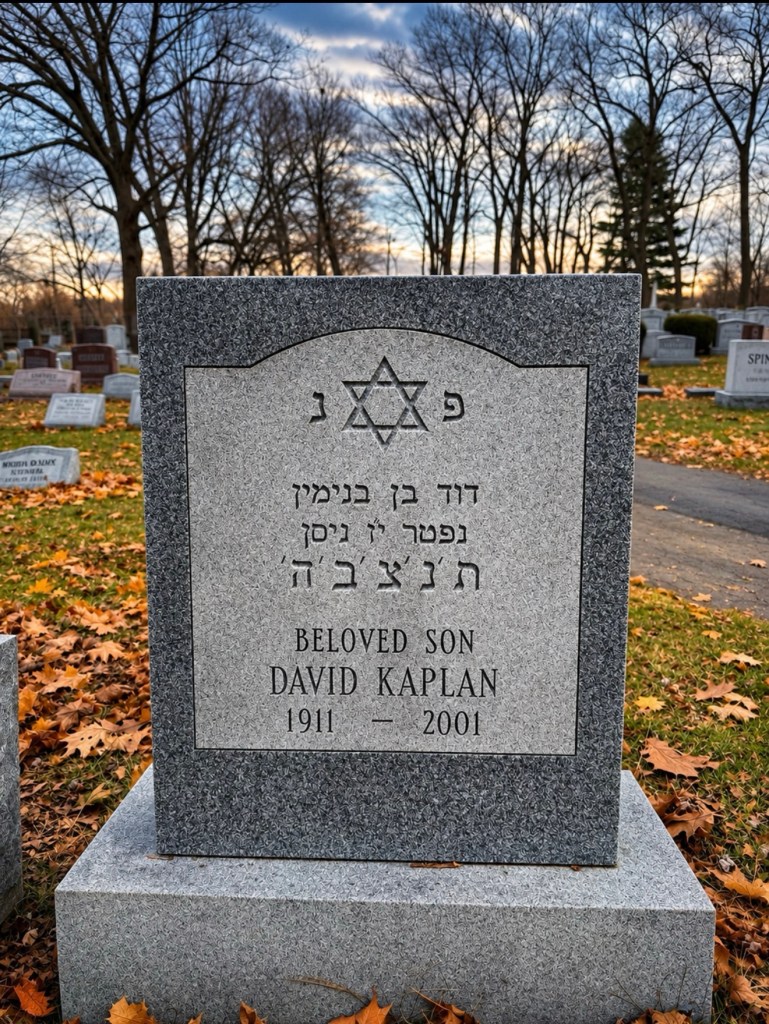
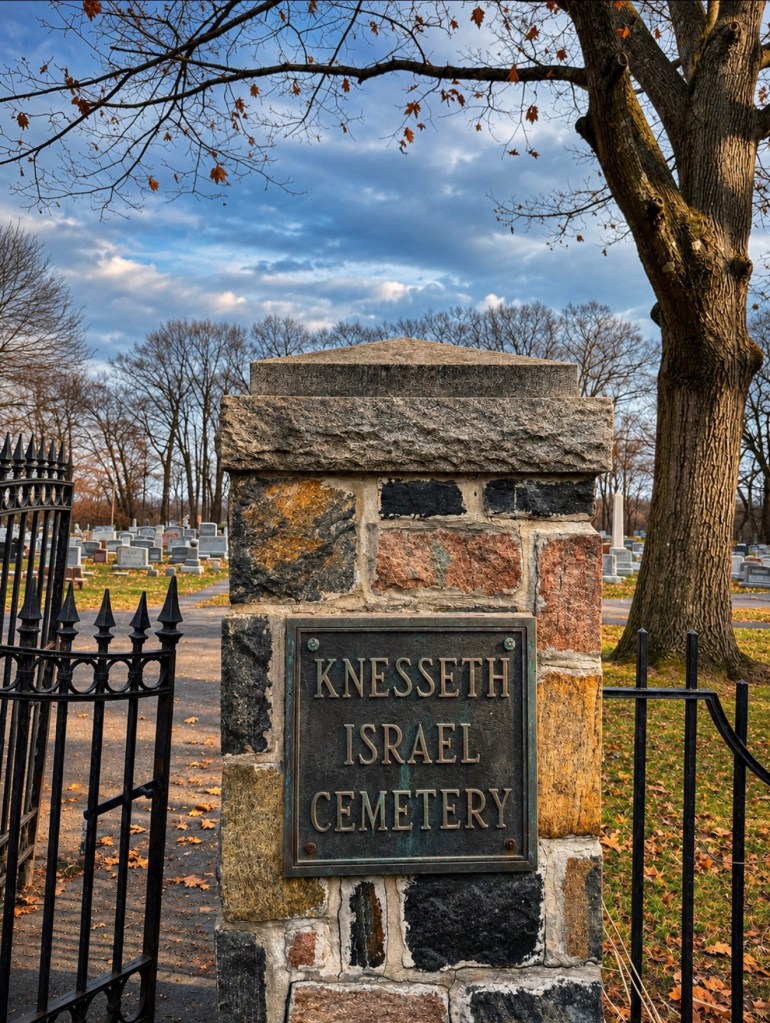
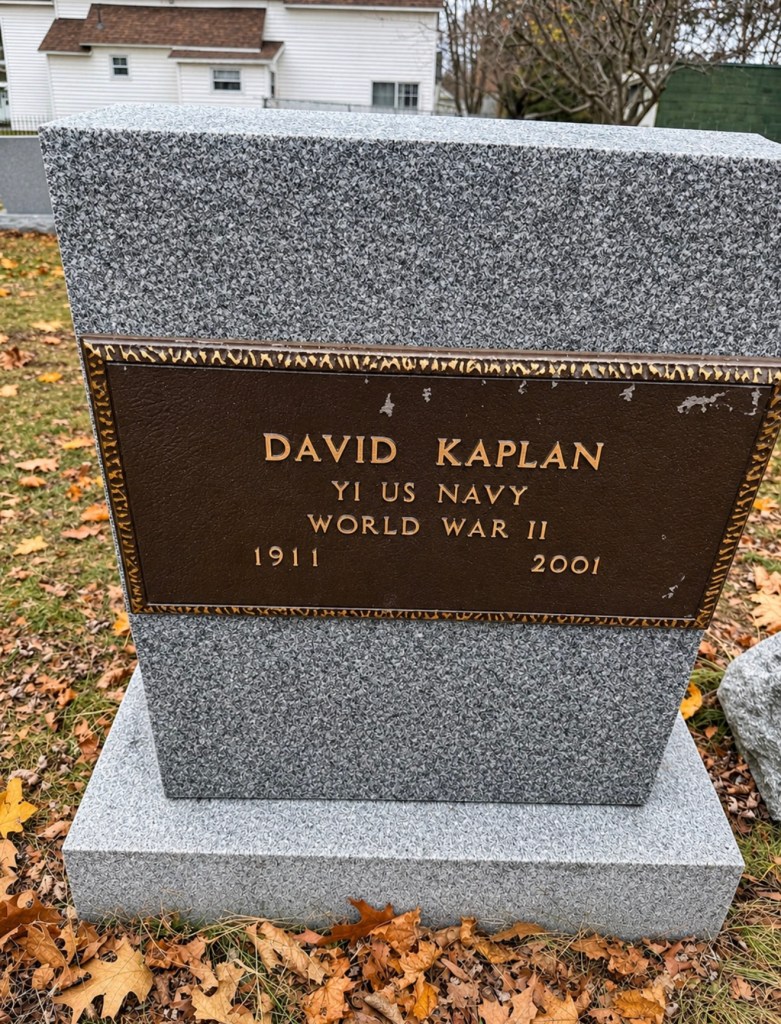
Today – on Thanksgiving Day in America – I went to the Knesset Israel Synagogue’s cemetery in Gloversville, and visited the grave of David Kaplan, who died in 2001. I said Kaddish for him for the first time. David was my father Marshall Feuer’s mentor in the leather business and one of the most fascinating Jewish characters of my childhood in Gloversville, New York. A Navy veteran, antique collector, hustler, comedian, and lifelong bachelor, he was a man of endless contradictions.
Having left Brooklyn at thirteen, he learned the leather trade on New York’s docks before making his way to the Adirondacks. He claimed descent from European maggidim, Jewish storytellers and preachers. Somewhere along the way, the sermons became leather deals, but the storytelling survived.
David lived in Northville and spent part of the year at the Holiday Inn, where he practically held court. I remember his room: overflowing ashtrays, pyramids of cigarette butts, grapefruits everywhere, and a stationary bicycle. His health philosophy apparently involved smoking incessantly, eating grapefruit, and pedaling away the consequences!
Usually dressed in a tracksuit, cranky, theatrical, and full of jokes about money, women, and business, he seemed like a character out of a Saul Bellow novel. He never married or had children, but our family became another family to him.
To understand David’s importance, one must go back to my grandfather, Menachem (Menka) Feuer, a rabbi’s son from Kalush in the Austro-Hungarian Empire. According to family history, he fought in the Alps during World War I, commanded Jewish soldiers, and earned military decorations.
Family lore tells of his impersonating a duke to secure passage to America, where he built a successful glove and leather business. After his death, however, bitter family disputes erupted. My father was pushed out, and lawsuits, betrayals, and even threats against his life followed. David helped him navigate this unforgiving world of hides, hustlers, crooked deals, and complicated loyalties.
What fascinated me most was listening to their telephone conversations. They could talk for hours, transforming leather scraps, swindlers, family feuds, and improbable adventures into hilarious, almost mythological stories. One exaggeration invited another.
Their conversations were performances, full of imagination, laughter, and an extraordinary capacity to reinvent experience. Watching their friendship, I learned something about tenacity, loyalty, practical wisdom, and resilience—not simply surviving adversity, but refusing to let it extinguish one’s imagination.
Growing up Jewish in Gloversville, far from the great centers of Jewish life, I wondered what being Jewish in America meant. Years later, reading Bellow and Ben Katchor and writing Schlemiel Theory, I recognized something familiar.
David wasn’t exactly a schlemiel—he was too shrewd for that! But he understood something central to the schlemiel’s comic wisdom: life cannot be reduced to winning, losing, or making money. Humor preserves possibilities that worldly calculation overlooks.
Standing at his grave, I realized that David, who had no children, had nevertheless helped shape my father and me. Saying Kaddish became an acknowledgment of that inheritance: the Jewish imagination, transmitted not through books or sermons, but through friendship, struggle, storytelling, and laughter.
I had spent years studying Jewish humor. Yet some of my earliest lessons came from two leather businessmen talking on the telephone in a small upstate New York glove town. David helped teach my father how to make a living in the leather business, after my father’s brothers squeezed him out of the family leather business. Without knowing it, Dave Kaplan taught me something about how to meet life with humor.

