“Don Quixote in Schlemieland” – A Guest Post by Ilan Stavans

Unknown

My first intent was to call this blog post “Schlemiel the First,” since it strikes me that Don Quixote, the mythical character created by Miguel de Cervantes (the second, and concluding, part of the novel was published in 1615, exactly four hundred years ago), is the source, the ur-text from which all subsequent schlemiels come from. But I immediately realized this, in and of itself, is a myth, by which I mean, in this case, a false premise. The Merriam-Webster definition of schlemiel is “an unlucky bungler.” Much might be said about Don Quixote, including that he is a schemer, an impostor, even a fraud. In the long and tortured—maybe “torturous”—narrative, he goes through all sorts of ordeals through which he puts his fanciful ideals to test. But one thing is certain: he is never unlucky.

In my yidishe kop I’ve always thought (call it pensée irrationnel) that “Quijotismo” in Spanish is the condition of being a schlemiel. In other words, either Don Quixote is’t a schlemiel or Merriam-Webster is wrong, or both. In my Yiddish-speaking childhood home in Mexico there were heated discussions attempting to differentiate between a schlemiel and a schlimazel. The former was seen as a fool, and Don Quixote is certainly one, whereas the latter as understood to a person prone for misfortune, which is also a description of Don Quixote. He is a mix of both, then. In the discussions, someone would frequently say that you can’t be a fool without being unlucky, although the opposite, you can’t be unlucky without being a fool, doesn’t hold true.

This conundrum—that the Knight of the Sorrowful Countenance bring these two qualities together—is untenable in my eyes. To explain why I need to comment on various elements of Cervantes’s book.

It is considered the first modern novel. It is, in my estimation, the one that, almost singlehandedly, invented modernity. Cervantes was a cautious proponent of the Enlightenment in Spain. Don Quixote is courageous in idealizing the power of dreams but it doesn’t take the Holy Inquisition head on, nor does it intend to. It distills some of the ideas of Erasmus of Rotterdam’s In Praise of Folly, although, again, it isn’t critical of the Catholic Church as an institution, at least not directly. What the narrative does—illustriously, no doubt—is question the concept of truth.

Should it be written with a capital “T,” that is, might it ever be seen as absolute? Cervantes’s answer is a rotund no: as Schopenhauer and Bishop Berkley would argue later, everything we are exposed to, reality as a whole, exists only in our mind; it is subjective, meaning relative, biased, and partial. We are the architects of the world, for the only way to register it, the only way to represent it is through our independent perspective. One could call this approach a road to foolish, for, after all, if the stimulation we receive from the outside is invariably filtered by our own misconceptions, truth and falsehood are easily interchangeable.

Yet Don Quixote of La Mancha is wiser; it doesn’t fall for this easy, Manichean dichotomy. Its basic premise is that reality and our imagination are intrinsically connected and, perhaps more importantly, that reason and foolishness aren’t antonyms. This is why I love Cervantes’s novel: because it proposes to see reason also not as absolute. A fool might be quite intelligent, even reasonable. And reasonable people is often foolish.

The reader delves into the adventures of Don Quixote and his squire Sancho with the intuition that they are a study in contrasts: one is rich and the other poor, one is thin and the other fat; one is an idealist and the other a pragmatist; and one is learned and the other illiterate. More importantly, the reader enters the novel with the conviction that one is a fool and the other is not.

The narrative quickly brings down these expectations. In fact, it fulminates them. It takes almost no time to realize that Cervantes is presenting different types of knowledge: the learned man, for instance, is often impractical. Furthermore, as the episodes accumulate the reader witnesses an extraordinary feast: Don Quixote is “Sanchified” and Sancho Panza is “Quixotified”; that is, elements from one suddenly appear in the other and vice versa. That, after all, is what true friendship is about.

All this is done through laughter. The novel is a parody: it makes fun of chivalry literature; it also makes fun of itself and it even makes fun of humor. It thrives on the wretched, the ridiculous, and the pathetic, an aspect, needless to say, constant in depictions of schlemiels: we laugh at and with them.

In any case, the knight isn’t a bungler. He doesn’t habitually bungle things. He isn’t an amateur either. He is impish, clumsy, certainly inelegant, but he even often gets from people what he wants. Sancho also isn’t unlucky. Actually, as recompense he is promised, early on in the plot, the governorship of an island, which will be a way for him to be paid and, along the way, cease being poor, and toward the end of the Second Part he does get it, sort of: it is called Barataria, and after a brief tenure at its helm he realizes it is better for him not to get involved in politics. So no: the fellow is rewarded and he learns from experience not to want to be outside his own class.

Still, Don Quixote, more than Sancho, does strike me as a schlemiel, maybe even the proto-schlemiel: the fool of fools, a wise man whose façade confounds those around him. And he is a schlimazel in that, in his quest to right all wrongs, he is regularly hit by misfortune. By the way, being hit by misfortune isn’t the same as being unlucky. They are dramatically different things.

In fact, my impression is that Don Quixote of La Mancha inaugurates a space—call it “Schlemieland—wherein the state of being a fool in constant misfortune becomes a feature of life in general. It is the space where dreams are attempted but fail to materialize, the dimension where everything we try ends up in failure. Cervantes’s character is a success in failure. Everything he attempts ends up in collapse yet his effort becomes a model, even a form of sustenance for others who, when, toward the end of the novel, he renounces his dreams and is ready to die as the hidalgo he once was, beg him—nah, they implore him—to remain the fool he always was.

There is a longstanding tradition in Jewish literature of celebrating, even emulating Don Quixote, discreetly or otherwise. Mendele Mokher Sforim’s Masoes Beniamin Hashlishi (Travels of Benjamin the Third) is the most obvious example. There are Quixotic elements in Tevye, in Isaac Babel’s Odessa stories, in Philip Roth, in Woody Allen, all of whom, to some degree, inhabit that liminal space invoked by Cervantes I’ve called Schlemieland.

The word “schlemiel” came about in the Pale of Settlement. Its birth is probably in the 17th century, although there is no data to prove it. Either way, I’m aware it is an anachronism to describe Don Quixote as a schlemiel and, furthermore, to image La Mancha and beyond, the universe in which he moves, as Schlemieland. Still, our language—any language—is made of a hefty dose of anachronisms. This is because every time a new concept emerges, people apply it not only to address the present but, unequivocally, to refer to the past. Not to go too far, think of the word “Quixotic,” which is taken to mean a dreamer, a person who is unrealistic. Not long ago, I came across a scholarly portrayal of Moses, the biblical patriarch, as Quixotic. Talk about applying the tools of one era to understand another.

Why not? If Moses is Quixotic then Don Quixote is Schlemiel the First.

__________________

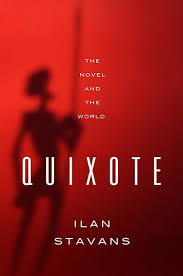
Ilan Stavans is the Lewis-Sebring Professor in Latin American and Latino Culture at Amherst College. His latest book is Quixote: The Novel and the World, just out from Norton. He wrote the introduction to the 400th anniversary edition of Don Quixote of La Mancha (Restless Books).

How Can Tevye Forgive Menachem Mendl? On Betrayal, Theft, and Forgiveness in Sholem Aleichem’s “The Roof Falls In”

Unknown

There is nothing worse than betrayal. But there are different degrees of betrayal. Some forms are worse than others. The worst violation of trust occurs when the person who is the betrayer is a close friend or a relative.   The stakes are especially high when the entrusted party is approached by a family member or friend who puts his livelihood, wife, and children on the line. Such a betrayal can destroy a person’s outlook on life and make him or her cynical and bitter.   In betraying trust, one destroys or seriously damages hope…and humanity.

Judaism, to be sure, is based in large part on the notion – germane to “covenantal theology” – that the relationship between the Jewish people and G-d (the covenant between them) is based on trust that neither party will ever betray the other. There is a trust, built into Judaism, that G-d promises and delivers. What makes the Torah so special is the fact that, from start to finish, there are trust issues between the Jewish people and God. As Moses Maimonides and other Rabbinic scholars have noted many times, God is constantly, throughout history, testing the trust of the Jewish people.  But there is a twist. Even though trust may be damaged or even destroyed in the relationship between man and God – which we see throughout the Torah, as in the story of Yosef – forgiveness is possible, trust can be re-established, and promises can be renewed. This works with God and man. But when it comes to betrayal and forgiveness between human beings, it’s a more complex matter.

In Sholem Aleichem’s “The Roof Falls In,” which is a part of Tevye the Dairyman, we see the playing out of trust, betrayal, and forgiveness between Tevye and Menachem-Mendl.   As many people know from Fiddler on the Roof or from a cursory reading of Aliechem’s most famous book, Tevye is the epitome of the honest, poor, and simple everyday Jew. He is a G-d fearing man who, in his kindness, gives every man and woman a chance.   However, there is a very important chapter (short story) in Tevye the Dairyman which shows Tevye in the most uncharacteristic way – as a cynic.

The story starts off in the wake of a betrayal by his “relative, Menachem-Mendl…a fly-by-night, a who knows what, a wheeler-dealer, a manipulator, may he never find a resting place”(23).   Menachem-Mendl’s betrayal shifts Tevye’s view of life.  Aleichem, by way of these characters, takes his readers through his betrayal of Tevye and leaves us to judge whether or not the conclusion of the tale – and Tevye’s decision – is just.

Tevye starts off his tale on a bitter note. He points out how poor he was and how he had to sell everything he had in order to support his family but…it’s simply not enough. He is in a dire situation and he imagines – as he usually does – what good he would do if he actually had money:

Having sold everything and thrown some hay to my horse, I decided to take a stroll around town. As it is said, Man is but dust – a man is only human. I wanted to see a bit of the world, breathe the air, and look at the find good that Yehupetz displays in its shopwindows….Standing just like that at a large shop window with a pocketful of cons and ruble notes, I thought, God in heaven! If I had a tenth of what I see here, I would never complain to God again. I’d make a match for my eldest daughter and give her a good dowry….I’d see to it that the house of study had a metal roof, not a roof about to collapse any minute. I’d open a religious school in town and hospital and a shelter…so poor people wouldn’t have to lie around on the bare floor of a house of study. (24)

In the midst of his dreaming of the good he will do for his people, he is startled – or rather awakened – by a voice:

Sholem Aleichem, Reb Tevye!” I heard someone call from behind me. “How are you?” (24)

The voice is of his “second cousin once removed,” Menachem-Mendl. After doing their Jewish geography, Tevye embraces him as he would any family member (with love and concern).   Tevye notices that Menachem-Mendl looks poor and ragged and he becomes sympathetic. He tells Menachem-Mendel that a “Jew must have hope” and “faith” that things will get better:

I stole a glance at his shabby clothes, patched in many places, the shoes almost worn through. “You can be sure that God will help you and things will get better. As it says in the Bible, All is vanity. Money,” I said, “is round, one day it rolls this way, another day it rolls away, so long as you live. The most important thing is faith. A Jew must have hope. (24)

Tevye sees that Yehupetz has not been good to Menachem-Mendl and offers him his home to come back to and heal:

“Listen to me, Menachem-Mendl,” I said, “come to my place for a day, and you can at least rest your bones. You’ll be my guest,” I said, “a welcome one too. My wife will be happy to have you”(25).

Menachem-Mendl agrees, goes home with Tevye, and brings “nachas”(joy) to him since there is nothing more pleasurable for Tevye than having a guest. And what is better than a guest who is family? The trust that circulates between them is a given.

We drove home together, and everyone was delighted to see him – a guest! Here was our own second cousin, no small matter. As they say, “One’s own are not strangers.” Golde’s (Tevye’s wife) grilling began: How are thigns in Kasrilevka? How is Uncle Boruch-Hersh?…Who got divorced? Who has given birth and who is expecting?” (25)

Tevye feeds and treats Menachem-Mendl like a Prince. Menachem-Mendl praises and thanks Tevye and his wife for the food and hospitality.   He swears that he has never experienced such kindness.

After they finish eating, Menachem-Mendl starts talking about what happened to him. He tells Tevye how he became rich and lost his money.   Tevye is impressed with Menachem-Mendl’s grasp of how the market works (26). As Menachem-Mendl manically goes on and on about his business dealings and the ways of the world, Tevye starts dreaming about money. The next morning, Menachem-Mendl props him up and makes Tevye an offer he can’t refuse. If he “partners up” with and gives Menachem-Mendl money, Menachem-Mendl assures Tevye that he will become a rich man.   But Menahcem-Mendl goes farther than that and appeals to Tevy’s desire for the good by telling Tevye that by doing so, Tevye will “save his life” and bring him “back from the dead.”

“You now have the chance, Reb Tevye, to make quite a few groschens and also save my life, literally bring me back from the dead.”(26).

Although Tevye tells him he doesn’t have much money, Menachem-Mendl pushes him to give more money than he can afford to give and to trust him fully on this “investment.”

“Really now,” he said, “are you telling me you can’t find a mere hundred, Reb Tevye, with your business, and your reputation, kayn eyen horeh?” (27)

All of the talking overwhelms Tevye, and he entrusts Menachem-Mendl. He starts having hope and convinces himself that Menachem-Mendl couldn’t be a liar. Menachem-Mendl could be a “heaven sent messenger” who could help Tevye live the rest of his life as a “respectable man.”

To make a long story short – why should I carry on? – I developed a yearning, and it was no laughing matter. Who could tell? I asked myself. Maybe he was a heaven-sent messenger…He didn’t strike me as a liar, making up tall tales out of his head. And what if things did turn around as he had said, and Tevye could become a bit of a mensch in his old age? How long could a person struggle and slave day after day, again and again the horse and wagon, again cheese and butter? (28)

Menachem-Mendl seals the deal by invoking God. He tells Tevye that God should “punish him” if he cheats Tevye:

“You can believe me, Reb Tevye,” he said. “I swear to you, let God punish me if I cheat you. I will honestly share everything with you.”(29)

After Menachem-Mendl gets the money and departs, Tevye starts dreaming of all the money he will have and how well the family will live:

We parted like the best of friends and kissed affectionately, as in usual between relatives. Standing by myself after he left, lively thoughts and daydreams entered my head, such sweet dreams that I wanted them never to end, to go on forever. (29)

Menachem-Mendl’s assurances and promises, which feed Tevye’s dreams of a better life are a prelude to the major betrayal.  Tevye’s wife starts worrying and, in the end, she is right. Everything falls to pieces.

Menachem-Mendl disappears and stops communicating with his “partner,” Tevye. Tevye starts realizing that he has been duped and starts, understandably, “going out of his mind.” This passage, of Tevye’s realization, are sad and shocking. They are very unique in Aleichem’s corpus of fiction, which is usually more upbeat and hopeful.

In short, a week passed, and two and three – no letter from my partner! I was going out of my mind, walking about in a daze, not knowing what to think. He could have just forgotten to write, I thought. He knew very well that we were waiting to hear from him. Then I began to wonder what I could do to him if he were to skim off the cream and tell me hadn’t earned anything. Would I call him a liar? I told myself it couldn’t be, it wasn’t possible. I treated the man like one of my own, been ready to take on his troubles. How could he play a trick like that on me?!…. A cold chill ran through my body. Old fool! I said to myself.   You made your bed, now lie in it, you ass! (30)

Following these disturbing revelations, Tevye’s wife prompts him to go to Yehupetz and find out what is going on. As he travels there, he starts imagining what may have happened. Since Tevye loves to only think good thought and would rather not dwell on the worst case scenario, he imagines the best case scenario and imagines what he will say when he confronts him (31-32).

He goes through the city in search of Menachem-Mendl. He doesn’t find him and nearly gives up.   But when he stops to look into one of the store windows he notices, in the reflection of the shop window, is the image of Menachem-Mendl!

My heart hurt when I saw him, so sorry did I feel for him! If ever I had an enemy, and if ever you had an enemy, may we hope to see them in the same state as Menachem-Mendl. His coat, his boots, were in terrible shape. (33)

When they turn to each other, we have an enigmatic scene and many questions that, as readers, we must think through. What will they say to each other? Will Tevye curse him or forgive him?   The representation of Menachem-Mendle as ragged and impoverished suggests an answer.

Menachem-Mendl, we learn, was “abashed to see me, we both stood as if frozen, unable to speak, just looking into each other’s eyes like tow roosters, as if to say, We’re both miserable and cleaned out. We might as well take tin cups and go from house to house! (33)

Menachem-Mendl appeals to Tevye’s emotions by making himself into a total schlimazel who is on the verge of suicide: “Reb Tevye! Without luck, a man shouldn’t have been born! Rather than living, it is better to hang!”(33).   But Tevye, against what one would expect, tells him that he is right: Menachem-Mendl is a disgrace and should be publically whipped. Tevye reminds Menachem-Mendl of how he didn’t just destroy him but his whole family!

“You took a household full of living souls, poor creatures, innocent as lambs, and slit their throats without a knife! God in heaven,” I said, “how can I face my wife and children? Go on, tell me, you slaughterer, swindler, thief!”(33, my emphasis)

Menachem-Mendl agrees that he is a thief, a slaughterer, and swindler.   He says that he deserves Gehennam (hell). Tevye says that Gehennam is “too good for you, fool”(33).   After saying this, Menachem-Mendl “lowers his head” and suggests that he may commit suicide.

But instead of walking away and letting him go, Tevye says he hears “every sigh and groan” he makes. “My heart went out to him”(33).

Tevye ends his tale by saying that he forgave him. He says that, if you think about it, “You aren’t entirely to blame.” Tevye can’t conceive of Menahcem Mendl as a swindler and thief! He also puts himself out there as a guilty party! “To say you did it on purpose would be foolish because we were equal partners, fifty-fifty”(34). After excusing him, Tevye offers to have a drink with him: “Come, my friend, let’s have some brandy!”

Looking back, Tevye notes how “that…is how the roof fell in, and with it all my dreams”(34). In other words, Tevye may have forgiven Menachem-Mendl but there was a price to pay: he can no longer, like a schlemiel, dream of something better. But there is more at stake, here. With the loss of dreams and hope, what happens to the Jew? Hasn’t Menachem-Mendl destroyed the fabric of Judaism? And was Tevye wrong for forgiving him? Tevye muses about the meaning of this experience and differentiates himself from the reader:

And what of hope and faith? On the contrary, the more troubles you have, the more faith you must have, and the poorer you are, the more hope you must have. Do you want any more proof?

But I think I’ve gone on too long today. It’s time to go and tend to my business. As you’ll no doubt say, “All men are false.” Every man has his burden. Be well and have a good life! (35)

These words – the last of the chapter, story – suggest that the reader can leave the story with a sense of cynicism at the betrayal perpetrated by Menachem-Mendl, a relative of Tevye, or let that it go.   Either way “every man has his burden,” and this burden – the burden of betrayal – is perhaps the biggest of all for humans.  Sholem Aleichem shows us how the greatest deeds of kindness of trust can be trounced by the people one would think one can trust. And this, for Aleichem, is not just the greatest challenge to Jewishness but the greatest challenge to humanity. The meaning of justice is at stake in this story. The reader may not agree with Tevye’s choice and would rather leave Menachem-Mendl to die, alone for the evil he had done.   Either way that is the “burden” of the reader or for anyone who has been betrayed by someone they trust.   While God may forgive man, man may not forgive someone who has destroyed his or her life and dreams. That type of forgiveness is a different matter.

And I’ll leave it there…..for you to decide. Would you forgive Menachem-Mendl?

Failure, Theft, Schlemiels, and Millennials: On Noah Baumbach’s “Mistress America”

Unknown

Noah Baumbach has a penchant for contrasting the young and the old, the naïve and the shrewd, the ethical person and the thief.   Many of his characters are immature and, at an older age, seem caught up in a life that they haven’t grown out of. They are dreamers and schlemiels. For instance, in a film like Greenberg (2010) – which bases the main character, Roger Greenberg, on Saul Bellow’s Herzog – the main character, played by Ben Stiller, is older and seems to be in worse shape than Florence (who is played by Gretta Gerwig).   In this film, there is a contrast based on age. But in the end, both of them are in bad shape.   They are not sure about how to have and sustain a relationship and are both awkward around each other. They live in their own little universes and, because they can’t be successful in “normal” jobs they take on jobs (such as babysitting, dogwalking, etc) that are for people who – Baumbach suggests – just aren’t made for this fast paced capitalist world.   (Greenberg and Gertig meet because they are taking care of odds and ends for Phillip Greenberg.)   Richard Brody, of The New Yorker, found the film to be sickening and was repulsed by Stiller’s depressing character.

However, both he and Ian Packer –also of The New Yorker – were impressed with Frances Ha (2012). What they both liked about the film was the fact that it was more a film by and about Gretta Gerwig and her positive (“happy”) vision of life, and less about Noah Baumbach’s more somber and dark view of humanity (as we can see in a film like Greenberg).

Packer’s insightful contrasts between Gertig and Baumbach are noteworthy in the sense that they can help us to better understand where the dark and the light come into each Gerwig-Baumbach production.

On this note, While We’re Young (2015) and Mistress America (2015) have some similarities but a few key differences.   I have written on While We’re Young.   What I liked about that film is the fact that, in it, we can see the contrast between the older schlemiel (Ben Stiller) and the younger and shrewder millennials (played by Adam Driver and Amanda Seyfried).

The contrast outlines the ethical nature of the schlemiel and how he is duped by the millennials.   They are portrayed as thieves who only look to get ahead while he is portrayed as a filmmaker who, like Greenberg, is not successful but has a desire to do good in the world.

Likewise, Mistress America has an older character (in her early 30s), played by Gretta Gerwig. Her name is Brooke. Her younger to-be-step-sister (which never really happens) is named Tracey. She is played by Lola Kirke. She is an 18 year old girl who majors in English at Barnard.   Just like While We’re Young, we have a plot twist in which the younger (millennial) seems to have a great interest in a failed, older schlemiel character (Brooke) but, in the end, we learn that she spent time with her so as to turn her comedic life into a short story for a campus literary journal.

While Gerwig’s character continues to fail and remains honest and ethical until the very end (side note: we learn that Brooke’s old friend had stolen her ideas; in fact, she is a schlemiel-dreamer who doesn’t know how to fully capitalize on her ideas), Kirke’s character, Tracey, steals throughout the film and, in the end, is successful: her article is printed up in the literary journal and she is “accepted.”   Brooke, on the other hand, remains a failure. As Brooke herself notes in the film, the older you get the less opportunities there are for success. Brooke sees herself as an old maid (at 30) who is dragging around a dead body with her wherever she goes. This depressing vision most likely emerges from Baumbach since Gertig goes from being a schlemiel to being a very tragic kind of character.

In the end, Baumbach, once again, lays down his judgment on the schlemiel: that in the age of millennials, the ethical schlemiel doesn’t have a chance; this era lives under the sign of theft in the name of success. This dower judgment is that of a filmmaker who has lost hope in the possibility of ethical art. For Baumbach – and perhaps now for Gertig – its dead. The hedge funder from Goldman Sacks – who says he will bail Brooke out (since they are old friends) – seems to have the last word: don’t do anything wholesome or ethical if it’s going to drain your time and money.   In other words, it’s better to be practical than to be a schlemiel-dreamer (a luftmensch).  This dovetails with Tracey’s theft.   The main goal in America is to be successful. The name of the film gives it away. Instead of being a Miss America one should be a “mistress America.” The message is dour: do things that are unethical if they will get you ahead.  For Baumbach and perhaps Gertig, the schlemiel is sacrificed on the alter of millennial success and theft-as-a-means-to-success.

Too Distracted, Almost Jewish, Not Sure, Keep Talking: On The Experience of Reading Joshua Cohen’s “Witz”

Unknown

With all of the movement from post to post or tweet to tweet, we have developed habits that are simply not beneficial to sustained and meaningful reading. And what’s worse is that many people don’t care.   Let’s be honest. People don’t read anymore; they scan. But, what’s worse, is when one can see the affect of distraction and habitual scanning affecting an author. When that happens, literature suffers and the possibility of literature disappears into a fog of words and disjointed phrases.

When I started reading Joshua Cohen’s Witz, this thought came immediately to mind.   Don’t get me wrong – I am as distracted as the next person. But when I read literature, I have different habits. I have – over the years – learned how to read closely. This book, however, has done a lot to challenge my reading habits. I have had a difficult time reading it for more than five or ten minutes at a time.   But…perhaps that’s Cohen’s intent. Perhaps he is illustrating the exhaustion of literature and something else: the witz (which suggests Jewish humor and maybe even Jewishness).

At the outset of the novel we are introduced to “them.” And they could be Jewish because the first words are Biblical: “IN THE BEGINNING, THEY ARE LATE.” The title of the chapter, however, is one of misdirection: “Over There, Then.” The words breathe exhaustion and frustration. I think: if you are going to do something or put something somewhere, don’t do it over here; do it… over there. And when I read about how late “they” are, I think that “they” might be Jews: the Jewish “I” (the I of the novel) has been impatiently waiting for them, and, guess what…they aren’t on time. They may be schlemiels.  After all, they are almost always late. The author may also be Jewish; like many Jews, he’s frustrated with “them,” those other Jews.

In truth, the voice seems Jewish; but it is, like everyone in the world, constantly distracted.   But at least we have some certainty: he or she – who m ay be Jewish – is speaking from the space of an empty synagogue:

Now it stands empty, a void.

Darkness about to deepen the far fire outside.

A synagogue, not yet destroyed.   A survivor. Who isn’t? (13)

The language is repetitive. It sounds like it is nagging:

A stomach, a shell, a last train station after the last train left to the last border of the last country on the last night of the last world: a hull, a husk, a synagogue, a shul. (13)

The Jewish language use (“Nu”) continues but where is it, like the train mentioned above, going?

Nu, it’s been like this ever since he was born, and those long hard years have all been yesterdays’ tool: the bridge crossing, the bottomless price of a boat full of holes, an aeroplane cast down from heaven, betrayed of its wings. And it’s not as if he hasn’t crawled to the end of the bargain: wriggling ever forward from garden to grave, he’s trying, just ask him. (13)

As it moves along, the text distracts itself and gets lost in time and movement:

Hours later when hours were still hours…stardeadline, falling, falling, the tickers of arrival and departure and arrival, diurinal again – the clock centerpieces upon our timetables that not only remind us when to partake but are, simultaneously, the only sustenance left. (14)

The novel develops into one distraction after the other: topics are displaced by names, places, things, that are all strung together. The listener gets lost and, most likely, will lose interest unless one cultivates a taste for distracted reading. In the midst of this flow, Jewishness ebbs away and then pops up in this or that list. But it is not a sustained meditation.   It is exhausted. And perhaps that is the message.

From the outset of the novel, one can see that Jewishness is a rhythm that is lost in so many different temporal flows of movement. One forgets where (or when) one is in the novel or where it is going – perhaps like Jewishness in our hyper-networked age, we are moving along too many trajectories. But if we are, we won’t know where it all started or where it is going. However, Cohen suggests that, at the very least, we should keep talking. Who knows where that will lead…..

Howie (“the Rabbi”) Mandel as a Schlimazel in Yidlife Crisis

images

How does one make a dead language, like Yiddish, relevant? Yidlife Crisis is a webseries that has brought Yiddish back into a kind-of-vogue by featuring comedy routines in Yiddish (and subtitled in English).   Yidlife Crisis has been written up in the Forwards, Jewcy, and the Huffington Post. And the webseries has, over the last year, become more popular in the Jewish cultural world.

Jamie Elman – a Hollywood actor, writer, and producer from Montreal – plays Chaimie and Eli Batalion – also an actor, writer, and producer from Montreal – plays Laizer. They both write, produce, and act in film shorts that last between 3-5 minutes. They each play comic characters whose caricatured differences provoke non-stop chuckles. Laizer often plays the schlemiel (the tam – simpleton). His character is often beset by blindness whether to this or that thing or to saying or doing too much of this or too little of that.

The excesses and blind spots of Laizer are offset by Chaimie’s claims and insights. Of the two, he is the more intellectual (maskiladic) character. Even so, Chamie also has his blind spots. (The very fact that he constantly engages in debating things is his biggest blindspot.) In every episode, the two of them end up getting in a spat over food, cultural customs, relationships, or religion.   Their comical repartee is buttressed by lots of body gestures and Yiddish. They, so to speak, give the body back to the language in these comical exchanges. They make Yiddish relevant by making it a comical language.

In their first episode, entitled “Breaking the Fast,” Chaimie breaks the Holy rule of not eating on Yom Kippur. And he does so in front of the dumbfounded Laizer while the singing of a traditional cantor – in a lamentation – can be heard in the background.

The first words of the show come from the schlemiel: “I can’t believe you are eating right now.”   Following this, Chaimie reminds Laizer of a philosophical argument they had earlier in which Laizer said that “God doesn’t exist.” Laizer corrects him and says that what he meant was that we couldn’t know if He does.   But then he adds that it’s not God he worries about “it’s my parents.” This admission blows a hole in his argument and shows that he only keeps the holiday out of fear of what his parents will say. This is the first shoulder shrug. But there are more.

Chaimie goes on to ask Laizer – in the next scene – if he believes in all the things the Torah says. He suggests that those beliefs are primitive, of a different time, and are not modern. Chaimie shrugs but then goes on to call Laizer a self-hating Jew who is on the border of being anti-Semitic.   But then Chaimie ends up going off topic, like a schlemiel, and talks about how Jews inbreed like other peoples, have lactose issues, and are intelligent.   Laizer calls him on the association of waste, incest, and intelligence. They move on to the next topic. But…I need not go on. You get it. The schlemiel has his blind spots and the nudnik reminds him; however, that doesn’t keep the schlemiel from spilling the soup. What’s most endearing about this episode is the fact that Chaimie and Laizer stick together even though they disagree with each other. And they do so…in Yiddish. Jewishness – Yiddishkeit, in a cultural sense – keeps them together.   But if it weren’t for the schlemiel, there would be no punch line.

In a recent “Special Episode,” Yidlife Crisis goes to visit Howie Mandel. In the skit, we see the well-known portrayal of the schlemiel –as the one who spills the soup – is given flesh.

In this episode, Chaimie tells, Laizer, the schlemiel to be careful, but he does so in English:

Chaimie: What are the rules?

Laizer: Rule #1: Do not touch Howie’s hands.

Chaimie: Do not touch his hands. Do not touch his body. And…

Laizer: Rule #2: Don’t say anything stupid and…look pretty.

Chaimie: Which you do….

Laizer: How’s my breath? (breathes in Chaime’s face)

Chaimie: Chew all of these (breath mints) immediately.

When they are about to meet Mandel, Laizer sees “free water,” and goes to take a bottle; but Chaimie yells at him and tells him not to touch anything in fear that the schlemiel will ruin everything.   All of this is said in Yiddish.

While they are speaking in Yiddish, Mandel walks in and says “Yiddish…you’re speaking Yiddish?”   Chaime introduces himself in English to Mandel. But, playing the comic foil, Laizer doesn’t say anything. He bows and Mandel is startled by the gesture. He becomes awkward and so does Laizer.   When Mandel asks, “And you are?” Laizer gestures in a very awkard manner with his shoulders bunched up. He can’t reply to the question.

Mandel asks if Chaimie is Laizer’s “caretaker.” Laizer finally pipes up after Chaime prompts him. But he addresses Mandel in the wrong way as “Mr. Howard,” “Mr. Howie,” “Mandel.”   This is punctuated by Laizer sneezing on Mandel and Madel becoming the schlimazel. Of the many swear words Mandel calls him, schlemiel and schlimazel are in the mix.   But instead of being broken up over what happened, as Chaimie seems to be, Laizer says that Howard is a “mentsch.”   What’s most beautiful about this scene is that Chaimie, instead of being angry, goes from a frown to a smile and repeats what Laizer said about Mandel being a mentsch.   This move puts a twist on the classic tale of the schlemiel spilling the soup on the schlimazel. In the end, it’s better to be happy about this or that failure than to be aggrieved.

Chaimie plays along with the schlemiel and, in the end, the viewer can act “as if” the main take away from the scene is that Mandel is a mentsch. Regardless of what just happened, the Yiddish emulation of the mentsch is what remains. And this is what many of the Yidlife Crisis episodes leave me with: despite their disagreements over food, culture, or sex both Chaime and Laizer are good people and we would like to see more of them and their comic routines.   But, ultimately, it is the schlemiel’s naïve foibles in relation to Chaimie, Mandel, and others that give life to a language that once was vernacular.

Mandel, the “Rabbi” of comedy, gives Yiddish his stamp of approval (a haskomah). But he really does this once he is sneezed on.  In such exchanges, Yiddish happens and becomes relevant.  Perhaps Jews – who do comedy with a Yiddish accent – are…still funny.   At the very least, we can all agree that they are mentsches.

It’s Not Working: A Reflection on Maurice Blanchot and Slavoj Zizek’s Melancholic Meditations on the Failure of the Work and…Work

Unknown

When things don’t work, we get frustrated. And when we can’t find work, we get even more frustrated. To be sure, work is a fundamental part of our lives.   As for reflecting on the meaning of work, the American pragmatic tradition is interested in what kinds of concepts or words work and which do not. Many pragmatists, like Richard Rorty or William James, understand that we can all live a better and more peaceful life if we create things that “work” in accord with time and change.  For this reason, a thinker like Richard Rorty is “anti-foundationalist.” He doesn’t think that absolutes – which serve as foundations for thought, politics, etc – work anymore. His search is for things that can expand our horizons, make us more tolerant, and more able to co-exist in a world that is becoming smaller and smaller every day. In his scholarship, Rorty often turns to literature since it is constantly exploring contingency and things that are relative to this or that situation or scene rather than absolute and unchanging.   Regardless, he’s looking for what works. Parochialism doesn’t work; literature does.

In contrast, many European thinkers (from Maurice Blanchot and Georges Bataille to Martin Heidegger, Karl Marx, and Slavoj Zizek) are more interested in when things no longer work. Because when things fail, we can start thinking or changing the way things “are” or are thought-to-be.   They are interested in the anxiety, madness, shock, trauma, and melancholy (depending on your experience of failure) that ensues in the wake of such failure since it spurs one to think differently.

Maurice Blanchot, in many of his books, discusses the notion of the “work” of art (“l’oeuvre”), purposeful activity or labor (“travail”), and unworking (“desoeuvrement”).       In The Infinite Conversation, Blanchot discusses the relationship of what he calls the “detour” or “turn” away from the work. Instead of advancing forward by way of what works, he sees the “advance” in terms of what doesn’t work and solicits a “crisis”(32).   He calls this turn the “critical turn.”   What makes it critical is the fact that it turns toward what Blanchot calls “worklessness,” the “outside of speech,” “the absence of the work,” and “madness.”

I would even say that every important literary work is important to the extent that it puts more directly and more purely to work the meaning of the turn; a turning that, at the moment when it is about to emerge, makes the work pitch strangely. This is a work in which worklessness, as its always decentered center, holds sway: the absence of work.

-The absence of work that is the other name for madness.

-The absence of work in which discourse ceasing so that, outside speech, outside language, the movement of writing may come, under the attraction of the outside. (32)

Writing on worklessness, Ann Smock points out that instead of calling upon an author or person’s “strength” to work it “calls upon his weakness, the incapacity in him to achieve anything at all; it inspires in him a kind of numbness and stupefication”(13, The Space of Literature).   All s/he knows is that there is a “demand” that rules over her to not work, that is overwhelming and exhausting. In other words, the writer cannot, if they are really a writer in Blanchot’s sense, create anything that works.   A true writer is one who experiences weakness, powerlessness, and the madness that comes in the face of a demand, in effect, to fail.

In his book, Inner Experience, Georges Bataille, echoes Blanchot’s understanding of the failed work and impossibility of working.   But while Blanchot does this in a very harsh and stoic manner, Blanchot does it in a humorous manner. He accepts his failure like a sad clown. He affirms that he – like most of humanity – is a joke. And his laughter at his failure “opens up an abyss”(91).

Laughter intuits the truth which the rupture at the summit lays bare: that our will to arrest being is damned. Laughter slips on the surface, the whole length of slight depressions: rupture opens the abyss. Abyss and depressions are together a same void: the inanity of being which we are. (91)

For Bataille, it is “through an ‘intimate cessation of all intellectual operations’ that the mind is laid bare”(13).   It is through a mystical kind of exercise, which always seeks to break the system or frame down, that one can see things as they really are: as a chaotic, mad mess that un-works all and denounces work-as-such.

Bataille wrote these words in the 1950s. Over half a century later, Zizek writes, in his 2014 book Event: A Philosophical Journey Through a Concept, that the event “undermines every stable scheme”(7). And it is through the experience of this undermining that we can “experience something new.”   But this unworking of the frame is not a joyful event. In fact, Zizek suggests that the melancholic gives us a model for how we should receive the new or, as he says citing Lacan, “the Real” (which Zizek associates with “the repellent forms of life” that we deny).

He cites the film producer Lars Von Trier’s words on this film Melancholia to describe melancholy:

The psychiatrist told him that depressive people tend to act more calmly than others under extreme pressure or the threat of catastrophe – they already expect bad things to happen.   This fact offers another example of the split between reality – the so-called universe of established customs and opinions in which we dwell – and the traumatic meaningless brutality of the Real. (19)

Zizek tends toward melancholy since it suggests an attitude that things will never work. This is, so to speak, the preface for an experience of the Real. We see this, Zizek argues, in Von Trier’s film, which eschews fantasy in the name of a melancholic truth:

Justine really is melancholic, deprived of the fantasmatic gaze. This is to say, melancholy is, at is most radical, not the failure of the work of mourning, the persisting attachment to the lost object, but their very opposite: ‘melancholy offers the paradox of an intention to mourn that precedes and anticipates the loss of the object’. Therein resides the melancholic’s stratagem: the only way to posses an object that we never had, which was from the very outset lost, is to treat an object that we still fully possess as already lost. (23)

This is not just Jusine’s strategy, is also Zizek’s since, as goes on to say, it’s goal is to destroy the “frame as such.”   By seeing everything as “already lost,” one can apprehend the Real without, so to speak, a filter (or as he says, a “frame”). We can experience the “event,” which is another way of saying, as Blanchot would put it, “worklessness.”

Zizek likes to tell jokes but, ultimately, he, like Bataille, is a melancholic comic. They aren’t interested in what works so much as using every “strategy” they can to make this or that project fail.   However, as Zizek argues, the belief that something works is already a fantasy.   That suggests that the only thing they are breaking is the illusion of the work or the illusion of work. In the end, perhaps we can say that neither Zizek nor Batialle worked a day in the their life.

Happy labor day!

Praying in a Car, Drifting Through Syracuse: On Hayden Carruth’s Poetic-Landscapes

LEE FRIEDLANDER - CARS - GALERIE THOMAS ZANDER - KOLN - 26FEB 30APRIL 2011_2_www.lylybye.blogspot.com

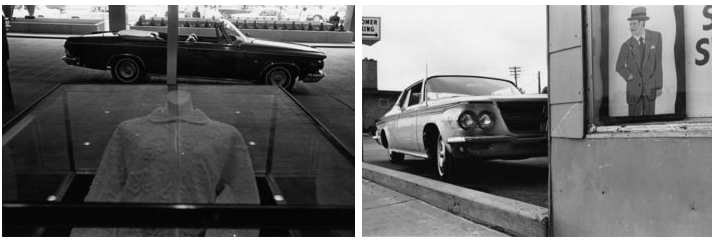
When one is living a meager existence, poetic and novelistic dystopias may have a passing appeal.   After having lived – or rather dwelled – as an undergraduate in the Binghamton and Syracuse area, I can understand the appeal of a landscape that includes – in a contiguous manner – monuments to a prosperous past, empty factories, residential neighborhoods, beautiful parks, and strip malls. But what interested me most was not so much the buildings as the people who drifted in and out of these areas. Like them, I grew up in a rural New York setting. I was always wondering about how the hard working, everyday American would navigate through this mess.   To my delight, I stumbled across a poet who lived in Syracuse and sought to address these very things: Hayden Carruth.

Reflecting on his poems today (which were originally written in 1983), I feel addressed by a simple question: are we, today, to read the odd orientations of people to the late-capitalist landscape in tragic or comic terms?   But there are other questions that follow in its wake: Have we, today, got used to destitution to such an extent that it doesn’t matter what landscape we travel through just as long as we….travel through it and go elsewhere?

In the opening poem of his book Asphalt Georgics entitled “Names,” we bear witness to Sam. He is caught up in a series of movements and flows. He needs to return a broken coffee machine.

I had said improbable. I

always do, that being

who I am. Nevertheless it

stopped pouring. We could bring

the defective electric per-

collator back to where

we bought it, the K-Mart up in

Seneca Mall. So there

We drove, past Hiawatha Pla-

za, Wegman’s, Bayberry

Mall, with all the other pieces

of the strip strung in be-


tween. Friendly and Ponderosa

looked o.k., but Carvel

was dilapidated and Mis-

ter Donut had a hell


Of a big jagged hole through both

sides of its glass sign. I

saw the killdeer running that has

her nest next to the high-

way on the gravel strip between

Rite-Aid and Sunoco,

and I heard her cry in the gnash

of heat at my window

Sam is not an ordinary man. He is very reflective and notes a line from an Italian poet about the meaning of “once.” But Sam dismisses this as too academic “Once. Tra la.”   He apologizes for the reflection and doesn’t want to get caught up into the depth it suggests. To be sure, he likes staying on the surface geography, amidst places, names, and spatial games:

The main reason for putting that

in is it was written

by a guy well up in his eight-

ies. He knows. In one sen-


tence, the past is nothing and we

are in love with it. Prag-

matically speaking we are

in love with nothing. Shag


me some more of these fungoes, boys,

before we quite. His name

is Eugenio, mine is Sam –

I like that name, that game


He drifts into thinking about baseball and eating food, about how this has something to do with being American.


Too, though utterly valueless,

The animal in us

Just sufficiently domestic-

ated, our venomous


American aggressiveness

Confined to balls and bats.

O.k. Back to the beginning

The saturated fats

In the midst of this, he drifts into a space in which everything seems to collapse and become odd. But instead of becoming indifferent himself, he tells us that “I found myself praying. It happens all the time.”   Sam calls himself a “poor deracinated numbskull” since he calls on many different religious symbols…but he does so “without conviction.”

He is, like many Americans, wandering through landscapes (external and internal), playing games, but unable to have deep conviction. Nonetheless, he feels the desire for something holy but Sam doesn’t know what to do with it…in Syracuse, New York.

And what do you do with this

amorphous faith, desire,

wanting, let someone else figure,

why me? I was on fire,


so was Poll (his companion) next to me, so was

the whole world. To get through,

get to the K-Mart, probably

was all I asked. So who

cares who I asked? Does it have to

be Somebody? It’s better

not. The asking is what counts. Poll

says the same. She says her

mind is always praying these days….

Sam reflects more and realizes that just “getting through all that hot traffic to the K-Mart is good enough for prayer.”   In other words, his prayers come to him as he and his companion, Poll, travel through the landscape of Syracuse, from one store or place to another. And as they do, they can sense that something is wrong and that the past and the world that they once knew has disappeared.  It takes too much away from their day-to-day practical activities to think about it. And instead of praying a Church or a Synagogue, they pray in a car.

“Our Face is a Mistake” – Celine’s Cynical Reflection on Faces and Masks

images

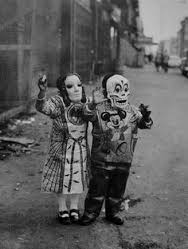
We can learn a lot of from a face. Writers, visual artists, and philosophers have been reading faces for centuries.   But while some see the face as mask, others see it as our presence to the world.   An acute difference can, for instance, be seen in the words on the face by Emmanuel Levinas and Louis-Ferdinand Celine.

Emmanuel Levinas is well known for the weight he gives to the “face” in his philosophy. In an essay entitled “Ethics as First Philosophy,” he writes: “The proximity of the other is the face’s meaning, and it means from the very start in a way that goes beyond those plastic forms which forever try to cover the face like a mask of their presence to perception”(82, Levinas Reader).     In the face of the other “there is the nakedness and destitution of the expression as such, that is to say extreme exposure, defencelessness, vulnerability itself”(83).     For Levinas, the face and the person who bears it to the world will always be exposed and vulnerable.

In contrast, Celine, in Journey to the End of the Night, shows us a face that, with more experience, changes, becomes ugly, and less vulnerable. Celine’s narrator introduces this theme through a character named Berbert who “had the greenish look of an apple that would never get ripe”(208). Berbert seems to be a friendly character. One day, he goes to say “good morning” to the doctor-narrator.

Before describing Bebert’s face in depth, the narrator laments that you can’t love grownups:

If you got to love something, you’ll be taking less of a chance with children than with grownups, you’ll at least have the excuse of hoping they won’t turn out as crummy as the rest of us. How are you to know? (209)

Bebert, it seems, is different:

I’ve never been able to forget the infinite little smile of pure affection that danced across his livid face. Enough gaiety to fill the universe. (209)

But this face is the exception, not the rule. After one hits a certain age, says Celine, his or her face changes for the worst. And that happens because the “world isn’t what we expected”:

Few people past twenty preserve any of that affection, the affection of animals.   The world isn’t what we expected. So our looks change!   And turned into a thorough stinker in next to no time! Past twenty it shows in our face! Our face is a mistake! (209)

For Celine, “our face is a mistake,” however Bebert’s is not. It gives Celine some respite from humanity. His ensuing description of Bebert portrays him as a sick, but charming animal. When they are separated by other people, Bebert tries to pop up in front of other people so he and Celine can exchange looks.

We couldn’t see each other anymore. Bebert jumped up and down, sneezing and shouting for joy. His haggard face, his greasy hair, his emaciated monkey legs, the whole of him danced convulsively at the end of his broom. (209)

In contrast, we have Bebert’s aunt. Celine treats her “free of charge,” because, as he sarcastically notes, “nobody paid me.” He helped them not because he was kind, however, but because he was “curious” about the nature of humanity.   With Bebert’s aunt and all of “them” (the people he treats for free) he learns that people hide behind masks, lie, and sought to take advantage of him…because he did them a favor:

People avenge themselves for the favors done them. Bebert’s aunt took advantage of my lofty disinterestedness. In fact she imposed on me outrageously. I let things ride. I let them lie to me. I gave them what they wanted. My patients had me in their clutches. Every day they sniveled more, they had me at their mercy. And while they were at it they showed me all the ugliness they kept hidden behind the doors of their souls and exhibited to no one but me. The fee for witnessing such horrors can never be high enough. They slither through your fingers like slimy snakes. (210)

Bebert may be the exception, his face is not a mistake, but “ours” is. By saying ours, Celine includes himself with these people who appear to be – as Levinas would say – exposed, defenceless, and vulnerable, but are only appearing like this so they can control and manipulate the care-giver.   Their faces are masks.

Celine’s cynical view suggests that very few people can “preserve” vulnerability and a child or animal-like honesty. In contrast, Levinas thinks that, regardless of what happens to us by way of loss, disappointments, etc, the face remains vulnerable and exposed.   The face will continue to solicit me regardless of whether the subject is trying to manipulate me or not. But, for Celine (the character, author, and person), his curiosity about humans (his scientific experiment, so to speak) led him to be much more skeptical about the sick people he treats.   His experience taught him otherwise.

Contrasting Levinas to Celine, we can ask ourselves a few questions. Are the faces we see in the street and in the mirror “mistakes”? Are we mistaken about what they appear to show? Isn’t every encounter with a face a risk? And should we write off most faces if we are deceived by a few? Celine remembers one face as good but sees many as masks of darker intentions. Levinas sees the face as exposed and vulnerable but, unlike Celine, he doesn’t turn the face into a mask. Both of them went trough war, but both of them decided to interpret the face in a different manner.